Home Blog Page 1766

Flexible terms key to boosting RFO condo demand, says Colliers
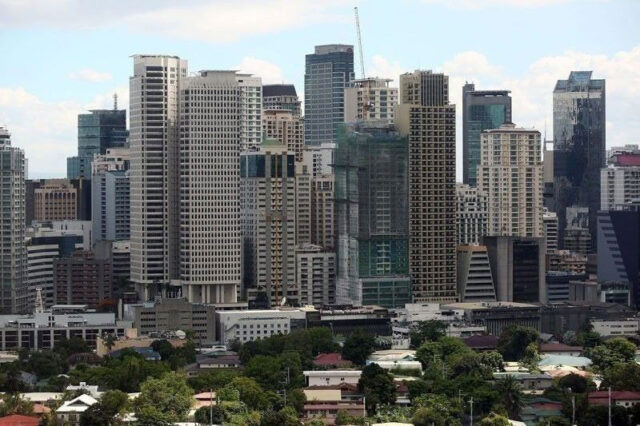
PHILIPPINE STAR/MIGUEL DE GUZMAN

CONDOMINIUM developers in Metro Manila should highlight their extended and flexible payment terms to boost demand for ready-for-occupancy (RFO) units, according to property consultancy firm Colliers Philippines.

According to Colliers’ Manila Survey Flash Report, which included a survey of about 300 property stakeholders nationwide, 69% of respondents would likely buy a condo in Metro Manila if offered extended and flexible payment terms.

“Developers should continue highlighting their attractive and flexible terms to further stimulate demand in the residential market, which has also seen a more pronounced shift to suburbia (or the development of projects outside Metro Manila),” Colliers said in the report.

As of the end of 2024, the Metro Manila condo market had a total of 74,400 unsold units, with about 26,300 classified as RFO projects. Colliers earlier said it may take over eight years to sell out the existing inventory.

Other promotions that would encourage buyers to purchase a condo include no spot downpayment (12%), early move-ins (8%), free furniture or appliances (7%), and no reservation fees (4%), Colliers said.

To attract buyers, several developers offered up to 30% discounts on the total contract prices for spot cash payment, compared to 10% before the pandemic. Some have offered 5% to no downpayment and extended their payment terms for as long as 48 months.

According to the survey, Pasig City (24%) is still the most preferred location for condo investments outside the more established business hubs like the Makati central business district (CBD), Fort Bonifacio, and Ortigas Center.

Likewise, Makati Fringe (22%), Quezon City (19%), Alabang (19%), Bay Area (13%), and Manila (3%) were also preferred submarkets for investors.

However, only 24% of those surveyed said their next residential development would be a condo unit in any major CBD.

In contrast, nearly 70% prefer to invest in a house-and-lot or lot-only unit, eyeing regional locations like Cavite, Laguna, Batangas, Pampanga, Bulacan, and Tarlac.

Colliers conducted both onsite and offline surveys with about 300 end-users, property equity analysts, and investors nationwide. The survey was conducted during the first week of February.

‘STABLE’ LUXURY SEGMENT
Meanwhile, the capital region’s luxury and upscale segment remains stable, accounting for 41% of Metro Manila’s condominium launches in 2024, Colliers said.

In particular, the Manila Bay Area is expected to be a premier lifestyle destination amid rising demand from expat Filipinos and investors across the Asia Pacific, according to UK-based real estate consultancy firm Knight Frank.

“Luxury residential properties in and around Manila Bay have enjoyed a surge in popularity, resulting in significant appreciation in valuations driven by high pre-selling prices,” Christine Li, head of research, Asia Pacific at Knight Frank, said in its latest “The Wealth Report.”

The Bay Area, which includes the cities of Manila, Parañaque, and Pasay, is home to many casinos, hotels, and retail establishments.

The price of Metro Manila’s luxury residences increased by 17.9% in 2024, ranking second in Knight Frank’s latest Prime International Residential Index (PIRI). The PIRI monitors the movement of luxury residential prices across 100 city and second home markets.

According to the property consultant, Metro Manila’s luxury property prices are rising as the country’s economy continues to expand.

“Local wealth creation has spurred the rapid expansion of investable luxury residential developments, particularly in the city’s core business districts, attracting foreign investors from within Asia-Pacific,” Ms. Li said. — Beatriz Marie D. Cruz

15 Richest Filipinos in Forbes’ 2025 World’s Billionaires List

TYCOON and former Senate President Manuel B. Villar, Jr. is the richest Filipino, according to Forbes’ latest World’s Billionaires List. Read the full story.

15 Richest Filipinos in <i>Forbes</i>’ 2025 World’s Billionaires List

Qualcomm considers buying UK semiconductor firm Alphawave

TRUSTPAIR.COM

US CHIPMAKER Qualcomm is considering making an offer to acquire Alphawave IP Group, it said on Tuesday, sending shares of the British semiconductor company surging more than 52%.

Alphawave designs and licenses semiconductor technology for data centers, networking, and storage.

Its “SerDes” (serializer/deserializer) technology determines how fast information can be processed by chips — crucial for AI development — and serves as the foundation for Broadcom and Marvell Technology’s multibillion-dollar bespoke chip businesses.

Alphawave’s shares soared by more than half to a high of 142.9 pence, valuing it at 708.2 million pounds ($913.1 million), according to LSEG data. As of Monday’s close, the stock had slumped more than 70% from its all-time peak in August 2021.

Qualcomm did not respond to a Reuters request for further details of a potential deal, while Alphawave did not comment.

Under UK takeover rules, the US company now has until April 29 to make a firm offer or walk away.

Qualcomm’s expression of interest came after Reuters exclusively reported earlier in the day that SoftBank-owned chip tech provider Arm had recently sought to buy Alphawave before deciding against a takeover.

Arm was looking to secure crucial technology for building its own artificial-intelligence processors, Reuters reported, citing three sources familiar with the matter. Arm and Alphawave both declined to comment.

Media reports last year said Qualcomm had also discussed a potential deal to buy some or all of US rival Intel. Reuters

Catholic shrine in Lourdes covers artwork by priest accused of abuse

The facade of the Rosary Basilica in Lourdes — FLICKR/LAWRENCE OP

VATICAN CITY — The sanctuary of Lourdes, one of the world’s most popular Catholic pilgrimage sites, began on Monday to cover up a series of mosaics made by a prominent priest with ties to the Vatican who has been accused of sexual abuse.

The artwork is by Rev. Marko Rupnik, an internationally known artist, who has been accused by about 25 people, mostly former Catholic nuns, of various types of abuse.

Mr. Rupnik, who was expelled from the Catholic Jesuit order in 2023 but remains a priest, is not known to have commented publicly on the accusations. The Vatican in 2023 reopened an investigation into his conduct, which is ongoing.

Mosaics by Mr. Rupnik adorn the facade of the Rosary Basilica in Lourdes, near the France-Spain border, where some five million Catholics and other faithful visit each year to experience spring water that is said to have healing properties.

Workers placed large coverings over many of the images on Monday, Lourdes Bishop Jean-Marc Micas said in a statement.

“A new symbolic step needed to be taken to facilitate entry into the basilica for all the people who today cannot cross its threshold,” said the bishop, in an apparent reference to clergy abuse victims.

Mr. Micas had previously declined to cover the images but ordered in July 2024 that they no longer be illuminated at night.

Laura Sgro, a lawyer representing five of Mr. Rupnik’s alleged victims, welcomed the covering of the images.

“Every believer, and not just every victim of abuse, must have an open heart when praying, and this cannot happen if they have to kneel before a work of art that was likely the place where abuse was experienced,” Ms. Sgro said in a statement.

Mr. Rupnik’s artwork is thought to adorn some 200 churches and chapels around the world, and is also known to adorn at least one chapel at the Vatican.

Vatican officials have largely declined to comment on the allegations, citing the ongoing investigation into Mr. Rupnik.

Cardinal Victor Fernandez, the Catholic Church’s chief doctrine official, told reporters earlier this month that he was starting to contact lawyers who could serve as judges in a likely Church trial against Mr. Rupnik.

Last week, the Jesuit order began reaching out to some of Mr. Rupnik’s alleged victims to start a process of offering reparations on a case-by-case basis.

Ms. Sgro called the letters a “clear, strong and concrete gesture” and “an important step forward.” — Reuters

Chats and spats

FREEPIK

CHAT GROUPS online are formed to keep abreast of what’s going on that is of common interest. These may be extended families, classmates in high school, a civic club, or associates at work. News of relevance to the group is shared. Sayings too are routinely posted, (Failures are lessons to be learned in life’s journey.) along with comic sketches, or videos like the arrest of a high-profile individual. (Don’t touch him.)

What about opinions on politics and religion? Is this also part of chatty exchanges? Can such fraught positions descend into name-calling (You have the brain of a tsetse fly.) and hasty exits from a chat group?

The easy rhythm of a simple chat is evident in a person-to-person setting. The body language is relaxed. There is no interruption of the person who is speaking. An attentive demeanor is evident, the body even leans forward to catch each word. A conversation tends to be quiet, occasionally punctuated with laughter and a slapping of the thighs, his or hers.

Debates are spats often unresolved as neither side is willing to wave the white flag — you’re right. (What was I thinking?) Verbal clashes attempt to score points off the adversary, challenge an opinion expressed as fake news, positions badly thought through and full of logical holes, all meriting derision if not outright contempt. (Take a cold shower.)

Spats start by taking a position, say — was the detention of a person at the airport an arrest or a kidnapping? (No ransom note?) Two sides argue, give their researched information supporting one position or the other, and post biased opinions to make their case. Noisy dissent and interruptions are routine. Agreeing with the other side, rather than reducing his words to absurdity and eroding their relevance, is seldom an option.

Getting entangled in a debate can lead to distress, even a headache. Exiting a chat group does not entail any slamming doors, just a small note — Mr. X has left the group. Don’t expect him to come back anytime soon.

Conversation, while referring to speech, really entails listening. A view is expressed and allowed to develop. The other person adds to the appreciation of the topic, giving a different perspective or providing a new insight. There is head-nodding — Hey, I never thought of it that way. Conversation allows some disagreement, even as it respects a different point of view and continues to be civil.

It is hard to like an opinionated person. Still, this predictability (say, a rabid dislike of the sitting president of another country) allows conversation to be distracted, and flow to other streams like the effect of art auctions on the rise of the contemporary artists.

Much harder is a discourse with an argumentative verbal bully. There is no subject to hide behind as each topic is challenged with a contrary point of view. It is even possible that the view being expressed is the one previously held but just because the same opinion is now being embraced by the other, an opposite view is immediately taken. If you’re white, then I’m black.

Chats and spats use different kinds of thinking.

Daniel Kahneman in his new book, Thinking, Fast and Slow, describes fast thinking as “system one” which is basically intuitive and requiring no analysis, like when you find a woman attractive without knowing the details of why. (Is it her tattoo?) Googling a map or figuring out the subway system of Paris on your first visit is “system two” thinking, rational, logical, and requiring methodical analysis.

Conversation which is intuitive and flowing clashes with the pugnacious tenacity of debate which thinks up of arguments and logical thrusts. Words and arguments need to have a logical direction, even if misguided.

Is a chat group worth joining when it descends into name-calling and personal insults? (I know you’re a stooge for fake news.) Efforts by third parties to distract the pugilists with photos of women volleyball players in beach attire don’t always work.

It’s possible to restore levity and camaraderie in the chats with birthday greetings to designated celebrants… as well as condolences for the family of a recently departed.


Tony Samson is chairman and CEO of TOUCH xda

ar.samson@yahoo.com

Bayad inks strategic deal with Dragonpay

BILLS PAYMENT platform CIS Bayad Center, Inc. (Bayad) has partnered with payment gateway Dragonpay Corp. for easier cash-ins and disbursements.

Under the strategic partnership, Bayad customers of accredited Dragonpay merchants can cash in their payments at over 600 Bayad Center and Bayad Partner branches nationwide. Dragonpay merchants can also disburse their income funds at these branches.

“We have seen remarkable strides in the adoption of e-commerce in the Philippines as several financial institutions work together to boost the country’s payment gateway landscape. We partnered with Dragonpay, sharing our mission of empowering both consumers and businesses through convenient, secured, and seamless payment and remittance transactions,” Bayad President and Chief Executive Officer Lawrence Y. Ferrer said in a statement.

“At Dragonpay, we believe in empowering businesses of all sizes by providing them with accessible and reliable payment solutions. Our partnership with Bayad aligns with our mission to drive financial inclusion in the Philippines by offering more convenient cash-in and disbursement options nationwide. Together, we are creating opportunities for merchants and consumers alike, fostering growth in the e-commerce space and contributing to a more inclusive economy,” Dragonpay CEO and Founder Robertson Chiang said.

Bayad is a subsidiary of Manila Electric Co. (Meralco) and a member of the MVP group of companies.

Meralco’s controlling stakeholder, Beacon Electric Asset Holdings, Inc., is partly owned by PLDT Inc.

Hastings Holdings, Inc., a unit of PLDT Beneficial Trust Fund subsidiary MediaQuest Holdings, Inc., has an interest in BusinessWorld through the Philippine Star Group, which it controls. — A.M.C. Sy

Ayala Land secures SEC approval for merger with 29 subsidiaries

AYALALAND.COM.PH

LISTED property developer Ayala Land, Inc. (ALI) has secured approval from the Securities and Exchange Commission (SEC) to absorb 29 corporations as part of its internal restructuring efforts.

The real estate company received the SEC’s approval of the articles and plan of merger on March 31, which subsequently took effect on April 1, ALI said in a regulatory filing on Wednesday.

“The merger is an internal restructuring to simplify the ownership structure and is expected to result in operational synergies, efficient funds management, and simplified reporting to government agencies,” ALI said.

The companies absorbed by ALI were Ayala Hotels, Inc., Buendia Landholdings, Inc., HLC Development Corp., Crimson Field Enterprises, Inc., Red Creek Properties, Inc., Prima Gaedi Development Corp., ALI Triangle Hotel Ventures, Inc., Arcasouth Hotel Ventures, Inc., and Seda College, Inc.

Also included were Asiatown Hotel Ventures, Inc., North Ventures Commercial Corp., Westview Commercial Ventures Corp., Circuit Makati Hotels Ventures, Inc., Primavera Towncentre, Inc., Hillsford Property Corp., Sunnyfield E-Office Corp., Southportal Properties, Inc., Regent Horizons Conservation Co., Inc., Amorsedia Development Corp., and Five Star Cinema, Inc.

The real estate developer also absorbed ALO Prime Realty Corp., Enjay Hotels, Inc., One Makati Hotel Ventures, Inc., Integrated Eco-Resort Inc., Ecoholdings Company, Inc., Whiteknight Holdings Inc., AyalaLand Medical Facilities Leasing, Inc., Altaraza Prime Realty Corp., and Cebu Leisure Company, Inc.

ALI secured board approval for the merger in March 2024, with a plan to absorb 34 subsidiaries that are wholly owned directly by the real estate developer or through AyalaLand Estates, Inc. and AyalaLand Hotels and Resorts Corp.

For 2024, ALI recorded a 15% increase to P28.2 billion as revenue surged by 21% to an all-time high of P180.7 billion due to higher residential and estate lot bookings.

The company aims to launch P100 billion worth of property development projects this year, supported by a P95-billion capital expenditure budget.

ALI shares rose by 3.91% or 90 centavos to P23.90 per share on Wednesday. — Revin Mikhael D. Ochave

How PSEi member stocks performed — April 2, 2025

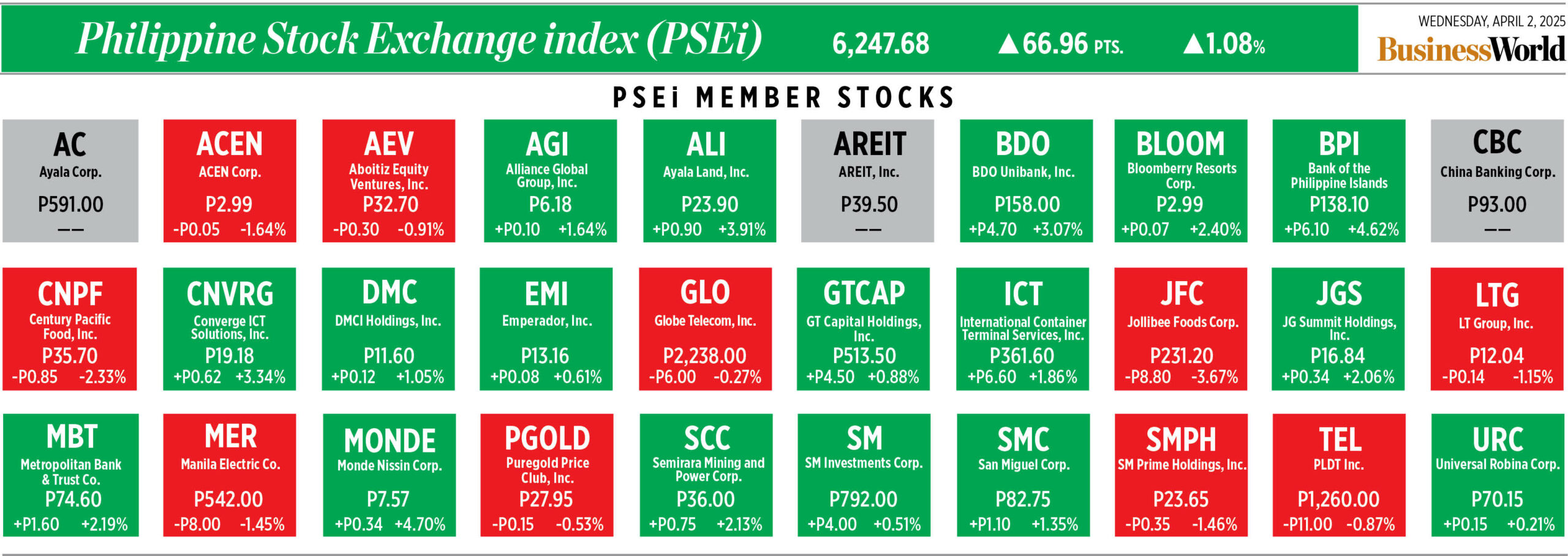
Here’s a quick glance at how PSEi stocks fared on Wednesday, April 2, 2025.


US OKs $5.6-B jet deal with Philippines

Photo shows F-16 fighter jets from last year’s "Thunder" US-Philippines joint military exercise at Basa Air Base. The United States announced on Tuesday that it had approved the sale of $5.58 billion worth of 20 F-16 fighter jets and related equipment to the Philippines, reinforcing its support for the treaty-bound ally amid rising tensions with China. — PHILIPPINE STAR/WALTER BOLLOZOS

By Kenneth Christiane L. Basilio, Reporter

THE US Department of State on Tuesday approved the possible sale of F-16 jet fighters and munitions worth $5.58 billion to the Philippines, a deal that could boost the Southeast Asian nation’s air combat capabilities amid rising tensions with China.

The US government greenlit the Philippines’ request for 20 units of F-16 fighters from Lockheed Martin Corp., according to the Defense Security Cooperation Agency (DSCA), an office attached to the US Defense department.

The proposed arms deal includes missiles, bombs, radar units, backup jet engines and engineering and technical support services for the planes, the DSCA said in a statement posted on its website. It has informed the US Congress of the potential deal.

Foreign military sales by US defense manufacturers require US government approval to ensure that weapon acquisitions of other nations align with Washington’s foreign policy and security interests.

The Philippine Defense department has yet to receive an “official notice” about the deal from the US, its spokesman Arsenio R. Andolong told BusinessWorld by telephone.

“This proposed sale will support the foreign policy and national security of the United States by helping to improve the security of a strategic partner that continues to be an important force for political stability, peace and economic progress in Southeast Asia,” the DSCA said.

The announcement comes days after the visit of US Defense Secretary Peter Brian Hegseth to Manila, during which he spoke with Philippine President Ferdinand R. Marcos, Jr. and Defense Secretary Gilberto C. Teodoro, Jr., vowing to help arm the US’ oldest treaty ally in Asia with deterrence capabilities by deploying advanced weaponry, such as an anti-ship missile system and unmanned sea vessels to counter China’s aggression in the South China Sea.

Philippine and US forces will also hold military drills in the northernmost province of Batanes island near Taiwan.

“The proposed sale will enhance the Philippine Air Force’s ability to conduct maritime domain awareness and close air support missions and enhance its suppression of enemy air defenses and aerial interdiction capabilities,” the DSCA said.

The deal could also help the Philippine military protect its “vital interests and territory” while also expanding interoperability with US forces, it added. “The Philippines will have no difficulty absorbing this equipment into its armed forces.”

Philippine forces have frequently sparred with Chinese ships and aircraft in the South China Sea over competing sea claims. Beijing asserts sovereignty over almost the entire waterbody based on its 1940s nine-dash line, which overlaps with territorial claims from the Philippines, Brunei, Malaysia, Taiwan and Vietnam.

A United Nations-backed tribunal based in The Hague in 2016 voided China’s claim for being illegal.

The Philippines is seeking to modernize its military and deepen security ties with other nations as it tries to counter China’s military might in the region, buying warships from South Korea, a missile system from India, all while letting a US missile battery that could hit the Chinese mainland stay in the country.

Manila is also eyeing much needed upgrades to its aging air force, whose arsenal mostly consists of turboprops. The Philippine Air Force only has 11 Korean-made FA-50 light fighter jets, its most advanced aircraft, after one crashed in early March.

The deal would advance the Philippines’ air defense capabilities, said Justin Keith A. Baquisal, national security analyst at FACTS Asia.

“The problem now is that our air defense primarily relies on FA-50s, so this is very necessary to add to the fleet mix,” he said in an X message.

CHEAPER DEALS
Maintaining the F-16 jets won’t be difficult for the Philippines due to the US’ sprawling supply chain, he added. “America’s supply chain is global… The logistics industry around it can be sourced from NATO (North Atlantic Treaty Organization) countries too,” he added, referring to the military coalition of European nations.

Mr. Teodoro last year said the military had allotted as much as $6.9 billion for the acquisition of 40 advanced military jets.

The Philippines should consider diversifying its planned purchase of multi-role fighter aircraft and not rely on one manufacturer if it could get cheaper deals with others, said Joshua Bernard B. Espeña, who teaches international relations at the Polytechnic University of the Philippines.

The cost of the F-16 deal could still decrease, according to the DSCA.

Philippine authorities should strike a balance in buying affordable jets with its air force’s need to seamlessly work with its allies, he said in a Facebook Messenger chat. “We also need to consider how these systems might become integrated into the AFP’s (Armed Forces of the Philippines) combat management systems at the operational level.”

“We shouldn’t just diversify our combat systems and assets for the sake of diversifying,” Mr. Baquisal said. “Our assets need to be interoperable too, and by and large the AFP uses US and US-allied equipment from South Korea and Israel.”

The US State Department approved the sale of a dozen F-16 jet fighters worth $2.43-billion to the Philippines in 2021.

Meanwhile, the chiefs of Philippine and Canadian military forces on Wednesday met in Manila, where they discussed ways to deepen security ties.

AFP Chief of Staff Romeo S. Brawner, Jr. met with Canada’s Chief of Defense Staff Marie Annabelle Jennie Carignan during her courtesy visit to Camp Aguinaldo, the military headquarters in the Philippine capital, according to an AFP statement.

Both reaffirmed their commitment to maintaining regional peace and pledged to continue joint military training drills.

“The visit underscored the AFP’s efforts to strengthen its defense ties with like-minded nations, and to solidify its shared commitment to regional peace and security,” the AFP said.

Manila and Ottawa last month finalized negotiations on a pact enabling military personnel from both countries to conduct joint training exercises in each other’s territories. It provides immunity from criminal and civil liability to visiting forces if the act was done during official duty. The privilege is also extended to Filipino soldiers visiting Canada.

PHL buildings not ready for ‘The Big One,’ experts say

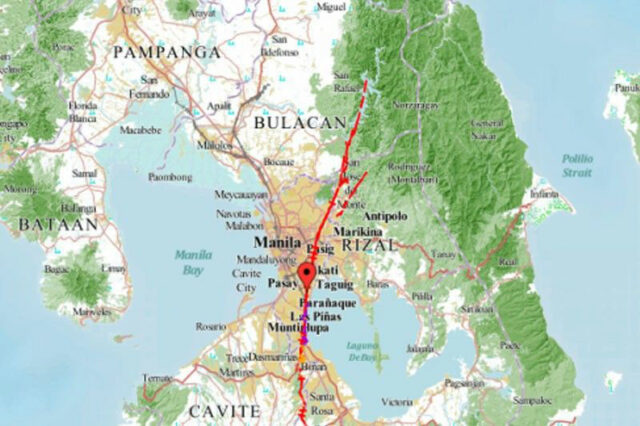
INTERAKSYON/SCREENGRAB FROM THE FAULTFINDER SERVICE OF THE DOST WEBSITE/PHILSTAR FILE PHOTO

By Beatriz Marie D. Cruz, Reporter

BUILDING EXPERTS are concerned about the readiness of buildings and the lack of public spaces in case of a major earthquake in Metro Manila, after a 7.7-magnitude quake killed thousands in Myanmar on March 28.

A magnitude 7.2 quake — also called “The Big One” — could happen soon, they said.

“I recommend an architectural and structural audit, as well as a mechanical, electrical, plumbing, sanitary engineering, and fire protection audit of all buildings that were built before 2015,” Felino A. Palafox, Jr. a veteran architect and founder of Palafox Architecture Group, Inc., told BusinessWorld by telephone.

It was only in 2015 when the National Structural Code of the Philippines was updated, he pointed out.

The code, published by the Association of Structural Engineers of the Philippines, Inc., is a comprehensive set of regulations for the design, construction and maintenance of structures in the Philippines. It guides structural and civil engineers and incorporates advancements in structural engineering and lessons from past disasters.

Experts have warned that a 7.2-magnitude earthquake triggered by the movement of the 100-kilometer West Valley Fault along Metro Manila, also called “The Big One,” could lead to thousands of deaths and cause widespread damage to infrastructure.

A strong earthquake along the West Valley Fault recurs about every 400 to 600 years, according to the Philippine Institute of Volcanology and Seismology (PHIVOLCS). Its last recorded movement was in 1658 or 367 years ago.

“The Big One could occur before the 400-year mark or after 600 years,” Ma. Mylene M. Villegas, chief science research specialist at PHIVOLCS, told BusinessWorld in an e-mail. “Given that stress has been accumulating along this active fault for the past 367 years, an earthquake could occur at any time.”

Mr. Palafox likened the fragility of Metro Manila’s buildings to a paper clip, which can break if damaged several times.

“You bend the paper clip once, it will not break, but if you bend it several times, it will break,” he said. “So, if your building has survived several earthquakes, maybe your steel bars are already tired.”

A 2004 joint study by the Japan International Cooperation Agency, Metropolitan Manila Development Authority and PHIVOLCS noted that a 7.2-magnitude quake on the West Valley Fault could kill 33,500 people.

The major quake could heavily and partially damage 38% of Metro Manila’s residential houses and 35% of its public buildings, it added.

The West Valley Fault passes through the cities of Taguig, Muntinlupa, Parañaque, Quezon, Pasig, Makati and Marikina, and the provinces of Rizal, Laguna, Cavite and Bulacan.

The Philippines is also situated in the Pacific Ring of Fire, a seismically active belt that could trigger earthquakes, volcanic eruptions and tsunamis.

Nigel Paul C. Villarete, a civil engineer and senior advisor at technical advisory group Libra Konsult, Inc., said Presidential Decree No. 1096 or the National Building Code of the Philippines contains the latest provisions on earthquake-resistant design. 

“We belong to the highest category (IV), which considers the more probable and stringent earthquakes, so we can be assured our building should have been designed with the most recent and strict standards,” he said in a Viber message.

‘MORE READY’
“Of course, design is one thing, construction is another, so we must also ensure that our buildings are built with the highest standards and without unnecessary deficiencies that may be caused by carelessness, or worse, cost-cutting or corrupt practices,” he added.

If the country’s structural and building codes are followed, the Philippines should be “comparatively more ready than most countries” against earthquakes, Mr. Villarete said.

However, some contractors lower building specifications to cut costs, said Paulo G. Alcazaren, an urban planner and landscape architect.

“Anecdotally, there have been a good number of public buildings and infrastructure that were adequately designed by registered and licensed civil and structural engineers, but contracting firms have had to shortcut or reduce specifications to bring down costs to create enough profit to pay off government officials and ensure margins,” he said in an e-mailed reply to questions.

Mr. Alcazaren, the co-founder of PGAA Creative Design, also cited the lack of open spaces such as parks or sidewalks in Metro Manila, where people can safely evacuate.

“In our very congested business and condominium residential districts, there is obviously not enough area to stay clear of falling debris, shattered glass and also to seek refuge,” he said.

He also noted that billboards on top of buildings could fall during a major earthquake, causing significant damage.

“Even if they are well designed, who maintains and inspects them? I have never seen these being repainted, inspected or repaired,” Mr. Alcazaren said.

Mr. Palafox said it is more cost-efficient for the government and private sector to invest in disaster prevention than rehabilitation.

“It’s 90% less expensive to address the hazards before they become disasters, and they should be addressed by good planning, design, architecture and engineering solutions,” he added.

Meanwhile, the Department of Public Works and Highways (DPWH) said it has assessed 21,000 public buildings for earthquake readiness and compliance with the building code.

“As of today, we have assessed more than 21,000 public buildings, and many of them are recommended for retrofitting,” Public Works Undersecretary Maria Catalina E. Cabral told a news briefing at the presidential palace.

“We have also completed several retrofitting projects. Essentially, retrofitting raises a building’s standard to comply with international earthquake standards,” she added.

She cited the agency’s 2020 deal with the World Bank to retrofit and upgrade 425 buildings in Metro Manila, including schools and health centers, to ensure they can withstand high-magnitude earthquakes.

Ms. Cabral said DPWH regional directors were assessing the structural integrity of buildings and bridges as part of the agency’s yearly efforts to look after local infrastructure.

“This is an ongoing effort — not just now, and not solely because of the incident in Myanmar, but as part of our annual program,” she said.

“Every year, all bridges, national roads and especially national bridges must be assessed to evaluate their structural integrity. This allows us to plan whether they need repairs, rehabilitation, replacement or retrofitting,” she added.

At the same briefing, Civil Defense Undersecretary Ariel F. Nepomuceno said President Ferdinand R. Marcos, Jr. had ordered his agency to craft long-term solutions for The Big One and ensure Metro Manila is ready for quakes similar to the one in Myanmar.

“If we start doing things correctly today, the process will still take time because it involves millions of houses that may need retrofitting and structural integrity audits,” he said. “So, it’s not hard to do; it just takes time.” — with John Victor D. Ordonez

Israel pushes cybersecurity, counter-terrorism partnership with PHL

ILAN FLUSS — NEW.EMBASSIES.GOV.IL

By Adrian H. Halili, Reporter

ISRAEL is looking at working with the Philippines to improve the Southeast Asian nation’s cybersecurity and counter-terrorism programs, according to its envoy.

“We are pushing to have more exchanges in the area of counter-terrorism and cybersecurity,” Israel Ambassador to the Philippines Ilan Fluss told BusinessWorld in an interview. “There are ongoing talks, but again, we are basically waiting for the Philippine government to decide if there is an interest in these sectors.”

He said the consulate might partner with the Department of Information and Communications Technology (DICT) on programs involving cybersecurity.

“Cybersecurity is certainly an area that we are offering to collaborate closer,” he said. “Israel has a very advanced cybersecurity ecosystem. We have offered to have a collaboration with the DICT on cybersecurity and it’s on the table.”

Mr. Fluss said international cooperation and information-sharing would help mitigate cyberattacks.

“Only when you collaborate and share information can you get better solutions,” he said. “Other countries may have the same experience and could give advice. Only by international collaboration can you serve your country better.”

He said information-sharing between the government and private sector could also improve the Philippines’ cybersecurity protocols.

“Sharing information helps in countering those attacks and in mitigating them, and from every attack, you can learn and improve the system for everybody,” he added.

The Philippines faced about 17.1 million cyberthreats last year, 36.8% of users in the country, according to Kaspersky.

Separately, the Cybercrime Investigation and Coordinating Center logged 10,004 cybercrime complaints in 2024, a sharp increase from 3,317 cases a year earlier.

In 2023, ransomware group Medusa hacked into the systems of the Philippine Health Insurance Corp. and leaked sensitive data, including the bank details of about 42 million members when the government refused to pay a $300,000 ransom.

Mr. Fluss said they had also offered to collaborate with the Philippines on counter-terrorism initiatives.

“These are two very sensitive, very important areas… and we are looking forward to collaborating with the Philippine government,” he said. “It depends of course always on the Philippine government’s interest and priorities.”

The Philippines is among the most affected by terrorism in the Asia-Pacific region after Myanmar, according to the 2025 Global Terrorism Index released last month.

Comelec starts distributing voters’ info sheets for midterm elections

PHILIPPINE STAR/EDD GUMBAN

THE Commission on Elections (Comelec) on Wednesday started distributing voters’ information sheets (VIS) ahead of the May 12 midterm elections.

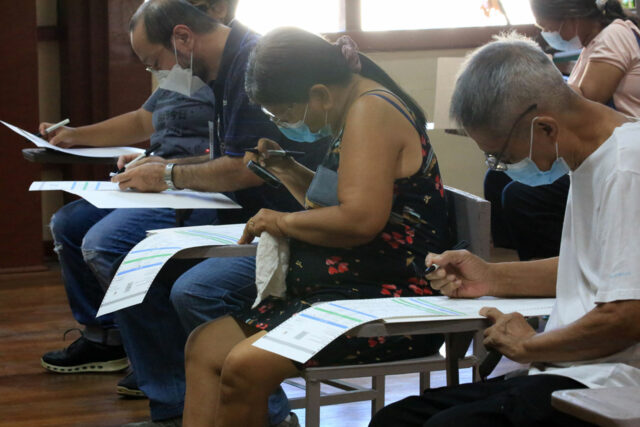
The VIS is a four-page document that provides essential information, including voters’ designated polling station, instructions for using vote-counting machines, and the list of national and local candidates, along with 155 party-lists.

“Everyone should remember that the VIS is very important because not everyone has access to the internet… so how can they get information from our precinct finder?” Chairman George Erwin M. Garcia said in Filipino during an ambush interview.

“[The VIS will show that] we are all equal in this country because we will only receive the same kind of document,” he added.

To avoid politicizing the process, the Commission opted to hire temporary employees instead of barangay officials to distribute the VIS. The distributors, who will carry Comelec-issued identification (ID) cards, will be required to personally deliver the VIS to each voter. 

If the voter is unavailable at their registered address, an authorized representative may receive the VIS on their behalf. 

According to the poll chief, several regions, including the Cordillera Administrative Region, northern Mindanao, Davao region, Soccsksargen, and the Bangsamoro Autonomous Region in Muslim Mindanao, have also started distributing the VIS, with the Comelec aiming to complete the process by April 30.

Mr. Garcia also said the Comelec will reopen its precinct finder two weeks before the May 12 elections, enabling voters to locate their designated voting centers or precincts in advance.

The Commission printed a total of 68 million VIS for 68.4 million voters in the Philippines.

Meanwhile, during the Management Association of the Philippines’ General Assembly on the same day, Mr. Garcia said the business community plays a crucial role in shaping the economy, not just through investments and job creation but also through their words and sentiments.

Their statements have a direct impact on economic confidence, making their voices matter in national conversations, he said.

“The business community’s contribution to the economy is significant, but it would be for nothing if they do not trust our processes and systems. How can our economy improve if they don’t trust it? Trust begins when they trust the elections themselves,” he told reporters in Filipino.

MYANMAR VOTING
Also on Wednesday, the Commission said Filipino voters in Myanmar will be casting their votes through postal voting, instead of online voting, after a 7.7-magnitude earthquake struck the Southeast Asian nation last March 28.

This means they will receive an envelope containing their ballot, which they will then send back to the Philippine embassy.

Once the ballots are received at the embassy, they will be counted using the machines provided by Comelec.

“There are only about 320 voters in Myanmar, and most of them are concentrated in the capital. It’s a small number, but every vote matters,” the poll chief said.

Some 1.2 million Filipinos registered to vote overseas, according to Comelec. Overseas voting will begin on April 13 until May 12.

The upcoming midterm elections will determine the composition of the Senate, House of Representatives, and local government positions. — — Chloe Mari A. Hufana