Home Blog Page 1758

Remittance growth slows in October

PHILIPPINE STAR/ MIGUEL DE GUZMAN

By Luisa Maria Jacinta C. Jocson, Reporter

CASH REMITTANCES from overseas Filipino workers (OFW) rose by 2.7% in October, the slowest growth in four months, data from the Bangko Sentral ng Pilipinas (BSP) showed.

Data from the central bank showed that cash remittances increased to $3.08 billion in October from $3 billion in the same month a year ago.

The remittance growth rate was the weakest since the 2.5% logged in June this year. October also marked the first time in four months that growth fell below 3%.

Overseas Filipinos’ Cash Remittances“The expansion was seen in remittances from both land-based and sea-based workers,” the BSP said.


Remittances from land-based workers jumped by 3.2% year on year to $2.48 billion, while money sent by sea-based workers inched up by 0.6% to $602.35 million.

Personal remittances, which include inflows in kind, also rose by 2.7% to $3.42 billion in October from $3.33 billion a year ago.

Remittances from workers with contracts of one year or more increased by 3% to $2.68 billion, while money sent home by workers with contracts of less than a year went up by 1.3% to $670 million.

In the January-October period, cash remittances grew by 3% to $28.3 billion from $27.49 billion a year earlier.

As of end-October, cash remittances from land-based workers jumped by 3.4% to $22.62 billion, while those from sea-based workers inched up by 1.4% to $5.69 billion.

“The growth in cash remittances from the United States, Saudi Arabia, Singapore, and the United Arab Emirates contributed mainly to the increase in remittances in January-October 2024,” the BSP said.

The US accounted for 41.2% or the biggest share of overall cash remittances in the 10-month period.

This was followed by Singapore (7.1%), Saudi Arabia (6.2%), Japan (4.9%) and the United Kingdom (4.8%).

Other top sources of remittances include the United Arab Emirates (4.3%), Canada (3.5%), Qatar (2.8%), Taiwan (2.8%), and South Korea (2.5%).

Meanwhile, personal remittances rose by 3% to $31.49 billion as of end-October from $30.57 billion in the comparable year ago period.

John Paolo R. Rivera, a senior research fellow at the Philippine Institute for Development Studies, said that the latest remittance data reflect global uncertainty.

“First is global economic uncertainties. Economic challenges in host countries, such as inflationary pressures or slower economic growth, may have reduced disposable income for OFWs limiting the amount they can remit,” he said.

Geopolitical tensions in top remittance sources such as the Middle East, Europe and the United States also impacted remittance flows, he added.

Mr. Rivera said October typically sees slower remittance growth “as OFWs prepare to send larger amounts closer to the holiday season (e.g., November and December).”

Meanwhile, Rizal Commercial Banking Corp. Chief Economist Michael L. Ricafort said the weaker peso during the month “would require the sending of less OFW remittances to pay the same amount of expenses in pesos that, in turn, would have led to slower year-on-year growth in OFW remittances.”

The peso depreciated to P58.1 against the greenback at end-October from the P56.03 per dollar at end-September.

For the remainder of the year, remittances are seen to continue to increase, especially during the holiday season.

“In the coming months, growth may accelerate in November and December due to the holiday season. Sustained demand for OFWs in high-income countries and the potential easing of inflation globally could also support a rebound,” Mr. Rivera said.

On the other hand, Mr. Ricafort cited risk factors such as the incoming Trump administration’s strict immigration policies that could dampen remittances next year.

“Possible protectionist policies by US President-elect Donald J. Trump, who will start office on Jan. 20, 2025, that could tighten immigration rules in the US in an effort to create and protect more jobs for US citizens, thereby potentially slow down OFW remittances from the US,” he added.

The central bank expects cash remittances to grow by 3% this year and in 2025.

Pace of easing must be considered very carefully — BSP

Shoppers enter a mall amid the holiday season in Manila. The central bank expects the inflation rate to average 3.1% this year. — PHILIPPINE STAR/ RYAN BALDEMOR

THE BANGKO SENTRAL ng Pilipinas’ (BSP) policy path is skewed towards easing, but the pace of cuts should be carefully considered, an official said.

“In the case of the central bank, we’ve actually had two meetings where the Monetary Board has relaxed the policy stance. The messaging is that while the general direction is still for relaxation, the pacing has to be considered very carefully,” BSP Deputy Governor Francisco G. Dakila, Jr. said at the ASEAN+3 Economic Cooperation and Financial Stability Forum.

The Monetary Board is expected to deliver another 25-basis-point (bp) rate cut on Thursday, according to 13 out of 16 analysts in a BusinessWorld poll conducted last week.

If realized, this would be the third straight meeting that the central bank reduced rates.

It would also bring the benchmark rate to 5.75% from the current 6%, for a total of 75 bps worth of cuts by end-2024.

The BSP began its rate-cutting cycle in August with a 25-bp cut and delivered another cut of the same size in October.

BSP Governor Eli M. Remolona, Jr. earlier said they plan to implement rate cuts in “baby steps.” He also noted that while they are likely to continue further easing next year, it may not necessarily be done every meeting or every quarter.

“When we began the relaxation pace, we were thinking that in 2025, the Fed would be lowering by about 100 bps,” Mr. Dakila said.

“And now… that space has changed considerably because the Fed is now envisioned to move by just 50 bps in 2025,” he added.

Markets are awaiting further signals from the US Federal Reserve’s final meeting for the year. Investors see it as a near-given that the Fed will cut rates by a quarter point at its Dec. 17-18 meeting. However, markets have only priced in an 18% chance of a January cut, according to CME’s FedWatch tool, Reuters reported.

“Because of the changing inflation dynamics in the United States, it may be that right now, we’re not looking at a scenario where the Fed would be raising rates again,” Mr. Dakila said.

“But the most likely scenario is that they will still be reducing in 2025, but at a slower pace than before. And we have taken that into account into our policy scenarios,” he added.

However, Mr. Dakila said the BSP prefers to take into consideration domestic data in its policy decisions.

“But even so, the main consideration for monetary policy would be domestic inflation and how that relates to the target,” he said.

Headline inflation averaged 3.2% in the 11-month period, still well within the BSP’s 2-4% target range.

“Even when we look at the risk-adjusted forecast, they remain within the target band. So having said that, it’s the case, therefore, that the primary consideration for monetary policy would be domestic inflation, how inflation relates to the target,” Mr. Dakila said.

The central bank expects the inflation rate to average 3.1% this year.

Meanwhile, Mr. Dakila said that the peso’s recent performance has been similar to other currencies in the region. Currency movements are making less of an impact on inflation-targeting, he added.

“Just to note that with inflation targeting, what we’ve seen is that the sensitivity of inflation to changes in the currency has gone down considerably as the public has become more accustomed to seeing greater volatility in the peso.”

“I think that’s a good sign because that means that we can worry less about our ability to meet the inflation target while keeping to a market-determined exchange rate.”

The peso closed at P58.671 per dollar on Monday, weakening by 20.1 centavos from its P58.47 finish on Friday. This was its weakest finish since its P58.71-per-dollar close on Nov. 27.

“Having said that, as the Board has already said, we retain the option to go into the market should there be any conditions that threaten to go into an abrupt change in the exchange rate that can dis-anchor inflationary expectations,” Mr. Dakila added. — Luisa Maria Jacinta C. Jocson

PEZA targeting to approve up to P250-B investments in 2025

THE PHILIPPINE Economic Zone Authority (PEZA) is targeting to approve as much as P250 billion worth of investments in 2025, its top official said on Monday.

PEZA Director-General Tereso O. Panga said the agency is targeting a “9 to 10% increase in investments from (our) 2024 performance,” to be driven by the manufacturing and information technology (IT) sector.

“This will translate to more or less P235 (billion) minimum to P250 billion in investments,” Mr. Panga said at a media briefing.

As of November, PEZA has already approved P201.55 billon worth of investments, surpassing its full-year target of P200 billion.

Mr. Panga said the total investment approvals could reach P215 billion by yearend as the PEZA board still has one more meeting. This would exceed the full-year target by 7.5%.

“We’re now covering December and there’s a board meeting (on Dec. 17). There’s a total of P13.45 billion (up for approval) so we expect P215 billion for 2024,” he added.

If realized, investment approvals this year would be 15.5% higher than the P186.098 billion worth of investments approved in 2023.

“That’s the highest by far in the last seven years or in 2018,” Mr. Panga said.

He noted the PEZA’s game plan was to equal the record level of investments during the Aquino administration.

“The highest they got was P311.9 billion in 2012,” he added.

Recent economic reforms are expected to attract more foreign investors to the Philippines, analysts said.

Foundation for Economic Freedom President Calixto V. Chikiamco said in a Viber message that a measure seeking to extend land lease limits for foreign investors to 99 years would entice more foreign investments in PEZA’s economic zones.

The measure, considered a priority by the Marcos administration, aims to liberalize the Philippines’ land lease policies which is currently limited to 75 years for foreigners.

Rizal Commercial Banking Corp. Chief Economist Michael L. Ricafort said that the signing of the Corporate Recovery and Tax Incentives for Enterprises to Maximize Opportunities for Reinvigorating the Economy (CREATE MORE) Act would attract more foreign investments in the Philippines.

“The CREATE MORE, already signed into law on Nov. 11, would help make foreign investors decisive to locate in the country, now with better and greater certainty on foreign investment incentives,” Mr. Ricafort said in a Viber message.

The CREATE MORE Act lowers corporate income tax to 20% from 25% for registered business enterprises (RBE). It also offers more attractive incentives for strategic investments.

Meanwhile, Mr. Panga said growth in PEZA’s economic zones will be driven by locators from the manufacturing and IT industries.

“We are predominantly in manufacturing, that’s 32% of our investments. Then, you have IT, that’s another 12-15%. So, these are the traditional winners for PEZA in the ecozones,” he added.

Mr. Panga said that PEZA is also looking to diversify the  investment mix at economic zones.

“We just have to expand our product mix, and especially in electronics… We need to promote assembly testing and packaging, which is really our bread and butter. But we have strong potential in (integrated circuit) design, including electronic manufacturing services,” he added.

He said that PEZA is also looking for locators from the electric vehicle and data center industries. — Adrian H. Halili

Revenue collection to surpass target this year — DoF

A woman files her annual income tax return at the Bureau of Internal Revenue (BIR) office in this file photo. — PHILIPPINE STAR/ EDD GUMBAN

REVENUE COLLECTION is on track to exceed this year’s revised goal, with revenue effort expected to be the highest since 1997, the Department of Finance (DoF) said.

“Total revenue collection for 2024 is expected to increase to P4.42 trillion by the end of the year, surpassing the full-year target,” the DoF said in a statement on Monday.

The Development Budget Coordination Committee (DBCC) on Dec. 2 raised this year’s revenue collection goal to P4.38 trillion from P4.27 trillion previously.

“As a percentage of GDP (gross domestic product) the emerging revenues will climb to 16.7%, the highest in the last 27 years or since 1997,” the DoF said.

The DoF said it was able to generate more revenues to fund the national budget without imposing new taxes.

Instead, the DoF said it privatized public assets, raised the dividend contributions of government-owned and -controlled corporations (GOCCs) and did a “sweep” of unused funds of GOCCs.

In April, the DoF raised the mandatory dividend remittances of GOCCs to the National Government to 75% of their annual net earnings in 2023 from 50% previously.

“The Bureau of Internal Revenue (BIR) and the Bureau of Customs (BoC) likewise improved their revenue administration efficiency by ensuring ease of paying taxes and accelerating their respective digitalization programs,” it said.

Latest data from the Bureau of the Treasury showed revenue collections jumped by 16.83% to P3.77 trillion in the January-to-October period.

Taxes, which made up 86% of the total revenues, increased by 11.4% to P3.23 trillion as of end-October. BIR collections rose by 13.49% to P2.42 trillion as of end-October, while Customs collections went up by 5.32% to P777.6 billion.

“The rest of the DoF’s revenue reforms are in the advanced stages in Congress, namely the Rationalization of the Fiscal Mining Regime, the Excise Tax on Single-Use Plastic Bags, Package 4 of the Comprehensive Tax Reform Program, and the Motor Vehicle Road User’s Tax,” DoF said.

The House version of the rationalization of the fiscal mining regime was approved last year, while its Senate counterpart is still pending at plenary.

The excise tax on single-use plastic bags, comprehensive tax reform program, and the motor vehicle road user’s tax have also been approved by the House of Representatives.

“2024 is a year of triumph for the Filipino people. In the face of unprecedented challenges, we have emerged stronger. I assure you that from here on, things will get better — because you have a government that works very hard to ensure that all Filipinos reap the rewards of strong economic growth through more comfortable lives and more high-quality jobs,” Finance Secretary Ralph G. Recto said in a statement.

The DBCC trimmed the GDP growth target for this year to a range of 6-6.5% but widened the target band to 6-8% for 2025 until 2028, due to “evolving domestic and global uncertainties.”

Despite the revised target, the DBCC “remains optimistic” about achieving the 6-6.5% growth target this year. — A.R.A.Inosante

ACEN plans to operationalize 1.2GW of projects by 2025

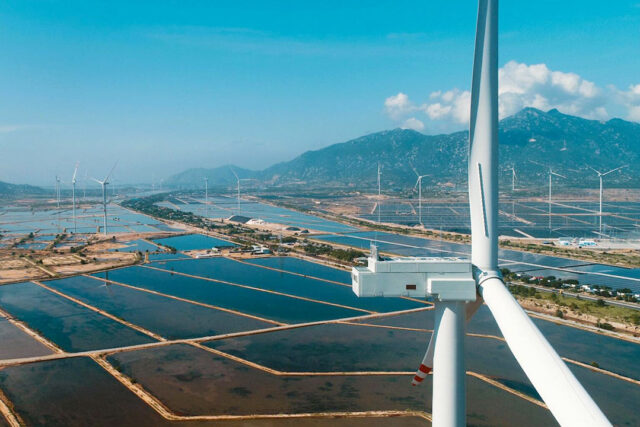
ACEN Corp., the energy platform of the conglomerate Ayala group, operates across a diverse range of markets, including the Philippines, Australia, Vietnam, India, Indonesia, Laos, and the US. — ACENRENEWABLES.COM

ACEN CORP. targets to operationalize power projects with a combined capacity of approximately 1.2 gigawatts (GW) by the end of next year, according to the company’s president.

The company is expanding its renewable energy presence within and outside the Philippines,  ACEN President and Chief Executive Officer Eric T. Francia told reporters on Monday.

Among the big-ticket energy projects expected to be completed in 2025 is the 520-megawatt (MW) Stubbo Solar in New South Wales, Australia, through its subsidiary ACEN Australia.

Other international projects set to beef up the company’s global presence are the 146 MW Monsoon Wind project in Laos, the 123-MW hybrid solar and wind project in India, and the 109-MW Stockyard Wind project in Texas, United States.

“It’s on track to operate,” Mr. Francia said, referring to the development of the Laos wind project.

Back home, ACEN is set to energize the 160-MW Pagudpud and 57-MW Capa Wind projects, both in Ilocos Norte, and the 60-MW Pangasinan Solar project.

This pipeline of projects forms part of the company’s 6.8-GW portfolio of attributable renewable capacity in operation, under construction, and committed projects.

The company operates across a diverse range of markets, including the Philippines, Australia, Vietnam, India, Indonesia, Laos, and the US.

“ACEN’s renewable capacity has grown to almost seven GW, in line with the strong momentum behind the energy transition in the region. The company continues to focus on execution, especially for projects in construction and under development,” Mr. Francia said.

To ensure technical operations and maintenance of its local operations, ACEN has subscribed to additional shares in its subsidiary Paddak Energy Corp. worth a total of P11.75 million.

In a stock exchange disclosure on Monday, the company said it signed a subscription contract with Paddak for the subscription to the latter’s 1.175 million common shares and 10.575 million preferred shares at P1 each.

“The subscription will allow ACEN to have full ownership in Paddak, which will provide technical operations and maintenance-related services to ACEN’s Philippine operating companies,” the energy company said.

Paddak is ACEN’s designated company that will provide technical operations and maintenance-related services to ACEN’s Philippine operating companies.

The company said it will partially pay the subscription price amounting to P2.94 million.

Amid these developments, the Department of Energy (DoE) has recognized ACEN’s “significant contribution to advancing clean energy solutions” as it was named a winner at the agency’s Sustainable Energy Awards 2024.

In particular, ACEN’s 81-MW North Luzon Renewables (NLR) wind project in Pagudpud, Ilocos Norte, was recognized under the category of Renewable Energy Projects in On-Grid Areas for its “outstanding role in fostering a secure, reliable, clean, and resilient energy sector.”

The project generates approximately 205,000 megawatt-hours of clean energy per year, powering around 50,000 homes.

“The success of NLR reflects ACEN’s unwavering commitment to sustainability and our vision of a renewable energy-powered future,” Mr. Francia said.

“This recognition from the DoE affirms the impact of our initiatives in addressing both environmental challenges and the socioeconomic needs of our host communities,” he added. — Sheldeen Joy Talavera

The calm before the Christmas rush

New music for December

By Brontë H. Lacsamana, Reporter

NOW that we are well into the Christmas rush, the number of music releases have begun to wind down, allowing for more time to process the albums that have come out. From upbeat rap and hip-hop to soft indie rock anthems and romantic Christmas songs, the latest music releases from just before December reflect the month’s unpredictable pace.

Here are five albums to immerse in as the holidays fully set in:

Soft Power by Fazerdaze

New Zealand singer-songwriter Fazerdaze (real name: Amelia Murray) released her sophomore album titled Soft Power on Nov. 15. As a follow-up to her 2017 debut album and indie cult classic Morningside, its maturity is seen in how the cozy, bedroom pop she is known for has now morphed into grittier, self-dubbed “bedroom stadium” sensibilities.

The 11 tracks blend Ms. Murray’s signature dreamy synths and electronic beats with more rock elements and refined pop production. The second track, “So Easy,” is a great example of a beautiful melody injected with attitude by the vocal distortion and backed by a catchy bass line, immediately followed by “Bigger” that is more wistful and emotional in tone.

For a more mellow anthem filled with longing, “In Blue” has a solid build-up in its drums and electronic mix. “A Thousand Years” is equally memorable, with Ms. Murray’s voice complemented by a pretty piano melody and an infectious beat. But it is her ninth track on the album, “Cherry Pie,” that is an instant favorite, with the Los Angeles-inspired lyrics given a dreamy and fun mix of synths for the pop-style vocals to dance over.

GNX by Kendrick Lamar

American rapper and producer Kendrick Lamar capped off a strong year with his 6th album, GNX, released as a surprise to fans on Nov. 22. The 12 tracks, produced by Dave Free and Mr. Lamar himself, show just how dynamic he can be even after garnering acclaim for winning his feud with Drake and performing at the Super Bowl.

The song “wacced out murals,” featuring the rapper firing off indignant energy, is a visceral opener. His tirade, directed towards others in the hip-hop elite who have wronged him, might not be the most relevant subject matter to open with, but it’s engaging. He then gives us more epic treadmill background music: “hey now” featuring Dody6 takes on a more hushed yet still venomous tone over the uptempo rhythm, while “tv off” featuring Lefty Gunplay has Mr. Lamar let loose as fierce rap blends with house party beats.

Honorable mentions go to “reincarnation” for its sublime lyrics and execution, and the two tracks Mr. Lamar made with R&B singer SZA — “luther” and “gloria” — her sweet voice providing melodies that make the album an easier listen. Overall, the rapper has given a decent Christmas gift, filled with memorable collaborations and hard-hitting verses.

see you, frail angel. sea adore you. by Homecomings

Japanese indie rock band Homecomings dropped their 7th studio album on Nov. 27. Titled see you, frail angel. sea adore you. (senseless yet somehow cute phrasing, as much of English spoken by the Japanese tends to be), the 12-track collection showcases the earnest soft rock that has never left J-pop.

The dreamy first track, “angel near you,” has vocalist Tatamino Ayaka sing beautifully while backed by her bandmates’ cohesive rock instrumentals. This is followed by “slowboat” that has a steadier flow and sentimental tone, building up intensity throughout the song.

“Moon Shaped” is the album’s stand-out, the strumming of the guitar setting the stage for Ms. Tatamino’s forlorn voice as the band creates a poignant rock soundscape. An underrated track is the 10th one, “Tenderly, two line,” which has electronic components that elevate its mellow acoustic quality.

Angel interview by Meaningful Stone

Continuing the angel theme is Korean indie rock soloist Meaningful Stone (real name: Kim Jimin) with Angel interview, her second album. Released on Nov. 28, it has a grittier style that contrasts with the singer’s sweet voice, a combination that sets the artist apart from other Korean acts today.

The soft “Supernova” eases us in with a slow tempo, the rock, electronic, and even orchestral elements gradually populating the track as it explodes pleasantly into a sonic experience. Ms. Kim’s artistry further blossoms with the third track, “Mikael,” evoking more standard bedroom pop with moments of heavy distortion, given a floatier vibe through the vocals.

“I open the window instead of the closed door” starts off as an acoustic ballad, then it escalates into the most intense rock break of the entire album. A memorable track is “Esc,” featuring female Korean rap powerhouse Swervy spitting bars alongside Ms. Kim’s spunky voice.

Christmas (live from a restaurant in downtown Los Angeles) by grentperez

The most Christmas-themed release leading into December was that of Filipino-Australian singer-songwriter grentperez (real name: Grant Perez). Known for his impeccable vocals and cheerful personality, the Gen Z artist decided to conclude the year with some of his favorite holiday tunes.

Christmas (live from a restaurant in downtown Los Angeles), released Nov. 29, is technically a new EP, though it features two live versions of previously released tracks along with their originals. These are “Christmas Starts Tonight” and “When Christmas Comes Again,” both original songs by Mr. Perez that show off his smooth, jazzy honeyed voice singing of scenes of holiday warmth and cheer.

The live renditions are a sweet treat enough on their own, but the EP also harkens back to his old covers of some holiday classics. “Please Come Home for Christmas” brings out his talents best, his voice taking on the slow tempo tune with ease on the rich acoustic track.

How First Gen is expanding its portfolio to meet PHL’s power demand

FIRST GEN PRESIDENT and Chief Operating Officer Francis Giles B. Puno

By Sheldeen Joy Talavera, Reporter

FIRST GEN Corp. is diversifying its energy portfolio to meet the Philippines’ power demand, with a strong focus on renewable energy sources like geothermal and solar.

“We’ve been in the business for quite a long time, and so, over the years, our priorities have always adjusted,” First Gen President and Chief Operating Officer Francis Giles B. Puno said in an interview with BusinessWorld.

“And of course, one of our big priorities is climate change. Part of our advocacy in climate change is to really promote renewable energy,” he added.

First Gen is a holding company for the power generation and energy-related businesses of the listed conglomerate First Philippine Holdings Corp.

The company has a total of 3,668 megawatts (MW) of installed capacity from its portfolio of plants that run on geothermal, wind, hydro, solar energy, and natural gas.

“Many of our investments were originally in fossil fuels, particularly gas. We never invested in coal. But over the last many years, our priority has been in geothermal,” Mr. Puno said.

“Hopefully, we will be able to deliver more capacity next year — to deliver more 24-hour baseload renewable energy to our consumers,” he said.

For 2025, the company has set a lower capital expenditure (capex) budget amounting to P35 billion, of which 90% will be allocated to its renewable energy subsidiary Energy Development Corp.’s drilling activities and growth projects.

First Gen has set a P60-billion capex program, of which P30 billion is for drilling wells and another P30 billion for building more geothermal power facilities, as well as battery energy storage facilities.

“We’re spending a lot on our well drilling program. But the other issue we’re facing is that our power plants above ground are quite old already,” he said. “So, we’re also trying to figure out how to make sure that we’re maximizing the steam capability of concessions matched with the right technology.”

First Gen has set a goal to expand its solar energy portfolio, with a portion of its capex allotted for the development of a 50-MW solar facility in Batangas.

“Right now, we’re hoping that we can build our largest solar investment, which will be 50 MW, and that will be the springboard for more solar expansion of the First Gen Group moving ahead,” Mr. Puno said.

As the Philippines aims to shift to renewable energy, First Gen is banking on liquefied natural gas (LNG) as a transition fuel.

Currently, the company is integrating LNG with Malampaya natural gas for its gas-fired power plants.

“We’re also trying to transition from full Malampaya operations to partly Malampaya, partly LNG,” Mr. Puno said.

“Because Malampaya is running out and is no longer sufficient to deliver all of our gas-fired power needs, we needed to bring in LNG,” he added.

First Gen has four existing gas-fired power plants with a combined capacity of 2,017 MW in the First Gen Clean Energy Complex in Batangas.

Its subsidiary, FGEN LNG Corp., constructed an interim offshore LNG terminal and executed a five-year time charter party for BW Batangas to provide LNG storage and regasification services.

Mr. Puno said that proper implementation of policies is needed as the country is going through “a very critical phase,” especially to address the feasibility of LNG for the country’s energy security.

“We have to be more proactive in making good policies and regulations, but also to provide incentives for investors so we can bring in more investments,” he said.

“If they do it wrong, then it will reduce the attractiveness for us to make those investments,” he added.

A Minute With: Vocal coach Eric Vetro on helping celebrities sing

ERIC VETRO helped pop singer Ariana Grande find a more operatic tone for Wicked and prepared Angelina Jolie to play Maria Callas.

LONDON — From singers Ariana Grande and Sabrina Carpenter to actors Angelina Jolie and Timothée Chalamet, vocal coach Eric Vetro has worked with numerous celebrities on honing their singing skills.

He helped longtime client Ms. Grande find a more operatic tone for musical Wicked, prepared Ms. Jolie to sing as soprano Maria Callas for biopic Maria, and Timothée Chalamet to sound like Bob Dylan in A Complete Unknown.

In an interview with Reuters, Mr. Vetro spoke about his work and shared his tips and techniques in an online BBC Maestro course.

Below are excerpts edited for length and clarity.

Q: What are the go-tos of a session with Eric?

Mr. Vetro: I’m really careful in listening to (clients) and observing them and then I get a strong intuition of what they need. So some people I’ll be working more on technique right from the start, improving their voice. Some people, it’s more a matter of helping them to preserve their voice.

Q: How did you prepare Angelina Jolie for Maria?

Mr. Vetro: Seven months is nothing in training to become an opera singer, especially if you have never sung at all. And so, the first… lessons were just about making a sound… then we’d start doing a little bit more daring exercises… she was very diligent, she worked really hard, was very dedicated to it, and each week it would get a little bit better.

And little by little, she started projecting her voice and all of a sudden, all these high notes started coming out. And we were all like, “Oh, she’s a soprano.”

Q: How much more pressure is there when actors portray real-life singers?

Mr. Vetro: I always try to think, what is it about this person that makes them so special? And if you can capture that, you’re ahead of the game right there… you can do an impersonation of someone and sound like them, but it doesn’t really capture their magic.

Q: What has it been like making a course for the public?

Mr. Vetro: I talk about the holistic approach to singing: what you eat, what you drink, that affects your voice, what you do all day… I try to put in a lot of really common sense tips… (and) everything that I tell all the stars that I work with. — Reuters

What really is financial inclusion?

FREEPIK

With technology being at the forefront of all financial services being made available, which lending platform is really pro-poor, and inclusive?

The days of “5-6” (a usurious lending scheme of yesteryears) seem to be numbered if technology makes borrowing money simpler and less cumbersome. These days, all you need to do is apply online and an app rates your credit worthiness (we don’t know how they do it) and gives you P6,000 off the bat. You give three personal references and you get the money.

Is this financial inclusion for the unbanked? If millions of people download this app, borrow P6,000 in the first round, how many of the borrowers will be able to pay back the money?

I was at a Financial Literacy training for farmers just recently and realized that a lot of these food producers have already been victims of “get rich quick” schemes, scams, and other tricks. Though they thanked us for what we thought to be a timely seminar and training, it appears many of them had already been victims of fraud, investment scams, and loans with high interest. So where do we really get the real deal?

Many years ago, we would hear of Micro-Finance Institutions (MFIs) serving the “unbanked” population or people who have no access to credit because they have no credit scores or history. These MFIs would charge higher interest rates because they also took more risk in lending to first-time borrowers, possible pole vaulters and their cost of collection was high. Technology changed all of this now. Today, you need not send collectors for daily payments, as apps and technology make it possible for a borrower to pay through e-wallets and the like. It is efficient but it also charges a service fee for every transaction, which makes it effectively part of the cost of borrowing. For example, even if you are borrowing the minimum, the service fee is the same as if you borrowed more. Ergo, this service fee is clear profit for the operators or lenders. Whether they get paid or not, they have already recovered a “service fee.” One can do the numbers of how “service fees” assure profits to the lender.

Now the MFIs are eclipsed by these fintech lenders. What about cooperatives? Are not cooperatives the first “go-to” of its members who need bridge financing or emergency funds? Cooperatives are able to charge interest which thankfully goes back into the coffers of the organization to benefit all its members in the form of a dividend share. So I don’t feel bad about cooperatives lending to their members. They make money and the coop members are able to borrow while expecting a share of that interest income somehow after all the reports of the cooperative’s financial performance are made.

What if we powered and enabled cooperatives with financial technology, or the much-abused term fintech? Would cooperatives be the perfect example of real Financial Inclusion?

With the many horror stories of loans gone wrong and blackmail collection schemes exposing borrowers to social media shaming, I have no love for fintech companies who take advantage of the poor and the unbanked. What makes them different from the traditional lender who threatens punishment when you cannot pay back a loan?

I think all of these need to be regulated. Maybe what our authorities can do is to moderate the greed of these fintech companies and startups who take advantage of the unbanked. These fintech companies, in the guise of financial inclusion, actually make victims of their borrowers. There is a lot of greenwashing and covering-up of their real intentions — which is to make tons of money from service fees taken from the uninitiated and unenlightened.

What then is the real solution to financial access for the unbanked? Is it fintech? Or is it traditional institutions, like banks, who can allocate a certain percentage of their portfolio to make a fintech-enabled lending platform?

If banks will not do it, how can we make cooperatives do it?

The solutions are many: the fintech revolution, monetary policies, and the heart to help the unbanked are all important in lending to the poor. But this effort must include teaching the unbanked poor citizen how to borrow, how to repay, and how to manage their budgets.

So, to those who think they are helping the poor, think again. Maybe you are helping yourselves at the expense of the unbanked, the ignorant, and the helpless.

I do not claim to be a finance expert, but I can see through the holes. I can see an evil scheme because the victims do not have much choice. The unbanked may as well go back to the usual “5-6” or a traditional rural bank. It can be MFIs that actually are cooperatives or associations that give back to their members or beneficiaries. Something tells me that may be better than these newfangled ways of making money in the guise of financial inclusion at the click of a button.

What can we do to help the people we know? The lessons will have to start at budgets and not spending more than you can earn. The basic lessons in saving for a rainy day will have to be shared again and again. The frugal lifestyle will have to be taught to many, if not all, who borrow incessantly and get caught in a vicious cycle.

How responsible is the ordinary citizen in managing money?

What really is financial inclusion?


Chit U. Juan is the co-vice chair of the MAP Environment Committee. She is also the president of the Philippine Coffee Board, Inc. and Slow Food Manila (www.slowfood.com).

map@map.org.ph

pujuan29@gmail.com

PAGCOR leases Nayong Pilipino property to SMC

PAGCOR CHAIRMAN and CEO Alejandro H. Tengco (left) and SMC Chairman Ramon S. Ang present the artist’s perspective of the new PAGCOR corporate office that will be constructed on a two-hectare area at the Nayong Pilipino Complex in Pasay City.

SAN MIGUEL CORP. (SMC) has signed a 25-year lease with the Philippine Amusement and Gaming Corp. (PAGCOR) to use the 15-hectare Nayong Pilipino property in Pasay.

Under the lease agreement, officially signed on Dec. 12, 13 hectares of the Nayong Pilipino property will be used for “SMC’s initiatives, which will mostly include infrastructure to complement airport requirements,” PAGCOR said in a statement on Monday.

San Miguel leads the New NAIA Infra Corp., which took over the operations and maintenance of the Ninoy Aquino International Airport, near where the idle Nayong Pilipino complex is situated.

Meanwhile, the two hectares will be used to build PAGCOR’s new corporate office, which will be fully funded and built by San Miguel, PAGCOR Chairman and Chief Executive Officer (CEO) Alejandro H. Tengco said, adding it will be at no cost to the gaming agency.

It added that the overall cost is P2.45 billion, of which P2 billion will be allotted for building construction and P450 million for fit-out.

PAGCOR said the office building will span 40,000 square meters (sq.m.), with an additional 15,000 sq.m. for fit-out space.

“For many years, PAGCOR has operated across various rented locations, with our employees spread out and often working under less-than-ideal conditions,” Mr. Tengco said.

He added that aside from the rental for the 13-hectare property, PAGCOR also expects additional revenues from renting out unused portions of the new corporate office once it is completed.

When asked for the timeline, the gaming agency said the office building “will commence immediately upon PAGCOR’s final approval of the building plan which is still being finalized.”

SMC Chairman and CEO Ramon S. Ang said that construction of the PAGCOR building “would commence promptly upon PAGCOR’s formal approval of the design.”

“Our goal is to maximize the potential of this property for the public’s benefit. The new PAGCOR headquarters will be a key part of this plan, providing a modern space to support their crucial role in funding government programs that uplift the lives of many Filipinos,” Mr. Ang said.

In the same event, Mr. Ang also turned over checks of nearly P100 million representing advance rentals and security deposits to PAGCOR.

How to buy a secondhand gift someone might actually want

FREEPIK

MERLE BROWN, a 53-year-old writer from Scotland, buys most of her gifts secondhand. “I love the thrill of finding something unique and special that I can’t get anywhere else,” she says.

She looks for vintage glass and kitchenware, Christmas cards and puzzles — all things unavailable in conventional stores. This Christmas, about half of the gifts she’s purchased so far have come from thrift stores run by UK charities. The trend is catching on across the globe.

Gifting secondhand used to have a bad rap (think last year’s candle or dusty bath set), but it doesn’t carry the taboo it once did. In the UK, some 84% of people say they plan to buy at least one pre-owned Christmas gift this year, according to research by the resale app Vinted and the market researcher Retail Economics. In the US, three in four people believe secondhand gifting has become more socially acceptable over the past year, according to a survey by the resale app OfferUp. The British Heart Foundation charity — with 680 secondhand shops in the UK — says demand has surged.

Searches for “pre-owned luxury” on eBay Inc. grew by over 40% in June of this year compared to June 2023, says Mari Corella, general manager of global luxury and sneakers at the online marketplace. “A couple years ago it was kind of frowned upon to gift secondhand. But now it’s totally acceptable, and people are more than willing to accept a secondhand Louis Vuitton bag or a Rolex watch,” she says.

Secondhand gifts are better for the planet. Each metric ton of newly produced textiles creates 15 to 35 metric tons of carbon emissions, according to the European Environment Agency. New furniture, electronics, and toys also come with their own environmental footprint. An ever-growing global waste pile is overwhelming landfills and causing widespread environmental damage, largely in developing countries.

Secondhand allows shoppers to opt for brands or items that might usually be too expensive, says Kate Sanner, co-founder and chief executive officer of Beni, a web browser tool that offers online shoppers used versions of their product searches. “Resale is this amazing tool during the holidays to really level up your gift giving, and do it in a way that doesn’t require you to go beyond your means,” she says. Beni recently launched a resale registry where people who are thrifting can save their wishlist and share it with their friends and family. “It’s a way to get what you actually want, versus the random candle from your uncle,” she says.

Big-name brand outerwear sells well during the winter months and is often a feature on holiday wishlists, says Ms. Sanner. A Canada Goose Holdings Inc. jacket that might be $1,300 new can be roughly a third of that price secondhand. Similarly, high-quality outdoor gear from the brand Arc’teryx usually sells within three days on the resale site ThredUp Inc., according to Cynthia Lee, the company’s head of merchandising. For those with a more modest budget, Aritzia Inc.’s Super Puff and The North Face puffer jackets are also popular across resale sites.

Some high-end resale sites offer authentication services and also accept returns on certain items, Ms. Sanner notes, making buying there feel a bit less risky to shoppers new to secondhand. Vestiaire Collective also promotes a small curation list of items that are pre-authenticated and ready to ship immediately, meaning customers will get them within one to two days, says Samina Virk, the company’s US chief executive officer.

The push toward pre-loved is also motivated by a desire for individuality, quality, and longevity, especially among younger people, says eBay’s Ms. Corella — something of a backlash to fast fashion. Some 63% of Gen Z consumers would feel good about receiving a secondhand gift, according to a survey by the company. “Not only do they want to look unique, but they really care about the environment. They’re also just starting off in life, they don’t have a lot of money yet. And so pre-loved is totally their game,” she says. 

For those without the budget for even a re-sold Louis Vuitton bag, mid-range designers like Mulberry, Longchamp, and Off-White are popular choices. Ms. Corella recommends handbags as a gift, because there’s no tricky sizing guesswork. For that same reason, Ms. Virk says secondhand jewelry, wallets, and other accessories can also make great gifts and are popular on Vestiaire Collective’s curated holiday gift guide list. Secondhand sneakers — often unworn and in mint condition — are also popular, particularly versions that had a limited run or are no longer available new.

Nostalgia is “really big right now,” says Ms. Corella, leading to high demand and many listings for classic toys like Sylvanian Families and Pokémon cards, and collectible items from franchises like Star Wars. Records, classic games consoles and cameras are popular gifts for the same reason, says Natacha Blanchard, consumer public relations lead at Vinted. At Any Amount of Books on the Charing Cross Road in London, where a bookstore has stood for 100 years, the variety of secondhand items in the Christmas window display is wide enough to tempt almost anyone.

Beautifully bound older editions of novels by Jane Austen and the Brontë sisters and poetry by WH Auden are particularly popular gifts, says William Hayward, a general bookseller at the store. “It’s to do with the age and the sharing of past to present that comes with that.” For his part, Mr. Hayward is a fan of the Romanian-French playwright Eugène Ionesco and has his eye on a first-edition copy of The Hermit that the shop currently has in stock. If someone was buying a gift for him, he says, “that’s the one I would go for.”

For Scotland thrifter Ms. Brown, her most memorable secondhand gift was one she received rather than gave. Three decades ago, her late father bought her a coffee set made by the English pottery company J&G Meakin that she had fallen in love with but couldn’t afford. It was a surprise gift from a local thrift store. “I still have it to this day,” she says. “It means so much to me.” — Bloomberg

Its the Universal Health Care Law’s fault

FREEPIK

Senator Grace Poe, chairperson of the Senate Committee on Finance, defended the decision of the bicameral conference committee, commonly referred to as the Bicam, to deny the Philippine Health Insurance Corp., commonly referred to as PhilHealth, a government subsidy, saying it should serve as a lesson for the state health insurer for failing to utilize over P600 billion in reserve funds. Senator Poe and members of the Bicam should be given lessons on the concept of insurance instead.

Insurance is a means of protection against the risk of a contingent or uncertain financial loss. In exchange for a fee (a premium), a party (insurance company) agrees to compensate the insured person in the event of a certain financial loss. An insurance company is paid the premium up front. It sets aside a portion of the aggregate premiums paid as a reserve for future claims of financial loss.

PhilHealth is a health insurance company. Claims are demands for reimbursement for the medical expenses of the insured or PhilHealth member. The P600 billion in reserve funds may be unspent or idle money at a certain point in time, but if the amount is part of PhilHealth’s reserve fund, it will not remain unspent or idle for long. A substantial part of it is spent within the year.

The Bicam people may think that the reserve funds of P600 billion is excessive considering that PhilHealth paid only P122.3 billion in claims last year. But the P122.3 billion paid last year cannot be considered an annual average. We cannot tell what the succeeding years would be like, whether there would be another epidemic or more natural disasters that would cause illness or injury to thousands of PhilHealth beneficiaries, which would mean significantly more claims for reimbursement of medical expenses.

At a Senate hearing in 2020, the Acting Vice-President for Actuarial Services and Risk Management claimed that PhilHealth’s actuarial life was down to a year due to decreased collections and an expected increase in benefit payouts due to COVID-19. Many questioned the validity of that projection, though.

As regards the subsidy, that represents the aggregate premium the government pays for the mass enrollment of more than 38 million Filipinos — indigents, senior citizens, people with disabilities, and others. Denial of the subsidy is tantamount to the non-payment of the premium for 38 million Filipinos, leaving them uninsured for healthcare or ineligible for PhilHealth benefits. That would be in brazen violation of Republic Act No. 11223 or the Universal Health Care Act passed by the 17th Congress in 2019.

The enactment of that law was rushed by a number of senators so that they could present it in the elections of 2019 as their gift to the Filipino people. Among the authors of the law were Senators JV Ejercito, Sonny Angara, Nancy Binay, and Cynthia Villar, who were all running for re-election. Senator Poe was also running for re-election that year.

Ironically, only JV Ejercito, the principal author of the law, failed to be re-elected. But he was elected senator again in 2022. So, Ejercito, Binay, Villar, and Poe are still senators but only Ejercito voted against denying PhilHealth the government subsidy.

I say RA No. 11223 is the root cause of the problems besetting the country’s Universal Health Care program. It was poorly conceived because it was rushed.

UNIVERSAL HEALTHCARE
The World Health Organization estimated that developing economies would take 15 years to put in place strong, efficient, well-run and sufficiently funded healthcare systems. That is why it advised our legislators to target the achievement of Universal Health Care (UHC) by 2030.

UHC is firmly based on the World Health Organization constitution of 1948, declaring health a fundamental human right. It is meant for citizens of the country whose lives can be saved or whose good health can be maintained if they receive timely preventive, curative, rehabilitative, and palliative health services of sufficient quality to be effective, while ensuring that the use of these services will not ruin them financially.

For UHC to achieve its goal, several factors must be in place, including: a strong, efficient, well-run health system that meets priority health needs; a system for financing health services to prevent people from falling into bankruptcy; access to essential medicines and technologies; and a sufficient number of well-trained, motivated health workers to provide the services.

The Philippine government’s healthcare delivery system was far from ready for UHC in 2019. It is still not ready. UHC will work only if there are sufficient primary healthcare providers. Complications of the leading diseases in the Philippines like bronchitis, influenza, chicken pox, diarrhea, and respiratory tract infections can be prevented if the patient receives preventive, curative, rehabilitative, and palliative health services.

But almost all regions of the country suffer from an insufficiency of primary care providers. The elderly, women, rural and poor Filipinos cannot avail themselves of those services because there are no primary healthcare facilities that render those services in their area. Hundreds of thousands of people in the rural areas and coastal towns die because of the lack of the most basic healthcare.

Per World Health Organization recommendation, there should be 20 hospital beds per 10,000 population. Almost all regions have insufficient beds relative to the population, except for the National Capital Region, Northern Mindanao, Southern Mindanao, and the Cordillera Administrative Region.

According to the Department of Health (DoH), as of 2022 there were 721 public hospitals. The occupancy rate of DoH-managed hospitals is over 100%. That means there are more inpatients in the hospital than there are beds available. So, many patients are turned away.

Income earners seek medical attention in private hospitals. Most of these hospitals were established for profit. Their payment system is independent of the strict guidelines observed in government-owned hospitals. The physician-stockholder of private hospitals is influenced by the incentives available to him. He may recommend longer hospital confinements, surgeries, and diagnostic tests much more than necessary. For every procedure, for every service, the physician charges a fee.

That is the reason why PhilHealth members pay out of pocket in spite of universal healthcare. PhilHealth benefits are mostly a small fraction of hospital bills and physician fees. That brings us back to the poorly conceived RA No. 11223.

UHC is a large expense for governments. It is usually funded by general income taxes. The UHC of the United Kingdom is an example. Healthcare services are free because they are provided by government hospitals and government employed professionals.

Another funding system is the national health insurance model. Singapore’s national health insurance plan is funded by payroll deductions and government subsidies. That is the system RA No. 11223 prescribed for the country’s UHC. It enrolled all Filipino citizens in the National Health Insurance Program administered by PhilHealth.

PHILHEALTH
PhilHealth is not configured to run a complex and far-flung operation. It is not managed by a team of people with formal education and special training to be able to perform the basic functions of a health insurance company. These people are an actuary, a fund manager, a medical director, and an army of claims adjusters.

The health insurance actuary is responsible for assessing future financial risk in healthcare. Using a blend of mathematics, statistics, and financial theory, he estimates financial uncertainty and calculates the cost of healthcare based on reported health data like the DoH’s morbidity rates. Academic disciplines combining courses such as mathematics, statistics, economics, and computer science are ideal in preparing a person for an actuarial position in a health insurance company.

We asked the PhilHealth actuary for her resume. In spite of follow-ups, we never received it. That makes us wonder if she has the credentials to be called an actuary.

The fund or investment manager is responsible for making the funds — the aggregate premiums paid by the people insured — grow by implementing investment strategies. The typical fund manager possesses a minimum of a bachelor’s degree in economics, finance, and business. He may have gone through advanced studies in financial management and had significant experience as a trader in a bank.

The senior vice-president for the Fund Management Sector of PhilHealth did not go through advance studies in financial management and had not worked in a financial institution in any capacity.

The president of PhilHealth had worked for financial institutions — as managing director of an offshore bank and as vice-president of an investment bank. He earned a master’s degree in Business Management, major in Finance, Accounting, and Management Strategy from the prestigious Northwestern University in Chicago. But he seems more inclined towards administration rather than fund management. That may account for his allowing the diversion of P89.9 billion of PhilHealth’s money to the government’s unappropriated programs.

However, his work experience does not qualify him for his current position of chief executive officer of a complex and far-flung operation. PhilHealth has 17 regional offices, five branches, and 101 local offices strategically located nationwide and more than 7,800 employees.

The medical director assists in the development of health insurance policies, analyzes medical data to identify risk factors and trends that could impact underwriting decisions, and works with actuaries to develop risk profiles. He or she provides expert opinions on complex claims involving medical conditions or treatments, and serves as a liaison between healthcare providers and the insurance company.

He must be a doctor of Medicine with experience working in a clinical setting and as an administrator. None of the top executive of PhilHealth is designated Medical Director or carries any title suggestive of the performance of the functions described above.

The claims adjuster is responsible for processing and authorizing the payment of medical claims, negotiating bills on an as-needed basis, and monitoring medical bills to make sure there are no errors in billing or items which are not covered by insurance.

A medical claims adjuster generally holds a bachelor’s degree in some medical field. Along with this, she has a high level of healthcare experience. A registered nurse with at least one year’s experience in a tertiary hospital would be ideal. PhilHealth needs an army of adjusters. As cited above, PhilHealth receives about 13 million claims a year.

PhilHealth does not have an army of such claim adjusters. I think that accounts for PhilHealth’s failure to pay the P27 billion due to government and private hospitals. They are unable to cope with the enormous number of claims. And because of their lack of experience in a medical setting, fraudulent claims estimated at P4 billion passed through them in 2013 alone.

With the government’s healthcare delivery system unable to provide free services to the great majority of the population like in the United Kingdom, and with PhilHealth reimbursing only a small portion of a member’s medical expenses unlike in Singapore, it cannot be said that the Philippines has universal healthcare.


Oscar P. Lagman, Jr. was country manager for the Philippine operations of a multinational health insurance company in the 1980s. As a freelance consultant, he set up the health insurance line of the Philippine subsidiaries of two different multinational general insurance companies, one in 1988, the second in 1999. As director and head of Healthcare Consulting Practice in a large consulting firm, he conducted a management audit of an HMO. He was program director of the Executive Development Program the De La Salle Graduate School of Business conducted for PhilHealth in 2007.