Home Blog Page 175

New US tariff starts at 10%, Trump administration working to hike it to 15%
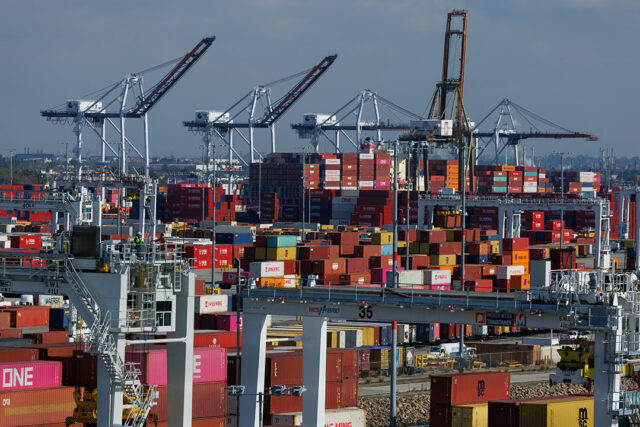
A drone view shows shipping containers from China at the Port of Los Angeles in Wilmington, California, Feb. 4, 2025. — REUTERS

WASHINGTON – The United States began collecting a temporary new 10% global import tariff on Tuesday, but the Trump administration was working to increase it to 15%, a White House official said, sowing confusion over President Donald Trump’s tariff policies after last week’s Supreme Court defeat.

Trump initially signed an order on Friday for a 10% tariff to last 150 days to replace broad duties under an emergency law that were struck down by the Supreme Court, but on Saturday, he said he would increase the rate to 15%.

On Monday night, before the midnight start of collections, the US Customs and Border Protection agency notified shippers that the rate would be 10%.

The White House official told Reuters that Trump has had “no change of heart” in his desire for a 15% tariff under Section 122 of the Trade Act of 1974, but offered no details on the timing for that increase.

As of Monday, Trump had not signed a formal presidential order for the increase to 15% and CBP can only act on published presidential executive orders and proclamations.

CBP’s notice referred to his Friday order, saying that aside from products covered by exemptions, imports would “be subject to an additional ad valorem rate of 10%.”

UNCLEAR WHY LOWER RATE IS IMPOSED

The move added to confusion surrounding US trade policy, with no explanation offered in the notice for why the lower rate had been used.

“Trump is delivering the State of the Union address tonight, so it’s possible we might get a better sense of the next steps on tariffs,” Deutsche Bank said in a note.

“Net-net we still think the effective tariff rate will fall this year and that the world post-SCOTUS will see lower tariffs than the pre-SCOTUS world,” its analysts said, using the acronym for the Supreme Court of the United States.

Although a 10% tariff is less punitive than expected, traders cited uncertainty about the trade outlook as one reason global stocks opened lower on Tuesday. But major US indexes ended higher, as tech stocks rebounded, with the Nasdaq up 1.05%, the Dow Jones Industrial Average up 0.76%, and the broad S&P 500 Index gaining 0.77%.

The new tariff took effect at midnight, while collection of the tariffs annulled by the Supreme Court was halted. They had ranged from 10% to as much as 50%.

REFUND MOTIONS FILED

The plaintiffs who prevailed in the Supreme Court tariff case filed motions on Tuesday in federal courts to enforce the ruling and initiate a process for refunds.

The Liberty Justice Center said it and co-counsel Neal Katyal filed coordinated motions in the US Court of International Trade in New York and the US Court of Appeals for the Federal Circuit in Washington seeking immediate issuance of a mandate to return the case to CIT and to order the government to issue directives to refund the tariffs with interest. The Supreme Court remanded the case to the lower courts to sort out any refunds.

Reuters has reported that more than $175 billion in federal revenue was collected from the now-invalid tariffs under the 1977 International Emergency Economic Powers Act, based on an estimate from the Penn-Wharton Budget Model.

Sara Albrecht, chairman of the Liberty Justice Center, which represented five small businesses challenging the tariffs, said the government needed to be held to earlier pledges for automatic refunds if the tariffs were struck down.

“The government cannot promise the courts that refunds will be automatic if the unlawful tariffs are struck down at the Supreme Court and then, after the decision, say those refunds might take years,” Albrecht said in a statement. “This is simple: the government unlawfully imposed a tax on Americans and took their money. We’d like it back.”

EU REASSURED ON TRADE DEAL

The new 10% tariff represents a conundrum for the European Union, which agreed to a trade deal with a 15% base tariff rate. European Commission Trade Minister Maros Sefcovic said the bloc faces a “transitional period” over Trump’s new temporary tariff, but added US trade officials have reassured him Washington will stand by the agreement.

It remains unclear whether and how companies will be refunded for tariff payments made under the program annulled by the Supreme Court.

The Section 122 law allows the president to impose the new duties for up to 150 days to address “large and serious” balance-of-payments deficits and “fundamental international payments problems.”

Trump’s tariff order argued that a serious balance-of-payments deficit existed in the form of a $1.2 trillion annual US goods trade deficit, a current account deficit of 4% of GDP and a reversal of the US primary income surplus. But some economists and trade lawyers argue the US is not on the cusp of a balance-of-payments crisis, making the new duties vulnerable to a legal challenge.

China urged Washington to abandon its “unilateral tariffs,” indicating it was willing to hold another round of trade talks with the world’s largest economy, the country’s commerce ministry said in a statement on Tuesday. — Reuters
Duterte ran nationwide kill plan — ICC prosecutors

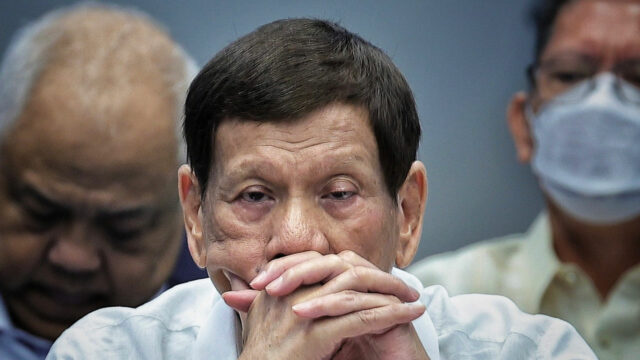
FORMER PRESIDENT Rodrigo R. Duterte — OFFICIAL FACEBOOK ACCOUNT OF THE SENATE OF THE PHILIPPINES

International Criminal Court (ICC) prosecutors told judges on Tuesday that former Philippine President Rodrigo R. Duterte carried out a nationwide campaign of state-backed killings, presenting what they described as evidence of a coordinated plan that targeted thousands under the cover of anti-drug police operations.

In submissions on the merits before the court’s Pre-Trial Chamber I, the Office of the Prosecutor said Mr. Duterte expanded the “Davao model” — a strategy he developed as mayor of Davao City against illegal drugs — to the national level after taking office in June 2016.

Prosecutors are seeking to establish responsibility for 14 murders of “high-value targets” and 45 murders or attempted murders during neighborhood operations, as part of charges of crimes against humanity.

“Mr. Duterte campaigned for the presidency on the basis that if elected, he would implement his Davao model of killing on a national scale,” trial lawyer Edward Jeremy told judges in a livestreamed hearing at the ICC. “Once sworn in, this is exactly what he did.”

At the center of the case is “Project Double Barrel,” launched on Mr. Duterte’s first full day in office through a police circular issued by then Philippine National Police chief Ronald M. Dela Rosa. The plan had two components: Project Tokhang, which focused on street-level suspects in poor communities, and Project HVT, aimed at high-value targets.

Prosecutors pointed to the repeated use of the word “neutralize” in police reports. While the term can mean to stop a threat, Mr. Jeremy cited insider testimony claiming it was widely understood within the police force as an order to kill.

“They used the word neutralize to emphasize the kill order of President Duterte,” one witness said in a deposition presented in court.

Judges were also shown evidence of what prosecutors described as a “PRRD list” — a roster after the President’s initials containing names and photographs of drug suspects.

The list functioned as a target registry, according to an insider witness. “Basically, the PRRD list is a dead list,” the witness said, adding that some people named were later killed.

Prosecutors cited the case of Rolando Espinosa, mayor of Albuera, Leyte, who was publicly identified by Mr. Duterte in 2016 and later shot dead inside a jail cell. Police said he died in a shootout, but prosecutors alleged the scene was staged.

The Office of the Prosecutor also relied on Mr. Duterte’s televised speeches to argue intent and command responsibility, including remarks in which he told security forces to kill suspects and promised protection.

Defense lawyers are expected to respond as proceedings continue. Prosecutors said almost 1,500 people had been killed in anti-drug operations by January 2017. — Erika Mae P. Sinaking

Philippines revises lower float plan after Indonesia MSCI fiasco

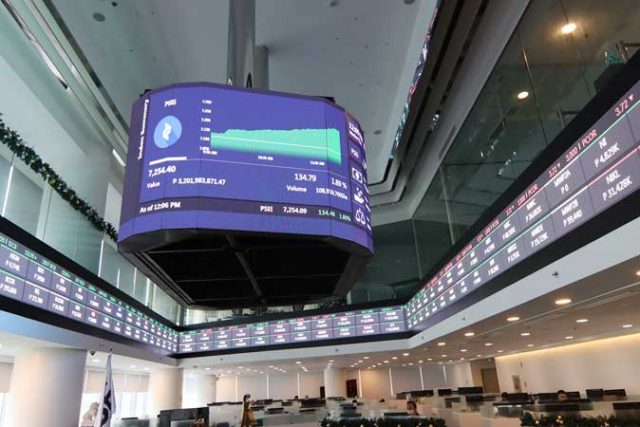
BW FILE PHOTO

The Philippines is dialing back plans to ease its free float requirements, after neighboring Indonesia contended with a market meltdown following concerns over ownership of tightly-held listed firms.

The Securities and Exchange Commission has set a minimum free float of 15% for large listings, according to a newly released circular on Tuesday. It had initially aimed to bring the floor down to 12% from the current level of 20%, based on a draft it circulated to market participants in December.

The adjustment comes as index compiler MSCI Inc. in January cracked down on Indonesia over the investability of its stocks, partly due to tightly-held ownership of its listed firms. Indonesian stocks saw their worst two-day rout in nearly three decades at one point after MSCI warned it could be downgraded to frontier market status.

According to the new rules, Philippine companies that have an expected market capitalization of more than P50 billion ($865 million) at the time of listing must have a minimum initial public ownership of 15%.

Regulators could allow a lower minimum IPO requirement for “exceptionally large” listings if it determines that this wouldn’t impair market liquidity, investor protection and orderly trading. Such accommodation should not go lower than 12%, it said.

In the earlier draft, the regulator had considered allowing a minimum 12% float for companies with an expected market capitalization of over 150 billion pesos. The SEC has now set the threshold at no less than 200 billion pesos in the latest rules.

The SEC has scrapped its “one-size-fits-all” approach in the new rules, adjusting the required free float based on the size of the listing, subject to a minimum offer size.

The overhaul caps months of public debate as companies say stringent requirements deter them from going public, while authorities look to encourage better investor participation in the stock market.

The move could clear the way for the IPO of local fintech leader GCash, which had argued that a 20% minimum float was too high for a potential offering that would value the e-wallet provider at at least $8 billion. The company previously called for the easing of float rules as it weighs a possible IPO, potentially in the second half of 2026, Bloomberg News reported earlier, citing people with knowledge of the matter. — Bloomberg

Philex Mining profit rises 15% on stronger metal prices

PHILEXMINING.COM.PH

Philex Mining Corp. reported a 14.75% increase in attributable net income to P929.69 million for 2025 from P810.2 million a year earlier, driven by higher gold and copper prices.

In a press release on Tuesday, the listed miner said revenues rose 8.21% to P8.85 billion in 2025 from P8.18 billion previously.

“Gold and copper prices remained at high levels throughout the year, while foreign exchange rate also improved in the last quarter,” Philex said.

According to the company, realized gold prices reached a record $4,338 per ounce in the fourth quarter of 2025, while copper peaked at $5.24 per pound during the same period and averaged $4.56 per pound for the year.

Stronger metal prices helped offset weaker output, as gold production fell 20.66% to 24,358 ounces from 30,702 ounces in 2024.

Copper production also declined 8.21% to 18.16 million pounds from 19.78 million pounds previously.

“Metal prices were our saving grace last year. There will always be uncertainties ahead, but we place our trust in the unwavering commitment and resilience of our Philex workforce,” Philex Chairman Manuel V. Pangilinan was quoted as saying in the statement.

Philex said the Silangan Project in Surigao del Norte, being developed by its wholly owned subsidiary Silangan Mindanao Mining Co. Inc., is in the final stretch toward its target first metal pour by the end of the first quarter.

“We are already in the last lap—just a few more weeks to the finish line—to complete the development component of the operations of our Silangan Project,” Mr. Pangilinan said.

The company said in an earlier disclosure that the Silangan project is expected to deliver an average annual output of about 81 million pounds of copper and 34,000 ounces of gold during its first phase.

The company also said operational challenges at its Padcal Mine in Benguet are expected to weigh on performance in the near term, as the aging facility continues to face technical constraints.

In January, the company reported a structural support failure in a section of Padcal’s mill plant, which negatively affected daily production.

Philex said it has implemented measures to stabilize operations, including the construction of a bypass crushing line to support a minimum sustainable milling capacity.

The company added that it is reinforcing crushing capacity and implementing a phased ramp-up in tonnage, with incremental improvements targeted by the second quarter and further optimization scheduled toward midyear.

Philex is one of three Philippine units of Hong Kong-based First Pacific Co. Ltd., the others being Metro Pacific Investments Corp. and PLDT Inc.

Hastings Holdings, Inc., a unit of PLDT Beneficial Trust Fund subsidiary MediaQuest Holdings, Inc., has an interest in BusinessWorld through the Philippine Star Group, which it controls. —Vonn Andrei E. Villamiel

Mexico weighs legal action after Musk links president to drug cartels

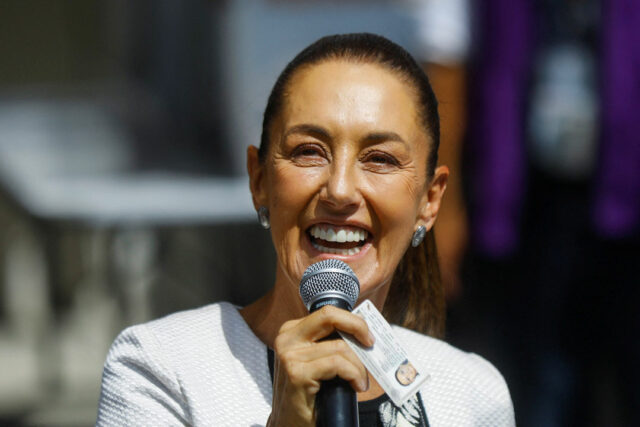
Mexico President Claudia Sheinbaum — REUTERS

MEXICO CITY — Mexican President Claudia Sheinbaum said on Tuesday she is considering legal action following a comment by tech billionaire Elon Musk, the world’s richest man, that alleged she was connected to drug cartels.

Mr. Musk’s post on X followed the capture and killing of Jalisco New Generation Cartel (CJNG) leader Nemesio Oseguera, “El Mencho,” by Mexican security forces.

In the post, Mr. Musk responded to a 2025 video of Ms. Sheinbaum discussing cartel violence and alleged that she was “saying what her cartel bosses tell her to say.” He did not provide further evidence.

“We are considering whether to take legal action,” Ms. Sheinbaum said during her daily morning press conference, adding that government lawyers are reviewing the matter.

STRONG FREE SPEECH PROTECTIONS

Ms. Sheinbaum could face difficulty suing Mr. Musk for defamation in the US because of strong legal protections for free speech. To prevail in a defamation case against Mr. Musk in the US, Ms. Sheinbaum would need to prove Mr. Musk knowingly said something false about her or recklessly disregarded the truth when he said it.

Tesla, Mr. Musk’s auto company, did not immediately reply to a request for comment on Ms. Sheinbaum’s remarks.

In the 2025 video, Ms. Sheinbaum said a return to a “war on drugs” was not feasible.

“Returning to the war on drugs is not an option … it is outside the framework of the law,” she said.

The military offensive on cartels led by former President Felipe Calderon in 2006 led to bloody turf battles as gangs splintered, triggering a spiral of violence that many analysts see as a contributing cause to still-high homicide rates.

Ms. Sheinbaum said she expected security to continue to normalize in Mexico after cartel members coordinated a series of roadblocks and arson attacks after the government’s Sunday operation against Mr. Oseguera.

Asked if the operation marked a return to a more violent security stance, Ms. Sheinbaum said this would never be the case.

“The detention of a suspected criminal with an arrest warrant can generate this type of circumstance, but we are looking for peace, not war,” she said.

Ruling MORENA Party president Luisa Alcalde also reacted to the post on social media, saying Mr. Musk should use his platform and X social media network to fight drug consumption, addiction, disinformation and stop the promotion of narco culture.

“Wealth does not give moral authority,” she said. “The lives that are lost in this fight, often fueled by consumption in other countries, are worth infinitely more than any fortune amassed in Silicon Valley.”

Over 130,000 people are missing in Mexico, where much of the country’s violence is linked to drug cartels that sell products to and obtain firearms from the United States. — Reuters

Deal with US within reach ‘only if diplomacy is given priority’, Iran’s foreign minister says

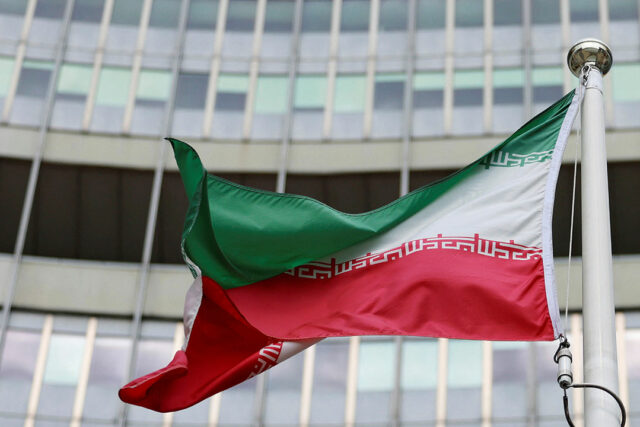
THE Iranian flag flutters outside the IAEA headquarters in Vienna, Austria, June 9, 2025. — REUTERS/LISA LEUTNER

DUBAI — Iran’s Foreign Minister Abbas Araqchi said on Tuesday that a deal with the US was “within reach, but only if diplomacy is given priority”, days ahead of an expected fresh round of talks between the two sides in Geneva.

The talks are set to take place on Thursday in Geneva, a senior US official said on Monday, with US envoys Steve Witkoff and Jared Kushner slated to meet with an Iranian delegation for the negotiations.

The two countries resumed negotiations earlier this month as the US builds up its military capability in the Middle East. Iran has threatened to strike US bases in the region if it is attacked.

“We have a historic opportunity to strike an unprecedented agreement that addresses mutual concerns and achieves mutual interests,” Mr. Araqchi said in a post on X.

The Iranian top diplomat said his country would resume the talks with “a determination to achieve a fair and equitable deal in the shortest possible time”.

Earlier, Iranian Deputy Foreign Minister Majid Takht-Ravanchi said Iran was ready to take all necessary steps to reach a deal with the United States.

“We are ready to reach an agreement as soon as possible. We will do whatever it takes to make this happen. We will enter the negotiating room in Geneva with complete honesty and good faith,” Mr. Takht-Ravanchi said in comments carried by state media.

White House Press Secretary Karoline Leavitt said on Tuesday that US President Donald Trump’s first option was always diplomacy but that he was willing to use lethal force if necessary.

A senior Iranian official told Reuters on Sunday that Tehran would seriously consider a combination of sending half of its most highly enriched uranium abroad, diluting the rest and taking part in creating a regional enrichment consortium – an idea periodically raised during years of Iran-linked diplomacy.

Iran would do this in return for US recognition of Iran’s right to “peaceful nuclear enrichment” under a deal that would also include lifting economic sanctions, the official said.

“If there is an attack or aggression against Iran, we will respond according to our defense plans… A US attack on Iran is a real gamble,” Mr. Takht-Ravanchi added.

Indirect talks between the two sides last year brought no agreement, primarily due to friction over a US demand that Iran forgo uranium enrichment on its soil, which Washington views as a pathway to a nuclear bomb.

Iran has always denied seeking such weapons.

The US joined Israel in hitting Iranian nuclear sites last June, effectively curtailing Iran’s uranium enrichment, with Mr. Trump saying its key nuclear sites were “obliterated”. But Iran is still believed to possess stockpiles enriched previously, which Washington wants it to relinquish. — Reuters

France’s Macron accepts resignation of Louvre museum chief after jewel theft

A CROWN worn by French Empress Eugenie, which was targeted by thieves during a heist at Paris’ Louvre Museum on Oct. 19 but was dropped during their escape, on display in this undated still frame from a video. — LOUVRE MUSEUM/HANDOUT VIA REUTERS

PARIS — French President Emmanuel Macron accepted the resignation on Tuesday of the head of Paris’ Louvre museum, which has been grappling with the fallout from a high-profile jewel heist and rolling strikes.

Laurence des Cars tendered her resignation, which Mr. Macron accepted, “praising an act of responsibility at a time when the world’s largest museum needs calm and a strong new impetus to successfully carry out major projects involving security and modernization”, his office said.

Ms. Des Cars has faced intense criticism since burglars made off in October with jewels worth an estimated $102 million that are still missing, exposing glaring security gaps at the world’s most-visited museum.

Strikes over pay and conditions since December have also led to regular closures and added to a list of woes that included two water leaks as well as a massive ticket fraud investigation.

Critics including the state auditors’ office have questioned the museum’s low spending on security and infrastructure maintenance while it made lavish purchases of new artwork, only a quarter of which is open to the public, and spent heavily on post-pandemic relaunch projects. — Reuters

Lazada shifts to trust-focused strategy from price-driven sales

CARLOS BARRERA, CEO of Lazada Philippines — LAZADA/BW FILE PHOTO

Lazada Philippines is emphasizing consumer trust and product authenticity in its upcoming March sales campaign, as e-commerce platforms aim to strengthen shopper confidence and move beyond purely discount-driven promotions.

Carlos O. Barrera, Lazada Philippines chief executive officer, said the upcoming 3.3 sale, happening from March 2 at 8:00 p.m. to March 5, is designed to give Filipino shoppers real value they can trust.

“With Global Brands at LazMall, expanded member rewards, and flexible payment options, we’re helping consumers make smarter, more confident purchasing decisions while building long-term trust in e-commerce,” Mr. Barera said in a statement released on Monday.

In the upcoming sale, Lazada assured authentic products, secure payments, dependable delivery, and after-sales support.

The platform noted that this underscores their commitment to a safer and more reliable shopping experience.

Meanwhile, global brands such as Carote, LocknLock, and Decathlon are also set to participate in the 3.3 sale.

Brand-led exclusives within LazMall’s Global Brands will be highlighted in the sale, in addition to platform-wide promotions.

Lazada Group is a pioneering e-commerce platform in Southeast Asia, with about 160 million active users and over one million active sellers each month.— Edg Adrian A. Eva

PHL faces climate-related credit risk

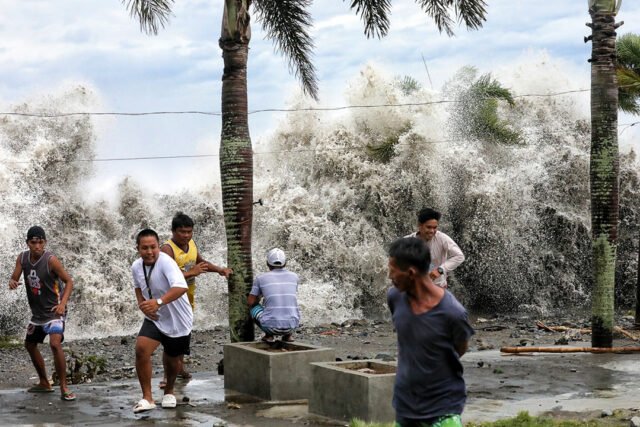
STRONG WAVES hit the shore in Dingalan, Aurora amid a storm surge from Typhoon Uwan in this file photo. — PHILIPPINE STAR/WALTER BOLLOZOS

By Katherine K. Chan, Reporter

THE PHILIPPINES is among the countries most vulnerable to climate-related credit risks as extreme weather imperils the country’s economic and fiscal stability, Fitch Ratings said.

“We expect physical climate risks to have an adverse (effect) on the Philippines economy and public finances through various channels,” Edward Parker, Fitch Ratings managing director and global head of research, sovereigns and supranationals, told BusinessWorld in an e-mail.

“Unfortunately, more frequent and severe storms and flooding will cause loss of life, and damage to homes, infrastructure and business that will cause disruption to economic activity, associated loss of tax revenues and rebuilding costs,” he added.

In a recent report, Fitch determined that the Philippines faces one of the highest physical risk pressures on credit by 2050.

“Fitch Ratings believes the Philippines is one of the sovereigns most exposed to physical climate risks, based on an array of data and climate projections that feed into our Climate Vulnerability Signals,” Mr. Parker said. “It is particularly exposed to more frequent and severe storms and floods, and to a lesser extent to sea level rise.”

“We do not view it as particularly exposed to transition risks,” he added.

In the Climate Vulnerability Signals (Climate.VS) report, Fitch analyzed sovereign credit profiles’ potential exposure to climate-related risks from 2030 to 2050 by scoring them on a scale of 0 to 100, based on both physical and transition risks.

Out of the 119 countries analyzed, 60 countries, including the Philippines, were at risk of a credit rating downgrade due to issues arising from climate concerns.

Physical risks include heatwaves and wildfires, droughts, storms, floods and landslides, and a rise in sea levels.

Meanwhile, transition risks pertain to fossil fuel dependence or the exposure of major fossil fuel producers to a projected decline in global demand for fossil fuels as well as green energy costs or the cost of de-carbonization.

Based on the debt watcher’s Climate.VS, the Philippines scored 55 out of 100 in terms of overall physical risk (VSp).

A VSp of 50 means Fitch Ratings could bring the country’s credit rating one notch lower.

Fitch Ratings last affirmed its “BBB” long-term foreign currency issuer default rating and “stable” outlook for the Philippines in April last year.

A “stable” outlook means the Philippines will likely maintain its rating in the next 18 to 24 months.

The Philippines usually encounters about 20 storms yearly due its proximity to the Pacific Ocean, according to the state weather bureau Philippine Atmospheric, Geophysical and Astronomical Services Administration (PAGASA).

In 2025, 23 typhoons hit the country, affecting millions of Filipinos and leaving billions of pesos worth of damage nationwide.

Fitch’s Mr. Parker said such climate risks could disrupt the local agriculture sector, potentially causing food prices and overall inflation to spike.

“Public expenditure aimed at mitigating some of the effects could also add to budget deficits, other things equal,” he added.

Considering this, the country should invest in flood control and disaster preparedness initiatives to ensure the economy has adequate buffers against climate-related risks, Mr. Parker noted.

“Investment in infrastructure such as sea and flood defenses in critical areas and in disaster preparedness capacity can help countries to mitigate some of the impact of physical climate risks,” he said. “They can also help to adapt to physical risks through careful consideration of planning, development and land use.”

Last year, extensive flooding revealed substandard or nonexistent flood control projects across the country. These practices were later linked to Public Works officials, lawmakers and contractors who allegedly received kickbacks from the government’s infrastructure program.

Fitch Ratings earlier told this paper that the graft scandal also risks the Philippines’ credit rating due to its impact on political stability, fiscal policy implementation, as well as business and consumer confidence.

PAGASA expects four to 11 tropical cyclones to hit the country until July this year, with zero to one storm monthly until April and one to two each in May and June.

Marcos to accelerate reforms as growth falters

President Ferdinand R. Marcos, Jr. participates in a fireside chat during the Association of Southeast Asian Nations Editors and Economic Opinion Leaders Forum at a hotel in Makati City, Feb. 24. — PHILIPPINE STAR/PPA POOL/NOEL B. PABALATE

By Chloe Mari A. Hufana, Reporter

THE ADMINISTRATION of Philippine President Ferdinand R. Marcos, Jr. is accelerating structural reforms and diversifying trade ties to shield the economy from global volatility following sluggish economic growth last year.

During the Association of Southeast Asian Nations (ASEAN) Editors and Economic Opinion Leaders Forum in Makati City on Tuesday, Mr. Marcos said the government is pushing the bureaucracy to make it more responsive to policy shifts as external shocks, from geopolitics to supply chain disruptions, become more frequent.

Mr. Marcos cited trade negotiations with nontraditional partners such as Latin American nations, members of the European Union (EU) and Canada, among others.

The President framed the next phase of his administration around strengthening economic resilience after the pandemic and amid what he described as increasingly complex geopolitical tensions.

While the government had expected a more stable global environment after the pandemic, he said successive economic and political shocks have required a recalibration.

“One of the main things that we are striving for is to provide stability,” he said. “Whatever shocks come, we are more robust, we are resilient and we are able to adjust.”

That balancing act, preserving policy continuity while remaining agile, will define Manila’s economic strategy in the coming years, he added.

Halfway through his six-year term, Mr. Marcos said that embedding reforms deep enough to outlast political cycles will be key to turning short-term growth into a long-lasting one.

The Philippines’ gross domestic product (GDP) growth slowed to a post-pandemic low of 4.4% in 2025, after a graft scandal affected government spending, consumption and investor and consumer confidence.

The Marcos administration is now targeting GDP growth of 5-6% in 2026, 5.5-6.5% in 2027 and 6-7% in 2028. These new targets are slightly lower than the earlier 6-7% growth goal for 2026 to 2028.

“Flood control problems, scandal, whatever you want to call it, have certainly played a very large part in that,” Mr. Marcos said, referring to his exposé about anomalous flood control projects last July in his annual address to Congress.

“Unfortunately, it had to be done. It is one of those things where you just have to rip the band-aid off. There was no easy way to do it. And otherwise, then the old practices would continue and the Philippines would flatline.”

The President also blamed the Ukraine-Russia war and disruptions in global commodity markets, which have also affected the Philippines through higher food and energy prices.

“It is uncertainty that we are fighting with,” he noted.

John Paolo R. Rivera, a senior research fellow at the Philippine Institute for Development Studies, said the Philippines is “moderately sensitive” to global volatility but generally less trade-dependent than export-heavy peers such as Vietnam and Thailand.

“The main transmission channels of global volatility are oil prices (import dependence), exchange rate pass-through to inflation, and financial conditions (portfolio flows, risk-off episodes),” Mr. Rivera said via Viber.

Compared with regional peers that are more deeply integrated into global manufacturing supply chains, the Philippines faces smaller exposure to abrupt trade disruptions, he noted.

Mr. Rivera said the country’s defenses include international reserves, a flexible exchange rate, a predominantly domestic-currency public debt profile and resilient forex (foreign exchange) inflows from remittances and services.

Mr. Rivera said energy and logistics costs, limited export diversification and uneven infrastructure execution may hamper competitiveness and the economy’s recovery.

He said productivity gains and investment in infrastructure will be critical to sustaining long-term growth.

University of Asia and the Pacific Associate Professor George N. Manzano said the Philippines is an open economy but is less exposed to global trade shocks than more export-dependent ASEAN peers.

He noted the country’s trade as a share of GDP is smaller than in Singapore, Vietnam and Thailand, meaning external disruptions transmit with somewhat less intensity.

GlobalSource: Rate cut a ‘wake-up call’ to Malacañang, Congress

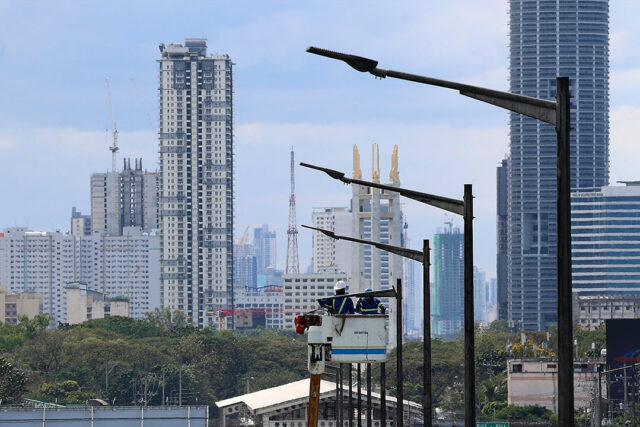
WORKERS are seen repairing streetlights along Commonwealth Avenue, Quezon CIty, Feb. 9, 2026. — PHILIPPINE STAR/MIGUEL DE GUZMAN

THE BANGKO SENTRAL ng Pilipinas’ (BSP) recent policy rate reductions may fall short in boosting the economy amid slow monetary policy transmission and persistent structural issues that hinder growth, GlobalSource Partners said.

In a commentary published late on Monday, GlobalSource Principal Advisor Diwa C. Guinigundo said the Philippine economy now needs structural reforms, stronger fiscal coordination and restored confidence beyond just an accommodative monetary policy.

“Despite substantial cumulative rate reductions, economic momentum has yet to respond decisively,” said Mr. Guinigundo, who was also a former deputy governor at the BSP.

“Private consumption remains soft, business confidence weak and tentative, and investment activity highly uneven.”

In 2025, the country’s gross domestic product (GDP) grew by 4.4% — the slowest since the pandemic — after GDP expanded by 3% in the fourth quarter.

This came amid the flood control corruption scandal, wherein some Public Works officials, lawmakers and private contractors allegedly received kickbacks from some infrastructure projects.

The scandal dampened consumer and business confidence, and dragged household consumption, investments and government spending.

This pushed the Philippine central bank to extend its easing cycle as it sought to spur domestic demand and boost the sluggish economy.

Last week, the BSP delivered its sixth straight 25-basis-point (bp) cut, marking the third one prompted by growth concerns from the flood mess. This brought the key policy rate to an over three-year low of 4.25%.

The BSP has now slashed benchmark borrowing costs by a cumulative 225 bps since it began easing in August 2024.

“The recent rate cut therefore reflects both accommodation and caution, a wake-up call to Malacañang and Congress. It signals support for the economy, while recognizing diminishing returns from further easing in the absence of complementary reforms,” Mr. Guinigundo said.

“Ultimately, sustainable growth will depend not only on calibrated monetary action but also on structural improvements, fiscal coordination, and renewed confidence in the broader economic environment.”

Mr. Guinigundo said the Monetary Board could have been more cautious by holding steady at its Feb. 19 meeting, especially as inflation is expected to rise until 2027.

“In addition, a pause could have been more circumspect: inflation forecasts for 2026 and 2027 during the last policy meeting of the Monetary Board were admitted to have escalated but not disclosed. This is indicative of mounting price pressures and upside risks, a call to a more calibrated monetary stance,” he added.

The BSP had said that it now sees headline inflation potentially breaching the midpoint of its 2%-4% target by the second half to average 3.6% this year, versus its 3.2% estimate previously.

It then expects inflation to ease to 3.2% in 2027, which is still a tad faster than its earlier projection of 3%.

REALITY OF MONETARY POLICY
Mr. Guinigundo also noted that the local banking sector has tightened its credit standards in response to the economic slowdown, even as the BSP has been accommodative for over a year.

This, he said, has created more lags in monetary policy transmission.

“Banks have acted pro-cyclically: even as the BSP adopted a substantially accommodative stance, many institutions tightened their credit standards, reflecting heightened risk aversion and balance sheet caution,” Mr. Guinigundo said. “Such tightening dampens loan growth precisely when credit support is most needed, muting the intended stimulus of lower policy rates.”

BSP data showed that bank lending growth was at a near-two-year low of 9.2% at end-December. December 2025 also marked the first time since April 2024 that bank lending grew at a single-digit pace.

“This dynamic underscores a central reality — monetary policy cannot compel risk-taking or override structural constraints,” Mr. Guinigundo said.

“Logistics inefficiencies, supply bottlenecks, regulatory uncertainty, and external vulnerabilities continue to weigh on growth. Interest rate adjustments alone cannot resolve these deeper impediments,” he added.

Following the Feb. 19 meeting, BSP Governor Eli M. Remolona, Jr. left the door open to supporting economic growth through monetary policy, provided that inflation remains in check as part of the central bank’s price stability mandate.

However, he noted that the policy path ahead is now less certain as he acknowledged that monetary policy easing may be insufficient to stimulate the economy.

Further support would have to come from the fiscal side, the central bank chief added.

Meanwhile, SM Investments Corp. Group Economist Robert Dan J. Roces said inflation will likely settle within the central bank’s target band until next year.

He added that the BSP “may or may not cut” further, with future policy decisions hinging on upcoming economic data.

“Well, the BSP already said that we’re nearing the end of the easing cycle. So, that says a lot,” Mr. Roces told reporters on the sidelines of the Makati Business Club 2026 Business-Government Forum on Tuesday held in Makati City.

“Because, I think with inflation managed and growth kind of recovering, the policy will matter more,” he added. “But again, it has to be measured. So, they will have to be more data-dependent.” — Katherine K. Chan with inputs from Vonn Andrei E. Villamiel

ASEAN to discuss unified stand on US tariffs

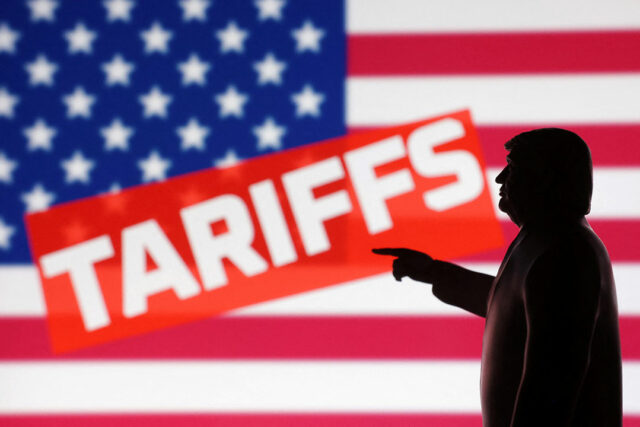
A 3D-printed miniature model depicting U.S. President Donald Trump depicting US flag and word “tariffs” in this illustration taken, April 17, 2025. — REUTERS

By Justine Irish D. Tabile, Senior Reporter

THE PHILIPPINES is eyeing to lead the regional discussions to come up with a unified stance on the US reciprocal tariffs through its Association of Southeast Asian Nations (ASEAN) chairship, the Department of Trade and Industry (DTI) said.

Trade Secretary Ma. Cristina A. Roque said that the US tariffs will be among the topics that the trade ministers will discuss next month.

The ASEAN senior economic ministers will hold a retreat in Manila on March 13.

“We haven’t spoken with the other members of ASEAN because for now we are really focused on the ASEAN chairship,” Ms. Roque told reporters on the sidelines of the ASEAN Editors and Economic Opinion Leaders Forum on Tuesday.

Over the weekend, US President Donald J. Trump announced that he will be imposing a new 15% duty on US imports starting Feb. 24.

However, Reuters reported on Tuesday that the US imposed an additional 10% tariff on all goods not covered by exemptions, citing a notice issued by US Customs and Border Protection said.

The Financial Times quoted a White House official saying the increase up to 15% would come later. Reuters could not immediately confirm this.

Mr. Trump’s new tariff policy comes after the US Supreme Court ruled that he had exceeded his authority when he imposed the reciprocal tariffs.

The ruling had invalidated the tariffs imposed by the Trump administration on China, Japan, South Korea, Taiwan and ASEAN economies. Most Philippine-made goods had faced a 19% US tariff.

Finance Secretary Frederick D. Go said that the Philippines is still in a good spot, despite the US tariff developments, as the country continues to dialogue with counterparts in the US.

“So, we continue to engage with them. As I always say, so far, the majority of our semiconductors are exempted, and the majority of our key agricultural exports are exempted,” he said on the sidelines of the event.

“So, I’d say we are in a good spot, but of course we will continue to engage with our counterparts there, which is the US Trade Representative,” he added.

Sought for comment, Philippine Exporters Confederation, Inc. President Sergio R. Ortiz-Luis, Jr. said that a collective response from ASEAN will be good not only for the Philippines but for the region as a whole. 

“That would be nice because that is where the collective call for exemptions on agricultural products and for the tariff on electronics to be put on hold,” he told BusinessWorld in a phone interview.

“If we can negotiate, regionally, the exemptions, that is also better. So, we should not stop talking to them,” he added.

However, Mr. Ortiz-Luis said that exporters are still in the dark about whether or not the new US tariff will be imposed on the Philippines.

While the country already agreed to a 19% reciprocal tariff, there was no final deal that was signed.

Reuters reported that Mr. Trump had earlier warned countries that if they backed away from signed trade deals with the US, they may be slapped with the higher duties.

“Some people are saying that those who agreed to tariffs higher than the 15%, which include us as we agreed to 19%, will not be covered by the 15% tariff,” he said.

“And on exemptions, it will be better if the exemptions are kept; so much the better, but nobody knows if Trump will remove the exemption,” he added.

If the exemptions are removed, especially on semiconductors and some electronic products, Mr. Ortiz-Luis said that electronics companies might move to other markets that are more competitive.

“At 10% we are still okay, but at 15%, we don’t already know what the supply chain will do. Until it is very clear, we should not stop talking with them,” he added.

Meanwhile, Ms. Roque said the talks with US counterparts have been continuous despite recent developments, but discussions on exemptions have not yet started.

“We have not spoken about that, but of course once there are changes, we will discuss, and then definitely we will give out a statement. But for now, we are just still in talks,” she said.

She said that the department is still hopeful of seeing $116 billion to $120 billion in total exports this year, aligned with the target set under the Philippine Development Plan.

Meanwhile, Mr. Go said that what the US reciprocal tariffs revealed is the need for the Philippines to find new markets.

“We have to create new markets for the Philippines to trade with, to sell to, which is why the activities being engaged in by the economic team and by DTI, like signing more and more economic partnership agreements and free trade agreements, are really important for our industries to be able to grow,” he added.