Home Blog Page 1685

AMRO says impact of tariffs on ASEAN+3 markets has been mild
REUTERS

FINANCIAL MARKETS in the ASEAN+3 economies posted mild reactions to the US tariffs announced in early April, ASEAN+3 Macroeconomic Research Office (AMRO) said.

The subsequent 90-day pause on most tariffs, however, have kept markets volatile, and investor confidence remains fragile, AMRO said in a report on Tuesday.

“The initial market shocks in ASEAN+3 economies were milder compared to the US, where the S&P 500 fell by 12.1%,” AMRO said.

The S&P 500 declined by more than 10% and shed $6 trillion in market value, the largest two-day loss in US stock market history.

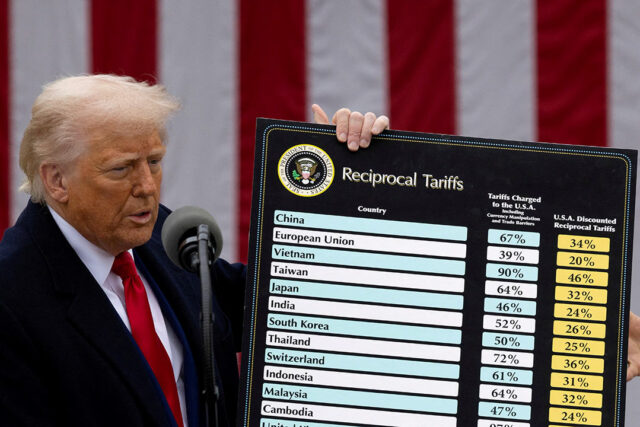
US President Donald J. Trump on April 9 paused the reciprocal tariff scheme for 90 days, but maintained a baseline 10% tariff on almost all US imports.

The Philippines was assigned a 17% reciprocal tariff, the second lowest in Southeast Asia.

AMRO noted that US Treasury bond yields surged while regional yields declined. The dollar initially depreciated by 1.3%, contributing to an appreciation in all regional currencies. 

The peso closed at a near six-month high of P57.095 to the dollar, against the March 27 finish of P57.215.

This was its best close since the P57.02 posted on Oct. 9, 2024.

AMRO said the 90-day pause resulted in a recovery in regional stocks, while equities in the US remained subdued.

Most regional economies have experienced substantial portfolio outflows, as US investors pulled back from funds investing in emerging markets.

“Overall, the developments around the tariffs in early April created significant uncertainty around US policies and economic stability, contributing to weaker equity markets, heightened volatility, weaker US dollar and a sharp rise in US Treasury yields,” AMRO said.

It said that ASEAN+3 economies vary by the drivers of market stress.

For China, bond market volatility was the primary impact, whereas Thailand experienced heightened foreign exchange volatility.

“Only the Philippines showed minimal change. Thus far, the spike has been primarily driven by increased market volatility,” AMRO said.

AMRO warned of potential pockets of vulnerability as seen in surges in sovereign credit default swaps, equity price movements, financial market stress, and probability of default.

JP Morgan estimates a 60% probability of the world economy going into recession by year’s end, up from 40% in March.

“As unpredictability of trade policies remains, policymakers need to stand ready to implement measures to help stabilize the financial markets, enhance market confidence and support growth,” AMRO said. — Aubrey Rose A. Inosante
NFA rice stocks equivalent to 9 days’ consumption

PHILIPPINE STAR/MIGUEL DE GUZMAN

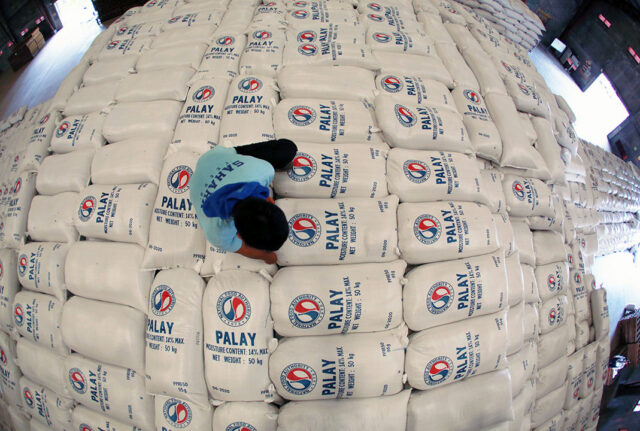
THE National Food Authority (NFA) said it built up reserves equivalent to nine days’ consumption — 7.17 million 50-kilogram bags of milled rice, the highest inventory level since the end of 2020.

The NFA said farmers were encouraged to sell by the agency’s palay (unmilled rice) buying price that averaged P27 a kilo last year and around P24 this year.

The NFA said it still has ample funds to procure around 500,000 metric tons (MT) of palay — equivalent to approximately 6.3 million bags of milled rice.

“So far this year, we’ve spent only P2.6 billion of the P14.6 billion available to us for palay procurement. This includes unspent funds of P5.6 billion carried over from the 2024 budget,” NFA Administrator Larry Lacson said.

The NFA said it is upgrading its storage infrastructure, including warehouses and handling facilities to accommodate a higher stockpile of 555,000 MT of rice, or 880,000 metrics tons of palay.

Under the revised Rice Tariffication Law, the NFA is tasked with maintaining 15 days of reserves — up from the previous nine-day requirement. All stocks in this reserve are required to be sourced from farmers.

The NFA said when the law was first implemented in 2019, it held reserves equivalent to just over 492,000 MT, much of it composed of imported rice.

Since 2019, the NFA has not been allowed to sell rice directly to the public.

The grains agency said its current mandate limits public sales to “aging stocks” or milled rice that has been stored for at least two months since processing.

The NFA is set to auction its older stock, citing low takeup from local government units (LGUs), which were being counted on to help sell rice released onto the market after the Department of Agriculture (DA) declared a rice food security emergency on Feb. 3.

The declaration allowed the NFA to release stocks to government agencies, LGUs, and government-backed markets.

However, Mr. Lacson said earlier this month the volume of rice the NFA had released since the emergency declaration was only 20,000 bags — well below the monthly target of 500,000 bags.

Rice imports fell 46% year on year to 641,000 MT in the year to date ending March 13. The US Department of Agriculture reported in March that Philippine rice imports will likely decline 1.9% this year due to an expected increase in domestic production.

The farmgate price of palay continues to decline, with the government estimating that it fell 24.4% year on year in March to an average of P18.57 per kilogram.

As of April 11, the NFA held 1.1 million bags of milled rice, including ageing stock.

Reserves are typically used to support vulnerable communities, potentially at prices even lower than the P29-per-kilo subsidized rice sold in government-run programs, the NFA said, citing Agriculture Secretary Francisco Tiu Laurel, Jr.

He said the DA is exploring “ways to better manage the NFA’s ageing rice stocks.” — Kyle Aristophere T. Atienza

Luggage maker considering manufacturing in PHL

SCIENCEPARK.COM.PH

LUGGAGE maker PLG Prime Global Co., a US-Taiwan company, is considering setting up a manufacturing facility in the Philippines, the Philippine Economic Zone Authority (PEZA) said.

In a statement on Tuesday, PEZA said it met with representatives of PLG Prime to discuss opportunities presented by the Corporate Recovery and Tax Incentives for Enterprises to Maximize Opportunities for Reinvigorating the Economy (CREATE MORE) regime.

“PLG Prime was accompanied by Manila Economic and Cultural Office (MECO) board member Wilson Tecson and PEZA investment promotion partner Jayson Sze during the meeting in which it presented plans to build a plant in Hermosa, Bataan,” PEZA said.

MECO is the de facto Philippine diplomatic post in Taiwan.

PLG Prime currently has manufacturing facilities in Taiwan, China, and the US.

“They operated in the Philippines from 2018 to 2022 and then transferred their luggage manufacturing to China. But because of the reciprocal tariff, they want to revive their operations to be able to export to the US,” PEZA said.

“They have reserved a lot at the Hermosa Industrial Park, and they will put in bigger investments this time. The company will file their application within 15 days,” it added.

According to PEZA, apparel, footwear, and luggage manufacturing are among the industries the Philippines lost to China, Vietnam, and Cambodia.

“With the reciprocal tariffs, we hope to revive these industries in the Philippines. Currently, we have received serious inquiries from several investors with manufacturing facilities in the US, China, Taiwan, and even Vietnam,” PEZA Director General Tereso O. Panga said.

“When you’ve got American, Chinese, Taiwanese, and even Vietnamese manufacturers knocking on your door, you know something’s shifting, and it’s shifting towards our direction. The Philippines is back in the conversation,” he added.

The US imposed some of its highest tariffs on the Association of Southeast Asian Nations. Cambodia is facing a 49% tariff, followed by Laos (48%), Vietnam (46%), Myanmar (44%), Thailand (36%), Indonesia (32%), Malaysia (24%), and Brunei (24%).

The Philippines was assigned a 17% tariff, second only to Singapore’s baseline rate of 10%.

US President Donald J. Trump announced a 90-day pause on the reciprocal tariff scheme, allowing most trading partners to be charged a blanket 10% duty until July. — Justine Irish D. Tabile

Hog farms invited to join direct-sourcing scheme

PHILIPPINE STAR/ MICHAEL VARCAS

THE Department of Agriculture (DA) said on Tuesday that it will invite more hog farms to participate in a direct-sourcing scheme piloted by Food Terminal, Inc. (FTI), which supplies retailers with pork products at reduced cost due to the savings on logistics.

The announcement indicates plans to move forward from a pilot program between FTI and the Philippine subsidiary of Thailand’s Charoen Pokphand Foods PLC (CP Foods), which began supplying 100 live hogs daily for dispatch to a Caloocan slaughterhouse to expand the pork supply available to retailers.

The pilot program enabled participating retailers to offer pork at prices at least P20 below the maximum suggested retail price (MSRP) of P380 per kilo for liempo (belly) and P350 per kilo for pigue and kasim (leg and shoulder), the DA said in a statement.

Distributors source the pork directly from the Caloocan slaughterhouse, eliminating the need to transport hogs from multiple farms. This approach reduces logistics costs passed on to retailers and consumers.

“The pilot test has been very successful,” the DA said. “Over the first 21 days, we’ve handled more than 2,000 pigs, and participating sellers have been able to price liempo at P360 per kilo, and kasim and pigue between P330 and P340 per kilo.”

“We are inviting more hog farms to join this program. FTI guarantees prompt and proper payment.”

The DA on March 10 started implementing an MSRP price for pork, with a price of P300 per kilo set for fresh carcass or sabit ulo, P350 a kilo for kasim and pigue, and P380 per kilo for liempo.

The DA said on Tuesday that compliance with the MSRP remains at about 20% in 10 markets inspected by market monitors on Monday.

The DA attributed the weak compliance to farmgate prices, which it said exceeded the agreed-upon level of P230 per kilo, and “multiple layers of added costs” before pork reaches retailers.

“This week, we will begin issuing notices to stakeholders, requesting them to explain their inability to comply with the MSRP,” Agriculture Assistant Secretary for Consumer Affairs Genevieve Velicaria-Guevarra said.

She said the DA is working with the Department of Trade and Industry, which has enforcement authority on pricing matters.

Meanwhile, the DA said FTI aims to complete by May a cost-tracking system designed to monitor the movement of hogs from farms to retailers.

“The goal is to ensure each player in the supply chain earns a fair return, while shielding consumers from unjustified markups,” the DA said.

The cost of raising a pig is estimated at between P165 and P80 per kilo, according to the DA.

It said a farmgate price above P230 per kilo is an indication of profiteering, calling a margin of P50 to P65 per kilo — or roughly P5,000 to P6,500 per 100-kilo hog — a fair return. — Kyle Aristophere T. Atienza

Balisacan batting for more 2026 funding for DEPDev beyond initial offers from legislators

ARSENIO M. BALISACAN — PHILIPPINE STAR/KRIZ JOHN ROSALES

NATIONAL ECONOMIC and Development Authority (NEDA) Secretary Arsenio M. Balisacan will seek more funding for the socioeconomic planning body for 2026 after it is made into a department.

“For now, the 2026 is still going to be framed by the Department of Budget and Management (DBM). It’s not much for now, for 2026,” he told reporters during a briefing on April 14.

“Senator (Juan Miguel F.) Zubiri just indicated an additional P150 million during the hearings, but I hope it can be a little bit more than that,” Mr. Balisacan added.

NEDA will be reorganized into the Department of Economy, Planning, and Development (DEPDev) after President Ferdinand R. Marcos, Jr. signed Republic Act No. 1214 on April 10.

NEDA got P12.35 billion in the 2025 General Appropriations Act, up 3.35%.

As DEPDev, it will exercise oversight over the government’s planning, investment planning, budgeting and monitoring and evaluation functions. 

“But we are not asking much. I think we can build from what we have, and now that we are given a more focused mandate, I think that we can be more efficient in our use of resources,” he said. 

Mr. Balisacan also said the department will go on supporting local government units, especially at the regional and provincial levels, in the form of resource mobilization in planning, monitoring and evaluation.

It will also extend technical assistance to provinces in drafting their development plans and improving the capacity of their planners.

“This ensures that local needs can be given greater consideration and priority in national planning, making development more inclusive and responsive,” NEDA said.

The law takes effect on April 27, 15 days after its publication in a newspaper of general circulation last April 12. — Aubrey Rose A. Inosante

FAO designates 100 sites in PHL to receive climate-change projects

PHILSTAR FILE PHOTO

THE United Nations Food and Agriculture Organization (FAO) nominated 100 sites in the Philippines on Tuesday to receive climate-change mitigation projects.

Beneficiaries of the Adapting Philippine Agriculture to Climate Change (APA) Project include municipalities in the Luzon provinces of Apayao, Ifugao, Kalinga, Cagayan, Isabela, Camarines Norte, and Camarines Sur.

Municipalities in Bukidnon, Cotabato, Northern Mindanao, and Soccsksargen region are also on the list.

The priority sites were identified after vulnerability assessments and their readiness for climate resilient agriculture (CRA) interventions, the FAO said.

The seven-year initiative supported by $26 million from the Green Climate Fund and an additional $13 million co-financed by the DA and the weather service PAGASA is expected to directly support 205,000 farmers.

At least 45,000 farmers are expected to engage in agri-enterprise development and apply CRA interventions to priority crops.

The FAO said the working group for the APA Project recommended the validation of priority crops, “which will serve as key entry points for scaling up climate-resilient technologies.” — Kyle Aristophere T. Atienza

Building permit approvals fall 2.5% in February

JOSUE ISAI RAMOS FIGUEROA-UNSPLASH

APPROVED building permits declined 2.5% in February, a turnaround from the 4.8% growth posted a year earlier, the Philippine Statistics Authority (PSA) said in a report.

Citing preliminary data, the PSA said building projects covered by the permits numbered 14,440 in February, lower than the year-earlier 14,809.

The decline recorded in February was less steep than the 12.8% contraction a month earlier.

Construction projects represented by the permits were valued at P41.60 billion, down 16.9% from a year earlier.

Permits for residential projects, which accounted for 63.9% of the total, rose 1.2% to 9,223. These projects were valued at P17.38 billion, lower than the year-earlier P23.13 billion.

Single homes made up 84.2% of the residential category with approved permits declining 0.3% to 7,766.

Applications for apartment buildings increased 14.6% to 1,331 while applications for duplex or quadruplex homes were down 24.7% at 113.

In February, nonresidential projects tallied 3,290 approvals, declining 4.7% from a year earlier.

Nonresidential permits were valued at P21.29 billion, falling 0.5%.

Approved commercial construction permits numbered 2,322, down 3.2%. Agricultural projects accounted for 128 approvals, down 4.5%, while other nonresidential works tallied 93 approvals, down 14.7%.

Industrial permits rose 5.3% to 260 approvals, while institutional projects fell 14% to 487 approvals.

Permits for additions fell 4% to 532 in February, while alteration and repair permits amounted to 1,058, down 14.2%.

Calabarzon — composed of the provinces of Cavite, Laguna, Batangas, Rizal, and Quezon — had the most approved construction projects, with 23.3%, followed by Central Luzon (12.4%), and Central Visayas (9%).

By value, construction projects in Calabarzon amounted to P10.42 billion, followed by Central Luzon with P7.83 billion, and the National Capital Region with P4.93 billion.

“Construction activity remains robust, albeit still in need of some support to sustain recent growth momentum. Despite the slower inflation prints, borrowing costs remain relatively elevated, moderating demand for construction activity given that these types of activities tend to require financing,” Metropolitan Bank & Trust Co. Chief Economist Nicholas Antonio T. Mapa said in an e-mail.

“We could see construction activity pick up as borrowing costs decline after Bangko Sentral ng Pilipinas (BSP) finally pushed through with policy easing at their last meeting,” Mr. Mapa added.

At the last Monetary Board meeting the BSP continued its rate-cutting cycle, delivering a widely expected 25-basis-points rate cut. This brought the target reverse repurchase rate to 5.5% from 5.75% previously.

Rates on the overnight deposit and lending facilities were also lowered to 5% and 6%, respectively.

The PSA said construction statistics are compiled from the copies of original application forms of approved building permits as well as from the demolition and fencing permits collected every month by the agency’s field personnel from the offices of local building officials nationwide. — Lourdes O. Pilar

DLSU, UST clash with separate foes in crucial Final Four berth

DE LA SALLE UNIVERSITY LADY SPIKERS — UAAP/PATRICK PAMPILON

Games on Wednesday
(SM Mall of Asia Arena)
9 a.m. – UST vs UP (men)
11 a.m. – DLSU vs AdU (men)
1 p.m. – UST vs UP (women)
3 p.m. – DLSU vs AdU (women)

TOP CONTENDERS De La Salle University (DLSU) and University of Santo Tomas (UST) want no complication in formalizing their Final Four march against separate foes as the UAAP Season 87 women’s volleyball comes out of a 10-day lull on Wednesday in the crucial homestretch at the Mall of Asia Arena.

The DLSU Lady Spikers (8-4) take on the also-ran Adamson University Lady Falcons (5-7) in the main game at 3 p.m. while the UST Golden Tigresses (8-4) battle the spirited and still semis hopeful University of the Philippines Fighting Maroons (6-6) at 1 p.m.

Wins by La Salle and Santo Tomas would ensure them a ticket to the Final Four, giving Far Eastern University (8-5) a free ride as well to complete the picture given UP’s seventh defeat.

Reigning champion National University, at 11-2, is already into the postseason with a twice-to-beat incentive as well, leaving the other bonus up for grabs among La Salle, Santo Tomas and FEU.

But first things for first for the Lady Spikers and the Golden Tigresses, and that’s clinching a Final Four ticket before embarking on their final assignments against FEU and NU, respectively, this weekend, in a mad scramble for Top 2.

Santo Tomas’ win last weekend eliminated Adamson in the process and another victory on Wednesday would eliminate UP, which for its part is undeterred in springing another massive upset.

The UP Fighting Maroons need to win all of their remaining matches, and hope for either of the three teams ahead of them to lose all their final matches to force a knockout at the No. 4 seed.

For UP, a chance is still a chance that it’s willing to fight for until the last serve.

“We can’t choose our final games. All of them are contenders. We have no choice but to push and push. We’re hoping for that chance and we’ll fight for it until the end,” said coach Benson Bocboc after a big 26-24, 18-25, 19-25, 25-22, 16-14 win over La Salle to dodge elimination.

Meanwhile, in men’s play, Santo Tomas (8-4) slug it out against UP (3-9) at 9 a.m. while La Salle (8-4) takes on Adamson (2-10) at 11 a.m. for playoff positioning after completing the Final Four with top-seeds FEU (12-1) and four-peat champion NU (11-2). — John Bryan Ulanday

TNT Tropang 5G kicks off grand slam quest against NLEX Road Warriors

TNT TROPANG 5G — FACEBOOK.COM/TNTTROPANG5G

Games on Wednesday
(Smart Araneta Coliseum)
5 p.m. – NLEX vs TNT
7:30 p.m. – Terrafirma vs Ginebra

IT’S AN OPPORTUNITY of a lifetime for a PBA team.

With triumphs in the Governors’ Cup and Commissioner’s Cup, TNT sits in striking position to snag a rare grand slam in Season 49 with a championship run in the culminating Philippine Cup.

Carrying the new moniker Tropang 5G, the PLDT franchise previously got in a similar situation back in Season 36 or the 2010-11 wars, when it conquered the first two conferences before Petron (now San Miguel Beer) denied it of the third jewel, 4-3.

This time, TNT looks to go all the way through and join Crispa (1976 and 1973), San Miguel (1989), Alaska (1996) and San Mig Coffee, now Magnolia (2013-14) in the elite grand slam club.

“It takes a special team to win a grand slam. I felt in the beginning of the season we can compete for the three conferences. And now we’ve got two and we have a shot,” said TNT manager Jojo Lastimosa, who himself won a Triple Crown as a key player of Alaska.

“The first one’s hard, the second one’s harder but the third one is going to be the hardest because you have to think about mental fatigue and everyone has to be injury-free. Everything has to fall together for you to win a grand slam now.”

Mr. Lastimosa expressed confidence coach Chot Reyes’ troops will be up to the task — even without the major driving force of their back-to-back victories — Rondae Hollis-Jefferson.

“These guys are still capable of winning without Rondae (Hollis-Jefferson) and this is their biggest opportunity to prove that,” he said.

The Tropang 5G kick off their hat-trick quest on Wednesday against NLEX (1-1) at the Smart Araneta Coliseum.

Game time is 5 p.m. in the opener of a post-Holy Week doubleheader that also features TNT’s conquered rival, Barangay Ginebra, in its conference debut versus Terrafirma (1-2) at 7:30 p.m.

Though TNT hasn’t played since beating the Gin Kings in overtime in an epic Game 7, 87-83, on March 28, NLEX mentor Jong Uichico expects their opponents to be very competitive.

“When a team is a well-oiled machine they don’t need a lot of practice time,” said Mr. Uichico.

“All they have to do is practice a little bit, get their rhythm back, be in shape and then they can play.” — Olmin Leyba

Teenage Canino misses flight for Asian Zonals on lack of DSWD minor clearance

RUELLE CANINO — FIDE

TEENAGE CHESS sensation Ruelle Canino on Tuesday sought help from the government to facilitate the release of her Department of Social Welfare and Development (DSWD) clearance for minors like her to be able to compete in the Asian Zonals in Mongolia.

The 16-year-old Ms. Canino, the reigning national women’s champion and a member of the Philippine team that snared a historic category B gold medal in last year’s Budapest Olympiad, told The STAR on Tuesday that she missed her morning flight because of the absence of this particular document from DSWD needed for minors traveling abroad.

The delay was reportedly caused by the newly implemented digitization of DSWD’s system.

“My flight was supposed to be 8 a.m. this morning but I wasn’t able to come anymore,” said Ms. Canino. “We tried to plead with the immigration but I wasn’t allowed.”

Due to this, the lean but mean delegation of Grandmaster (GM) Daniel Quizon, Woman GM Janelle Mae Frayna and International Master Paulo Bersamina, who recently finished a strong second in the just concluded Bangkok Open, with National Chess Federation of the Philippines Chief Executive Officer GM Jayson Gonzales as head of delegation, was forced to leave Ms. Canino behind.

The Zonals, which stakes slots to the World Cup, is scheduled to start on Wednesday.

Ms. Canino though isn’t losing hope.

“I will wait,” she said.

Ms. Frayna, one of Ms. Canino’s coaches, wasn’t happy with the delay.

“Digitization usually should make the process faster, but why is this happening,” she said. — Joey Villar

Unseeded Jeļena Ostapenko shocks world number one Aryna Sabalenka in Stuttgart finale, 6-4, 6-1

STUTTGART, GERMANY — Unseeded Jeļena Ostapenko crushed world number one Aryna Sabalenka, 6-4, 6-1, on Monday to win the claycourt title in Stuttgart for her first singles trophy of the year.

It was the Latvian’s first title on clay since her 2017 French Open Grand Slam victory while Sabalenka has now lost four finals on Stuttgart’s clay after losing the showcase match in 2021-23.

The world number one was no match for her opponent’s fierce baseline power while struggling with her first serve throughout.

“Congrats Aryna on a great week,” Ostapenko said. “I think you hate me now because you wanted this car so bad,” she said in reference to a sponsor’s offer of a luxury sports car for the tournament winner.

“Every time I come here I enjoy it so much and thanks everyone for making this week amazing for me. I am really happy today,” she said.

In her first claycourt tournament since last year’s French Open, the Belarusian was broken in the very first game.

World number 24 Ostapenko, who also ousted world number two Iga Swiatek earlier in the tournament, earned another three break points at 4-2 but could not convert any of them with the Belarusian hanging on.

Sabalenka finally carved out her first break only to be broken straight back before Ostapenko clinched the first set.

In the second set the pair traded early breaks but the Latvian powered through, winning 16 of 18 points to break Sabalenka twice and race to a 5-1 lead.

Another erratic Sabelenka service game handed Ostapenko two match points and made sure of her first singles title when she fired a sensational crosscourt forehand winner on a second serve to put down a marker ahead of next month’s French Open. — Reuters

Dominant Thunder

It took the Thunder a mere quarter and change to cover the 13.5-point spread in their match against the Grizzlies the other day. Three minutes and 11 seconds later, they had doubled it — all but making the rest of Game One of their first round series academic. And so dominant were they that when Most Valuable Player candidate Shai Gilgeous-Alexander walked off the court for good with just under five minutes to go in the third canto, their lead was a whopping 49 points, more than the competition’s actual score. The advantage would be 51 at the buzzer, the fifth-largest in National Basketball Association postseason history, never mind that no starter saw action in the payoff period.

To be fair, the Thunder had the Grizzlies’ number in the regular season as well. Not only had they claimed all four set-tos; they did so by double figures, with the average margin of victory at 18 points. In fact, they bested the entire league en route to posting an eye-popping 68-14 slate off a pacesetting defensive rating and top three offensive rating. Simply put, the outcome the other day was to be expected, especially in light of the short turnaround provided the blue and gray following the do-or-die play-in victory over the Mavericks.

“We played to our identity. Nothing more, nothing less than that,” Gilgeous-Alexander noted in his post-mortem. And he’s right; all the Thunder did, really, was be themselves the other day. Which, in a nutshell, is why an emphatic sweep won’t be a shocker, and why even a single loss would be a surprise. Anything the Grizzlies can do, they can do better — make that so much better — and hardly break into a sweat in the process. They are, at this point, inevitable.

Will the Thunder be tested in the later rounds? Perhaps. If there’s anything they lack, it’s experience. That said, the good news is that they know well enough not to fall prey to hubris. They understand their frailties, and thus lean on their strengths to stay competitive in the crunch. Meanwhile, they’re keen on making short work of the Grizzlies. After all, there is no better way to prep for a long journey than to get as much rest as they possibly can.


Anthony L. Cuaycong has been writing Courtside since BusinessWorld introduced a Sports section in 1994. He is a consultant on strategic planning, operations and human resources management, corporate communications, and business development.