Home Blog Page 1644

Energy giants seal $3.3-billion LNG deal

SANMIGUEL.COM.PH

THE SUBSIDIARIES of Manila Electric Co. (Meralco), Aboitiz Power Corp. (AboitizPower), and San Miguel Corp. (SMC) have finalized their $3.3-billion deal to build an integrated liquefied natural gas (LNG) facility in Batangas.

In separate announcements, the energy giants said that Meralco PowerGen Corp. (MGen), Therma NatGas Power, Inc. (TNGP), and San Miguel Global Power Holdings Corp. (SMGP) have successfully completed all the financial arrangements required for the deal.

MGen is the power-generation arm of Meralco, while TNGP is a wholly owned subsidiary of AboitizPower through Therma Power, Inc. SMGP is the power arm of conglomerate SMC.

Under the deal, MGen and TNGP, through their 60:40 joint venture Chromite Gas Holdings, Inc. (CGHI), will invest in South Premiere Power Corp. (SPPC), Excellent Energy Resources, Inc. (EERI), and Ilijan Primeline Industrial Estate Corp. (IPIEC).

SPPC is the owner-operator of the 1,278-megawatt (MW) Ilijan Combined Cycle Gas Power Plant, while EERI is the owner-operator of the 1,320-MW combined cycle gas power plant under construction. IPIEC is the owner of the plant sites of SPPC and EERI.

MGen and TNGP, along with SMGP, will acquire the Batangas-based LNG import and regasification terminal owned by Linseed Field Corp. (LFC), which will “process, handle, and deliver the LNG requirements of the power plants of SPPC and EERI.”

SPPC, EERI, and IPIEC were previously wholly owned subsidiaries of SMGP, said SMC.

With the completion of the transactions, CGHI will own 67% of the three firms. SMGP retains a 33% equity stake in SPPC, EERI, IPIEC, and LFC.

The financial close came a month after the Philippine Competition Commission approved the mega deal, allowing the parties to proceed with their joint acquisition of power facilities and the LNG terminal, subject to certain conditions.

In a regulatory filing last week, Meralco said it would borrow P75 billion from BDO Unibank, Inc., Bank of the Philippine Islands, and Metropolitan Bank & Trust Co., which is payable over 12 years.

Meralco Chief Finance Officer Betty C. Siy-Yap said via Viber that the credit facility is intended for the “acquisition of investments in Project Chromite” and will be drawn “within the week.”

First Grade Finance, Inc. Managing Director Astro C. del Castillo said that the landmark deal is expected to “boost the generation capacity of the two gas-fired power plants, contributing to a more stable and reliable power supply for the country.”

“However, the venture could unsettle the public and regulators as a few dominant players will control a significant portion of the energy supply,” he said via Viber.

“Regulatory oversight is critical to ensure a level playing field in the energy sector and that consumer protection measures are in place.”

Monalisa C. Dimalanta, chairperson and chief executive officer of the Energy Regulatory Commission, earlier said that the commission needs to review the LNG deal to ensure that the companies comply with market share limitations and to review power supply deals.

Meralco’s majority owner, Beacon Electric Asset Holdings, Inc., is partly owned by PLDT Inc.

Hastings Holdings, Inc., a unit of PLDT Beneficial Trust Fund subsidiary MediaQuest Holdings, Inc., has an interest in BusinessWorld through the Philippine Star Group, which it controls. — Sheldeen Joy Talavera

16 companies on SEC, PSE radar for IPO

BW FILE PHOTO

THE SECURITIES and Exchange Commission (SEC) is tracking 16 potential companies that may go public, according to its chairman.

“As for public listing, we currently have 16 leads, which we are still monitoring together with the Philippine Stock Exchange (PSE),” SEC Chairperson Emilio B. Aquino said during his keynote message at the last leg of its Roadshow on Capital Formation for micro, small, and medium enterprises (MSMEs) and startups in Makati City on Tuesday.

The PSE is eyeing six initial public offerings (IPOs) this year.

“As overseer and regulator of the corporate sector and the capital market, we aim to create opportunities for businesses to realize their growth potential by availing of the limitless benefits of turning to the capital market for their capital needs,” Mr. Aquino said.

The SEC has been pitching the capital market to micro, small, and medium enterprises (MSMEs) as a source of financing.

In a separate statement, the corporate regulator said it generated P2.24 billion in fresh funds for small businesses after a two-year MSME nationwide roadshow.

As of the end of 2024, the SEC said that 361 companies tapped crowdfunding intermediaries for 1,212 projects, reflecting the surging interest in the capital market among MSMEs.

The commission also saw at least 358 companies that have signified their interest in crowdfunding activities.

The roadshow, which began in February 2023, touted the capital market as an option for MSMEs to fund their operations and promote expansion via crowdfunding and IPO.

The last leg of the roadshow was held at the SEC’s headquarters in Makati City on Tuesday.

The SEC visited 21 key cities, including Baguio, Tarlac, Legazpi, Cebu, Iloilo, Bacolod, Tacloban, Cagayan de Oro, and Zamboanga, catering to over 3,000 onsite participant MSMEs and 60,000 online participants.

“Catering to the needs of the country’s MSMEs, especially their access to capital, has always been a priority of the Marcos administration,” Mr. Aquino said.

“Aligning ourselves with this mandate of the government, the SEC sees the need for more financing instruments to be made available to our MSMEs who continue to face credit constraints,” he added. — Revin Mikhael D. Ochave

Senate bill extending Meralco franchise OKd on 2nd reading

PHILIPPINE STAR/BOY SANTOS

THE SENATE on Tuesday approved on second reading a bill that seeks to extend Manila Electric Co.’s (Meralco) franchise for another 25 years.

Under House Bill No. 10926, Meralco will be allowed to continue to construct, operate, and maintain its electric distribution systems in areas such as Metro Manila, Bulacan, Cavite, Laguna, Batangas, and Rizal.

The power provider supplies electricity to at least 7.775 million Filipinos.

Meralco will have to offer at least 30% of its outstanding capital stock to Filipinos; otherwise, its franchise would be revoked, based on the measure.

The Senate can only give the measure a final nod three days after its second reading approval.

Senator Emmanuel Joel J. Villanueva, who sponsored the measure, earlier said Meralco plans to invest about P24 billion over the next five years to upgrade its power distribution system and replace more than 45,000 aging poles and power lines.

Under the Electric Power Industry Reform Act (EPIRA) of 2001, power suppliers are mandated to ensure a reliable supply of electricity in a “least-cost manner” or at reasonable rates.

In his third address to Congress in July last year, President Ferdinand R. Marcos, Jr. sought a review of EPIRA to address issues hounding the energy sector, particularly high energy prices.

The House energy committee in November last year approved a bill that would give the Energy Regulatory Commission (ERC) “quasi-judicial, quasi-legislative, and administrative” powers to fast-track the resolution of pending applications and cases.

Energy Undersecretary Sharon S. Garin earlier urged senators to amend the ERC charter to allow price increases without regulatory approval as long as these fall within a set benchmark or bracket.

P19-BILLION REFUND
Typical households in areas served by Meralco may expect a refund of around P19 billion.

“We confirm that Meralco will be filing an application to refund a total of P19 billion, in compliance with the order of the ERC in December that declared July 2022-June 2025 as a lapsed period,” the company said in a statement on Tuesday.

Meralco said that the application was “duly published as well as a pre-filing requirement.”

The ERC is mandated to establish and enforce a methodology for setting transmission and distribution wheeling rates for a distribution utility.

Distribution utilities such as Meralco are subject to performance-based regulation wherein they are required to undergo a rate reset process prior to the start of the next regulatory year.

The rate reset process is usually a “forward-looking” exercise that requires the regulated entity to submit forecasted expenditures and proposed projects for the ERC to review and adjust rates.

In March 2022, Meralco filed its application for the fifth regulatory period (5RP), which spans from July 1, 2022 to June 30, 2026.

However, the rate reset during the period, which was supposedly under the 5RP, has not been completed.

Last year, the ERC decided to forego the regular regulatory reset process and declared July 2022 to June 2025 as a lapsed period.

With the application of Meralco, it said that the total proposed amount covers the difference between its actual weighted average tariff and the last approved rate of P1.35 per kilowatt-hour from July 2022 to December 2024.

The company is proposing to implement the refund over a period of 36 months, equivalent to around 19 centavos per kilowatt-hour for residential customers.

“It will be up to the ERC to accept, approve, or modify this application,” Meralco said.

Sought for comment, ERC Chairperson and Chief Executive Officer Monalisa C. Dimalanta confirmed that Meralco is undergoing the pre-filing process with the agency’s legal services.

“Once cleared and filed, we shall act on their application in due time,” she said in a Viber message. The commission has yet to receive the application, she said.

In a briefing earlier this year, Ms. Dimalanta said that the commission was targeting to complete Meralco’s rate reset for 5RP within the first semester of 2025.

Meralco’s controlling stakeholder, Beacon Electric Asset Holdings, Inc., is partly owned by PLDT, Inc. Hastings Holdings, Inc., a unit of PLDT Beneficial Trust Fund subsidiary MediaQuest Holdings, Inc., has an interest in BusinessWorld through the Philippine Star Group, which it controls. — John Victor D. Ordoñez and Sheldeen Joy Talavera

Discovery of a new Rizal letter: Austrian connection revealed

SCREENSHOTS of the Rizal letter on display and of Dr. Johann Stockinger’s presentation.

IT WAS a revelation of cultural and historical significance that no one at the Vienna City Library had been aware of for over a century. Jose Rizal’s letter in 1887 to Johannes Nordmann, an Austrian writer introduced to him by his friend Ferdinand Blumentritt, had never been read by anyone else, until now.

“Today, we give our deepest thanks and praise to Johann Stockinger, who unearthed this gem at the Vienna City Library, further deepening our understanding of Rizal’s global influence,” said Lourdes Bernas, Philippine Ambassador to Austria, at a lecture on Jan. 24 in Vienna, which was streamed live via Zoom.

“He learned about Blumentritt from his visit to the Philippines, where he saw the many places named Blumentritt. Mr. Stockinger’s dedication to research this connection has unveiled another proof of Rizal’s enduring legacy in Europe.”

The letter is found at the Vienna City Library, where it is open for public viewing. In it, Rizal mentions Johannes Nordmann’s book Frühlingsnächte in Salamanca (Spring Nights in Salamanca), which he likens to his own Noli Me Tangere.

CONNECTING THE DOTS
In May of 1887, Rizal and his friend Maximo Viola had visited Vienna, with correspondence with Ferdinand Blumentritt showing that the German had referred them to a few locals during their stay. One of these was Johannes Nordmann.

An Austrian writer and newspaper editor also known for being the president of Austria’s Concordia Press Club, Mr. Nordmann had welcomed the two Filipinos warmly, introducing them to his family, taking them to the theater, and inviting them to the press club. All of this Rizal had detailed in his letters with Blumentritt that month.

Dr. Johann Stockinger, with a doctorate in cultural and social anthropology and founder of the Austro-Philippine Society, wondered if there was more to this well-established connection.

“Tomorrow I shall also write to Mssrs. Nordmann and Willkomm,” Rizal said in a letter to Blumentritt while he was in Geneva in June of 1887.

“So, I searched for Nordmann correspondences dated 1887 here in the Vienna City Library,” explained Mr. Stockinger. “I found the letter — six pages — and on the first page Rizal mentioned the book he received from Nordmann: Spring Nights in Salamanca.”

The novel, published in the 1850s but later censored, then re-published in full in the 1880s, was written by Nordmann about the Concordat, an agreement between the Roman Catholic Church and Austria. It was a ruling that gave the clergy control over schools, censorship, and matrimonial laws.

Some of its main characters include friars who fall in love with noble ladies, mischievous friars, and even drunken friars.

Mr. Stockinger detailed Rizal’s praise of Nordmann’s book: “If you only knew Spanish, you would find something like this in my novel Noli Me Tangere, with the difference that mine are not as gloriously described as yours.”

He added that Nordmann faced an “odyssey” of sorts after publishing the novel — being summoned to the police, his book getting confiscated and tampered with, and eventually forced to publish in Germany instead of Austria.

Notably, Rizal says in his letter that if the Austrian officials were “rougher,” “smarter,” and “even more ridiculous and arrogant,” they would be more like the Spanish authorities in the Philippines, “who are preparing a much worse fate for me because of my novel,” he said.

RIZAL AND NORDMANN’S FATES
The letter features a rare connection between two writers who had undertaken similar work, one with heavier consequences than the other. Born from an introduction by Rizal’s known benefactor Blumentritt, their brief friendship can be glimpsed from this one piece of correspondence found 137 years later in the Vienna City Library.

In August of 1887, three months after the two men first met, Blumentritt sent a postcard to Rizal in Calamba, revealing that Nordmann had died from an operation at Wiedner Hospital in Vienna.

One could only speculate how Rizal reacted to this, but through the newly discovered letter, it is safe to say he mourned the loss of a valuable friend.

Part of the letter reads: “You have written an excellent description of the past of the monasteries and yet you suffered so much. What will I suffer for having written about the present situation of our monasteries in a mediocre novel?”

He would die nine years later after persecution for his novels, Noli Me Tangere and El Filibusterismo.

Mr. Stockinger told attendees at the lecture that the letter shows that Rizal learned a great deal from his interaction with Johannes Nordmann and the history of Vienna.

“I learned a lot about Austrian history from this letter too. I didn’t know much about the Concordat before this,” Mr. Stockinger said.

Philippine ambassador Ms. Bernas hopes that more collaborative events will be held between Austria and the Philippines, so that each other’s peoples can be aware of “this precious connection,” and that more discoveries can eventually come to light. — Brontë H. Lacsamana

PAL’s 15-B share listing may attract value investors — analysts

AN AIRPLANE is seen landing at the Ninoy Aquino International Airport, March 7, 2024. — PHILIPPINE STAR/RUSSELL PALMA

By Ashley Erika O. Jose, Reporter

THE LISTING of over 15 billion shares by flag carrier Philippine Airlines (PAL), operated by PAL Holdings, Inc., on the stock exchange may spur investor interest as it is expected to improve the company’s market visibility, according to analysts.

“This move reflects a key milestone in PAL’s restructuring efforts and demonstrates its intent to stabilize and strengthen its financial base,” Globalinks Securities and Stocks, Inc. Head of Sales Trading Toby Allan C. Arce said in a Viber message.

While this move may not directly spur operational growth for the company, it could provide liquidity for creditors and bring focus to PAL’s shares at the local bourse, Mr. Arce said.

“The large number of shares entering the market might suppress prices temporarily due to selling pressure, especially if creditors offload their holdings quickly,” he said.

According to Mr. Arce, the trading opportunity is expected to attract “value-focused” investors or those banking on PAL’s turnaround trajectory.

“Overall, while there might be short-term volatility, this listing could bolster long-term investor interest by improving liquidity and transparency,” he said.

In its listing notice to the stock exchange last week, PAL Holdings, Inc., the operator of Philippine Airlines, said it would list over 15 billion common shares on Jan. 27 at the stock exchange.

These shares were just being listed and were already issued back in 2021 and accounted for against PAL’s outstanding shares, Mr. Arce said.

“Most of these shares were issued in 2021 during PAL’s bankruptcy restructuring, with Lucio Tan’s Buona Sorte Holdings and 46 creditors, including major entities, receiving shares. These listings will potentially lead to significant selling pressure as creditors might cash out to recoup their losses,” Mr. Arce said.

According to its notice, PAL Holdings listed 15.24 billion of its shares, of which about 5.04 billion shares belonging to the creditors will be tradable while the remainder have a lock-up period of 180 days.

“[This is a] positive step, [and] will improve share liquidity and share price discovery, one that is more reflective of company growth potential and inherent fundamentals,” First Metro Investment Corp. Head of Research Cristina S. Ulang said in a Viber message.

At the stock exchange on Tuesday, shares in the company closed unchanged at P5.15 apiece.

The e.g. journal makes space for offcuts and false starts

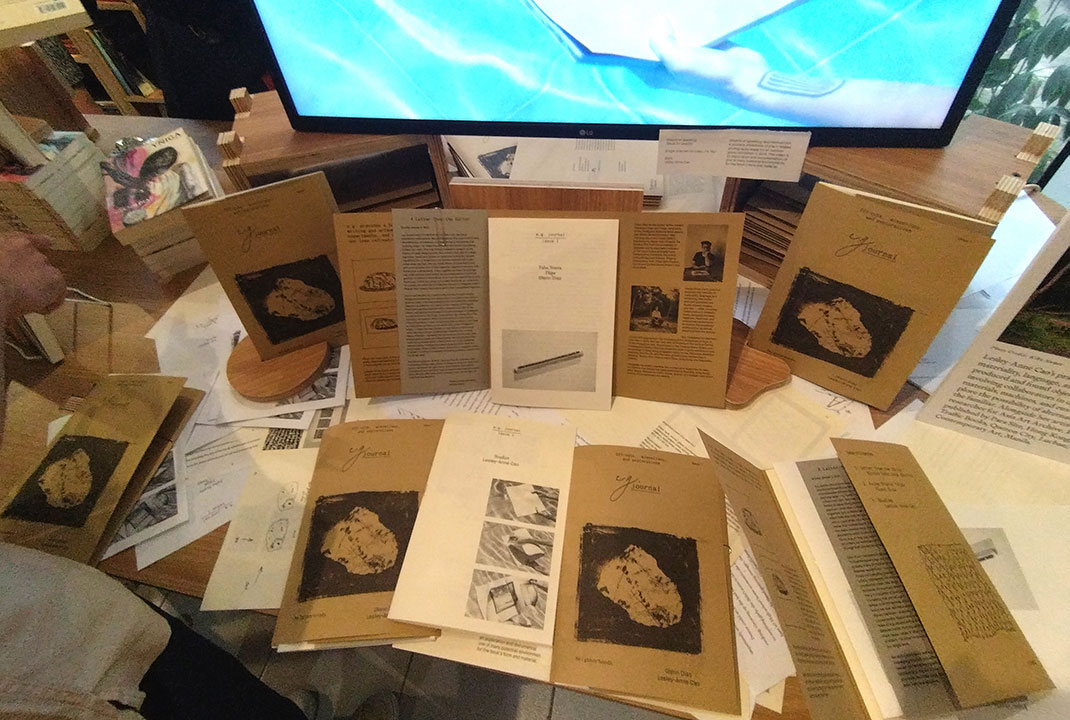
A DISPLAY of e.g. journal at Everything’s Fine bookstore during the launch on Jan. 25. — ALICIA A. HERRERA

AS A platform for fresh and unseen pieces of writing, fragments of artworks, loose experiments, and literary digressions, local press Exploding Galaxies’ newly launched journal e.g. aims to fill a gap.

The works featured in it span early iterations that would otherwise not be accepted in other publications.

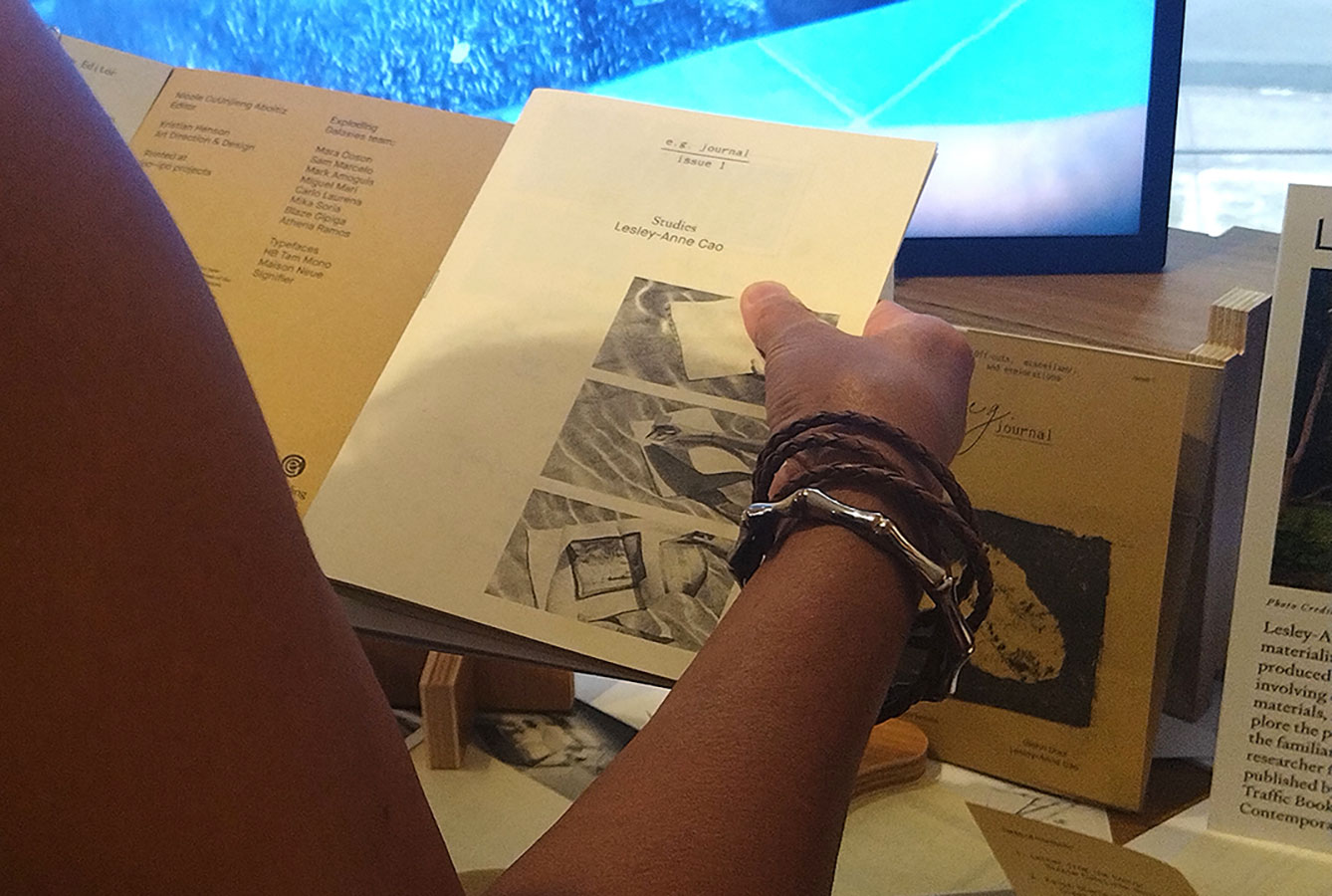
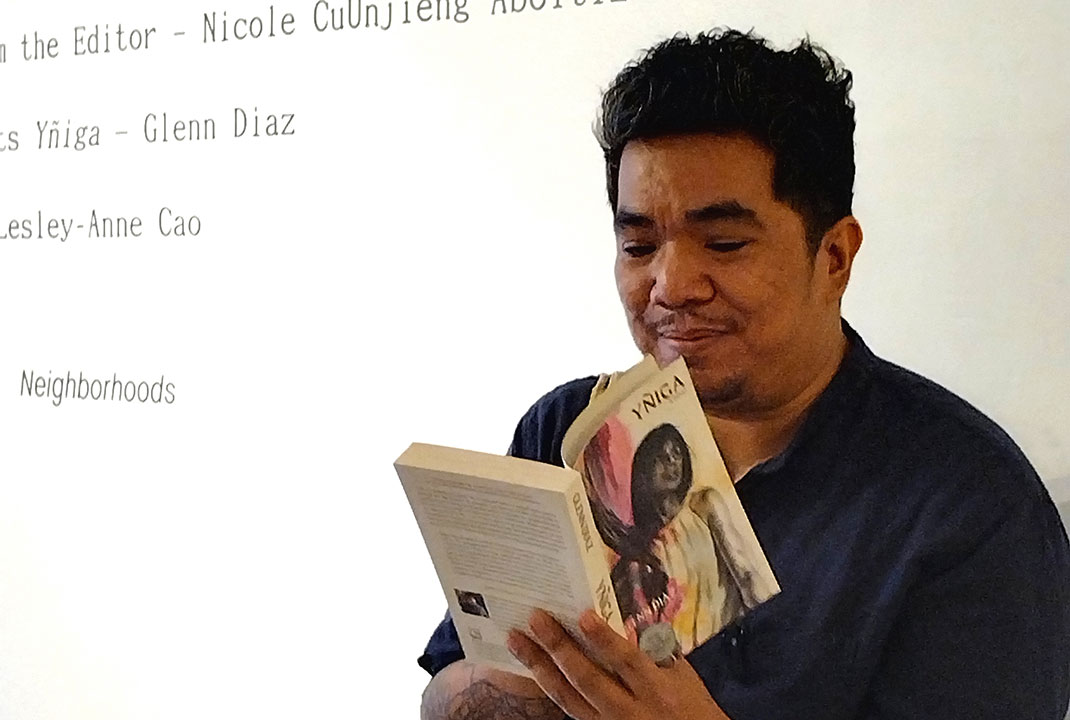
Edited by Nicole CuUnjieng Aboitiz and designed by Kristian Henson, the first issue features contributions by award-winning author Glenn Diaz and contemporary visual artist Lesley-Anne Cao. It contains the first two draft chapters of Mr. Diaz’s novel, Yñiga, which went on to win Best Novel in English at the 2024 National Book Awards, and various sketches from Ms. Cao’s practice, which explores the interplay of materiality, language, and artmaking.

Given the journal’s focus on off-cut fragments of literary and artistic work, its design and typography are similarly loose, tactile, and analog.

For its editor, showcasing remnants of the creative process as well as finished products is a natural way for Exploding Galaxies to revive overlooked works.

“If there’s no contemporary reinvestment of meaning into a work, it dies whether it remains in print or not,” Ms. CuUnjieng Aboitiz said at e.g. journal’s launch on Jan. 25, held at Everything’s Fine bookstore in Makati City.

Having republished two out-of-print novels so far, Exploding Galaxies hopes to “help amplify the larger discourse in which these works are situated,” she told BusinessWorld.

The journey of making e.g. started last July, according to publisher Mara Coson. “There’s a huge pool to choose from when it comes to writers and artists who can provide drafts and iterations of their work, but we thought to start with one text and one illustration,” she said.

THE VALUE OF THE PROCESS
At the launch, the team highlighted that e.g. is for works that are “fascinating but too focused, miscellaneous, extraneous, or experimental to incorporate into anything larger.”

This would include anything like “a research tangent on the history of ylang-ylang perfume that could inform part of a larger argument, short stanzas or scenes or variations on openings regretfully cut, as well as forays into new formats explored just to see where they may lead,” said Ms. CuUnjieng Aboitiz.

Pairing these offcuts of prose and poetry with visual art and sketches allows for a conversation to form.

Glenn Diaz, whose first three chapters of Yñiga, as well as its false start, were read out loud at the launch, admitted that it will only be interesting to a certain number of people.

“It’s interesting to me, though,” he told BusinessWorld. “I think the value of it is that there might be lessons in terms of how we look at the not-so-final, the not-so-perfect. It’s often an unnecessary judgment that we give to ourselves.”

Ms. CuUnjieng Aboitiz added that Ms. Cao, who was unable to attend the launch, also had similar reflections on “the process of pruning and sketching and thinking,” in contrast to her polished finished work.

“Pruning back to allow for a clear narrative to emerge is part of the process, enabling others to see this world newly shaped outside of your own cacophony, outside of your own imagination,” she said.

Limited editions of the print issues of e.g. are available at Everything’s Fine bookstore at Prince Tower, Tordesillas St., Salcedo Village, Makati City. Digital issues will be available soon via www.explodinggalaxies.com.  Brontë H. Lacsamana

Gov’t fully awards dual-tranche bond offer amid heavy demand

BW FILE PHOTO

THE GOVERNMENT made a full award of its dual-tranche Treasury bond (T-bond) offer on Tuesday as both tenors’ rates were below secondary market levels amid strong market interest, a decline in US yields, and expectations of a Bangko Sentral ng Pilipinas (BSP) cut next month.

The Bureau of the Treasury (BTr) raised P35 billion as planned via its dual-tenor T-bond offering as total bids reached P120.917 billion or over three times the amount placed on the auction block.

Broken down, the Treasury borrowed the programmed P15 billion via the reissued seven-year bonds, with total bids reaching P74.593 billion or almost five times the amount on offer. This brought the outstanding volume for the series to P276 billion, the BTr said in a statement.

The bonds, which have a remaining life of three years and two months, were awarded at an average rate of 5.894%. Accepted yields ranged from 5.85% to 5.9%.

The average rate of the reissued papers rose by 224.3 basis points (bps) from the 3.651% fetched for the series’ last award on July 27, 2021. This was also 226.9 bps higher than the 3.625% coupon for the issue.

Still, this was 11.4 bps below the 6.008% seen for the same bond series and 7.8 bps lower than the 5.972% quoted for the three-year bond at the secondary market before Tuesday’s auction, based on PHP Bloomberg Valuation Service (BVAL) Reference Rates data provided by the BTr.

The government likewise raised P20 billion as planned from the new 25-year T-bonds it auctioned off on Tuesday, with total bids reaching P45.964 billion or more than twice the amount on offer.

The BTr said this was its first offering of new 25-year T-bonds since 2015.

The notes were quoted at a coupon rate of 6.375%. Accepted yields ranged from 6% to 6.45% for an average rate of 6.334%.

The coupon fetched for the tenor was 5.9 bps lower than the 6.434% quoted for the 25-year bond at the secondary market prior to the auction, based on PHP BVAL Service Reference Rates data provided by the Treasury.

Following the strong demand for the 25-year tenor, the BTr on Tuesday opened its tap facility window to all 10 government securities eligible dealers and market makers to raise P5 billion more via the bonds at the same coupon rate quoted during the auction proper.

The government fully awarded its T-bond offering amid strong demand, which a trader said in a text message was expected following the drop in US Treasury yields overnight and the similarly well-received Treasury bill (T-bill) auction on Monday.

“Last night’s drop in US Treasury yields was caused by the drop in US stocks amid the flight to safety. Basically, there is less reason for rates to stay high,” the trader said.

“On the domestic end, investors are growing confident on the destination of rates and caring less about the bumps along the way.”

US Treasury yields tumbled to multi-week lows on Monday, tracking steep declines in equities, as investors sought the safety of government bonds, Reuters reported. The benchmark US 10-year yield dropped 7.7 basis points to 4.546%.

On Tuesday, the yield on benchmark 10-year Treasury notes bounced back in Asia time to 4.55% after dropping to a one-month low of 4.561% the previous day.

The decline in T-bond rates also came amid market expectations of a 25-bp cut by the BSP Monetary Board at its Feb. 13 policy meeting amid easing inflation concerns, Rizal Commercial Banking Corp. Chief Economist Michael L. Ricafort likewise said in a Viber message. 

BSP Governor Eli M. Remolona, Jr. earlier said the central bank still has room to continue its rate-cut cycle as current benchmark interest rates remain “restrictive.”

The Monetary Board has slashed benchmark borrowing costs by a total of 75 bps since it began its easing cycle in August, bringing its policy rate to 5.75%.

Tuesday’s T-bond auction was the last one for January. The BTr raised P125 billion as planned via long-term debt this month as it made full awards of all its offerings, and also borrowed an additional P15 billion via tap facility window offers following two T-bond auctions.

In February, the government is looking to raise P203 billion from the domestic market, or P88 billion from T-bills and P115 billion from T-bonds.

The government borrows from local and foreign sources to help fund its budget deficit, which is capped at P1.54 trillion or 5.3% of gross domestic product this year. — AMCS with Reuters

Rebisco eyes double-digit growth despite raw material costs

REPUBLIC BISCUIT Corp. (Rebisco) expects modest double-digit revenue growth despite concerns about rising raw material costs, a company official said.

“We’re looking forward to this year being a good year, especially with the usual support and boost from all our wonderful people in politics,” Rebisco Vice-Chairman Jonathan C. Ng told reporters on the sidelines of the Business Manual CEO Awards 2025 on Monday.

“I think we are looking at a modest double-digit increase in our topline,” he added.

However, he said that the company does not anticipate similar growth for its bottom line this year due to rising cocoa prices. The company imports most of its cocoa from countries such as Malaysia.

“The net income is going to be a little bit difficult this year. I think we’re looking at a little bit of potential price inflation, some cost inflation, especially in our business, as cocoa prices are up again—the raw materials,” he noted.

At the same time, he said the company has plans to expand its factory lines amid growing demand for its products.

“We’re fortunate enough that the market loves our product, so we’re looking at expanding our capacity some more to fill the market requirements. That is more or less adding new lines,” he added.

He said the company is also on the lookout for expansion in international markets.

“In general, our strategy has always been, as I mentioned, the Filipino family. So, basically, where you have a lot or you have a presence of overseas Filipino workers, it’s a very interesting market for us,” he added.

The company already exports to Thailand, Taiwan, the United States, Dubai, the United Arab Emirates, Hong Kong, and Vietnam.

“Those are a few markets that come to mind as good markets for us,” he said.

Internationally, the leading product is Doowee Donut, while domestically, it is Rebisco biscuits.

Mr. Ng also said the company is monitoring measures like the tax on single-use plastics.

“That’s something to look at. It’s something that’s of concern. Because we feel that our product needs it. So, I’m not sure where the government is going to go with this,” he said.

“We will do what we can to see what we can absorb and improve with the way we do things, especially with our plastic use,” he added.

Asked about plans for an initial public offering, he said: “It’s something we always hear people tell us or ask us. It’s maybe something to think about but no real plans.”

Mr. Ng was among the executives from various companies recognized for their exemplary work in their respective fields at the Business Manual CEO Awards 2025. — Justine Irish D. Tabile

The demographic dividend of the Philippines: Let’s talk about sex education

FREEPIK

(Part 9)

If we accept the truth that human sexuality, marriage, and family cannot be analyzed in purely materialistic, hedonistic, or consumerist terms, then sexuality education itself must be an education in the ultimate purposes of life, love, sexuality (manhood and womanhood), and sex itself. This is the approach taken by an 11-volume guidebook for schoolteachers and parents on education in human sexuality, intended for pupils in Grades 5 to 12 written by Antonio Torralba, Chelina de los Trinos-Gutierrez, and Lora Tan-Garcia (together with other alumni of the University of Asia and the Pacific).

With the introductory volume entitled, Sexuality Education 101 (Education in Love, Sex, and Life), this series of textbooks is currently used in hundreds of public and private schools all over the country because the content and approach used by the authors are of universal application across faith (with no reference to religious beliefs), culture, social status, and school type.

This guidebook should be seriously considered as an alternative to materials and approaches being proposed by both Senate Bill 1979 and Department of Education Memo 31 that incorporate very dangerous ideas from the so-called Comprehensive Sexuality Education (CSE) being proposed by such international bodies as the UNESCO and the World Health Organization (WHO), notorious for indulging in what is called “ideological colonization.” Even President Ferdinand “Bongbong” Marcos, Jr. himself has observed that the Senate Bill reeks with the very dangerous “woke mentality” that the Bill’s proponents are “trying to bring into our system.” For example, these international bodies discuss masturbation as normal, not harmful, and in WHO, an explored topic at a very early age. Our legislators should be very careful that they don’t pass laws that incorporate, even subliminally, morally objectional behaviors that some of these international bodies are trying to impose on the developing countries of the world under the guise of modernization and industrialization.

The guidebook seeks to accomplish two objectives:

a. To provide teachers and parents with sound criteria based on both faith and reason to enable children to make good and responsible day-to-day decisions.

b. To provide an easy reference for parents and teachers on the education of pre-teenage and teenage children in living their sexuality with the goal of wholesome lifestyle and well-being.

As we saw in my last column, parents are the first and principal educators of their children, especially on the topic of sex education.

The guidebook was meant by the authors — highly experienced especially in values education or character development — as a response to the mandate of legislation on reproductive health. They recognized the fact that human sexuality is the most deeply personal of all subjects in the basic education curriculum. It is obvious that the subject is not just an academic matter but one that is life directing, since what is primarily studied is the human relationship between man and woman, between husband and wife, and between father and mother. Its teaching must, therefore, be based on objective and universal principles that ought to be more or less understood by the parents and teachers working in close collaboration with one another across the grade levels. And as indicated in the law, the teaching on sexuality has to be age-appropriate both in substance and form, in content and approach.

Let me quote from a chapter of the book entitled “The Bottomline is the Human Person”: “In giving an authentic sexuality education, it is necessary to have a philosophical understanding of the human person. Why? By analogy, a doctor cannot make right diagnoses if he does not have a good grasp of human anatomy. His prescriptions would not work well and could even be fatal. Similarly, without a genuine understanding of the human person, his dignity and the gift of his sexuality, the teacher may unwittingly use methods or impart information that harm the student’s judgement on sexual matters. One student whose teacher taught her and her entire class how to use a condom using a banana said, “On hindsight, this lesson did not teach me to respect my body and the act of sex. It even made me curious about sex and everything else that had to do with it.”

As reported by Kyle Aristophere T. Atienza et al in this paper, the Senate Committee on Basic Education, led by Senator Sherwin T. Gatchalian, is conducting an inquiry into the Department of Education’s implementation of sexual education in response to criticisms of the Bill coming from organizations of parents, educators, and religious leaders. This move was also partly provoked by comments of President Marcos Jr. which linked the Bill to the “woke mentality” especially prevalent in the US during the term of President Joe Biden. Mr. Gatchalian, who worked closely with former Senator Sonny Angara (who is now the Secretary of Education) on issues of basic education, announced: “Amid debates on implementing sex education in schools, where the President emphasized the important role of parents — a stance I completely agree with — the Senate Committee on Basic Education will conduct an inquiry on the DepEd’s implementation of Comprehensive Sexuality Education.”

(To be continued.)


Bernardo M. Villegas has a Ph.D. in Economics from Harvard, is professor emeritus at the University of Asia and the Pacific, and a visiting professor at the IESE Business School in Barcelona, Spain. He was a member of the 1986 Constitutional Commission.

bernardo.villegas@uap.asia

Arts & Culture (01/29/25)


Katrina Cuenca exhibit at Galerie Joaquin

UNTIL Jan. 31, artist Katrina Cuenca is displaying Tetrachromacy, a collection of experimentations in material, form, and color with several pieces on round canvas at Galerie Joaquin. The circular shape, a symbol of wholeness and good fortune, embodies the artist’s desire for new possibilities and creative growth as she enters this season. A particularly striking element of the collection is her use of metal leaf in vibrant new hues. The soft luster of electric blue and blush pink metallic backdrops frame her signature abstract figures, with the goal to invite a sense of tranquility and peace. Tetrachromacy is on view at the Galerie Joaquin in Rockwell, Makati City.


Google celebrates Snake Year with interactive doodle

GOOGLE is ringing in the Lunar New Year with a nostalgic twist. To celebrate the Year of the Snake, the search engine has launched an animated Google Doodle that features a modern take on the classic Snake game. Clicking on the Doodle allows players to personalize their snake, customize the look of its snacks, and enjoy a fresh “daily challenge” each day. The link to the game from the Google Search is http://www.google.com/doodles/lunar-new-year-2025.


CCP Pasinaya 2025 highlights art for all

WITH the theme “Para sa Lahat!,” the Culural Center of the Philippines’ (CCP) Pasinaya Open House Festival is back with even more venues across Metro Manila from Feb. 1 to 2. Following a pay-what-you-can scheme, online registration for CCP Pasinaya is now open via EventBrite at https://bit.ly/CCPPasinayaParaSaLahat. There is also a visit-all-you-can museum program through Paseo Museo, where a free CCP shuttle along Vicente Sotto St. at the CCP Complex in Psay City takes off to explore 20 museums and galleries around Metro Manila. These are: the Adamson University Gallery, the Museo Maritimo, Bahay Tsinoy, Baluarte San Diego, Casa Manila, Centro de Turismo, Museo de Intramuros, Fort Santiago, Galleria Duemila, GSIS’ Museo ng Sining, the Manila Clock Tower Musem, the Metropolitan Theater, Museo Pambata, Museum of Contemporary Art and Design, the National Museum’s Anthropology, Fine Arts, and Natural History museums, PWU-SFAD’s Jose Conrado Benitez Gallery, Bulwagang Roberto Chabet, and Liwasang Kalikasan. The tours start at 9 a.m., with the last trip at 4 p.m. on both days.


Guided tours mark Battle of Manila’s 80th anniversary

TO mark the 80th anniversary of the Battle of Manila, the Nilad Community is hosting guided tours across historic districts, honoring the lives lost, the resilience, and the city’s wartime legacy. With the goal for people to learn, reflect, and preserve history, the collaborative effort involves various organizations: Manila Girls, Don’t Skip Manila, The Heritage Collective, Renacimiento Manila, and WanderManila. Registration can be done via: https://forms.gle/MT6imQqZUKtn7B4S8. The tours are slated for Feb. 8 in Sampaloc, Feb. 9 in Binondo, Feb. 15 in Malate, Feb. 22 in Intramuros, and March 1 in Ermita. The formal launch will be at the Luneta Art Fair on Feb. 1, 4 p.m., at the Rizal Park in Luneta, Manila.


Filipino street artist Sean Go goes to Paris

FRESH from an exhibition in Osaka, Filipino artist Sean Go continues his international artistic journey with a new solo exhibition, We Are the Angels in Marble, at the PAB Aguiar Bianco in Paris. Opening Feb. 6, his latest collection explores the complex relationship between urban life and human transcendence using mixed media, including his piece Fallen Angel, a 48-inch canvas that combines acrylic, leather paint, spray paint, and grease pencil. We Are the Angels in Marble runs at PAB Aguiar Bianco, 19 Rue de Beaune, 75007 Paris, France, from Feb. 6 to 16.


Memorare Manila 1945 commemorates Battle of Manila

THIS year marks the 80th Anniversary of the Battle of Manila, and the 30th Anniversary of the founding of Memorare Manila 1945. The organization, formed with the objective of honoring the memory of the more than 100,000 innocent, non-combatant Manileños who perished during the Battle of Manila, is inviting the public to attend its commemorative event on Feb. 22. Starting at 8:30 a.m. at the Memorare Manila Memorial at Plazuela de Sta Isabel, Luna corner Anda Sts., Intramuros, Manila, there will be a program by the organization where they offer words of inspiration after which they open the exhibit The Battle of Manila on the Memorare grounds.


FEU Theater Guild’s Niyebe set to open in Feb.

THE Far Eastern University Theater Guild (FTG) is staging a Gabriel Garcia-Marquez short story as an experimental play for the opening of its 91st season. Niebe: Isang Musikal features music and musical direction by Vince Lim. Against the backdrop of Europe’s harsh winter, it tells the tragic story of newlyweds Billy Sanchez and Nena Deconte, whose honeymoon turns into a nightmare when Nena suddenly dies and Billy must grapple with solitude, grief, and despair. It will run from Feb. 12 to March 27 at the FEU Center for the Arts Studio. Ticket prices are P100 for the FEU Community, P300 for student guests, and P500 for regular guests. For reservations and inquiries, contact the FTG through their social media pages.


REP restages hit romcom musical

REPERTORY Philippines (REP) is bringing back its successful musical comedy from 2024, I Love You, You’re Perfect, Now Change. The show runs from Feb. 20 to March 9 at the REP Eastwood Theater in Eastwood City Walk, Quezon City. The original cast of Gian Magdangal, Marvin Ong, Gabby Padilla, and Krystal Kane return to reprise their roles as the play’s 40 characters. I Love You, You’re Perfect, Now Change was nominated and cited for 13 Gawad Buhay Awards and two Aliw Awards.


Into the Woods show dates, casts Eugene Domingo

THEATRE Group Asia (TGA) has announced that FAMAS and Aliw award-winning actress, comedian, and host Eugene Domingo will be playing the role of Jack’s mother in its production of Stephen Sondheim’s Into The Woods, set for August this year. The production will be held at the Samsung Performing Arts Theater at Circuit Makati, with show dates from Aug. 7 to 24.


The Mind Museum and 2GO’s Mind Rover project

THE Mind Museum has launched a partnership with 2GO, a logistics solutions provider, to bring STEAM (Science, Technology, Engineering, Arts and Math) learning experiences to kids across the Philippine islands through the Mind Rover. The project is a custom-built museum bus which measures over 12 meters, filled with interactive science exhibits, equipped for workshops and science shows led by The Mind Museum’s team of Mind Movers. It has started visiting communities in the various islands in the archipelago, the first leg of which was in Bacolod. Free of charge to the communities it serves, the Mind Rover is supported by 2GO and other partners of The Mind Museum.


House OKs DBP charter on final reading

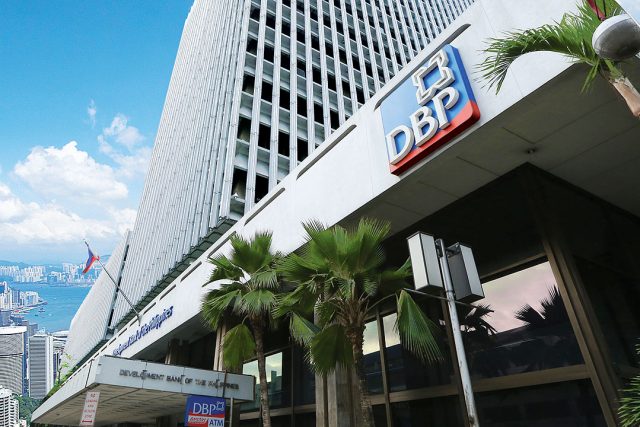
COURTESY OF DBP FACEBOOK PAGE

By Kenneth Christiane L. Basilio, Reporter

THE House of Representatives on Tuesday approved on third reading a bill that will replace the current charter of state-run Development Bank of the Philippines (DBP) to raise its authorized capital stock and allow it to conduct an initial public offering.

In a 199-3-0 vote, congressmen approved House Bill No. 11230, which repeals DBP’s almost 27-year-old charter to raise its capital stock to P300 billion from the current P35 billion.

The new charter also mandates the state-run lender to promote economic growth by supporting small businesses and “high impact programs,” such as infrastructure and housing developments, among other key provisions.

“This took us about nine years,” DBP President and Chief Executive Officer Michael O. de Jesus told BusinessWorld before the bill’s approval, referring to legislative efforts to update the state lender’s charter.

“This is going to be good for the bank and the country,” he added.

The Finance department has been pushing for congressional approval of DBP’s amended charter that is meant to strengthen its financial position and give it easier access to the capital markets, which would help fund its loans to its priority sectors, including social infrastructure and micro, small, and medium enterprises.

The Senate okayed its counterpart version of the measure in September 2024.

Both House and Senate versions of the measure allow the government to sell DBP shares to the public, provided that it retains a 70% stake. They also mandate that 10.67% or P32 billion of the bank’s shares should be subscribed to and paid by the government.

“We don’t intend to partly privatize right away. We intend to improve the bank, improve the valuations. That could take maybe three to five years,” Mr. de Jesus said.

“But we need to improve many things first. Our information and technology structure and our branches need to be improved.”

The DBP’s net income declined by 8.95% year on year to P4.68 billion in the first nine months of 2024 amid lower foreign exchange gains.

URC earmarks over P8B for 2025 capex

URC.COM.PH

UNIVERSAL ROBINA Corp. (URC) is earmarking over P8 billion for its 2025 capital expenditures (capex) to sustain growth, the company’s president said.

“We expect to be steady in our capex investments. In the past few years, we’ve been spending capex somewhere between P8 billion to P10 billion, including some landbanking for future growth opportunities,” URC President Irwin C. Lee told reporters on the sidelines of the Business Manual CEO Awards 2025 in Taguig City late Monday.

Mr. Lee said URC is eyeing to record single-digit growth in top line and bottom line for this year, as the company is “cautiously optimistic” about its financials.

He added that URC is expected to see “good profit growth” as the company works to recover margins and deal with high prices of inputs due to inflation.

“We’re looking for about mid-to-high single-digit top line growth. That will be driven by the return to growth in the Philippines, but also a continuation of our very good growth internationally. We’ll continue to see good profit growth. We’re going to accept a profit growth that is a few points behind top line growth,” he said.

“A lot of us are sort of very cautiously optimistic. The past three years have been a period of high inflation and therefore high price increases, which have been passed on to the consumers. We’re beginning to see the impact of that over the last year and a half or so,” he added.

With this, Mr. Lee said that URC is focusing on resuming volume growth, led by bolstering the value of its products as well as investing in new infrastructure.

“We’re focusing on best-value interventions, giving more value to the consumers, whether that’s in the form of better prices or just better offerings to consumers,” he said.

“We’re doing a lot of expansions in our infrastructure and capacity. We’re opening up some new factories and some infrastructure developments in the Philippines as well as outside of the country. The combination of these efforts will hopefully lead us to better volume growth,” he added.

However, Mr. Lee said that URC remains affected by inflationary pressures, which resulted in higher prices for its products.

“There are still selected commodities and ingredients that still have high inflationary pressure. Some of those still need to be addressed, both by internal cost savings and with some very selective pricing moves,” he said.

“But seeing what has happened over the last two to three years, I think those will be a little bit more muted and more deliberate in how we execute those so that the priority continues to be top line growth,” he added.

Mr. Lee said the company is also seeing a boost from the elections.

“We generally would expect some degree of help from the elections. Historically, there’s always been a bump whenever there’s an election year,” he said.

“We’re very strong in ready-to-drink with C2. We have a good water business. We have some ready-to-drink chocolates. We have good ready-to-drink coffee. We’re also number one in snacks. We’re strong in biscuits and some confectionery,” he added.

For the first nine months, URC saw a 17.6% drop in its attributable net income to P8.02 billion while sales improved by 1% to P118.88 billion.

URC shares fell by 1.07% or 70 centavos to P64.80 apiece on Tuesday. — Revin Mikhael D. Ochave