Home Blog Page 1569

DBM outlines coverage of 2nd tranche of state salary hikes this month
PHILIPPINE STAR/BOY SANTOS

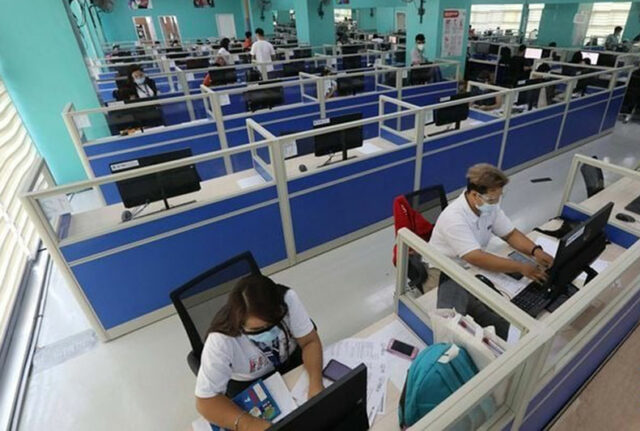
THE Department of Budget and Management (DBM) has clarified the coverage of the second tranche of salary increases for government workers this month.

National Budget Circular No. 597 lays down the implementation of the updated salary schedule for civilian workers based on Executive Order (EO) No. 64, which was signed in August 2024.

“In continuation of the promise of our President, we will implement this January 2025 the second part of the salary increase for our government employees,” Budget Secretary Amenah F. Pangandaman said in a statement on Wednesday.

The circular was applied to government workers in the Executive, Legislature and Judiciary; constitutional commissions and offices; state universities and colleges; and government-owned or -controlled corporations (GOCC) not covered by the GOCC Governance Act of 2011 and EO No. 150.

Military and uniformed personnel and government agencies that are exempted from the Revised Compensation and Position Classification System will not be covered by the pay increase.

It also excludes workers without an employer-employee relationship and funded by nonpersonnel service budgets.

“The amounts required for the salary adjustment of the civilian government personnel in fiscal year 2025 shall be charged against the miscellaneous personnel benefit fund and any available appropriations under the 2025 General Appropriations Act, subject to budgeting, accounting and auditing rules and regulations,” the DBM said.

For state-run companies covered by the circular, the amount for the salary increases will be provided by their operating budgets.

“Conversely, the DBM wishes to highlight that the guidelines applicable to local government units shall be covered by a separate circular,” it said.

The circular noted that the updated salary schedule for civilian personnel will be enforced in four tranches from 2024 to 2027. — Aubrey Rose A. Inosante
House bill grants amnesty to hospitals amid P59.6-B unpaid PhilHealth claims

STOCK PHOTO | Image by Silas Camargo Silão from Pixabay

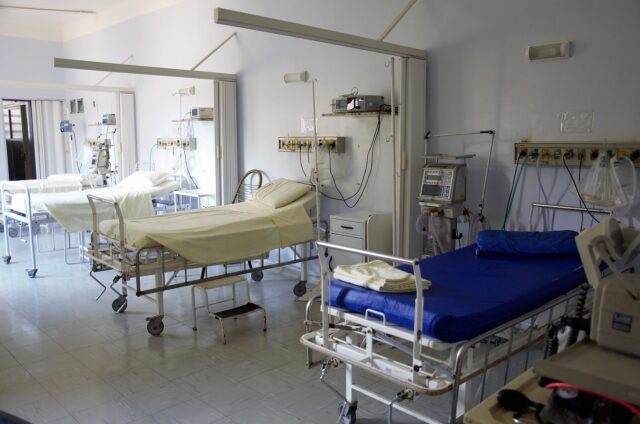
A BILL granting amnesty to hospitals with denied reimbursement claims, embroiled in legal disputes with the Philippine Health Insurance Corp. (PhilHealth), has been filed at the House of Representatives.

The state health insurer has P59.6 billion in unpaid claims to hospitals, which it accumulated from 2018 to 2024, PhilHealth Senior Vice-President Renato L. Limsiaco, Jr. told lawmakers during a House hearing on Wednesday.

“I have filed a House bill giving amnesty to these denied claims because of late submissions and return-to-hospitals [claims] because of small discrepancies [in reimbursement forms],” Party-list Rep. Wilbert T. Lee said during the same hearing.

House Bill (HB) No. 11298, filed on Monday, aims to ease the strain experienced by hospitals amid “legal battles resulting from payment delays, disparities in claims processing, and other compliance difficulties,” the bill’s explanatory note read.

Philippine hospitals file reimbursement claims to PhilHealth for the accrued costs of medical services provided to Filipinos, which is then deliberated by the state health insurer to determine its validity for compensation.

Processed claims which PhilHealth finds worthy of repayment are tagged as a “good claim,” according to a 2021 PhilHealth memorandum; while reimbursement requests seen as “deficient” are categorized into return-to-hospital (RTH) and denied claims, which leads to it being unpaid.

The Health department last week noted that most claims are denied as hospitals exceed the 60-day deadline for filing reimbursement claims.

HB No. 11298 proposed to automatically dismiss year-old pending cases against hospitals filed by PhilHealth for “suspected fraudulent activities.” The state health insurer should also reassess claims due to late form submissions prior to 2018, provided that hospitals demonstrate their delays were caused by “circumstances beyond their reasonable control.”

“[Granting] amnesty by facilitating the payment of denied claims due to late filing will help healthcare providers recover from financial strains and ensure continued operation and the availability of services to the public,” the proposed law stated.

Mr. Lee’s amnesty bill is “untenable,” Iloilo Rep. Janette L. Garin said. “It will be very difficult for PhilHealth to do that because they will now be the subject of a lot of cases,” she told lawmakers during the same House hearing.

PhilHealth should instead fast-track its digitization efforts to curb denied and RTH claims to hospitals, she said. The state health insurer started automating its claims system in 2018.

Reimbursement claims are often returned or denied for minor documentary discrepancies due to manual processes, PhilHealth Senior Vice-President Israel Francis A. Pargas said in the same hearing.

The state health financier has received more than 101 million reimbursement claims amounting to P985 billion since 2017. Of this, it has settled 93 million claims worth P899 billion, according to its presentation during the House hearing. — Kenneth Christiane L. Basilio

House OKs bill overhauling Philippine education system

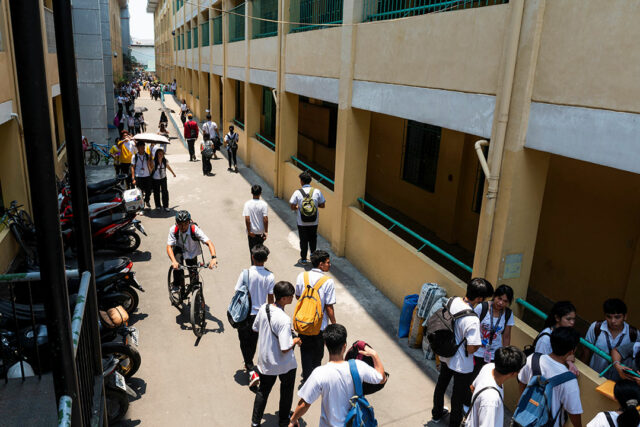
Students walk inside the campus of a high school in Quezon City, April 18, 2024. — REUTERS

THE House of Representatives on Wednesday approved on second reading a bill that seeks to overhaul the Philippine education system by dividing the tertiary education pipeline and aligning it with industry standards.

In a voice vote, congressmen approved House Bill No. 11213, which gives students the option to pursue a college education or learn a trade.

After junior high school, students will choose between two education pathways — the university preparatory program under the Department of Education (DepEd) or the technical-vocational program under the Technical Education and Skills Development Authority (TESDA), according to the bill.

The Philippines in 2013 adopted the K-12 program, which meant to enhance the quality of basic education and the competencies of Filipino students and equipping them with the skills to enter the workforce without going to college.

But Pasig Rep. Roman T. Romulo told the House plenary that senior high school graduates find it challenging to find employment as companies continue to favor college graduates.

“The reality of the job market has not aligned with these expectations,” he said in his sponsorship speech on the measure.

Also on Wednesday, the House approved on third and final reading a measure that would let the National Housing Authority (NHA) restructure housing loans.

For a period of two years after the issuance of the implementing rules of the proposed law, all socialized and low-cost housing loans with the NHA and Social Housing Finance Corp. that have at least three months of unpaid monthly amortizations will be covered by loan restructuring and condonation program, according to the bill.

A housing loan must be under P1.8 million to be covered. “All existing interests on principal, penalties and surcharges shall be condoned upon approval of the restructuring application. — Kenneth Christiane L. Basilio

DMW reviews Kuwait deployment

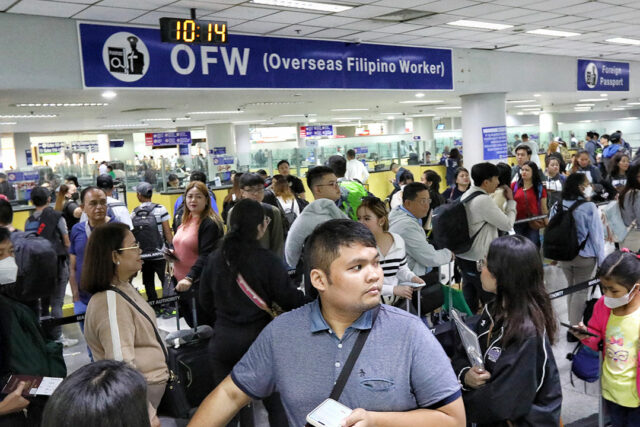
Overseas Filipino workers (OFWs) are seen at the Ninoy Aquino International Airport Terminal 3. — PHILIPPINE STAR/WALTER BOLLOZOS

THE Department of Migrant Workers (DMW) is reassessing its policies on deploying overseas Filipino workers (OFWs) to Kuwait, aiming to bolster protections for Filipino workers, particularly domestic helpers, in the Gulf state.

Migrant Workers Secretary Hans Leo J. Cacdac said the department is examining its current deployment guidelines and considering stricter measures to safeguard the welfare of OFWs.

“We are reviewing our deployment policies and also trying to review the welfare of long-time OFWs in Kuwait. And as I said, we will come up with the findings on whether to tighten the requirements or impose more stringent measures,” Mr. Cacdac said in mixed English and Filipino in a statement.

Currently, the DMW prohibits the deployment of first-time OFWs without prior overseas experience. The department has also introduced measures, such as pre-departure briefings, electronic on-site monitoring, and a system of whitelisting and blacklisting Kuwaiti recruiters.

“We are also implementing the whitelisting and blacklisting of Kuwaiti recruiters, pre-departure briefings, and electronic on-site monitoring. Everybody goes through pre-departure briefings, and so we know their contact numbers. We meet them personally before they leave,” he added.

The review follows the recent deaths of two OFWs in Kuwait, including Jenny Alvarado, who died from suffocation caused by burning coal, and Dafnie Nacalaban, who was found dead in December after being reported since October. — Chloe Mari A. Hufana

Ballot printing to resume on Jan. 24

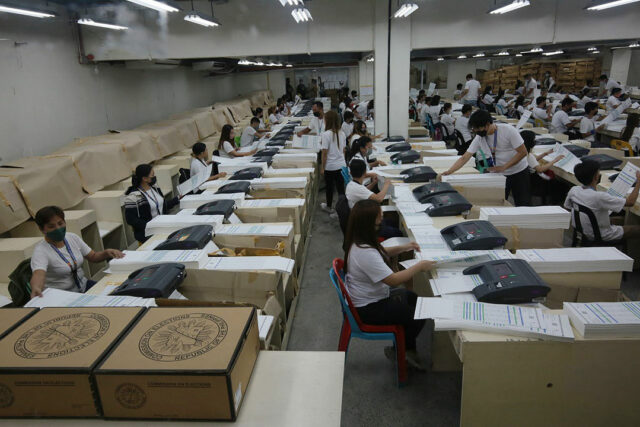
PHILIPPINE STAR/ MICHAEL VARCAS

THE Commission on Elections (Comelec) said it would resume printing ballots on Jan. 24, after the Supreme Court (SC) ordered the inclusion of two more candidates in the midterm elections this May.

This followed the issuance of temporary restraining orders (TROs) against the poll body on Tuesday after it disqualified social media personality Francis Leo Marcos and dismissed Albay Governor Noel E. Rosal.

In a Viber chat with BusinessWorld on Wednesday, spokesman John Rex C. Laudiangco said the printing would restart on Friday to include two political bets, while the mock election would be on Saturday, Jan. 25.

The poll body started printing ballots for the May 12 midterm elections last Jan. 6, but halted printing after the top court issued the first round of TROs from Jan. 14.

Comelec said about 6 million ballots were wasted, amounting to P22 each.

Meanwhile, Chairman George Erwin M. Garcia said Comelec will commence its three-month training of field officials on Jan. 27.

“Monday next week (Jan. 27) is the start of our national and local elections (NLE) training. It will last until May,” Mr. Garcia told reporters in a Viber chat on Wednesday.

The training covers operations for the automatic counting machines, which the election commission will use for the first time in May, replacing the previously used precinct count optical scanners. — Chloe Mari A. Hufana

Lawmakers slam delays in VP ouster

VICE-PRESIDENT SARA DUTERTE-CARPIO — PHILIPINE STAR/ RYAN BALDEMOR

A GROUP of minority congressmen on Wednesday urged the House of Representatives’ top official to submit the consolidated impeachment complaints against Vice-President (VP) Sara Z. Duterte-Carpio to the office of the House speaker so discussions for her removal could begin.

House Secretary-General Reginald S. Velasco should no longer “sit on” the impeachment complaints by handing them to Speaker Ferdinand Martin G. Romualdez, Party-list Reps. France L. Castro, Arlene D. Brosas, and Raoul Danniel A. Manuel said.

“Never in the history of Congress have we witnessed impeachment complaints languishing in the Secretary-General’s office for more than a month,” they said in a joint statement.

“The House Secretary-General cannot continue to sit on these three complaints. The Constitution mandates that impeachment proceedings must be initiated upon proper filing of complaints,” they added.

The 1987 Constitution states that ouster raps against impeachable officials “shall be included in the Order of Business within 10 session days,” and for it to be referred to its “proper committee” three session days after.

Mr. Velasco did not immediately respond to a Viber message confirming the number of session days since the filing of ouster complaints against Ms. Duterte.

The estranged vice-president is facing three impeachment complaints at the House since last month, with civil society organizations, clergymen, and activists seeking her removal from office due to alleged corruption, bribery, and betrayal of public trust. — Kenneth Christiane L. Basilio

Revilla has highest social media engagement

PHILIPPINE STAR/MICHAEL VARCAS

PHILIPPINE Senator and reelectionist Ramon “Bong” B. Revilla, Jr. topped the list of senatorial candidates with the highest social media engagement last month heading into the midterm elections this year, according to a report by PUBLiCUS Asia, Inc.

In its Auditus survey, published on Wednesday, Mr. Revilla garnered a score of 53.2% positive social media engagement from Dec. 16 to Jan. 15, followed by  former Senator and boxing legend Emmanuel “Manny” D. Pacquiao (44.2%), and Senate Majority Floor Leader Francis N. Tolentino (37.6%), former Interior and Local Government Secretary Benjamin C. Abalos, Jr. (36.8%).

Party-List Rep. Erwin T. Tulfo got 27.3%, while Senator Christopher Lawrence T. Go, and Senator and presidential sister Maria Imelda “Imee” R. Marcos scored 30.6% and 21.1% in engagements, respectively.

The report tracked mentions, engagements, sentiments, and topics related to 31 senatorial candidates on Facebook, X, Instagram, news reporters, forums, and Reddit,

“Strategies such as raffle draws and personalized content have proven effective in fostering a stronger personal connection with voters, significantly enhancing positive engagement,”  PUBLiCUS Asia said.

It added that Mr. Abalos was seen as overexposed during the campaign season due to the “omnipresence” of his advertisements on billboards, soap operas and public utility vehicles, while Las Piñas Rep. Camille A. Villar had been criticized online for presenting herself as a candidate with a “new perspective” despite her ties to the Villar political family.

“Camille Villar’s ‘new perspective (Dapat May Bago)’ campaign was perceived as an attempt to project herself as a new candidate but clashed with the reality of her association with a political dynasty,” PUBLiCUS Asia said. — John Victor D. Ordoñez

Baguio activates dedicated health team vs Mpox

REUTERS

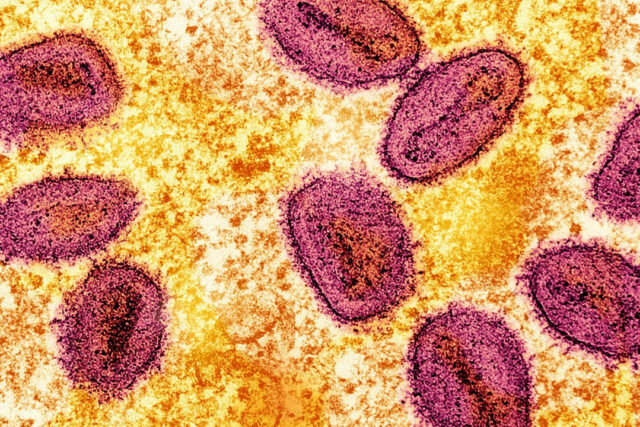
BAGUIO CITY — The Baguio City Health Services Office (CHSO) said it has activated a dedicated health team to focus on the prevention, detection, and management of monkeypox (Mpox) cases.

The team is currently conducting communication campaigns, contact tracing, and establishing procedures for case management and transmission prevention.

On Saturday night, Baguio City Mayor Benjamin Magalong reported the city’s first Mpox case — a 28-year-old male, which was caused by the less severe Clade II Mpox virus type.

As one of the modes of transmission of Mpox is intimate skin-to-skin contact (hugging, kissing, sexual contact, etc.), CHSO chief Dr. Flor C. Brillantes profusely urged people to avoid such contact especially with the manifestation of symptoms.

Common symptoms of Mpox are skin rashes or muscle lesions which can last two to four weeks. These lesions are accompanied by fever, headache, muscle aches, back pain, low energy, and swollen lymph nodes.

Residents were also advised to visit their nearest District Health Center for a check-up if symptoms manifest.

She also appealed to hotels, inns, lodges, AirBnBs, and transient houses to implement stricter sanitation procedures as Mpox can be transmitted through infected items, such as beddings, and other frequently touched objects or surfaces.

Ms. Brillantes emphasized that bedding, towels, and similar items must be washed and sanitized after every use by guests or clients.

Employees of these tourism service establishments were also advised to wear face masks, gloves, and long sleeves when handling the housekeeping and laundry of such items to avoid the spread of infection.

Food establishments, including food delivery services, were likewise reminded of sanitation practices especially handwashing and making these sanitation areas in the establishments visible to all customers.

She also urged tourists and residents to wear masks, long sleeves, and long pants when visiting crowded places and events. She advised frequent handwashing and the use of hand sanitizers.

Event organizers were also urged to apply transmission preventive measures for all activities to be held in the city.

As a proactive move, the health team is also preparing the reactivation of an isolation facility for patients whose own houses may not be conducive for home isolation, Ms. Brillantes said.

The CHSO is also in coordination with the Cordillera Disaster Risk Reduction and Management Council for other preparedness and mitigation measures. Artemio A. Dumlao

3 schoolgirls dead after truck ramming in Bukidnon

COTABATO CITY — A speeding truck rammed three grade schoolgirls walking along a stretch of a highway in Barangay Cayaga in San Fernando, Bukidnon on Tuesday, killing all of them instantly.

Senior officials of the Bukidnon Provincial Police Office told reporters on Wednesday that truck driver Reynaldo Algame Camaso first sped away but surrendered eventually several hours later to the San Fernando Municipal Police Station.

Major Christian D. Serdeña, San Fernando municipal police chief, said Mr. Camaso is now detained and that they have compelled the owner of the truck to reach out to the families of the three fatalities and provide them with essential support needed for their burials.

Mr. Serdeña said the Mitsubishi Fuso truck, bearing license plates RJT 835, is now in their custody.

Witnesses told police investigators who responded to the incident that the victims were on their way to the Cayaga Elementary School when they were hit by the truck, headed in the same direction, at the highway in Purol 2-B in Barangay Cayaga. — John Felix M. Unson

LRT-1 Cavite extension phase 2 alignment seen finalized by Q1

PHILIPPINE STAR/EDD GUMBAN

THE Department of Transportation (DoTr) is hoping to finalize the realignment of the Light Rail Transit Line 1 (LRT-1) Cavite extension within the first quarter.

“Around February or March,” Transportation Undersecretary for Railways Jeremy S. Regino told reporters in response to queries about the timeline.

The Transportation department considers the LRT-1 extension as among its 16 flagship infrastructure projects.

Mr. Regino said the second phase of the LRT-1 Cavite extension, which includes Las Piñas and Zapote stations, needs to be realigned due to a flyover set to be built in the area.

“Once we resolve the conflict with the skyway, we also hope to resolve the remaining right-of-way acquisition in Las Piñas within the year,” he said.

Last year, the first phase of the LRT-1 Cavite extension was opened which will accommodate an additional 80,000 passengers daily. This initial phase adds a total of 6.2 kilometers from Pasay City to Parañaque City. The five new stations are Redemptorist–Aseana Station, MIA Road Station, PITX Station, Ninoy Aquino Avenue Station, and Dr. Santos (formerly Sucat) Station.

In August the DoTr said the second and third phases of construction of the LRT-1 Cavite extension may begin by 2026 amid right-of-way acquisition issues. — Ashley Erika O. Jose

NFA seeks extra P9B for rice procurement

PHILIPPINE STAR/MIGUEL DE GUZMAN

THE National Food Authority (NFA) said on Wednesday that it is seeking an additional P9 billion to procure domestically grown rice that it plans to add to its grain reserves this year.

In a statement, the NFA said that the increased funding would allow it to accomplish its buffer stock goals in compliance with Republic Act (RA) No. 12708 or the Agricultural Tariffication Act.

“We were initially allocated a budget of P9 billion for buffer stocking this year, based on the nine-day requirement. But the additional six days will necessitate an extra P9 billion considering that our palay procurement price increased in 2024,” NFA Administrator Larry R. Lacson said.

RA 12708 raised the NFA minimum rice reserve level to 15 days’ demand from the previous nine days.

The law also allocates about P2 billion for NFA rice procurement from rice tariffs in excess of the P30 billion earmarked for the Rice Competitiveness Enhancement Fund.

The NFA said that the national consumption of rice is projected to average 37,000 metric tons (MT) per day.

“The additional six days of reserve will require the NFA to procure approximately 300,000 MT of palay (unmilled rice) from farmers at an estimated price of P23 per kilo,” the agency said.

Agriculture Secretary Francisco P. Tiu Laurel, Jr. said NFA procurement should be equivalent to up to 20% of domestic production or about 4 million MT. The NFA’s current procurement rate is 3% to 4% of the harvest.

“The NFA used to be a market maker — both a buyer and seller of rice. Now it is restricted to buffer stocking and buying rice from rice farmers,” Mr. Laurel added.

“We aim to restore its influence on palay pricing by purchasing more rice, helping to boost farmers’ profitability,” he said.

Additionally, the NFA Council had also approved a resolution allowing the NFA to sell rice stocks to local government units (LGUs) for disaster preparedness.

“The NFA should ideally release around 25,000 MT of rice every month to LGUs without jeopardizing the buffer stock needed to respond to emergencies, calamities, or a national food emergency declaration aimed at stabilizing rice supply and prices,” Mr. Lacson added.

Last week, Mr. Laurel said the Department of Agriculture is proposing to declare a food security emergency focused on rice to enable the NFA to offload 300,000 MT in rice stocks onto the market. — Adrian H. Halili

Tourism department targets Indian market for growth

REUTERS

THE Department of Tourism (DoT) said it hopes to increase visitor arrivals from India by executing the memorandum of cooperation on tourism signed by India and the Philippines in 2019. 

In a statement on Wednesday, Tourism Secretary Ma. Esperanza Christina G. Frasco said that the Philippines welcomed around 79,000 Indian visitors last year, up 12.4%.

“While this number is smaller relative to our ASEAN neighbors, it represents significant growth,” Ms. Frasco said.

“We see tremendous potential in India’s outbound tourism market, and we are committed to making the Philippines a top destination for Indian tourists,” she added.

Ms. Frasco met with Minister Gajendra Singh Shekhawat of India’s Ministry of Culture and Tourism on the sidelines of the ASEAN Tourism Forum meetings.

She expressed the Philippines’ readiness to sign an implementation program to execute the 2019 Memorandum of Cooperation.

“We are very hopeful that through our meeting today, through the forthcoming implementation program, and the work that both our teams will do, we can increase from the 79,000 Indians that arrived in the Philippines last year to allow the Philippines to have a bigger share of the over 5 million that arrived to ASEAN in 2024,” Ms. Frasco said. 

The implementation program would cover the expansion of air connectivity, the exchange of travel professionals, and joint marketing promotions to mutually increase tourism flows.

“India and the Philippines both share a long (history of) cultural ties,” said Mr. Singh.

He added that the Philippines “deserves much more” of a share of Indian tourists visiting ASEAN.

VISA LIBERALIZATION
At the Kapihan sa Manila Prince on Wednesday, Ms. Frasco said: “What happened after the pandemic is that our ASEAN neighbors became very aggressive in their visa liberalization policies, either by adopting electronic visas or implementing visa-free policies for citizens of many countries,” she said.

“That is why the DoT, as early as the start of the administration, advocated (for more liberal visa policies with) the Department of Foreign Affairs (DFA) and the Bureau of Immigration,” she added.

An electronic visa system used to be in place for Chinese visiting the Philippines; however, this scheme was suspended.

“Visa liberalization is critical. And so with the challenges that we are facing pertaining to the Chinese market, we are now looking at India,” she said.

President Ferdinand R. Marcos, Jr. has given a directive to improve and implement a more efficient and competitive e-visa system for Indians.

“During the ASEAN Tourism Ministers meetings, Thailand announced that it is removing visa requirements, if I’m not mistaken, for at least 90 countries,” Ms. Frasco said.

She added that the Philippines should try to liberalize visa policies for as many countries as possible.

“But in terms of priority, it’s really India that we’re looking at right now for visa liberalization,” she added. — Justine Irish D. Tabile