Home Blog Page 1542

US cuts intelligence sharing for Ukraine, adding pressure for Russia peace deal

UKRAINE and Russian flags are seen through broken glass in this illustration taken March 1, 2022. — REUTERS

– The U.S. has paused intelligence-sharing with Ukraine, CIA Director John Ratcliffe said on Wednesday, piling pressure on Ukrainian President Volodymyr Zelenskiy to cooperate with U.S. President Donald Trump in convening peace talks with Russia.

The suspension, which could cost lives by hurting Ukraine’s ability to defend itself against Russian missile strikes, followed a halt this week to U.S. military aid to Kyiv. It underscores Trump’s willingness to play hardball with an ally as he pivots to a more conciliatory approach to Moscow from previously strong U.S. support for Ukraine.

The pressure appears to have worked, with Trump on Tuesday saying he received a letter from Mr. Zelenskiy in which the Ukrainian leader said he was willing to come to the negotiating table.

“I think on the military front and the intelligence front, the pause I think will go away,” Mr. Ratcliffe told Fox Business Network.

“I think we’ll work shoulder to shoulder with Ukraine as we have to push back on the aggression that’s there, but to put the world in a better place for these peace negotiations to move forward,” he said.

A source familiar with the situation, speaking on condition of anonymity, said the Trump administration had halted “everything,” including targeting data that Ukraine has used to strike Russian targets.

A second source said intelligence-sharing had only “partially” been cut but was unable to provide more detail.

Washington on Monday halted military aid to Kyiv following a disastrous Oval Office meeting on Friday when Mr. Trump and Mr. Zelenskiy engaged in a shouting match before the world’s media.

The clash delayed the signing of a deal that would give the U.S. rights to revenue from Ukraine’s critical mineral deposits, which Trump has demanded to repay U.S. military aid.

Mr. Zelenskiy said on Wednesday there had been “positive movement” on the issue and officials from the two countries could meet again soon.

The White House said it is reconsidering its pause in funding for Ukraine and talks between the two countries over a minerals deal were ongoing.

A senior administration official said on Wednesday that the signing was expected to happen soon and to be the first step in a longer negotiation between Ukraine, Washington and Russia on ending the war.

The Ukrainian embassy in Washington and Ukraine’s foreign ministry did not immediately respond to a request for comment.

In an address to Congress on Tuesday evening, Mr. Trump said Kyiv was ready to sign a minerals deal.

Mr. Trump also said he had been in “serious discussions with Russia” and received strong signals that it was ready for peace.

“It’s time to end this senseless war. If you want to end wars, you have to talk to both sides,” he said.


EUROPE SCRAMBLING

Several Democrats criticized the intelligence-sharing suspension. Senator Mark Warner, the vice chairman of the Senate intelligence committee, said the “ill-advised decision” showed that Trump had given American power to Russia.

“Let me be clear: Cutting off intelligence support to our Ukrainian partners will cost (Ukrainian) lives,” the Virginia Democrat said in a statement.

A Russian missile struck a hotel in the central Ukrainian city of Kryvyi Rih late on Wednesday, killing two people and injuring seven, emergency officials said.

European countries are scrambling to boost defense spending and maintain support for Ukraine. Diplomats said France and Britain are aiming to finalize a peace plan to present to the U.S., while the Dutch government said it will reserve 3.5 billion euros ($3.8 billion) for Ukraine aid in 2026.

The U.S. has provided critical intelligence to Ukraine for its fight against Moscow’s forces, including information that helped thwart Russian President Vladimir Putin’s drive to seize Kyiv at the start of his full-scale invasion in February 2022.

But in less than two months in office, Trump has upended U.S. policy, stunning and alienating European allies and raising concerns about the future of the NATO alliance.

He has also ended Putin’s isolation through phone calls with the Russian leader and talks between Russian and U.S. aides in Saudi Arabia and Turkey, from which Ukraine and its European allies were excluded.

Some experts said the U.S. intelligence-sharing suspension would hurt Ukraine’s ability to strike Russian forces, which occupy about 20% of the country’s territory, and defend itself.

“Unfortunately, our dependence in this regard is quite serious,” said Mykola Bielieskov, a research fellow at Ukraine’s National Institute for Strategic Studies. – Reuters

Google reports scale of complaints about AI deepfake terrorism content to Australian regulator

VECSTOCK-FREEPIK

 – Google has informed Australian authorities it received more than 250 complaints globally over nearly a year that its artificial intelligence software was used to make deepfake terrorism material.

The Alphabet-owned tech giant also said it had received dozens of user reports warning that its AI program, Gemini, was being used to create child abuse material, according to the Australian eSafety Commission.

Under Australian law, tech firms must supply the eSafety Commission periodically with information about harm minimization efforts or risk fines. The reporting period covered April 2023 to February 2024.

Since OpenAI’s ChatGPT exploded into the public consciousness in late 2022, regulators around the world have called for better guardrails so AI can’t be used to enable terrorism, fraud, deepfake pornography and other abuse.

The Australian eSafety Commission called Google’s disclosure “world-first insight” into how users may be exploiting the technology to produce harmful and illegal content.

“This underscores how critical it is for companies developing AI products to build in and test the efficacy of safeguards to prevent this type of material from being generated,” eSafety Commissioner Julie Inman Grant said in a statement.

In its report, Google said it received 258 user reports about suspected AI-generated deepfake terrorist or violent extremist content made using Gemini, and another 86 user reports alleging AI-generated child exploitation or abuse material.

It did not say how many of the complaints it verified, according to the regulator.

A Google spokesperson said it did not allow the generation or distribution of content related to facilitating violent extremism or terror, child exploitation or abuse, or other illegal activities.

“We are committed to expanding on our efforts to help keep Australians safe online,” the spokesperson said by email.

“The number of Gemini user reports we provided to eSafety represent the total global volume of user reports, not confirmed policy violations.”

Google used hatch-matching – a system of automatically matching newly-uploaded images with already-known images – to identify and remove child abuse material made with Gemini.

But it did not use the same system to weed out terrorist or violent extremist material generated with Gemini, the regulator added.

The regulator has fined Telegram and Twitter, later renamed X, for what it called shortcomings in their reports. X has lost one appeal about its fine of A$610,500 ($382,000) but plans to appeal again. Telegram also plans to challenge its fine. – Reuters

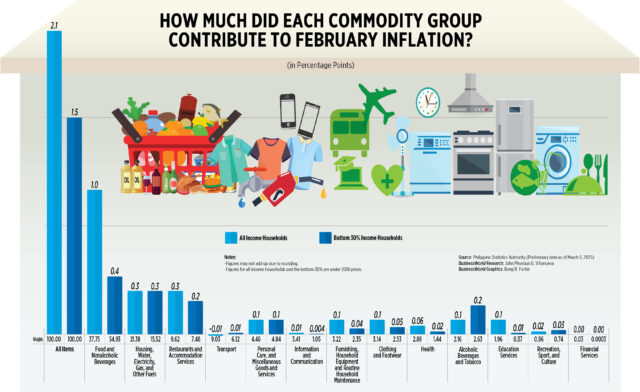
How much did each commodity group contribute to February inflation?

HEADLINE INFLATION sharply decelerated in February to its slowest print in five months, preliminary data from the Philippine Statistics Authority (PSA) showed.  Read the full story.

Inflation eases sharply in February

Inflation sharply eased to 2.1% in February from 2.9% in January and 3.4% a year ago, amid lower prices of rice and utilities. -- Photo by Noel Pabalate, The Philippine Star

By Luisa Maria Jacinta C. Jocson, Reporter

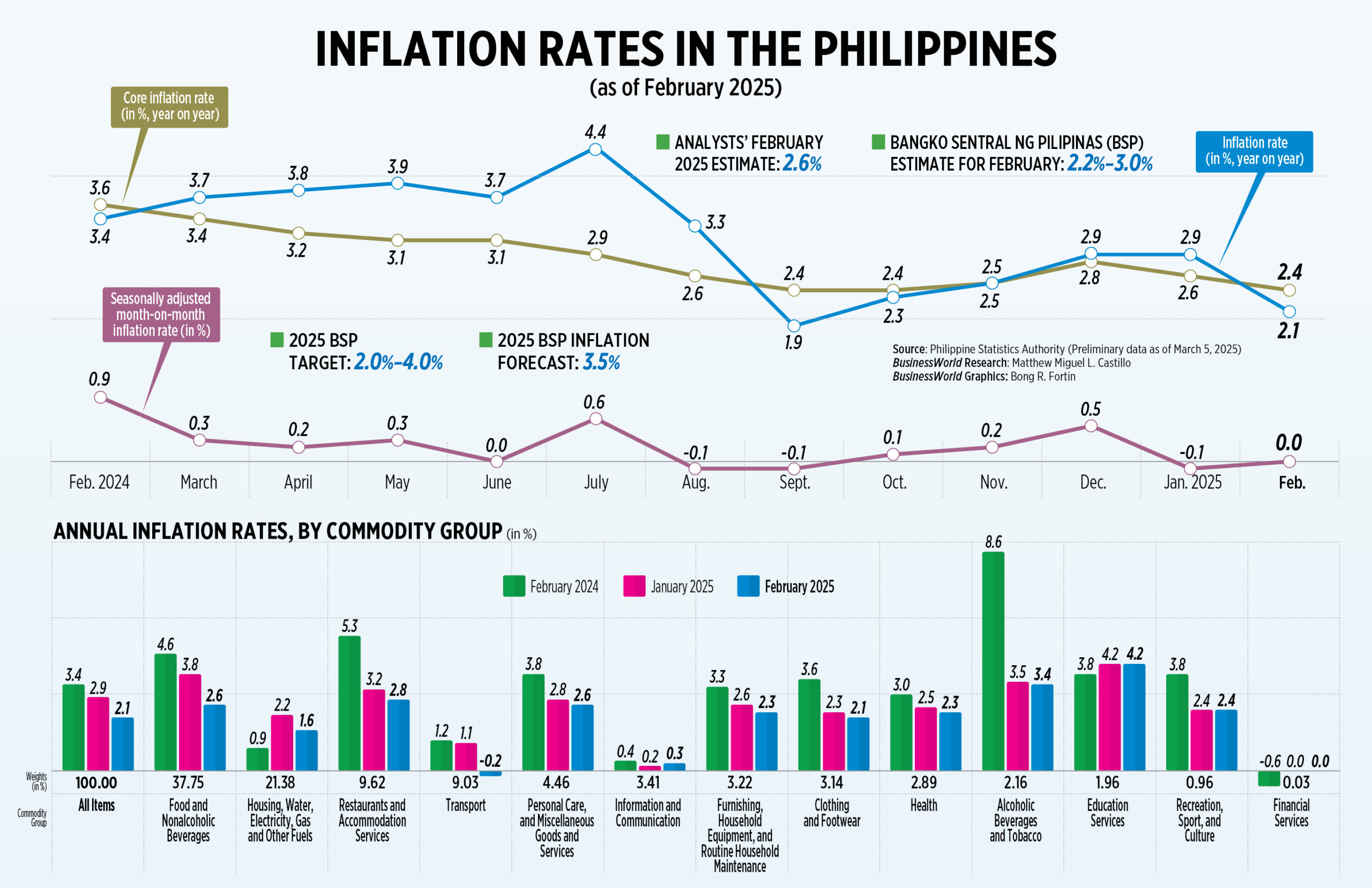
HEADLINE INFLATION sharply decelerated in February to its slowest print in five months, preliminary data from the Philippine Statistics Authority (PSA) showed.

The consumer price index (CPI) eased to 2.1% in February from 2.9% in January and 3.4% a year ago. It was below the 2.2%-3% forecast from the Bangko Sentral ng Pilipinas (BSP).

This was the slowest inflation print in five months or since the 1.9% clip in September 2024.

The February print was also well below the 2.6% median estimate in a BusinessWorld poll of 18 analysts conducted last week.

Inflation averaged 2.5% in the first two months, well within the central bank’s 2-4% target.

Core inflation eased to 2.4% in February from 2.6% in the previous month and 3.6% a year prior. Core inflation discounts volatile prices of food and fuel.

PSA Assistant Secretary Divina Gracia L. Del Prado said the main source of deceleration during the month was the heavily weighted food and nonalcoholic beverage index, accounting for a 58.8% share to the downtrend in inflation.

The index slowed to 2.6% in February from 3.8% in January and 4.6% in the same month in 2024.

Food inflation eased to 2.6% in February from 4% a month ago and 4.8% the year prior.

Cereals and cereal products, which include rice, fell to 3% in February from the 1.1% drop in January.

Rice inflation decreased to 4.9% in February from the 2.3% drop in January. This was the lowest rice inflation print since the 5.7% contraction in April 2020.

In February, the average price of regular milled rice fell to P47.23 per kilo from P50.44 a year earlier. Well-milled rice prices slipped to P53.46 a kilo from P55.93 a year ago, while special rice dropped to P62.65 a kilo from P64.42 a year ago.

“We are seeing the effect of the food security emergency, because we were able to release buffer stocks from the National Food Authority (NFA),” Ms. Del Prado said.

The Agriculture department last month declared a food security emergency on rice, which authorized the NFA to release buffer stocks at subsidized prices. Local government units can buy NFA rice at P33 per kilo and sell it to the public at P35 per kilo.

In mid-February, the department also lowered the maximum suggested retail price (MSRP) of 5% broken imported rice to P52 per kilo from P55 previously. This was further slashed to P49 per kilo, starting March 1.

Ms. Del Prado said rice inflation could remain in the negative for the rest of the year amid continued interventions by the government.

Meanwhile, the inflation of vegetables, tubers, plantains, cooking bananas and pulses decelerated to 7.1% in February from 21.1% a month prior.

Though still elevated, several vegetables posted a slower annual increase in prices. In particular, cabbage slowed to 33.4% in February from 39% in January; okra to 5.5% from 15.3%; and squash to 8.6% from 16.4%.

On the other hand, meat of pigs was the top contributor to February inflation, accounting for 16.2% or 0.3 percentage point to inflation. The inflation of pig meats rose to 12.1% in February from 8.4% in January.

This could be attributed to the rise in African Swine Fever cases, PSA’s Ms. Del Prado said.

For example, the average retail price of fresh pork kasim rose to P352.89 per kilo in February from P337.38 per kilo in the prior month.

The government’s plan to impose an MSRP on pork would help slow down inflation. “Once there is a maximum suggested retail price for pork, it might lead to a deceleration or even a negative inflation for pork,” Ms. Del Prado said.

PSA data showed the housing, water, electricity, gas and other fuels index slowed to 1.6% in February from 2.2% in January.

Electricity inflation dropped to 1% from the 0.2% acceleration a month ago.

This even as Manila Electric Co. (Meralco) raised the overall rate by P0.2834 per kilowatt-hour (kWh) to P12.0262 per kWh in February from P11.7428 per kWh in January.

Inflation of rentals also eased to 1.6% from 2% while liquefied petroleum gas (LPG) prices slowed to 3.7% from 4.7%.

Transport inflation was also a source of slower inflation in February, as it edged lower to 0.2% from the 1.1% rise in January.

In February, pump price adjustments stood at a net decrease of P0.05 a liter for diesel and P0.90 a liter for kerosene. However, gasoline had a net increase of P2.1 a liter.

Meanwhile, inflation for the bottom 30% of income households decelerated to 1.5% in February from 2.4% in January and 4.2% a year ago.

Consumer prices in the National Capital Region (NCR) eased to 2.3% in February from 2.8% in January. Outside NCR, inflation slowed to 2% from 2.9%.

EFFORTS TO TAME PRICES

“This sustained downward trend confirms that our proactive measures to curb inflation are delivering results, especially on helping alleviate the burden on vulnerable sectors,” Finance Secretary Ralph G. Recto said.

National Economic and Development Authority Secretary Arsenio M. Balisacan likewise said the downtrend in inflation shows the government’s efforts are working to tame prices.

“However, we will not be complacent in addressing causes of commodity price increases, particularly for food, to help uplift the lives of poor and vulnerable Filipino families, especially,” he added.

Mr. Balisacan said the government will continue to sustain its efforts to keep inflation manageable.

However, he warned the country may be hit by six to 13 typhoons from March to August.

“The Department of Agriculture (DA) will implement the La Niña action plan to restore agricultural productive capacity in areas likely to be affected by continuous rainfall, flooding, and landslides. The action plan includes water management, financial assistance and credit support, and a massive information campaign on La Niña,” Mr. Balisacan said.

Analysts said inflation is expected to remain within the 2-4% target band for the coming months.

“Barring any unexpected shocks, we project that inflation will remain within the BSP’s 2-4% target, though we remain cognizant of upside risks such as higher electricity prices, transport fare hikes, and potential increases in global commodity prices due to higher tariffs,” Chinabank Research said in a report.

Standard Chartered Bank economist and FX (foreign exchange) analyst Jonathan Koh Tien Wei said lower prices of rice and rent, as well as contained core inflation are helping offset upside risks from higher electricity prices.

“We do not think that today’s lower inflation print necessarily bolsters the case for the BSP to cut earlier in April — the key reason for the pause in February was external uncertainty. Growth and inflation fundamentals already pointed to-wards further easing,” Mr. Koh Tien Wei said.

“If USD-PHP does break below P57 or if the Fed does turn dovish because of weak jobs data, then that may give BSP a window to cut rates in April to provide much needed support to the economy.”

The peso closed at P57.345 per dollar on Wednesday, strengthening by 40.8 centavos from its P57.753 finish on Tuesday. This was the peso’s best finish since its P57.205-per-dollar close on Oct. 11, 2024.

Dino Angelo C. Aquino, vice-president and head of fixed income at Security Bank Corp., said that 75 bps worth of cuts for the year is a “conservative” estimate.

“If you look at pre-pandemic, the spread between the inflation rate and the policy rates is around 150 bps,” Mr. Aquino said in an interview on Money Talks with Cathy Yang on One News on Wednesday.

“So, right now, it’s huge. Say if we average 3% (inflation) conservatively, and your policy rate is at 5.75%. Technically, they have 125 bps room to cut rates. So, 75 for me is a little bit conservative if you ask me.”

The BSP unexpectedly kept rates steady last month after cutting rates for three straight meetings last year.

However, Mr. Remolona has said the central bank is still in easing mode, signaling the possibility of up to 50 bps worth of cuts this year.

The Monetary Board’s next rate-setting meeting is on April 3.

Inflation rates in the Philippines

HEADLINE INFLATION sharply decelerated in February to its slowest print in five months, preliminary data from the Philippine Statistics Authority (PSA) showed.  Read the full story.

Philippine banks’ exposure to real estate sector rises at end-2024

BANKS’ real estate exposure ratio jumped to 19.75% as of end-December from 19.55% at end-September, central bank data showed.

THE EXPOSURE of Philippine banks and trust entities to the property sector increased at the end of December amid a rise in residential and commercial real estate loans, data from the Bangko Sentral ng Pilipinas (BSP) showed.

Banks’ real estate exposure ratio rose to 19.75% as of end-December from 19.55% at end-September. However, it was lower than 20.17% in the same period in 2023.

The BSP monitors lenders’ exposure to the real estate industry as part of its mandate to maintain financial stability.

Total investments and loans extended by Philippine banks and trust departments to the real estate sector grew by 5% to P3.31 trillion as of end-December from P3.15 trillion in 2023.

Central bank data showed real estate loans rose by 7.9% year on year to P2.95 trillion at end-December from P2.74 trillion a year ago.

Residential real estate loans climbed by an annual 9.6% to P1.1 trillion, while commercial real estate loans went up by 6.9% to P1.85 trillion.

Past due real estate loans amounted to P140.645 billion, higher by 4% from P135.261 billion a year ago.

Broken down, past due residential real estate loans rose by 4.7% to P99.727 billion, while past due commercial real estate loans edged higher by 2.3% to P40.918 billion.

Meanwhile, gross nonperforming real estate loans inched up by 0.4% to P108.807 billion as of the fourth quarter from P108.389 billion a year ago.

This brought the gross nonperforming real estate loan ratio to 3.68% at end-December, lower than 3.96% a year earlier.

On the other hand, real estate investments declined by 13.8% to P353.809 billion as of end-December from P410.653 billion in the same period a year ago.

Of this, debt securities dropped by 10.5% year on year to P236.881 billion, while equity securities fell by 19.8% to P116.928 billion.

Joey Roi H. Bondoc, director and head of research at Colliers Philippines, said the jump in real estate exposure was due to businesses expanding their operations in the latter part of the year.

“For residential, I would attribute that partly to ready-for-occupancy (RFO) units. We have a lot of RFOs now,” he said via phone call.

“Given there is a lot of supply now, a lot of these RFO promos are getting sweeter, that probably contributed to the increase,” he added.

Buying an RFO unit was much more difficult before the pandemic, Mr. Bondoc said, noting that buyers had to pay 5% to 10% of the total contract price before being able to transfer into the unit.

“Now, there are promos if you are an investor and buyer of RFOs, all you have to do is secure bank loans. Have that approved and you can transfer. You don’t have to pay a hefty downpayment,” he added.

Rizal Commercial Banking Corp. Chief Economist Michael L. Ricafort said the rise in real estate loans is also consistent with faster growth in overall loans “making it cheaper to finance new real property developments.”

The latest BSP data showed bank lending jumped by 12.2% year on year to P13.1 trillion in December, its fastest growth in two years.

Mr. Ricafort said this may be offset by the higher vacancy rates amid the ban on Philippine offshore gaming operators (POGOs).

“Some buyers, however, would be opportunistic and snap up bargains amid higher vacancy rates and increased supply after the POGO exit,” he added.

For the coming months, Mr. Bondoc said he expects increased demand for real estate loans, especially for the residential segment as promos for RFOs are becoming more attractive.

‘We’re likely to see greater purchases of these RFOs. Since these require bank loans also, this will likely result in the exposure of real estate to the banking sector, which will bode well for the property sector in general.”

Mr. Ricafort said further policy rate cuts and reserve requirement ratio (RRR) reductions would also bolster bank lending in general.

Despite surprising markets with a policy pause last month, BSP Governor Eli M. Remolona, Jr. has said the central bank is still in easing mode, signaling the possibility of up to 50 basis points (bps) worth of cuts this year.

Last month the BSP also announced it will cut the RRR of universal and commercial banks and nonbank financial institutions with quasi-banking functions by 200 bps to 5% from 7%, effective March 28.

In 2020, the central bank raised the real estate loan limit of banks to 25% of their total loan portfolio from 20% previously to help free up additional liquidity as a relief measure during the coronavirus pandemic. — Luisa Maria Jacinta C. Jocson

Nickel Asia, DMCI Mining to partner on nickel processing plant in PHL

STOCK PHOTO | Image by David Hellmann from Unsplash

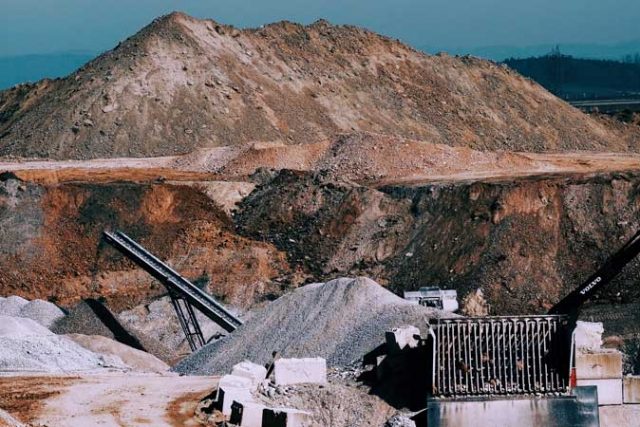
NICKEL ASIA Corp. (NAC) and DMCI Mining Corp. on Wednesday said they are studying the feasibility of developing a nickel processing plant in the country.

This comes as the government is considering a ban on raw nickel ore exports to boost domestic processing.

In a joint statement, NAC and DMCI Mining said they signed a memorandum of understanding (MOU) “to explore the feasibility of developing and operating a nickel processing plant in the Philippines.”

Under the MOU, NAC is expected to provide its expertise in nickel processing technology and exploration, while DMCI Mining will contribute new assets and bring its parent company’s experience in construction and engineering.

In the next two to three years, NAC and DMCI Mining will “evaluate suitable technologies, identify an optimal site, and secure a stable ore supply.” However, this will depend on regulatory approvals.

Both companies also agreed to discuss the equity structure of a possible joint venture for the nickel processing plant’s development and operation.

The planned nickel processing plant would process low-grade nickel ore that is currently not viable for export, “maximizing the country’s mineral resources, generating new opportunities and boosting the local nickel industry,” they said.

Despite the current oversupply of nickel, NAC President and Chief Executive Officer Martin Antonio G. Zamora said the future is “bright” as demand is being driven by the electric vehicle and stainless-steel markets.

“Establishing an economically viable nickel processing plant in the Philippines requires several factors to align, including clear government policy directions and regulations, but proactive preparation is crucial. With the significant nickel resources needed and complex logistical challenges to navigate, early planning is essential for long-term success,” Mr. Zamora said.

Tulsi Das C. Reyes, president of DMCI Mining, said the project is “a step toward creating jobs and ensuring the sustainable use of our mineral resources.”

“By laying the groundwork early, we can help position the Philippines as a key player in the global nickel supply chain,” Mr. Reyes said.

Owned by the family of Manuel B. Zamora, NAC is a listed diversified natural resources development firm. Its mines produce saprolite ore, which is used as feed for ferronickel and nickel pig iron smelters in Japan and China, and limonite ore.

DMCI Mining is a wholly owned subsidiary of the Consunji-led listed company DMCI Holdings, Inc. It has assets in Palawan and Zambales and mainly exports nickel ore to China and other markets.

On Wednesday, shares in NAC inched up 0.85% to close at P2.37 a piece, while shares in DMCI Holdings went up by 0.71% to close at P11.30 each.

“The deal is a good signal on the further integration of mining downstream industries, specifically for mineral processing/smelting/refinery, similar to what Indonesia encourages when the latter bans the export of mineral ores,” said Rizal Commercial Banking Corp. Chief Economist Michael L. Ricafort in a Facebook Messenger chat.

“The preparations are in anticipation of the Senate bill’s passage into law.”

Last month, the Senate approved on third reading a bill that includes a provision banning raw mineral exports after five years, to give time for miners to build processing plants.

Congress is expected to approve the bicameral conference committee report when session resumes in June.

AP Securities, Inc. Research Head Alfred Benjamin R. Garcia said the NAC-DMCI Mining deal was interesting, especially with the proposed ban on the export of raw nickel ore.

“It is a bit of an odd move for Nickel Asia, however, especially since they recently just sold their stake in the Coral Bay nickel processing facility due to the losses being incurred,” Mr. Garcia said in a Viber message.

“It would be interesting to see how the two companies would develop a more cost-efficient facility that can profitably operate even if nickel prices remain low,” he added.

Mr. Ricafort said high electricity costs in the Philippines pose risks to the project.

“Capital-intensive nature of investments would realistically take some time to establish,” he added.

Investment analyst Terry L. Ridon said the proposed facility should process both high- and low-grade nickel “to maximize the value potential of our nickel products.”

“In order for the country to corner a more significant slice of the EV battery supply chain, the main focus of any local nickel processing plant should be the processing of high-grade nickel ore,” he said via Messenger chat. — Kyle Aristophere T. Atienza

SM Prime allots nearly P15B for 5-year hospitality growth

Radisson Blu Hotel in Cebu

SM PRIME Holdings, Inc. said its hotels and convention centers unit is investing nearly P15 billion to support a five-year expansion plan that will broaden its offerings.

SM Prime’s SM Hotels and Convention Corp. (SMHCC) aims to develop eight new hotels and two convention centers across the country within the five-year period.

The expansion will add over 1,500 guestrooms to SMHCC’s portfolio, SM Prime said in a regulatory filing on Wednesday.

Alongside its expansion efforts, SMHCC is building new function rooms, adding food and beverage outlets, and renovating rooms at Taal Vista Hotel, Pico Sands Hotel, and Park Inn by Radisson Davao to enhance its offerings.

For 2024, SM Hotels reported a 67% occupancy rate, up by two percentage points from the previous year, driven by strong demand for travel and meetings, incentives, conferences, and exhibitions (MICE).

Its properties in the National Capital Region averaged a 71% occupancy rate, exceeding the 61% industry average at year-end.

“The rise in hotel stays and event bookings signals a vibrant rebound for the hospitality and MICE sectors,” SMHCC Executive Vice-President Peggy E. Angeles said.

SMX Convention Centers also recorded a 15% increase in hosted events, welcoming 6.3 million visitors in 2024. The company’s halls and function rooms hosted major trade shows, corporate events, and industry exhibi-tions.

“Many of these events have returned to or surpassed pre-pandemic levels, reflecting strong recovery and sustained market interest,” SM Prime said.

SMHCC’s portfolio includes ten hotels, spanning luxury (Conrad and Radisson Blu), leisure (Taal Vista, Pico Sands), and business (Park Inn and Lanson Place) brands, as well as eight convention centers and trade halls under the SMX brand.

For 2024, SM Prime’s consolidated net income rose by 14% to a record-high P45.6 billion, as consolidated revenue grew by 10% to an all-time high of P140.4 billion.

Beyond hotels and convention centers, SM Prime’s portfolio also includes malls, residences, and offices.

SM Prime shares rose by 3.51% or 80 centavos to P23.60 apiece on Wednesday. — Revin Mikhael D. Ochave

ACEN to invest $13M in solar projects in Malaysia

IBV ACEN Renewables Asia is a joint venture between ACEN Renewables International Pte. Ltd., a unit of ACEN, and ib vogt (Singapore) Pte. Ltd. — ACENRENEWABLES.COM

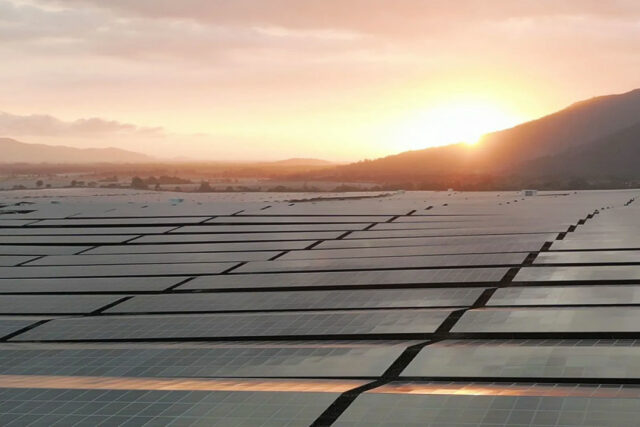
ACEN CORP. is expanding its global presence as its joint venture firm plans to invest $13 million (approximately P748 million) in the development of solar power projects in Malaysia with a total capacity of 80 mega-watts (MW).

IBV ACEN Renewables Asia Pte. Ltd. is in the final stages of assessing and finalizing an investment in various solar photovoltaic project opportunities in Malaysia, ACEN said in a stock exchange disclosure on Wednesday.

The investment is part of ACEN’s planned contribution of up to $200 million in equity to accelerate the deployment of renewable energy in Asia.

IBV ACEN Renewables Asia is a joint venture between ACEN Renewable International Pte. Ltd. (ACRI), a unit of ACEN, and ib vogt Singapore.

Ib vogt Singapore is an affiliate of ib vogt GmbH, a German company specializing in the development and delivery of large-scale turnkey photovoltaic plants.

The joint venture focuses on shovel-ready projects in Bangladesh, Laos, Cambodia, Vietnam, Indonesia, Malaysia, and other countries in the Asia-Pacific region, targeting a minimum operational capacity of 1,000 MW with potential for future expansion.

Last year, the company acquired a 49% stake in a 70-MW solar power project in Bangladesh. ACRI previously announced its plan to invest up to $18 million in the joint venture to facilitate the project’s construction.

The company’s expansion outside the Philippines follows recent developments in Australia through its subsidiary. ACEN Australia is set to develop an 800-MW pumped hydro project and a 400-megawatt-hour battery en-ergy storage system in the country.

ACEN, the listed energy platform of Ayala Corp., holds a portfolio of about 6.8 gigawatts of attributable renewable capacity in operation, under construction, and in committed projects.

The company has a presence in the Philippines, Australia, Vietnam, India, Indonesia, Laos, and the US.

At the local bourse on Wednesday, shares in the company fell 1.27% to close at P3.10 each. — Sheldeen Joy Talavera

Topline in talks with ‘strategic investor’ ahead of P900-M IPO

BW FILE PHOTO

CEBU-BASED fuel retailer Top Line Business Development Corp. (Topline) said it is in talks with a “substantial strategic investor” as it prepares for its P900-million initial public offering (IPO).

“Potentially, we’re looking at a substantial strategic investor coming in. It’s a strategic investor from a logistics standpoint. We’ve already spoken with them. They’ve shown a lot of interest,” Topline Chairman, President, and Chief Ex-ecutive Officer Eugene Erik C. Lim said during a media briefing in Taguig City on Wednesday.

“We’re in advanced talks right now, and we’ll know soon when we do the offer period because we’re doing the book-building process now,” he added.

Mr. Lim said the entry of the strategic investor will coincide with the company’s planned IPO.

“We’re still waiting until the book-building process is finished. But we’re hopeful that they’ll be joining us,” he said.

Topline previously reduced the size of its IPO to P900 million from the initial P3.16 billion after discussions with potential institutional investors.

The IPO now consists of up to 2.15 billion primary common shares with an overallotment option of up to 214.84 million secondary shares, priced at up to 38 centavos per share.

Based on its latest prospectus dated Feb. 25, the book-building period for the IPO began on Feb. 27 and will run until March 14, while the price-setting date is scheduled for March 17.

The offer period for Topline’s IPO will be from March 24 to 31, with a target listing date of April 8.

Mr. Lim said the allocation of the IPO proceeds has been adjusted to align with near-term expansion plans.

The company aims to raise up to P764.2 million in net proceeds, which will be used for its vertical integration strategy to manage its commercial fuel trade and retail market operations.

“Through vertical integration, we are enhancing control over supply chain risks, paving the way for healthier profit margins, improved supply stability, and consistent product quality. The increased operational efficiency will sustain our expansion and growth momentum,” Mr. Lim said.

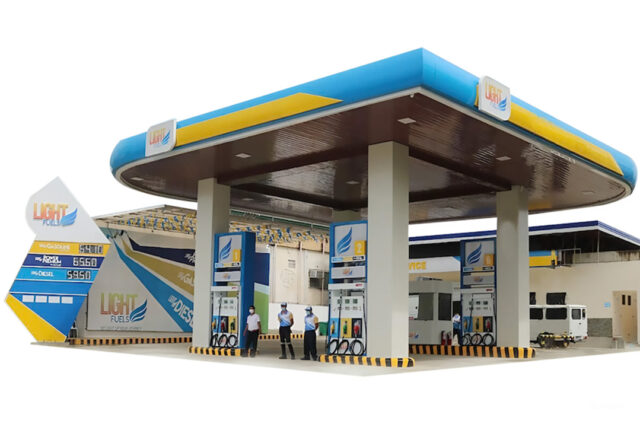
Topline will allocate P300 million of the net proceeds to build 20 additional service stations under the Light Fuels brand, which are set to become operational between 2025 and 2026.

Light Fuels currently has four operational stations, while six fuel stations are in various stages of construction and development. The company aims to have ten operational stations by the first quarter of the year.

By 2026, Topline expects to have 30 operational Light Fuels stations, including the 20 stations to be funded by the IPO proceeds.

The company will also allocate P180 million for the purchase of a fuel tanker with a 5-million-liter capacity to enhance its fuel storage facilities.

Additionally, P270 million will be set aside for working capital requirements, while P14.2 million will be allocated for general corporate purposes.

The construction of additional depot facilities, initially included in the company’s prospectus filed last year, will be funded through other sources outside of the IPO.

“In view of the feedback from potential institutional investors, we have updated our expansion plans and IPO proceeds to focus on growing our current depot space, improving our importation processes, and ex-panding our operations,” Mr. Lim said.

“This approach will help us strengthen our market position to reliably supply fuel in the high-growth Central Visayas region and deliver more value to our shareholders in the long run,” he added. — Revin Mikhael D. Ochave

SMFB income up 7% to P40.9B as sales climb 6%

SANMIGUELFOODS.COM

ANG-LED San Miguel Food and Beverage, Inc. (SMFB) posted a 7% increase in net income for 2024, reaching P40.9 billion from P38.1 billion in 2023, driven by higher volumes and market expansion efforts.

Consolidated sales rose by 6% to P400.9 billion in 2024 from P379.8 billion in 2023, SMFB said in an e-mail statement on Wednesday.

Gross profit grew by 10% to P110.9 billion, while income from operations climbed by 15% to P55.8 billion.

“Our performance in 2024 reflects the strength of our brands, operational excellence, and disciplined execution of our growth strategies,” SMFB Chairman Ramon S. Ang said.

“We continue to invest in innovation, expand our market reach, and optimize efficiencies to drive sustainable, long-term value for all our stakeholders,” he added.

In the food segment, San Miguel Foods recorded a 33% increase in net income to P8.4 billion, while operating income rose by 37% to P13.3 billion.

Sales grew by 3% to P185 billion, driven by a 12% increase in the prepared and packaged food unit, supported by strong demand for Purefoods Tender Juicy Hotdogs, Magnolia dairy products, and San Mig Coffee.

In the beer segment, San Miguel Brewery Inc. reported a 1% increase in net income to P25.6 billion, while operating income grew by 6% to P33.4 billion.

Sales rose by 4% to P153.4 billion, with domestic sales reaching P137.6 billion and international sales amounting to $276.5 million.

Meanwhile, the spirits business, led by Ginebra San Miguel Inc., recorded a 3% increase in net income to P7.3 billion, while operating income rose by 26% to P8.6 billion.

Sales improved by 17% to P62.5 billion, driven by 9% volume growth. The spirits business benefited from strong demand and increasing popularity among a broader range of consumers.

On Wednesday, SMFB shares fell by 3.51% or P1.80 to P49.50 apiece. — Revin Mikhael D. Ochave

Berde, Thai partner to roll out 300-MW projects in Thailand

(L-R) Nakkarin Saingarmsatit, PSS Group general manager; Sam Yamdagni, founder and CEO of PSS Group; Morris Zhou, co-founder of Berde Renewables, Inc.; and Ashish Agarwal, I Squared Capital managing director

RENEWABLE ENERGY company Berde Renewables, Inc. has formed a joint venture with Thailand-based Power Systems and Solutions Co. Ltd. (PSS) to develop 300 megawatts (MW) of renewable energy projects in Thailand over the next three years.

The joint venture aims to develop solar photovoltaic, battery storage, and hybrid energy projects to meet the growing demand for sustainable power in industrial, commercial, and grid-scale applications, Berde Renewables said in a media release on Tuesday.

The companies will begin with operating assets of 18.9 megawatts-peak (MWp), 30 MWp under construction, and 170 MWp in the pipeline.

“This partnership is key to advancing our vision of accelerating the global transition to renewable energy,” said Morris Zhou, co-founder of Berde Renewables.

“By combining our strengths, we aim to deliver innovative, world-class renewable energy solutions and empower organizations and industry leaders to drive decarbonization and sustainability, shaping a greener future.”

Berde Renewables is a portfolio company of I Squared Capital, an independent global infrastructure investment manager. It develops, builds, and operates distributed renewable energy projects for commercial and industrial customers.

Meanwhile, PSS is a Thailand-based renewable energy developer and engineering, procurement, and construction contractor that has delivered over 198 MW of sustainable energy projects across the region.

“This joint venture strengthens Thailand’s renewable energy landscape by combining PSS’s deep market expertise with ISQ/Berde’s global expertise. Together, we are not just deploying megawatts — we are shaping a resilient, scalable, and bankable clean energy future for the region organically and inorganically,” said Sam Yamdagni, founder and chief executive officer of PSS Group.

The joint venture brings together Berde Renewables’ clean energy technologies and PSS Group’s expertise in engineering, oil and gas, power, renewables, and industrial services. — Sheldeen Joy Talavera