Home Blog Page 1539

Tatum-less Celtics plan to ‘leave it all out there’ vs Knicks

IF the Boston Celtics extend their season by beating the visiting New York Knicks in Game 5 of the Eastern Conference semifinals on Wednesday night, they will do so without leading scorer Jayson Tatum.

Tatum, 27, suffered a ruptured right Achilles tendon in the final minutes of New York’s 121-113 victory in Game 4 on Monday night. He had surgery on Tuesday and will miss the remainder of the playoffs.

The Celtics said the surgery was a success, but the length of the recovery process remains unclear. Some reports said Tatum could miss the entire 2025-26 season as well.

“Get ready for the next one,” Jaylen Brown said. “Get ready to fight. Get ready to come out on our home floor and do what we need to do. That’s the goal. Still the goal. We’ve got enough in the locker room, so I believe in my guys.”

The Knicks have a 3-1 lead in the series and can end Boston’s season with a win on Wednesday. The victory also would put New York in the Eastern Conference finals for the first time in 25 years.

Jalen Brunson had 39 points and 12 assists to help the Knicks overcome a 14-point deficit in Game 4. He’s averaged 30.2 points in 34 career playoff games with New York.

“We have a great opportunity,” Brunson said. “We’re playing a really good team, and I don’t think we’re playing our best basketball yet. We have a team that’s fairly new this year and we still have a long way to go to be the best that we can be. There’s always time to learn for us. We’ve got to make sure that we’re never satisfied and have that student mentality.”

Tatum scored 42 points in Game 4, also racking up eight rebounds, four assists, four steals and two blocks before he was helped off the floor with 2:58 left. He averaged 26.8 points per game during the regular season.

“Obviously you’re always concerned about someone’s health, so it’s twofold,” Boston coach Joe Mazzulla said. “We’re concerned about his health, where he’s at, and then we’re concerned about what we have to do better for Game 5 when we get back to Boston.”

The Celtics had a 9-2 record this season in games they played without Tatum. That includes a 109-100 victory over Orlando in the first round. Tatum sat out that game with a wrist injury.

“It’s a part of this sport, part of this game, and we feel for him, of course,” Boston’s Kristaps Porzingis said. “But we have to move forward. He doesn’t want us to be sad and not playing our best basketball. So we’re going to go out there and leave it all out there and live with the results.”

New York will be seeking its third win in Boston during the series. The Knicks took a 2-0 series lead with road wins before the teams split two games in New York. The Knicks are 5-0 on the road this postseason.

“That team is special,” Knicks center Karl-Anthony Towns said of Boston, per the New York Daily News. “They’re defending champions. It takes a whole team to beat them.”

Towns has double-doubles in six straight games dating to the Knicks’ first-round series against Detroit and is averaging 19.8 points and 14.0 rebounds in the Boston series. — Reuters

Coach Murray, Novak Djokovic part ways ahead of French Open

BENGALURU — Andy Murray will no longer coach 24-times Grand Slam champion Novak Djokovic, with the pair’s high-profile partnership coming to an end after six months and no titles, the Briton’s team said on Tuesday.

Djokovic appointed fellow former world number one Murray ahead of this year’s Australian Open and the Serb said at the Qatar Open in February that he would continue working with Murray for an indefinite period.

However, the partnership has come to an end as Djokovic looks to arrest a dip in form during the clay season atthe Geneva Open next week ahead of his quest for a fourth French Open title when Roland Garros gets underway on May 25.

“Thanks to Novak for the unbelievable opportunity to work together and thanks to his team for all their hard work over the past six months,” Murray said in a statement.

“I wish Novak all the best for the rest of the season.”

Djokovic, who won 25 of his 36 matches against Murray, said he was grateful for his former rival’s hard work and support in their short spell together

“I really enjoyed deepening our friendship together,” Djokovic added.

Djokovic reached the semi-finals of the Australian Open in January before injury ended his campaign. He made the Miami Open final in March but his bid for a 100th tour-level title ended in a defeat by Jakub Mensik.

The Serb, who turns 38 three days before the year’s second Grand Slam begins, has been woefully out of form since that Miami defeat and was beaten in his opening matches at Masters tournaments in Monte Carlo and Madrid last month.

He was expected to jumpstart his clay campaign in Rome before returning to Paris, where he won Olympic gold last year, but skipped the ongoing Italian Open without giving a reason.

Djokovic accepted a wildcard for the May 18-24 Geneva Open. — Reuters

US to lift Syria sanctions, gets $600-B Saudi deal

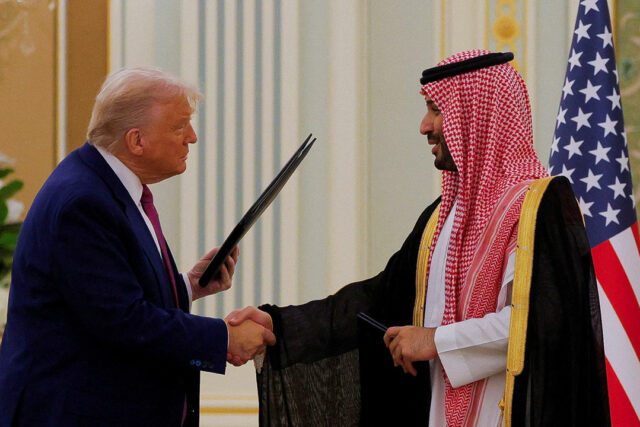
US PRESIDENT Donald J. Trump and Saudi Crown Prince and Prime Minister Mohammed Bin Salman shake hands during a Memorandum of Understanding (MOU) signing ceremony at the Royal Court in Riyadh, Saudi Arabia, May 13. — REUTERS

RIYADH — US President Donald J. Trump kicked off his trip to the Gulf on Tuesday with a surprise announcement that the US would lift long-standing sanctions on Syria, and a $600-billion commitment from Saudi Arabia to invest in the US.

The US agreed to sell Saudi Arabia an arms package worth nearly $142 billion, according to the White House, which called it the largest “defense cooperation agreement” Washington has ever done.

The end of sanctions on Syria would be a huge boost for a country that has been shattered by more than a decade of civil war. Rebels led by President Ahmed al-Sharaa toppled President Bashar al-Assad in December.

Speaking at an investment forum in Riyadh at the start of a deal-focused trip that also brought a flurry of diplomacy, Mr. Trump said he was acting on a request to scrap the sanctions by Saudi Arabia’s de facto ruler, Prince Mohammed bin Salman.

“Oh, what I do for the crown prince,”Mr. Trump said, drawing laughs from the audience. He said the sanctions had served an important function but that it was now time for the country to move forward.

The move represents a major US policy shift. The US declared Syria a state sponsor of terrorism in 1979, added sanctions in 2004 and imposed further sanctions after the civil war broke out in 2011.

Syrian Foreign Minister Asaad al-Shaibani said on X the planned move marked a “new start” in Syria’s path to reconstruction. Mr. Trump has agreed to briefly greet Mr. Al-Sharaa in Saudi Arabia on Wednesday, a White House official said.

Mr. Trump and the Saudi crown prince signed an agreement covering energy, defense, mining and other areas. Mr. Trump has sought to strengthen relations with the Saudis to improve regional ties with Israel and act as a bulwark against Iran.

The agreement covers deals with more than a dozen US defense companies for areas including air and missile defense, air force and space, maritime security and communications, according to a White House fact sheet.

It was not clear whether the deal included Lockheed F-35 jets, which sources say have been discussed. The Saudi prince said the total package could reach $1 trillion when further agreements are reached in the months ahead.

Saudi Arabia is one of the largest customers for US arms, and the two countries have maintained strong ties for decades based on an arrangement in which the kingdom delivers oil and the superpower provides security.

But relations were strained after the 2018 murder of US-based Saudi journalist Jamal Khashoggi by Saudi agents in Istanbul caused a global uproar. US intelligence concluded that bin Salman approved an operation to capture or kill Khashoggi, a prominent critic, but the Saudi government has denied any involvement.

Mr. Trump did not mention the incident during his visit and called bin Salman an “incredible man.” “I really believe we like each other a lot.”

Mr. Trump will go on from Riyadh to Qatar on Wednesday and the United Arab Emirates on Thursday in a trip that is focused on investment rather than security matters in the Middle East.

Several US business leaders attended the event, including Elon Musk, the Tesla chief who has led a government-downsizing effort for Mr. Trump in Washington, OpenAI Chief Executive Officer (CEO) Sam Altman, BlackRock CEO Larry Fink and Blackstone CEO Stephen Schwarzman.

Mr. Trump was shown speaking with several Saudi officials, including sovereign wealth fund governor Yasir al-Rumayyan, Aramco CEO Amin Nasser and investment minister Khalid al-Falih as he viewed models for the kingdom’s flashy, multibillion-dollar development projects.

Mr. Bin Salman has focused on diversifying the Saudi economy in a major reform program dubbed Vision 2030 that includes “giga-projects” such as NEOM, a futuristic city the size of Belgium. Oil generated 62% of Saudi government revenue last year.

The kingdom has scaled back some of its ambitions as rising costs and falling oil prices weigh.

NO VISIT TO ISRAEL
Mr. Trump has not scheduled a stop in Israel, raising questions about where the close ally stands in Washington’s priorities as Mr. Trump presses Israeli Prime Minister Benjamin Netanyahu to agree to a new ceasefire deal in the 19-month-old Gaza war.

Israel’s military operations against Hamas in Gaza and Hezbollah in Lebanon, and its assassinations of the two Iran-allied groups’ leaders, have at the same time given Trump more leverage by weakening Tehran and its regional allies.

Mr. Trump said it was his “fervent hope” that Saudi Arabia would soon normalize relations with Israel, following other Arab states that did so during his first 2017-2021 term. “But you’ll do it in your own time.”

Mr. Netanyahu’s opposition to the creation of a Palestinian state makes progress with the Saudis unlikely, sources told Reuters.

Mr. Trump on Tuesday called Iran “the most destructive force” in the Middle East and warned that the US would never allow it to obtain a nuclear weapon. He said he was willing to strike a new deal with the Islamic Republic but only if its leaders changed course.

“I want to make a deal with Iran,” he said. “But if Iran’s leadership rejects this olive branch… we will have no choice but to inflict massive maximum pressure.” — Reuters

Houthi ceasefire followed US intel showing militants sought off-ramp

REUTERS

WASHINGTON — Days before a surprise US ceasefire agreement with Houthis, US intelligence started picking up indications the Yemeni fighters were looking for an exit after seven weeks of relentless US bombings, four US officials said.

Houthi leaders began reaching out sometime around the first weekend in May to US allies in the Middle East, two of the officials said.

“We started getting intel that the Houthis had had enough,” one of the sources said, speaking on condition of anonymity to recount the internal discussions about the intelligence, which haven’t been previously reported.

Interviews with current and former US officials, diplomatic sources and other experts show how a campaign that the US military’s Central Command once envisioned might stretch through most of this year came to an abrupt halt on May 6 after 52 days, allowing President Donald J. Trump to declare victory before heading to the Middle East this week.

Since November 2023, the Houthis have disrupted commerce by launching hundreds of drone and missile attacks on vessels in the Red Sea, saying they were targeting ships linked to Israel in solidarity with Palestinians over the war in Gaza.

Two sources said Iran played an important role in encouraging the Iran-aligned Houthis to negotiate, as Tehran pursues its own talks with the US over its nuclear program aimed at ending crippling US sanctions and preventing a military strike by the US or Israel.

But the culmination of the ceasefire accord underscored how quickly the Trump administration moved on initial intelligence to secure what in March seemed unthinkable to many experts in the short term: a Houthi declaration it would stop striking US ships.

Mr. Trump’s unconventional approach included bypassing close US ally Israel, which is not covered by the agreement, and which was not told ahead of time, an Israeli official and a person familiar with the matter said.

The Houthis weren’t the only ones feeling pressure. The bombing campaign has also been costly to the US, which has burned through munitions and lost two aircraft and multiple drones.

After the early May tips on the Houthis, Defense Secretary Pete Hegseth initiated a series of meetings at the White House on Monday morning, and concluded there was a window of opportunity with the Iran-aligned fighters, one of the officials said.

Mr. Trump’s Middle East envoy Steve Witkoff, who was already leading US negotiations on Iran’s nuclear program, worked through Omani mediators and held indirect talks with the chief Houthi negotiator and spokesperson, Mohammed Abdulsalam, two US officials told Reuters.

Mr. Abdulsalam was in turn in contact with the Houthis’ top leader, Abdul Malik al-Houthi, one of the officials said.

A framework agreement was reached later on Monday, one of the officials said.

By Tuesday, May 6, Mr. Trump was ready to announce an accord, declaring the Houthis had capitulated.

“They said please don’t bomb us any more, and we’re not going to attack your ships,” he told reporters.

Asked about Reuters’ findings, the Houthis’ Abdulsalam said the group communicated only via Oman and agreed to the ceasefire because the Houthis had been responding to the US defensively.

“So if they stopped their aggression, we stopped our response,” Mr. Abdulsalam told Reuters, declining further comment.

A spokesperson for Mr. Witkoff did not immediately respond to a request for comment.

OFF-RAMP
Each side saw some benefit to striking a deal. For the Houthis, it offered an off-ramp that could allow them to rebuild and relieve pressure that, over months or years, could have strategically put them at risk, US officials and experts say.

Washington’s allies in the region also wanted out, one source said.

“Because if the Houthis were under more pressure, their response was going to be to fire on the Saudis or the Emiratis,” one person familiar with the matter said.

At the start of the US campaign on March 15, Mr. Al-Houthi was defiant, saying in a televised address that his fighters would target US ships in the Red Sea as long as the US continued its attacks on Yemen.

At the time, it appeared the US might be locked in a costly standoff with a group known for its resiliency, as US forces used up munitions during more than 1,100 strikes. Mr. Hegseth said the US would only halt its bombings once the Houthis agreed to stop striking US ships and drones.

The Houthis shot down seven US MQ-9 drones — each worth tens of millions of dollars — since Mr. Trump took office.

The Harry S. Truman aircraft carrier, whose deployment in the Middle East was extended by Mr. Hegseth, lost two fighter jets, including one falling from the deck of the ship after the massive vessel was forced to make a hard turn because of a Houthi attack in the area.

Some analysts questioned the wisdom of the US strategy. The Houthis had already endured nearly a decade of heavy strikes launched by a Saudi-led military coalition but were able to rebuild to the point where they could threaten the US Navy and Israel.

One of the US officials said a turning point for the Houthis came on April 17, when the US targeted the Houthi-controlled Ras Isa fuel terminal on the Red Sea coast.

It was the deadliest strike to that point, with the Houthi-run Health Ministry saying 74 people were killed. The Pentagon has not commented on specific numbers of people killed in individual strikes.

“That (damaged) their ability to conduct operations and generate revenue,” the official said, describing efforts to squeeze the group economically.

Asked for comment, White House Deputy Press Secretary Anna Kelly told Reuters Mr. Trump’s ceasefire was “another good deal for America and our security.”

“The objective at the outset was securing the freedom of navigation, and that was achieved through the restoration of American deterrence.”

Pentagon spokesperson Marine Colonel Chris Devine said in response to Reuters’ findings that the US military campaign successfully degraded Houthi capabilities and “set the stage for the President to achieve a ceasefire agreement.”

LONGER CAMPAIGN PROPOSED
Mr. Trump’s campaign to weaken the Houthis came after failed attempts to deter and degrade the group during the Biden administration.

The US military’s Central Command recommended a campaign, lasting at least eight months, that would include a gradual shift to more targeted strikes from the broader ones that took place in the first few weeks, the official added.

The bombings cost well over $1 billion, officials say, and killed a significant number of mid-tier Houthi fighters who trained lower-level forces, as well as destroyed multiple command facilities, air defense systems, weapons manufacturing and storage facilities.

They also destroyed stocks of anti-ship ballistic missiles and cruise missiles, aerial drones and drone ships.

But the strikes didn’t cut Houthi supply lines or fray higher level leadership, and three experts cautioned the group may rapidly recover.

The group’s persistent attacks on Israel also demonstrate that it retains significant capability, despite the US campaign. Those have continued after the May 6 ceasefire announcement.

US officials and other sources also caution that it is unclear how long the ceasefire will hold, and if the Houthis will continue to see the US and Israel as separate threats, especially as Israel retaliates against Yemen.

“Proxies of Iran and Iran don’t distinguish between what is Israel and what is the United States,” one person familiar with the situation said.

“Their view is that anything Israel does is enabled by the United States. So at some point, I think the Houthis will see themselves as trying to hold the United States accountable.” — Reuters


Ukraine attacks on Russia’s Belgorod injured 16, regional governor says

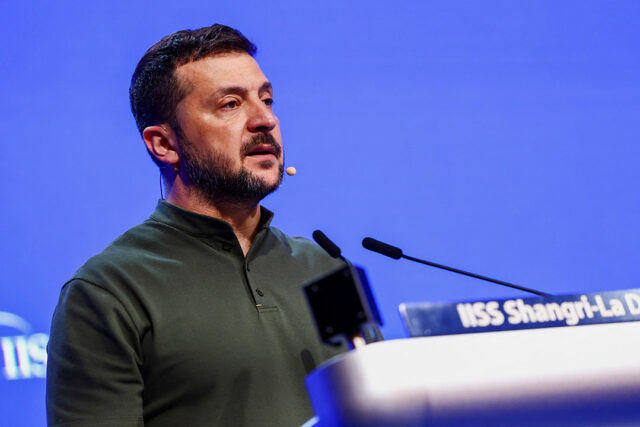
Ukrainian President Volodymyr Zelensky — UKRAINIAN PRESIDENTIAL PRESS SERVICE/HANDOUT VIA REUTERS

A SERIES of Ukraine drone attacks on the region of Belgorod injured at least 16 people on Tuesday, the governor of the region in Russia’s southwest that borders Ukraine said on Wednesday.

Among the injured were a doctor and a paramedic, Belgorod Governor Vyacheslav Gladkov said on the Telegram messaging app. Eight people were hospitalized, he added.

The Russian Defense Ministry said that its units destroyed 12 drones that Ukraine launched overnight, three of them over the Belgorod region. The ministry reports only the number of drones destroyed, not how many Ukraine launched.

Reuters could not independently verify the Russian reports. There was no immediate comment from Ukraine. Both sides deny targeting civilians in the war that Russia started with an invasion of Ukraine 2022.

Russia’s President Vladimir Putin called for direct talks with Ukraine on Thursday, while he called a proposal, issued at the weekend by Ukraine’s President Volodymyr Zelensky and his European allies for a 30-day ceasefire, an ultimatum.

Mr. Zelensky on Tuesday said he would attend talks with Russia on the war in Ukraine this week only if  Mr. Putin is also there, and goaded him by saying the Russian leader was scared to meet him face-to-face.

The Kremlin had yet to say whether Mr. Putin will take part in the talks scheduled to be held in Istanbul on Thursday, more than three years into the deadliest conflict in Europe since World War Two.

The planned talks have become the main focus of peace efforts led by US President Donald J. Trump, who said he would send Secretary of State Marco Rubio and has also offered to attend.

Mr. Trump is also sending senior envoys Steve Witkoff and Keith Kellogg, three sources familiar with the plans said.

Mr. Zelensky said he wanted to negotiate an unconditional 30-day ceasefire as a step toward ending the war, and that Mr. Putin should take part in talks because “absolutely everything in Russia” depends on him.

“We want to agree on a beginning to the end of the war,” Zelensky told a press conference. But he added: “He (Putin) is scared of direct talks with me.”

Mr. Zelensky said he expected the US and the European Union to impose “strong sanctions” if talks did not take place.

Moscow and Kyiv have both sought to show they are working towards peace after Mr. Trump prioritized ending the war, which has raged since Russia’s full-scale invasion of Ukraine in February 2022.

Russian bombs killed at least three people in Ukraine’s Kharkiv region on Tuesday, a local official said.

Mr. Putin on Sunday proposed direct talks with Ukraine, after ignoring a Ukrainian offer for an unconditional 30-day ceasefire. Mr. Trump publicly told Mr. Zelensky to accept the proposal.

The Ukrainian leader then said he would be waiting for Mr. Putin in Istanbul on Thursday, though the Kremlin chief had never made clear he intended to travel himself.

Asked who would represent Russia at the talks, Kremlin spokesperson Dmitry Peskov said: “As soon as the president sees fit, we will announce it.”

TRUMP MAY ATTEND
During a speech in Saudi Arabia, Mr. Trump said Mr. Rubio would attend the talks on Thursday, as well as others. “We’ll see if we can get it done,” he said.

Mr. Kellogg, in an earlier interview on Fox Business Network, said Mr. Trump would join the talks in Istanbul if Mr. Putin showed up.

“We’re hoping President Putin shows up as well, and then President Trump will be there. This could be an absolutely incredible meeting,” he said. “We can get peace, I really believe, pretty fast if all three leaders sit down and talk.”

Mr. Kellogg told Fox Ukraine was willing to accept a “ceasefire in place” in which Ukrainian and Russian forces would each back up 15 kilometers (9 miles), creating a demilitarized zone. International forces would be stationed west of the Dnipro River as a deterrent.

Ukrainian officials have not publicly said what ceasefire terms it may accept. Russia has said it would not accept international forces in Ukraine.

Ukraine’s embassy in Washington did not immediately respond to a request for comment.

Newly elected Pope Leo promised Mr. Zelensky on Monday he would do his best to help bring about a just and lasting peace, a Mr. Zelensky aide said.

Reuters reported last year that Mr. Putin was open to discussing a ceasefire with Mr. Trump but that Moscow ruled out making any major territorial concessions and demanded that Kyiv abandon ambitions to join NATO.

Ukraine has said it is ready for talks but a ceasefire is needed first, a position supported by its European allies.

Russian Deputy Foreign Minister Sergei Ryabkov was quoted by Russian news agencies as saying Moscow was ready for serious talks on Ukraine but doubted Kyiv’s capacity for negotiations.

The agencies quoted him as saying realities “on the ground” should be recognized, including the incorporation of what Moscow calls “new territories” into Russia — a reference to territory in Ukraine that is occupied by Russian forces.

US officials want Russia to agree to a comprehensive 30-day land, air, sea and critical infrastructure ceasefire, a senior US official said. — Reuters

US judge says Trump can use Alien Enemies Act for deportations

REUTERS

A FEDERAL JUDGE in Pennsylvania ruled on Tuesday that the US could use the Alien Enemies Act to fast-track the deportation of accused Venezuelan gang members, in what appears to be the first court ruling that backs the Trump administration’s interpretation of the 1798 law.

Judge Stephanie Haines, of the US District for the Western District of Pennsylvania, ruled that President Donald J. Trump has authority to declare the Venezuelan gang Tren de Aragua a foreign terrorist organization and deport its members under the Alien Enemies Act, but she criticized the administration’s practice of deporting people sometimes “within a matter of hours.”

Ms. Haines, appointed by Mr. Trump during his first term, ruled that the administration must give potential deportees at least 21 days’ notice and the opportunity to challenge their removals, to avoid the possibility that people who are not gang members “may be errantly removed from this country.”

She made the ruling in court papers in the case of a Venezuelan man identified as A.S.R. Ms. Haines did not rule whether A.S.R. was a member of the gang, but she said people like him must be given more opportunity to challenge their deportations.

Ms. Haines required the government to provide notice in Spanish and English, and to provide interpreters when necessary.

Lee Gelernt, an attorney with the American Civil Liberties Union who is representing A.S.R., said he would appeal.

“We strongly disagree with the Court’s decision to allow the government to continue using this wartime authority during peacetime, and will appeal that aspect of the decision,” Mr. Gelernt said.

Ms. Haines’ ruling is contrary to other federal courts’ decisions on the Trump administration’s interpretation of the Alien Enemies Act, which the president invoked in March as legal justification for deporting hundreds of men whom his administration accused of being Tren de Aragua members.

Federal judges in New York, Colorado and Texas have ruled against Mr. Trump’s use of the law to deport Venezuelans.

Ms. Haines, in her ruling, noted that her district has jurisdiction over the petition filed by A.S.R., even though he was transferred from an Immigration and Customs Enforcement facility in Philipsburg, Pennsylvania, on April 15 to an ICE detention center in Texas, despite a temporary restraining order issued that day barring his transfer from the Western District of Pennsylvania.

The Trump administration has deported alleged gang members to a prison in El Salvador under an arrangement in which the United States is paying the Central American nation $6 million. It is part of Trump’s hardline approach toward immigration.

The White House did not immediately respond to requests for comment. — Reuters

Critical infrastructure and resources: priorities for Philippine policymakers

“The seven key growth sectors identified by the Arangkada Philippines Project – a 2010 policy paper that aims to boost the Philippine economy – are still relevant today, said Ebb Hinchliffe, executive director of the American Chamber of Commerce of the Philippines, Inc. (AmCham Philippines).

There are some legislative priorities that can help streamline the business environment in the Philippines, he also told BusinessWorld. These include the separation of regulatory and development functions in various government agencies, particularly for aviation and seaports, as well as the establishment of Water Resources and Disaster Resilience departments.

AmCham Philippines, Mr. Hinchliffe added, also advocates for job creation through increased foreign direct investment.

“The more investment we get in here, the more jobs we create…What better way to lift the Philippines out of poverty than bring in more foreign direct investment and create more jobs,” he said. “Things are going in the right direction here over the last 15 years.”

Interview by Patricia Mirasol
Video editing by Jayson Mariñas

Ukraine’s Zelenskiy insists on face-to-face talks with Putin in Istanbul

Ukrainian President Volodymyr Zelensky, June 2, 2024. — REUTERS

 – President Volodymyr Zelenskiy said on Tuesday he would attend talks with Russia on the war in Ukraine this week only if Vladimir Putin is also there, and goaded him by saying the Russian leader was scared to meet him face-to-face.

The Kremlin has yet to say whether Putin will take part in the talks scheduled to be held in Istanbul on Thursday, more than three years into the deadliest conflict in Europe since World War Two.

The planned talks have become the main focus of peace efforts led by U.S. President Donald Trump, who said he would send Secretary of State Marco Rubio and has also offered to attend.

Mr. Trump is also sending senior envoys Steve Witkoff and Keith Kellogg, three sources familiar with the plans said.

Mr. Zelenskiy said he wanted to negotiate an unconditional 30-day ceasefire as a step toward ending the war, and that Putin should take part in talks because “absolutely everything in Russia” depends on him.

“We want to agree on a beginning to the end of the war,” Mr. Zelenskiy told a press conference. But he added: “He (Putin) is scared of direct talks with me.”

Mr. Zelenskiy said he expected the U.S. and the European Union to impose “strong sanctions” if talks did not take place.

Moscow and Kyiv have both sought to show they are working towards peace after Mr. Trump prioritized ending the war, which has raged since Russia’s full-scale invasion of Ukraine in February 2022.

Russian bombs killed at least three people in Ukraine’s Kharkiv region on Tuesday, a local official said.

Mr. Putin on Sunday proposed direct talks with Ukraine, after ignoring a Ukrainian offer for an unconditional 30-day ceasefire. Mr. Trump publicly told Mr. Zelenskiy to accept the proposal.

The Ukrainian leader then said he would be waiting for Mr. Putin in Istanbul on Thursday, though the Kremlin chief had never made clear he intended to travel himself.

Asked who would represent Russia at the talks, Kremlin spokesperson Dmitry Peskov said: “As soon as the president sees fit, we will announce it.”


TRUMP MAY ATTEND

During a speech in Saudi Arabia, Mr. Trump said Mr. Rubio would attend the talks on Thursday, as well as others. “We’ll see if we can get it done,” he said.

Mr. Kellogg, in an earlier interview on Fox Business Network, said Mr. Trump would join the talks in Istanbul if Mr. Putin showed up.

“We’re hoping President Putin shows up as well, and then President Trump will be there. This could be an absolutely incredible meeting,” he said. “We can get peace, I really believe, pretty fast if all three leaders sit down and talk.”

Mr. Kellogg told Fox Ukraine was willing to accept a “ceasefire in place” in which Ukrainian and Russian forces would each back up 15 kilometers (9 miles), creating a demilitarized zone. International forces would be stationed west of the Dnipro River as a deterrent.

Ukrainian officials have not publicly said what ceasefire terms it may accept. Russia has said it would not accept international forces in Ukraine.

Ukraine’s embassy in Washington did not immediately respond to a request for comment.

Newly elected Pope Leo promised Mr. Zelenskiy on Monday he would do his best to help bring about a just and lasting peace, a Zelenskiy aide said.

Reuters reported last year that Putin was open to discussing a ceasefire with Mr. Trump but that Moscow ruled out making any major territorial concessions and demanded that Kyiv abandon ambitions to join NATO.

Ukraine has said it is ready for talks but a ceasefire is needed first, a position supported by its European allies.

Russian Deputy Foreign Minister Sergei Ryabkov was quoted by Russian news agencies as saying Moscow was ready for serious talks on Ukraine but doubted Kyiv’s capacity for negotiations.

The agencies quoted him as saying realities “on the ground” should be recognized, including the incorporation of what Moscow calls “new territories” into Russia – a reference to territory in Ukraine that is occupied by Russian forces.

U.S. officials want Russia to agree to a comprehensive 30-day land, air, sea and critical infrastructure ceasefire, a senior U.S. official said. – Reuters

US says Cuba ‘not fully cooperating’ with counter-terrorism efforts

The U.S. State Department on Tuesday placed Cuba on a short list of countries it says did not fully cooperate with U.S. counterterrorism efforts in 2024, reversing a decision by the Biden administration the previous year.

The State Department said in statement that there are at least 11 U.S. fugitives in Cuba, including several facing terrorism-related charges and that Cuba’s government had “made clear it was not willing to discuss their return” to face justice in the United States.

Cuban Foreign Minister Bruno Rodriguez lashed out at the decision by U.S. Secretary of State Marco Rubio, a Cuban-American, saying it was based on lies.

“It’s worth reminding him that agencies of his own country in 2024 presented evidence to the contrary,” Mr. Rodriguez said on X late on Tuesday.

Biden administration officials the previous year took Cuba off the list, citing the resumption of law enforcement cooperation between Cuba and the U.S. as one the reasons why the previous designation was deemed “no longer appropriate.”

The cooperation against terrorism list, which the State Department is required by law to provide the U.S. Congress, is not the same as the State Sponsors of Terrorism list.

Biden had also removed Cuba from the State Sponsor of Terrorism list, but Trump promptly reversed the decision upon taking office, imposing harsh new sanctions on the Caribbean island nation.

The State Department on Tuesday also re-certified North Korea, Iran, Syria, and Venezuela as countries that failed to cooperate with the U.S in counter-terrorism efforts.

The non-cooperation certification results in a prohibition on the sale or license for export of defense articles and services to these countries. – Reuters

UN humanitarian chief slams aid plan for Gaza proposed by Israel, backed by US

REUTERS/MOHAMMED SALEM

 – United Nations aid chief Tom Fletcher on Tuesday criticized an Israel-initiated and U.S.-backed humanitarian aid distribution plan for Gaza as a “fig leaf for further violence and displacement” of Palestinians in the war-torn enclave.

“It is cynical sideshow. A deliberate distraction,” Mr. Fletcher told the U.N. Security Council.

No humanitarian aid has been delivered to Gaza since March 2, and a global hunger monitor has warned that half a million people face starvationa quarter of the enclave’s population.

Israel proposed last week that private companies would take over handing out aid in Gaza’s south once an expanded Israeli offensive starts in its war there, which began in October 2023 after militant group Hamas attacked Israel. Aid deliveries have been handled by international aid groups and U.N. organizations.

“We can save hundreds of thousands of survivors. We have rigorous mechanisms to ensure our aid gets to civilians and not to Hamas, but Israel denies us access, placing the objective of depopulating Gaza before the lives of civilians,” said Mr. Fletcher.

Israel has accused Hamas of stealing aid, which the militant group denies, and is blocking deliveries until Hamas releases all remaining hostages.

U.N. Secretary-General Antonio Guterres has rejected Israel’s proposal, saying in April it risked “further controlling and callously limiting aid down to the last calorie and grain of flour.”

The U.N. says any aid distribution must be independent, impartial and neutral, in line with humanitarian principles.

Fletcher said the U.N. has met more than a dozen times with Israeli authorities about their proposed aid distribution model to find a solution but without success. Minimum conditions include the ability to deliver aid to all those in need wherever they are in Gaza, he said.

Amid the stalemate, the United States last week backed a mechanism for Gaza aid deliveries to be handled by private companies, an approach that appeared to resemble Israel’s proposalbut gave few initial details about the plan.

“We will not allow the old, broken system to remain in place,” Israel’s U.N. Ambassador Danny Danon told the council. “We appreciate the efforts to build a new mechanism, one grounded in accountability.”


US WORKING WITH ISRAEL

Senior U.S. officials were working with Israel to enable a newly established Gaza Humanitarian Foundation to “provide a secure mechanism capable of delivering aid directly to those in need, without Hamas stealing, looting or leveraging this assistance for its own ends,” acting U.S. Ambassador to the U.N. Dorothy Shea told the Security Council on Tuesday.

She urged the U.N. and aid groups to cooperate, saying the foundation would deliver aid consistent with humanitarian principles and would “ensure its own security so that commodities reach civilians in need.”

“While some humanitarian organizations may ultimately choose not to engage in these conversations, others have chosen a more constructive path, and they will be able to deliver aid in an appropriate way, hopefully very soon,” Ms. Shea said.

Fletcher said the Israeli-designed distribution model was not the answer. This was in part because Israel said it would limit aid distribution to south Gaza during its planned offensive and people would have to relocate to access aid there.

“It forces further displacement. It exposes thousands of people to harm,” Fletcher told the council. “It restricts aid to only one part of Gaza while leaving other dire needs unmet. It makes aid conditional on political and military aims. It makes starvation a bargaining chip.”

Most of the 15-member Security Council expressed concern about the proposed aid distribution plans.

“We cannot support any model that places political or military objectives above the needs of civilians. Or that undermines the U.N. and other partners’ ability to operate independently,” Britain, France, Slovenia, Greece and Denmark said in a joint statement before the council meeting.

The war in Gaza was triggered on October 7, 2023, when Hamas killed 1,200 people in southern Israel, and took some 250 hostages, according to Israeli tallies. Since then, more than 52,700 Palestinians have been killed, according to Gaza health authorities. – Reuters

Trump’s approval rating rises to 44%; Americans worry less about recession

US President Donald J. Trump — BLOOMBERG

 – President Donald Trump‘s approval rating rose this week as Americans worried less about his handling of the economy and prospects of a recession, according to a Reuters/Ipsos poll that closed on Tuesday.

The two-day poll showed 44% of respondents approved of the Republican leader’s performance, up from 42% in a prior Reuters/Ipsos survey carried out April 25-27. The poll had a margin of error of 3 percentage points.

Approval of Mr. Trump’s economic stewardship rose to 39% from 36%.

Mr. Trump began his term with a 47% approval rating, and saw his popularity tick lower as Americans worried about a series of trade wars he launched since taking office on January 20.

Mr. Trump’s moves to hike tariffs to historic levels on major trading partners, notably China, fueled stock market declines as many economists predicted a recession was looming.

In recent weeks, Mr. Trump has eased back on his sharpest trade actions and announced on Monday morning he was slashing tariffs on China. The benchmark S&P 500 stock index is up about 17% from its lowest closing of Mr. Trump’s second administration, hit soon after he unveiled sweeping tariffs.

Among the public, concerns about recession have also eased but remain high.

Some 69% of respondents in the new poll said they were concerned about a recession, down from 76% in a Reuters/Ipsos poll conducted April 16-21. The share who said they worried about the stock market fell to 60% from 67%.

Mr. Trump has said blame for the country’s economic problems should fall on former President Joe Biden, his Democratic predecessor. Inflation surged during Biden’s presidency amid the global economic chaos of the COVID-19 pandemic, but trended lower toward the end of his presidency. Annual price inflation cooled in April, the Labor Department said on Tuesday, though economists continue to warn that Mr. Trump’s trade actions are likely to boost prices later in the year.

In the Reuters/Ipsos poll, 59% of respondents said it would be Mr. Trump’s fault if the economy falls into recession this year, compared to 37% who said it would be Biden’s fault.

The Reuters/Ipsos poll, conducted nationwide online, surveyed 1,163 people. – Reuters

Gov’t open to seasonal tariffs for rice

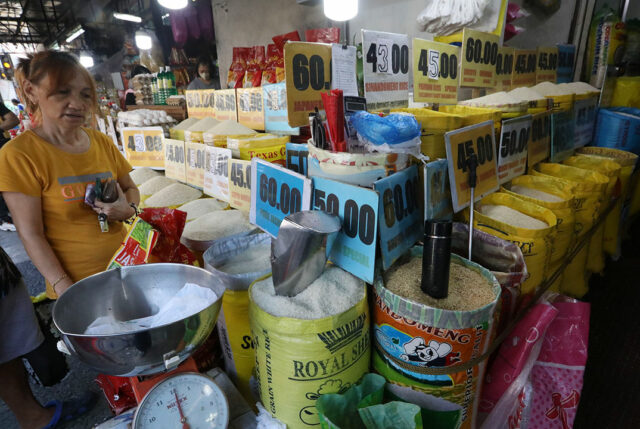
PHILIPPINE STAR/EDD GUMBAN

By Luisa Maria Jacinta C. Jocson, Senior Reporter

MILAN, Italy — The government is open to adopting a seasonal tariff scheme for rice imports to better protect farmers.   

“Yes, we will need to study it. I would say if there are no operational or even legal impediments to it, I would favor it. Because that way, we can stabilize farmers’ incomes and prices that farmers receive,” Department of Economy, Planning, and Development Secretary Arsenio M. Balisacan told BusinessWorld on the sidelines of the Asian Development Bank Annual Meeting here last week.

This comes after the Federation of Free Farmers (FFF) proposed implementing levies that are strategically timed to not clash with the height of the harvest season. Seasonal tariffs would also mean variable rather than fixed duties.

Since July last year, the government slashed tariffs on rice imports to 15% from 35% until 2028 to tame spiraling prices.

Mr. Balisacan said the government would need to study how to implement seasonal tariffs, adding that these used to be a primary instrument of the European Union and the United States prior to the World Trade Organization (WTO).

“Now, we have to find out how you navigate that, because who is following WTO at this time? Everybody’s just changing tariffs everywhere, so we have to find a way to study this.”

A seasonal tariff will shield farmers from the impact of volatile prices, he added.

“What you’re actually doing is establishing a price that you would want the farmers to face. Then when the world prices drop, you raise the tariff so as to keep the price. When the world prices rise sharply, you reduce the tariff. In other words, you’re stabilizing the price faced by farmers. So that’s good,” Mr. Balisacan said.

For the past few months, rice inflation has been on a downtrend after the government implemented several measures to tame the retail prices of the staple.

Apart from lower tariffs, it also declared a food security emergency on rice in February, which allows the release of buffer stocks. The Agriculture department also imposed a maximum suggested retail price on rice earlier this year.

In April, rice inflation further contracted to 10.9% from the 7.7% decline in March.

Data from the Philippine Statistics Authority showed the average price of a kilo of regular milled rice nationwide fell by 13.3% year on year to P44.45 in April. Average prices of well-milled rice dropped by 10.4% to P50.54 while special rice decreased by 6.2% to P60.69.

Despite this, farmers’ groups have said rice prices still remain elevated in most local markets.

The Committee on Tariff and Related Matters (CTRM) is already reviewing the proposal to implement seasonal levies, Mr. Balisacan said.

“From there, they will recommend it to the CTRM Cabinet, and then it will be elevated to the Economy and Development Council, which is formerly the National Economic and Development Authority Board.”

Farmers’ groups like the FFF and Samahang Industriya ng Agrikultura have also recommended bringing the rice tariff back to 35%.

Meanwhile, the Department of Agriculture (DA) said it is also open to considering seasonal tariffs pending further study.

“Conceptually, we are receptive to the idea and we’re willing to consider many ideas,” Agriculture Undersecretary Asis G. Perez told BusinessWorld on the sidelines of the same event. “But we have to find ways to implement it and also make sure, because when you do it at the seasonal level, sometimes it might cause uncertainty and unpredictability.”

“As for the concept itself, we are receptive to considering the idea as proposed. As always, the DA is like that. We don’t shut down an idea.”

Mr. Perez said their policies must aim to “take out the unpredictability” in food supply, which affects prices.

“That’s to ensure consistency, predictability, which is, I think, a critical element for a robust food supply system. Not only for rice but for everything, any other product,” he added.

The DA in January said it was expecting the palay or unmilled rice harvest to exceed 20 million metric tons (MT) this year. In 2024, palay output declined to a four-year low of 19.09 million MT, down by 4.84% from the previous year.

Rice imports will likely decline 1.9% to 5.2 million MT this year, according to the US Department of Agriculture. In 2024, rice imports hit a record 4.7 million MT.