Home Blog Page 1286

Basic Energy to spend up to P300M on RE project pre-development

STOCK PHOTO | Image from Pixabay

LISTED renewable energy (RE) firm Basic Energy Corp. (BEC) has earmarked up to P300 million to finance the pre-development activities for its renewable energy projects in the pipeline over the next two to three years.

“For the ongoing projects, plus maybe pre-development on the others, we’re looking somewhere around 300 million in the next two to three years,” BEC President and Chief Executive Officer Oscar L. De Venecia, Jr. told reporters on Wednesday.

Mr. De Venecia said the company is pursuing three solar power projects with a combined potential capacity of around 150 megawatts (MW).

BEC is in full swing with its other ongoing solar projects in Bataan, Negros Occidental, and Pangasinan, according to the company.

These include the 60.5-megawatt peak (MWp) Mariveles Solar Power Plant in Bataan, the 43.41-MWp Cadiz 1 Solar Power Plant in Negros Occidental, and the 46.993-MWp solar project in Pangasinan.

In the onshore wind space, Mr. De Venecia said the company has completed the wind resource assessment and permitting process for the Mabini Wind Energy Project, which is expected to generate 50 MW.

The project is being developed under a joint venture with Renova, a publicly listed renewable energy company in Japan.

Slated for commissioning by the second half of 2028, the wind farm is expected to generate approximately 199 gigawatt-hours annually, enough to serve around 61,400 households.

BEC is also conducting pre-development activities for the Panay Wind Energy Project, which straddles the municipalities of San Joaquin in Iloilo and Hamtic in Antique. The company said the wind site may accommodate an installed capacity of up to 194 MW.

“While recent years have posed some challenges, we are confident in the direction we are taking… With several key projects now underway, we believe the future of Basic Energy is brighter than ever,” Mr. De Venecia said at a recent annual stockholders’ meeting.

BEC is aiming to build a 1-gigawatt renewable energy portfolio by 2030. — Sheldeen Joy Talavera

Stop politicizing virtue, fix the economy

By Jam Magdaleno and Cesar Ilao III

RECENTLY, the proposed Parents Welfare Bill surfaced in Congress. This bill seeks to “further strengthen filial responsibility and to make it a criminal offense in case of flagrant violation thereof.” Unsurprisingly, it has triggered fiery debates and vitriol online. The idea of punishing children who fail to support their aging parents touches a cultural nerve. But while much has already been said, the discourse generated by the proposal functions more as a political distraction.

It frames the issue almost entirely as a matter of moral responsibility, raising the wrong questions while ignoring a simple truth: it’s our protectionist economy that condemns many Filipinos to undignified aging. This, precisely, is what (dis)incentivizes filial piety.

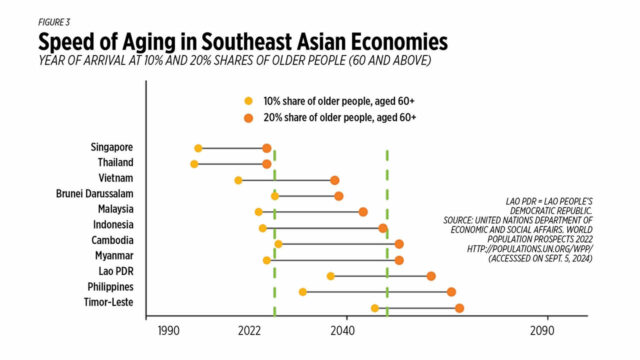
What the debate overlooks is a more honest reckoning with long-term demographic projections and structural realities. Two weeks before the bill went viral, the World Bank released a timely report on the demographic and poverty trends among older Filipinos. Current projections estimate that by 2029 and 2066, older Filipinos aged 60 years and over will comprise 10% and 20% of the total population, respectively. These findings are aligned with the Commission on Population and Development’s projection last year that the country will become an “aging population” by 2030. This means that while the population continues to grow — albeit more slowly — the count of older people is increasing.

The World Bank report classified the Philippines as an early-transition economy. This means that it continues to demonstrate rapid population growth and boasts a high number of young people. But the crisis is already here, we’re already facing the challenges of an aging population. Many retirees are living with meager or non-existent savings and pension payouts, forcing them to rely on their children for financial support and skyrocketing healthcare expenses.

The report comes with a stark warning: If not addressed, demographic transition marked by an increasing population of older people can place a significant strain on an economy’s fiscal resources.

And this is the elephant in the room: It’s not simply that parents’ children or the State refuse to neglect elders. Both public and private pockets are running empty.

On the State’s side, the country’s social protection institutions are struggling. The Social Security System (SSS) is projected to be shaky starting 2039, as benefit payouts begin to outpace contributions due to worsening worker-to-pensioner ratios. Currently at six contributors per pensioner, the ratio will fall to 3:1 within two decades. The core issue is under-contribution: you have too few workers, paying too little, into a fund meant to support too many. While the P700-billion reserve fund remains stable in the short term, it’s projected to be depleted by 2054, after which the SSS will carry a P4-trillion unfunded liability, leaving it unable to fully pay future benefits.

The Government Service Insurance System (GSIS), which serves public-sector workers, is in relatively better shape. Its fund life is projected to last until 2058, bolstered by consistent employer contributions, mandatory coverage, and a smaller pool of retirees. However, GSIS covers only 2.7 million members who are mostly permanent government employees, a fraction of the country’s total workforce. The GSIS model is only stable because its membership is small, formal, and backed by the state’s taxing power.

On the side of Filipino children — those meant to share the legal and moral duty — the challenges are equally severe. Four in 10 Filipino workers are part of the informal economy, which means exclusion from regular pensions and health insurance. Even formal workers are burdened by the rising cost of living. Many belong to the so-called “sandwich generation,” caring for both their children and their aging parents, while trying to build their own future. What’s more, a single hospitalization in a private facility can cost anywhere from P250,000 to over P1,000,000, depending on the critical care availed, far exceeding the approximately P227,000 average annual income per capita.

The current debate distracts us from asking the relevant questions. Why does the state lack money for social services? Because its economy is too feeble to generate enough taxes and contributions. Why is the economy weak? Because we block investments, restrict trade, and stifle industries instead of opening them. This isn’t just cultural neglect, but economic failure. We failed to design an economy that makes aging secure and dignified.

But our young population remains a silver lining. Our demographic window gives us a rare chance to act early. Unlike its neighbors, already in later-transition stages of demographic shift, the Philippines can still build an inclusive system for aging.

Why does this matter? Having a young population means two things: One, more people can work and earn. Two, younger citizens generally mean fewer medical needs, keeping healthcare costs down and the system more manageable. But this opportunity comes with a caveat. A young population can only become an asset if it’s empowered to work productively. This means creating high-quality jobs, attracting more investment, improving the business climate, and strengthening education. When workers thrive, the State collects more taxes and contributions. Those collections fund public services, including hospitalization, elderly care centers, and pensions.

The path forward must be two-pronged.

First, we need to raise real disposable income. This means ensuring that Filipino families earn more and spend less on basic needs. One way is by attracting higher-quality, better-paying jobs through economic openness. Despite reforms in recent years, the Philippines lags behind its ASEAN neighbors in investment: foreign direct investment (FDI) inflows to the country were only $9.2 billion in 2023, compared to $20.2 billion for Vietnam and $22.4 billion for Indonesia. Further liberalizing our investment climate, expanding the coverage of free trade agreements (FTAs), and removing constitutional restrictions on foreign participation are essential for economic dynamism and job creation. This will result in more formality in the labor market, as higher-value industries absorb workers and incentivize compliance with labor regulations. Formal employment means that workers are included in the pension system and have access to health insurance, social security, and stable wages.

We also need to address the high cost of living, especially food. The Philippines has among the highest food inflation rates in Southeast Asia. In 2023, food inflation peaked at 11.2%, disproportionately affecting poor and lower-middle-income families. Lowering agricultural input prices — especially for corn, which directly affects feed and meat prices — through deregulation and reduced tariffs will help stabilize food costs. Encouraging land consolidation for economies of scale and investing in rural infrastructure will also improve farm productivity and lower food prices.

At the same time, open-access reforms in sectors like telecommunications and transportation are long overdue. Filipinos pay some of the highest internet costs per Mbps in the region, limiting access to online learning and e-commerce. Liberalizing these sectors and improving infrastructure will reduce consumer costs and make services more inclusive.

Investments in education and upskilling are equally vital. As of 2022, one in five Filipino youths aged 15 to 24 was not in education, employment, or training (NEET). Strengthening vocational education, supporting industry-academe linkages, and implementing voucher-based systems for skills training can help equip the young labor force to meet future economic demands.

Second, we must sustain greater funding for social infrastructure for the elderly through smarter and efficient tax administration.

Despite having one of the highest value-added tax (VAT) rates in Southeast Asia, the Philippines only collects about 40% of its potential VAT revenue. In 2018, for example, the government missed out on roughly P1.06 trillion, equivalent to 4% of GDP. Part of the problem lies in abuse and inefficiencies: fake PWD cards, numbering up to eight million despite only 1.8 million registered PWDs, result in around P88 billion in foregone revenues annually. Ghost receipts and fictitious VAT deductions are estimated to cost the country over P300 billion, or 1.2% of GDP.

To address this, we must broaden the tax base and review outdated exemptions. While politically sensitive, removing privileges that no longer serve their intended purpose can significantly boost revenues for social protection. A unified digital registry for all tax discount IDs — PWDs, senior citizens, solo parents — linked with the National ID system can help curb abuse. Expanding electronic invoicing and digitizing tax enforcement can reduce fraud and improve compliance. And as more commerce shifts online, capturing e-commerce transactions through smart regulation will help close the leakage gap while leveling the playing field.

When the economy fails to generate these opportunities, caring for the elderly becomes a private burden. Families are forced to fill the gaps. Resentment builds. Intergenerational conflict grows. Legislators respond with policies that politicize virtue rather than address structural problems. Children who earn well will naturally help their struggling parents, with or without a law that forces them to do so.

At the end of the day, genuine social protection rests on one thing: a working economy. When the economy grows, so does parents’ children and the State’s ability to provide care.

The choices are simple yet consequential: liberalize or let the gray wave crush us.

Given our policy trajectory, how are we faring? Right now, the answer is: not well enough.


Jam Magdaleno is a political and economic researcher, writer, and communication strategist. He is the head of Information and Communications of the Foundation for Economic Freedom (FEF), a Philippine-based think tank. Cesar Ilao III is a researcher and communications specialist for FEF. He was formerly a researcher at Monash University, Australia.


National Government fiscal performance

THE NATIONAL Government’s (NG) budget deficit ballooned to P241.6 billion in June as state spending outpaced revenue collections, the Bureau of the Treasury (BTr) said on Thursday. Read the full story.

National Government fiscal performance

Doctor pleads guilty to supplying ketamine to Friends star Matthew Perry

Matthew Perry in Friends. — IMDB

LOS ANGELES — A California doctor charged in the 2023 overdose death of Friends star Matthew Perry pleaded guilty on Wednesday to four counts of illegal distribution of the prescription anesthetic ketamine.

Dr. Salvador Plasencia, one of five people charged in the death of Mr. Perry at age 54, entered the plea in US District Court in Los Angeles. He faces up to 40 years in prison.

Mr. Plasencia, 43, will remain free on bond until his sentencing on Dec. 3. He intends to surrender his medical license within 45 days, his attorney said.

In court, the doctor looked down and patted his face with tissues while answering “yes, your honor” to a series of questions about his actions in the weeks before Mr. Perry’s death in October 2023.

Mr. Plasencia admitted to supplying Mr. Perry with ketamine, a short-acting anesthetic with hallucinogenic properties.

The drug is sometimes prescribed to treat depression and anxiety but is also abused by recreational users. Mr. Plasencia acknowledged that he injected Mr. Perry with ketamine at the actor’s home and in the back seat of a parked car and that doing so was not for legitimate medical purposes.

Mr. Plasencia operated an urgent care clinic and obtained the ketamine from another doctor, Mark Chavez of San Diego. According to court filings, Mr. Plasencia texted Mr. Chavez about Mr. Perry, writing, “I wonder how much this moron will pay.”

Attorneys for Mr. Plasencia said the doctor was “profoundly remorseful” for the decisions he made regarding Mr. Perry and was “fully accepting responsibility.”

“He hopes his case serves as a warning to other medical professionals and leads to stricter oversight and clear protocols for the rapidly growing at-home ketamine industry in order to prevent future tragedies like this one,” his attorneys said in a written statement.

Mr. Chavez and two other co-defendants already have pleaded guilty in the case. None has yet been sentenced.

A fifth defendant, Jasveen Sangha, whom authorities said was a drug dealer known to customers as the “ketamine queen,” has been charged with supplying the dose that killed Mr. Perry. She has pleaded not guilty and is scheduled to go on trial in August.

Mr. Perry had publicly acknowledged decades of substance abuse, including during the years he starred as Chandler Bing on the hit 1990s television sitcom Friends. — Reuters

Small banks and MSME lending

A recent news report noted how Philippine banks allocated 4.63% of their total loan portfolio towards lending for small businesses, falling short of the lending quota of 10%. Only rural banks met the quota with lending of 16.18% to micro and small and 8.26% to medium enterprises.

Ironically, with the regulatory environment increasingly focused on prudence and compliance, the future of small banks in the Philippines stands at a critical juncture. Rural and thrift banks — long essential conduits of credit for micro, small, and medium enterprises (MSMEs) — are now squeezed by escalating regulatory demands on anti-money laundering (AML), cybersecurity, and sustainability disclosures.

While these regulations aim to strengthen the financial system, there is growing concern that they are imposing disproportionate burdens on smaller institutions. This, in turn, discourages lending to the very sectors we seek to empower.

The numbers tell a sobering story. From over 800 rural banks in the early 2000s, fewer than 400 remain today. Mergers, closures, and failures to meet evolving standards have driven a steady contraction. Many rural banks, often family-owned and deeply rooted in local communities, find it increasingly difficult to absorb the costs of compliance or meet growing digital and capital requirements.

Yet these institutions play a vital role in serving MSMEs, farmers, and low-income communities — segments that large commercial banks often overlook. Their deep local knowledge and personalized service models address the needs of clients who may not fit neatly into conventional credit assessment frameworks.

The regulatory treatment of MSME lending needs critical review. Regulators, understandably, aim to promote sound credit standards. But applying corporate loan evaluation criteria such as reliance on audited financials, rigid debt-service ratios, and formal collateral to MSMEs is often impractical. Most MSMEs operate with informal records, fluctuating cash flows, and blended personal-business finances. Many are viable and resilient but lack the documentation required by traditional credit screens.

Even more concerning are provisioning rules. Delayed payments — common in seasonal businesses like agriculture or informal retail — can trigger immediate loan reclassification and heavy loss provisioning, even if the loan is ultimately repaid in full. This is not risk management; it is risk mischaracterization. The absence of collateral is often penalized. These blanket rules may shield financial institutions from latent risk, but they also disincentivize MSME lending altogether.

What’s needed is not deregulation but proportional regulation — compliance requirements tailored to the size, risk profile, and operational realities of the institution.

This approach is already practiced elsewhere. In the European Union, the principle of proportionality enables smaller institutions to comply with prudential standards in simplified ways. The Basel Committee similarly advocates differentiated application of global rules for smaller, non-systemic banks.

In the Philippine context, allowing more credit discretion in MSME lending, especially for banks with strong local knowledge and sound risk management, could strike a healthier balance. Banks should not be penalized for exercising credit judgment, particularly when a client’s creditworthiness is better assessed through character, cash flow, and relationship history rather than formal paperwork.

A few policy shifts could help realign incentives:

1. Enhance proportional supervision for rural and thrift banks, building on the Bangko Sentral ng Pilipinas’ (BSP) Rural Bank Strengthening Program. Compliance requirements can be scaled appropriately without compromising system integrity.

2. Reform provisioning frameworks to distinguish between chronic nonperformance and temporary payment delays. A more nuanced approach would help prevent unnecessary capital erosion and unlock greater MSME lending.

3. Encourage alternative credit scoring models that use behavioral and transactional data, mobile usage, or payment histories as proxies for creditworthiness.

4. Support digital transformation via shared services or cloud-based compliance platforms for small banks. Many lack the scale to invest in IT infrastructure on their own.

5. Expand public guarantee schemes to absorb some of the credit risks associated with MSME lending, allowing banks to lend more without undue capital strain.

The question is not whether regulation is necessary — it is — but whether regulations are sufficiently tailored to on-the-ground realities. For many MSMEs, access to credit remains a daily challenge. For small banks, the choice increasingly lies between survival and closure, not due to poor lending practices, but because they struggle to meet standards designed for larger institutions.

If we want to empower MSMEs — the backbone of the Philippine economy — we must also empower the banks that serve them. This means crafting policies that reward prudence while allowing room for credit judgment. It means regulating with both rigor and empathy.

The BSP, in its submission to the World Bank, has described how it applies proportional supervision based on a financial institution’s risk profile and systemic importance. The BSP segments banks according to their business model and risk profile as either “simple” or “complex.” Universal and commercial banks are automatically classified as complex. Thrift banks, rural banks, and cooperative banks can also be deemed complex if they meet at least three of the following criteria: total assets of at least P6 billion; extensive branch network; provision of nontraditional financial products; adoption of non-conventional business models; or an aggressive risk appetite.

The BSP has adopted a segmented Basel regulatory framework and differentiated liquidity metrics to support proportionality. These measures aim to ensure the continuing soundness and stability of the banking system, ensure regulatory and business alignment, efficiently allocate supervisory resources, and promote broad-based growth and innovation.

This conceptual framework deserves recognition. However, given the characteristics of the Philippine banking landscape, is the plain dichotomy between simple and complex sufficient? Shouldn’t there be a finer tiering approach? Are the differentiated measures being consistently applied on the ground?

We must not regulate small banks out of existence. Instead, we should provide them the space to grow, digitize, and innovate, so they can continue doing what they do best: lending to those who need it most.

The views expressed herein are his own and do not necessarily reflect the opinion of his office as well as FINEX.


Benel Dela Paz Lagua was previously EVP and Chief Development Officer at the Development Bank of the Philippines. He is an active FINEX member and an advocate of risk-based lending for SMEs. Today, he is independent director in progressive banks and in some NGOs.

Keeping benefits affordable starts with healthcare — study

STOCK PHOTO | Image by Kaboompics.com from Pexels

PHILIPPINE EMPLOYERS are grappling with offering benefits to drive worker retention and satisfaction, while also managing the expense of the benefits on offer, particularly healthcare, risk and employment consultancy WTW reported.

Citing its 2025 Benefits Trends Survey issued on Thursday, WTW said: “With rising budgetary pressures and employee benefit costs, particularly around healthcare, cost issues have intensified, impacting employers’ ability to enhance and deliver on their employee benefits,” Royston Tan, head of WTW’s Health & Benefits in Asia-Pacific, said in a statement.

WTW noted that medical expenses are projected to rise 12.3% in the Asia-Pacific, among the highest growth rates worldwide.

“At the same time, competition for talent remains the biggest issue facing employers in the Asia-Pacific, and that has been a top concern since 2021. Structural gaps in the labor market especially for specialized skills, demographic shifts and workforce preferences are also contributing factors to this challenge faced by employers.”

In the Philippines, retirement benefits and other long-term savings are also a major concern, it said.

WTW said employers “will need to recalibrate, doing less of what does not work and more of what does,” Mr. Tan said.

“Companies need to invest in employee needs with greater precision, improving experience and choice, and using benefits to communicate who they are and what they stand for,” he added.

WTW said 61% of employers in the region plan to adjust their benefits spending in the next three years, with a focus on benefits dealing with mental health, medical care and financial well-being.

Some 51% of employers said they plan to maximize the value they get from healthcare benefits providers, with 38% noting their intention to adopt targeted programs to more effectively manage costs.

Over 80% intend to expand targeted programs in the next three years for mental health, women’s health, cardiovascular disease and cancer.

According to the report, one in three employers is considering providing comprehensive leave for caregivers. The current proportion of those already doing so is 17%.

The survey consulted around 2,000 employers across 20 markets in the Asia-Pacific. — Katherine K. Chan

AboitizPower’s solar farm in Negros Occidental ready for commercial operations

ABOITIZ RENEWABLES, INC.

ABOITIZ RENEWABLES, INC., the renewable energy subsidiary of Aboitiz Power Corp. (AboitizPower), has received approval from the grid operator to connect its 137.4-megawatt alternating current (MWac) solar power facility in Negros Occidental.

The National Grid Corp. of the Philippines (NGCP) issued the final certificate of approval to connect for AboitizPower’s Calatrava Solar Power Plant (SPP), signaling the facility’s readiness for commercial operations, the company said in a statement on Thursday.

“Aboitiz Renewables is able to complete great projects like the Calatrava SPP with the strong collaboration from NGCP. We appreciate NGCP for working closely with us to bring this project online, and helping us progress our humble mission to deliver affordable, reliable, clean energy to customers,” said Aboitiz Renewables President Jimmy Villaroman.

Mr. Villaroman added that the facility contributes significant capacity to the grid and helps electricity suppliers meet their obligations under the Renewable Portfolio Standards.

Meanwhile, Aboitiz Renewables is getting ready to energize two more solar projects in Luzon. The Olongapo Solar Power Plant in Olongapo City and the San Manuel Solar Power Plant in Pangasinan are scheduled for testing and commissioning by the third quarter of 2025.

These facilities will connect to NGCP’s Castillejos 230-kilovolt (kV) and San Manuel 69-kV substations, respectively.

“The successful grid integration of Calatrava SPP, alongside these upcoming projects, highlights Aboitiz Renewables’ momentum in contributing to the country’s renewable energy growth,” Mr. Villaroman said.

Aboitiz Power is the holding company for the Aboitiz Group’s investments in power generation, distribution, and retail electricity services.

The company aims to build 3,700 megawatts of new renewable energy capacity by 2030. — Sheldeen Joy Talavera

‘Mr. Japan’ bends the knee — and falls on his sword

SHIGERU ISHIBA — COMMONS.WIKIMEDIA.ORG

By Gearoid Reidy

MR. JAPANfinally has his trade deal, after three months of talks. It looks like it will be his final act.

After a third successive blow from the Japanese electorate, Prime Minister Shigeru Ishiba blinked in trade talks with the US. He spent months seeking a complete removal of the levies that President Donald Trump held over the country, including those already imposed on cars.

“We will never accept tariffs, especially on autos,” Ishiba said in May, declaring the issue his red line. With vehicles long the main source of Trump’s ire — perhaps understandably, given that they account for more than three-quarters of the trade deficit — getting the president to back down was always going to be a tough ask, especially considering Japan’s lack of leverage.

But after Sunday’s hammering in the upper house election, which has left the prime minister with a minority in both houses of parliament and arguably the worst electoral record of any Liberal Democratic Party leader in history, Ishiba has seemingly accepted his fate. That’s why he agreed to the deal that will include 15% tariffs across the board, including on cars.

With this last piece of business concluded, local media indicates that less than a year into his term, Ishiba will soon announce his resignation. (The prime minister has subsequently denied the reports, which were made by multiple independent outlets.)

Trade envoy and close aide Ryosei Akazawa painted a positive picture. It was “mission completed” in the tariff talks, he cheerfully said in a post on X, pointing to a picture hung in the White House of Ishiba and Trump speaking at the Group of Seven meeting in Canada. He also denied any link between the agreement and the election results.

Certainly markets were pleased, with automakers surging after being freed from months of uncertainty. Toyota Motor Corp. rose by the most in nearly 40 years; the Topix headed for an all-time high.

And perhaps it’s as good a deal as Japan could expect. As with all these agreements, the devil is in the details: It still puts a 15% levy across the board on imports. While that’s less than the 25% “reciprocal” tariff that was threatened, and, most importantly, less than the 25% already imposed on auto imports in May, it’ll still be damaging for exporters. There’s an odd promise of $550 billion in investment in the US, and a more logical agreement for Japan to buy more US rice. The part about Japan opening “to trade including cars and trucks” is confusing, given that there are no barriers currently in place. But perhaps Ishiba has done what he should have in the beginning, and simply told Trump what he wants to hear — knowing it won’t, indeed can’t, be delivered.

But the agreement also removes the last piece of leverage the prime minister had left — the “national crisis” he said must be prioritized ahead of infighting. That’s been enough to keep the target off his back, until now. But after Sunday’s results, it’s clear he can’t be allowed to do any more harm.

In just 10 months, his weak leadership has resulted in an unstable political landscape that threatens to damage Japan for years. Conservative voters have deserted the LDP in droves — and headed to some disturbingly populist places. The landscape is so fractured that there also isn’t a viable opposition to take over, meaning the forecast is for parliamentary gridlock.

That’s why the LDP needs to win voters back. With the trade deal about to be done, Ishiba should leave as soon as possible. Many conservatives are eyeing the anniversary of the end of World War II next month, fearing he will further alienate right-leaning voters by undoing the groundbreaking statement by the late Shinzo Abe on the 70th anniversary a decade ago.*

It’s not Ishiba’s fault that relations with the US have been so tarnished. That blame lies with Trump. And by removing the uncertainty around tariffs, he will finally have done some good for the country.

But he will leave Japan in a weaker position than when he took office — and in search of direction once again.

BLOOMBERG OPINION

*Abe affirmed past apologies for the country’s wartime conduct while offering a more forward-looking vision of relations with its Asian neighbors.

How powerful is the Philippine passport?

The Philippine passport placed 72nd out of 199 passports, offering visa-free or visa-on-arrival access to 65 destinations, out of 227 possible travel destinations, based on the July 2025 update of the Henley Passport Index (HPI). The HPI is an authoritative ranking of all the world’s passports according to the number of destinations their holders can access without a prior visa. The Philippine passport’s ranking ties with Mongolia and Sierra Leone.

How powerful is the Philippine passport?

Fantastic Four film feels like a beginning for Marvel’s first family

IMDB

LOS ANGELES — For actor Ebon Moss-Bachrach, the superhero film Fantastic Four: First Steps is different from other Marvel films because it is centered on a close-knit family.

“Our movie is about a family that’s been a family for many years, and they undergo this transformation together, which brings them even closer,” said Mr. Moss-Bachrach, who plays the character made of rocks named The Thing.

The Bear actor added that love is at the heart of the movie, especially when it comes to being in a “precarious situation” as “the custodians of the world.”

Echoing this, Pedro Pascal, who plays the super stretchy scientist Reed Richards, feels like the cast is like a family.

“We’re in our family and kind of holding hands together, waiting for the movie to be released into the world,” he said.

Disney’s Fantastic Four: First Steps introduces Marvel’s first family as they face the cosmic threat of Galactus, an intergalactic planet eater, in a futuristic 1960s-inspired world.

Joining Mr. Moss-Bachrach and Mr.Pascal are cast members Vanessa Kirby, who plays Reed’s wife with invisibility powers named Sue Storm, and Joseph Quinn as Johnny Storm, who has fire powers.

Fantastic Four: First Steps, scored a positive 87% on review aggregator Rotten Tomatoes, is out now in Philippine theaters, with an MTRCB rating of PG.

“True to its subtitle, the film feels like a fresh start,” Peter Debruge of Variety wrote in a review.

Mr.Pascal feels the key to stepping into his popular roles in projects like Game of Thrones, The Mandalorian, and The Last of Us has been studying the content.

“I love paying attention to the legacy of characters and the legacy of material that you’re stepping into. I love being a part of an adaptation or something that has previous authorship, because it helps me,” he said.

Daniel Loria, senior vice-president at Boxoffice predicts that Fantastic Four: First Steps will open domestically at $115 to $135 million.

While sales are currently around $115 to $125 million, he noted an increase in ticket purchases over the last week that will likely draw closer to the $115 to $135 million range.

For director Matt Shakman, the film is a celebration of firsts in several different ways.

“The DNA of the Fantastic Four is the space race. So, first steps is an obvious reference to Neil Armstrong, and one small step for mankind,” he said.

“But it’s also baby first steps, you know. So, the idea of what having a baby will do to a family and changing a family. Also, about first steps for Marvel’s first family in the MCU, bringing them into the MCU for the first time,” he added. — Reuters

Peso up as US finalizes more trade deals

BW FILE PHOTO

THE PESO extended its climb against the dollar on Thursday amid easing market uncertainty as the United States finalized trade deals with more countries, including the Philippines.

The local unit surged to P56.65 per dollar, up by 23.1 centavos from its P56.881 finish on Wednesday, Bankers Association of the Philippines data showed. This was the peso’s best close in nearly two weeks or since it finished at P56.63 on July 14.

The peso opened Thursday’s trading session stronger at P56.68 against the dollar. Its intraday best was at P56.60, while its weakest showing was at P56.73 against the greenback.

Dollars exchanged went down to $1.37 billion on Thursday from $1.51 billion on Wednesday.

“The peso appreciated from growing market optimism as the US continues to secure trade agreements with its key trading partners ahead of the August 1 deadline set by President Donald J. Trump,” a trader said in a Viber message.

The local unit continued to get support from the deal secured by the Philippines after President Ferdinand R. Marcos, Jr.’s three-day state visit to Washington this week, Rizal Commercial Banking Corp. Chief Economist Michael L. Ricafort said in a Viber message.

On Tuesday, Mr. Trump announced that the US will impose a 19% “reciprocal” tariff rate on Philippine exports to the world’s largest economy. This is below the threatened 20% but still higher than the 17% announced in April.

European Union diplomats said on Wednesday that the US was nearing a trade deal with Brussels, resulting in a broad 15% tariff on the bloc’s exports to the US, a day after agreeing deals with Japan and smaller trading partners, Reuters reported.

For Friday, the trader sees the peso moving between P56.50 and P56.75 per dollar, while Mr. Ricafort expects it to range from P56.55 to P56.80. — AMCS with Reuters

The costs of rehiring former employees

STOCK PHOTO | Image by vectorjuice from Freepik

The talent we want is scarce on the job market. As such, we’re thinking of rehiring resigned employees, many of whom are open to the idea. Would you view this as the best and fastest solution? Please advise. — Gossip Girl.

The answer is “yes” in terms of being a tentative solution. It could be the fastest solution, but not necessarily the best. One answer is to implement a long-term program in parallel with hiring “boomerang workers,” aka former employees who want to return.

However, a long-term program requires systematic coaching and intensive training of current workers, so they become eligible for promotion when the right time comes.

But you’re right. In a job market where finding and retaining talent feels like trying to catch water with a sieve, the idea of rehiring former employees is a practical option. They know the company culture, you know their strengths (and weaknesses), and onboarding is quicker.

What could go wrong? Let us count the ways. Some are obvious while others are hidden. While hiring boomerang employees makes strategic sense, many organizations easily overlook the hidden costs and unintended consequences.

It’s crucial to look beyond the nostalgia and convenience and assess whether returning employees are truly the best fit today and in the future, not yesterday.

FUTURE PROBLEMS
Before deciding on hiring boomerang workers, take a good look at their resignation letters. What was the reason for their departure? Whether it was low pay, burnout, interpersonal conflict, dissatisfaction with management, or misalignment with the company’s direction, the reasons that made them leave truly matter.

If those reasons haven’t changed — or if the root issues were never addressed — they could easily resurface. Rehiring someone without resolving those issues is like rebooting a software program without fixing the bug. It might run smoother at first, but the glitch is still there.

Therefore, what are the things you should look into when hiring boomerang workers? Here are the major ones:

One, the morale of current employees may plunge. Imagine being the employee who stayed, took on extra work, and remained loyal through tough times — only to see someone who left waltz back in, possibly enticed with a raise or a better title.

Boomerang hires can breed resentment. Other employees may start questioning whether loyalty is valued. If the returning employee brings baggage or demands special treatment, it can further fracture team cohesion.

Two, returnees may not adjust to the new normal. Companies evolve. Strategies shift. Cultures mature. The organization the employee left months or years ago may no longer be the same place they once knew. Rehired staff often come back expecting familiarity, only to find new leadership, new systems, and new dynamics.

This can cause frustration on both ends, especially if the returning employees try to reassert the old norms or cling to “how we used to do it.” In some cases, they become vocal critics of the company’s evolution, slowing down progress rather than supporting it.

Three, a clash between fresh eyes and familiar habits. New external hires question old assumptions, spot inefficiencies, and bring in best practices from other industries. Boomerang hires, by contrast, tend to revert to their old, familiar routines.

They’re often resistant to change and can become protectors of outdated and wasteful processes. While experience is valuable, it can also become a trap if not accompanied by adaptability.

Four, boomerang workers that failed with their past employer. Are they back for the right reasons? Are they returning for convenience? Is the former employee excited to rejoin the team, or was the return the result of “greener pastures” that turned out to be carabao grass?

While there’s nothing wrong with realizing a past job wasn’t so bad after all, managers must be cautious of rehires who treat the company like a fallback option.

Five, rehiring complicates internal equity. One of the stickiest challenges in management is ensuring fairness, and nothing screams “double standard” like giving a returning employee a faster track to promotion or higher pay than peers who stayed and performed consistently.

Even if the returning hire is worth it, managers must navigate the situation carefully. Overcompensating to win them back could cause current workers to question their growth potential.

Six, legal and policy considerations. Rehiring may also require HR gymnastics, especially in organizations with strict policies around tenure, benefits, or retirement eligibility. Does the returning employee retain their prior seniority rights?

Are they subject to probation again? Why or why not? What about their unused leave or previous severance agreements? Without clear policies, managers could find themselves navigating a minefield of unintended consequences — or worse, legal liability.

Rehiring former employees isn’t always a bad decision, but it should not be automatic. Managers must evaluate not just the person’s track record but the context of their return. Sometimes the best path forward is tapping external talent while also nurturing current workers, minus their old habits. The bottom line?

A familiar face is comforting, but growth often lives outside the comfort zone.


Ask questions and receive Rey Elbo’s insights for free. E-mail elbonomics@gmail.com or DM him on Facebook, LinkedIn, X, or via https://reyelbo.com. Anonymity is guaranteed.