Home Blog Page 1256

Building material costs likely to remain steady
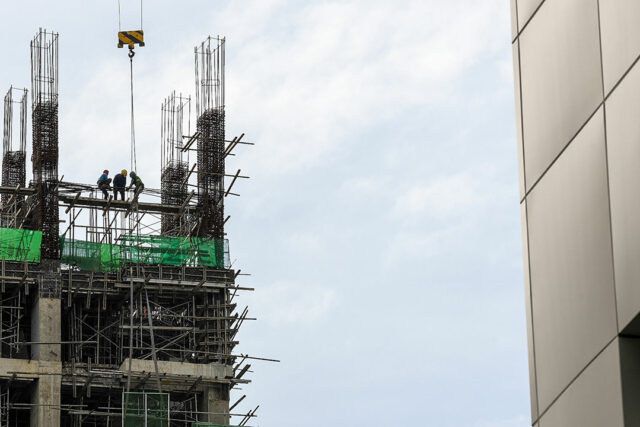
Workers were seen at a construction site in Manila. — PHILIPPINE STAR/EDD GUMBAN

By Beatriz Marie D. Cruz, Reporter

THE COST of building materials is likely to remain steady this year amid government demand and slowing inflation, although geopolitical uncertainties may cause price volatility, according to construction company executives.

“Based on the current market situation, we see a steady trend in prices, with partial bias for marginal increases due to demand coming from government infrastructure projects as well as the rollout of economic and socialized housing projects,” Megawide Construction Corp. said in an e-mail to BusinessWorld.

Jason C. Valderrama, president and chief executive officer  at construction firm JCV & Associates, said prices of construction materials are expected to remain stable amid cooling inflation and easing interest rates.

“The inflation rate has been the lowest in the last five years and the construction materials wholesale price index moves in lock step with it, so prices of construction materials will be stable this year,” he said in an e-mail.

In the first three months of the year, the wholesale price growth of construction materials in Metro Manila averaged 0.1%, lower than 1.1% a year ago, latest data from the Philippine Statistics Authority showed.

Headline inflation averaged 2.2% in the January-to-March period, within the central bank’s 2-4% target.

Mr. Valderrama said the resumption of the Bangko Sentral ng Pilipinas’ (BSP) easing cycle would further temper inflation and stabilize construction material prices.

The BSP on April 10 cut rates by 25 basis points, bringing its key policy rate to 5.5%. BSP Governor Eli M. Remolona, Jr. said further rate cuts will likely be delivered in “baby steps” or in 25-bp increments.

“The Philippines is always reliant on developments in the global commodity markets like oil, steel products and China’s economic situation/trends, and basic construction materials like cement, pipes and lumber may be very volatile,” Aboitiz Construction Vice-President for Strategic Asset and Supply Chain Management Eric King said in an e-mail to BusinessWorld.

However, the price and supply of raw steel are expected to remain steady through 2025, he said.

“We anticipate that this will result in a stable availability and unchanged base cost of our steel base materials, including steel fibers, dowel cradles, armor joints, gabions, and other double-twist items.”

The expected slowdown of global oil prices would also stabilize the cost of energy intensive materials like steel and cement, according to Megawide Construction.

“As of the latest forecasts, oil prices are expected to slow down on account of higher output coupled with reduced demand,” Megawide Construction said.

The Organization of the Petroleum Exporting Countries on April 14 reduced its 2025 global oil demand growth forecast as the United States’ tariff policy has dampened economic activity, Reuters reported.

“This scenario, however, can change depending on the intensity of the ongoing trade war triggered by US policy directions,” Megawide said.

IMPACT OF TRADE WAR
However, the US tariff policy as well as ongoing conflicts in the Middle East could still hurt global supply chains, affecting the cost of building materials.

“If the current state of tensions in Europe, the Middle East and Asia worsens, shipping routes may be affected and cause higher transport and landed costs. In addition, the trade war could disrupt traditional sourcing channels and impact pricing, which should also be reflected in prices,” the company said.

US President Donald J. Trump on April 9 announced a 90-day suspension of reciprocal tariffs with its trading partners except China, although the baseline 10% tariff on most US imports remained in effect.

Philippine exports were imposed a 17% reciprocal tariff by the US, the second- lowest among Southeast Asian countries.

Cebu Landmasters, Inc. Chief Operating Officer Jose Franco B. Soberano said the company is still seeing “very favorable” steel prices and stable cement prices amid tariff pressures.

“It might even be beneficial to us because there will be more supply coming to our region… We will get more competitive and aggressive pricing from Southeast Asia or Asian countries that supply construction materials to us. Costs have gone up in the last three years due to the supply chain disruptions and the pandemic, but it’s become more stable now,” Mr. Soberano said in an interview aired on Money Talks with Cathy Yang on One News last week.

However, Mr. Soberano said that while the company is taking advantage of pricing opportunities, it is “not locking in anything beyond three or six months.”

Mr. Valderrama said he expects muted US demand for construction materials from China and other countries due to the trade war. He noted these countries will look to send more of their products to other export markets such as the Philippines.

“There will be a lot of available supply from China when it comes to steel, so if there is nowhere to go because of the tariff issue, then the tendency is there will be supply available [for the Philippines],” PHINMA Corp. Director and Executive Vice-President for the Construction Materials Group Eduardo A. Sahagun said via telephone.

To navigate unexpected changes in the market, Mr. King said Philippine companies should foster strong relationships with its business partners and suppliers.

“In some advanced organizations and industries, they have started to use data and AI-powered tools to help them find better prices and manage their inventory more efficiently,” he said.
PSE IPO target unlikely amid uncertainties due to tariffs — analysts

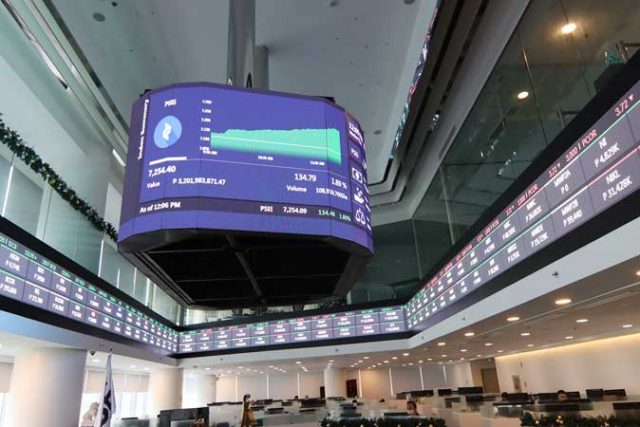
BW FILE PHOTO

By Revin Mikhael D. Ochave, Reporter

THE PHILIPPINE Stock Exchange’s (PSE) target of six initial public offerings (IPOs) this year may no longer be achievable due to uncertainties related to US tariffs, according to analysts.

“Until we see more consistency between President Donald J. Trump’s trade statements and actual policy direction, investor sentiment may remain cautious — making it more important for upcoming IPOs to be timed carefully and backed by strong fundamentals,” DragonFi Securities, Inc. Equity Research Analyst Jarrod Leighton M. Tin said in a Viber message on Wednesday.

“We’ve seen how market volatility can derail IPOs, with Mr. Trump’s unpredictable tariff policies shaking global equity markets… This kind of bearish sentiment makes it harder for IPOs to gain traction,” he added.

AP Securities, Inc. Research Head Alfred Benjamin R. Garcia said that the ongoing trade war has increased the likelihood of an economic slowdown, weakening investors’ risk appetite.

“With markets being as weak as they are, GCash is likely thinking that they won’t be able to get valuations acceptable to existing shareholders. Since they have no immediate need for funds, it would be better for them to wait for better conditions before going public,” he said.

“We thought that the six-IPO target was a long shot even before the trade war, so it’s even more unattainable now. Our most optimistic IPO estimate is four, and only Maynilad will be big,” he added.

Electronic wallet giant GCash recently hinted at possible delays in its planned public listing, citing the Trump administration’s tariffs.

Globe Chief Financial Officer Juan Carlo C. Puno said on Tuesday that the new US tariffs have added a lot of uncertainty. Despite this, he said that GCash’s market debut would likely happen either this year or next year.

“I think this uncertainty does not stop us from preparing. The goal is to get GCash to a point where we are push-button ready. So, when the market opens up, if we find the window where the valuations and interest we’re getting are appropriate and acceptable, we will push that button for the IPO,” Mr. Puno said.

Globe has a 36% stake in Globe Fintech Innovations, Inc. (Mynt), which owns GCash operator G-Xchange, Inc.

Mr. Trump recently announced his “Liberation Day” tariffs, which include a 10% duty on goods from all countries. The Philippines is subject to a 17% tariff on its exports to the US, though these, along with most reciprocal tariffs, have been suspended for 90 days.

The PSE saw its first public listing on April 8 with the P732.6-billion IPO of Cebu-based fuel retailer Top Line Business Development Corp.

Mr. Garcia said that the risk appetite among investors is not there yet despite positive local factors such as slower inflation and easing policy rates.

“Valuations are still at levels not seen since the Global Financial Crisis of 2008, so it’s unlikely that the market will have appetite for high valuations. Companies, on the other hand, are unlikely to accept low valuations for their IPO,” he said.

Philippine inflation eased to 1.8% in March from 2.1% in February, the lowest in 58 months or since the 1.6% logged in May 2020.

The local central bank recently reduced borrowing costs by 25 basis points despite a more challenging external environment.

China Bank Capital Corp. Managing Director Juan Paolo E. Colet said in a Viber message that the risk of economic slowdown caused by the Trump administration’s tariffs would have a negative impact on corporate earnings and valuations.

“Elevated uncertainty around US economic policy has also introduced significant volatility in global financial markets, so that has made some foreign investors more cautious about committing to IPOs in Southeast Asian emerging markets,” he said.

Despite uncertainties, Unicapital Securities, Inc. Equity Research Analyst Peter Louise D.C. Garnace said that the P49-billion IPO of Pangilinan-led water provider Maynilad Water Services, Inc. is still expected to proceed.

“We believe that the water sector is relatively insulated from global trade tensions as growth is domestically driven. On top of this, Maynilad’s IPO has a higher likelihood of pushing through, as the water concessionaire is legally required to list by 2027,” he said in a Viber message.

Mr. Colet said that Maynilad is still on track to have a “successful IPO” despite the uncertainties.

“They are a defensive stock and dividend play, so that would draw a lot of investor interest,” he said.

The offer period of Maynilad’s IPO will be from June 25 to July 2, with a July 10 listing date, based on its prospectus dated March 14.

Signed into law on Dec. 10, 2021, Republic Act No. 11600 granted Maynilad a 25-year legislative franchise until 2047 to establish, operate, and maintain a waterworks system and sewerage and sanitation services in the West Zone service area of Metro Manila and Cavite province.

The law also requires Maynilad to offer at least 30% of its outstanding capital stock within five years from the grant of the franchise.

ICTSI: Trump tariffs pose little risk, Mexico terminal vulnerable

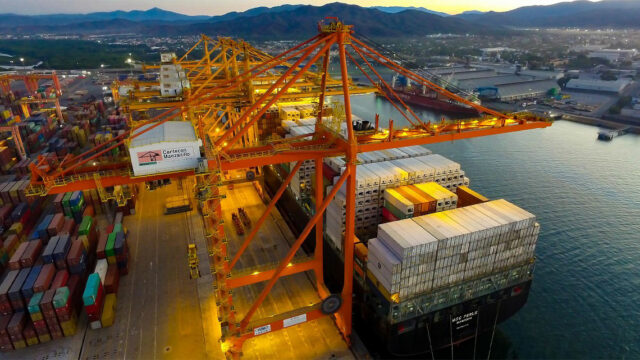
ICTSI.COM

INTERNATIONAL Container Terminal Services, Inc. (ICTSI) said its operations are unlikely to be affected by new US tariffs, but its Mexico operations may face market impact.

“It is too early to tell the impact since Trump’s flip-flopping every day. It is also too early to tell how these tariffs will settle; our operations are very diverse,” ICTSI Chairman and President Enrique K. Razon, Jr. said during the company’s annual stockholders’ meeting on Thursday.

“The only major impact that could be possible would be at the Manzanillo terminal (in Mexico),” he added.

Mr. Trump has disrupted the global trade system with his “Liberation Day” tariffs, including a 10% duty on goods from all countries.

The Philippines has been hit with a 17% tariff on its exports to the US, but these, along with most reciprocal tariffs, have been suspended for 90 days.

ICTSI operates 33 terminals in 20 countries across six continents. The company has operations in Mexico through Contecon Manzanillo (CMSA).

“There could be an impact (on the Mexico terminal), but so far it is a wait-and-see. Out of our portfolio, trade with the US is only 3%,” he said, noting that if the company’s Mexico operations were affected, this could still be mitigated by other markets.

“Massive industrial installed capacity in China means they will be looking for other markets. So, one market offsets another.”

In 2024, the listed port operator saw its attributable net income surge by 66.1% to $849.8 million from $511.53 million a year earlier, driven mainly by its operations in Asia.

Gross revenues for the period rose by 14.6% to $2.74 billion from $2.39 billion in 2023.

Breaking down the company’s revenue growth, its operations in Asia accounted for the largest share, generating $1.14 billion in 2024, up by 9.6% from $1.04 billion in 2023.

Revenues from its operations in the Americas reached $1.08 billion, up by 26% from $855.62 million in 2023, while revenues from Europe, the Middle East, and Africa (EMEA) totaled $521.02 million, an increase of 6.3% from $490.28 million. — Ashley Erika O. Jose

Total EKlipse

NORMAN P. AQUINO

By Norman P. Aquino, Special Reports Editor

RELUCTANTLY, I stepped forward. The ride attendant secured our harnesses and gave us a thumbs-up. As the countdown began, I shut my eyes, my heart hammering in my chest. The ride lurched upward, slowly at first, but with each second, we went higher. My stomach twisted as the world blurred around me. Then, the EKlipse spun. 

The massive pendulums of Enchanted Kingdom’s (EK) newest ride swung high, revolving and tilting as it threw four riders fastened back-to-back to each gondola on both ends into the air.

I could hear the grunts from my nephew and grand-nephew behind me — their screams of terror echoing through the park and later turning into laughter. The thrill of weightlessness, the rush of the wind against my face — it was terrifying and exhilarating at the same time. Below, the park lights shimmered like stars.

Riding the EKlipse felt pretty much like riding the Octopus — a popular amusement park ride known for its rotating arms and suspended seats, resembling an octopus with multiple “tentacles” that swing in various directions — in peryas during my pre-teen years.

Like the Octopus, riders experience centrifugal force and weightlessness while on the EKlipse, except that guests stay upright throughout the experience. You also won’t feel like you are falling from your seat because your body is tightly secured by padded metal bars.

But the resemblance was striking, especially at night, when two rows of round white LED bulbs covering the EKlipse “tentacles” light up, resembling octopus suckers.

It never really felt like one of the four arms I was on would hit another, but after watching the EKlipse operate while not riding it, it definitely seemed like it might as the arms passed each other in synchronized motions.

As the ride slowed and finally stopped after about two minutes — the preparations took much longer — we stumbled off, breathless.

The EKlipse, designed and manufactured by Italian company Antonio Zamperla S.p.A., targets pre-teens and teenagers, and parents too, as long as they’re bold. It’s definitely not for the faint of heart — as you enter the gate, you are warned that the EKlipse is not for people with a weak heart.

EK launched the EKlipse on March 30 as one of their inaugural gifts for their 30th anniversary this year. It’s the first of its kind in Southeast Asia, and before its installation at Enchanted Kingdom, the EKlipse was recognized by the International Association of Amusement Parks and Attractions in 2019 as one of the best rides globally.

Enchanted Kingdom is open from 11 a.m. to 8 p.m. on Wednesdays through Sundays. It is located along RSBS Boulevard (San Lorenzo Road) in Santa Rosa, Laguna.

Pangilinan says Meralco ‘looking for ways’ to lower power prices

PHILSTAR FILE PHOTO

By Ashley Erika O. Jose, Reporter

MANILA ELECTRIC Co. (Meralco) remains focused on lowering power rates and ensuring supply reliability, its chairman said on Thursday, amid continued scrutiny following the renewal of its franchise.

“We are very mindful of that. I hope we are able to bring down power prices, at least on the distribution side. We don’t make money on the generation side, but we get the brunt of the criticisms. It is in our interest to bring power rates down — we are looking for ways to do that,” Meralco Chairman and Chief Executive Officer Manuel V. Pangilinan said at the Giga Summit 2025: The Fusion of Power and Intelligence, an industry forum held on Thursday.

President Ferdinand R. Marcos, Jr. on April 11 signed into law the measure extending Meralco’s franchise for another 25 years. Its current franchise is set to expire in 2028.

With the extension, the company will have the authority to distribute power to Metro Manila, Bulacan, Cavite, Rizal, and select areas in Batangas, Laguna, Quezon, and Pampanga until 2053.

It has around eight million customers in 39 cities and 72 municipalities.

“Beyond the traditional role of business, of supplying goods and services for profit, we are stewards of the money entrusted to us; that’s the basic role of business — providing goods and services for profit,” Mr. Pangilinan said.

Mr. Pangilinan said the company is focusing on helping advance the country’s energy transition, including the Philippines’ ambition to include nuclear power in the country’s power mix.

“Let me focus on the nuclear situation, the thrust of Meralco in nuclear. We’ve had several visits abroad; we’re looking at viable modular nuclear energy, but that’s still some years away,” Mr. Pangilinan said.

Energy Secretary Raphael P.M. Lotilla has also called on Meralco to ensure that it can fulfill its franchise obligations, noting that it is also responsible for the supply through its decisions on where to procure power.

“What Meralco chooses to contract also dictates what power supplies are left for all other distribution utilities, and electric cooperatives do not have the scale to backstop the construction of a large-generation facility,” Mr. Lotilla said during the same event.

Earlier this month, the Energy Department called on Meralco and Excellent Energy Resources Inc. (EERI), the operator of the 1,275-megawatt combined-cycle natural gas plant, for alleged undelivered capacity under their power supply agreement.

“Any delays in the implementation of a power supply agreement have results, not just within the Meralco franchise area, but particularly for the rest of Luzon. And in all this, as I’ve said, the question that we need to ask is, how can Meralco be the very best that it can be? It is a challenge that I impose on you, given that your performance affects the rest of the country,” Mr. Lotilla said

Meralco’s controlling stakeholder, Beacon Electric Asset Holdings, Inc., is partly owned by PLDT, Inc. Hastings Holdings, Inc., a unit of PLDT Beneficial Trust Fund subsidiary MediaQuest Holdings, Inc., has an interest in BusinessWorld through the Philippine Star Group, which it controls.

Forget the film: Vatican is preparing for the real Conclave

A SCENE from the 2024 film Conclave.

VATICAN CITY — As the Vatican prepares for the secret meeting of cardinals who will pick a successor to Pope Francis, forget — to some extent — what you may have learned from Conclave, last year’s hit movie depicting high-level power games and backstabbing among the red-robed clerics.

The conclave of the so-called “Princes of the Church” that will elect a new pope is expected to start some time between May 6 and May 11. It will follow Francis’ funeral on Saturday and wider consultations among cardinals, known as general congregations.

The film, which won an Oscar in March for best adapted screenplay, is a faithful representation in terms of costumes and staging, but the blatant scheming and closing plot twist — which this article will not spoil — are too much, Church experts say.

“Let’s face it: Conclave, which takes us to the heart of one of the most mysterious and secret events in the world, is a highly entertaining film, especially for an easy-going American audience,” the Italian bishops’ newspaper, Avvenire, wrote in a December review.

“But it is impossible not to smile at certain characters or situations that, especially in the eyes of Italian viewers, risk resembling involuntary parodies,” it added.

US Cardinal Sean O’Malley was scathing, saying in a February entry on his blog that the business of electing a pope is not “some sort of scene of political backroom plotting of how to get your candidate elected.”

O’Malley, a Franciscan friar who took part in the 2013 conclave that elected Francis, wrote:

“Throughout the process, we had a very acute awareness that millions of Catholics around the world were praying for us so that the Holy Spirit would guide us in our deliberations.”

FRANCIS AND HIS ‘LICENSE TO TELL’
The word “conclave” comes from the Latin cum clave (with a key), referring to the Medieval practice of locking cardinals up in a room until they make a decision on a new pope. That is still essentially how it works today.

Cardinals gathered inside the Sistine Chapel are banned from communicating with the outside world — no phones, television, or internet — and are supposed to keep quiet about the election afterwards. But details, inevitably, filter through.

Francis himself, in an interview book published last year, broke the confidentiality rule, and did admit there were some machinations.

“Cardinals swear not to reveal what happens in the conclave, but popes have a license to tell it,” he told Spanish journalist Javier Martinez-Brocal.

He said he was “used” in a failed attempt to block Benedict XVI, the 2005 frontrunner, with 40 out of 115 votes converging on him as cardinals behind the maneuver hoped this would pave the way for the emergence of another candidate.

Benedict was duly elected, Francis said, after he told one of the would-be schemers: “Don’t fool me with this candidacy, because right now I’m going to say I’m not going to accept, okay? Leave me out.”

Francis said he personally voted for Benedict because the Church needed a “transition pope” after the long papacy of John Paul II. In 2013, Francis came up as a surprise candidate, after impressing peers with a speech on the need for church reform.

This time around, there is no clear frontrunner, although British bookmakers have named Luis Antonio Tagle, a reformer from the Philippines, and Pietro Parolin, a compromise choice from Italy, as early favorites in the race.

Robert Harris, author of the book on which the film Conclave is based, told The Boston Globe this week that he had approached the conclave “purely from a secular point of view of someone who is interested in institutions, how they work, and the power plays within them.”

“These powerful figures are locked away in one of the most extraordinary artistic gems of the Renaissance. They’re not allowed to speak to the outside world and they have to stay there for days until they get a two-thirds majority, and that is just the most wonderful drama in itself,” he added.

Conclave director Edward Berger has said that while the film is set in the Vatican, it could be about the power games that take place wherever there is a top job to fill.

“And whenever that power vacuum exists, there’s going to be people striving for it. There’s going to be people fighting for it and stabbing each other in the back and trying to manipulate their way into this power,” he told Reuters in November.

Regardless of how much the book and film are fiction, interest in the story surged after Francis died on Monday.

Entertainment industry data firm Luminate reported that US streaming viewership figures for Conclave rose by 283% on Monday compared to the previous day. — Reuters

PAL, Qatar Airways partner for daily Manila-Doha flights

QATARAIRWAYS.COM

FLAG carrier Philippine Airlines (PAL) is set to launch daily nonstop flights between Manila and Doha, Qatar, under its codeshare cooperation agreement with Qatar Airways.

In a media release on Thursday, Philippine Airlines and Qatar Airways announced a strategic partnership to expand flights between Manila and Doha, with the goal of improving connectivity between the Philippines and the Middle East.

“As Philippine Airlines expands its presence across the globe, we are delighted to forge new alliances that build new connections and give our business and leisure passengers more flexibility and seamless access when flying to their desired destinations,” said PAL President and Chief Operating Officer Stanley K. Ng.

Beginning June 16, the two airlines will codeshare on the seven weekly flights operated by PAL as part of the first phase of the collaboration.

The planned flights will be operated using PAL’s long-range Airbus A330-300 aircraft in a dual-class configuration, with an exclusive Business Class cabin and 341 seats in the main Economy Class cabin.

“At Qatar Airways, we continue to explore opportunities that strengthen our connectivity around the world, and our latest partnership with Philippine Airlines is a testament to this commitment. This strategic cooperation also aims to deepen the socio-economic ties between the Qatari and Filipino communities. We are proud of the new codeshare flights and look forward to delivering increased benefits to global travelers,” Qatar Airways Chief Commercial Officer Thierry Antinori said.

The two airlines will also explore further collaborations, including a partnership to promote additional destinations across both Qatar Airways’ and PAL’s networks. The two carriers also aim to explore potential opportunities for frequent flyer cooperation. — Ashley Erika O. Jose

Indonesian singer Pamungkas and Thai duo Scrubb to share a stage in Manila

POP ARTISTS Pamungkas and Scrubb, from Jakarta, Indonesia, and Bangkok, Thailand respectively, will be coming together onstage for the first time in the concert #GNN10 Presents: Pamungkas and Scrubb Live in Manila.

This showcase of Southeast Asian music will play for one night only on April 26, at 123 Block in Mandala Park, Mandaluyong City.

Pamungkas (whose full name is Rizki Rahmahadian Pamungkas) is one of the most commercially successful singer-songwriters in Indonesia. Known for his 2019 global hit single “To The Bone,” which peaked at No. 5 on Spotify Philippines’ Top 50 chart, he recently released his fifth studio album, Hardcore Romance.

Meanwhile, Scrubb reached international popularity for contributing to the official soundtrack of Thai “boy’s love” (BL) romance 2gether The Series, released in 2020. Composed of Thawatpon “Muey” Wongboonsiri and Torpong “Ball” Chantabubpha, the duo has produced six studio albums over the course of their career.

For Pamungkas, the concert will be another welcome learning experience.

“My favorite thing is learning from people. [Music] is always about connecting with people on and off the stage. My mindset is to go there and be very open, to take everything in,” he said during an online press conference on April 22.

“I can pick up something from the perspectives of Filipino audiences, from discovering a new sound in the area, from watching Scrubb or by talking to them. That’s my mindset,” he added.

The Indonesian singer-songwriter last performed in the Philippines for Gabi Na Naman (GNN) Productions’ music festival Gimme Shelter in 2022. He was well-received for his heartfelt songs, some sung in Bahasa Indonesia, but some in English which more people could understand.

Since then, there has been a new format for his band, which means fans can expect a slightly different sound in the upcoming concert, according to Pamungkas.

“It was surprising to me when my manager said that the numbers of [listeners in the] Philippines are pretty high. Why would people listen to my songs? How? I don’t know. Like a photographer capturing moments with pictures, [songwriting] is my way of capturing my checkpoints in life. I’m able to connect through that,” he explained.

The one-day event doubles as a landmark celebration of regional talent, curated by GNN Productions in honor of its 10th anniversary. In addition to the international headliners, the show’s lineup includes Filipino acts The Ridleys and Shirebound.

Scrubb was last in the Philippines in February last year, which was their first concert in the country. Aside from the wide following due to their involvement with the BL romance genre, the Thai alt-pop duo garnered new Filipino fans from an online collaboration with local pop band Ben&Ben during the pandemic.

For Pamungkas, the upcoming concert will be a great opportunity to perform with Scrubb, whom he considers “a brilliant artist.”

Tickets for #GNN10 Presents: Pamungkas and Scrubb Live in Manila concert are now available via https://scrubbpamungkas.helixpay.ph, with tickets ranging in price from P1,900 to P5,200. — Brontë H. Lacsamana

Ayala Land eyes P55-billion fundraising this year

AYALA LAND

LISTED property developer Ayala Land, Inc. (ALI) is targeting to raise P55 billion in fresh funds this year to settle debt and support its expansion.

“We have a very busy year ahead of us. This year, we intend to raise a total of P55 billion, P25 billion of which will go toward the refinancing of maturing obligations, and P30 billion will support our P95-billion capital expenditure (capex) program,” ALI Chief Finance Officer Augusto D. Bengzon said during a media briefing in Makati City on Thursday.

Mr. Bengzon said 60% of the planned P55-billion fundraising will be done through sustainability-linked financing, while 40% will be through bilateral credit facilities.

He added that roughly half of ALI’s sustainability-linked financing will be through a multilateral agency, while the other half will be via the capital market.

ALI earmarked P95 billion for capex this year as the real estate company targets launching P100 billion worth of projects.

Of the total, 37% will be for residential projects, 25% for estate development, 23% for leasing and hospitality assets, and 15% for land acquisitions and general corporate purposes.

ALI President and Chief Executive Officer Anna Ma. Margarita Bautista-Dy said in the same briefing that the property developer will be aggressive in expanding its commercial and industrial lots business this year.

“This product has traditionally been part of our menu of offerings, accounting for maybe 10% of our sales. This is an area where we believe there are opportunities because the buyers are businesses. Buyers would like to have commercial property as part of their portfolio of real estate assets,” she added.

However, Ms. Dy reiterated that ALI will continue to focus on expanding its premium residential segment.

“Our focus on the premium segment will continue, specifically the premium segment and more horizontal developments,” she said.

“The middle market continues to have some challenges, not just in terms of interest rates being stickier than we would have wanted, but also some oversupply in particular segments and geographies,” she added.

Sales from premium brands AyalaLand Premier and Alveo rose by 25% to P80.8 billion in 2024, accounting for 64% of total sales.

Ms. Dy said ALI will soon launch the Laurean luxury residential tower project. It will be located on a half-hectare property in Makati City.

“This would be more varied. It would have one-, two-, and three-bedroom units. We’re trying to attract a broader market for it,” she said.

AYALALAND LOGISTICS
Meanwhile, ALI’s industrial park and cold storage subsidiary AyalaLand Logistics Holdings Corp. (ALLHC) sees growth opportunities as manufacturers adjust their strategies in response to uncertainties surrounding new tariffs imposed by the United States government.

“The recent macroeconomic shifts offer a potential advantage for ALLHC. The enhanced attractiveness of the Philippines as an investment hub is expected to boost demand for its industrial parks, warehouses, and cold storage facilities,” ALLHC President and Chief Executive Officer Robert S. Lao said during the company’s virtual annual stockholders’ meeting on Thursday.

“Moreover, the Philippines’ competitive advantage within ASEAN could make our sites a preferred location for manufacturers, directly benefiting ALLHC as they seek new operational sites. Through a dynamic approach, ALLHC will proactively adapt to the evolving requirements of its foreign and local clients and navigate the shifting business climate,” he added.

US President Donald J. Trump recently announced 10% blanket tariffs on all its trading partners. However, he implemented a 90-day pause on a plan to impose higher reciprocal tariffs on some countries.

The US imposed a 17% reciprocal tariff on Philippine exports, the second lowest among Southeast Asian countries after Singapore’s 10%.

Last month, ALLHC said its subsidiaries acquired 3M Pangasinan in Urdaneta City, Pangasinan, and 3M Iloilo in Santa Barbara, Iloilo, as part of growing its cold storage network.

The two properties, renamed Artico Urdaneta and Artico Iloilo, were the sixth and seventh facilities under ALLHC’s Artico cold chain brand. These additions brought 11,200 new pallet positions, putting the company’s total storage capacity at 31,500.

On Thursday, ALI shares rose by 0.41% or ten centavos to P24.70 apiece, while ALLHC stocks gained by 2.21% or three centavos to P1.39 per share. — Revin Mikhael D. Ochave

EastWest Bank bullish on sustained profit growth

PHILSTAR FILE PHOTO

EAST WEST Banking Corp. (EastWest Bank) is bullish on sustained double-digit profit growth this year, barring any external shocks amid the uncertain global economic environment caused by the policy shifts in the United States.

EastWest Bank Chief Executive Officer Jerry G. Ngo said at a media briefing following their annual stockholders’ meeting on Thursday that he remains confident that the listed lender can sustain the double-digit income growth they have seen in recent years, barring systemic and economic shocks from recent global trade developments stemming from the Trump administration’s tariff policies.

The bank saw its net income increase by 25% year on year to a record P7.608 billion in 2024. In 2023, its attributable profit also grew by an annual 32%.

“What gives us confidence … is the quality of our growth was not really reliant on any one-time gains. It’s all focused predominantly on core businesses. Over the past few years, we’ve focused on rebalancing the portfolio, embedding smarter risk controls, refining the way we serve our different customer segments, and this groundwork is now delivering consistent quality results,” Mr. Ngo said.

“I think more importantly, we’re not chasing volume for the sake of volumes. We’re building what I would like to claim to be a durable business now. The mix of our customer loan portfolio now is more resilient. Our deposit base is stable and our digital infrastructure is now built to scale. Our performance in 2024 isn’t just a rebound.”

The official said the challenge would be getting incremental volume and income moving forward to combat base effects.

“What we believe is that the operating model is now able to generate economies of scale, and I think that’s the most important thing. The infrastructures [and the] groundwork are put in place. There’s still a lot to go, but… our clients are starting to see and feel them, probably in terms of delivery channels, faster turnaround times, online capabilities, apps that are really, really responsive to their needs. So, it’s about growing with intention and also growing in the right way… I think we’re really excited about what the future holds for EastWest Bank,” Mr. Ngo said.

He added that the bank is expected to benefit from lower funding costs resulting from cuts in key interest rates as a negatively-gapped lender.

The bank is also looking to boost its digital services to expand its customer reach, he said.

“We are doing more embedded banking and more ecosystem partnerships. It should allow us to tap into a growing pool of newly-banked clients, and that allows us to help them graduate from the informal sector to the formal sector,” Mr. Ngo added.

Meanwhile, he said the bank is looking to raise at least P10 billion from the domestic bond market under a new fundraising program.

“I think we are looking at [raising] P10 billion in the initial stage, but of course the shelf will be much higher. It really depends on where the interest rates are at the moment.”

Mr. Ngo said in August last year that the bank was looking to raise up to P10 billion from bond issuances in several tranches and tenors.

On Thursday, he said the bank is setting up a new fundraising program. EastWest Bank in 2023 approved a P30-billion bond program that was set to be issued over five years.

The listed bank last tapped the domestic bond market in February 2020, raising P3.7 billion from an issuance of three-year fixed-rate bonds.

“I think it’s going to be a matter of price and liquidity… The recent reserve requirement cuts by the BSP (Bangko Sentral ng Pilipinas) are starting to kick in and will create more liquidity in the market… Hopefully that will then allow us to tap into the market and to that pool of liquidity,” Mr. Ngo said.

“As you know, our CASA (current and savings account) ratio is still fairly strong. Our funding base is stable. We are growing in line with what our asset growth is. So, I think that that can still be sustained quite well.”

The BSP in March cut the reserve requirement ratios (RRR) of universal and commercial banks and nonbank financial institutions with quasi-banking functions by 200 basis points to 5% from 7%.

It also reduced the RRR for digital banks by 150 bps to 2.5%, while the ratio for thrift lenders was lowered by 100 bps to 0%.

Rural and cooperative banks’ RRR has been at zero since October 2024.

The central bank has brought down banks’ reserve ratios to single-digit levels from the high of 20% set for big banks in 2018.

Meanwhile, the Monetary Board on April 10 resumed its rate-cutting cycle, reducing benchmark borrowing costs by 25 basis points (bps) to bring the policy rate to 5.5%.

BSP Governor Eli M. Remolona, Jr. said they will likely continue cutting rates further this year in “baby steps” or increments of 25 bps.

There are four more Monetary Board policy meetings this year, with the next slated for June 19.

EastWest Bank’s shares declined by 12 centavos or 1.14% to close at P10.44 each on Thursday. — A.M.C. Sy

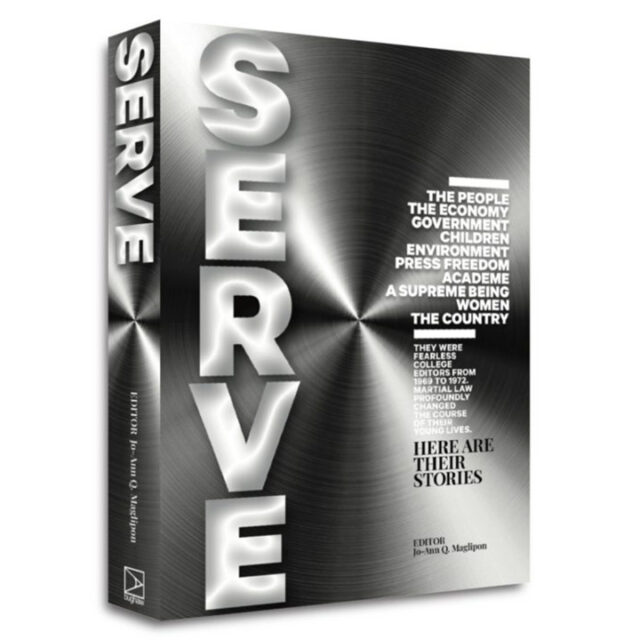
Serve: Jo-Ann’s ode to positive nationalism

Less than two years ago, we launched Serve, a book of stories of fearless college editors from 1969 to 1972, arguably the sequel to our 2012 book Not On Our Watch: Martial Law Really Happened. We Were There. Not On Our Watch sold out while the bookstores are running out of Serve — not in big quantities, but in huge demand from those who care to know what really happened to the Philippines during Martial Law, and what happened to those who kept watch during those dark days of military dictatorship.

Writing for Serve, according to fellow contributor and eminent writer Butch Dalisay, was done “…under no compulsion to conform to an ideological standard. They only had to extol the spirit of service to the people — the overarching theme of their youth and now their continuing commitment and legacy.” That is the strategic convergence of the 19 writers. But service, in the epilogue we wrote with our distinguished editor and writer par excellence Jo-Ann Q. Maglipon, cannot be a “fleeting business, to be set aside when the next riveting cause comes along.”

If indeed in the 1970s, our struggles taught us to focus and work hard, today is no different because as positive nationalists, we continue to do our share to see change in the government because there is so much space for change. We need to build our nation because the political and social fabric is rather fragile. We should reinvent ourselves, for innovation can lead to constructive fruitfulness. Positive nationalism, after all, demands a practical expression in a people’s daily lives.

This should be good news to those who want to buy a copy but have difficulty sourcing it. All 19 writers and our editor Jo-Ann reached a consensus to have a second printing. There is a huge difference, though, between the first and the forthcoming edition. The new edition’s preface will be Jo-Ann’s brilliant ode of a speech given during the launch of the first edition in September 2023. I call it an ode because of its beautifully lyrical language, capturing the deepest thoughts and sentiments behind the contributions of these wiser souls.

As Serve is indeed about positive nationalism, let me offer our readers excerpts of Jo-Ann’s lyricism:

Serve is not a vanity publication.

“Twenty of us did not gather one morning and say, Let’s get down and chronicle the memories of our storied youth. Nor did we decide that our high-flying journey into our ’70s deserved to be immortalized. And, as far as I know, none of us had stumbled upon a burning bush and come to the epiphany that we were special.

“We had always just wanted to put out books.

“We had the skill and the interest — we had been editors in college, or even earlier, in high school, or much later, at work. We had the provocation and the temperament — the country we knew was being written up in ways that made it unrecognizable to us and saying nothing did not feel right. We had the time — or, more honestly, we felt we had only so much time — and we were not going to be run out of here by default.

Serve is not a self-congratulatory book.

“It is purposeful but, we trust, not smug. Its pitch is deliberate and, we also trust, not a decibel higher than is needed to make the point. All told, we go for the unhurried tone and the decorous language, avoiding breathlessness and belligerence.

“Seriously, this is who we are.

“We say dark times when we mean murderous times. We say events that profoundly changed our lives when we mean families torn, careers derailed, self-worth shattered. We say robbed of our rights when we mean bodily, mentally debased and defiled. We say moneys squirreled away into confidential funds when we mean taxpayers duped, defrauded, double-crossed. And we say autocrat and strongman when we mean murderer and dictator.

“But we refuse to be bullied into being civilized.

“No argument, there is virtue in mastering smokescreens.

“There is even entertainment to be had in tricks, decoys, sleights of hand, and coverups. The whole thing could turn into a wily game in a kingdom where we are lowly jesters, and the jesters win!

“After all, how many times can we keep writing plunderer? How many times megalomaniac and narcissist? Killer and butcher? Sadist and sociopath? Or even the more sedate brain-addled? Ineffectual? Sick?

“These creepy types come around with an almost cursed inevitability to run the republic to the ground — how long before the plain-spoken turns to noise? Or, worse, to ambient sound? How long before the public shuts down? Still, every single time, it is our language, our choice.

“Otherwise, we can just stop all the democracy talk.

“Civilized speech, it is also said, comes with a command of both the message and the mode. Well, we are intimate with our message but we choose not to screech it.

“What’s more, we want to reach people outside our circles — they who flinch before the harsh details of our past, they who like the distance offered by concepts and contemplations, they who find refuge in intellectual fogginess, they who require space to process the ugliness on their own.

“I swear, we’re not knocking any of this. To each his own, we say, at putting the devil in its place.

Serve is not about extracting sympathy.

“As real as the violations to our bodies and spirits are, this book is not about showcasing them. We have never been about soliciting tears. Quite the opposite — we cover visible battle scars well and we are talented at keeping private pains private.

“I wager it has to do with the incessant hum to ‘Serve the People.’ It is inside, in the head, receding sometimes, losing to times, we admit that the hum, also a kind of murmur, is sacred to us.

“How then call attention to our minor moans? Is not the call to pay attention to the grand lamentations of the many? This is not to say that we are all head and no heart, that we calculate our altruism or determine our course on will alone.

“Not at all.

“We have gratitude, we have joy, we have wonder. No way we are not sentimental. No way we do not let our guard down.

Serve is not about drama.

“We tell it as it is. If we must be faulted, perhaps it can be for (unconsciously) paring away too much or for (consciously) curating distracting theatrics. Some of us tend to be really spare.

Serve is not a book of unexamined lives.

“Everywhere is a thoughtfulness, a reflection, a scrutiny of the self.

Serve is not a book of certainties.

“Believe it or not, we may have begun our campus lives with a worldview egalitarian, classless, even utopian, all harking for that perfect world, but we do not stay static.

“We are searchers.

“We track the ups and downs in belief systems across continents and divides, the better to validate our old certainties or emancipate ourselves from them.

“On home soil, I suppose it counts that one government after another, eternally lacking the vocabulary, has locked down the ‘perfect world’ view as ‘communist,’ making it a word that could get us killed.

“So, we watch, we flex, we carry on.

“In our youth an ideology captures our imagination — one haunting enough to draw many of us to the underground, risk life, and bring a dictatorship down; one potent enough to send a number of us to the hills, court death, and fight for country.

“In our later years we turn to our own evolved set of beliefs — one haunting enough to make us bypass the red-baiting and the one potent enough to make us go ahead and produce obstinate and contrary books that could mark us enemies of the state.

“But, whether in the early or in the later years, we could not have done nothing.

“So, what is out there?

“It has been 51 years and running since September 1972. The millions who vote today have little instinct about the martial rule that descended then. They do not pick up on the parallelisms between Marcos Sr.’s Presidential Decrees then and the Anti-Terrorism Act now handed wholesale to Marcos Jr.

“Yet, this utterly means: The Son need never declare martial law and he will still wield the same overarching power The Father did. Little wonder Butch Dalisay writes this book’s introduction with, in his words, ‘sadness edging on sorrow.’

“So, why this book?

“To fight fantasy, forgetting, flagellation.

“To stop gaslighting activists for the resurrection of a dictator’s family.

“To rebuke calls to embrace unity and move forward by disremembering.

“To demand apology, atonement, redress.

“To remind the powers: We are here, we remember everything, and we write.”


Diwa C. Guinigundo is the former deputy governor for the Monetary and Economics Sector, the Bangko Sentral ng Pilipinas (BSP). He served the BSP for 41 years. In 2001-2003, he was alternate executive director at the International Monetary Fund in Washington, DC. He is the senior pastor of the Fullness of Christ International Ministries in Mandaluyong.

KMU batting for P1,200 ‘family living wage’

PHILSTAR FILE PHOTO

THE Kilusang Mayo Uno (KMU) labor union said its proposal for a P1,200 daily minimum wage is intended to give workers nationwide a family living wage in the face of rising prices.

“Every worker has the right to a living wage… It is only right that workers charge this to those who are sitting and aspiring to sit in government,” KMU Secretary General Jerome Adonis said in a statement.

KMU along with 30 other organizations have put together a “Labor Agenda” calling for wage reform, price controls, an end to contractualization, and strengthening union rights.

The groups represent workers from the agriculture, electronics, telecommunications, manufacturing, education, health, and business process outsourcing industries.

“Workers are fed up with policies that make us suffer in exchange for the profits of a few,” Mr. Adonis added.

Labor groups have called on President Ferdinand R. Marcos, Jr. to certify as urgent a bill that will impose a legislated national wage hike.

Senate Bill No. 2534, which seeks to impose a P100 national wage increase for private-sector workers, was approved on third reading last year.

The House version or House Bill No. 11376, which was approved on second reading in February, calls for a P200 daily wage increase.

KMU said Regional Wage Boards have failed to set appropriate wages and have not kept up with rising prices of goods. — Adrian H. Halili