Home Blog Page 1236

From teammate to rivals, Tenorio as new head coach of Magnolia

LA TENORIO — SBP

MANILA Clasico will never be the same, especially for Barangay Ginebra players who will now be at the frontlines against the longest-tenured Gin King LA Tenorio as the new head coach for archnemesis Magnolia starting in PBA Season 50 in October.

From teammates to rivals, Japeth Aguilar, Scottie Thompson, RJ Abarrientos and Justin Brownlee look forward to a bittersweet moment when they share the court with “kuya” LA albeit from different ends in an unbelievable whirlwind of PBA order.

Mr. Tenorio, originally from San Miguel and Alaska as the No. 4 pick in the 2006 draft, has been with Ginebra since as its leader since 2012 before being named by SMC sports director Alfrancis Chua on Monday as the new mentor in Magnolia in lieu of its long-time coach Chito Victolero.

And that has not sunk in yet to any Gin King, including resident import and Gilas Pilipinas naturalized player Mr. Brownlee, who looks up to Mr. Tenorio as his second coach next to Tim Cone since his arrival in the PBA in 2016.

“I can’t believe it, man. But to be honest, in my nine years in the Philippines playing for Ginebra, I feel like LA has been my second coach on the floor,” said Mr. Brownlee, who’s been with the Gin Kings since 2016.

“His moniker is ‘The Gineral’ for a reason and I wish him nothing but the best. It’s like a bittersweet feeling. Obviously, Magnolia is Ginebra’s biggest rival and yeah, I can’t wait to see what Manila Clasico is gonna be like, especially with LA now on the other side.”

Messrs. Tenorio and Brownlee have won six championships together in almost a decade but he and Mr. Aguilar have been playing together longer for almost 20 years, making it a tough transition for the latter.

It may be a little different with the younger Messrs. Thompson and Abarrientos, who have received the torch from the aging Mr. Tenorio in Ginebra’s changing of the guard for years now.

Mr. Abarrientos, the youngest of Mr. Tenorio’s proteges, echoes the same sentiment while being grateful for his lessons even for just a year since his Ginebra arrival as the No. 3 pick in last year’s rookie draft.

As per SMC official Mr. Chua, the possibility of being a playing coach for Magnolia is in the hands of Mr. Tenorio and for Ginebra players, that will be another different bridge they have to cross over once they get there.

For now, one thing’s clear, Mr. Tenorio — an eight-time PBA champion and four-time Finals MVP — has turned into a rival and the greatest respect they could ever have for a former comrade is playing to their fullest against him. — John Bryan Ulanday

Millora-Brown appeals case to FIBA to play Gilas as local

QUENTIN MILLORA-BROWN — UAAP

IT may not be for now but top prospect Quentin Millora-Brown (QMB) is hoping to don national colors on the international stage — sooner than later.

The 6-foot-10 Filipino-American standout revealed that he’s in the process of appealing his case to the International Basketball Federation (FIBA) to finally be eligible to play as a local.

“Absolutely, there’s an appeal in the works,” said Mr. Millora-Brown after facing Gilas Pilipinas himself with his club Macau Black Bears in a send-off tune-up match on Monday at the Smart-Araneta Coliseum.

“The lawyers and my agent are kind of taking care of that. I don’t really have all the details on that but if you want to know more about that, they can probably tell you more if you reach out to them.”

Mr. Millora-Brown, whose grandfather was a University of the Philippines (UP) alumnus himself, has been on the Gilas radar since his rise as a one-and-one player for UP in the UAAP last season but FIBA ruled him as a naturalized player due to lack of necessary citizenship requirements.

FIBA requires a home player with foreign blood to secure a passport of his preferred country before turning 16 years old and Mr. Millora-Brown’s camp has moved leaps and bounds to prove that to FIBA but to no avail.

There’s no stopping that effort for Mr. Millora-Brown, whose dream is to represent the country in a homage of his Filipino roots, even if it takes a long while.

“It would be amazing (to play for Gilas). There’s so much respect for all of those guys and absolutely, just the ability to play for your country is amazing. So, if that comes up, there’s no way I could turn it down,” added Mr. Millora-Brown, who came from three US NCAA schools before towing UP to the UAAP Season 87 crown in his lone collegiate year at home.

Mr. Millora-Brown, who also admitted choosing Europe over the PBA Season 50 Rookie Draft for now, showed a glimpse of that potential to help Gilas down the road with six points, seven rebounds, two assists, two steals and a block in Macau’s 103-98 loss to Gilas.

Even Gilas head coach Tim Cone admitted his desire to have a versatile and agile center like Mr. Millora-Brown, especially on his squad in need of size following the ACL injury of 7-foot-3 sensation Kai Sotto.

“He’s awesome. Man, I’d love to have him. He’s physical, he gets to the offensive boards really well. He has great size but (the possibility) is not there yet,” said Mr. Cone, who cleared that the Gilas’ naturalized spot belongs to Justin Brownlee alone at this point.

“I can dream and wish. I dream we had Michael Jordan and Kobe Bryant, but that’s not possible either. But if I had an opportunity, man, I would love QMB on the team.” — John Bryan Ulanday

Gilas Pilipinas beats Macau Bears ahead of FIBA Asia Cup mission

ONE SPORTS/RM CHUA

FAR from ideal but getting there.

A listless performance in the first half and a fiery showing in the second marked Gilas Pilipinas’ 103-98 come-from-behind victory over the Macau Bears Monday in a testy warm up ahead of its FIBA Asia Cup mission.

Much work is still needed from hereon but the Nationals are confident of hitting top form in time for the gold-medal mission in the Aug. 5-17 Continental meet.

“I really like our chances. The team has been having really great practices. As you saw (against Macau), I think the second half is more how we want to play, especially on the defensive end,” said Justin Brownlee, who exploded for a game-high 32 points spiked by a five-of-seven shooting from three point range in Gilas’ fightback from 21 down versus import-laden Macau.

“And yeah, it’s been a really great couple of weeks for us. Everybody’s getting more comfortable with each other, the chemistry has been really great. So I’m just excited overall for the whole experience and I can’t wait to see how we do out there.”

Brownlee and Co. leave for Jeddah, Saudi Arabia Wednesday to continue their more-tournament buildup there. They’re slated to face Jordan on Saturday in a tuneup, though Rondae Hollis-Jefferson won’t be beefing up their old rival.

Coach Tim Cone said after taking a breather against the Bears, June Mar Fajardo is expected to join the scrimmages in Jeddah. But Calvin Oftana, he reported, is “doubtful” due the ankle sprain he sustained during the PBA Philippine Cup finals.

“We were given a medical report from his camp and we’re not sure if he’s going to be available for the whole tournament. We’re going to try to address that (in the coming days). And we got Troy (Rosario) and RJ (Abarrientos) sitting on the wings to step in if necessary,” said Mr. Cone.

The Nationals will kick off their Asia Cup campaign in Group D against Chinese-Taipei on Aug. 6 before taking on New Zealand the next day and Iraq on Aug. 9.

Their initial object is to advance to the quarterfinals and ultimately, rule it all.

“Our goal is to win a gold medal. We’re going to go out there to try to win a gold medal. Will we? I’m not sure. That’s certainly our goal. That’s not what we’re focused on, though, we’re focused on every day, And right now, we’re focused on the first game we play,” said Mr. Cone.

“Man, it’s an incredible challenge you know. You got some really good teams out there… I think with the team we have, that’s very possible. It’s just going to take us an extreme amount of hard work and dedication from everybody to buy into that. With everybody doing that, I think it’s a bright future to be honest for the Gilas program,” said Mr. Brownlee. — Olmin Leyba

The Scores

Philippines 103 – Brownlee 32, Ramos 19, Edu 15, Quiambao 14, Thompson 10, Perez 7, Newsome 2, Malonzo 2, Abarrientos 2, Aguilar 0, Tamayo 0.

Macau Black Bears 98 – Douglas 23, Amorie Anthony 22, Leung 17, Peek 14, Shackleford 7, Millora-Brown 6, Dennis 5, Obasa 2, Ndiaye 2, Micek 0.

Quarterscores: 25-33, 46-63, 79-81, 103-98

Larga Pilipinas delayed its return due to damaged roads in parts of Benguet

THE Larga Pilipinas’ return will be delayed for a few months after race organizers rescheduled the six-stage cycling event to late this year due to damaged roads in the mountains of Benguet caused by inclement weather.

“Unfortunately, Northern Luzon was heavily battered, roads were damaged and some of our terminals were isolated,” said Larga race operations executive Snow Badua during Tuesday’s Philippine Sportswriters Association Forum in Manila.

Mr. Badua had already coordinated with the eight participating teams as well as the PhilCycling headed by Abraham Tolentino as well as the local government units considered and said they have tentatively reset the race in November.

“It was only decided last night (Monday) after Baguio called us that Kennon Road is closed and Marcos Highway is one-way traffic,” he said. — Joey Villar

Yoshinobu Yamamoto strikes out 9, leads Dodgers over Reds

YOSHINOBU YAMAMOTO allowed just one run with nine strikeouts over seven innings, and Shohei Ohtani hit a two-run double to send the visiting Los Angeles Dodgers to a 5-2 win over the Cincinnati Reds on Monday night.

Yamamoto (9-7) matched a season-high seven innings, allowing just four hits and one run with two walks. The right-hander improved his road record to 6-3 in 11 starts. The only blemish on his slate was an RBI groundout by former Dodger Gavin Lux in the first inning.

Ohtani walked twice and cashed in a pair of runners to break a 1-1 tie with a double to center field off Cincinnati starter Chase Burns (0-3). Teoscar Hernandez had two hits and drove in two runs while Mookie Betts also had a pair of hits and three runs for the Dodgers, who bounced back after losing two of three in Boston to open their three-city, nine-game road trip.

Burns failed again in his bid for his first Major League win in his sixth career start. The righty was charged with three runs on six hits over 5 2/3 innings while walking one.

But the highly-touted rookie did achieve another historic milestone, striking out 10 for a third straight start to become just the second Cincinnati pitcher with 10+ strikeouts in three straight starts, joining Raisel Iglesias in 2015.

Reds right fielder Will Benson singled in a run with one out in the ninth to bring the tying run to the plate. Reliever Blake Treinen, in a non-save situation, struck out Noelvi Marte but walked TJ Friedl on four pitches to bring Matt McLain to the plate with the bases loaded.

Lefty reliever Jack Dreyer retired McLain on a grounder to short for his first career save in two chances.

Cincinnati had its four-game win streak snapped. The Dodgers won in Cincinnati for the first time since June 8, 2023, a string of three straight losses at Great American Ball Park. — Reuters

PTA hoping Eala could join the PHL team in SEA Games

FOR a national sports association that is still picking up the pieces less than a year after its reinstatement from suspension, the Philippine Tennis Association (PTA) is accepting everything that could serve as a shot in the arm to its battered program.

And that is why it wants its best player to spearhead its national team wading into battle in this December’s Southeast Asian (SEA) Games in Thailand — Alexandra “Alex” Eala.

“We’re hoping she could play for the Philippines, let’s all pray she does,” said PTA Executive Director Tonette Mendoza during Tuesday’s Philippine Sportswriters Association Forum at the Rizal Memorial Sports Complex.

Ms. Mendoza said everything would depend on the World No. 65 Ms. Eala’s schedule.

“She’s just trying to fit it to her schedule but she seems very excited so we really hope she could fit it all in,” said Ms. Mendoza.

If Ms. Eala ends up playing, she will have a shot at her first gold in the SEA Games after copping three bronzes in the 2021 Hanoi edition.

Meanwhile, the country is preparing for Group III in the Davis Cup with hopes of winning there and securing a return to Group II where the country was once a regular.

“It’s a slow climb, we’re hoping to climb back to Group II,” said Ms. Mendoza, who was accompanied by Davis Cupper Jed Olivarez. — Joey Villar

Philippines eyes podium finish in Para Chess Olympiad

PHILSTAR FILE PHOTO

THE Philippines will have a shot at replicating, if not eclipsing, its impressive bronze medal effort in the inaugural Chess Olympiad for People with disabilities two years ago in Belgrade, Serbia.

This after FIDE, the sport’s governing body, recently awarded one of the 34 spots to the Filipinos in the second edition of this biennial meet scheduled Oct. 19-26 in Astana, Kazakhstan.

“We hope to make the country proud again,” said ASEAN and Asian Para Games gold medalist Henry Lopez, who was part of that national squad that shocked the world with that sensational podium finish in the Serbian capital.

Also with Lopez in that historic moment were FIDE Master Sander Severino, a former world champion for people with physical disability, Darry Bernardo, Cheyzer Mendoza and playing team captain James Infiesto.

Poland ruled the event while IPCA (International Physically Disabled Chess Association) took the silver.

The meet will gather the planet’s top chessers with visual, hearing, and physical impairments with each team consisting of four players including at least one female representative plus one captain/reserve. — Joey Villar

Teener Ivan Travis Cu closes in on GM title

FILIPINO teenage chess sensation Ivan Travis Cu is slowly but surely realizing his Grandmaster (GM) potential.

The 16-year-old FIDE Master (FM) gave a glimpse of it by dominating the blitz section in the premier Under-18 event of the 9th Eastern Youth Championships in Zhuhai, Guangdong, China Monday.

The 11th-grader from Xavier finished unbeaten with 8.5 points out of the possible nine on eight victories, including a final-round triumph over Mongolian Chuluuntuul Erkhembayar, and a draw.

It was an impressive effort for a player whose biggest feat so far came in last year’s International Master Closed tilt in Hanoi, Vietnam where he came a last-round win short of the title and eventually ended up second.

It also came a day after he fell short of a podium finish and wound up fourth in the standard event that was topped by countryman FM Christian Gian Karlo Arca.

On this one, Mr. Arca finished tied for No. 2 with Chinese Chen Kailin with seven points each but lost on tiebreaks and settled for the bronze. — Joey Villar

Suzuki’s HOF induction

Of all the moments in Ichiro Suzuki’s Hall of Fame (HOF) induction the other day, it was the soft jab that stuck. In a speech laced with gratitude and quiet wit, he took aim at the lone scribe who denied him a consentient vote: “The offer for the writer to have dinner at my home has now expired.” It was precise, playful, and unmistakably Ichiro: delivered with the same control he brought to a 28-year career that straddled continents, languages, and traditions. He could have left it unsaid. But even as he embraced triumph in Cooperstown, he reminded all and sundry that he never let anything slip — not a pitch, not a base runner, not a detail, not a grudge.

What made the instant resonate beyond the delivery was the contrast. Ichiro had done everything right: Rookie of the Year and Most Valuable Player in the same season, 3,089 hits in the majors, 4,367 across his professional career, 10 Gold Gloves, two batting titles, and a work ethic that bordered on monastic. And still, universal acclaim eluded him. All the same, he refused to rail against the disrespect. He didn’t have to, of course; the smile and the deadpan timing were enough to show a rare public flare from someone who built his reputation on restraint.

Certainly, the speech was fitting of Ichiro’s character, as well as for the circumstance. He spoke for nearly 20 minutes in English, his longest address in the language, and moved easily between reverence and humor. He thanked teammates, coaches, and, needless to say, his wife Yumiko Fukushima, who kept him anchored through his decades in the spotlight. He acknowledged legends Rod Carew, George Brett, and Tony La Russa, noting that “I am a rookie again… so easy on the hazing.” He even slipped in a crack about signing with the Marlins in 2015: “Honestly, when you guys offered me a contract, I had never heard of your team.”

For all the measured tone, there could be no discounting Ichiro’s historic induction. He became the first Japanese-born player to enter the Hall, and only the second to receive over 99% of the vote. The symbolism was impossible to ignore. A generation of players from the Land of the Rising Sun had followed him to the majors, but none managed to match his scale, his consistency, or his gravitas. What he represented — discipline without ego, excellence without spectacle — has become increasingly rare in a sport that now trades on pomp. His success was as much structural as personal, a singular offshoot of mastery within tight margins.

The Mariners will retire Ichiro’s No. 51 next month, but his legacy requires no formal ceremony; it’s already stitched into the fabric of two baseball cultures that once seemed worlds apart. He arrived with equal parts precision and flair, but the substance of his remarkable career was borne of the intangible: the way he prepared, the way he endured, the way he made himself, well, inevitable. Even that lone ballot — unanimity spoiled by anonymity — serves only to affirm it.

No doubt, the Hall was always going to be a destination for Ichiro. It also happened to be a journey, and the manner of his arrival, like he himself, was exacting, composed, and unmistakably his own.


Anthony L. Cuaycong has been writing Courtside since BusinessWorld introduced a Sports section in 1994. He is a consultant on strategic planning, operations and human resources management, corporate communications, and business development.

From dream to doorstep, Global Dominion makes homeownership achievable

By Jay Ann Bonghanoy

For many Filipinos, owning a home is more than a milestone; it’s a lifelong dream. Yet, the path toward homeownership is often paved with challenges: rising property prices, strict bank requirements, and the realities of urban living make it difficult, especially for young families, overseas Filipino workers (OFWs), and first-time buyers.

Recognizing these obstacles, Global Dominion Financing, Inc. introduced its Real Estate Financing (REF) program, a practical and empowering solution designed to bring more Filipinos closer to homeownership.

Unlike traditional housing loans that are often lengthy, rigid, and intimidating, Global Dominion’s REF program provides a faster, simpler, and guided path to acquiring a home. Whether the goal is to purchase a townhouse, a house and lot, or a condominium unit, the program offers full support from application to property acquisition.

According to the Bangko Sentral ng Pilipinas, real estate loan exposure reached a staggering P2.95 trillion by the end of 2024. Despite this, homeownership in Metro Manila hovers just over 52%, significantly below the 62% national average, a clear indicator of the housing gap in urban centers.

REF was built with three core pillars in mind:

✅ Fast — faster approval than traditional bank loans
✅ Secured — transparent processing with full documentation and customer care
✅ Guided — dedicated assistance from initial inquiry to move-in

REF is ideal for startup families, OFWs, young professionals, and even long-time renters who are now ready to invest in a permanent residence. In a time when extreme weather, traffic congestion, and inflation affect everyday life, many are choosing homes strategically located near workplaces, schools, and transport hubs. Others view property as a long-term investment, recognizing real estate as a stable and appreciating asset.

Through its Real Estate Financing program, Global Dominion is not just providing a loan, its helping people build a future. By offering flexible terms, hands-on guidance, and a simplified process, REF empowers more Filipinos to take that first big step toward a home they can truly call their own.

In the journey to homeownership, Global Dominion is proving to be a partner that makes dreams more reachable, one Filipino family at a time.


Spotlight is BusinessWorld’s sponsored section that allows advertisers to amplify their brand and connect with BusinessWorld’s audience by publishing their stories on the BusinessWorld Web site. For more information, send an email to online@bworldonline.com.

Join us on Viber at https://bit.ly/3hv6bLA to get more updates and subscribe to BusinessWorld’s titles and get exclusive content through www.bworld-x.com.

Trump eyes 15-20% ‘world tariff’ for most US trading partners

REUTERS

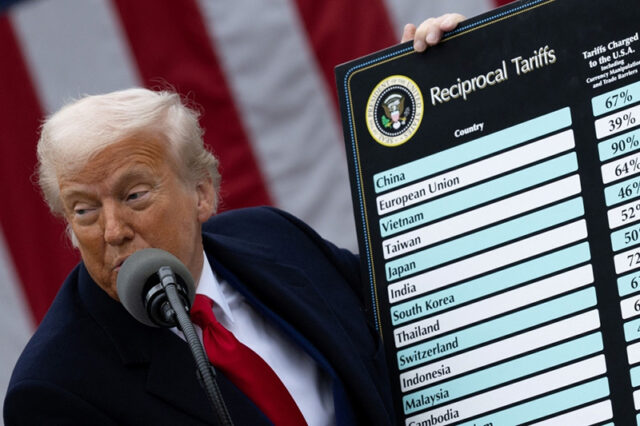
TURNBERRY, Scotland — President Donald J. Trump said on Monday most trading partners that do not negotiate separate trade deals would soon face tariffs of 15% to 20% on their exports to the United States, well above the broad 10% tariff he imposed in April.

Mr. Trump told reporters his administration will notify some 200 countries soon of their new “world tariff” rate.

“I would say it’ll be somewhere in the 15 to 20% range,” Mr. Trump told reporters, sitting alongside British Prime Minister Keir Starmer at his luxury golf resort in Turnberry, Scotland. “Probably one of those two numbers.”

Mr. Trump, who has vowed to end decades of US trade deficits by imposing tariffs on nearly all trading partners, has already announced higher rates of up to 50% on some countries, including Brazil, starting on Friday.

The announcements have spurred feverish negotiations by a host of countries seeking lower tariff rates, including India, Pakistan, Canada, and Thailand, among others.

The US president on Sunday clinched a huge trade deal with the European Union (EU) that includes a 15% tariff on most EU goods, $600 billion of investments in the US by European firms, and $750 billion in energy purchases over the next three years.

That followed a $550-billion deal with Japan last week and smaller agreements with Britain, Indonesia, and Vietnam. Other talks are ongoing, including with India, but prospects have dimmed for many more agreements before Friday, Mr. Trump’s deadline for deals before higher rates take effect.

Mr. Trump has repeatedly said he favors straightforward tariff rates over complex negotiations.

“We’re going to be setting a tariff for essentially, the rest of the world,” he said again on Monday. “And that’s what they’re going to pay if they want to do business in the United States. Because you can’t sit down and make 200 deals.”

Canadian Prime Minister Mark Carney said on Monday trade talks with the US were at an intense phase, conceding that his country was still hoping to walk away with a tariff rate below the 35% announced by Mr. Trump on some Canadian imports.

Mr. Carney conceded this month that Canada — which sends 75% of its exports to the United States — would likely have to accept some tariffs. — Reuters

Enough apologies: How Japan is shaking its price hike phobia

CONSUMER price inflation has remained above 2% for three years in Japan as food prices continued to rise. — CATHY ROSE A. GARCIA/BUSINESSWORLD

TOKYO — When Japanese ice pop maker Akagi Nyugyo raised its prices a meager 10 yen in 2016, its somber-faced management appeared in a one-minute commercial, bowing silently in apology as a melancholy folk song lamented the inevitability of price hikes.

Almost a decade later, the Saitama-based company has changed its tune — a tongue-in-cheek advertising campaign last year promised in a series of photos to bow successively deeper for each of its next three price hikes.

The lighter-hearted spin comes as Japanese firms, after decades of deflation, find a rare moment that allows them to raise prices without triggering the intense public backlash that once made such moves taboo.

“Compared to when we raised prices in 2016, I’d say there’s more of a sense now that the public is more accepting of price hikes,” the company’s marketing team leader Hideyuki Okamoto said. “The sentiment that price hikes are evil is receding.”

That shift in consumer mindset is driven by the biggest pay hikes in three decades and has given companies more confidence to pass on rising costs — something they long avoided for fear of losing customers.

If sustained, the change could embolden the central bank to further raise interest rates, though that is dependent on just how much more households can absorb. The Bank of Japan is expected to keep its benchmark rates unchanged at this week’s policy meeting but could signal its intention to resume rate hikes later in the year.

Japan’s consumer inflation has stayed above 2% for three years, driven largely by rising food prices, a sharp departure from the decades of near-zero inflation that followed the asset bubble collapse in the early 1990s.

Nearly 200 major food makers expect to hike prices for 2,105 items in July — up fivefold from year-before levels — by an average 15%, a private think tank survey showed recently.

“A few years ago, people would make a fuss over one or two items going up. Now it’s dozens, even hundreds. You can’t keep track anymore. There are just too many to remember,” said Fusako Usuba, a 79-year-old pensioner.

“But there’s no way around it, because we all need to eat to survive,” she added.

WAGE GROWTH
Japan’s wave of price hikes initially began in 2022, triggered by external shocks such as post-pandemic supply chain disruptions, the war in Ukraine and the yen’s subsequent depreciation.

But economists say it is consumers’ greater tolerance for higher prices — underpinned by three straight years of robust wage growth — that has kept the trend going.

“Japanese consumers have come to realize they are now living in an era of persistent price increases,” said Tsutomu Watanabe, emeritus professor of economics at the University of Tokyo.

He said consumers are beginning to shift their focus from low prices to higher wages, as intensifying labor shortages give workers more bargaining power.

According to a survey led by Mr. Watanabe, Japanese consumers were the most resistant to price hikes among five major countries four years ago, with a majority saying they would switch supermarkets if prices rose by 10%.

But in the same survey last year, most said they would continue shopping at the same stores and buying the same items, bringing them in line with consumers in other countries.

The key question now is whether the trend is sustainable.

Meiji, Japan’s top chocolate maker, has launched nine price hikes since 2022, reflecting soaring cocoa costs.

“Back in 2022, we met resistance from retailers asking us to hold off a bit longer,” said Akira Yoshida, general manager at Meiji’s cacao marketing division. “Nowadays, they accept our price hikes more smoothly, so we assume their customers are also reluctantly going along.”

But Meiji, which holds a 25% market share and effectively sets industry prices, is now seeing signs of price fatigue.

A 20% price hike in June, the biggest in recent years, led to a more than 20% drop in sales volume at some retailers, unlike in previous rounds where volume declines were smaller than the scale of price hikes.

“We’re increasingly concerned. There’s only so much more we can raise prices,” Mr. Yoshida said. “I think we’ll need to change how people view chocolate — not as a commodity, but as a luxury.”

Rei Ihara, food sector analyst at UBS Securities, said the scope for further price hikes is narrowing, as Japan’s Engel coefficient, the share of household spending on food, hit 28.3% in 2024, the highest in 43 years.

“With prices rising year after year, consumers appear to be adjusting their purchasing habits, opting for less expensive options like chicken instead of beef, for example. For inflation to be sustainable, it must be supported by solid wage growth,” he said.

Inflation has outpaced nominal pay gains, pushing real wage growth into negative territory for months, fueling frustration among voters that led to a major defeat of Prime Minister Shigeru Ishiba’s coalition in recent house elections.

The outlook for wage growth is increasingly uncertain due to sweeping US tariffs. Japanese exporters have so far avoided major price hikes in the US to stay competitive, sacrificing profits. If that continues, it could limit their ability to raise wages next year.

“We’re at a turning point now,” professor Watanabe said. “If this wage-driven price momentum fails, we may not see another opportunity like this in our lifetime. This moment is that rare.” — Reuters