Home Blog Page 1161

DigiPlus says Singapore registration marks key step in global strategy

A VIEW of the city skyline in Singapore, Dec. 31, 2020 — REUTERS

TANCO-LED DigiPlus Interactive Corp. has incorporated a wholly owned unit in Singapore to provide regional support services as part of its global strategy.

The newly incorporated company, DigiPlus Global Pte. Ltd., is wholly owned by DigiPlus subsidiary Digivest Holdings, Inc.

“The newly established DigiPlus Global will serve as the company’s international hub — driving its global ambitions through strategic partnerships, talent acquisition, and corporate support,” DigiPlus said in a regulatory filing on Tuesday.

“The entity is formally registered under Singapore’s business activity classification for head and regional offices, acting as DigiPlus’ centralized administrative and management office,” it added.

DigiPlus Global will provide regional support services and will not operate any gaming platforms in Singapore, in compliance with the country’s regulatory framework.

“This is not just an expansion; it’s a foundational step in our growth strategy,” DigiPlus Chairman Eusebio H. Tanco said.

“By anchoring our international presence in Singapore — one of the world’s most advanced business ecosystems — we are accelerating DigiPlus’ transformation into a globally recognized force in digital entertainment,” he added.

DigiPlus said the move will help widen its access to global expertise, strengthen cross-border collaboration, and build high-value relationships in key markets.

“It will also accelerate the company’s ability to pioneer the next wave of digital entertainment innovations as it continues to grow its digital platforms — BingoPlus, ArenaPlus, and GameZone — which already dominate the Philippine market,” it said.

In January, DigiPlus said its subsidiary DigiPlus Brazil Interactive Ltda. secured a gaming license from the Brazilian Ministry of Finance’s Secretariat of Awards and Bets.

This license enables the company to conduct land-based and online sports betting, electronic games, live game studios, and other fixed-odds betting activities in Brazil.

For 2024, DigiPlus reported a 207% surge in net income to P12.6 billion as total revenue increased by 176% to P75.2 billion, driven by sustained momentum in its retail gaming segment and new game launches.

DigiPlus shares rose by 0.48% or 20 centavos to P41.70 per share on Tuesday. — Revin Mikhael D. Ochave

Digital transformation in Philippine agribusiness: The scarcity and glut of tomatoes

FREEPIK

(Part 6)

A major part of Industrialization 4.0 is Data Analytics and Data Science. JT Solis, CEO of Mayani, went straight to the point at the Forum on Digital Transformation by referring to the huge data deficit that exists in the Philippine agribusiness sector. He rightly pointed out that what we have to build up is not just the physical infrastructure that underpins our physical supply chain operations (first mile line haul, last mile delivery, reefer trucks, cold storage facilities, etc.) but the information structure that is needed to correct the asymmetry of information, especially biased against the small farmers.

To dramatize the point, Mr. Solis suggested that the participants of the Forum check what appeared on Facebook and other news websites that very day. The news reported that 91 hectares in Bungabon, Nueva Ecija were devoted to planting tomatoes. Consequently, there was an oversupply situation leading to a precipitous drop in prices. Just last January, the Bangko Sentral ng Pilipinas (BSP) reported that of the 2.9% rise in average prices reflected by the Consumer Price Index, 0.4% could be attributed to the increase in tomato prices. In fact, the top five contributors to inflation were mostly in the agricultural sector. Tomato was the top one, with meat and poultry as top four and five, respectively.

Because of this obvious lack of information to guide the production decisions of farmers, Mayani decided to do the following, Mr. Solis said:

1.) “We initially built Mayani as an agri e-commerce platform to be able to provide the average Filipino with access to nutritious, fairly priced produce. We have tried to accomplish this goal by working with a good number of B2B offtake partners, such as Jollibee Food Group, Shakey’s, etc. as well as NGOs. What we realized was that we can leverage the power of offtake and do a great deal of development interventions upstream the supply chain. We, however, have been sufficiently realistic to realize that providing market linkage to these smallholders is not sufficient to make a significant dent in their lives. We could do more to actually provide and unlock other interventions, such as access to inputs for the production process.”

2.) “We took cognizance of the fact that half of the cost of production goes towards inputs, in fact oftentimes more than half. At the same time, it would be more profitable for the farmer if they have access to less costly credit. This motivated us to strike a partnership with GCash. What stared us in the face is that there is a $6 billion agricultural credit gap in the Philippines.

“There is an agri-agra law that exists in the Philippines. Despite this, the large financial institutions prefer to pay hundreds of millions of pesos in penalties for not investing in agriculture because they do not see how they can generate profits from agri-agra loans.

“We were fortunate to see the light: that we could leverage our information infrastructure, the data that we have within our supply chain to be able to holistically underwrite loans for these small farmers, and at the same time leverage offtake. ‘Someone’s gonna buy their harvest anyway, right? And that is a sure source of repayment!’”

3.) Mr. Solis expressed satisfaction that Mayani partnered with GCash in providing credit to the small farmers. Mayani’s vision is to create the largest agri-credit movement to do what the big banks have failed to accomplish. “No assets, no credit card, no collateral!” These small farmers have never stepped into any bank branch in their lifetime. “Thanks to our having the information structure provided by our close contacts with the small farmers, we are able to prevent situations similar to what we have seen in Bongabong, Nueva Ecija today — an oversupply of tomatoes. At the same time, we are able to drive rural financial inclusion.”

The intervention of Irish Ativo from the Department of Agriculture moved the discussion towards the efforts of the present Secretary of Agriculture, Francis Tiu Laurel, to introduce the Science and Info-driven Market Decision Making in the work of the department.

This is a perfect example of the digitalization of the entire Department of Agriculture. As a first step, the Agribusiness and Marketing Assistance Service (AMAS) division of the Department is launching its Agricultural and Fishery Market Information Systems whose objective is to develop a data base for suppliers and buyers, as well as to facilitate market linkage on a digitalized level. Dr. Maningas then pointed out that it is crucial for the Department of Agriculture to coordinate with the Department of Information and Communications Technology since the latter is the one charged with providing the backbone for the information network. This close coordination was confirmed by the representatives of the two government agencies.

Given the appropriate leadership and intervention coming from the government agencies concerned, civil society can play an equally important role in bringing digitalization to the small farmers. A good example is the role played by the social enterprise AgrodigitalPh represented in the forum by Henry James Sison who emphasized that his organization works exclusively with small holders.

To quote him: “It is but natural that we get in touch with local government units. There are a lot of interventions in the countryside. But there is an absence of business plans among these enterprises. As an example, we work a lot in Panay, Negros, and Cebu. In these provinces, there are numerous landing sites that are built at random, with little consideration on how they are going to be optimally used. Large sums are invested in these landing sites but there is a serious shortage of business plans on how these sites are going to be profitably utilized. That’s where we come in. We try to foster a business mentality among the progressive small holders. We try to distinguish between the enlightened smallholders and those who are hopelessly entrenched in the old system in which the only concern is to bring their stuff to the bagsakan (trading post) or the bulungan in the case of the small fishermen.

As a final word, as Marc Concio concluded, the biggest challenge is to change the farmer’s mindset. It is easy to talk about digitalization, using advanced technology, but at the end of the day, if the farmer does not appreciate it enough to adopt it, there will be zero impact.

To illustrate, Mr. Concio said that they have spoken to many farmers and asked them if they want to have access to cheaper credit, say at 4% yearly interest, to the tune of P100,000 to P500,000 per hectare. It’s usually a YES. Then they ask what do they have to do? They are told to enroll online into our platform, into our farmer credit scoring system. This openness is already a step towards changing their behavior. Changing behavior is easier said than done, though.

As Mr. Concio affirmed, all that they tell the small farmers is that it is not necessary that they change their behavior. All that they tell them is that when they enter the trading post, it passes through the AI CCTVs and truck weighing scales. Based on the weight of their truck, the CCTVs and the person at the entrance capture what kind of fruit or vegetable is being brought in, say five tons of carrots. The price at the trading post is determined by supply and demand. There appears a theoretical price which then determines the gross income of the farmer supplier. This proof of income is shared with the LANDBANK, the creditor. Third, the farmer is matched with the buyer at the trading post. The buyer is guaranteed whatever price comes out in the trading post. By having this bidding system, there is no need to change the behavior of the farmer. Once he perceives the improvement in his income through this system, he will adopt technology and digitization.

As the colloquial expression attests, the “proof of the pudding is in the eating.”


Bernardo M. Villegas has a Ph.D. in Economics from Harvard, is professor emeritus at the University of Asia and the Pacific, and a visiting professor at the IESE Business School in Barcelona, Spain. He was a member of the 1986 Constitutional Commission.

bernardo.villegas@uap.asia

AUB’s net income rises by 34% in Q1

BW FILE PHOTO

ASIA United Bank Corp. (AUB) and its subsidiaries saw its consolidated net income rise by 34% year on year in the first quarter amid strong lending growth and its digital partnerships.

The AUB Group’s consolidated net earnings climbed to P3.1 billion in the first three months from P2.3 billion a year prior, the bank said in a disclosure to the stock exchange on Tuesday.

This translated to a return on equity of 22.3% and a return on assets of 3.4%, up from 20% and 2.8% a year prior, respectively.

The bank’s financial statement was unavailable as of press time.

“We have managed to sustain the growth in our profitability since the pandemic, thanks to our robust core business and digital partnerships,” AUB President Manuel A. Gomez said.

“While we are confident of our performance, we remain cautiously optimistic about the near-term outlook for the global economy due to the ongoing trade wars, the potential disruption in global supply chains, the projected slowdown in many major economies, and the growing geopolitical tension in some parts of the world. We will continue to adjust our sails to navigate this global turmoil and remain agile,” Mr. Gomez said.

AUB’s net interest income increased by 8% year on year to P4.3 billion in the first quarter. This came as its interest earnings rose by 9% to P5.6 billion, which partially offset the 11% increase in its interest expense on deposits.

The bank said its loan portfolio expanded by 34% to P252.6 billion from P188.4 billion a year ago, helping drive profitability. Despite the increase in loans, its nonperforming loan ratio improved to 0.35% from the previous year’s 0.47%.

Meanwhile, its total deposits rose by 9% year on year to P308.1 billion, with low-cost current account, savings account or CASA deposits accounting for 69% of the total and being its primary source of funding.

Net interest margin was at 5.1%.

“Non-interest income grew 81% to P1.3 billion as other non-interest-bearing business activities such as trading and securities gains, foreign exchange gains, miscellaneous income and service charges and other fees from other operating activities such as credit cards, AUB PayMate, HelloMoney, remittance business, trust and other branch-related transactions grew,” AUB added.

Meanwhile, the bank’s operating expenses increased by 9% year on year to P1.8 billion in the first quarter due to higher compensation, capital expenditures, and business growth-related expenses.

“Thanks to its heavy reliance on digital partnerships, the bank continues to exhibit efficient resource management in its business generation as evidenced by its 32.6% cost-to-income ratio,” it said.

Loan loss provisions went down by 15% to P66 million in the first quarter from P78 million  a year prior. Still, the bank’s NPL coverage ratio rose to 119.8% from 116.7%.

AUB’s assets increased by 11% year on year to P384 billion at end-March, while total equity rose by 22% to P61.8 billion.

Its indicative common equity Tier 1 ratio stood at 17.49%, while capital adequacy ratio was at 18.19%.

“The bank is adequately capitalized with capital ratios well above regulatory requirements,” it said.

AUB’s shares climbed by P3.75 or 5.48% to close at P72.15 apiece on Tuesday. — Aaron Michael C. Sy

Sean ‘Diddy’ Combs’ jurors say they have seen video of alleged beating, heard baby oil jokes

Sean “Diddy” Combs on the talk show Late Night with Seth Myers. — IMDB

NEW YORK— Prospective jurors in Sean “Diddy” Combs’ sex trafficking trial acknowledged on Monday being familiar with allegations against the hip-hop mogul, seeing a video of him allegedly assaulting a woman and hearing a comedian joke about baby oil that prosecutors say was found in his residences.

But having followed the case in the media did not exclude them from potentially serving on the jury for a trial expected to last up to two months on charges of racketeering conspiracy, sex trafficking, and transportation to engage in prostitution.

Mr. Combs, 55, has pleaded not guilty. The Bad Boy Records founder is known for elevating hip-hop in American culture in the 1990s and 2000s, and hosting lavish parties for the cultural elite in the Hamptons and Saint-Tropez.

In a 26th-floor courtroom in Lower Manhattan, US District Judge Arun Subramanian questioned 32 prospective jurors one-by-one, a process known as voir dire, in a bid to seat a panel of 12 jurors and six alternates who can be fair and impartial to both sides despite heavy media coverage of the case.

Opening statements are scheduled for May 12.

Mr. Subramanian deemed 19 qualified to serve — including two who said they were fans of 1990s hip-hop — and the rest were dismissed. More will be questioned on Tuesday, and jury selection is expected to finish by the end of the week.

The judge’s goal is to choose 45 potential jurors who are qualified to serve, and lawyers for both sides will then have the opportunity to dismiss jurors without stating a reason.

With Mr. Combs looking on wearing dark glasses and sporting a salt-and-pepper goatee, one juror said they had seen a video on the news that showed Mr. Combs allegedly assaulting someone in a hotel. Mr. Subramanian decided that juror, referred to as Juror No. 5, was qualified for the panel after they assured the judge they would be a “blank slate entering this courtroom.”

A prospective juror was dismissed after writing in a screening questionnaire that a still image they had seen below a news headline of a woman on the floor in a hotel hallway and Mr. Combs standing near her “could be damning evidence.”

Last year, CNN broadcast surveillance footage of what it said was a 2016 incident in which Mr. Combs attacked his former girlfriend, the R&B singer Casandra Ventura, in the hallway of a Los Angeles hotel. Mr. Combs apologized after the footage aired.

The jury will be anonymous, which is frequently the case in high-profile trials in which jurors could face threats or harassment if their identities are known.

Prosecutors have said the incident depicted in the hotel surveillance video was evidence of how Mr. Combs used force and threats over a two-decade period to coerce women to take part in days-long, drug-fueled sexual performances with male sex workers, which the mogul called “Freak Offs.”

COMBS JAILED SINCE SEPTEMBER ARREST
Prosecutors say employees of Mr. Combs’ business empire helped the “Freak Offs,” including by booking hotel rooms, buying controlled substances and other items used during sex, and helping him cover up the activity. During raids of Mr. Combs’ homes, authorities found drugs and 1,000 bottles of baby oil and lubricant, prosecutors said.

One prospective juror said they had “liked” a video on social media in which a comedian joked about Mr. Combs and baby oil.

“I remember liking it because I thought it was funny,” said the juror, who Mr. Subramanian decided was qualified after they said they would be able to put the video aside and be impartial.

Mr. Combs’ lawyers say the hotel surveillance video depicted a domestic dispute over infidelity and was not evidence of sex trafficking. They are expected to argue that the sexual activity described by prosecutors was consensual.

Mr. Combs is the latest powerful man in the entertainment industry to be accused of sexual misconduct since the #MeToo movement encouraged women to speak up about abuse.

Since September he has been held at Brooklyn’s Metropolitan Detention Center, about an hour by subway from the Harlem neighborhood where he was born. His rags-to-riches life story is of a boy reared by a single mother who through perseverance grew up to live in mansions in Los Angeles and Miami.

If convicted on all counts, he faces a mandatory minimum of 15 years in prison and could face life in prison. — Reuters

Alfamart plans nearly 300 store openings this year

BW FILE PHOTO

MINIMART CHAIN Alfamart is looking to open nearly 300 new stores this year as the retailer strengthens its nationwide footprint.

“I think this year we should be opening close to 300 stores,” Alfamart Philippines Chief Operating Officer Harvey T. Ong said during the Money Talks with Cathy Yang program on One News Channel on Tuesday.

Mr. Ong also said Alfamart will evaluate some of its branches with expiring leases as part of efforts to rationalize its store network.

“As we have opened a lot of stores, some of them are already very close to older stores. We may take this opportunity to rationalize some of these stores. We expect, at the very minimum, 250 net new store openings for the year. There’ll be 300 new stores minus at most 50 stores that will be rationalized,” he said.

He also said Alfamart is banking on its diverse product offerings to sustain growth.

“Our assortment is broader, and you see a lot of things that you won’t find in a convenience store like frozen meats. Our prices tend to be closer to the supermarkets as well,” he said.

“We are really more catered to subdivisions and residential areas. We are less of a convenience store and more of a compact supermarket,” he added.

As of end-2024, Alfamart had 2,400 stores in its nationwide network. The company opened its first store in June 2014.

Alfamart is part of the SM group’s retail food business. It operates as a joint venture between SM and Indonesia-based retail company PT Sumber Alfaria Trijaya Tbk. — Revin Mikhael D. Ochave

Elections are always a critical juncture in a nation’s history

PHILIPPINE STAR/KJ ROSALES

Filipinos only have a few remaining days before the elections on May 12. By this time, we should already have a firm idea, if not a working list, of whom we are going to elect for the various posts that are waiting to be filled.

The candidates for both national and local posts have made their respective pitches, highlighting their good points, and projecting themselves as the best choice for the job. The question is, should we the voters simply buy into their rhetoric?

Elections have always been both a definitive time and a critical juncture for Filipinos. This year’s polls stand out because of three main issues: Economic challenges, political divisions, and massive disinformation.

According to a survey by the Social Weather Stations, nine out of 10 Filipinos will support candidates who advocate for job creation, healthcare, food security, education, and affordable prices of goods and services. These issues reflect the deep economic concerns that continue to shape voter preferences.

Jobs remain the top advocacy, with 92% of respondents prioritizing candidates who push for employment opportunities. This preference stems from the understanding that stable work ensures income to support families. Similarly, healthcare advocacy garners strong support (91%), as the high cost of medical treatment remains a burden for many. Food security, education, and controlling inflation also rank high, reflecting the urgent need for solutions to rising food prices, access to quality education, and the increasing cost of living.

The survey underscores the persistent struggles of many Filipinos with everyday needs. We are seeing that traditional campaign issues such as the fight against illegal drugs and corruption no longer dominate voter preferences. This shift signals a growing demand for candidates to address tangible, everyday concerns rather than relying on rhetoric or sensationalized platforms. Thus, candidates need to show they are capable of providing long-term solutions to these struggles.

Among those in the running, most administration-supported senatorial candidates are in the projected winning circle. Nine of these candidates continue to lead, showcasing the strategic advantages of incumbency, name recall, and access to government machinery. This dominance reflects the power of established networks and media leverage in shaping voter preferences.

But there is another aspect that Filipinos are considering: SWS says a resounding 75% of respondents prefer candidates who advocate for asserting the Philippines’ sovereignty against China’s aggressive actions in the West Philippine Sea. This overwhelming majority underscores the public’s desire for leaders who prioritize national interests and stand firm against Beijing’s encroachment.

However, the survey also highlights a concerning trend: 41% of those who favor non-assertive candidates belong to Social Class E, the country’s most vulnerable sector. This could likely be attributed to China’s systematic disinformation campaign, which targets the poorest Filipinos, distorting narratives and undermining public trust. Tragically, the daily struggles of Social Class E leave them more susceptible to manipulation, especially when amplified by local politicians with a history of favoring Chinese interests.

These disinformation efforts are being weaponized by political actors ahead of the elections, exploiting the aspirations of the poor with false promises and hollow rhetoric. This betrayal of the Filipino people, particularly the most vulnerable, threatens the nation’s sovereignty and future.

Indeed, the prevalence of fake news in the Philippines has reached alarming levels, as highlighted by the latest SWS survey commissioned by the Stratbase Group. With 59% of Filipinos identifying fake news on social media platforms like Facebook, X (formerly Twitter), YouTube, and TikTok as a “serious” problem, and 62% expressing similar concerns about traditional media such as TV, radio, and newspapers, the issue is undeniably pervasive.

Some 65% of Filipinos admit struggling to distinguish real from fake information, underscoring the challenge of navigating a media landscape rife with disinformation. This difficulty is compounded by the fact that 55% of respondents frequently encounter fake news, whether “often” or “sometimes,” across both traditional and social media platforms.

These dangers are magnified as we near the elections because disinformation manipulates public opinion, distorts democratic choices, and enables corrupt forces to maintain power. Sinister actors will exploit misinformation to sway votes, urging Filipinos to remain vigilant, verify sources, and think critically before believing or sharing news. Those pushing pro-China narratives will stop at nothing to spread disinformation, silence critics through trolling, and amplify divisive content to shape public opinion and political agendas. These activities not only distort public discourse but also suppress meaningful participation in critical issues like the West Philippine Sea.

The demonization of mainstream media began during the Duterte administration, coupled with the demolition operations of well-funded online troll armies to erode public trust in credible news organizations. Despite this, news organizations persist, mindful of their duty to speak truth to power and inform the public of their options.

All these challenges taken together make Monday’s elections especially crucial for Filipinos and the nations. Voters must make sure that they do not fall prey to the machinations of others who seek to win their hearts and minds for personal gain. We must reject disinformation, and recognize that political agendas must give way to economic solutions. Ultimately, it is the betterment of the lives of the people at stake.


Victor Andres “Dindo” C. Manhit is the president of the Stratbase ADR Institute.

BDO Network Bank gets thrift bank license

BDO.COM.PH

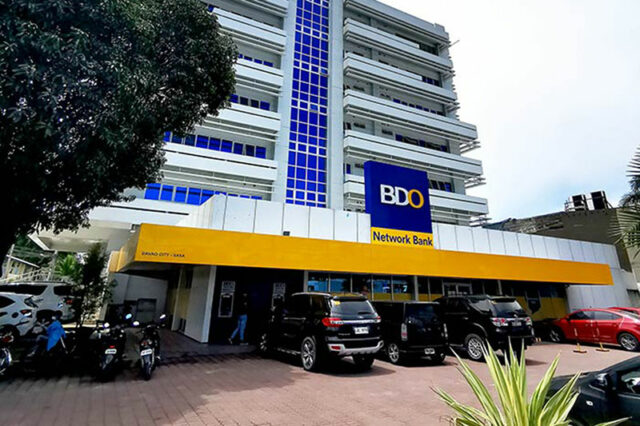
BDO NETWORK Bank, Inc. has received the green light for its conversion into a thrift bank, its parent said on Tuesday.

“We wish to inform you that effective today, May 5, 2025, BDO Network Bank, Inc., a subsidiary of BDO Unibank, Inc., has secured all required regulatory approvals for its conversion from a rural bank to a thrift bank,” BDO said in a disclosure to the stock exchange.

“With its newly granted thrift bank license, BDO Network Bank is set to widen its reach and deepen its impact — especially in areas still underserved by traditional financial institutions,” the unit said in a statement on BDO’s website dated April 28.

BDO Network Bank, formerly One Network Bank, Inc., was the biggest rural lender in the country in terms of assets as of end-2024 with P124.05 billion. BDO took over One Network Bank in 2015 in a transaction valued at P6.7 billion.

Based on end-2024 data from the central bank, upon its license’s conversion, BDO Network Bank would be among the top five biggest thrift banks in the country as only four other lenders in the sector currently have assets above P100 billion.

The bank posted a net income of P884.4 million in 2023, down 22% from P1.134 billion in 2022, based on its annual report. It had 393 branches, 121 loan offices, and 431 automated teller machines at end-2023.

BDO Network Bank President Jesus Antonio S. Itchon said last year that the bank expected to end 2024 with a total of 560 to 570 branches.

Meanwhile, its listed parent BDO’s net income rose by 6.49% year on year to P19.7 billion in the first quarter on the back of the sustained performance of its core businesses.

BDO was the largest Philippine bank in terms of assets with P4.67 trillion at end-2024.

Its shares dropped by 90 centavos or 0.57% to end at P157.50 apiece on Tuesday. — A.M.C. Sy

Digital nomad visas could spur growth in Philippine startups

MANA5280-UNSPLASH

By Beatriz Marie D. Cruz, Reporter

THE issuance of digital nomad visas is expected to bolster Philippine startup growth by spurring innovation and enriching the local talent pool, according to local venture capitalists.

“The digital nomad visa is a welcome step to enhancing our local startup talent pool by helping to attract new remote workers who can potentially bring global perspectives, skills and networks to the Philippines,” Paulo Campos III, founding managing general partner at Kaya Founders, said in a Viber message.

President Ferdinand R. Marcos, Jr. has approved the issuance of digital nomad visas to foreigners seeking temporary residence in the Philippines for remote work. 

Under Executive Order No. 86 signed on April 24, digital nomads — people who work remotely from several locations — may enter and stay in the Philippines for as long as a year.

Issuing digital nomad visas can plug existing talent and innovation gaps in the startup ecosystem, according to the National Development Co. (NDC), the investment arm of the Department of Trade and Industry.

“Digital nomad visas can help bring in self-employed individuals from outside of the country who may have distinct skills and specializations that can provide support to developments and knowledge transfers to startup companies,” Alewijn Aidan K. Ong, assistant general manager for business development at NDC, said in a Viber message.

Local startups may get the opportunity to upgrade their capabilities through community collaborations or knowledge-sharing with digital nomad talents, said Bit Santos, who serves as the partner for portfolio operations at Kickstart Ventures.

“The introduction of the digital nomad visa in the Philippines brings in a wealth of diverse backgrounds and professional experiences that can enrich and inspire local founders and tech professionals,” he said in an e-mail.

“The hope is that the process for digital nomads interested to come and work here is made simple and efficient to make the Philippines an even more desirable destination than it already is, especially as more and more countries are establishing similar initiatives,” he added.

But Mr. Campos said the one-year time frame for digital nomads might be too short compared with the multi-year stays given to visa holders in other Southeast Asian markets.

To increase the Philippines’ attractiveness to digital nomads, Mr. Santos cited the need to bolster investments in high-speed connectivity, as well as affordable and flexible housing.

The country should also improve infrastructure especially its inter- and intra-city transportation to better support the startup community’s digital nomads and domestic talent, Mr. Campos said.

“Similarly, building a thriving ecosystem of workshops, innovation hubs, startup events and community meetups can help digital nomads connect with local entrepreneurs, talent and capital allocators, helping to open the doors for collaboration, investment and other new opportunities,” he added.

Rene D. Cuartero, co-founder and chief executive officer at AHG Lab, said the government should ensure clarity in tax and registration policies, as well as in regulations on how digital nomads can collaborate with local teams.

He also cited infrastructure challenges in key locations like Dumaguete, La Union, Palawan and Siargao. These areas struggle with sufficient internet access, work-friendly cafés and co-working spaces, he pointed out.

“These areas would benefit greatly from more investment and support especially if we want to spread the benefits of this visa beyond urban centers,” he said in a LinkedIn message.

The Philippine startup ecosystem raised $1.12 billion in 2024, 16% higher than a year earlier, according to Boston Consulting Group and venture capital fund Foxmont Capital Partners.

Jimmy Page, Sony Pictures sued by songwriter over Led Zeppelin song

SONGWRITER Jake Holmes sued former Led Zeppelin and Yardbirds guitarist Jimmy Page, music publisher Warner Chappell, and film studio Sony Pictures in California federal court on Monday for allegedly violating his rights in the song “Dazed and Confused.”

Mr. Holmes said in the complaint that Mr. Page and Warner Chappell broke a settlement agreement by releasing new early live recordings of the song and featuring it in Sony Pictures’ documentary Becoming Led Zeppelin without paying or crediting him.

Mr. Holmes accused Mr. Page of copyright infringement and breach of contract. Spokespeople for Warner and Sony Pictures did not immediately respond to requests for comment on the complaint.

Mr. Holmes’ attorney Daniel Johnson declined to comment.

Mr. Holmes, a singer-songwriter and prominent ad jingle creator, wrote “Dazed and Confused” in 1967. Mr. Page’s band the Yardbirds reworked it later that year, and his next band Led Zeppelin featured it on their debut album in 1969.

Mr. Holmes sued Mr. Page for copyright infringement in 2010 over Mr. Page’s versions of the song. The dispute was settled outside of court in 2011.

The new lawsuit said that Mr. Page has since released several archival Yardbirds live versions of “Dazed and Confused” that only credit Mr. Page as its songwriter, breaking their agreement and infringing his copyright.

The complaint said that Becoming Led Zeppelin, released in February, also uses “Dazed and Confused” without permission.

Mr. Holmes requested damages of at least $150,000 per instance of infringement under US copyright law. — Reuters

Toyota teams up with JoyRide for car rentals

PHILIPPINE STAR/ MICHAEL VARCAS

TOYOTA Mobility Solutions Philippines, a subsidiary of Toyota Motor Philippines (TMP), has partnered with ride-hailing app JoyRide to offer long-term car rental solutions, initially available in Metro Manila.

“Through this strategic partnership… customers can now book Toyota RentaCar services directly through the JoyRide Superapp,” said TMP in a statement on Tuesday.

“This integration enhances the user experience by offering a hassle-free and scalable solution for both immediate and extended car rental needs,” it added.

Managed by Toyota Mobility Solutions Philippines, Toyota RentaCar offers self-drive and chauffeur-driven rentals.

Vehicles may be rented for as short as 10 hours or for as long as three years, depending on the customer’s specific travel and mobility requirements, the company said.

“Travelers arriving at the Ninoy Aquino International Airport terminals — or other designated pick-up locations across Metro Manila — can seamlessly reserve vehicles for longer durations,” the company said.

“This service is especially advantageous for passengers based outside Metro Manila, those with multiple planned destinations, or anyone seeking a more personalized and flexible travel experience,” it added. — Justine Irish D. Tabile

Pope Francis: Catolico Abierto

CATHOLIC CHURCH ENGLAND AND WALES/FLICKR

Having been a “lapsed” Catholic for many years, it was Pope Francis who inspired me to go back to the Catholic Church. I had become disillusioned with what I saw as the dogmatism of the Church when I was in college and for a long time thereafter.

In college, we had a subject called “dogmatic theology” and another subject called “apologetics.” Here we were taught how to respond to questions on dogma and other official doctrines of the Catholic Church which I thought had strayed too far from the basic teachings of Jesus Christ himself as written in the Gospels.

For a while, following Vatican 2, it seemed to me that the Church was becoming closer to Christ’s teachings. However, the Church being a human institution, reports indicate it was pressured by internal politics at the highest levels, by the conservative factions in the Vatican, to less liberalism.

Meanwhile, following Vatican 2, a synod of Bishops decided that the Church should be open to Asian methods of prayer. Because of this, a couple of Jesuits and a Catholic missionary nun, Sister Elaine McInnes, studied Zen under a Buddhist roshi (master) named Yamada Roshi and eventually became roshis themselves.

When Sr. Elaine was assigned to the Philippines, she was encouraged by the Jesuit Fr. Catalino Arevalo to teach Zen meditation in the country. They obtained permission from Jaime Cardinal Sin and so today, there are many Zen teachers in our country. Zen is non-denominational. Its practitioners come from various spiritual persuasions, including even agnostics.

Pope Francis opened the Church to love, forgiveness, and tolerance. He even made the statement that there are many paths to the same God. When asked why he allowed blessing of homosexuals, he replied “Who am I to judge?”

Rather than emphasize correctness of beliefs and doctrines, Pope Francis focused on positive attitudes as taught by Christ, who told a crowd of men who were condemning a prostitute: “Let him who is without sin cast the first stone.” But he advised the woman to go and “sin no more.”

Pope Francis advocated peace among nations and people; and reminded world leaders of our obligation to care for our natural home, the environment.

The recent synod of Bishops went beyond promoting “closeness to the Church” among its members. It encourages the Church to become closer to the people.

Today, we are in a crucial situation. Does the next Pope continue the Church’s liberalism as begun by Pope Francis; or do we return to conservatism, doctrine, and dogma? We need to pray harder that the Conclave will select a Pope who will continue to build on Vatican 2, the way Pope Francis tried his utmost to do.


tsabesamis0114@yahoo.com

CIBI launches data-sharing initiative to fight cybercrime

CREDIT BUREAU CIBI Information Inc. launched a data-sharing initiative meant to help financial institutions combat cybercrime.

“The Fraud Bureau is a collaborative initiative that unites banks, fintechs, and financial institutions to share data on potentially deceptive applicant activity securely… The Fraud Bureau is poised to become a vital platform for financial institutions to share intelligence and collaborate in fighting fraud,” CIBI said in a statement on Tuesday.

“By compiling resources, the Fraud Bureau promotes proactive detection, speeds up identification, and strengthens cybercrime prevention efforts across the financial sector”

The data on the platform include watchlist or blacklist information and details from incoming applications and inquiries, among others, allowing for greater transparency in the financial industry, it said.

This will help address the need for a coordinated, data-driven approach to fighting cyberthreats that affect the sector, it added, inviting other institutions to join the “shared defense network.”

“The significant increase in fraudulent activity highlights the urgent need for coordinated action. CIBI recognizes that data-driven collaboration is essential to tackling fraud — an insight that helped shape the bureau’s framework and mission. This collaborative approach strengthens industry-wide defenses and supports greater trust and transparency in the financial ecosystem,” CIBI President and Chief Executive Officer Pia L. Arellano said.

“This initiative marks a meaningful step toward empowering Filipinos and fostering sustainable progress through responsible fintech innovation. By collectively combating fraud, we not only protect consumers but also build confidence in digital financial services — enabling broader adoption, financial inclusion, and long-term resilience in the country’s evolving fintech landscape,” Ms. Arellano added. — ARAI