Home Blog Page 1144

Trump’s Syria announcement surprised his own sanctions officials

REUTERS

 – When President Donald Trump announced in Saudi Arabia on Tuesday that he would lift all sanctions on Syria, the decision, which will boost a country devastated by 13 years of war, took many in the region by surprise.

It also caught some in his own administration off guard.

In Washington, senior officials at the State Department and Treasury Department scrambled to understand how to cancel the sanctions, many of which have been in place for decades, according to four U.S. officials familiar with the matter.

The White House had issued no memorandum or directive to State or Treasury sanctions officials to prepare for the unwinding and didn’t alert them that the president’s announcement was imminent, one senior U.S. official told Reuters.

The sudden removal of the sanctions appeared to be a classic Trump move – a sudden decision, a dramatic announcement and a shock not just for allies but also some of the very officials who implement the policy change.

After the announcement, officials were confused about exactly how the administration would unwind the layers of sanctions, which ones were being eased and when the White House wanted to begin the process.

By the time Mr. Trump met interim Syrian President Ahmed al-Sharaa in Saudi Arabia on Wednesday, officials at State and Treasury were still unsure how to proceed, the senior official said.

“Everyone is trying to figure out how to implement it,” said one U.S. official in reference to the president’s announcement.

Following the ouster of former President Bashar al-Assad late last year, officials from both State and Treasury had drafted memos and options papers to help guide the government on lifting Syria sanctions if and when the administration chose to do so.

But senior White House and national security officials, as well as some lawmakers on Capitol Hill, have for months debated whether to ease sanctions, given Mr. Sharaa’s former ties with al Qaeda. The Syrian leader severed ties with the group in 2016.

Before Mr. Trump’s trip to Saudi Arabia, there was no clear indication – at least to the officials inside State and Treasury working on sanctions – that the president had made a decision, the senior U.S. official said.

The State Department and Treasury Department did not immediately respond to a request for comment.

A White House official told Reuters that Turkey and Saudi Arabia had asked Mr. Trump to lift the sanctions and to meet with Mr. Sharaa. In his announcement, Mr. Trump said that he did so to give Syria a chance at a better future.


COMPLICATED UNWINDING

Mr. Trump’s decision may not have come completely out of the blue.

Senior Syrian officials were in Washington last month and lobbied hard to have all the sanctions removed, said Jonathan Schanzer, a former senior Treasury official who is now the executive director of the Foundation for Defense of Democracies, who met with Syrian officials during their visit.

Nevertheless, the easing of sanctions on Syria does not appear to be imminent.

A White House readout of Mr. Trump’s meeting with the Syrian leader said the president asked Syria to adhere to several conditions in exchange for sanctions relief, including telling all foreign terrorists to leave Syria, deporting “Palestinian terrorists,” and helping the U.S. prevent the resurgence of ISIS.

Removing sanctions is rarely straightforward, often requiring close coordination between multiple different agencies and Congress.

But it is particularly challenging in Syria’s case, given the layers of measures cutting it off from the international banking system and barring many international imports.

The U.S. first put the country on its state sponsor of terror list in 1979 and since then has added additional sets of sanctions, including several rounds following the country’s 2011 uprising against Assad.

Edward Fishman, a former U.S. official and the author of the book “Chokepoints,” said the unwinding of Syria sanctions, which were imposed under a mix of executive orders and statutes, could take months to ease. He noted, however, that the Treasury Department has practice from sanctions relief provided to Iran as part of the nuclear deal in 2015.

Complicating the task are sanctions imposed under the “Caesar Syria Civilian Protection Act,” also known as the “Caesar Act,” which was passed in 2019 and extended late last year just after Syria’s government fell. The act imposed stiff sanctions not just on Assad’s government but also secondary sanctions on outside companies or governments that worked with it.

Overturning the bill would require congressional action, but it includes a provision allowing the president to suspend the sanctions for national security reasons. Mr. Trump could also issue a general license suspending some or all of the sanctions.

Mr. Fishman said he would be surprised if every single sanction was lifted as part of Mr. Trump’s order, adding that some specific people or entities in Syria sanctioned for specific behavior-based reasons, such as support for a terrorist group, may not be removed from the sanctions list. – Reuters
Australia PM Albanese to meet Indonesia counterpart in first international visit since re-election

REUTERS

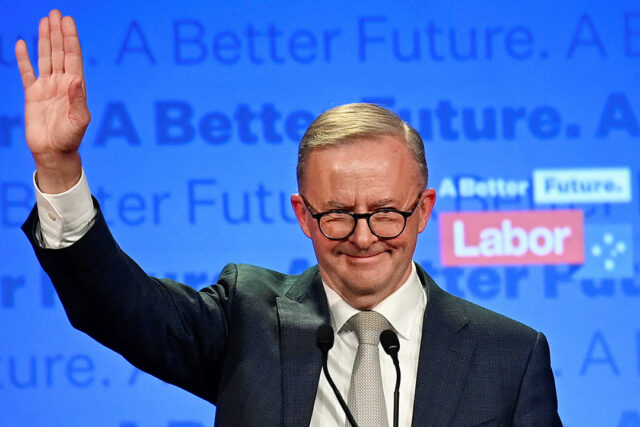
 – Australia’s Prime Minister Anthony Albanese will meet with Indonesia President Prabowo Subianto on Thursday to discuss defense cooperation and global trade, after arriving in Jakarta on his first international visit since his re-election.

Albanese, sworn into office on Tuesday after his center-left Labor party won an increased majority in parliament, said his visit showed the priority Canberra placed on defense and economic ties with Jakarta.

“Indonesia is a critical relationship for Australia, this major neighbor just to our north that will grow to be the fifth largest economy in the world by the end of the next decade,” Albanese said in a radio interview in Perth on Wednesday.

Substantial progress had been made on defense and maritime cooperation, he said, referring to a defense cooperation treaty signed last year.

Australian Strategic Policy Institute senior analyst for defense, Euan Graham, said the Australia-Indonesia relationship has “avoided serious crisis for more than a decade, cooperation continues to move forward incrementally and there is greater stability than before”.

Yet wide differences remain, he added.

“Jakarta sees China and Russia as vectors of opportunity more than threats and views the U.S. and China primarily through the same lens of great power rivalry. That’s largely at odds with Canberra’s world view,” he said.

Indonesia dismissed reports last month that Russia had requested to base military aircraft in the archipelago’s easternmost province of Papua, about 1,200 km (750 miles) north of the Australian city of Darwin, where a U.S. Marine Corps rotational force is based for six months of the year.

Mr. Albanese said the two leaders will also discuss global trade.

Australia wants to increase economic ties with Southeast Asia, as it seeks to diversify export markets to reduce reliance on China, and in response to trade uncertainty caused by U.S. President Donald Trump’s tariffs.

Indonesia remains a “protected and challenging market” and a competitor to Australia in commodity exports, said Mr. Graham. – Reuters

Putin, Trump to skip Ukraine’s peace talks that Russian leader proposed

RUSSIAN PRESIDENT VLADIMIR PUTIN — KREMLIN.RU-COMMONS.WIKIMEDIA.ORG

 – U.S. President Donald Trump and his Russian counterpart Vladimir Putin will not attend what could be the first direct peace talks between Moscow and Kyiv in three years on Thursday, the Kremlin sending instead a group of experienced technocrats.

Mr. Putin on Sunday proposed direct negotiations with Ukraine in Istanbul on Thursday “without any preconditions”. Late on Wednesday, the Kremlin said the delegation would include presidential adviser Vladimir Medinsky and Deputy Defense Minister Alexander Fomin.

After the Kremlin’s delegation announcement, a U.S. official said Mr. Trump would not attend – days after saying that he was considering the trip.

While Mr. Putin had never confirmed he would attend in person, the absence of the Russian and U.S. presidents lowers the expectations for a major breakthrough in the war that Russia started in February 2022.

Ukrainian President Volodymyr Zelenskiy had challenged the Kremlin leader to attend the talks “if he’s not afraid,” in an apparent contest to show Mr. Trump who wants peace more. Mr. Zelenskiy was on his way to Turkey, a Ukrainian official said. Earlier, the Kyiv leader has said he would take part in the negotiations only if Putin were there.

Mr. Trump wants the two sides to sign up to a 30-day ceasefire to pause Europe’s biggest land war since World War Two, and a Russian lawmaker said on Wednesday there could also be discussions about a huge prisoner of war exchange.

Mr. Zelenskiy backs an immediate 30-day ceasefire, but Mr. Putin has said he first wants to start talks at which the details of such a ceasefire could be discussed.


MORE SANCTIONS ON RUSSIA?

Mr. Trump, who is growing increasingly frustrated with both Russia and Ukraine as he tries to push them towards a peace settlement, said he was “always considering” secondary sanctions against Moscow if he thought it was blocking the process.

U.S. officials have spoken about possible financial sanctions as well as potential secondary sanctions on buyers of Russian oil.

A Ukrainian diplomatic source told Reuters on Wednesday that Ukraine’s leadership would decide on its next steps for peace talks in Turkey once there was clarity on Putin’s participation.

The U.S. delegation to Turkey included Secretary of State Marco Rubio and senior envoys Steve Witkoff and Keith Kellogg.

Ukrainian Foreign Minister Andrii Sybiha said early on Thursday he had met with Rubio to share Mr. Zelenskiy’s peace vision and “coordinate positions during this critical week.”

Mr. Medinsky and Mr. Fomin, part of the Russian delegation, took part in the last set of negotiations between the two sides in the first weeks of the war.

Direct talks between negotiators from Ukraine and Russia last took place in Istanbul in March 2022, a month after Mr. Putin sent tens of thousands of troops into Ukraine in what he calls a “special military operation” to root out neo-Nazis.

Ukraine and its allies say the invasion was an unprovoked, imperial-style land grab. – Reuters

Britain steps up efforts to tackle organized immigration crime in the West Balkans

Britain-Flag
The British union flag flutters on the Victoria Tower at the Houses of Parliamen, in London, Britain Dec. 30, 2020. — REUTERS/TOBY MELVILLE

 – Britain will step up its efforts to tackle criminal networks across the Western Balkans that facilitate illegal migration, Prime Minister Keir Starmer said on Thursday, days after he announced a major set of reforms to help reduce legal migration.

Losing ground in the polls to Nigel Farage’s anti-immigration Reform Party, Mr. Starmer is under pressure to show he can control both legal and illegal immigration, and that on the latter his plan to target people smuggling gangs is working.

In his first official visit to Albania, Mr. Starmer will announce measures to stop Albanian nationals from returning to Britain after they have been deported and do more to eliminate money laundering between the two countries. He will donate two forgery detection machines to catch those using fake passports.

He will also announce the expansion of a joint migration task force to add North Macedonia and Montenegro. The group already includes Albania and Kosovo.

In 2022 Albanians made up the largest group heading to Britain on small boats but the number has since fallen sharply, in part due to a deportation deal agreed by the previous Conservative government.

On legal migration – which makes up the vast majority of those coming to Britain – Mr. Starmer promised on Monday to cut net arrivals significantly, saying the country risked becoming “an island of strangers” without tougher rules. – Reuters

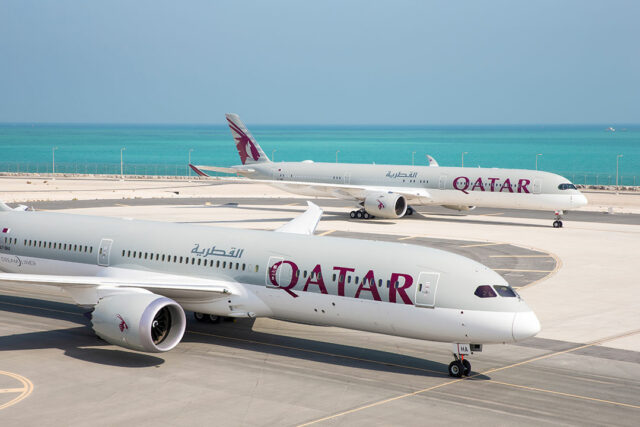
Qatar Airways orders 160 Boeing twin-aisle jets during Trump visit

QATARAIRWAYS.COM

 – Boeing landed its biggest deal for widebody airplanes on Wednesday when state carrier Qatar Airways placed firm orders for 160 jetliners plus options to buy 50 more during President Donald Trump’s visit to the Gulf Arab country.

The deal for Boeing 777X and 787 planes with GE Aerospace engines was worth $96 billion, according to the White House. It is a win for Mr. Trump on a high-profile visit to the region, even though it will be years before the jets are delivered.

The sale is also a boost for Boeing and its biggest engine supplier at a time when large versions of rival Airbus’ A350, powered by Rolls-Royce engines, have struggled with maintenance problems from operating in the world’s hottest climates, including the Gulf region.

The agreement is for 160 firm orders – 130 787s and 30 777Xs – and options for another 50 of the two long-haul airplanes, according to Boeing. The company’s shares rose 0.6% in New York, while GE Aerospace stock gained 0.7%.

For the 787s, Qatar opted for GE Aerospace’s GEnx engines rather than Rolls-Royce’s Trent 1000, according to the administration. GE Aerospace’s GE9X is the only engine option for the 777X.

The deal for 400 GE engines is the largest ever for GE Aerospace, the company’s CEO Larry Culp said in a statement, a point echoed by Qatar Airways, which told Reuters in March that it was working on a large order for widebody jets.

Mr. Trump and Qatar’s Emir Sheikh Tamim bin Hamad Al-Thani joined a signing ceremony with Boeing CEO Kelly Ortberg and Qatar Airways CEO Badr Mohammed Al-Meer. Trump said Ortberg told him it was the largest jet order in Boeing’s history.

The deal was signed during Mr. Trump’s second stop on a tour of Gulf states after he struck a string of deals with Saudi Arabia on Tuesday.

The 777X is still in development and slated to start deliveries in 2026, six years behind schedule. Qatar Airways already has orders for 94 777Xs. Its competitor, Emirates, has orders for 205 777Xs. The two airlines were among the first customers when Boeing launched the program in 2013.

Boeing’s order book included 521 777X orders and 828 787 orders as of April 30, according to the company. – Reuters

EXPLAINER: How are vaccines tested?

WHO FILE PHOTO

U.S. Health and Human Services Secretary Robert F. Kennedy Jr. plans to require all new vaccines be tested against a placebo in human trials, and has said that almost no shots used in the United States have undergone such rigorous testing, which is not accurate.

The American Academy of Pediatrics has said childhood vaccines are carefully studied in randomized controlled trials — including with placebos — to ensure they’re safe and effective. Here is what you need to know about how vaccines are tested and approved in the United States:


What has Mr. Kennedy said about vaccine testing?

In an appearance with television personality Dr. Phil McGraw in April, Kennedy said that “the only vaccine that was ever safely tested in a clinical trial against a placebo was the COVID vaccine… None of the others were ever tested against placebo.”

He repeated that claim during heated Congressional testimony on Wednesday.


What is a randomized controlled trial?

In order to receive approval from the U.S. Food and Drug Administration, most new medical treatments must be tested in large trials to confirm their effectiveness and safety.

In such trials, participants are randomly assigned to either a group receiving the new medicine or a control group. That ensures that any differences in outcomes can be attributed to the new treatment.

In many randomized trials, a new therapy is compared to an older, well established therapy. If no standard therapy already exists, the new treatment is compared to a placebo – an inert sham treatment without any therapeutic or physiological effect.


Are new vaccines always compared to placebos?

Not always. When a brand new vaccine is developed to protect against a disease that has no preventative therapy on the market, the FDA requires placebo-controlled trials to prove the vaccine is safe and effective.

Drugmakers also develop vaccines to improve upon an existing shot, either by updating an already-approved vaccine or by identifying a mechanism for defending against the virus that offers better protection and/or fewer side effects.

In those cases, the newer vaccine is compared to an existing vaccine. It is considered unethical to randomly assign volunteers to receive an inert placebo, leaving them – and the unvaccinated people they may come in contact with – vulnerable to a disease when a protective vaccine is available.

After successful testing in randomized controlled trials, all vaccines are then monitored in “real world” studies, which usually include more diverse patient populations and reflect actual use in routine healthcare settings.


Have all childhood vaccines been tested against a placebo?

No. Childhood vaccines currently recommended for use in the United States that have been tested against placebos include Sanofi’s Daptacel, used to protect against diphtheria, tetanus, and pertussis (whooping cough), Sanofi’s immunization against respiratory syncytial virus (RSV) Beyfortus, and GSK’s Rotarix and Merck’s RotaTeq, the two rotavirus vaccines licensed for use in the United States.

Some of the currently available vaccines were tested by comparing them to already-approved vaccines.

For example, the very first combined vaccine against measles, mumps and rubella (MMR), approved in 1971, was compared in randomized controlled trials to a measles-only vaccine and a placebo. But most subsequent MMR vaccines were not compared to placebos because that would have left study participants vulnerable to preventable diseases.


What do experts say about Mr. Kennedy’s proposal?

Mr. Kennedy’s proposal to require that all new vaccines undergo safety testing in placebo-controlled trials “is ethically problematic and will slow testing down for no good reason,” Dr. Seema Shah, director of research ethics at Ann & Robert H. Lurie Children’s Hospital of Chicago, said in a statement. – Reuters

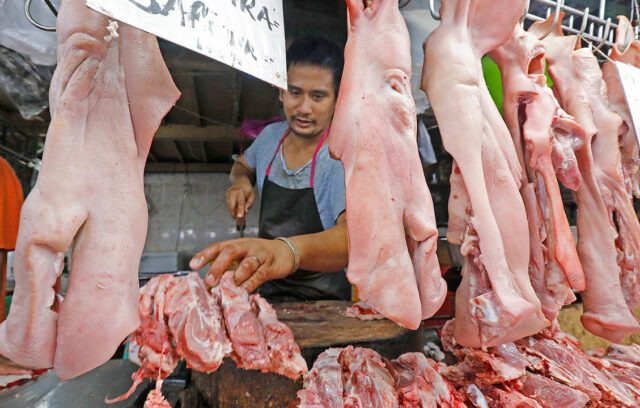
DA to lift max SRP for pork in 24 hours

A MEAT VENDOR at the Marikina Public Market. — PHILIPPINE STAR/ WALTER BOLLOZOS

By Kyle Aristophere T. Atienza, Reporter

THE Department of Agriculture (DA) on Wednesday said it would lift the maximum suggested retail price (MSRP) for pork, demand for which spiked during the election season, within 24 hours amid low compliance among suppliers.

“It’s called one step back and two steps forward,” Agriculture Undersecretary for Livestock Constante J. Palabrica told reporters on the sidelines of an industry event on Wednesday. The agency is studying a better way to deal with high pork prices, he added.

“We are going to lift it, we’re going to study it then come up with a revised program,” he said.

The MSRP was set at P300 per kilo for whole pig, P350 per kilo for pork shoulder and hind leg and P380 per kilo for pork belly. 

But the agency had been complaining about low compliance with the MSRP since the first week of implementation, now at below 30%.

Mr. Palabrica attributed high pork retail prices to high farmgate prices that have hit as much as P290 per kilo.

He said increased demand during the election season outpaced low domestic supply caused by the African Swine Fever (ASF). “It’s the law of supply and demand.”

“So, expect a possible revision of MSRP, holding it for the meantime while we are studying how to make it really effective,” he added.

For now, the agency will focus on buying hogs from pig farms at a lower price — set at P230 per kilo — and distributing these to key slaughterhouses.

He was referring to a direct-sourcing strategy piloted by the Food Terminal, Inc. (FTI) with Thai firm Charoen Pokphand Foods PLC (CP Foods). The FTI is supplying a Caloocan slaughterhouse with 100 live hogs daily from CP Foods under a pilot program that started in April.

“The first thing we asked for was 100 pigs a day,” Mr. Palabrica said. “And then by next month, it will be 200. And then our target is around 500 pigs [a month].”

He added that the government is also looking into a similar strategy used by other farm companies including Pilmico Foods Corp.

“We are looking for other farms which can supply us with our own price,” he said. “If we can get a price of P230, then we can supply at a lower price in the market.”

The Agriculture official said about P5-7 billion is earmarked for the direct-sourcing program, which doesn’t cost the FTI because it sells the hogs at the same price, while the delivery cost to slaughterhouses is shouldered by the partner company.

“If we get it at P230, you will also buy at P230. Then for logistics, we have gotten a discounted price,” he added.

Mr. Palabrica said Philippine pork supply is stable. “We have enough supply of pork. But the limited number is for local pork. On imported pork, we have a lot of supply.”

Pork imports hit 53.598 million kilos in February, up from 38.994 million kilos a year earlier.

Forty-two Philippine villages had ASF cases as of March 28, up from 39 barangays as of March 14, according to data from the Bureau of Animal Industry. More than 6,200 villages have been affected by ASF cases since the first outbreak in 2019.

Mr. Palabrica said they expect the commercial rollout of a Vietnamese ASF vaccine by the end of the year.

The Agriculture department earlier said it is working with the hog industry to increase their herds by at least two million hogs each year through 2028 to return to pre-ASF levels.

REGIONALIZATION PACT
Meanwhile, Mr. Palabrica said the Philippines is in talks with several countries as it implements a regionalization agreement for the imports of live chickens and their products.

Thailand, Taiwan, Paraguay and Chile are seeking to be included in the deal that seeks to do away with a countrywide ban on a trade partner dealing with bird flu outbreaks, he said.

Under the pact, the Philippines will impose a ban on poultry imports only from a specific area affected by avian influenza, allowing imports from zones or regions certified free from the animal disease.

The US, Poland, Spain, Portugal, Brazil and the Netherlands are among the countries that have been accredited by the Philippine government, Mr. Palabrica said.

The DA earlier said a countrywide ban limits the sources of day-old chicks, parent stocks and poultry meat, which leads to higher prices.

The three-phase process for inclusion in the agreement includes submission of documents on veterinary oversight, disease surveillance, traceability, control measures and zoning protocols by the exporting country.

The application will be reviewed by a risk assessment team.

A regionalization agreement will then be drafted and finalized after a successful evaluation, outlining the import terms and conditions, including revised veterinary certificates.

The agreement also mandates continuous disease reporting and biennial reviews and provides grounds for termination in cases of undeclared outbreaks.

Philippine chicken imports hit 31.7 million kilos in February from 32.426 million kilos a year earlier.

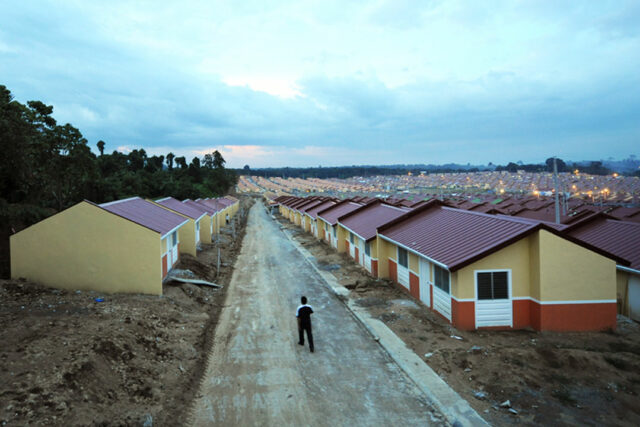
Housing policies can’t keep up with evolving family trends in PHL

By Beatriz Marie D. Cruz, Reporter

THE PHILIPPINE government should reform its housing policies as more Filipinos live with extended families — a sign that traditional family structures are shifting, according to the Philippines Institute for Development Studies (PIDS).

About 29% of Filipino households are no longer the traditional nuclear type, as more relatives resort to cohabitation to share in housing and other costs, PIDS Supervising Research Specialist Tatum P. Ramos told a recent webinar.

“They have decided to join their relatives in a household to gain support in growing their own family or [to manage] living and housing expenses,” she said, based on a PIDS statement released on Wednesday.

A PIDS paper cited the significant link between wealth and the likelihood of living in extended households.

“An extended family setup offers a resource-sharing opportunity and provides support for working young female adults who may not necessarily have the same amount of time for household management activities as before,” PIDS said.

Rising housing prices, especially in Metro Manila and in key cities, have forced households to share living spaces with relatives, Michael L. Ricafort, chief economist at Rizal Commercial Banking Corp., said in a Viber message.

“[There’s also the] lack of mass transport or train systems that would allow more Filipinos to live farther from central business districts to nearby provinces where housing is cheaper,” he added.

“The low attainability of housing in the Philippines is resulting in lower household formation with the rise of extended and multi-family arrangements and nonfamily housing arrangements (living alone or living with nonrelatives),” Ms. Ramos and her co-authors Marife M. Ballesteros and Jenica A. Ancheta said in the study.

“Government efforts to address this issue through a market-driven strategy should be reviewed, and housing affordability issues have to be closely examined,” they added.

Housing prices in the Philippines rose 6.7% in the fourth quarter of 2024 from a year earlier, according to the Bangko Sentral ng Pilipinas.

Mary Racelis, who teaches anthropology at the University of the Philippines, said housing policies should go beyond abstract models to address the lived experiences of the bottom 60% of the population — those who are underserved and priced out of formal housing markets.

She cited the need to understand the poor’s economic conditions to help design sustainable and inclusive housing plans.

“We should recognize that the informal settlers are not the problem, they are the solution,” she told the webinar, adding that informal settlers are not mere passive aid recipients.

Despite the wide membership of housing funds like the Home Development Mutual Fund (Pag-IBIG), the uptake of government assistance for housing finance remains limited, said Kevin Godoy, chief development specialist at the Department of Economy, Planning, and Development.

“Only 4% have government assistance as a financing source… considering that Pag-IBIG had 16 million members in 2024,” he pointed out.

He cited the importance of transport infrastructure, noting that long commutes rather than urban congestion alone are a major barrier to homeownership and household formation.

Mr. Godoy also sought the creation of a national rental housing program.

“We’re the only country in Southeast Asia that does not have a national program on public rental,” he said, noting how local governments have been left to experiment with rental solutions on their own in the absence of a national framework.

The Philippines faces a housing deficit of 6.5 million units, which could rise to 22 million by 2040 if not addressed, according to the United Nations Human Settlements Program.

GBonds feature launch eyed for second half

WIKIPEDIA/JUDGE FLORO

THE BUREAU of the Treasury (BTr) plans to launch GBonds, which will let retail investors buy and sell government securities on e-wallet giant GCash, in the second half.

“Definitely within the year, maybe in the second half, early second half of the year,” National Treasurer Sharon P. Almanza told a Filipino community in Milan, Italy at a financial literacy seminar on May 4, according to a video posted by the Philippine Consulate General in Milan on Facebook.

The GBonds feature will be available to more than 94 million registered users of GCash.

The BTr in January said it was working with the Philippine Digital Asset Exchange, Inc. and GCash to integrate government security investments in e-wallets.

“Right now, we are still testing with GCash but hopefully, it will be available soon,” Ms. Almanza said. “Minimum investment will be about P500 for Treasury bills. But if it’s a retail Treasury bond (RTB), you can buy it for as low as P5,000 for GCash.”

RTBs are peso-denominated, low-risk, fixed-income retail investment instruments that earn interest every quarter.

Ms. Almanza said GCash would waive the transaction fee during the primary issuance or in the first two weeks of the offer period.

In the seminar, the national treasurer said retail bonds offer overseas Filipinos workers a safe investment haven, while supporting programs of the National Government.

Other modes of investments for government securities include over-the-counter transactions, BTr’s online ordering facility and app-based channels.

The government plans to borrow P2.545 trillion this year — 80% from local lenders and the rest from overseas.

The National Government’s outstanding debt rose 0.31% year on year to a fresh high of P16.68 trillion at end-March. — A.R.A. Inosante

SMC Q1 net income soars to P43.4B on forex, asset gains

BW FILE PHOTO

ANG-LED conglomerate San Miguel Corp. (SMC) reported a sharp increase in its first-quarter net income to P43.4 billion from P8.9 billion a year earlier, fueled by foreign exchange (forex) gains and a one-time gain from the partial sale of power assets, despite a decline in consolidated revenue.

Core net income rose by 31% to P19 billion, supported by cost management efforts and improved performance across most core businesses, SMC said in an e-mail statement on Wednesday.

Revenue declined by 8% to P360.9 billion, weighed down by lower crude prices and reduced contributions from the power business following the deconsolidation of the Ilijan Power Plant.

The decline was partially offset by stronger sales from the food, hard liquor, and infrastructure units.

Operating income increased by 13% to P45.6 billion, while consolidated earnings before interest, taxes, depreciation, and amortization (EBITDA) rose by 17% to P64.2 billion.

For its food and beverage business, San Miguel Food and Beverage, Inc. recorded a 16% increase in net income to P11.6 billion, as consolidated revenue grew by 4% to P98.9 billion.

San Miguel Foods saw an 83% jump in net income to P3 billion, driven by an 8% rise in revenue to P46.3 billion on strong poultry sales and steady demand for processed meats and dairy products.

San Miguel Brewery, Inc. posted a 1% increase in net income to P6.6 billion, with sales reaching P36.3 billion.

Ginebra San Miguel, Inc. reported an 11% growth in net income to P2.1 billion as revenue climbed by 8% to P16.3 billion.

San Miguel Global Power Holdings Corp. generated P26.4 billion in net income. Revenue fell by 4% to P42.5 billion, reflecting the impact of the Ilijan Power Plant deconsolidation.

Petron Corp., which leads SMC’s fuel and oil segment, posted a 2% increase in net income to P4 billion. Revenue dropped to P194.4 billion, weighed by lower crude prices and softer export sales.

SMC Infrastructure recorded a 7% rise in revenue, led by continued growth in toll road operations. Operating income improved by 10% to P5.3 billion.

The conglomerate’s cement business reported a 4% decline in revenue to P8.9 billion, reflecting lower average selling prices amid heightened import competition and soft demand.

The business includes Eagle Cement, Northern Cement, and Southern Concrete Industries.

SMC shares rose by 0.19% or 15 centavos to P78.75 apiece on Wednesday. — Revin Mikhael D. Ochave

Mega Prime eyes IPO in 2-3 years

MEGAPRIMEFOODS.COM.PH

MEGA PRIME FOODS, Inc. is targeting an initial public offering (IPO) within the next two to three years as part of its long-term growth strategy, while seeking to expand its sardines market share this year.

“It is on the table because we really want to share this story, this company, with the Filipinos and with other investors because we believe in it so much,” Mega Prime Chief Growth and Development Officer Marvin P. Tiu Lim told reporters on Wednesday.

“And I think given the right management team, given the right brands that are out there for acquisition, and given the right plan for future growth, we can take this Filipino company globally,” he added.

Mr. Tiu Lim said the company has started preparations for the potential listing, which include discussions with banks and improving internal processes.

“We want the company to be able to go IPO anytime, and that means being more transparent, having good corporate governance in place, and being more professional. So, it has to run like a professionally run company,” he said.

He noted, however, that the plan remains in its early stages. “But it [the plan to go public] is still premature. So, we are just trying to hopefully bring out more products and acquire new brands. We just recently acquired Jim’s Coffee,” he said.

Mega Sardines, the company’s flagship brand, is the current market leader in the Philippines. Citing Nielsen Retail Audit data, Mr. Tiu Lim said the brand captured a 26% market share in 2023, ahead of its closest competitors with 18% and 15% shares, respectively.

The company is targeting an additional five to 10 percentage points in market share this year, aiming to reach at least 30% by end-2024.

“We are not only expecting to sustain it but to grow it massively because we are the only brand that has this certification, and celebrating our 50th year, we have a big raffle promo coming up… so we expect a lot of market share growth hopefully this year,” he said, referring to a recognition the brand received from the Medical Wellness Association (MWA).

On Wednesday, Mega Sardines was endorsed by the US-based MWA as a “Superfood,” becoming the first sardine brand globally to receive such recognition.

“With the product being rich in omega-3, high in vitamins, and processed with world-class safety, we can say that it is more than a pantry essential — it’s a food that supports overall health,” said James Michael Lafferty, founding board member of the MWA.

He said Mega Sardines met the MWA’s System-6 criteria for a “Superfood,” citing its high omega-3 content, essential nutrients, and stringent food safety processes.

“Based on these proven health benefits, the MWA is proud to bestow its professional recommendation to Mega Sardines — the first and only sardine brand in the Philippines to receive this endorsement. In fact, it is the only seafood brand to do so,” he added.

Following the MWA recognition, Mega Prime aims to increase the share of its export sales from 5% to 10% over the next three years. Its key export markets include Dubai, the United Arab Emirates, and Canada, with Egypt being eyed as a potential new market. — Justine Irish D. Tabile

JG Summit Q1 profit falls 61% to P4.3B amid petrochemical losses

JGSPETROCHEM.COM

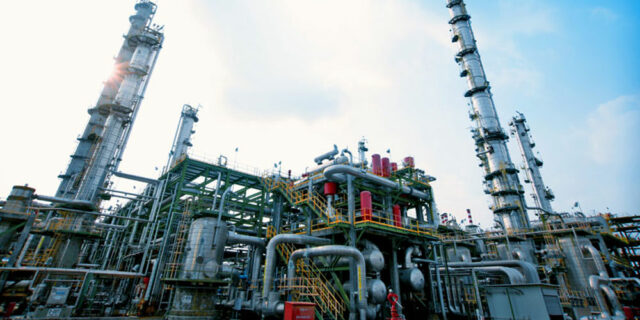
JG SUMMIT Holdings, Inc. reported a 61% drop in first-quarter (Q1) net income to P4.3 billion from P11 billion a year earlier, weighed down by losses from its petrochemical business, which will remain shut for at least two years.

Consolidated revenues rose by 2% to P98.2 billion from P96.6 billion, lifted by the conglomerate’s travel, malls, hotel, and food and beverage segments, the company said in a disclosure to the stock exchange on Wednesday.

However, core net income dropped by 65% to P4.4 billion, as last year’s figure included a P7.9-billion gain from the merger of Robinsons Bank Corp. and Bank of the Philippine Islands.

“We are hopeful that the encouraging trends we are seeing in improving consumer sentiment brought about by the tempering inflation coupled with the favorable forex and oil prices will help accelerate demand and translate to better topline growth and improving margins for the balance of the year,” JG Summit President and Chief Executive Officer Lance Y. Gokongwei said.

JG Summit announced that its petrochemical unit, JG Summit Olefins Corp. (JGSOC), will remain shut for at least two years due to ongoing challenges in the global market.

“During this period, the focus will be on preserving the assets in the plant complex while evaluating strategic options for the business moving forward. Meanwhile, its liquefied petroleum gas trading arm, Peak Fuel Corp., will continue to operate,” JG Summit said.

JGSOC recorded a net loss of P3.3 billion for the period, as non-recurring costs were incurred to facilitate the shutdown. Revenues declined by 46% to P7.6 billion, weighed by lower petrochemical sales.

“Our decision to extend the shutdown of our petrochemical unit will also help reduce the drag on our profitability,” Mr. Gokongwei said.

Meanwhile, its food business Universal Robina Corp. reported a 2% drop in net income to P4.1 billion, reflecting lower foreign exchange gains. Revenues rose by 7% to P45.3 billion, driven by the domestic branded consumer foods segment.

Robinsons Land Corp., the group’s property arm, saw its net income increase by 4% to P3.5 billion. Revenues rose by 1% to P10.7 billion, supported by sustained investment portfolio growth despite a decline in residential sales due to fewer units sold post-pandemic.

Cebu Air, Inc., the airline unit, posted a 79% drop in net income to P466 million, following higher aircraft depreciation and financing costs. Revenues, however, grew by 20% to P30.4 billion, supported by robust passenger demand and continued network expansion.

JG Summit’s core investments also contributed positively. Its share in Manila Electric Co.’s net income rose by 9% to P2.7 billion, driven by higher distribution sales volumes and stronger contributions from its power generation business.

PLDT, Inc. declared dividends of P47 per share, resulting in P1.1 billion in dividend income for JG Summit, up 2% year on year.

On Wednesday, shares in JG Summit fell by 0.65% or 12 centavos to close at P18.38 each. — Revin Mikhael D. Ochave