
How PSEi member stocks performed — April 29, 2025

Here’s a quick glance at how PSEi stocks fared on Tuesday, April 29, 2025.


Here’s a quick glance at how PSEi stocks fared on Tuesday, April 29, 2025.

THE Department of Agriculture (DA) said on Tuesday that the P20-per-kilo subsidized rice program will tap the contingency fund of President Ferdinand R. Marcos, Jr.
The Office of the President has authorized the release of P5 billion from its contingency fund to Food Terminal, Inc., (FTI) which will distribute rice bought from the National Food Authority (NFA) to local government units (LGUs) and the Kadiwa network of government-supported produce markets, Agriculture Secretary Francisco Tiu Laurel, Jr. said at a briefing.
The FTI will spend P4.5 billion to procure the rice, with the remaining P500 million going to logistics and packaging, he added.
The P20 rice program — first introduced in the Visayas on a pilot basis — will also be rolled out in Kadiwa outlets, the DA said on Monday.
The NFA currently sells rice to LGUs at P33 per kilo on the strength of a food security emergency declared in late January. It loses about P12 per kilo assuming a breakeven price of P45. LGUs then resell the NFA rice without a markup or at the slightly higher price of about P35 per kilo.
Mr. Laurel said with the price of NFA rice at P33, the FTI and LGUs will need to pay P6.50 each to close the P13 gap.
This means that in sum, participating LGUs are also expected to contribute around P4.5 billion to the subsidy.
Selling rice at P20 per kilo would yield losses to the government of P10-P12 billion, according to Mr. Laurel.
He said however that NFA stocks are not moving because LGUs are not placing orders for nearly three months after the rice emergency declaration.
He compared the program to a “moving-out sale,” noting that if the NFA stocks — estimated at 370,000 metric tons remain unsold for a long time then it might be forced to sell inventory at even lower prices.
Mr. Laurel said LGUs are reluctant to buy NFA stock in the face of the declining global price of rice, which has pushed some commercial retailers to offer rice at less than the NFA price.
“If we can’t sell them and they rot in our warehouses, they lose value. We tried selling at P33. It did not catch on because rice prices at retail also declined,” he said.
The DA said on Monday that world prices of rice averaged $300 per metric ton, down from a high of over $700.
NFA inventory rose to a five-year high equivalent to 7.56 million 50-kilogram bags of milled rice as of April 24.
Rice prices in Metro Manila markets ranged from P39.99 to P58.17 per kilo between April 21 and April 24, according to DA price monitors.
Mr. Laurel said subsidizing rice is practiced by Malaysia, Indonesia, China Japan, and India, and the Philippines could have done the same as early as 2024 if NFA had enough stock.
Mr. Laurel said the government may roll out the P20 rice program nationwide by January.
A pilot program must run for “at least six months” to determine whether it is feasible for nationwide implementation, he said.
President Ferdinand R. Marcos, Jr. had ordered the DA to find ways to sustain the program until the end of his term in 2028.
The pilot run in the Visayas is set to kick off in Cebu on May 1.
Mr. Laurel last week said the Visayas was chosen for the pilot due to its poverty rate, which exceeds the national average of 10.9%.
The program is targeting about 400,000 families for the P20 rice, including some of the most vulnerable segments of society.
An initial eight Kadiwa outlets in and around Metro Manila will also start their own pilot run on May 2.
Mr. Laurel, meanwhile, clarified that while the initiative has been exempted from the election spending ban, participating LGUs still need to request exemptions. — Kyle Aristophere T. Atienza
THE Philippine Economic Zone Authority (PEZA) approved investment pledges worth P4.575 billion in April, down 69.5% year on year.
In a statement on Tuesday, PEZA said it approved 20 new and expansion projects at a board meeting on April 23. The approved investments are expected to generate more than 9,000 jobs and over $300 million worth of exports.
Seven of the projects involve export manufacturing, five information technology and business process management (IT-BPM), four facilities, two utilities, and one logistics. One of the projects is a domestic enterprise.
The projects are located in the National Capital Region, Cordillera Administrative Region, Central Luzon, Calabarzon, and Central Visayas.
PEZA’s approvals for the month brought the four-month tally to P63.523 billion, up 112.06%.
In the first four months, the investment promotion agency approved 86 new and expansion projects, expected to generate 24,920 jobs and $846.735 million in exports.
“PEZA’s continued upward trajectory reflects our strong commitment towards investment promotion and facilitation,” PEZA Director General Tereso O. Panga said.
“Despite the geopolitical challenges, this momentum reflects renewed investor confidence in the Philippines as a resilient and globally competitive destination,” he added.
The 86 approved investments include 31 manufacturing projects, 29 IT-BPM projects, eight domestic enterprises, seven economic zone developments, and seven facilities projects.
South Korea was the top source of investment in the first four months, accounting for P10.45 billion. This was followed by the US (P2.53 billion), China (P2.17 billion), Japan (P1.66 billion), Hong Kong (P1.14 billion), and Singapore (P1.1 billion).
Meanwhile, PEZA said that it signed a supplemental agreement with MOOG Controls Corp. for the company’s new facility in Luisita Industrial Park in Tarlac.
It also said that the Baguio City Economic Zone Multipurpose Center is now 62% complete and will be running by the third quarter.
“With the current global trade volatilities and uncertainty in the supply chain, we have been receiving more queries about the Philippines and even welcoming several inbound delegations exploring investment opportunities within the ecozones,” Mr. Panga said. — Justine Irish D. Tabile

THE Department of Trade and Industry (DTI) said it sees the coconut and garment industries as among the main beneficiaries if the Philippines locks down a favorable tariff deal with the US.
“Coconut is a huge market, which our neighboring countries used to dominate. But if our tariff is lower, of course, we can dominate that,” Trade Secretary Cristina A. Roque said.
“I was able to talk to a big coconut company, and they said that they are prepared just in case there’s a surge in orders,” she added.
The US was the country’s top export destination for food and non-food coconut products last year, accounting for 25.68% of the total.
Last year, the Philippines exported $556.3 million worth of coconut products to the US, up 65.6%.
Philippine goods were assigned the second-lowest tariff in Southeast Asia of 17%, after Singapore’s 10%, from the reciprocal tariffs imposed by the US on its trading partners earlier this month.
The Philippine delegation to negotiate the tariffs will be led by the DTI and the Office of the Special Assistant to the President for Investment and Economic Affairs.
Aside from coconut exports, Ms. Roque said the timing is right to strengthen the garments industry as competitors face higher rates.
“In the past, when there was a Garments and Textile Export Board, our exports were really big. So definitely, we can revive the industry because we have existing factories and skills … (given the history of the industry) it is not like we are going to do it out of nowhere,” she added.
Major garment exporters like Vietnam and Cambodia, face some of the highest US tariffs — 46% and 49%, respectively. — Justine Irish D. Tabile

THE Philippine Coconut Authority (PCA) said it launched a P350-million integrated coconut processing facility in Balingasag, Misamis Oriental under a public-private partnership (PPP).
The PPP project between the Department of Agriculture (DA) and the First Community Cooperative has the capacity to process 60,000 nuts daily into high-value products, the PCA said in a statement.
The high-value products include cocoboard, activated carbon, virgin coconut oil, flour, skim milk, and health drinks.
The PCA said products will be sold in both domestic and export markets.
The facility is expected to directly generate employment for at least 2,500 people, it said.
The project is also projected to trigger the planting of one million coconut trees every year. — Kyle Aristophere T. Atienza

THE rate of fraud in Philippine digital transactions was estimated at 13.4% in 2024, exceeding the global average of 5.4%, according to a study by TransUnion Philippines.
Of the 18 markets analyzed, the Philippines posted the second-highest suspected digital fraud rate, behind India (19%).
According to TransUnion’s H1 2025 Update to the State of Omnichannel Fraud Report, the average loss in fraudulent Philippine digital transactions was about $768.
“While these figures are lower than the median of $1,747 across global markets which TransUnion surveyed, the impact of falling victim to fraud remains significant,” Yogesh Daware, chief commercial officer at TransUnion Philippines, said in a statement.
“Considering the average monthly wages in the Philippines, the losses constitute at least over two months’ salary for most Filipino households.”
The study incorporated input from 990 Filipino consumers surveyed between Nov. 21 and Dec. 11, 2024. About 74% said they were targeted by fraudulent schemes in the last three months, exceeding the 53% average across all markets surveyed, TransUnion said.
Some 34% of Filipinos said they lost money in fraudulent transactions, exceeding the global rate of 29%.
“These trends showed that Filipinos are facing greater risks from fraud, highlighting the need for stronger safeguards to prevent financial losses,” TransUnion said.
By industry, communities, including online dating and social media sites, posted the highest suspected digital fraud rate of 19.2% last year.
“The high volume of users interacting online opens doors for fraudsters to take advantage of unsuspecting victims,” Mr. Daware said, noting that fraudsters are ramping up their attacks and diversifying their tactics.
According to the report, phishing was the most reported fraud scheme among Filipinos, with 63% of consumers saying they were targeted but did not fall victim. Some 26% said they were not targeted, while 11% were targeted and fell victim.
The fraud rates for other industries were as follows: retail (13%), financial services (6.3%), logistics (5.8%), government (4.5%), telecommunications (0.8%), and travel and leisure (0.5%).
TransUnion also noted the significant decline in the financial services sector’s suspected digital fraud rate due to stronger efforts from the public and private sectors.
Still, nearly all Filipinos surveyed were concerned they could fall victim to fraud, according to Mr. Daware.
“Fraudsters are highly adaptable and constantly evolving their tactics to exploit unprepared victims. Businesses and consumers must remain vigilant to avoid deception.” — Beatriz Marie D. Cruz

THE leading China-based suppliers to the cosmetics industry could pivot to Southeast Asia (SEA) to stay afloat during the trade war with the US, a market research firm said.
Informa Markets added that the Philippine cosmetics market will be driven by e-commerce channels, though it may not escape the trade war fallout, which poses a risk to the firm’s 5.8% growth projection for the country.
Informa Markets Philippine General Manager Rungphech Chitanuwat said: “This year, I think (hitting the growth projection) will be difficult. The difficulty is geopolitical. The second thing is the ingredients to make cosmetics are mainly from China, and the US-China trade war may slow things down,” she said.
“However, we speculate that China will shift their interest into the Southeast Asian market. That would be the benefit. But we don’t see any sudden improvement,” she added.
The Philippine beauty and personal care market was valued at $3.7 billion in 2024, and is projected to grow to $11.05 billion in the coming years.
Informa Markets is organizing a business-to-business (B2B) beauty trade show, Cosmobeauté Philippines, which will run between June 4 and 6 at the World Trade Center.
Expected participation is 250 brands from 20 countries and up to 7,000 visitors.
“I am excited for the opportunities that Cosmobeauté Philippines will bring as it redefines the beauty trade landscape in the Philippines,” she said.
“This is not just a beauty show or showcasing products, but it is all about fostering meaningful connections, sharing innovations, and empowering industry professionals,” she added.
Trade Assistant Secretary Nylah Rizza D. Bautista said that the trade show is a continuation of the department’s pilot beauty fair last year.
“We held it in SM Megamall and brought about 83 micro, small, and medium enterprises, but that was more on the retail side,” she said.
“This time, we are focusing on B2B as we are talking to the wellness entrepreneurs, salon owners, and cosmetologists that can bring in more of the bulk sales,” she added. — Justine Irish D. Tabile
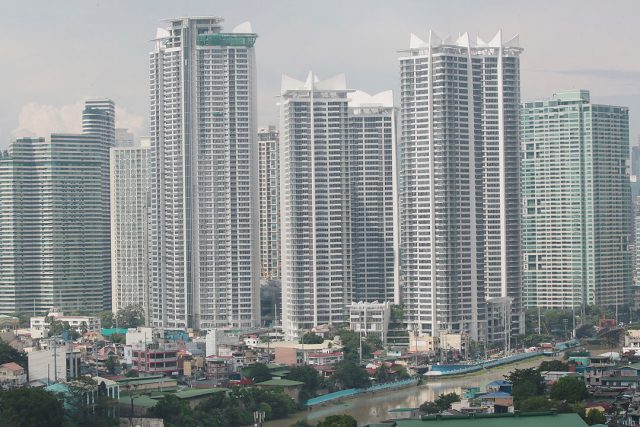
THE vacancy rate for residential property in Metro Manila will likely hit 26% by the end of this year, with condominium developers reining in their launches to dispose of inventory, according to property consultant Colliers Philippines.
If realized, this would exceed the 24.3% overall vacancy in Metro Manila in the first quarter, according to the Colliers First Quarter Property Market Report.
“Essentially, one out of four condo units in the secondary market in Metro Manila is vacant,” Joey Roi H. Bondoc, director and head of research at Colliers Philippines, said in briefing on Tuesday.
The ban on Philippine Offshore Gaming Operators (POGOs) last year has left a void in the residential market, particularly in the so-called Bay Area district, Mr. Bondoc said.
The Manila Bay neighborhood is projected to have the highest vacancy rate by year’s end of 56.5%, against 14.3% in 2016, when POGOs started to pick up momentum.
Colliers projects that 5,800 units will be completed annually on average between 2025 and 2027, against the average of 13,000 units between 2017 and 2019.
In 2025, about 8,600 units will be completed in Metro Manila. This is expected to decline to 6,200 in 2026 and 2,500 in 2027.
Most of these condos started construction between 2019 to 2021, and are only due to be completed by 2025 or 2026, Mr. Bondoc said.
“Developers are not ramping up completion right now. Unlike before, where they would even expedite four years of completion, because they wanted to take advantage of the POGOs,” Mr. Bondoc said after the briefing.
Metro Manila had a total condominium inventory — both in ready-for-occupancy and in pre-selling — of 706,000 units as of the first quarter.
Southern Quezon City posted inventory of 7,000 units, followed by the Alabang-Las Piñas area (6,000 units), Pasig City (5,000 units), Makati fringe (4,000 units), Bay Area (4,000), and the northern Quezon City (4,000 units).
Ortigas Center had about 2,000 unsold units, while the Makati CBD and Fort Bonifacio each had inventory of 1,000 units.
Mr. Bondoc also noted that the government’s proposal to increase capital gains tax might impede real estate transactions.
“If you are a seller and you want to factor in the entire capital gains tax, you’re likely to sell your property at a much higher price. And that will result in slower real estate transactions, thereby hampering the affordability of properties especially in the secondary market,” he told the briefing.
In the office segment, the Metro Manila market saw a quarter-on-quarter rebound in transactions by floor area at 238,000 square meters (sq.m.), against 143,000 sq.m. in the fourth quarter of 2024.
As of the first quarter, Colliers estimated net takeup of 77,000 sq.m. in office space. Demand was driven by expansion particularly in Quezon City, Makati and Ortigas CBDs, the Bay Area, and Fort Bonifacio.
On the other hand, relocations accounted for 1,000 sq.m. of demand, mainly in Alabang and the Makati and Ortigas fringes.
Metro Manila office vacancies are projected at 22% this year. It expects about 612,000 sq.m. of new office supply by the end of the year. — Beatriz Marie D. Cruz

THE Philippines’ income classification is not a primary consideration for prospective investors, the Department of Economy, Planning, and Development (DEPDev) said.
If the Philippines fails to meet its goal of graduating to upper middle-income status soon, this would not significantly dampen its investment prospects, it added.
“I don’t think that’s what investors are looking at. Investors are looking at your investment climate,” Economy Secretary Arsenio M. Balisacan told reporters on the sidelines of an event on Tuesday.
“They’re more concerned about how we address the constraints to investment, the ease of doing business, your economic fundamentals, the deficit, inflation. They don’t care about that particular metric,” he added.
The Philippines is currently classified as a lower middle-income country with a gross national income (GNI) per capita of $4,230 in 2023, according to the World Bank.
An economy is considered lower middle-income if GNI per capita is between $1,146 and $4,515, while upper middle-income countries are those with GNI per capita of $4,516 to $14,005.
“Of course, it’s good that we develop because GDP per capita or GNI per capita is an average overall measure of welfare. It doesn’t tell us about the distribution of the gains or the distribution of the output, but it provides a certain information.”
“If it’s growing fast, then it’s of course good, but where is that growth coming from? That’s even more important,” he added.
Mr. Balisacan said investors are more likely to consider information on growth sources, policy priorities, and incentives.
The Marcos administration is hoping to achieve upper middle-income status by 2026.
Mr. Balisacan has said that the Philippines is still on track to hit this target “barring major external shocks.”
“You have to employ innovation, you have to employ modern technology, you have to develop your workforce, educate your people, in other words, you upskill and reskill them so that they can be more productive.”
“That way you can continue to grow even as you already are out of those cheap traditional sources of growth,” he added.
The World Bank has projected that the Philippines is likely to reach the upper middle-income class tier by 2027.
“It’s a moving target, but the context again is when we were making the projection last year, the world economy was not as bad then. The tariff uncertainty, the trade uncertainty was not there at all. There was only a bit of that, but not to this extent,” Mr. Balisacan said.
“We were still counting on a robust global economy… For that reason, we projected 6-8% growth. Of course, now the situation is a bit different, but a slowdown of one year does not take away an ambition, a long-term vision.”
He said the Philippines can position itself to recover once external conditions improve.
“The biggest threat to a middle-income trap is complacency. If you become complacent, that’s when you get trapped into that middle-income status.”
The Philippines hosted the High-Level Conference of Middle-Income Countries, which culminated in the adoption of the Makati Declaration, which serves as a roadmap for middle-income economies to address challenges and accelerate sustainable development.
Over 100 countries fall under the middle-income classification, accounting for about 75% of the world’s population. They also account for about a third of global economic output.
“We recognize that middle-income countries experience frequent growth slowdowns and, if left unaddressed, this loss of economic dynamism can cause countries to get stuck in what is referred to as the ‘middle-income trap’,” according to the conference declaration.
It flagged persistent challenges middle-income countries face, such as high inequality, low growth, and persistent growth and unemployment, among others.
Since 2000, only 27 countries have graduated to high-income status from the middle-income tier.
“We note that current approaches to development cooperation result in most official financial flows to middle-income countries taking the form of loans rather than grants, including access to climate finance,” it said.
“We stress that middle-income countries have a significantly greater share of foreign liabilities among the developing countries arising from higher dependence on debt instruments.” — Luisa Maria Jacinta C. Jocson
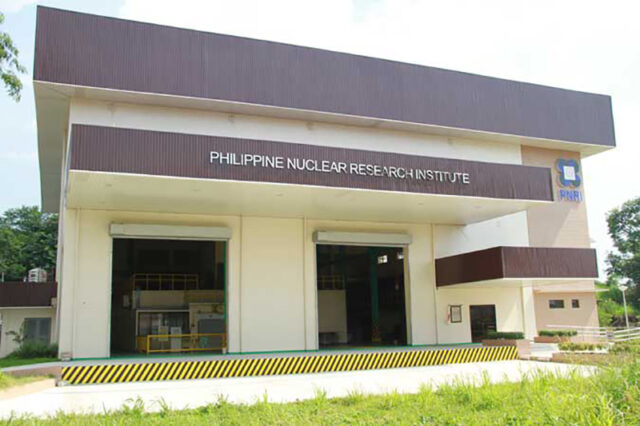
THE Philippine Nuclear Research Institute (PNRI) said any safety concerns posed by nuclear power can be addressed by appropriate regulation.
PNRI made the remarks as Manila Electric Co. (Meralco) brought forward its efforts to develop nuclear energy, including studies to rehabilitate the mothballed Bataan Nuclear Power Plant (BNPP).
“Most definitely…We want nuclear power…we want cheaper power for everybody and nuclear can provide that. But the concern of people is safety. We guarantee safety by regulation,” PNRI Director Carlo A. Arcilla said on the sidelines of a briefing by Alpas Pinas, a nuclear energy advocacy, on Tuesday.
Mr. Arcilla noted, however, that if Meralco is to construct and operate a nuclear power facility, the company will need to secure a license from PNRI.
During the briefing, Mr. Arcilla said nuclear energy plants provide power that is “92% available.”
In October, Meralco signed a memorandum of understanding (MoU) with South Korea’s Doosan Enerbility Co., Ltd. to explore collaboration in developing low-carbon energy projects, including the rehabilitation of the BNPP.
The partnership follows a memorandum of understanding (MoU) entered into by the Department of Energy and Korea Hydro & Nuclear Power Co., Ltd. (KHNP) regarding a comprehensive technical and economic feasibility study on the potential rehabilitation of the BNPP.
Asked for update, Meralco Executive Vice-President and Chief Operating Officer Ronnie L. Aperocho said that MoU with Doosan “remains fully in force” and aligns with the government’s nuclear-energy roadmap.
“At this stage, Meralco and Doosan are conducting joint dialogues covering the potential rehabilitation of the Bataan Nuclear Power Plant and the feasibility of small modular reactors,” Mr. Aperocho told BusinessWorld via Viber.
However, nothing is firm pending the passage of the PhilATOM Bill and the issuance of key nuclear policies, he said.
PhilATOM refers to the prospective Philippine Atomic Energy Regulatory Authority, which will have regulatory control over all sources of ionizing radiation, both from nuclear and radioactive materials as well as radiation devices.
“Specific to BNPP, we are supporting the DoE-led study with KHNP on its rehabilitation. We understand this may be finished towards the end of the year. We will be in a better position to share concrete milestones down the line once this study is completed,” Mr. Aperocho said.
Under the Philippine nuclear energy roadmap, the government targets at least 1,200 megawatts (MW) of nuclear energy capacity by 2032, scaling up to 2,400 MW by 2040 and 4,800 MW by 2050.
By 2025, the necessary laws regarding the nuclear legal and regulatory framework are expected to be in place.
Meralco’s controlling stakeholder, Beacon Electric Asset Holdings, Inc., is partly owned by PLDT, Inc.
Hastings Holdings, Inc., a unit of PLDT Beneficial Trust Fund subsidiary MediaQuest Holdings, Inc., has an interest in BusinessWorld through the Philippine Star Group, which it controls. — Sheldeen Joy Talavera

NEIGHBORHOOD mom-and-pop stores, also known as sari-sari stores, posted strong energy drink and iced tea sales last year, the hottest year on record, according to tech startup Packworks.
“Our data underscores the critical role sari-sari stores play in providing immediate relief and meeting the ongoing demand for essential refreshment, especially during the hotter months,” Packworks Chief Data Officer Andoy Montiel said.
“As forecasts predict continued warm periods this year, it solidifies the sari-sari stores’ role as a crucial touchpoint for consumers nationwide, especially for regions that are sweltering through warmer conditions,” he added.
In 2024, energy drink brand Sting recorded an 83% increase in sales to P34 million in gross merchandise value.
This was most pronounced in Mindanao, where the Bangsamoro Autonomous Region in Muslim Mindanao (BARMM) posted a 1,810% increase, Region XIII or Caraga booked a +575% increase, and Region X or Northern Mindanao growth was 554% increase.
“The sales spikes in Mindanao coincided with the all-time temperature records posted, particularly in Butuan City and Malaybalay City, Bukidnon,” Packworks said.
Powdered iced tea brand Nestea posted sales growth of 76% to P30 million in 2024.
Top regions for Nestea sales were Region IV-A, or Calabarzon; Region VII, or the Central Visayas; and Region I, or the Ilocos Region.
Posting top Nestea sales growth were Region V, or the Bicol Region; BARMM; and Region VI, or the Western Visayas.
“Both Sting and Nestea saw their sales peak in March 2024, coinciding with the Philippine Atmospheric, Geophysical, and Astronomical Services Administration (PAGASA) declaration of the start of the dry season,” Packworks said.
“Sting saw a 43% sales increase over the previous month, while Nestea saw a 24% increase,” it added.
“With prolonged periods of warm weather and all-time temperature spikes recorded last year, consumers nationwide found ways to cope with the record-breaking heat at their neighborhood stores,” Packworks said. — Justine Irish D. Tabile
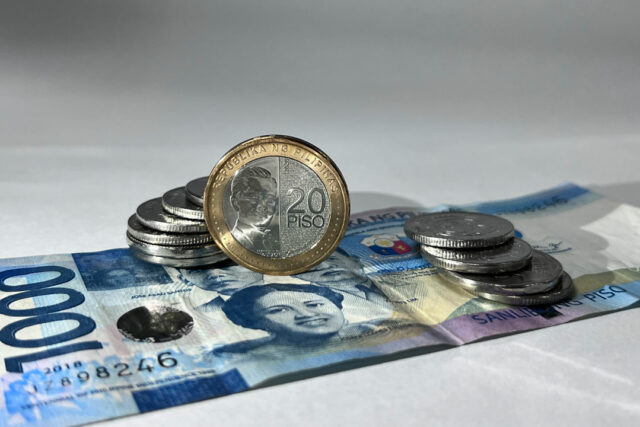
THE PESO strengthened to a seven-month high on Tuesday as the greenback continued to struggle due to tariff uncertainties.
The local unit closed at P56.145 per dollar on Tuesday, surging by 27.5 centavos from its P56.42 finish on Monday, Bankers Association of the Philippines data showed.
This was the peso’s best finish in seven months or since its P56.03-a-dollar close on Sept. 30, 2024.
The peso opened Tuesday’s session stronger at P56.333 against the dollar. It climbed to its intraday best of P56.10, while its weakest was at P56.35 versus the greenback.
Dollars exchanged rose to $1.78 billion on Tuesday from $1.57 billion on Monday.
The peso rose due to a weak dollar “after Chinese Foreign Minister Wang Yi said China would seek solidarity with other countries against US tariff threats after news that the Trump administration is exploring a new trade tool to pressure China,” a trader said in a phone interview.
The dollar recouped some of its losses on Tuesday, supported by reports that the US administration may ease planned tariffs, although investor caution lingered over whether a meaningful de-escalation in the US-China trade conflict was in motion, Reuters reported.
The administration of US President Donald J. Trump was set to take steps on Tuesday to soften the impact of his automotive tariffs.
The United States and China in recent days seemed to have softened their respective stances, with Washington signaling openness to reducing tariffs and Beijing exempting some US imports from its 125% levies.
Still, US Treasury Secretary Scott Bessent said that it was up to China to de-escalate on tariffs — the latest in a slew of conflicting signals over progress on trade talks between the world’s two largest economies.
The US dollar index, a measure of the greenback’s value relative to a basket of foreign currencies, strengthened 0.15% to 99.23 after falling 0.58% the previous day.
It remained on track for its biggest monthly drop since November 2022, as tariff tensions stoked fears of a global economic slowdown and undermined confidence in US assets.
The dollar rose against other major currencies, adding 0.25% to 142.38 yen.
Lower global crude oil prices also supported the peso, Rizal Commercial Banking Corp. Chief Economist Michael L. Ricafort added in a Viber message. Brent crude was 1.4% weaker at $65 a barrel on Tuesday.
For Wednesday, the trader expects the peso to move between P56 and P56.40 per dollar, while Mr. Ricafort sees it ranging from P56.05 to P56.25. — Aaron Michael C. Sy with Reuters
