Home Blog Page 1127

US business spending on equipment softening as tariff uncertainty persists

REUTERS

WASHINGTON – New orders for key U.S.-manufactured capital goods plunged by the most in six months in April amid mounting uncertainty over the economy because of tariffs, suggesting business spending on equipment weakened at the start of the second quarter.

The report from the Commerce Department on Tuesday also showed shipments of these goods falling last month. Economists said President Donald Trump’s flip-flopping on import duties was making it difficult for businesses to plan ahead. That has been evident in the deterioration in sentiment among businesses.

“I have predicted for months that business investment will be the main driver of a softer economic performance this year, as executives postpone their capital projects until they have more clarity on policy,” said Stephen Stanley, chief U.S. economist at Santander U.S. Capital Markets. “These data offer the first confirming evidence of that hypothesis.”

Non-defense capital goods orders excluding aircraft, a closely watched proxy for business spending plans, tumbled 1.3% last month. That was the largest drop since last October and followed an upwardly revised 0.3% gain in March, the Commerce Department’s Census Bureau said. Economists polled by Reuters had forecast these so-called core capital goods orders dipping 0.1% after a previously reported 0.2% drop in March.

Core capital goods shipments slipped 0.1% after increasing 0.5% in March. Nondefense capital goods orders slumped 19.1%. Shipments of these goods rebounded 3.5% after falling 1.1% in March. Front-running by businesses eager to avoid higher prices from Trump’s sweeping tariffs on imports contributed to business spending on equipment, mostly information processing equipment, surging at its fastest rate in 4-1/2 years in the first quarter.

That helped to limit the drag on gross domestic product from a flood of imports. Trump has delayed higher import duties on most countries until July. The White House this month announced a deal with Beijing to slash tariffs on Chinese goods to 30% from 145% for 90 days.

The truce in the trade war between Washington and Beijing helped to lift consumer confidence in May after deteriorating for five straight months. Consumers, however, continued to worry about tariffs raising prices and hurting the economy.

The Conference Board’s consumer confidence index increased 12.3 points to 98.0 this month, blowing past economists’ expectations for an improvement to 87.0.

But concerns about the labor market lingered, even as consumers planned to spend more over the next six months on big-ticket items such as motor vehicles and household appliances, take vacations and buy houses.

The survey’s so-called labor market differential, derived from data on respondents’ views on whether jobs are plentiful or hard to get, narrowed to 13.2 from 13.7 in April. This measure correlates with the unemployment rate in the Labor Department’s monthly employment report.

Trump last week ratcheted up his trade war, proposing a 50% tariff on European Union goods starting June 1 and threatened Apple AAPL.O with a 25% duty on any iPhones manufactured outside the United States. Trump at the weekend, however, backed off his threat against the EU, restoring a July 9 deadline.

Stocks on Wall Street were trading higher. The dollar rose against a basket of currencies. U.S. Treasury yields fell.

FRESH ROUND OF FRONT-LOADING
Economists are anticipating a period of volatility for business spending, with the pauses in higher tariffs for Chinese and EU products seen unleashing a fresh round of front-loading. Ultimately, they expect investment to soften this year.

Trump sees tariffs as a tool to, among other things, revive a long-declining U.S. industrial base, a feat that economists argue would be difficult to achieve in the short-term because of structural issues, including labor shortages.

While orders for computers and electronic products rebounded 1.0% last month, bookings for communications equipment decreased 2.6%. Electrical equipment, appliances and components orders fell 0.2%. But orders for machinery increased 0.8% as did those for fabricated metal products.

Orders for durable goods, items ranging from toasters to aircraft meant to last three years or more, dropped 6.3% last month after a slightly upwardly revised 7.6% rise in March.

Durable goods orders were previously reported to have jumped 7.5% in March. They were last month weighed down by a decline in orders for commercial aircraft as well as the fading boost from the tariff-related front-running.

Boeing reported on its website that it had received only eight aircraft orders in April, down from 192 in March. Orders for motor vehicles and parts decreased 2.9%.

Overall transportation orders plummeted 17.1% after soaring 23.5% in March. The Atlanta Federal Reserve lowered its second-quarter GDP growth estimate to a 2.2% annualized rate on the data from a 2.4% pace earlier. The economy contracted at a 0.3% rate in the January-March quarter.

Some economists expect business spending on equipment to hold up if companies more or less maintain the first quarter’s robust pace of front-running of imports.

“It is not until this import-driven boost fades later this year that we expect investment growth in that category to slow sharply,” said Thomas Ryan, an economist at Capital Economics. “We expect business equipment investment to flatline in the second half of the year.”

The tariff-driven economic uncertainty and higher mortgage rates are weighing on demand for homes, resulting in a rise in supply that is curbing house price growth. New housing inventory is at levels last seen in 2007, while the supply of previously owned homes is the highest in more than four years.

A third report from the Federal Housing Finance Agency showed house prices increased 3.7% in the 12 months through March after advancing 3.9% in February.

“Prospects for house prices do not look strong,” said Carl Weinberg, chief economist at High Frequency Economics. “A new slowing trend is emerging as the economy slows and real incomes falter.” — Reuters


US drops COVID vaccine recommendation for healthy kids, pregnant women

REUTERS

The US has stopped recommending routine COVID-19 vaccinations for pregnant women and healthy children, Health Secretary Robert F. Kennedy Jr announced in a social media post on Tuesday, circumventing the CDC’s traditional recommendation process.

Kennedy, FDA commissioner Marty Makary and National Institutes of Health director Jay Bhattacharya said in a video that the shots have been removed from the Centers for Disease Control and Prevention’s recommended immunization schedule.

The changes come a week after they unveiled tighter requirements for COVID shots, effectively limiting them to older adults and those at risk of developing severe illness.

Traditionally, the CDC’s Advisory Committee for Immunization Practices would meet and vote on changes to the immunization schedule or recommendations on who should get vaccines before the director of the CDC made a final call. The committee has not voted on these changes.

Kennedy, a long-time vaccine skeptic whose department oversees the CDC, has been remaking the U.S. health system to align with President Donald Trump’s goal of dramatically shrinking the federal government.

“Last year, the Biden Administration urged healthy children to get yet another COVID shot despite the lack of clinical data to support repeat booster strategy in children,” Kennedy said in the video.

The CDC, following its panel of outside experts, previously recommended updated COVID vaccines for everyone aged six months and older.

Insurers said they are reviewing the regulatory guidance to determine their policies, which typically follow the ACIP recommendations.

A spokesperson for CVS Health said the company is determining whether changes in health insurance coverage are required as the federal government reassesses COVID-19 vaccine eligibility, while a Blue Cross Blue Shield Association spokesperson said preventative health benefits, including COVID vaccines, are essential in keeping patients healthy.

‘TURNED UPSIDE DOWN’
“The recommendation is coming down from the secretary, so the process has just been turned upside down,” said William Schaffner, professor of infectious diseases at Vanderbilt University Medical Center and a consultant to the ACIP.

Schaffner said the CDC’s panel was to vote on these issues at a June meeting, where he had expected them to favor more targeted shots instead of a universal vaccine recommendation. “But this seems to be a bit preemptory,” he said.

Dorit Reiss, professor of law at UC Law San Francisco, said in a Facebook post that going around the advisory committee might hurt the agency in the case of potential litigation.

Studies with hundreds of thousands of people around the world show that COVID-19 vaccination before and during pregnancy is safe, effective, and beneficial to both the pregnant woman and the baby, according to the CDC’s website.

But Makary said in the video that there was no evidence that healthy children need routine COVID shots. Most countries have stopped recommending it for children, he added.

COVID vaccine makers Moderna and Pfizer did not respond to requests for comment.

Dr. Cody Meissner, professor of pediatrics at Dartmouth who co-wrote an editorial with Makary during the COVID pandemic against masks for children, said he agreed with the decision.

He said he felt the U.S. had been overemphasizing the importance of the COVID vaccine for young children and pregnant women, and that previous recommendations were based on politics, adding that the severity of the illness generated by the virus seems to have lessened over time in young children. — Reuters

ASEAN leaders agree tariff deals with US should not harm fellow members

In this photo illustration, the Association of Southeast Asian Nations (ASEAN) emblem is seen on a smartphone screen in front of the ASEAN flag. — PAVLO GONCHAR / SOPA IMAGES/SIPA VIA REUTERS CONNECT

KUALA LUMPUR – Southeast Asian leaders reached an understanding on Tuesday that any bilateral agreements they might strike with the United States on trade tariffs would not harm the economies of fellow members, Malaysia’s premier Anwar Ibrahim said.

Anwar, the current chair of the Association of Southeast Asian Nations, said there was consensus during an ASEAN summit in Kuala Lumpur that any deals negotiated with Washington would ensure the interests of the region as a whole were protected.

The ASEAN meeting came at a time of global market volatility and slowing economic growth, and amid uncertainty over a trade war that has ensued since U.S. President Donald Trump’s announcement of sweeping “Liberation Day” tariffs.

Southeast Asia is among the regions hardest hit by the tariffs, with six of its countries facing levies of between 32% and 49% in July if negotiations on reductions fail.

“While proceeding with bilateral negotiations …, the consensus rose to have some sort of understanding with ASEAN that decisions should not be at the expense of any other country,” said Anwar, who on Monday said he had written to Trump requesting an ASEAN-U.S. meeting on the tariffs.

“So we will have to protect the turf of 650 or 660 million people,” he said of ASEAN.

ASEAN, a region with combined gross domestic product of more than $3.8 trillion, is in a precarious position in relation to the United States, which is the biggest market for the region’s exports, key drivers of its growth.

The 10-member bloc on Tuesday released a five-year strategic plan to better integrate its economies, citing challenges that meant “carrying on business as usual will not suffice”.

Tuesday’s meetings also included an economic gathering of leaders of the ASEAN, Gulf countries and China, which was represented by Premier Li Qiang.

One absentee was Brunei’s 78-year-old ruler, Sultan Hassanal Bolkiah, who was admitted to a Kuala Lumpur hospital after feeling tired, but was in good health according to his office.

At a dinner event late on Tuesday, China’s Li urged Gulf and ASEAN countries to remove trade barriers and expand liberalization in the face of rising protectionism and unilateralism.

“We all need to firmly maintain the multilateral trading system with the World Trade Organization as the core, and promote the creation of a stable and orderly international market environment,” he said.

CALL TO EXPAND TRUCE
ASEAN leaders also called for a temporary ceasefire in army-ruled Myanmar to be expanded nationwide, to enable warring sides to build trust and work towards convening dialogue.

Myanmar has been in crisis since its military overthrew an elected civilian government in 2021, triggering pro-democracy protests that morphed into a widening rebellion, with more than 3.5 million people displaced.

A devastating earthquake in March that killed more than 3,800 people led to a series of temporary ceasefires in affected areas of Myanmar, but the military government has continued air strikes and artillery attacks.

“We further called for the sustained extension and nationwide expansion of the ceasefire in Myanmar, as an initial step towards the cessation of violence,” ASEAN leaders said in a statement.

“We encouraged all relevant stakeholders in Myanmar to build trust towards convening an inclusive national dialogue.”

Anwar hailed “significant” engagement steps on Myanmar on Monday after last month holding a closed-door meeting in Bangkok with junta chief Min Aung Hlaing and virtual talks with the rebel-aligned shadow National Unity Government.

On Tuesday, Anwar said ASEAN leaders had agreed that the path forward was to engage all sides in Myanmar.

“Now we have gone to a stage where both parties are now in consultation, although at the lower key level,” he said. — Reuters

NG posts P67.3-B surplus in April

The National Government posted a P67.3-billion budget surplus in April. _ PHILIPPINE STAR/EDD GUMBAN

THE NATIONAL GOVERNMENT’S (NG) fiscal position swung to a surplus in April as an uptick in tax revenues offset the decline in state spending, the Bureau of the Treasury (BTr) said on Tuesday.

Data from the Treasury posted a P67.3-billion surplus in April, a turnaround from the P375.73-billion deficit in March.

National Government outstanding debtThe surplus was also 57.51% higher than the P42.7-billion surplus seen in April 2024.

This was the first budget surplus since the P68.36-billion surplus in January.

Revenue collections slid by 2.82% to P522.1 billion in April from P537.2 billion in the same month last year, “due solely to the timing of nontax collections.”

Nontax revenues plunged by 68.08% to P24.1 billion in April from P75.4 billion in the same month in 2024.

“This is because most government-owned and -controlled corporations (GOCCs) have yet to remit dividends, unlike the same period last year,” it said.

BTr revenues dropped by 77.42% to P14.5 billion in April, while other offices saw a 15.64% decline to P9.6 billion.

The Department of Finance last week reported that state-run firms remitted P76 billion worth of dividends to the Treasury as of May.

On the other hand, tax revenues jumped by 7.84% to P498 billion in April from P461.8 billion in the same month in 2024.

The bulk of tax revenues came from the Bureau of Internal Revenue (BIR), whose collections rose by 11.1% to P420.5 billion in April from P378.5 billion a year ago.

“This strong performance was driven by higher collections from corporate income tax (CIT), value-added tax (VAT), and personal income tax (PIT),” BTr said, noting the annual tax filing deadline was April 15.

Improvements in personal income tax and VAT collections were attributed to BIR’s efforts to simplify tax filing through digital services, it added.

“The increase in VAT collections was also supported by the Bureau’s crackdown on the use of fake receipts and its continued campaign against illicit trade,” the BTr said.

The Bureau of Customs saw revenues fall by 7.48% to P74.7 billion in April from P80.7 billion a year ago.

“This is partly due to the fewer working days for the month and the impact of lower import volumes amidst global trade challenges,” the Treasury said.

In April, US President Donald J. Trump announced a baseline 10% tariff on all its trading partners, as well as higher reciprocal tariffs on some countries, including the Philippines. The reciprocal tariffs have been paused until July.

Meanwhile, government expenditure fell by 8.03% to P454.8 billion in April from P494.5 billion in the same month last year.

The BTr attributed the drop in state spending to lower interest payments, and subsidies to government corporations, particularly the National Irrigation Administration.

“The timing of transfer of the capitalization requirement of the Coconut Farmers and Industry Trust Fund also weighed down on the growth of April spending. In the previous year, the transfer was taken up in April while this year’s capitalization requirement was released in March,” it said.

Primary spending — which refers to total expenditures minus interest payments — slipped by 4.37% to P408.3 billion in April from P427 billion a year earlier.

Interest payments fell by 31.19% to P46.4 billion in April this year from P67.5 billion in the same month in 2024.

The annual decline in interest payments was attributed to the shift in the timing of payments of both domestic securities and external loans related to Lenten and Eid’l-Fitr holidays.

“Fundamentally, budget surpluses are expected during the month of April in a given year during the tax collection/filing month on a yearly basis. The budget surplus could reduce the need for additional borrowings/debt by the NG,” Rizal Commercial Banking Corp. Chief Economist Michael L. Ricafort said.

Reinielle Matt M. Erece, an economist at Oikonomia Advisory and Research, Inc. said the drop in spending may have been due to the election ban on some public spending which started in late March and ran until election day.

“However, this surplus may not last long as faster government spending is expected this year to support the economy,” he said.

4-MONTH GAP
At the same time, the NG’s fiscal deficit widened to P411.5 billion in the January-to-April period, 78.98% bigger than the P229.9-billion gap a year ago, as the pace of expenditures outpaced revenues.

The BTr said the deficit ballooned due to the “faster expansion in public spending to fuel economic activity and support priority programs of the Marcos Jr. administration.”

State spending went up by 13.57% to P1.93 trillion in the first four months from P1.7 trillion in the same period last year.

Primary spending increased by 14.16% to P1.64 trillion, while interest payments rose by 10.35% to P287.4 billion.

On the other hand, revenues inched up by 3.35% to P1.52 trillion in the January-to-April period from P1.47 trillion a year ago.

Taxes, which account for 94.03% of the total revenues, increased by 11.49% to P1.43 trillion.

BIR revenues rose by 14.5% to P1.11 trillion in the first four months, due to the intensified campaign against fake receipts, illicit trade, digitalized tax filing and higher excise tax collections.

Customs collections inched up by 2.16% to P306.1 billion as of end-April.

Meanwhile, nontax revenues slumped by 51.94% to P90.7 billion in the January-to-April period from P188.8 billion a year earlier. 

The NG’s deficit ceiling for 2025 is capped at P1.54 trillion or 5.3% of gross domestic product. — Aubrey Rose A.Inosante

PHL eyes more investments from UAE sovereign wealth funds

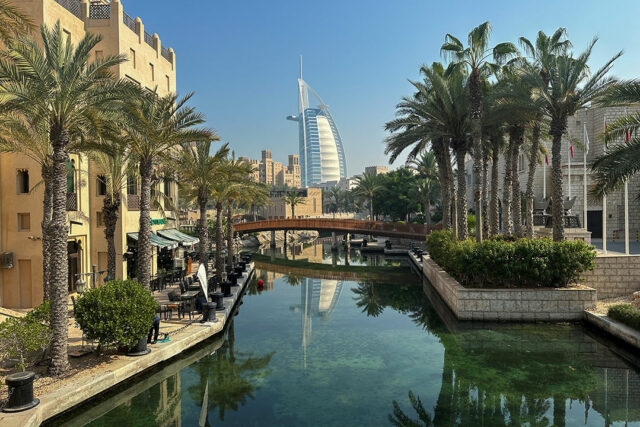
A general view of Burj Al Arab in Jumeirah area in Dubai, United Arab Emirates, June 22, 2024. — REUTERS

By Justine Irish D. Tabile, Reporter

THE PENDING Comprehensive Economic Partnership Agreement (CEPA) with the United Arab Emirates (UAE) will create a framework that will allow the Philippines to secure more investments from the UAE’s sovereign wealth funds, an official of the Department of Trade and Industry said.

This as the Philippines-UAE CEPA is expected to be signed next month.

“This will be historic in the sense that it will be our first FTA (free trade agreement) with a Middle Eastern country,” the President’s Special Envoy to the UAE for Trade and Investment Ma. Anna Kathryna Yu-Pimentel said.

Even before the FTA is signed, Trade Undersecretary Ceferino S. Rodolfo said that the UAE’s sovereign wealth funds and private sector have already been investing heavily in private equities.

“Those are the ones that are investing in the Philippines,” he said on the sidelines of the Doing Business with the Philippines Forum of the Philippine Chamber of Commerce and Industry (PCCI).

While the UAE sovereign wealth funds can already invest in the Philippines, Mr. Rodolfo said the CEPA will be important as it will provide the framework on how the Philippines can receive investments from these funds.

“I think for Dubai, they place a high importance on the CEPA as a way of also unraveling the potential for more investments, particularly from the sovereign wealth funds,” he added.

Data from the Global SWF showed that the sovereign wealth funds (SWF) managed by the UAE reached $2.39 trillion as of May 2025.

Mr. Rodolfo said that the Philippines hopes to attract UAE investments in renewable energy, infrastructure, logistics, digital infrastructure, and high-tech agriculture through the FTA.

A delegation consisting of 17 companies from Dubai visited the Philippines on Tuesday to explore potential partnerships with local companies.

These companies are in the areas of agriculture, automotive, construction, human resources and service, hospitality, food and beverages, industrial lubricants, and perfume.

“CEPA will provide the framework (for these investments) through these missions, and we already have an investment protection agreement with them, so all of the things are in place,” Mr. Rodolfo said.

Mr. Rodolfo said that the Philippines-UAE CEPA would also be the country’s first FTA with a Gulf Cooperation Council (GCC) country.

“So, very important also would be the access that we can get through Dubai to the other GCC countries and onwards towards Africa,” he said.

“The unique thing with the UAE CEPA is that even before the agreement has been signed and has entered into force, the private sector from both sides is already actively working on deals on the commercial engagement side,” he added.

Dubai Chamber of Commerce (Dubai Chambers) Vice-President for International Relations Salem Al Shamsi said that they are already thinking ahead on how Dubai and the Philippines can benefit from the CEPA. They are already organizing a Philippine business delegation that will go to Dubai next year.

He said the CEPA is anticipated to boost bilateral trade and provide opportunities for Dubai companies to invest in the Philippines. In the past four years, he said investments from Dubai to the Philippines amounted to $193 million.

Among high-potential Philippine exports to Dubai include leather, car parts, fertilizers, flat-rolled iron or steel, organic chemicals, and flooring materials.

Dubai Chambers also sees tourism, agri-industry, telecommunications, logistics, and healthcare as promising sectors for UAE firms.

On Tuesday, the PCCI and Dubai Chambers signed a memorandum of understanding (MOU) aimed at strengthening bilateral trade relations and exploring new areas of collaboration.

“This MOU transcends formality, creating concrete pathways for trade collaboration, investment opportunities, and joint ventures. It serves as our strategic framework for deeper economic partnership,” said PCCI President Enunina V. Mangio.

“Through PCCI’s extensive network of over 35,000 enterprises countrywide, we are positioned to connect businesses across priority sectors such as renewable energy, innovation, agribusiness, infrastructure, healthcare, and technology startups,” she added.

According to Ms. Mangio, the Philippines’ top exports to the UAE are electrical equipment, machinery, food products, and steel. The country’s top imports from the UAE include mineral fuels, plastics, vehicles, and metals.

“The UAE presents promising opportunities for Filipino products, particularly halal goods, tropical fruits, garments, and premium consumer items,” she said.

“We are optimistic that the proposed Philippines-UAE FTA will unlock wider market access, enhanced export opportunities, and greater investment flows for both economies,” she added.

ADB set to approve $400-M PHL loan for ‘blue economy’

Fishermen are seen at sea in this file photo. — PHILIPPINE STAR/EDD GUMBAN

THE ASIAN Development Bank (ADB) on Tuesday said it is set to approve this year a new $400-million loan for the Philippines, which would fund efforts to boost the country’s marine ecosystem and “blue economy.”

“Today, I am pleased to share that a $400-million loan for the Philippines is set for approval this year, to strengthen marine ecosystems and support the blue economy under its National Adaptation Plan,” ADB President Masato Kanda said during the Brunei Darussalam-Indonesia-Malaysia-Philippines East ASEAN Growth Area (BIMP-EAGA) Summit in Kuala Lumpur.

Mr. Kanda was referring to the loan for the Marine Ecosystems for Blue Economy Development Program (Subprogram 1). The program falls under the National Adaptation Plan, which aims to reduce the country’s vulnerability to climate change impacts by boosting adaptive capacity, fostering resilience, and integrating adaptation into relevant policies and programs.

According to the ADB’s website, this project aims to establish an integrated and inclusive management of coastal and marine ecosystems, improved plastic and solid waste circularity.

The “blue economy” refers to the responsible use of ocean resources to foster economic growth, improve livelihoods, and ensure the long-term sustainability of marine ecosystems.

Valued at P943.05 billion in 2023, the blue economy covers fisheries, manufacturing of ocean-based products, tourism, shipping, and offshore energy.

Meanwhile, Mindanao Development Authority Chairman Leo Tereso A. Magno said the multilateral lender has committed to extending assistance to projects in Mindanao.

“They gave an amount during the meeting earlier and they committed for some funds, additional funds for our country, to develop Mindanao and Palawan,” he told reporters in Kuala Lumpur.

Separately, the ADB also expects to approve a $62.7-million loan for the first phase of the Mindanao Irrigation Development Project in 2026.

It aims to improve irrigation planning and promote climate-resilient farming systems to boost agricultural productivity in Mindanao.

Another related initiative scheduled for approval next year is the $61-million Promoting Sustainability and Productivity for Enterprise Resilience and Upscaling in the Philippines (ProSPER) Project.

ProSPER supports agricultural diversification and food value chain development in Mindanao by “promoting private investments in agro-industry, improving agricultural logistics and services, and enhancing product quality and competitiveness.”

‘DYNAMIC GROWTH HUB’
Meanwhile, Mr. Kanda said the ADB supports BIMP-EAGA’s Vision 2035, which positions the region as a “dynamic growth hub.”

“We stand at a crucial juncture and must navigate a great deal of uncertainty. The region must face the impacts of trade and geopolitical tensions, rapid technological shifts, and threats to food and energy security,” he said.

To unlock the region’s potential, Mr. Kanda said there is a need to tackle vulnerabilities in the food system.

“BIMP-EAGA is known as ASEAN’s (Association of Southeast Asian Nations) food basket, sustaining millions through agriculture, fisheries, and aquaculture. But climate change threatens food security and marine ecosystems. We must act to address this,” he said.

Mr. Kanda said the ADB is scaling up its investment in food security to $40 billion through 2030.

“In the Philippines, we have deployed $500 million for agricultural development through policy and regulatory reforms, enhanced public services and financial support, and protection of rural families,” he said.

To boost regional energy integration, Mr. Kanda said the ADB is also prepared to commit up to $10 billion to advance the ASEAN Power Grid.

Mr. Kanda also sees opportunities in BIMP-EAGA’s expanded economic corridors and special economic zones.

The ADB chief said the bank is ready to double trade finance in the ASEAN to more than $2.5 billion annually by 2030. — A.R.A. Inosante

New mid-income condo launches unlikely in the next 3 to 4 years

Condominium and office buildings are seen in the Ortigas Business District, April 4, 2025. — PHILIPPINE STAR/MIGUEL DE GUZMAN

IT MAY TAKE up to four years before launches of new middle-income residential condominium projects in Metro Manila begin picking up again, amid lingering oversupply in the market, according to real estate consultancy firm Cushman & Wakefield.

“Based on historical experience, it will take about three to four years before the market begins to react again and new launches will be announced,” Claro dG. Cordero, Jr., director and head of research, consulting and advisory services at Cushman & Wakefield, said at a news briefing on Tuesday.

The Metro Manila condominium market, particularly for the middle-income segment, continues to experience excess inventory, Cushman & Wakefield said.

“Prior to the pandemic, I think the annual launches were about, on average, 15,000 units a year from around 2005 up to 2020. After the pandemic, we noticed that the launches have gone down to about 5,000 [units] annually,” Mr. Cordero told BusinessWorld.

In its first-quarter property market report, Cushman & Wakefield estimated there are around 450,000 units available in the middle-income and high-end segment.

Mr. Cordero said the high-end residential condominium segment has maintained its growth momentum, while noting an increasing demand for house and lot properties outside Metro Manila.

“For residential condominium markets, investors are shifting again towards high-end residential for capital appreciation, and rental yields have remained attractive in major central business districts like Makati, Ortigas, and Bonifacio Global City,” he said.

This year, Cushman & Wakefield said around 5,000 units will be added to the available supply in Metro Manila, covering middle-income to luxury residential segments.

Meanwhile, high vacancy rates persist in the office sector due to hybrid work schemes, policy changes and the exit of Philippine offshore gaming operators (POGO), Mr. Cordero said.

He said the Metro Manila office vacancy rate rose to 17.3% in the first quarter, from 16.5% in the same period a year ago.

The Metro Manila office sector has a consolidated stock of 9.83 million square meters (sq.m.), mostly Prime and Grade “A” facilities. About 69,200 sq.m. of new supply was added in the first quarter, Mr. Cordero said.

“We’re looking at again more than half a million square meters [of new supply] by end of 2025 mainly coming from Quezon City, Makati and Taguig,” he also said. “We’re looking at persistently high vacancy rates over the next few quarters.”

In the first three months of the year, headline rents averaged P987 per sq.m. per month — declining annually by 2.4% — reflecting pressures from excess supply in the market, Mr. Cordero said.

Despite a positive net absorption of 32,000 sq.m. year-to-date, demand remains “on the low side” due to office spaces that have remained vacant since the exit of POGOs.

“The overall absorption rate is positive, but some areas like Parañaque and Quezon City still have negative absorption figures because of the amount of spaces vacated by the POGO industry,” Mr. Cordero said.

To attract tenants, office developers in Metro Manila should consider offering flexible leasing strategies and fit-out incentives, Mr. Cordero said.

Meanwhile, the retail sector is expected to stay resilient, driven by the growing middle class as well as new commercial developments outside the Philippine capital.

“We’re seeing a significant supply of new shopping mall developments outside of Metro Manila primarily by SM [Prime Holdings, Inc.] and Ayala [Land, Inc.],” Mr. Cordero said.

These malls are expected to complement developers’ township projects in regional areas, he added.

Cushman & Wakefield said around 250,000 sq.m. of new retail spaces came online in the January-March period, while it expects a total of 345,000 sq.m. to be completed by end-2025. — Beatriz Marie D. Cruz

Meralco seeks DoE nod to procure 800 MW of power

PHILIPPINE STAR/ MICHAEL VARCAS

POWER DISTRIBUTOR MANILA Electric Co. (Meralco) said it is awaiting the issuance of certifications from the Department of Energy (DoE) to proceed with its bidding processes to procure a total of 800 megawatts (MW) of electricity.

Lawrence S. Fernandez, Meralco’s vice-president and head of utility economics, said the issuance of a certificate of conformity (CoC) by the DoE is a regulatory requirement before a competitive selection process (CSP) can be conducted.

“Meralco has yet to receive this (certificate) for two proposed CSPs: 200-MW RE (renewable energy) baseload, for supply starting Jan. 26, 2026, and 600-MW baseload, for supply starting Feb. 26, 2028,” Mr. Fernandez said on the sidelines of Meralco’s annual stockholders’ meeting on Tuesday.

The two CSPs form part of Meralco’s 2025 power supply procurement plan (PSPP) to secure over 2,100 MW of capacity spanning 2026 to 2028, which has already been approved by the DoE.

A CSP is a government policy requiring distribution utilities to procure power through transparent and least-cost mechanisms.

“We try to commence CSPs as early as possible, to consider unforeseen events that may delay a CSP,” the official said. “For the two proposed CSPs that were slated to commence in April and May, we should still be able to complete them in a timely manner, based on experiences from past CSPs.”

Under the 2025 PSPP, Meralco also intends to procure power supply with a capacity of 1.426-MW RE baseload in April, 450-MW mid-merit in May, and 900-MW baseload in September.

Baseload power plants are facilities that generate a steady supply of electricity to meet regular demand, while mid-merit plants are designed to operate during periods of intermediate demand.

The PSPP was approved on April 11 — the same day President Ferdinand R. Marcos, Jr. signed into law the franchise extension of Meralco, granting the utility 25 more years of distribution authority.

The extended franchise allows Meralco to operate in Metro Manila, Bulacan, Cavite, Rizal, and select areas of Batangas, Laguna, Quezon, and Pampanga through 2053.

Meralco’s controlling stakeholder, Beacon Electric Asset Holdings, Inc., is partly owned by PLDT Inc.

Hastings Holdings, Inc., a unit of PLDT Beneficial Trust Fund subsidiary MediaQuest Holdings, Inc., has an interest in BusinessWorld through the Philippine Star Group, which it controls. — Sheldeen Joy Talavera

Ayala Land signs 25-year lease for Camp John Hay Technohub

AYALA LAND TECHNOHUB

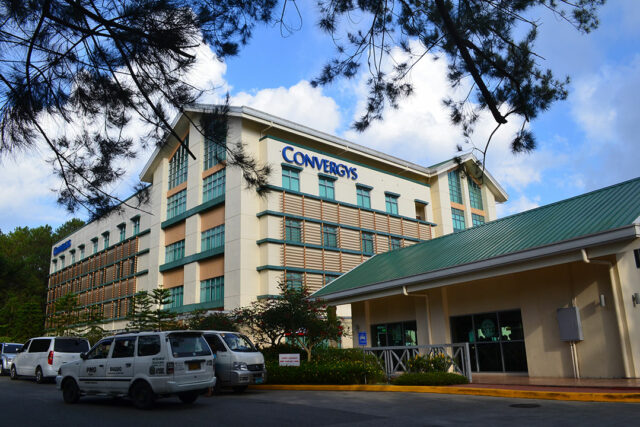
LISTED property developer Ayala Land, Inc. (ALI) has signed a 25-year lease agreement with the Bases Conversion and Development Authority (BCDA) to continue operating the Camp John Hay Technohub in Baguio City.

The lease agreement is projected to generate P600 million in revenue, BCDA said in an e-mail statement on Tuesday.

It will also sustain job stability in the property, which currently employs 3,000 workers. The technohub houses retail clusters and a business process outsourcing building.

BCDA also anticipates a boost in land value capture, which has averaged 14% across Ayala developments.

“This partnership ensures that business continues to thrive smoothly while we build a stronger, brighter future for all. It reflects the deep trust and confidence that respected companies like Ayala place in government,” BCDA President and Chief Executive Officer Joshua M. Bingcang said.

“At BCDA, we are living up to our promise to keep Camp John Hay a place where great things happen,” he added.

Since recovering the Camp John Hay property in January, BCDA has secured more than P14 billion in investments from new commercial and residential lease agreements.

In a separate statement, ALI said it is collaborating with AC Mobility, Makati Central Estate Association, and the Makati City government to launch the country’s largest electric vehicle (EV) charging network.

Makati City aims to grow its network to more than 100 charge points in 22 locations as part of its sustainability commitment.

ALI said users will soon gain EV charging access in areas such as One Ayala, Greenbelt, Glorietta, Tower One, and key carparks including Valero, Dela Rosa, and Corinthian.

Makati City currently has 70 charge points in 16 locations. It will be the home of the first-ever super fast chargers in the country.

For the first quarter, ALI grew its net income by 10% to P6.9 billion. Consolidated revenue increased by 6% to P43.6 billion, led by stronger leasing operations and property development revenue.

ALI shares rose by 1.71%, or 40 centavos, to close at P23.85 per share on Tuesday. — Revin Mikhael D. Ochave

Cosco Capital sets P7-B capex for 2025 expansion

PUREGOLD

COSCO CAPITAL, Inc. has allocated P7 billion for capital expenditures (capex) this year, with plans to expand its grocery retail store network and invest in its real estate and specialty retail businesses.

“Signifying this commitment to grow, Cosco’s capex budget for 2025 amounts to P7 billion,” Cosco Capital Comptroller Gerardo S. Teofilo, Jr. said during the company’s virtual annual stockholders’ meeting on Tuesday.

Mr. Teofilo said the bulk of the capex will be directed toward expanding the store network of the group’s grocery retail business, which includes Puregold Price Club, Inc. and S&R Membership Shopping Club.

As of end-March, Puregold operates 757 stores nationwide, consisting of 662 Puregold stores, 30 S&R Membership Shopping warehouses, and 65 S&R New York Style quick-service restaurants.

He added that part of the capex will be allocated to Cosco Capital’s real estate business and its specialty retail segment led by Office Warehouse, Inc.

Cosco Capital expects to sustain strong growth and profitability despite ongoing economic and business challenges, Mr. Teofilo said.

“As we look ahead to 2025 and beyond, we are confident in our position and capabilities to capitalize on the many opportunities that abound across industries,” he said.

“We remain committed to maximizing our strengths and achieving our full potential as we continue to set the pace for the industry and contribute to national economic development,” he added.

For the first quarter, Cosco Capital posted a 7.6% increase in consolidated net income to P3.68 billion, as consolidated revenue rose 11.5% to P56.7 billion, driven by recovering consumer demand.

The grocery retail businesses led by Puregold and S&R Membership Shopping contributed 72% of total net income, followed by liquor distribution at 19%, commercial real estate at 7%, and energy and minerals and specialty retail at 2%. 

“The group continued to benefit from the economic recovery amidst prevailing macroeconomic challenges through sustained and stronger revenue growth across all its business segments, indicating recovering consumer demand,” Cosco Capital said.

Cosco Capital shares rose by 0.65%, or four centavos, to P6.24 per share on Tuesday. — Revin Mikhael D. Ochave

DoE eyes power access in 167 areas via third microgrid auction

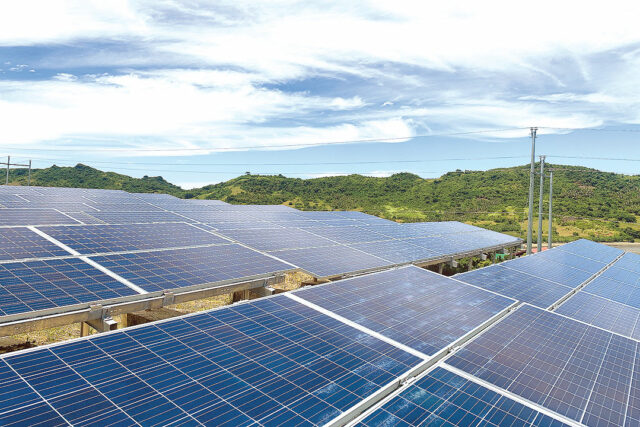
SOLAR PV SYSTEM - Lahuy Island - Camarines Sur Qualified Third Party Project — FP ISLAND

THE DEPARTMENT of Energy (DoE) said it hopes to provide electricity to 167 unserved and underserved areas through the third round of bidding for microgrid system providers (MGSPs).

“This third round of MGSP-CSP marks a pivotal step in our push for total electrification,” Energy Undersecretary Rowena Cristina L. Guevara said in a statement on Tuesday.

The schedule for the auction is expected to be announced by the end of June.

For the third round, the DoE said it has enhanced the policy and regulatory framework governing microgrid service operations “to create a more transparent, efficient, and investor-friendly environment for interested private investors.”

Republic Act No. 11646, or the Microgrid Systems Act of 2022, mandates the DoE to conduct a competitive selection process (CSP) for potential concessionaires seeking to serve off-grid areas.

The DoE recently revised the implementing rules and regulations (IRR) of the law, streamlining CSP procedures, clarifying provisions of the microgrid service contract and the corresponding responsibilities of stakeholders, and enhancing incentives for microgrid service provision.

Under the revised IRR, the award of a microgrid service area to a provider will automatically qualify the project as an energy project of national significance, allowing concerned entities to fast-track the issuance of necessary permits and licenses.

Additionally, the notice of award will include a renewable energy service contract for the renewable energy components of the microgrid system, “subject to the completion of remaining requirements, particularly the submission of proof of possessory rights over the service area.”

“By streamlining regulatory procedures, introducing policy innovations, and strengthening coordination across government and the private sector, we are sending a clear signal: the Philippines is ready and open for sustainable microgrid investments,” Ms. Guevara said.

“Through these efforts, we aim to empower our most remote communities with clean, reliable, and affordable energy, because energy access is not just a policy objective — it is a fundamental right,” she added.

The first MGSP auction was conducted in 2023, in which only one firm out of nine prequalified bidders submitted a complete bid proposal.

In the second round, only one proponent expressed interest and was later deemed prequalified. However, Ms. Guevara earlier told BusinessWorld that the bidding failed as the only prequalified bidder was unable to submit a complete bid proposal by the set deadline.

Ms. Guevara previously said the potential market for MGSPs includes over 200 sites with economic growth potential if given access to electricity.

The 2023-2032 National Total Electrification Roadmap targets 100% electrification by 2028, the end of the Marcos administration’s term. — Sheldeen Joy Talavera

SEC revokes Cyfle OPC’s registration

BW FILE PHOTO

THE Securities and Exchange Commission (SEC) has revoked the corporate registration of Cyfle One Person Corp. (OPC) following findings of unauthorized investment activities.

In an order dated May 16, the SEC’s Enforcement and Investor Protection Department (EIPD) said it canceled Cyfle’s registration due to violations of Section 44 of Republic Act No. 11232, or the Revised Corporation Code (RCC), in relation to Section 6(i), paragraph 2 of Presidential Decree No. 902-A.

The RCC bars corporations from exercising powers beyond those set in their articles of incorporation (AoI).

The SEC also imposed a P1-million fine on Cyfle for offering securities to the public without securing the necessary registration or license.

In addition, the commission directed Cyfle, along with its sole stockholder-director-president, nominee, and alternate nominee, to pay P1 million in administrative sanctions.

Cyfle, incorporated in 2022, declared in its AoI that its primary purpose was to provide management consultancy services. However, the SEC said its investigation found that Cyfle had offered investment products despite a clause in its AoI prohibiting the solicitation, acceptance, or receipt of investments, as well as the issuance of investment contracts.

According to the SEC, Cyfle promoted a scheme promising a 30% return on a minimum investment of P50,000 over a one-year term.

The commission said the structure of the scheme resembled a Ponzi scheme, in which returns to earlier investors are paid using funds from newer participants — an arrangement prohibited under Section 26 of Republic Act No. 8799, or the Securities Regulation Code.

“The investment scheme of [Cyfle] also operates to defraud investors as it deceives the investing public by making it appear that they have the authority to deal in securities,” the order read.

“This also amounts to serious misrepresentation as to what they can do or are doing to the damage and prejudice of the investing public,” it added.

The SEC had issued an advisory against Cyfle in July 2024, warning the public about the company’s unauthorized solicitation of investments. — Revin Mikhael D. Ochave