Home Blog Page 1116

Land accident deaths surge

THE site of the head-on collision in Cagayan de Oro City on Sunday, where a retired judge was killed and seven others were injured. — PHILIPPINE STAR/JOHN FELIX M. UNSON

DEATHS in land transportation accidents hit a 10-year high of 13,125 in 2023, accounting for 1.9% of 694,821 deaths in the country, according to Philippine Statistics Authority (PSA).

Young adults aged 20 to 24 accounted for most of the deaths.

PSA said the land transport-related deaths were 7.2% higher than in 2022 and 49.7% higher than in 2020 at the height of a coronavirus pandemic when there was a decline in land transport-related deaths.

The Department of Transportation has ordered shorter driving hours and regular drug testing for public utility vehicle drivers after a series of road accidents in May. — Ashley Erika O. Jose

Gov’t eyes 2,000 houses in Cavite

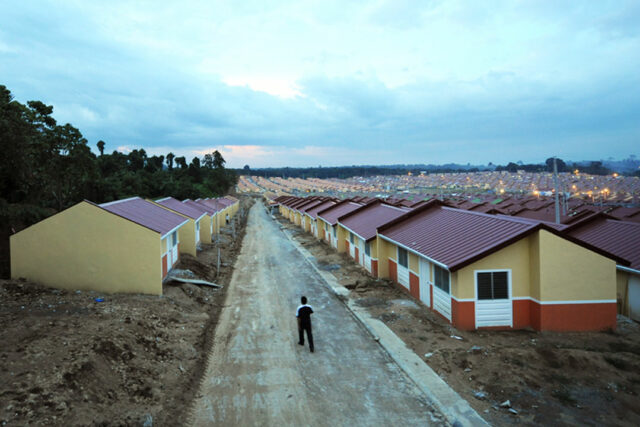
THE DEPARTMENT of Human Settlements and Urban Development (DHSUD) is looking to build 2,000 new housing units in Bacoor City in Cavite under the government’s flagship housing program.

“Located on a 1.9-hectare land in Barangay Salinas I, Bacoor, Cavite, the project is designed to deliver around 2,000 housing units, marking a major step toward providing decent, affordable and sustainable homes for Bacooreño families,” it said in a statement on Thursday.

The Pambansang Pabahay Para sa Pilipino (4PH) housing program, the Marcos administration’s flagship housing program, seeks to provide low-cost housing units to the poor. 4PH housing units cost P1.6 million to P1.8 million.

The government aims to build 3.2 million housing units by 2028. Last year, the DHSUD cut its original six-million target houses amid delays in construction and processing of bank loans. — Beatriz Marie D. Cruz

Delivery workers offered amnesty

REUTERS

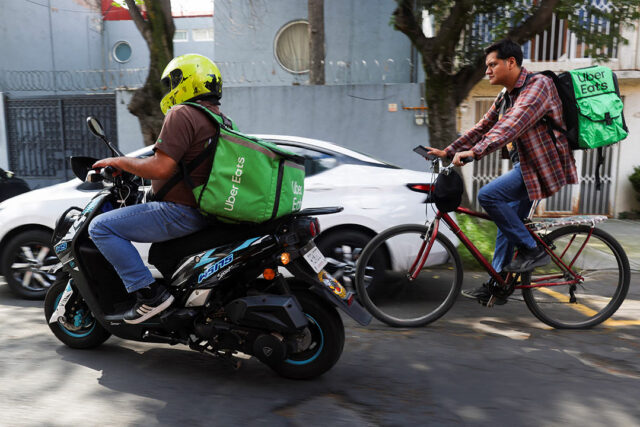
THE DEPARTMENT of Information and Communications Technology (DICT) will launch an amnesty program this year to allow illegal delivery gig workers to register.

“The program encourages unauthorized operators to register legally and join a professionalized delivery ecosystem,” the agency said a statement on Thursday. “We want to protect our people, not penalize them.”

“This amnesty is about recognition, reliability and rebuilding public trust,” DICT Secretary Henry R. Aguda said.

Private express or messengerial delivery service operators are those engaged in express or logistics services, including motorcycle riders, bikers, van operators, foot messengers and app-based delivery providers. — Ashley Erika O. Jose

Pinoys asked to vote for pro-WPS bets

PHOTO FROM ARMED FORCES OF THE PHILIPPINES

A PHILIPPINE COAST GUARD (PCG) official on Wednesday urged voters to vote for candidates who will defend the country’s rights in the West Philippine Sea (WPS).

“They need to be discerning,” PCG spokesman Commodore Jay Tristan Tarriela told reporters on the sidelines of a security forum on Thursday. “They need to make sure that the leaders they elect won’t deceive them, and that the track record of those politicians shows they are truly sincere in fighting for our rights in the West Philippine Sea.”

A Stratbase ADR Institute survey in April found that 75% of Filipinos would vote for candidates who will champion Philippine claims in the South China Sea.

Mr. Tarriela said it is time to stop appeasing China by being friendly with it, which he said happened under former President Rodrigo R. Duterte.

“His approach, some would say, was because of diplomacy,” he said. “It’s because he believes that diplomacy is the only way we can counter China’s oppression. But some security scholars are saying it’s not just diplomacy, but rather appeasement.”

The government, he added, should not let China do what it wants in the disputed waterway. — Edg Adrian A. Eva

Marcos urged to drop water deals

PHILIPPINE STAR/EDD GUMBAN

BAYAN MUNA party-list on Thursday asked President Ferdinand R. Marcos, Jr. to cancel the joint venture agreements between PrimeWater Infrastructure Corp. and local water districts, citing legal infirmities, poor service quality and alleged profiteering.

“Bayan Muna Party-List demands the cancellation of all joint venture agreements between PrimeWater and local water districts and for an immediate provision of clean and affordable water for affected residents nationwide,” according to a copy of its four-page letter dated May 7 to the President.

The group cited complaints about substandard services of the water company to its customers, especially in San Jose del Monte in Bulacan, Bacolod City, Quezon, Cavite and Bukidnon provinces.

Mavic Chavez Ching, head of public relations at PrimeWater parent company Prime Asset Ventures, Inc., did not immediately reply to a Viber message seeking comment. — Chloe Mari A. Hufana

NG debt jumps to 62% at end of Q1

BW FILE PHOTO

NATIONAL GOVERNMENT (NG) debt as a share of gross domestic product (GDP) rose to 62% at the end of the first quarter, the highest in 20 years.

The first-quarter reading represented a significant jump from the 60.7% posted at the end of 2024, indicating a setback to the Medium-Term Fiscal Framework. The government had been seeking to bring the ratio down to 60.4% by the end of 2025, and to 56.9% by 2028.

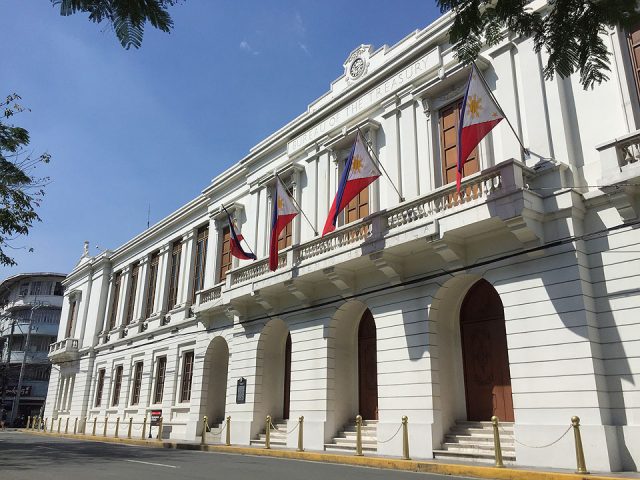
According to the Treasury, NG outstanding debt was at a record P16.68 trillion at the end of March, against P16.63 trillion a month earlier.


Pantheon Macroeconomics Chief Emerging Asia Economist Miguel Chanco said he suspects “some fiscal slippage” in the debt consolidation process due to the US trade war.

He said the government could be anticipating “a bit less revenue than planned and having to spend more to cushion the impact on growth. Ultimately… this will mean the authorities having to borrow more than previously expected.”

Mr. Chanco had forecast that the deficit will shrink only modestly to 5.5% of GDP, compared to the government’s expectation of 5.3%.

Rizal Commercial Banking Corp. Chief Economist Michael L. Ricafort said this is “not a good signal” as it moved away from the 60% ceiling deemed suitable for developing countries. He noted that “soft GDP data led to a lower denominator and (produced) a higher NG debt-to-GDP ratio.”

He also said that in the coming months, the outstanding NG debt could hit new records as the NG resorts to borrowing in response to the Trump tariffs.

He said it was critical to keep the sovereign credit rating at 1-3 notches above investment grade “to lower borrowing costs and obtain favorable terms for the National Government.”

GlobalSource Partners Country Analyst and former Bangko Sentral Deputy Governor Diwa C. Guinigundo said sees no connection to US tariff policy as the Philippines benefits from a lower tariff of 17% compared to many of its neighbor.

He said debt stock is likely to further increase, noting that the debt was P16 trillion at the end of December.

“Of course, it’s not straightforward to add P600 million every month for three months. I’m sure there will be quarters when the additional debt will be lower and then higher, lower, higher,” Mr. Guinigundo said.

Mr. Guinigundo also said in the absence of any additional tax or non-tax revenue, the government will really need to raise funds through borrowing.

Finance Secretary Ralph G. Recto remained firm in his “no new taxes” position for the rest of the Marcos administration. — Aubrey Rose A. Inosante

DA bats for restoration of NFA’s power to intervene in rice market

PHILIPPINE STAR/MIGUEL DE GUZMAN

THE Department of Agriculture (DA) is pressing Congress to restore the National Food Authority’s (NFA) regulatory powers over the grain market.

In a statement, the DA said the NFA needs to have sufficient powers to effectively influence the rice market, instead of its current role as maintainer of the national rice reserve.

“We need to restore some of NFA’s powers to help it manage the country’s rice situation more effectively,” according to Agriculture Secretary Francisco Tiu Laurel, Jr., who also chairs the policymaking NFA Council.

The Rice Tariffication Law of 2019 stripped the NFA of its power to import, allowing private traders to bring in rice with no restrictions, though they were made to pay import tariffs initially set at 35% on Southeast Asian grain.

The DA said the law severely weakened the NFA’s ability to stabilize rice prices and supply, even removing its power to intervene in the market by selling rice directly to the public.

“Once a crucial player in controlling market prices through timely imports and public sales, the NFA is now reduced to a buffer-stocking agency, limited to buying rice from farmers for emergency use,” it added.

A House of Representatives version of the now revised Rice Tariffication Law had sought to restore that power, but “unfortunately, the Senate Committee on Agriculture rejected it.”

The revised law increased the annual tariff collection going into a rice industry modernization fund to P30 billion from P10 billion originally.

Farmer groups have raised concerns that P30-billion funding requirement will not be met following the reduction of rice import tariff to 15% from 35% in June 2024.

Earlier this year they asked the Tariff Commission to restore rice import tariffs to 35% for Southeast Asian grain and to 50% for all other countries of origin.

The revised law also authorized the DA to declare an emergency that would trigger the release of rice from government warehouses.

NFA Administrator Larry Lacson said the NFA may only dispose of rice stocks through auction during a food security emergency declaration, or in the event of a calamity.

The risk of failed auctions is ageing stocks, the DA said. In palay form, ageing takes twice as long — about six months.

In a first-in first-out system of inventory management, it takes at least nine months from palay purchase before rice needs to be auctioned, Mr. Lacson said.

“That means, inferior quality stocks and higher cost due to stock maintenance just to keep it from being infested by insects. Allowing the NFA to directly release stocks to the market ensures better quality rice at more affordable prices,” he said.

“Before the law took effect in 2019, the NFA could import rice to augment supply, allowing it to maintain a healthier buffer stock and intervene when prices surged,” the DA said.

Mr. Laurel said the NFA’s inability to directly sell rice to the public has hindered its ability to optimize financial resources — “funds that could have been allocated to increase rice procurement and strategic market interventions benefiting both farmers and consumers.”

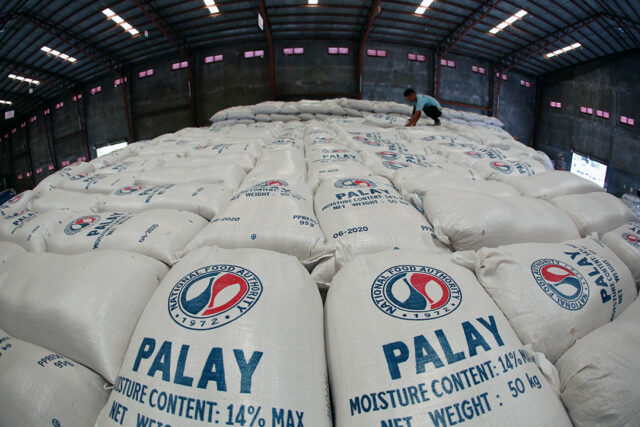
The NFA currently holds the equivalent of over 7.7 million 50-kilo bags of rice, sufficient for 10 days’ consumption.

With warehouses nearing capacity, the NFA must soon unload stock to make room for more palay (unmilled rice), which it buys at P18-P19 per kilo for fresh grain and P23-P24 for dry, the DA said.

“Without reforms, however, the NFA’s hands remain tied, unable to act swiftly in a volatile market that directly affects millions.” — Kyle Aristophere T. Atienza

Small minority of PHL organizations have ‘mature’ cybersecurity systems

FREEPIK

ONLY 6% of organizations in the Philippines have “mature” cybersecurity systems that are up to the task of handling threats, Cisco Systems said.

Citing the findings of a study, it said hyper connectivity and artificial intelligence (AI) have increased the complexity of cybersecurity.

“While there have been significant advancements in AI, its deployment in cybersecurity defenses appears to have stalled, suggesting that companies are still grappling with concerns around trust, effectiveness, and integration,” Cisco said in its 2025 Cybersecurity Readiness Index report.

According to Cisco, about 40% of Philippine organizations are considered “progressive” in their cybersecurity readiness. Meanwhile, 52% were at the formative level, and 2% at the beginner level.

It also noted that 75% of Philippine respondents anticipate business disruptions from cyber incidents within the next one to two years.

“As AI transforms the enterprise, we are dealing with an entirely new class of risks at unprecedented scale — putting even more pressure on our infrastructure and those who defend it,” Cisco Chief Product Officer Jeetu Patel said in a statement.

Some 93% of organizations use AI to understand threats better, Cisco said. Others use AI for threat detection (84%), as well as response and recovery (84%).

While 57% of Philippine organizations use approved third-party GenAI tools, 92% face increased security risks as employees access unapproved GenAI tools in unmanaged devices.

Cisco also reported that 57% lack confidence in detecting unregulated AI deployments, or shadow AI. Furthermore, 82% said their complex security infrastructures impede their ability to quickly respond to threats.

The 2025 Cisco Cybersecurity Readiness Index was based on a double-blind survey of 8,000 business leaders with cybersecurity functions in their companies. These covered 30 territories in North and Latin America, Asia-Pacific, and Europe, the Middle East, and Africa. — Beatriz Marie D. Cruz

PHL road to digitalization to be costly, ADB says

STARLINK.COM

PHILIPPINE EFFORTS to digitalize its economy will be expensive, but it must keep pace with its neighbors to further its inclusion and sustainability agenda, the Asian Development Bank (ADB) said.

“For the Philippines, due to geographical features, deploying stable and universal connections, especially in hard-to-connect remote areas, could be expensive,” ADB Principal Economist Shu Tian said in an e-mail.

“In some places this might be commercially less attractive to the private sector. This calls for initiatives to promote quality and coverage of connectivity.”

In the ADB’s Asian Development Policy Report on digital transformation, the Philippines was classified as a low-digitalization country alongside Bangladesh, Cambodia, Laos, Mongolia, Nepal, and Sri Lanka.

High-digitalization, high-inclusion countries pursuing sustainable policies were South Korea and Singapore, while high-digitalization but low-inclusion and sustainability countries included Indonesia, India, Thailand, and Vietnam.

“When factoring in income levels and rising data requirements, mobile data costs in the Kyrgyz Republic, Mongolia, the Philippines, and Sri Lanka were unaffordable for the three to four poorest income deciles,” according to the report.

“Moreover, digital literacy remains low across the region, even in upper middle-income economies,” it added.

The Philippines slumped to 61st out of 67 economies in the World Digital Competitiveness Ranking compiled by the International Institute for Management Development.

The ADB said low-digitalization countries must “accelerate digital transformation to boost growth and income levels, which will, in turn, improve inclusion and sustainability.”

“The Philippines has an opportunity to continue to improve connectivity in terms of coverage and quality, enhance digital skills, and address digital divides for inclusive development in the digital era,” Ms. Tian said.

The bank noted that the Philippines is among a category of economies with low emissions while being vulnerable to extreme weather events and disasters.

“Governments can use incentives and regulations to promote low-carbon business practices, such as infrastructure-sharing, to reduce emissions associated with duplicating digital infrastructure,” it said.

“Some regional economies, such as Bangladesh and the Philippines, have introduced policies to enable digital infrastructure sharing.”

It cited the Philippines’ Common Tower Policy, which promotes shared telecommunication infrastructure to save on costs.

The report also noted remote sensing as a key technology being employed in the Philippines.

“Remote sensing combined with social economic information can be useful to enhance disaster risk management; and remote sensing and big data analytics can provide advisory and predictive analytics to help improve adaptation to extreme weather,” Ms. Tian said.

“There are different types of green technologies, but the adoption and choice of technologies depend on actual needs,” she added.

Data from remote sensing is used to assess the impact of tropical cyclones on fishing activity in the Philippines.

“By combining this real-time information with socioeconomic data, digital-based analysis can assess how changes in translation, wind speed, and distance from the typhoon track disrupt fishing activities in various grounds,” the ADB said.

“Such analysis can enhance resilience and mitigate disruptions caused by natural hazards.”

The ADB also flagged the impact of emerging technologies such as artificial intelligence on jobs.

“In Indonesia, Malaysia, the Philippines, Thailand, and Vietnam, enhanced productivity from automation has created jobs for skilled workers engaged in nonroutine manual and cognitive tasks, while formal workers employed in routine manual work have simultaneously been displaced.”

“Although a stable, balanced path between the two effects is possible, inequality may increase if the displacement effect outpaces the reinstatement effect. Therefore, interventions are needed to build new skills to accelerate the reinstatement effects.” — Luisa Maria Jacinta C. Jocson


NDC receives final payment for property used in Skyway

PHILSTAR FILE PHOTO

THE National Development Co. (NDC) said on Thursday that it has received the final payment from the Toll Regulatory Board (TRB) for a 1.3-hectare property in Pandacan, Manila needed to construct the Skyway.

“This completed transaction comes seven years after negotiations started in 2018,” NDC General Manager Saturnino H. Mejia said in a statement on Thursday.

“The lengthy process resulted in a sale that reflects the market value of commercial properties in the Pandacan area,” he added.

The Pandacan property, which is part of a 5-hectare site owned by the NDC, was acquired by the TRB for the Metro Manila Skyway Stage 3 Project.

“Due to the construction of the Skyway, the parcel was segmented into three irregular fragments,” the NDC said.

As such, two deeds of sale were executed because one area was affected by the main alignment of the Skyway and the other area was affected by the interconnection structure.

The payment, which was made last week, signifies the NDC’s “commitment to unlocking the value of government assets and reinvesting in projects that drive national development and long-term growth.”

“The conclusion of this transaction between NDC and TRB forms part of the strategic infrastructure project of the National Government,” Mr. Mejia said. — Justine Irish D. Tabile

Shares drop on weaker-than-expected GDP data

REUTERS

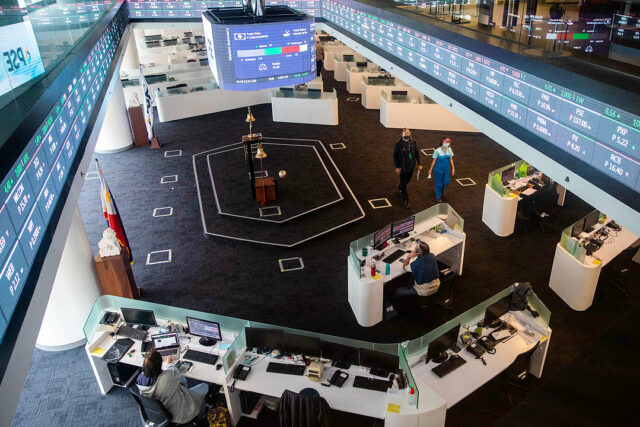
STOCKS DROPPED on Thursday due to weaker-than-expected Philippine gross domestic product (GDP) growth last quarter and after the Federal Reserve warned of potential risks to the US economic outlook amid the Trump administration’s shifting policies.

The Philippine Stock Exchange index (PSEi) fell by 1.17% or 75.96 points to 6,389.49, while the broader all shares index went down by 0.74% or 28.03 points to 3,740.35.

“The local market went down as investors digested the Fed’s decision to keep policy rates unchanged and its gloomy outlook for the US economy amid President Donald J. Trump’s tariff policies,” Philstocks Financial, Inc. Senior Research Analyst Japhet Louis O. Tantiangco said in a Viber message. “Investors also dealt with the Philippines’ first quarter 2025 GDP data, which posted a growth of 5.4%, below the government’s full-year target of 6% to 8%.”

“Philippine investors sold on profit as the first quarter GDP came out at 5.4%, while other investors digested the implications of the latest Federal Open Market Committee meeting,” Regina Capital Development Corp. Head of Sales Luis A. Limlingan said in a Viber message.

The Federal Reserve held interest rates steady on Wednesday but said the risks of higher inflation and unemployment had risen, further clouding the US economic outlook as its policymakers grapple with the impact of Mr. Trump’s tariffs, Reuters reported.

At this point, Fed Chair Jerome H. Powell said it isn’t clear if the economy will continue its steady pace of growth, or wilt under mounting uncertainty and a possible coming spike in inflation.

The Fed’s policy statement, which held the benchmark overnight rate steady in the 4.25%-4.5% range, noted that since the central bank’s last meeting in March “uncertainty about the economic outlook has increased further,” and that risks were increasing that both inflation and unemployment could increase.

Meanwhile, the Philippine economy expanded by 5.4% year on year in the first quarter, faster than the 5.3% GDP growth seen in the fourth quarter. This was slower than the 5.8% median forecast of 15 economists in a BusinessWorld poll and the 5.9% growth posted in the same quarter last year.

All sectoral indices closed in the red on Thursday. Holding firms declined by 2.01% or 108.86 points to 5,282.78; mining and oil sank by 1.98% or 192.52 points to 9,528.96; property went down by 1.64% or 37.64 points to 2,255.17; financials retreated by 0.82% or 20.44 points to 2,465.78; industrials decreased by 0.64% or 58.93 points to 9,053.09; and services shed 0.07% or 1.58 points to end at 2,070.80.

Value turnover dropped to P6.01 billion on Thursday with 733.54 million shares traded from the P8.27 billion with 958.47 million issues that changed hands on Wednesday.

Decliners outnumbered advancers, 113 versus 75, while 54 names were unchanged.

Net foreign selling was at P18.84 million on Thursday versus the P671.55 million in net buying seen on Wednesday. — Revin Mikhael D. Ochave with Reuters

Peso ends lower on weak Q1 GDP growth

BW FILE PHOTO

THE PESO weakened anew against the dollar on Thursday due to slower-than-expected Philippine economic growth last quarter.

The local unit closed at P55.625 per dollar, declining by 22.9 centavos from its P55.396 finish on Wednesday, Bankers Association of the Philippines data showed.

The peso opened Thursday’s session weaker at P55.50 against the dollar. It dropped to as low as P55.675, while its intraday best was at just P55.46 versus the greenback.

Dollars exchanged went down to $1.7 billion on Thursday from $2.07 billion on Wednesday.

The peso depreciated following weaker-than-expected Philippine gross domestic product (GDP) data, a trader said in a phone interview.

The Philippine economy expanded by 5.4% in the first quarter, slightly faster than the 5.3% growth in the prior three-month period but slower than the 5.9% pace in the same quarter last year.

This was also below the 5.8% median forecast of 15 economists in a BusinessWorld poll conducted last week and the government’s 6-8% growth target band for the year.

The peso was also dragged down by data showing that the National Government’s (NG) debt reached a fresh peak at end-March, Rizal Commercial Banking Corp. Chief Economist Michael L. Ricafort said in a Viber message.

The NG’s outstanding debt hit a new record high of P16.68 trillion as of March, Treasury data showed.

This was equivalent to 62% of GDP, above the 60.7% recorded at end-2024. This was the highest debt-to-GDP ratio seen since the 65.7% in 2005.

The threshold considered by multilateral lenders to be manageable for developing economies is 60%.

Under its Medium-Term Fiscal Framework, the government seeks to bring the debt-to-GDP ratio down to 60.4% by the end of 2025 and to 56.9% by 2028.

For Friday, the trader expects the peso to move between P55.40 and P55.80 per dollar, while Mr. Ricafort said it could range from P55.50 to P55.70. — A.M.C. Sy