Home Blog Page 1038

PHL farmers’ perceptions of AI

“Filipino farmers are more curious than scared about the idea of integrating artificial intelligence (AI) in farming, Aldrin “Soj” R. Gamayon, founder and chief executive officer at AgriConnect PH, said in an interview.

“They’re not really intimidated by it, but there’s still a long way to go,” Mr. Gamayon told BusinessWorld.

The 22-year-old founder added that he anchors the conversation with farmers on their current knowledge of technologies like the Internet.

“When you try to explain that to them like in layman’s term… it becomes a very interesting conversation honestly,” Mr. Gamayon said.

Related article: https://www.bworldonline.com/bw-launchpad/2025/03/26/661700/pinoy-startup-uses-ai-to-prevent-crop-damage/

Interview by Almira Martinez
Video editing by Arjale Queral

Japan’s economy shrinks more than expected as US tariff hit looms

STOCK PHOTO | Image by Josh Soto from Unsplash

 – Japan’s economy shrank for the first time in a year and at a faster pace than expected, data for the March quarter showed on Friday, underscoring the fragile nature of its recovery now under threat from U.S. President Donald Trump’s trade policies.

The data highlights the challenge policymakers face as steep U.S. tariffs cloud the outlook for the export-heavy economy, particularly for the mainstay automobiles sector.

Real gross domestic product (GDP) contracted an annualized 0.7% in January-March, preliminary government data showed, much bigger than a median market forecast for a 0.2% drop.

The decline was due to stagnant private consumption and falling exports, suggesting the economy was losing support from overseas demand even before Trump’s announcement on April 2 of sweeping “reciprocal” tariffs.

The data did highlight some brighter aspects, which included GDP growth being revised up slightly to 2.4% from 2.2% for the final quarter of last year.

Capital expenditure rose a faster-than-expected 1.4%, helping domestic demand add 0.7 percentage point to GDP growth.

Overall, however, analysts were cautious about the softer demand impulse and risks to the outlook from a Trump-led change to the global trade order.

“Japan’s economy lacks a driver of growth given weakness in exports and consumption. It’s very vulnerable to shocks such as one from Trump tariffs,” said Yoshiki Shinke, senior executive economist at Dai-ichi Life Research Institute.

“The data may lead to growing calls for bigger fiscal spending,” he said, adding the economy could contract again in the second quarter depending on when the hit from tariffs intensifies.

On a quarter-on-quarter basis, the economy shrank 0.2% compared with market forecasts for a 0.1% contraction.


TARIFF RISKS

Japan’s Economic Revitalisation Minister Ryosei Akazawa said big pay hikes offered by companies will likely underpin a moderate economic recovery, but warned of risks to the outlook.

“We must be mindful of downside risks to the economy from U.S. tariff policy. The hit to consumption and household sentiment from continued price rises is also a risk to growth,” Akazawa told a news conference after the GDP data.

Private consumption, which accounts for more than half of Japan’s economic output, was flat in the first quarter, compared with market forecasts for a 0.1% gain.

The GDP deflator, which shows the extent to which firms are able to pass on rising costs, rose 3.3% in January-March from year-before levels, accelerating for second straight quarters.

But external demand shaved 0.8 point off GDP as exports fell 0.6% and imports rose 2.9%, even before the impact of Trump tariffs begins to materialize in full force.

Trump imposed 10% tariffs on all countries except Canada, Mexico and China, along with higher tariff rates for many big trading partners, including Japan, which faces a 24% tariff rate starting in July unless it can negotiate a deal with the United States.

Washington has also imposed 25% levies on cars, steel and aluminum, dealing a huge blow to Japan’s economy that relies heavily on automobile exports to the United States.

Japanese automakers are already feeling the pain.

Toyota Motor said it expects profit to decline by a fifth in the current financial year. Mazda held off disclosing earnings estimates for the current year through March 2026 due to uncertainty over U.S. trade policy.

“The early-year (GDP) contraction serves as a reminder of Japan’s economic struggles. Tariff pain and weak domestic momentum will weigh on growth in the quarters ahead,” said Stefan Angrick, head of Japan and Frontier markets Economics, Moody’s Analytics.

The gloomy GDP data could pile pressure on Prime Minister Shigeru Ishiba to heed lawmakers’ demands to cut tax or compile a fresh stimulus package, though Akazawa said there were no such plans for now.

The global trade war touched off by U.S. tariffs has also complicated the Bank of Japan’s decision on when and how far it can push up interest rates.

Having exited a decade-long stimulus last year, the BOJ hiked rates to 0.5% in January and has signaled its readiness to keep hiking borrowing costs if a moderate economic recovery keeps Japan on track to durably hit its 2% inflation target.

But fears of a Trump-induced global slowdown forced the BOJ to sharply cut its growth forecasts at its April 30-May 1 policy meeting, and cast doubt on its view that sustained wage hikes will underpin consumption and the broader economy.

While a de-escalation of U.S.-China trade tensions offered markets and policymakers some relief, there is uncertainty on whether Japan can win exemptions from U.S. tariffs in bilateral trade talks with Washington.

“If the impact of Trump tariffs is fairly light, the BOJ could raise interest rates again in September or October. But if the tariffs deal a severe blow to capital spending and exports, rate hikes could be put on hold,” said Takeshi Minami, chief economist at Norinchukin Research Institute. – Reuters

Shein to set up huge Vietnam warehouse in US tariff hedge, sources say

SHEIN.COM

 – Fast-fashion online retailer Shein is leasing a huge warehouse in Vietnam, two people familiar with the deal told Reuters, its first in the country, in a move that could reduce its exposure to unpredictable U.S.-China trade tensions.

Shein, which was founded in China and sells products including $5 bike shorts and $18 sundresses, has agreed to lease nearly 15 hectares of industrial land for a warehouse near Ho Chi Minh City, Vietnam’s commercial and trading hub, the two sources said, declining to be identified because the information was not public.

The online retailer, which almost entirely relies on China-based suppliers to make garments for the United States and other markets, has been caught in the crosshairs of a tit-for-tat China-U.S. trade war that threatens to upend global supply chains, despite a recent de-escalation.

One of the sources and a third person said Shein had been looking to rent more storage space in Southern Vietnam in addition to the large warehouse – equivalent to about 26 football pitches – which would store clothing and apparel from contractors before export.

Reuters could not establish where products housed in the leased warehouse would come from.

The retailer has previously flagged plans to source some products from Turkey and Brazil, and Shein suppliers from its traditional production base in southern China have told Reuters they are losing orders to Vietnam as some Chinese manufacturers opened factories there.

Sheinwhich is seeking a London listingdid not respond to questions from Reuters about the leasing of the warehouse space. It had previously denied it was shifting production capacity out of China.

The area around Ho Chi Minh City hosts an international airport, Vietnam’s largest port for imports from China and another port that handles most seaborne exports to the United States.

Under a U.S. threat of punitive tariffs, Vietnam is cracking down on some imports from China, which Washington has said have for long been illegally rerouted through Vietnam to the United States to avoid higher duties.

Reuters had no access to the details of the warehouse lease and could not establish whether Shein would be able to revise its plans should U.S.-China trade tensions de-escalate further, reducing the appeal of diversification overseas.

Given the ongoing instability of the situation, however, analysts say Shein has little choice but to reduce its reliance on China.

“It would be dangerous for them not to diversify,” said Manish Kapoor, CEO and founder of e-commerce supply chain solutions firm Growth Catalyst Group.


ARMY OF SUPPLIERS

The fashion giant has built in China a formidable army of suppliers who can turn out crop tops and other fast fashion for a few yuan apiece to feed demand for cheap clothing from Gen Z consumers around the world.

Shein has said it is expanding its network of contractors in China and is also investing 10 billion yuan ($1.37 billion) in industrial projects in the south of the country, including a $500 million supply chain hub near Guangzhou. The first phase of that hub, currently under construction, will span about 49 hectares, around the size of Vatican City.

Shein became a behemoth selling more than $30 billion worth of goods annually on a foundation of cheap prices and advantageous trade rules, such as the U.S. “de minimis” exemption that allowed duty-free entry for low-cost imports worth $800 or less.

The Trump administration scrapped that exemption for Chinese products on May 2, effectively exposing Shein’s packages to a levy of 120%, before the U.S. agreement with Beijing earlier this week reduced the duties to 54% on parcels worth $800 or less, and to 30% for low-value commercial shipments.

The U.S.-China thaw has caused concern in countries benefiting from those tensions, but current U.S. levies on Beijing keep Vietnam competitive as shipments from China’s neighbour still enjoy duty-free treatment if they are worth $800 or below.

The reprieve could be short-lived, however. Kapoor says he is advising clients not to rely on drop-shipping “de minimis” imports from anywhere as a core part of their logistics strategy.

“We’re advising people to expect that this “de minimis” exemption could be gone completely [before long],” he said.

Vietnam’s other exports to the U.S. face a 10% tariff until July when the levy would rise to 46% if Hanoi does not otherwise reach an agreement with the White House. – Reuters

Meta asks judge to rule that FTC failed to prove its monopoly case

Facebook parent company Meta Platforms asked a federal judge on Thursday to throw out the U.S. Federal Trade Commission’s case accusing it of an illegal social media monopoly, saying the agency failed to prove its case at a high-stakes antitrust trial.

At the trial, which began on April 14 in Washington, the FTC has sought to show that Meta, then known as Facebook, illegally dominated the market for social media platforms used to share updates with friends and family through its acquisitions of Instagram and WhatsApp. The FTC is seeking to unwind those deals, which occurred more than a decade ago.

If granted, Meta’s request for a ruling on the evidence so far would bring a quicker end to the case, though U.S. District Judge James Boasberg could decline to take it up. Meta is now presenting its own evidence at the trial, which may run into June.

A spokesperson for the FTC did not immediately respond to a request for comment on Thursday.

The FTC is seeking to show that Meta, then known as Facebook, bought Instagram and WhatsApp to take out upstart rivals, pointing to emails where CEO Mark Zuckerberg worried about the apps’ growth.

But evidence at trial showed that WhatsApp had no plan to expand to become a social network rival to Facebook, and that Zuckerberg knew that before the deal was finalized, Meta said Thursday. And testimony showed Instagram grew after the acquisition, the company said.

Meta also argued FTC failed to show a meaningful difference between supposed friends-and-family sharing apps — such as SnapChat, Instagram and Facebook — and TikTok, which Meta said it has been forced to imitate to survive.

Platforms where users broadcast content to strangers based on shared interests, such as X, TikTok, YouTube and Reddit RDDT.N, are not interchangeable, the FTC has said.

“The through line connecting all of these social apps is that each vies to show the most compelling user-generated content so that it can take as much user time and attention as possible from the other apps, including Meta’s apps,” the company said.

If Boasberg does not grant Meta’s request, the FTC and Meta are expected to file final briefs and deliver closing arguments after the company is finished presenting evidence.

If the judge then finds that Meta holds an illegal monopoly, the case would go to a second trial over the appropriate measures to address it. – Reuters

US tariffs take center stage at APEC trade gathering, joint statement in doubt

 – The Asia-Pacific Economic Cooperation’s trade gathering comes to a close on Friday with divisions over U.S. tariffs and reforms to the world trade body putting the adoption of a joint statement in doubt, according to some diplomats.

The annual meeting is the first major multilateral trade gathering since U.S. President Donald Trump’s announcement of sweeping tariffs and more than half the 21 members of the bloc face new U.S. import duties in excess of the 10% minimum.

APEC warned on Thursday that exports from a region that accounts for around half of world trade will slow sharply this year, and barely grow at all, in the wake of U.S. tariff announcements.

The sessions are held with a focus on fostering multilateral cooperation on economies and trade, while contentious reforms to the World Trade Organization are also in the spotlight this year.

The Trump administration views the WTO as a body that has enabled China to gain an unfair export advantage and has recently moved to pause U.S. funding to the institution.

“Big economies in APEC might have strong views on certain issues,” a top diplomat from one of the member economies told Reuters, expressing skepticism over the adoption of a joint statement by the close of the two-day meeting.

“But, we never know,” the diplomat added. “The chairman really wants it,” referring to South Korea’s Minister for Trade Cheong In-kyo.

An official from a different country, also expressing doubt about member economies adopting a joint statement, said working-level negotiations were ongoing until late into the night on Thursday.

For many of the member economies, the attendance of U.S. Trade Representative Jamieson Greer raised the stakes of the conference held on South Korea’s Jeju Island, ahead of a leaders’ summit scheduled later in the year.

On the first day, many, if not all, of the representatives had or sought a meeting with Greer, according to host country officials.

“Quite a lot of countries had planned to send deputy ministers but later decided to send their ministers after Ambassador Greer’s attendance was confirmed,” Cheong said.

Greer held talks with China’s Vice Commerce Minister Li Chenggang, less than a week after their first face-to-face talks in Geneva on May 10-11, where they agreed to significantly lower tariffs for 90 days.

Greer also met the host country’s Cheong, three weeks after Seoul and Washington held their opening round of trade talks; and Malaysian Trade Minister Tengku Zafrul Aziz, who expressed optimism after Thursday’s meeting, his second one in two weeks.

Australia, Canada, Japan, Singapore and Russia are among countries whose trade chiefs did not attend the gathering.

In late February, a Group of 20 meeting of finance ministers and central bankers held in Cape Town failed to adopt a joint communique, after top officials from several countries, including the United States, skipped it.

The meeting concluded with a “chair’s summary” issued by the host, which said participants “reiterated the commitment to resisting protectionism” and used several words the Trump administration has strongly objected to.

Cheong is scheduled to hold a briefing on the meeting outcome on Friday afternoon. – Reuters

US considers more Chinese companies for ‘entity list,’ source says

REUTERS

 – The U.S. Commerce Department is considering placing more Chinese companies, including ChangXin Memory (CXMT), on its restricted export list, a person familiar with the matter said.

The Bureau of Industry and Security is also looking at adding subsidiaries of Semiconductor Manufacturing International Corporation and Yangtze Memory Technologies Co. to the “Entity List”, the person said.

Timing of move has been complicated by a recent trade deal between the U.S. and China, according to the Financial Times, which first reported the news.

Companies on the list cannot receive goods or technology exports without a license, which is generally denied. Companies are added for activities viewed as contrary to U.S. national security or foreign policy interests.

The Biden administration added more than two dozen Chinese entities to the list in January, including Zhipu AI, a developer of large language models, and Sophgo, a company whose TSMC-made chip was illegally incorporated into a Huawei artificial intelligence processor.

The Commerce Department at that time also strengthened controls on the flow of chips to China to better prevent diversion to Huawei. – Reuters

Globe’s advanced AI use elevates service, empowers teams for broader efficiency

At Globe, artificial intelligence (AI) isn’t just a tech buzzword, it’s a tool for real progress. As enterprises increasingly adopt advanced Generative AI (GenAI) to boost efficiency and improve services, Globe is taking confident strides in embedding this powerful technology across its business.

A recent Global System for Mobile Communications Association (GSMA) outlook on AI in telecommunications shows that telco operators worldwide are turning to GenAI to meet core business goals, including customer experience, operational agility, and financial performance. Globe is proudly at the forefront of this movement in the Philippines, with a strategy that puts customers and people at the center of AI transformation.

“At Globe, we don’t just want to ride the AI wave, we want to build something sustainable with it,” said Carl Cruz, Globe’s President and Chief Executive Officer. “We see AI as a long-term enabler that not only helps people work smarter and faster but also transforms how we serve our customers by delivering more responsive, efficient, and meaningful experiences. It’s not just about internal productivity. It’s about building the right foundations to support lasting customer impact.”

To unlock that potential, Globe has created a space for employees to safely explore AI tools with intention. Through its internal AI Advocates Guild, Globe’s workforce now has access to platforms like Gemini for Workspace, ChatGPT Enterprise, and the company’s in-house Retrieval-Augmented Generation (RAG) toolkit. These tools have powered the creation of more than 400 bots and co-pilots — each designed by Globe employees themselves to solve day-to-day problems and boost productivity.

By using AI to streamline internal processes, Globe has made tasks faster, more accurate, and more cost-efficient. A great example is the GenAI Quality Audit, which replaced manual quality checks and cut down annual costs from millions to just around P2,000 per month. These smart changes have contributed to managing expenses, leading to a 4% year-on-year reduction in total operating costs — from P19.8 billion in 2024 to P19.1 billion in the first quarter of 2025.

The company is also making strides in using AI to enhance customer experiences by working on AI-powered hyper-personalization to deliver the next best experience for customers, tailoring services to individual needs. More broadly, Globe’s dedication to continuous innovation and delivering meaningful value to customers is reflected in its strong Net Promoter Score (NPS) of 49, well above the telco benchmark of 31.

“We believe AI should serve a greater purpose — one that prioritizes inclusivity, responsibility, and trust,” added Cruz. “As we continue to innovate, we’re committed to using AI not just to accelerate progress, but to ensure that every Filipino can meaningfully participate in the digital future.”

As Globe deepens its investment in people-first AI, it aims to not just keep up with global trends, but to set the pace for how telcos in the Philippines can responsibly and meaningfully integrate GenAI to create lasting impact.


Spotlight is BusinessWorld’s sponsored section that allows advertisers to amplify their brand and connect with BusinessWorld’s audience by publishing their stories on the BusinessWorld Web site. For more information, send an email to online@bworldonline.com.

Join us on Viber at https://bit.ly/3hv6bLA to get more updates and subscribe to BusinessWorld’s titles and get exclusive content through www.bworld-x.com.

Boomi announces new products, general availability of Agentstudio

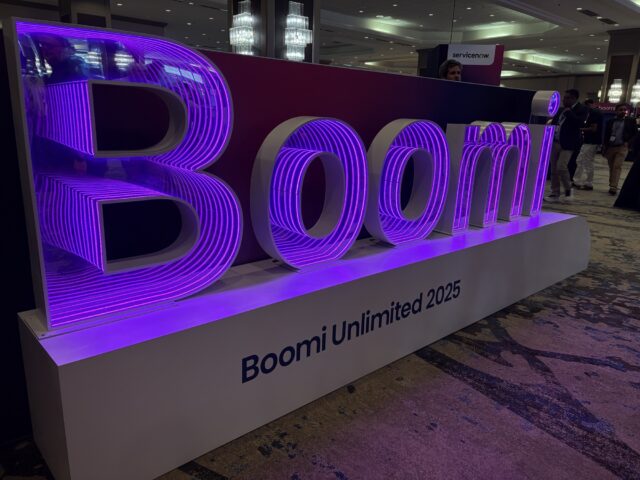
Boomi World 2025 in Dallas, Texas/Cathy Rose A. Garcia

DALLAS, Texas — Boomi on Wednesday unveiled new product innovations aimed at accelerating and scaling automation, as well as the acquisition of a provider of managed file transfer (MFT) solutions and the general availability of Boomi Agentstudio later this month.

Steve Lucas, chairman and CEO at Boomi, said enterprises are now being overwhelmed by digital fragmentation and data sprawl.

“The future belongs to organizations that can intelligently connect everything and automate anything — and Boomi is the platform that makes it happen. With these innovations, we’re empowering our customers to move faster, work smarter, and lead in an AI-first world,” he said.

At Boomi World 2025 here, Mr. Lucas announced the general availability of Boomi Agentstudio, where customers can build, govern and orchestrate artificial intelligence (AI) agents at scale within a no-code environment, starting May 24.

Mr. Lucas said this would accelerate the development of AI agents for real-world cases. Agentstudio includes an Agent Designer, where custom agents can be built using no-code templates; and an Agent Garden.

“Boomi Agentstudio is something we want everyone to have access to — the agent design capability, the agent garden — the secure execution container; the agent marketplace for sharing, discovering agents that are pre-built, and of course our Agent Control Tower,” Mr. Lucas said.

“On May 24, we will make available to all of you the Agent Designer included in your Boomi platform, with unlimited agents. You’ll be able to build and test as many agents as your heart’s content,” he added.

With Agentstudio now available for its customers, Boomi also expanded its integration capabilities to include Amazon Q Business.

Boomi is now an approved Data Processor enabled for all Amazon Web Services (AWS) customers, which “brings powerful, enterprise-grade functionality to those building AI agents on AWS.”

The company forged a multi-year strategic collaboration agreement with AWS to help customers develop their AI agents. Amazon Bedrock, a fully managed service for building and scaling generative AI applications, will be integrated with the Boomi Agent Control Tower, a centralized management solution for deploying, monitoring, and governing AI agents across hybrid and multi-cloud environments.

Mr. Lucas said the agreement with AWS comes at a time when enterprise AI adoption requires a “delicate balance between innovation and governance.”

“Whether you have two agents or 200,000 in your company or two million, we can watch the agents, we can understand what they do, we can report on their behavior. We give you dashboards, insight, control, apply policies,” he said.

He noted the partnership enables enterprises to “confidently scale their AI initiatives with the security, compliance, and operational excellence their business demands.”

NEW AI AGENTS
Since last year, Mr. Lucas said Boomi customers have already deployed over 33,000 AI agents.

“These intelligent software entities act on behalf of developers to automate complex tasks, streamline business processes, and accelerate application, data, and API (application programming interface) integration — dramatically reducing time-to-value and boosting operational efficiency,” Boomi said.

Boomi also added new agents to the Enterprise Platform, including the Integration Advisor Agent, which can autonomously review integration processes; and the API Design Agent, which can rapidly design and edit APIs tailored to business and technical needs.

The API Documentation Agent can boost adoption by autonomously generating business and technical documentation, while the Data Connector Agent can design and create data integration connectors.

At the same time, Boomi announced it will incorporate the Model Context Protocol (MCP), a new open standard that allows AI agents to connect to data sources, within the Boomi Enterprise Platform.

ACQUISITION
Meanwhile, Mr. Lucas also announced Boomi is acquiring Thru, Inc., a provider of enterprise-grade MFT solutions, which would expand its file-based integration capabilities.

Thru’s functionality will be embedded into the Boomi Enterprise Platform, which would enable the management of API, apps and files from a single interface.

“As organizations increasingly manage a hybrid mix of API-based and file-based integrations, Thru, Inc.’s proven MFT technology ensures secure, scalable, and compliant file exchange across distributed business ecosystems,” Greg Wolfe, Boomi chief commercial officer, said in a statement.

Thru has been a Boomi partner in delivering MFT solutions to joint enterprise customers in industries where file transfer is a mission-critical part of business operations.

Also, Boomi Data Integration, formerly Rivery, is now part of the Boomi platform.

“Boomi is uniquely positioned at the intersection of AI, enterprise data, and business process automation,” Ed Macosky, Boomi chief product and technology officer, said, noting that Boomi is setting a new standard for AI-driven automation. — Cathy Rose A. Garcia


Remittance growth hits 9-month low

REUTERS

By Luisa Maria Jacinta C. Jocson, Senior Reporter

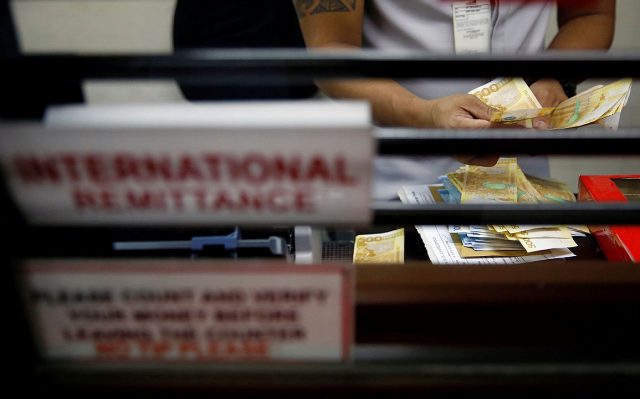
MONEY SENT HOME by migrant Filipinos rose 2.6% in March from a year earlier, the Bangko Sentral ng Pilipinas (BSP) said on Thursday, though this was the slowest growth in nine months.

Cash remittances from overseas Filipino workers (OFW) coursed through banks hit $2.81 billion (P156.8 billion) from $2.74 billion a year ago.

Remittances from land-based workers increased 3.1% to $2.22 billion, while money sent home by sea-based workers inched up 1% to $595 million.

Overseas Filipinos’ Cash RemittancesIn the first quarter, cash remittances rose 2.7% to $8.44 billion from a year earlier. Money sent home by land-based workers jumped by 3.2% to $6.74 billion, while sea-based workers’ remittances went up 1% to $1.7 billion.

“The growth in cash remittances from the United States, Singapore, Saudi Arabia and the United Arab Emirates (UAE) was the main driver of the overall increase in remittances for January to March,” the BSP said.

The US was the top remittance source in the first quarter, accounting for 40.7% of the total. It was followed by Singapore (7.6%), Saudi Arabia (6.2%), Japan (4.9%), the UAE (4.6%), UK (4.4%), Canada (3.1%), Qatar (2.8%), Taiwan (2.8%) and Hong Kong (2.7%).

“Cash remittances rose in March and the first quarter largely due to sustained demand for Filipino labor abroad, particularly in healthcare, engineering and domestic services,” John Paolo R. Rivera, a senior research fellow at the Philippine Institute for Development Studies, said in a Viber message.

He also cited seasonal factors such as the Lenten break and school-related expenses, which might have driven remittances during the quarter.

Michael L. Ricafort, chief economist at Rizal Commercial Banking Corp., said the continued single-digit growth in remittances is a “bright spot for the overall economy, as an important growth driver, especially in terms of consumer spending.”

BSP data showed personal remittances, which include inflows in kind, increased 2.6% to $3.13 billion in March from a year ago.

Personal remittances from workers with contracts of a year or more climbed 3% to $2.4 billion during the month, while those from workers with contracts of less than a year went up 1.4% to $660 million.

Personal remittances for the last quarter rose 2.7% to $9.4 billion from a year ago.

Ruben Carlo O. Asuncion, chief economist at Union Bank of the Philippines, Inc., said remittances this year would likely grow 2.5% to 3% despite external headwinds. “We see remittances as resilient and still expect robust growth.”

The central bank expects cash remittances to grow 2.8% this year.

“Despite global uncertainties, remittances continue to show resilience, serving as a critical support for household consumption and a buffer for the country’s external accounts,” Mr. Rivera said.

On the other hand, Mr. Ricafort flagged the impact of US President Donald J. Trump’s tighter immigration policy on remittance flows.

“For the coming months, protectionist policies of President Trump, particularly stricter immigration rules, could weigh on some OFW remittances, especially from the US,” he added.

Mr. Trump kicked off an aggressive immigration campaign after taking office in January, declaring illegal immigration an “invasion” to boost deportations.

Approved foreign investments lowest in more than a year

PHILIPPINE STAR/NOEL B. PABALATE

By Pierce Oel A. Montalvo, Researcher

APPROVED foreign investments in the Philippines slumped further by 82% in the first quarter to the lowest in one-and-a-half years, according to the local statistics agency, as US President Donald J. Trump tries to undo decades of global economic integration through his sweeping tariff increases.

Foreign investment commitments approved by the country’s investment promotion agencies plunged to P27.99 billion from P155.26 billion a year earlier, according to data from the Philippine Statistics Authority (PSA) posted on its website on Thursday.

This was also 51.5% lower than a quarter earlier and the lowest since the P27.46 billion logged in the third quarter of 2023.

Total Approved Investment Pledges

“The main reasons are the geopolitical uncertainties and trade disruptions caused by Trump’s tariffs,” Calixto V. Chikiamco, president at Manila-based Foundation for Economic Freedom, said in a Viber message.

“These factors are aggravating the already dire unfavorable climate for foreign investments, from high food inflation to lack of infrastructure and internal political divisions,” he added.

While Mr. Trump’s announcement of sweeping reciprocal tariffs on US trade partners did not come until April, he had threatened to increase duties during his campaign last year.

He later suspended these tariffs for 90 days starting April 9, imposing a 10% base tariff instead until July, pending negotiations.

South Korea was the leading source of foreign investment pledges, with commitments hitting P12.36 billion or 44.2% of the total. The US followed with P3.08 billion (11%) and China with P2.88 billion (10.3%).

Real estate activities attracted the biggest share of foreign investments at P10.79 billion (38.5%), followed by manufacturing at P6.14 billion (21.9%) and administrative and support services at P5.35 billion (19.1%).

The impact of lower investment pledges on Philippine economic growth would be limited, Mr. Chikiamco said, noting how the economy continues to rely on consumption and government spending rather than investment.

Economic growth in the first quarter was slower than expected at 5.4%, below the government’s 6-8% target for the year.

The Philippine Economic Zone Authority approved P17.85 billion in foreign investments, accounting for 63.8% of the total. The Board of Investments (BoI) came in second with P7.29 billion or 26% of the total, followed by the Bases Conversion and Development Authority with P1.91 billion and the Subic Bay Metropolitan Authority with P476.95 million.

Central Luzon had 53.3% of total foreign investment commitments at P14.9 billion, followed by Metro Manila at P6.78 billion and the Calabarzon (Cavite, Laguna, Batangas, Rizal and Quezon) Region with P3.95 billion.

Foreign and local investments pledged during the quarter are expected to generate 31,848 jobs once the projects are realized.

On the other hand, investment pledges from Filipino nationals fell 8.4% to P153.94 billion in the first quarter, the PSA said.

Mr. Chikiamco said the local political situation could affect foreign investment pledges in the next quarters.

Investors would want to know “whether President Ferdinand R. Marcos, Jr. has enough political capital, given the results of the midterms, to push for more economic reforms in the remaining years of his term,” he added.

He said the state should liberalize foreign investment laws, expand public-private partnerships in infrastructure and reform education to boost workforce quality to counter the foreign investment decline.

It should also boost farm output to lower food prices and ease wage pressures, modernize labor rules and pursue free trade deals with the European Union, Canada and the US while seeking membership in the Japan-led Comprehensive and Progressive Free Trade Agreement for Transpacific Partnership, he added.

PSA data on foreign investment pledges differ from actual foreign direct investments tracked by the Philippine central bank, whose data go beyond projects and include reinvested earnings and lending to Philippine units through their debt instruments.

Inflation seen within target until 2027

A customer buys fresh produce at the public market in Marikina. — PHILIPPINE STAR/ WALTER BOLLOZOS

PHILIPPINE INFLATION is expected to remain within the central bank’s 2-4% target until 2027, according to economists surveyed by the Bangko Sentral ng Pilipinas (BSP).

The mean inflation forecasts are expected to settle at 3.1% this year, 3.3% in 2026 and 3.4% in 2027, the survey showed, based on the minutes of the Monetary Board meeting on April 10.

“The survey respondents see upside risks from the effect of geopolitical tensions, changes in global trade policies, adverse weather conditions and upward adjustments in utility rates, transport charges and minimum wages,” the BSP said. “Downside risks are still seen from lower rice prices.”

The central bank said it expects inflation below 3% until the fourth quarter, citing the steady decline in domestic food and global oil prices.

The BSP in its April policy review slashed its inflation forecasts to 2.3% for 2025 and to 3.3% for 2026. It now expects inflation to average 3.2% in 2027.

“However, inflation is expected to rise gradually and peak in the second quarter of 2026,” it said.

As global commodity prices stabilize, inflation could ease to near 3% starting in the third quarter of 2026. “Initial baseline projections also indicate within-target inflation in 2027.”

Inflation was the slowest in more than five years in April at 1.4%, bringing the four-month average to 2%.

Risks to the inflation outlook remain broadly balanced until 2027, which would let it continue taking a “measured approach” in further policy easing.

“Monetary policy settings still appear to be relatively tight,” it said. “The timing and magnitude of further monetary easing will be determined on a meeting-by-meeting basis.”

The Monetary Board resumed its easing cycle last month with a 25-basis-point (bp) rate cut to 5.5%. It has lowered borrowing costs by 100 bps since August last year.

BSP Governor Eli M. Remolona, Jr. earlier said they are open to cutting rates by 75 bps more this year amid a favorable inflation outlook.

Meanwhile, the central bank said it expects economic growth to settle at the lower end of the government’s 6-8% target this year until 2027.

“Domestic economic activity may benefit from disinflation but faces downside risks,” it added.

The economy grew by a weaker-than-expected 5.4% in the first quarter from 5.9% a year ago.

Central bank estimates showed “slightly lower” growth forecasts for 2025 compared with its forecast in February.

“The downward revision could be attributed to the higher real policy rate, which outweighed the impact of the decline in oil prices,” the BSP said.

It also flagged challenges from the external environment that could dampen global growth “and pose a downside risk to domestic economic activity.”

“Nevertheless, recent activity indicators suggest domestic demand will be supported by low inflation, improvements in real wages and labor market conditions and the gradual easing of monetary policy settings,” it added.

Meanwhile, Economic Secretary Arsenio M. Balisacan said it is “too early” to revise the government’s 6-8% growth target for 2025-2028 despite global uncertainties and lackluster first-quarter growth.

“My sense is that it’s too early to give up 6-8% for the medium term, meaning 2025-2028,” he told reporters. “We have to be ambitious.”

“We have been left behind so far by our neighbors. If you don’t push very hard to work on a more rapid growth, you’ll always be [the last],” he added.

Lowering the upper end of the goal is possible, but Mr. Balisacan said that could affect budget assumptions.

The Development Budget Coordination Committee is expected to review macroeconomic assumptions later this month.

The Philippine economy could still growth by 6-6.5%, Reinielle Matt M. Erece, an economist at Oikonomia Advisory and Research, Inc., said in a Viber message.

“This is as investments and trade deficits drag on growth, as long as trade uncertainties persist,” he said. “Although trade tensions have eased relative to what it was last April, unstable trade policies can still drag investment inflows and export growth.”

“A downward adjustment on the growth targets is something that is expected given the global environment,” he added.

The best course of action for the country is “internal housekeeping” pending tariff negotiations between the Philippines and the US Trade Representative, Mr. Balisacan said, citing the country’s limited political and economic clout.

“How we all end up remains uncertain, and for so long as that uncertainty stays, the ability of investors to make these commitments and investments, whether in the Philippines or elsewhere, is muted,” he added. — Luisa Maria Jacinta C. Jocson and Aubrey Rose A. Inosante

Changing work styles fueling demand for coworking spaces

GREATWORKGLOBAL.COM

By Beatriz Marie D. Cruz, Reporter

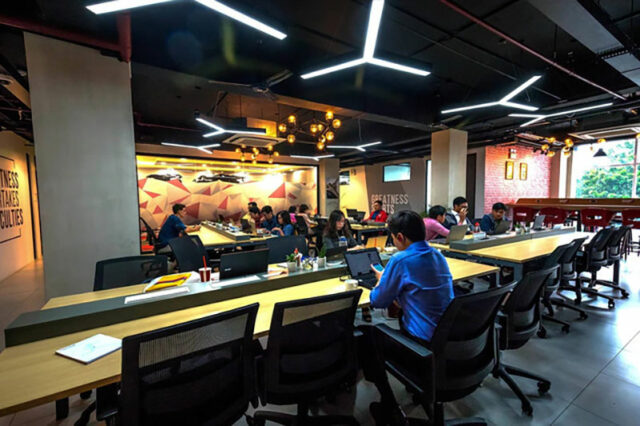
DEMAND for coworking workspaces in the Philippines is expected to rise amid easing inflation and as companies shift to flexible, short-term leasing, analysts said.

“The recent drop in inflation to 1.4%, coupled with the Bangko Sentral ng Pilipinas’ (BSP) guidance toward gradual interest rate cuts signals improving macroeconomic conditions, setting the tone for renewed business confidence and investment activity,” Ruth Coyoca, assistant vice-president for sales and business development at Greatwork Global Workspaces, said in a Viber message.

“For the coworking industry, this shift presents a significant upside,” she added.

The coronavirus pandemic has accelerated companies’ shift to flexible workspaces amid changing work styles. These include coworking spaces, hot desk and virtual offices and hybrid workspaces.

Ms. Coyoca said further rate cuts by the Philippine central bank could encourage both big and small companies to take up more flexible workspaces.

“Lower interest rates enhance liquidity and reduce the cost of financing, encouraging startups, small and medium enterprises and large corporations alike to explore expansion strategies, including new project teams and satellite offices,” she pointed out.

Inflation slowed to 1.4% in April, the lowest in over five years. BSP Governor Eli M. Remolona, Jr. earlier said they are open to cutting interest rates by 75 basis points more this year amid cooling prices.

To maximize the demand for coworking spaces, GreatWork is looking to strengthen its presence in central business districts such as Makati and Bonifacio Global City in Taguig.

It is also planning to expand in regional markets like Cebu, Davao and the greater Manila area amid the decentralization of the Philippine capital, Ms. Coyoca said.

“Our flexible lease terms, cost-efficient setups and prime locations allow companies to scale operations without the long-term financial commitments typical of traditional office spaces,” she said.

“Many international firms, especially those exploring soft market entries or setting up satellite teams, are turning to coworking solutions as a low-risk, high-agility option,” she added.

Weremote, a flexible workspace provider, said it has received inquiries from startups, business process outsourcing companies and corporate teams in need of satellite offices or swing spaces — temporary workspaces used by companies during periods of transition such as renovations, expansions or relocations.

“Flexible workspaces are no longer just a pandemic trend; they’ve become a reflection of how businesses now think about office use,” Weremote Managing Director Rene D. Cuartero said in a LinkedIn message.

He said companies want the flexibility to grow, scale down or adjust their team size without committing to long-term leases.

“Larger companies are coming to us to avoid the capital expenditures of fit-outs and office expansions as they want ‘move-in ready’ private offices,” he said. “On the other hand, smaller teams are choosing affordable but professional coworking spaces that give them credibility without the overhead.”

Mr. Cuartero also cited global economic headwinds from trade wars and geopolitical tensions, which have pushed companies to be more “risk-adverse” in terms of office space.

Traditional, long-term leases often come with heavy upfront costs such as fit-outs, deposits and long lock-ins, he pointed out.

For instance, outfitting a bare-shell workspace can cost over P50,000 per square meter, which may be too costly for some companies, Ms. Coyoca said.

“As these global economic changes continue, we see more companies choosing flexible setups like Weremote because they offer control, scalability and less exposure to risk,” Mr. Cuartero said.

Joey Roi H. Bondoc, director and head of research at Colliers Philippines, said the appetite for coworking spaces remains strong as more companies adopt the “work-near-home” trend.

“A lot… are choosing coworking facilities within condominiums or any co-working facility near their place of residence,” he added.