Home Blog Page 1032

Arts & Culture (09/10/25)


Jonathan Ching, Juno Santos at MO_Space

TWO EXHIBITIONS are opening at MO_Space on Sept. 13. One is Jonathan Ching’s The World, in a Moment at the Main Gallery, which presents a world of connectedness through an inward process of reflection and deliberate brushstrokes. The other is Juno Santos’ E is the third day of the week! at Gallery 2, which showcases the intersectionality of music and art, summarized in a compendium of details for complete artists’ facts, titles, playing time, and order, interpreted visually through acrylic markers and paint. These shows run from Sept. 13 to Oct. 12 at MO_Space in Bonifacio High Street, Bonifacio Global City, Taguig.


Rizal’s journey in Frankfurt explored in exhibit

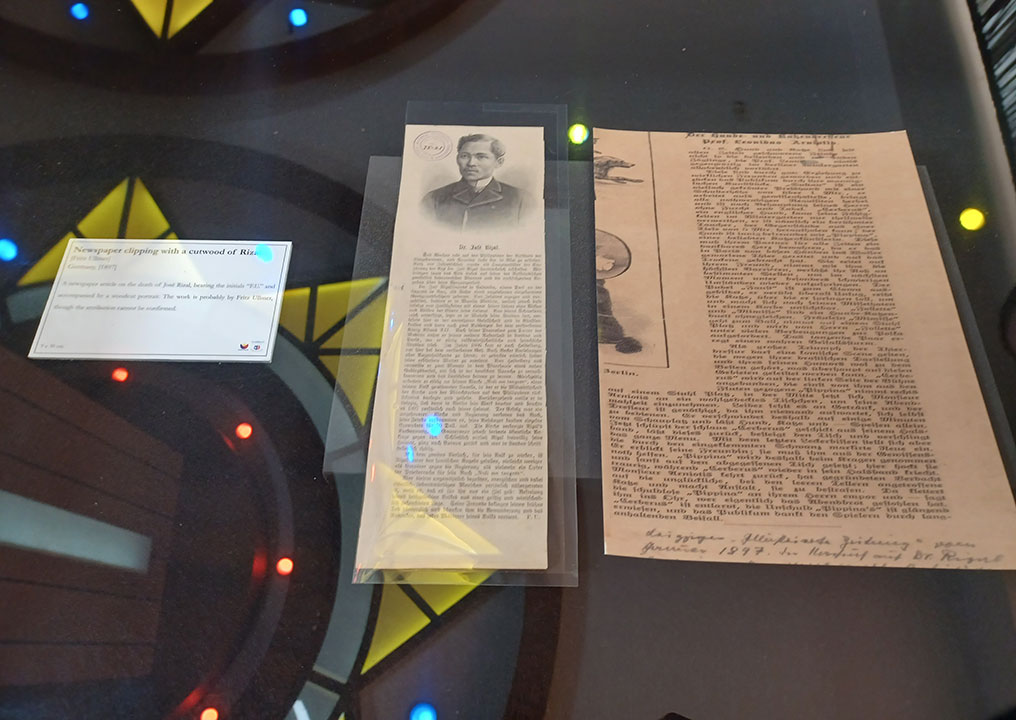
AN EXHIBITION at the National Library of the Philippines titled From Calamba to Frankfurt collates letters, drawings, and a first edition copy of Dr. Jose Rizal’s Noli Me Tangere. They are currently on display at the library’s second floor as part of the send-off of the Philippines’ participation as Guest of Honor to this year’s Frankfurt Book Fair. Curated by Lisa Guerrero-Nakpil, the exhibit details Rizal’s time in Frankfurt and how it affected his work, and relationships with the people who fostered him in the German city. It runs until Oct. 17 at the National Library at T.M. Kalaw St., Luneta, Manila.


Imahica Art Gallery hosts three women artists

THE show Triadico: A Tapestry of Diverse Art is opening on Sept. 20 at the Imahica Art Gallery. In it, three women artists — Jinky Rayo, Millet Sacerdoti, and Butchie Diano-Peña — explore the vibrancy of creativity, collaboration, and diverse perspectives. Their works span watercolor, acrylic, gouache, oil, and mixed media. The exhibition runs from Sept. 20 to Oct. 4 at Imahica Art, 2A Lee Gardens, Lee St., Wack Wack, Mandaluyong City.


Reb Belleza mounts exhibit at Alliance Française de Manille

ALLIANCE Française de Manille will be home to an exhibition this month titled The Reflex and the Seven Astronauts, with works by Reb Belleza. The show is a visual narrative spun from the artist’s ongoing poetic novel of the same title. Curated by minimalist artist Gus Albor, it aims to distill Mr. Belleza’s surreal works in an engaging exhibit. It opens on Sept. 20, 5 p.m., at the AFM Gallery at the Alliance Française de Manille, 209 Nicanor Garcia, II, Makati.


Battle of Manila film to screen at Ayala Museum

A FILM screening and talkback session commemorating the Battle of Manila and the end of World War II will take place at the Ayala Museum near the end of the month. Titled “Lest We Forget: 80 Years Since the Battle of Manila,” the program includes the screening of documentary Children of the War, followed by a talk with director Mike Alcazaren and producer Desiree Benipayo. The documentary follows seven survivors of the Battle of Manila. The event is made possible with the support of Memorare Manila 1945 Foundation and Philwar Foundation. It will be held on Sept. 27, 2 p.m., at the Ayala Museum, Makati Ave., Makati City. Regular tickets are P300, and are available via ayalamuseum.org.

Stronger peso seen to cut Meralco rates in Sept.

MERALCO.COM.PH

By Sheldeen Joy Talavera, Reporter

POWER DISTRIBUTOR Manila Electric Co. (Meralco) expects a lower overall rate this month, as a stronger peso is seen to have brought down the cost of power purchased from its suppliers.

“We expect lower generation charge to pull down the overall rate this September,” Meralco Vice-President and Head of Corporate Communications Joe R. Zaldarriaga said in a statement on Tuesday.

The potential easing in the generation charge was triggered by peso appreciation, affecting costs of Meralco’s suppliers that are dollar-denominated, he said.

The peso closed at P57.13 per dollar on Aug. 29, strengthening by nearly P1.19 from its P58.32 finish on July 31, according to the Bankers Association of the Philippines’ reference exchange rate.

The generation charge typically accounts for more than 50% of the monthly electricity bill.

Mr. Zaldarriaga said the potential reduction in the generation charge is projected to more than compensate for the cost recovery claims filed by San Miguel Global Power Holdings Corp. (SMGP) for its terminated contracts.

The Energy Regulatory Commission (ERC) earlier allowed South Premiere Power Corp. (SPPC) and Sual Power, Inc. (SPI) (formerly San Miguel Energy Corp.) to collect P5.1 billion in total cost recoveries, to be implemented over a six-month period starting in September.

The case stemmed from the 2022 joint petitions by SPPC and SPI with Meralco, seeking temporary price adjustments under their 2019 power supply agreements to recover higher fuel costs due to Russia’s invasion of Ukraine.

“Overall, we are optimistic that the reduction in generation charge will be able to offset increase in other bill components,” Mr. Zaldarriaga said.

The potential decline in the September electricity bill would end two straight months of increases.

MERALCO FACES RENEWABLE COSTS
While Meralco seeks to comply with its obligations under the Renewable Portfolio Standards (RPS), the distribution utility (DU) may be exposed to the renewable energy market (REM).

In an open commission meeting on Tuesday, among the agendas of the ERC was the power supply agreement (PSA) between Meralco and San Roque Hydropower, Inc. (SRHI), a subsidiary of SMGP.

After emerging as a winning bidder in Meralco’s competitive selection process, SRHI is supposed to supply 340 megawatts (MW) of mid-merit contract capacity, starting Feb. 26 at a rate of P6.95 per kilowatt-hour (kWh).

However, in a decision dated Dec. 3, 2024, the ERC approved only P5.1908 per kWh, a rate lower than what was proposed under the supply deal.

Alvin Jones M. Ortega, acting director for ERC Regulatory Operations Service, cited Meralco’s comment in May informing the Commission of the possible termination of the PSA with SRHI.

SRHI sought reconsideration of the ERC’s decision to impose a different rate and limit the sourcing of contracted capacity to eligible renewable energy (RE) facilities.

ERC Chairperson and Chief Executive Officer Francis Saturnino C. Juan said the delays in acting upon Meralco’s application may result in purchasing RE certificates (RECs) in the market.

“If Meralco is unable to source renewable energy generation, it will be compelled to purchase RE certificates at prices that could reach the established cap,” Mr. Juan said.

Under the RPS, DUs, electric cooperatives (ECs) and retail electricity suppliers are required to source a certain portion of their energy supply from eligible RE resources.

Aside from entering into power supply deals, participants may comply with their RPS obligations by buying RECs, a certificate equivalent to a one-megawatt-hour of RE generation at a price capped at P241 each.

“The longer the Commission takes to act on this application, the more Meralco may be exposed to additional costs in order to comply with its RPS obligation by purchasing what are called RE certificates from the RE market,” Mr. Juan said.

Meralco’s majority owner, Beacon Electric Asset Holdings, Inc., is partly owned by PLDT Inc.

Hastings Holdings, Inc., a unit of the PLDT Beneficial Trust Fund subsidiary MediaQuest Holdings, Inc., has an interest in BusinessWorld through the Philippine Star Group, which it controls.

New Banksy mural at London’s High Court shows judge striking protester

BANKSY.CO.UK

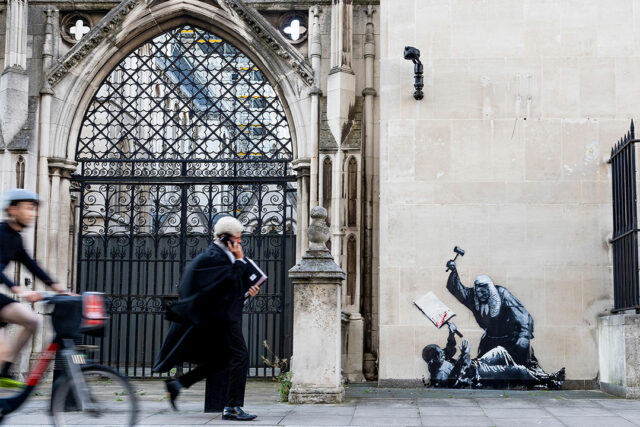
LONDON — British street artist Banksy has painted a mural on London’s High Court depicting a judge beating a protester, possibly in reaction to the arrest of hundreds of demonstrators supporting the banned group Palestine Action.

The artist, whose identity has never been confirmed, published pictures of the artwork on his Instagram page on Monday.

The stenciled mural shows a bewigged judge using a gavel to hit a protester holding a blood-splattered placard who has been knocked to the ground.

It was painted after almost 900 people were arrested at a demonstration in London on Saturday against Palestine Action’s ban. That followed hundreds of other arrests of the group’s supporters in recent weeks.

Britain banned, or proscribed, Palestine Action as a terrorist organization in July, making it a crime to belong to or support the group, after some of its members broke into a Royal Air Force base and damaged military planes.

Britain’s criminal and judicial system has come under attack from both sides of the political spectrum, with critics saying the right to peaceful protest is under threat.

Although Banksy never comments on his artwork, he has created previous work in support of Palestinian causes, including murals on the West Bank separation barrier, concentrated around Bethlehem.

London’s Royal Courts of Justice, which houses the High Court, is a Grade One-listed building, meaning it has the highest level of historical significance and protection. Photos on Monday showed barriers had already been installed around the artwork. — Reuters

SMC seeks bondholder consent to use NAIA shares as loan collateral

NEWNAIA.COM.PH

By Alexandria Grace C. Magno

SAN MIGUEL Corporation (SMC) has initiated a “consent solicitation” to its bondholders to amend the terms of several outstanding bonds, a move aimed at facilitating project financing for its subsidiary, New NAIA Infra Corp., which is undertaking the rehabilitation and operation of the Ninoy Aquino International Airport (NAIA).

The company is asking for permission to use shares it owns in its NAIA subsidiary as collateral for a loan, and to adjust certain definitions in its bond agreements to allow for this.

In a disclosure on Monday, the company requested bondholders’ consent to waive specific negative covenants and approve amendments to trust agreements, which would enable its subsidiary, San Miguel Holdings Corp., to grant security interests related to the project financing.

The proposed changes included increasing the ownership threshold in the definition of “material subsidiary” from 25% to 30%, and expanding the “permitted liens” definition to include exceptions for project financing liens.

SMC aims to align the bond terms with common project finance structures, allowing the company and its material subsidiaries to support infrastructure projects while ensuring the debt remains non-recourse to them.

The company said that these changes are essential to sustain its ongoing growth and involvement in large-scale and greenfield projects, including joint ventures and minority ownership.

Meanwhile, Regina Capital Development Corp. Head of Sales Luis A. Limlingan said in a Viber message that bondholders can look at the consent solicitation in two ways.

“If bondholders agree to the solicitation, they’re basically helping SMC raise money easier for its projects, which could make the company stronger and better able to pay its debts down the line. That’s the upside,” he said.

“On the flip side, it also means bondholders give up some of their safety nets, since SMC can use the airport shares as collateral,” he said.

Mr. Limlingan added that SMC’s strong portfolio and relatively healthy cash flow should ease any concerns.

The consent solicitation involves several bond issues, including the 5.7613% Series C bonds maturing in 2027; 7.1250% Series G bonds due in 2028; 7.4650% Series I bonds due in 2027; 5.2704% Series J bonds due in 2027; 5.8434% Series K bonds due in 2029; 7.4458% Series L bonds maturing in 2028; 7.8467% Series M bonds due in 2029; 8.4890% Series N bonds due in 2032; 7.2584% Series O bonds maturing in 2033; and 7.7197% Series P bonds due in 2034.

SMC’s consent solicitation period is scheduled from noon of Sept. 8 to noon of Oct. 8, with the results to be published on the Philippine Dealing & Exchange Corp. (PDEx).

“Only holders of the Fixed Rate Bonds on Record Date may participate in the consent solicitation,” the company noted.

SMC shares rose by 1.13% at P58 apiece on Tuesday.

Gov’t fully awards reissued bonds at lower rates

BW FILE PHOTO

THE GOVERNMENT made a full award of the reissued seven-year Treasury bonds (T-bonds) it offered on Tuesday at a lower average rate on strong demand, with investors looking to lock in high yields as they expect further monetary easing here and in the United States.

The Bureau of the Treasury (BTr) borrowed P30 billion as planned via the reissued seven-year bonds it auctioned off, with total bids reaching P79.666 billion or nearly triple the amount on offer.

This brought the total outstanding volume for the bond series to P386.7 billion, the Treasury said in a statement.

It added that it made a full award as the papers fetched an average yield that was lower than what was quoted at the previous auction and the comparable secondary market rate.

The reissued bonds, which have a remaining life of four years and 10 months, were awarded at an average rate of 5.772%. Accepted yields ranged from 5.76 to 5.78%.

The average rate of the reissued papers was 12.4 basis points (bps) lower than the 5.896% fetched for the series’ last award on July 1 and was also 60.3 bps below the 6.375% coupon for the issue.

This was likewise 2 bps lower than the 5.792% fetched for the same bond series and 4.2 bps below the 5.814% quoted for the five-year paper — the benchmark tenor closest to the remaining life of the issue — at the secondary market before Tuesday’s auction, based on the PHP Bloomberg Valuation Service Reference Rates data provided by the BTr.

“The T-bond average auction yield was lower amid the continued effects of the widely expected 25-bp BSP (Bangko Sentral ng Pilipinas) rate cut on Aug. 28,” Rizal Commercial Banking Corp. Chief Economist Michael L. Ricafort said in a Viber message.

Signals from monetary authorities that another reduction in benchmark rates is possible within this year “led more investors to lock in yields before they go down further in the coming months,” he said.

The Monetary Board last month lowered benchmark borrowing costs by 25 bps for a third consecutive meeting to bring the target reverse repurchase rate to 5%. It has now slashed rates by a cumulative 150 bps since the start of its easing cycle in August 2024.

BSP Governor Eli M. Remolona, Jr. said that the policy rate is now at a “sweet spot” in terms of both inflation and output, but left the door open for one last cut this year to support growth if needed, which would likely mark the end of its current easing cycle.

The Monetary Board’s last two meetings this year are scheduled in October and December.

The government also saw high demand for its offering following the maturity of P288.659 billion worth of bonds on Tuesday as market players sought to reinvest their cash at “still much higher yields,” Mr. Ricafort said.

“Demand is noticeably higher compared to last week, likely due to the 10-60 maturity today encouraging market players to buy more than usual. Adding to this is the fall in yields, which corroborates the consistent increase in demand these past few weeks,” a trader said in a text message.

The drop in comparable US Treasury yields due to growing bets of a US Federal Reserve cut next week after weak jobs data recently also affected local rates, Mr. Ricafort added.

Traders’ expectations of more aggressive Fed easing are gradually increasing. Pricing of Fed funds futures on Tuesday implied an 11.6% probability of a jumbo 50-bp rate cut at the Fed’s September meeting, compared with an 11% chance on Monday, according to the CME Group’s FedWatch tool, with a cut of at least 25 bps viewed as a certainty, Reuters reported.

US job growth weakened sharply in August and the unemployment rate increased to a nearly four-year high of 4.3%, confirming that labor market conditions were softening and sealing the case for a Fed rate cut next week.

Investors were also bracing for US data revisions that could show the jobs market in worse shape than initially thought, shoring up the case for even deeper Federal Reserve interest rate cuts.

Economists anticipate a downward revision of as much as 800,000 jobs, which could signal that the Fed is behind the curve in efforts to achieve maximum employment.

Investors are now awaiting the US producer price data on Wednesday and consumer price data on Thursday for further clues into the Fed’s policy path.

The BTr is looking to raise P220 billion from the domestic market this month, or P100 billion via Treasury bills and P120 billion through T-bonds.

The government borrows from local and foreign sources to help fund its budget deficit, which is capped at P1.56 trillion or 5.5% of gross domestic product this year. — A.M.C. Sy with Reuters

Rick Davies, Supertramp co-founder and singer, 81

SUPERTRAMP.COM

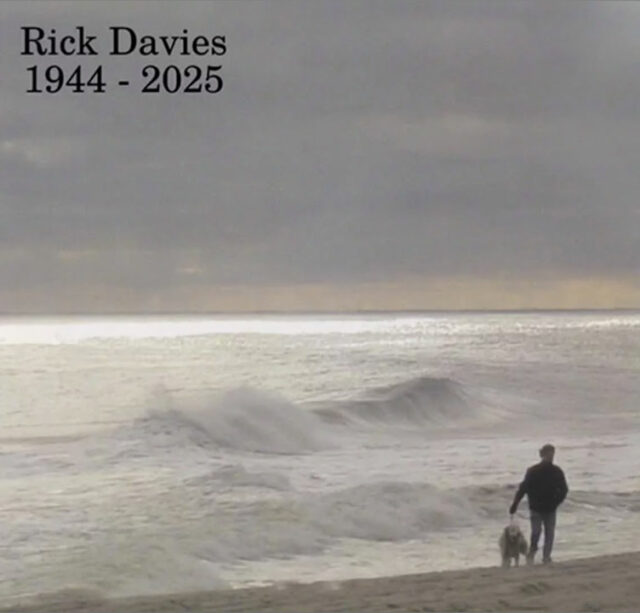
LONDON — Rick Davies, the Supertramp vocalist and songwriter behind some of the British rock band’s best known hits such as “Goodbye Stranger” and “My Kind Of Lady,” has died at the age of 81, the band said on Monday.

Mr. Davies passed away on Saturday after a more than a decade-long battle with multiple myeloma, a type of blood cancer.

“As co-writer, along with partner Roger Hodgson, he was the voice and pianist behind Supertramp’s most iconic songs, leaving an indelible mark on rock music history,” a statement from Supertramp said. “His soulful vocals and unmistakable touch on the Wurlitzer became the heartbeat of the band’s sound.”

Born in Swindon, southwest England, in 1944, Davies grew up with a love of jazz, blues, and the piano, and helped form Supertramp in 1970 after placing a magazine advert looking for musicians.

The group’s Grammy-winning 1979 album Breakfast in America made them one of the era’s cultural touchstones, blending elements of classic rock and pop and winning praise from Rolling Stone magazine, which called the work “textbook-perfect.”

Mr. Davies, who also played the keyboards and harmonica, carried the band forward after Mr. Hodgson’s departure in 1983 but disbanded the group by the end of the decade.

“Beyond the stage, Rick was known for his warmth, resilience, and devotion to his wife Sue, with whom he shared over five decades,” the band said in their statement.

“Rick’s music and legacy continue to inspire many and bear testament to the fact that great songs never die, they live on.” — Reuters

Analysts see SM Prime’s US dollar bond issue as strategic funding for expansion

SM City Chengdu in Chenghua District of Chengdu, Sichuan province, China — SMSUPERMALLS.CN

By Beatriz Marie D. Cruz, Reporter

SM PRIME HOLDINGS, INC.’S (SMPH) planned issuance of US dollar-denominated senior notes aligns with the need to diversify its funding sources, as it defers the initial public offering (IPO) of its planned real estate investment trust (REIT), analysts said.

“SMPH’s plan to issue US dollar-denominated senior notes and tap the foreign debt market could be linked to favorable market conditions for dollar-denominated bonds, providing access to global investors at potentially lower interest rates compared to local borrowing options,” Regina Capital Development Corp. Head of Sales Luis A. Limlingan said in a Viber message.

“With the REIT IPO postponed, issuing bonds helps maintain liquidity and financing flexibility, especially for ongoing projects,” Mr. Limlingan added.

On Monday, SMPH told the stock exchange that it had mandated a group of global and domestic banks to arrange fixed-income investor meetings for its planned dollar bond issuance.

The company has allotted over P150 billion for 16 major redevelopments and 12 new lifestyle malls from 2026 to 2030. It also has plans to open a new mall in Xiamen, China next month and in Fujian by 2027.

The SM Prime reclamation project in Pasay, called Pasay 360, has an investment of P25 billion.

“SMPH is one of the largest property developers in Southeast Asia and has ambitious growth plans, so it makes sense for them to diversify their funding mix by tapping the offshore bond market,” China Bank Capital Corp. Managing Director Juan Paolo E. Colet said in a Viber message.

“Given the scale of the company’s capex (capital expenditure) requirements for mall development and redevelopment as well as for the completion of the Pasay 360 reclamation project, it helps to have active financing options in both the peso and dollar credit markets,” he added.

In August, SMPH said it would put on hold the supposed $1-billion IPO of its REIT to beyond 2026 amid unfavorable market conditions.

Mr. Colet said that SMPH may consider a REIT IPO contingent on lower interest rates and a better stock market performance.

“They may revisit that plan down the road when interest rates are much lower, our stock market is stronger, and valuations are better. It is also advisable for potential REIT candidates to wait for the SEC’s (Securities and Exchange Commission) proposed reforms to the REIT rules as that could make listing more attractive.”

Mr. Limlingan also cited strong investor appetite for REITs, a favorable macroeconomic environment, and a recovery in property market trends as key factors before the company can proceed with its REIT IPO.

SM Prime Chief Finance Officer John Nai Peng C. Ong earlier said the company was also considering the use of green financing in its fundraising initiatives.

SMPH recorded an 11% increase in its first-half net income to P24.5 billion, with consolidated revenue growing by 5% to P68 billion amid higher rental income, real estate sales, and ancillary revenues.

SM Prime shares on Tuesday were up by 1.28% or 30 centavos to close at P23.70 apiece.

Award-Winning excellence: work.able GBF Center 1 named Best Co-Working Space

The work.able team at the 13th PropertyGuru Philippines Property Awards where they won the Best Co-working Space Award. From left: Steph Lopez, Special Projects Manager; Gab Ybanez, Special Projects Officer; Elton John Peralta, Head of Special Projects; Lloyd Tan, the Official Supervisor of the Awards; Lyza Cortes, Community Associate Director; and MA Buenaventura, Associate Lease Director

work.able GBF Center 1 was awarded Best Co-working Space at the 13th PropertyGuru Philippines Property Awards.

Located in the vibrant Bridgetowne Destination Estate which straddles Pasig and Quezon City, work.able GBF Center 1 is the first premium center of work.able, Robinsons Offices’ flexible office space brand. The prestigious honor underscores work.able’s role in redefining the co-working landscape in the country.

“This award is not just about design or amenities–it celebrates a space that is deeply human-centered, one that balances productivity, creativity, and cultural identity,” said Elton John Peralta, work.able Head of Special Projects.

Interiors are warm and inviting, with Filipino touches.

work.able stands out in the Philippine flexible office space sector — it’s more than just a workspace, it’s an environment where individuals and companies can dream, create, connect, collaborate and grow.

Since launching in 2019, work.able has expanded to 2,500 seats across 13 centers in key business hubs throughout Metro Manila, including Ortigas Center, Makati, and Bridgetowne.

Peralta said, “One of the unique selling points of any work.able center is the heart. Beyond desks and meeting rooms, work.able creates places that care for people, honoring both the work they do and the lives they live.”

work.able spaces can adapt to the diverse needs of professionals, teams, and communities.

work.able centers are designed with empathy, ensuring that the space adapts to the diverse needs of professionals, teams, and communities.

The different elements and details celebrate not just Filipino culture but also Filipino values. It’s a living expression of culture and identity, with local artistry, language, tradition, and sustainability woven into the design.

GBF Center 1’s interiors are inspired by the “bahay na bato” — a symbol of warmth, resilience, and timelessness, qualities that Filipinos hold dear, reinterpreted for the needs of today’s workforce. Vigan tiles on the floor, reminiscent of Calle Crisologo, are a nod to the country’s rich history.

GBF Center 1 has approximately 400 seats spread across 15 private offices, with plenty of space to accommodate both individuals and growing teams. There’s a townhall space big enough for 250 people, co-working areas, and a dedicated focus group discussion (FGD) room for qualitative research to gather in-depth opinions, attitude, and experience from a small group of people on a specific topic, an amenity that caters to the growing research consulting industry.

Balance fuels productivity — and at work.able, rest is just as important as work. “Pahinga” is sacred and, to honor this, there are comfortable sleeping pods for those who need a breather.

“Bambikes”, bicycles handcrafted from bamboo, epitomize Filipino ingenuity, sustainability, and workplace wellness.

Balance and wellness are important at work.able. Seen here are Bambikes, handcrafted bamboo bicycles, and a reminder to keep going in Hiligaynon.

Padayon” in a glowing neon sign, reminds everyone to “keep going” in Hiligaynon — a beacon of encouragement during long days at work.

In the lift lobby, there’s a chess and sungka table — a reminder to everyone that play and connection are as vital as work.

More than an office, work.able GBF Center 1 reflects what it means to be Filipino: resilient, community driven, and forward-looking. It honors the Filipino way of working: hardworking yet warm, innovative yet grounded in tradition, ambitious yet anchored in community.

Need a nap? work.able GBF Center 1 has comfy sleeping pods where you could recharge.

The recognition from PropertyGuru affirms that co-working can be both world-class and deeply local, setting a new benchmark for the industry.

As work.able continues to expand, each center will continue to embody this same commitment to culture, care, and community.

Peralta said, “It’s that human element, that human touch that sets us apart. At work.able, there’s always someone who will take care of you. You’re supported by the RLC ecosystem.”

work.able upholds its simple yet profound philosophy at GBF Center 1 and all its other centers: when you work at work.able, work.able works for you.

Because in every work.able, the goal is not just to provide a space to work but a space where innovation thrives and dreams take flight.


Spotlight is BusinessWorld’s sponsored section that allows advertisers to amplify their brand and connect with BusinessWorld’s audience by publishing their stories on the BusinessWorld Web site. For more information, send an email to online@bworldonline.com.

Join us on Viber at https://bit.ly/3hv6bLA to get more updates and subscribe to BusinessWorld’s titles and get exclusive content through www.bworld-x.com.

BSP makes fresh push for bank secrecy amendments

BW FILE PHOTO

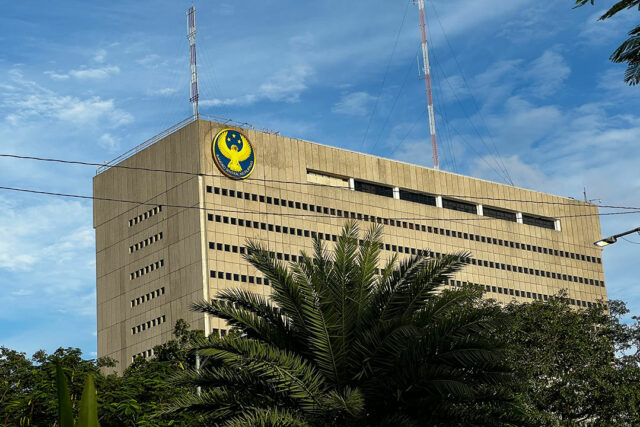
THE BANGKO SENTRAL ng Pilipinas (BSP) is renewing its push for amendments to the country’s bank deposit secrecy laws as part of its priority legislative agenda for the 20th Congress.

The central bank is proposing changes to the Republic Act (RA) No. 1405 or the Law on Secrecy of Bank Deposits and RA 6426 or the Foreign Currency Deposit Act to boost its supervisory powers, BSP General Counsel Roberto L. Figueroa said at a House briefing on Tuesday.

“In these BSP-supported amendments, the inquiry is limited to the deposit account of the stockholder, owner, director, trustee, officer, or employee of an entity that is subject to the supervision or regulatory power of the BSP,” Mr. Figueroa said.

The central bank wants to have the authority to look into the deposit accounts — including foreign currency deposits in banks operating in the Philippines and offshore branches of domestic banks — of these persons suspected of fraud or irregularity in BSP-supervised institutions and as part of investigations into closed banks, it said in a presentation.

“It also provides protection to banks and financial institutions against frivolous suits from depositors in connection with the inquiry and examination of deposits by BSP,” Mr. Figueroa added.

Information obtained via an inquiry will be for exclusive use of the BSP, except when necessary to prevent or prevent or prosecute any offense or crime. The proposal also features safeguards against the use of the bank secrecy exemption for persecution, harassment, or to hamper competition.

The BSP has been pushing for amendments to the Philippines’ tight and decades-old bank secrecy laws to boost its oversight of the financial sector by preventing cases of insider abuse, citing cases where bankers themselves borrow from their own banks or hide proceeds of fraudulent activities in their banks, which endanger depositors. 

CREDIT INFORMATION SYSTEM
Meanwhile, the BSP is also pushing for the New Credit Information System Act, which is a measure that would transfer the powers and functions of the Credit Information Corp. (CIC) to the central bank.

“So, essentially, it’s transferring the functions and powers of the CIC, which is a separate legal entity right now, to BSP,” Mr. Figueroa said. “And, of course, the expectation and the focus of this will result in the streamlining of credit information processes and enhancing regulatory oversight.”

The state-run CIC manages the public credit registry that acts as the central repository of credit information, receiving and collating data from entities like banks, quasi-banks, investment houses, cooperatives, micro-financing organizations, credit card companies, insurance firms, and government lending institutions. Borrowers’ credit reports can be accessed via the CIC’s accredited credit bureaus.

Mr. Figueroa said the proposal aims to provide credit data at a low cost, protect consumer rights, and promote fair competition.

“The establishment and maintenance of an efficient credit information system is consistent with the mandate of BSP to effectively regulate and supervise credit granting businesses, as may be determined by the MB (Monetary Board); is key to financial stability, which is an objective of BSP; and will strengthen the policy formulation of BSP, specifically in the areas of banking and credit,” the central bank’s presentation showed.

Lastly, the BSP is supporting the Digital Payments Bill that seeks to facilitate the use of digital payments in financial transactions of the government and the public.

“When we support digital payment for economic growth and financial inclusion, there is a study done by the Bank for International Settlements that for every 1% increase in the use of digital payments, there is a corresponding 0.5% boost in GDP (gross domestic product) per capita growth, as well as 0.06% reduction in informal employment,” BSP Deputy Governor Mamerto E. Tangonan said. “So, that is global evidence that digital payments do help the economy and also help reduce informality.”

“The concern we have is that in the Philippines, the use of digital payments collections by government banks that of business. The government, the share of digital collections for government is just 25%. Business is already at like 70% collections done digitally,” he added. “So, government, being a catalytic user in the market, once they adopt a digital payments collection, could really instill confidence among the rest of the businesses and population to use digital payments more so that we achieve our desired objectives.”

The BSP wants digital payments to make up 60-70% of the total volume of retail payments by 2028 in line with the Philippine Development Plan.

The share of online payments in monthly retail transactions stood at 57.4% in terms of volume and 59% in value terms in 2024, according to the BSP’s 2024 Status of Digital Payments in the Philippines report. These are up from 52.8% and 55.3%, respectively, in 2023. – Katherine K. Chan

The rise of the Baguio Business Club

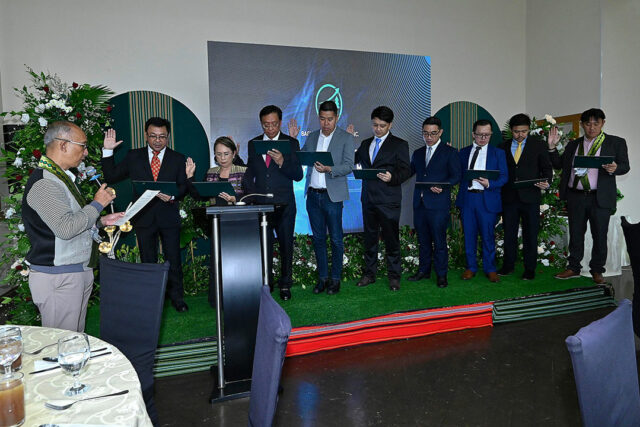
BAGUIO BUSINESS CLUB inauguration, induction and oath-taking ceremony of officers, directors and members held on July 24 at John Hay Golf Clubhouse, Baguio City. — BAGUIO BUSINESS CLUB FACEBOOK ACCOUNT

(Part 1)

As I serve as a consultant to the newly established Baguio Business Club, I have felt a certain kind of déjà vu. I see in those initial 20 members of the club an image of those patriotic young business executives, media personalities, and academics who, almost half a century ago, established the Makati Business Club.

A good number of them have already left this world: Enrique Zobel, Jimmy Ongpin, Joe Romero, Henry Esteban, Jayjay Calero, Rolly Pantaleon and Maning Reyes. Most of them, still in their forties then, responded to the call of business tycoon Enrique Zobel to establish an association of professionals involved in the business world in one way or another that will do their best to promote the common good of society, even at the cost of their respective business vested interests. They were very conscious that they were not establishing another business chamber or industry association that exists to promote the legitimate vested or sectoral interests of their respective businesses or industries.

The business chambers of industry associations are a necessary component of a democratic society in which each stakeholder must articulate what promotes its legitimate vested interest that must be balanced with the interests of other stakeholders, like labor, the government, civil society, the academe, the religious community and others.

In contrast, a business club, as was defined by the founders of the Makati Business Club, must work for the common good of the entire society, even if business has to sacrifice its own vested interest. Examples of such causes are good governance, protecting the physical environment, fighting mass poverty, or achieving food security.

Because of the adverse political environment in 1981 resulting from the dictatorial rule of then President Ferdinand Marcos, Sr., it was understandable that the first major effort of the Makati Business Club was to battle against “crony capitalism,” a phrase that was coined by the late Jimmy Ongpin.

Since I was part of the founding group of the Makati Business Club, I can attest to the desire of the pioneers that the concept of a business club be replicated at the regional level. Some of the first to respond to this call were Cebu, Iloilo, Batangas, and Palawan. From my experience, the most successful replication was that of the Iloilo Business Club that was one of the positive forces behind the transformation of the Greater Iloilo Area into one of the best metropolitan districts in the country today.

I have the conviction, upon seeing how dedicated the organizers of the Baguio Business Club (BBC) are to their mission and vision, that the BBC will achieve the same success as the Iloilo Business Club.

It is a happy coincidence that the very first major project they have taken upon themselves is to help all the stakeholders of the BLISTT (Baguio, La Trinidad, Itogon, Sablan, Tuba, and Tublay) area in building a megapolis similar to the Greater Iloilo Area which is a model for urban planning. The vision of the BBC is a “united, resilient, and forward-thinking business community driving inclusive, sustainable, and innovative growth across the BLISTT area, built upon a new generation of ethical and excellence-driven leaders.”

In record time, the newly elected officers of the BBC — mostly in their thirties and forties and among the movers and shakers of the BLISTT region — came out with their Mission:

• Fostering collaboration among industries, government, academia, and civil society;

• Championing ethical, sustainable business practices that uplift communities;

• Promoting inclusive development while preserving cultural and environmental heritage;

• Building capacity and professionalism among entrepreneurs, especially the youth;

• Nurturing leaders rooted in hard work, empathy, humility, and leading by example; and,

• Advocating for policies and investments that improve competitiveness and quality of life.

Very early in their initial stage of operations, the BBC officers already have identified the interests common to the entire Baguio and BLISTT community:

• Strengthen linkages among business, government and civil society (especially the academe).

• Serve as a resource and advisory body in policy formulation and development planning at the various level of regional government.

• Provide capacity-building, mentorship, and professionalization programs for SMEs and young entrepreneurs.

• Promote entrepreneurship through initiatives like Go Negosyo, business clinics, and financial literacy.

• Contribute to the strategic development of key sectors such as agribusiness, tourism, IT-BPM, manufacturing, and vocational education.

The Core Values identified in their first strategic planning workshop were excellence and continuous learning, integrity and ethical leadership, collaboration and teamwork, civic responsibility and nation-building and sustainability and respect for local culture.

The officers also had their feet firmly planted on the ground by recognizing the PESTLE (Political, Economic, Science and Technology, Legal and Environment) factors affecting the BLISTT region. Since the newly re-elected Mayor of Baguio is in his last term, what can be expected of the next? How can the presence of young blood in the newly elected councils be converted into an opportunity? Will there be obstacles posed by the heavy partisanship that characterizes the Cordilleras/Benguet region? The choice of contractors for infrastructure is highly politicized and marred with corruption about which the Mayor of Baguio is very vocal and thus antagonizing some of the mayors of the other BLISTT municipalities.

As regards economic issues, there is the brain drain problem of IT professionals migrating to other countries like India or other Philippine regions like Clark. How can they be retained? The PEZA within Baguio City is very limited. Can it be expanded to other BLISTT areas? There are serious land restrictions in the region because of ancestral domains. How can the LGUs in the other municipalities of the BLISTT region be engaged in opening up areas for expansion of manufacturing for exports? What can be done to address the many infrastructure inadequacies such in water, energy, telecom, roads, and public school buildings?

The officers also took cognizance of the legal and regulatory challenges such as the delays related to zoning regulations and in the granting of business permits; uncertainties posed by Department of Environment and Natural Resources regulations affecting forests and government reservations; expectations about the role of the newly established Metropolitan BLISTT Development Authority; uncoordinated municipal ordinances from the different LGUs comprising the BLISTT region.

To these we can add other issues related to national and global developments. What should be the role of the BLISTT area in helping the nation to attain food security, the top priority in the development plans of the Marcos Jr. Administration? In addition to the FDIs that can be attracted to the export processing zones that can locate in the region, what other sectors are ripe for significant increases in foreign investments? Could these be in infrastructure, hospitality sector, agribusiness, logistics, and education?

More specifically, how can the geopolitical challenges faced by Taiwan in relation to China be harnessed to the benefit of the Cordillera region (together with the other regions in Northern Luzon) by attracting inflows of foreign capital, technology, and professional expertise from our closest neighbor to the north, especially in electronics and semiconductor as well as in high-value crops? There are a good number of world class universities in Taiwan, steeped in research and development, that are eager to strike academic partnerships and alliances with Philippine universities, who can provide them with the young talent that Taiwan no longer has because of its severe demographic crisis. Baguio has hundreds of thousands of university students because it is a university city. Vegetable farmers, especially in Benguet, can benefit from the experiences of the outstandingly successful farmers’ co-operatives in Taiwan. There is much synergy between Taiwan and the Cordillera Region.

In order to walk the talk, the officers made sure that they would have an Action Plan and Timetable over a three-year period. The BBC will work with the government, the business community, and academe to build a strong foundation among SMEs involved in agribusiness and tourism. There will also be an emphasis on the upskilling, reskilling, and retooling of the young labor force in the region, especially in the training of more electricians, plumbers, carpenters, painters, etc. who are in great demand in the booming construction and housing sectors.

Members of the BBC are looking forward to roadshows in Taiwan and Japan that they have already tentatively scheduled for March of 2026.

(To be continued.)


Bernardo M. Villegas has a Ph.D. in Economics from Harvard, is professor emeritus at the University of Asia and the Pacific, and a visiting professor at the IESE Business School in Barcelona, Spain. He was a member of the 1986 Constitutional Commission.

bernardo.villegas@uap.asia

Wealthy ancient Roman’s tomb discovered in Albania

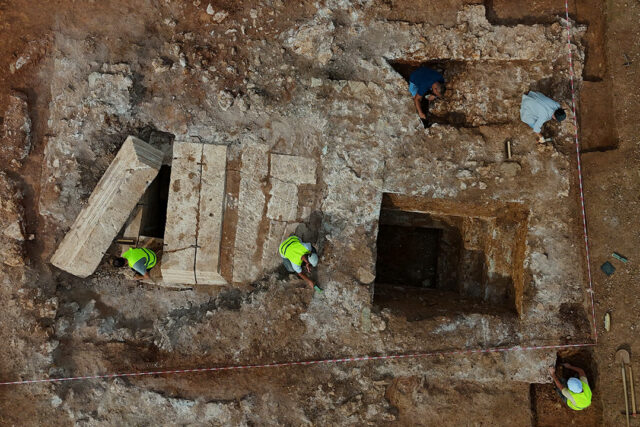
A DRONE view shows archaeologists working on Albania’s first discovered monumental tomb, which they suggest may be a mausoleum, dated to the Roman period III–IV century AD in Strikçan, Albania, Sept. 4. — REUTERS/FLORION GOGA

STRIKÇAN, Albania — Archaeologists in Albania have discovered a large Roman burial chamber dating from the third to fourth century AD, the first of its kind found in the Balkan country that was once part of the Roman Empire.

Tipped off by locals who had noticed some unusual stones on a plateau near the North Macedonia border, staff from the Institute of Archaeology began excavating in early August and found the underground structure whose large limestone slabs were inscribed with Greek lettering.

“The inscription tells us that the person buried here was named Gelliano, a name typical of the Roman period. We are uncertain about the identity of the second individual, but it is likely a family member,” said Erikson Nikolli, the project’s lead archaeologist.

The tomb, which measures nine meters by six meters (29 ft by 19 ft), is the first discovery in Albania of what the experts believe to be a wealthy person’s resting place, grander than other burial sites found in the area.

Local authorities in Albania, where tourism is booming, are already planning to develop the site into a tourist attraction, while residents flocked to the area upon hearing the news of the discovery.

Last week, Mr. Nikolli’s team used brushes to reveal the intricately carved edges of the tomb’s white roof stone and walls.

“We also uncovered a piece of fabric embroidered with gold thread, which confirms our belief that we are dealing with a member of the upper class.”

Other findings include glass plates and knives.

Mr. Nikolli said that the tomb had been looted at least twice — once in antiquity and later when heavy machinery was used to move a massive rock on top of the chamber.

He explained that the occupant’s name was inscribed in Greek letters but carried a Latin meaning, while a second inscription indicates that the tomb was dedicated to the god Jupiter.

Experts have yet to decipher additional inscriptions on stones found nearby, which are believed to have belonged to another monument now surrounded by cornfields and a quarry. — Reuters

Islamic insurance’s growth in PHL may take years as awareness remains low

PHILIPPINE STAR/EDD GUMBAN

PRU LIFE Insurance Corp. of UK Philippines (Pru Life UK) expects takaful or Islamic insurance to start gaining momentum in two to three years as companies take a cautious approach towards what is a relatively new market for most players.

“Actually, overseas, it usually takes two to three years. That’s the standard for not only for takaful but product development,” Pru Life UK Vice-President and Sustainability and Takaful Head Maricel Estavillo said at a media briefing on Tuesday.

“For now, at least for the life sector, we are the first [to offer a takaful product], and there’s a second insurer with a takaful window. And we feel like they’re also on a wait-and-see [stance],” she added.

The Insurance Commission (IC) last year issued takaful operator licenses to Pru Life UK and Etiqa Life and General Assurance Philippines, Inc.

Takaful is a type of Islamic insurance where members contribute a certain sum of money to a common pool to guarantee each other against loss or damage. It needs to be compliant with Shari’ah law, which prohibits riba (interest), al-maisir (gambling), and al-gharar (uncertainty) principles.

Instead of paying premiums, parties in a takaful arrangement agree to contribute to a pool or mutual fund from which claims are paid out of. A contract will specify the risks covered and the length of coverage.

These takaful pools or funds are managed and administered by a takaful operator that charges fees for sales, marketing, underwriting, and claims management.

In June, Pru Life UK launched its takaful product called PruTerm Lindungi.

Ms. Estavillo said they expect a shortfall as claims are likely to exceed the available funds for the product.

“It’s not a risk but it’s a real possibility, especially if you have a product that is very small. In terms of contributions or premium, it’s very small, and the benefit is P100,000. So, it’s really a mass game. You need to onboard a sufficient number of participants,” she said.

“So far, the take-up has been very encouraging, but of course, since this is a very new — not only a new product, but also it’s a new concept, new model as a whole — we need to continue investing in public education and awareness. So, at least for now, we’re focusing on marketing and selling the first product.”

For the first year of the product, the company will focus on educating both the public and its agents on takaful, she said, adding that they currently have almost 300 appointed takaful agents.

Ms. Estavillo cited a study commissioned by the insurer, which found that only 2.5 million out of the 7 million Filipino Muslims in the country can afford financial protection.

She added that there are limited Shari’ah-compliant investment options in the country. “But if you check the guidelines, it doesn’t prohibit a takaful window operator to also invest overseas.”

Pru Life UK booked a premium income of P48.15 billion and net profit of P3.72 billion in 2024, IC data showed. — A.M.C. Sy