Home Blog Page 100

Regulator revokes Discaya construction firms’ registrations

PHILIPPINE STAR/MIGUEL DE GUZMAN

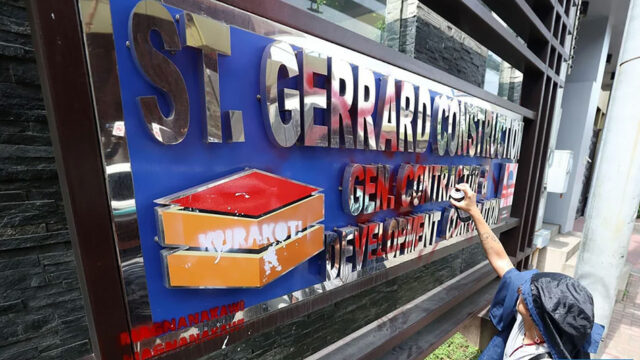
THE SECURITIES and Exchange Commission (SEC) has revoked the corporate registrations of St. Timothy Construction Corp. and St. Gerrard Construction General Contractor and Development Corp., both owned by the Discaya family, for submitting false beneficial ownership information.

“In separate resolutions issued on Nov. 26, the SEC Enforcement and Investor Protection Department (EIPD) canceled the certificates of incorporation of St. Timothy Construction Corp. and St. Gerrard Construction General Contractor and Development Corp.,” the commission said in a statement on Thursday.

During a Senate Blue Ribbon Committee hearing on Sept. 1, Cezarah Rowena C. Discaya claimed ownership and officer positions in St. Timothy and St. Gerrard.

However, SEC records show that the EIPD found Ms. Discaya was not listed as a beneficial owner in the declarations for St. Timothy from 2022 to September 2025, or for St. Gerrard from 2022 to 2024.

“The SEC underscores that corporations must accurately and truthfully disclose beneficial ownership information. Failure to comply — whether by omission or by submission of incorrect information — undermines market integrity and will be met with decisive regulatory sanctions,” the commission said.

“Corporations are expected to respond promptly and responsibly when allowed to clarify or rectify discrepancies in their filings,” it added.

Each firm was ordered to pay a P2 million penalty, as set out in Section 11, I-A of SEC Memorandum Circular No. 10, Series of 2022, along with a daily administrative fine of P1,000 for any ongoing violations, in accordance with Section 158 of the Revised Corporation Code (RCC).

The SEC issued notices as early as September, ordering the companies to pay fines and correct their disclosures, but neither responded within the 15-day period.

The commission said that these sanctions are administrative and do not prevent other civil, criminal, or administrative proceedings under the RCC or other applicable laws from being pursued. — Alexandria Grace C. Magno

Our own Trillion Peso Spring

PHILIPPINE STAR/MIGUEL DE GUZMAN

The Philippines’ political dynamics and institutions differ greatly from those of the key Arab Spring states. Unlike the largely authoritarian regimes in the Middle East, the Philippines remains a functioning — if flawed — electoral democracy. Yet the parallels are hard to ignore. Public frustration with corruption, patronage politics, and deeply entrenched political dynasties echoes many of the grievances that fueled the uprisings across the Arab world in December more than a decade ago.

Here, as in the Middle East, dissatisfaction has been building for years. The once-clear lines between political and business elites have blurred, creating an oligarchic bloc whose power is self-reinforcing. For many Filipinos, these elites represent the core of our democratic deficit. This is the combustible mix we face today: institutionalized corruption, weak governance, and a society whose patience is steadily wearing thin.

The recent flood control scandal exposed how deeply corruption has penetrated public institutions. It also opened a rare window for demanding accountability and reform. The real challenge now is how to sustain the gains from the public’s anger and engagement — how to ensure this moment becomes a springboard for structural change rather than a fleeting episode of outrage.

Books examining the Arab Spring, including Mark Haas and David Lesch’s Arab Spring: The Hope and Reality of the Uprisings (2016), consistently outline four reasons why the uprisings failed to produce lasting democratic transitions: one, entrenched authoritarian structures that proved resilient; two, fragmented civil society and reform movement with conflicting goals; three, deteriorating business conditions that further deepened instability; and transition fatigue and backlash.

These lessons are useful as we grapple with our own “Trillion Peso Spring.” They prompt a sober question: Will this moment of awakening lead to meaningful change, or will it dissipate into a long and discouraging “Trillion Peso Winter?”

There is no denying that corruption and bad governance in the Philippines are systemic. They are not merely persistent — they are durable. The electoral process is often influenced long before votes are cast, shaped by political dynasties and business powerbrokers who can buy influence and secure leverage across branches of government. Without decisive action now, the momentum generated by current investigations could fade, and the names implicated in official documents or whistleblower accounts may soon be forgotten. History has shown that even convicted officials have managed to return to power, resurrecting political careers as if nothing had happened.

Many authoritarian Arab regimes entered the uprisings with similar levels of entrenched patronage networks, weak civil society, and fragile democratic traditions. With such brittle foundations, the initial wave of protests proved difficult to convert into sustainable institutions of accountability.

Contrary to the belief that corruption is a concern only of the elite or the middle class, recent Pulse Asia findings (September 2025) show that Filipinos rank the fight against graft and corruption as the second most urgent national concern, just after inflation. More than half of respondents are deeply troubled by corruption, placing it even higher than concerns over wages, criminality, poverty, illegal drugs, and jobs.

If the flood control scandal has done anything, it is to expose how corruption permeates multiple layers of governance, from the highest offices down to local bureaucracies. This recognition has emboldened many citizens. The strong turnout at both the Sept. 21 and Nov. 30 Trillion Peso Marches showed that Filipinos are not alone in their frustration; many are ready to uphold truth, transparency, and accountability.

For some, the magnitude of corruption may feel overwhelming, inspiring resignation rather than resistance. But for many others, this moment demands vigilance, a renewed commitment to confronting corrupt officials and institutions until genuine reform is finally achieved.

Yet the Arab Spring reminds us that division can be fatal to reform movements.

Fragmentation plagued many of the uprisings, and similar strains are visible here. The Luneta and EDSA rallies, though united in demanding integrity and accountability, disagreed on the call for President Ferdinand “Bongbong” Marcos, Jr. and Vice-President Sara Duterte to resign. The Luneta demonstrators insisted on leadership accountability and systemic reforms, including the abolition of political dynasties and the restitution of stolen public funds. Meanwhile, the EDSA rally supported the fight against corruption but distanced itself from the demand for resignations, expressing fears of unintended consequences such as a transition council, revolutionary government, or civilian-military junta.

Cardinal Ambo David’s statement acknowledged this tension while keeping channels of unity open. His words — “we do not yet believe in the call of the people who are in Luneta” — suggested caution, not rejection. This openness creates space for reconciliation rather than division, a critical ingredient for sustaining any reform movement.

Groups like 1Sambayan echoed the Cardinal’s position, emphasizing accountability, peace, and constitutional order. They rejected attempts at extraconstitutional regime change and warned against divisive politics amid economic and political instability.

The truth is that EDSA and Luneta share far more goals than differences.

Efforts should focus on strengthening common ground while constructively addressing disagreements. There is no deep ideological chasm separating the two — only differing views on political timing and the sequence of reforms. Some actors have in fact begun to exploit these divisions to push for outcomes such as a forced resignation that could favor particular political factions. But public discourse must stay anchored in evidence: if documentation is stronger in support of an impeachment case against the Vice-President than the President, then the political narrative should reflect that reality rather than partisan speculation.

To move forward, we need institutional spadework. Key legislative reforms must include enforcing constitutional prohibitions against political dynasties, passing electoral reforms to strengthen campaign finance rules and transparency, mandating lifestyle checks for public officials, and overhauling budget processes to prevent insertions and abuse.

The Arab Spring also revealed that political uprisings cannot succeed without addressing underlying economic issues. Many of the protests in the Middle East were fueled by unemployment, stagnation, and declining living standards. Similarly, in the Philippines today, the economic context adds urgency and complexity. If the Trillion Peso March leads to accountability but fails to bring improvements in economic growth, job creation, business confidence, and living conditions, sustaining the movement’s momentum will be difficult. The BusinessWorld Forecast 2026 captured this anxiety: we are confronting a “corruption crisis combined with political volatility” that is eroding business confidence.

The public now demands resibo — tangible proof that reform is not just political theater. Citizens want to see rising incomes, stable prices, sustainable fiscal policy, stronger healthcare and education systems, improved social infrastructure, declining poverty, better public services, lower cost of doing business, and more productive employment opportunities.

Revolutions and regime changes often falter when they fail to deliver results. The Arab Spring demonstrated that enthusiasm can quickly turn to disillusionment when transitions do not yield better governance or improved livelihoods. In several Arab countries, initial optimism was followed by civil liberties shrinking again as old elites reasserted their power.

This transition fatigue is real and dangerous.

We must guard against such a trajectory. Many Filipinos already feel that the spirit of EDSA 1986 was squandered, leading to cynicism about regime change and skepticism toward constitutional reforms. The belief that simply amending the Constitution will usher in transformative change reflects a recurring misunderstanding of what it takes to build strong, accountable institutions.

If we fail to address weak institutions, fragmented civic movements, deep socio-economic challenges, and the risk of transition fatigue, our aspirations will falter. What began as a Trillion Peso Spring — an awakening to the possibility of unity, integrity, and reform — could easily descend into a Trillion Peso Winter marked by disappointment and continuing upheaval.

But it does not have to. The window is open. It is narrow, but real.

The test before us is whether we can seize this moment, sustain the unity necessary to demand meaningful reforms, and strengthen the institutions needed to guard against future abuses. The future of the Trillion Peso Spring depends not on a single march or a single scandal, but on our collective ability to translate anger into action and action into durable, credible change.


Diwa C. Guinigundo is the former deputy governor for the Monetary and Economics Sector, the Bangko Sentral ng Pilipinas (BSP). He served the BSP for 41 years. In 2001-2003, he was alternate executive director at the International Monetary Fund in Washington, DC. He is the senior pastor of the Fullness of Christ International Ministries in Mandaluyong.

Peso sinks to P59 level again as growth concerns hit sentiment

PHILIPINE STAR/IRRA LISING

THE PESO on Thursday sank to the P59 level against the dollar, hitting an over two-week low, as expectations of another rate cut from the Bangko Sentral ng Pilipinas (BSP) next week due to dimming economic growth prospects weighed on sentiment.

The local unit closed at P59.022 per dollar, weakening by 10.2 centavos from its P58.92 finish on Wednesday, Bankers Association of the Philippines data showed.

This was the peso’s lowest close and was the first time it ended at the P59 level against the greenback in two weeks or since it finished at P59.065 on Nov. 20.

The peso opened Thursday’s trading session weaker at P58.95 against the greenback. Its intraday best was at P58.92, while its worst showing was at P59.17 versus the dollar, which is the local unit’s record-low close logged on Nov. 12.

Dollars traded declined to $1.29 billion on Thursday from $1.41 billion on Wednesday.

“The peso closed higher today on buying momentum after the recent comments from BSP regarding the local GDP (gross domestic product) outlook and possibilities of a rate cut,” a trader said in a phone interview.

On Wednesday, BSP Governor Eli M. Remolona, Jr. said that Philippine GDP growth may only settle between 4% and 5% this year as the corruption scandal continues to limit government spending and weaken investor sentiment. This would be well below the government’s full-year growth target of 5.5% to 6.5%.

Mr. Remolona said this raises the chances of a fifth straight rate cut at the Monetary Board’s Dec. 11 meeting.

In October, the central bank lowered borrowing costs by 25 basis points (bps) for a fourth meeting in a row to bring the policy rate to 4.75%.

It has reduced benchmark rates by a total of 175 bps since it began its easing cycle in August 2024.

For Friday, the trader said the peso could range from P58.80 to P59.20 versus the dollar.

Still, the local unit is unlikely to stay at the P59 level for long as the expected increase in remittances for the holiday season could give the currency a boost, the trader said.

Meanwhile, the US dollar was steady near a five-week low after lackluster US data seemingly cemented the case for a Federal Reserve rate cut next week, providing relief to the yen and pushing the euro to an almost seven-week high, Reuters reported.

Investors have also been weighing the prospect of White House economic adviser Kevin Hassett taking over as Fed Chair after Jerome H. Powell’s term ends in May. Mr. Hassett is expected to push for more rate cuts.

US President Donald J. Trump said this week he will unveil his pick to succeed Mr. Powell early next year, extending a months-long selection process despite previously claiming he had already decided on a candidate.

A move to appoint Mr. Hassett could pressure the dollar, analysts have said, with bond investors expressing concerns to the US Treasury that Mr. Hassett could aggressively cut rates to align with Mr. Trump’s preferences, the Financial Times reported.

Traders are pricing in an 85% chance of a quarter-point rate cut next week, LSEG data showed.

The dollar index, which measures the US currency against six rivals, was little changed at 98.94 after falling for nine straight days. It was languishing near a five-week low and remains down nearly 9% for the year.

A Reuters survey showed a sizeable minority of foreign exchange strategists are now predicting the dollar to strengthen next year although most largely stuck to forecasts for a softer greenback in 2026 on rate cut wagers. — Katherine K. Chan with Reuters

Doctor in Matthew Perry overdose case sentenced to 2-1/2 years

COMMONS.WIKIMEDIA.ORG

LOS ANGELES — A California doctor was sentenced to 2-1/2 years in prison on Wednesday for illegally supplying Friends sitcom star Matthew Perry with ketamine, the powerful sedative that caused the actor’s drug overdose death in 2023.

Dr. Salvador Plasencia, 44, who ran an urgent-care clinic outside Los Angeles, pleaded guilty in federal court in July to four felony counts of illegal distribution of the prescription anesthetic. He could have faced up to 40 years in prison for the crime.

Mr. Perry was found by his live-in assistant floating face down and lifeless in the jacuzzi of his Los Angeles home on Oct. 28, 2023. He was 54. An autopsy report concluded the actor died from the “acute effects of ketamine,” which combined with other factors in causing the actor to lose consciousness and drown.

Ketamine is a short-acting anesthetic with hallucinogenic properties that is sometimes prescribed to treat depression and other psychiatric disorders. It also has seen widespread abuse as an illicit party drug.

Mr. Plasencia, who surrendered his medical license in September, admitted as part of his plea agreement that in the weeks before Mr. Perry’s death he had injected the actor with ketamine on multiple occasions at the actor’s home and once in the back seat of a parked car.

Mr. Perry had publicly acknowledged decades of substance abuse, including the years he starred as Chandler Bing on the hit 1990s NBC television series Friends.

According to federal law enforcement officials, Mr. Perry had been receiving ketamine infusions for treatment of depression and anxiety at a clinic where he became addicted to the drug.

When doctors there refused to increase his dosage, he turned to unscrupulous providers elsewhere willing to exploit Mr. Perry’s drug dependency as a way to make quick money, authorities said.

Mr. Plasencia, who practiced medicine in the Los Angeles suburb of Calabasas, said he was introduced to Mr. Perry through a patient acquainted with the doctor and obtained the ketamine from another doctor, co-defendant Mark Chavez of San Diego. According to court filings, Mr. Plasencia once texted Mr. Chavez about Mr. Perry, writing, “I wonder how much this moron will pay.”

Within weeks, Mr. Perry was dead from an overdose of ketamine supplied by yet another co-defendant — a drug dealer known as the “Ketamine Queen” — and injected by the actor’s personal assistant, Kenneth Iwamasa.

“You and others helped Mr. Perry stay on the road to such an ending while continuing to feed his addiction,” US District Judge Sherilyn Peace Garnett said before sentencing Mr. Plasencia to 30 months in prison and a $5,600 fine.

Addressing the court before the judge imposed sentence on Wednesday, amid audible sobs from his mother and Mr. Perry’s relatives, Mr. Plasencia expressed remorse and said he took full responsibility for his actions.

“I failed Mr. Perry, I failed his family, and I failed the community,” he said, before turning to directly face members of Mr. Perry’s family seated in the courtroom and adding, “I’m just so sorry.”

Delivering a victim impact statement earlier in the proceeding, Mr. Perry’s mother, Suzanne Morrison, said, “There is an oath that doctors take, and I think it really got forgotten.” Looking directly at Mr. Plasencia, she said, “I want you to see this is the mother” and added “this was a bad thing to do.”

Four other defendants — Mr. Chavez, 55; Mr. Iwamasa, 60; Jasveen Sangha, 42, aka “Ketamine Queen”; and go-between dealer Erik Fleming, 56 — have pleaded guilty in connection with Mr. Perry’s death and are scheduled to be sentenced in the coming weeks. — Reuters

EEI board OKs P11.42-B liability acquisition, subsidiary consolidation

EEI.COM.PH

EEI CORP.’S board of directors has approved the acquisition of P11.42 billion in liabilities of its subsidiary First Orient International Ventures Corp. in exchange for unissued shares.

“The Board of Directors approves the acquisition of the liabilities of First Orient International Ventures Corporation (FOIVC), its wholly owned subsidiary,” EEI said in a stock exchange disclosure on Thursday.

The listed construction company said the assignment of liabilities requires creditor consent, while the issuance of FOIVC shares in exchange for those liabilities is subject to Securities and Exchange Commission (SEC) approval.

EEI noted that the transaction further strengthens FOIVC’s balance sheet and enhances its creditworthiness.

“[It] enhances operational flexibility, while allowing the parent to formalize capital support and increase its ownership stake. This structure optimizes group financing and simplifies future restructuring, all while maintaining a fair exchange of value and improving long-term strategic control,” EEI said.

In October, EEI announced that it had fully acquired FOIVC for P2.8 billion, expanding its real estate investment holdings. FOIVC owns 49 hectares of land in Cavite, including Island Cove, a Philippine offshore gaming operator (POGO) hub, and is engaged in acquiring, developing, leasing, and holding real estate for investment purposes.

EEI said the transaction is expected to diversify its revenue streams and add long-term value to its business.

In a separate disclosure on Thursday, EEI said its board had also approved the consolidation of its two wholly owned subsidiaries, EEI Ltd. and EEI Realty Corp., under EEI Ventures, Inc., its investment and holding company, through a share-swap agreement.

Under the agreement, EEI Ventures will issue 300 million shares at P22.33 apiece to EEI in exchange for 100% of EEI Ltd. and EEI Realty.

“The consolidation also supports more efficient capital raising, as investors are increasingly drawn to ‘pure-play’ business units. Housing non-construction assets under EEI Ventures makes it easier to attract strategic partners or explore future financing options without affecting the parent company’s balance sheet,” EEI said.

At the stock exchange on Thursday, shares in EEI closed eight centavos, or 2.9% lower, at P2.68 apiece. — Ashley Erika O. Jose

Resilience is not policy: Why Filipino grit can’t fix broken infrastructure

PHILIPPINE ARMY FACEBOOK ACCOUNT

There is no shortage of stories celebrating Filipino resilience. After every storm, flood, or earthquake, we see familiar scenes: families wading through chest-deep waters while smiling for the cameras, neighbors sharing rice and coffee in candlelight, and children turning evacuation centers into playgrounds. It is a powerful image of courage and optimism, a cultural badge of honor.

But over the years, that badge has become dangerously convenient for those who should be held accountable. “Resilience” has become the language of survival in a country where too many public works projects fail the people they were meant to protect. It has become a convenient narrative that praises endurance while excusing negligence.

Resilience, in its purest form, is a virtue. It reflects the Filipino’s ability to adapt, recover, and rebuild. But when used by policymakers and corporate actors as a shield against accountability, resilience turns toxic. It becomes an institutional comfort zone that normalizes substandard performance and diverts public outrage.

The truth is, Filipinos should not have to be resilient all the time. A truly resilient nation is one that does not need to test its citizens’ endurance every year. Real resilience lies not in how quickly people recover from disaster but in how well the system prevents avoidable suffering in the first place.

WHERE RESILIENCE MEETS ROT
The current flood control scandal exposes the cracks, literal and figurative, in our public infrastructure system. Senate hearings have revealed that several flood control projects, worth billions in public funds, were implemented using substandard materials, questionable procurement processes, and in some cases, were never completed at all.

According to testimony before the Senate Blue Ribbon Committee, contractors allegedly colluded with public officials to pad budgets and deliver half-baked work. Auditors also flagged numerous projects that lacked completion reports or were non-existent despite full disbursement of funds.

The consequences are real. When torrential rains hit Bulacan, Pampanga, and parts of Metro Manila last month, several newly built dikes and drainage systems failed to hold. Entire barangays went underwater again. People lost homes, livelihoods, and loved ones. Yet government officials were quick to praise communities for their “resilience.”

Resilience should never be the consolation prize for corruption.

When government and private-sector leaders celebrate resilience without fixing the root causes of suffering, they shift the burden from the state to the citizen. “Filipinos are resilient” becomes shorthand for “Filipinos can handle it.” It is an elegant way to avoid saying, “We failed you.”

This misplaced admiration also corrodes accountability. It allows politicians to under-deliver, contractors to overcharge, and agencies to overlook poor workmanship because the public, time and again, finds ways to survive.

When endurance becomes an expectation, resilience ceases to be a strength. It becomes systemic abuse.

RESILIENCE AS MORAL HAZARD
In risk management, a moral hazard occurs when someone takes greater risks because they do not bear the full consequences of failure. In our case, institutions take moral hazards when they rely on the people’s resilience to cushion the impact of their incompetence.

This mindset infects both the public and private sectors. Local governments underinvest in maintenance because they expect communities to self-organize during floods. Contractors take shortcuts knowing that post-disaster relief will cover their deficiencies. National agencies promise to “study” the problem anew after each calamity instead of fixing the root causes.

In other words, resilience becomes policy by default, not by design.

Poor infrastructure is not only a humanitarian concern. It is an economic drag. Studies by the World Bank and National Economic and Development Authority (NEDA), now the Department of Economy, Planning, and Development, have shown that climate- and disaster-related disruptions consistently shave off growth by damaging assets, displacing workers, and interrupting logistics and power supply. Flooding alone regularly paralyzes commerce in major cities, reducing productivity, and inflating the cost of doing business.

When roads, bridges, and flood control structures repeatedly fail, the cost compounds. Businesses lose inventory, insurers raise premiums, and investors hesitate to expand in vulnerable areas. The private sector ends up paying for the government’s negligence, and consumers pay for it twice: through taxes and higher prices.

The irony is that infrastructure is supposed to be the backbone of national competitiveness. When that backbone is weak, the country spends more time surviving than thriving.

INTEGRITY, NOT IMPROVISATION
If the Philippines wants to move from survival to sustainability, it must redefine resilience. True resilience is built on three foundations: integrity, accountability, and foresight.

Integrity in construction means that every bridge, dike, and drainage system must meet the standards promised in the contract, not just on paper but on the ground. It means an end to the pwede na mentality that still dominates public works.

Accountability requires that public officials, project engineers, and contractors face consequences for negligence and fraud. Investigations must lead to convictions, not just headlines. Otherwise, the cycle repeats.

Foresight demands planning beyond the political term. Flood control systems, for instance, must be designed with climate projections in mind, not merely for ribbon-cutting ceremonies before elections.

The private sector has a crucial stake in this issue. Companies that benefit from government contracts must uphold the highest standards of engineering and ethics. Cutting corners is not merely a crime. It is a reputational and financial liability.

Moreover, industries that depend on logistics, real estate, and tourism cannot thrive in an environment where infrastructure collapses with every storm. Businesses must therefore lend their voice to demand better governance, not as charity or corporate social responsibility, but as enlightened self-interest.

A resilient economy is impossible without reliable infrastructure. Reliable infrastructure is impossible without ethical leadership.

FROM RESILIENT PEOPLE TO RESILIENT SYSTEMS
We must retire the narrative that resilience lies solely in the Filipino spirit. The real test of a nation’s resilience is not in how people smile through suffering but in how the system prevents that suffering in the first place.

This means redefining “resilience” from a cultural trait into a structural outcome. It means building floodways that work, drainage that lasts, power lines that hold, and housing that withstands storms. Not because people are used to rebuilding, but because they deserve not to.

It also means reimagining leadership. The best leaders do not wait for calamity to showcase compassion. They design systems so effective that compassion becomes less necessary.

For decades, the Filipino people have carried the weight of the nation’s resilience narrative. It is time for institutions to carry their share. Policymakers must craft budgets that prioritize maintenance over monuments and results over ribbon-cuttings. Regulators must professionalize public-works oversight and ensure that projects are independently audited and verified.

Civil society and the media must continue to expose corruption in infrastructure, not as scandal but as systemic risk. Citizens must demand transparency, from bidding documents to completion certificates.

Resilience, if reclaimed properly, can become a shared ethic of responsibility: citizens who cooperate, companies that build with integrity, and a government that delivers without excuse.

The floods will come again. The question is whether we will have learned.

If the only thing we build better after every disaster is the myth of Filipino resilience, then we have failed. But if we build structures that stand, systems that work, and a culture that demands nothing less, then resilience will finally mean what it should: not survival amid failure, but strength through accountability.

Resilience is not policy. It is a promise. And it is time our leaders, both in government and in business, kept it.


Dr. Ron F. Jabal, APR, is the CEO of PAGEONE Group (www.pageonegroup.ph) and founder of Advocacy Partners Asia (www.advocacy.ph).

ron.jabal@pageone.ph

rfjabal@gmail.com

Tonik Financial raises $12 million to bolster digital bank’s capital position

TONIK FINANCIAL Pte Ltd, the controlling shareholder of Tonik Digital Bank, Inc., has raised $12 million in fresh financing to boost its capital and fund the bank’s continued expansion.

Tonik Financial raised $12 million in Pre-Series C financing in a round led by Diligent Capital Partners and with participation from Plio Limited, existing shareholder Altara Capital, and Tonik management.

“The funding strengthens the regulatory capital position of Tonik Digital Bank under Bangko Sentral ng Pilipinas requirements and supports continued investment in Tonik’s technology platform to accelerate customer acquisition, cross-sell, and automation,” it said in a statement on Thursday.

Tonik Digital Bank is one of the six online banks licensed by the BSP to operate in the country. It began its commercial operations in 2021.

Singapore-based Tonik Financial holds a 60% stake in the digital bank, while Oak Drive Ventures, Inc. and Camerton, Inc. have shareholdings of 20% apiece.

“This round is about scaling with discipline — protecting our capital ratios while growing a profitable, credit-led model,” said Greg Krasnov, founder and chief executive officer of Tonik. “Tonik was built to prove that financial inclusion in emerging markets can be delivered with truly world-class returns. The momentum we’re seeing in risk performance, technology leverage, and channel scale shows that the model works — and is ready for another 10x in the next 2-3 years.”

“While our fund’s primary focus is on Ukraine and the Black Sea basin, we also back mission-driven Ukrainian founders building globally,” said Dan Pasko, partner at Diligent Capital Partners. “Our team supported Greg more than a decade ago in one of his prior builds, and many other high-performing Ukrainian leaders are now helping drive Tonik. That continuity gives us deep confidence in execution. Tonik’s unit-economics rigor and technology stack position it to become one of Southeast Asia’s most valuable digital banks over time.”

Data on the BSP’s website showed that Tonik Digital Bank held assets worth P7.905 billion at end-June 2025, while its liabilities were at P6.785 billion. Total stockholders’ equity stood at P1.12 billion.

Meanwhile, its common equity Tier 1 ratio was at 18.75%, while its capital adequacy ratio stood at 19.07%, down from 23.51% and 23.95%, respectively, at end-2024.

The digital bank booked a net loss of P1.126 billion in 2024, wider than the P744.92-million loss in 2023, mainly due to higher expenses, its annual report showed.

“While the bank continues to report net losses at the consolidated level, these are primarily driven by ongoing strategic investments in platform development, talent, and customer acquisition. Key performance metrics such as loan yields, contribution margins, and delinquency rates continue to improve quarter on quarter,” it said.

Its loans grew by 110% to P2.5 billion at end-2024, while deposits stood at P5.8 billion. It also ended the year with over one million registered users, with active accounts up 42% year on year.

Tonik Digital Bank said in its annual report that it wants to grow its loan portfolio to over P5 billion this year and achieve breakeven contribution margin across all its major lending products by reducing credit costs.

“Tonik continues to invest in AI (artificial intelligence)-driven underwriting, customer lifecycle automation, and responsible credit expansion — all geared toward achieving sustainable profitability by 2026,” it said.

“With a clear roadmap to profitability, a strong regulatory foundation, and a loyal customer base, Tonik remains focused on delivering inclusive, technology-driven financial services in the Philippines.” — BVR

Kate Winslet teams up with son for directorial debut Goodbye June

A SCENE from Goodbye June.

LONDON — Oscar-winning actor Kate Winslet makes her directorial debut with Goodbye June, a holiday season-set drama about a family faced with loss coming together.

Ms. Winslet, who also stars in the film, directs from a screenplay by her son Joe Anders. The story was partly inspired by their personal experience of losing Ms. Winslet’s mother, Mr. Anders’ grandmother, to cancer in 2017.

“I just wanted to make a film that felt authentic and real,” said Ms. Winslet, premiering the movie with Mr. Anders and the cast in London on Wednesday.

“I also didn’t want to make a story that was about someone who dies because it’s really not. It’s actually about the life that is given to the people who are left behind.”

Ms. Winslet said she wanted to set the movie in Britain’s National Health Service space because it is “massively undervalued.”

“And we need to give credit and honor the people who do that incredible work, especially our palliative care workers,” she said.

“It’s entirely fictional,” added Mr. Anders. “I think it just emotionally came from that place of sending my grandmother off.”

Mr. Anders, whose father is filmmaker Sam Mendes, wrote the script when he was 19, and showed it to Ms. Winslet for feedback.

“I didn’t even know if I could write a screenplay. I just really wanted to give it my best shot. And the fact that it’s been made into a movie is insane,” Mr. Anders, now 21, said.

Ms. Winslet, who has three children, said she had thought about stepping behind the camera over the years but raising a family kept her busy.

“There just wouldn’t have been that space in my life, I think, emotionally and just energetically. I couldn’t possibly have added anything else into the juggle of it all. But this felt like the right moment, and I felt really ready to do it,” she said.

In the film, family matriarch June (Helen Mirren) is hospitalized shortly before Christmas. Her husband (Timothy Spall), son (Johnny Flynn), and three daughters, played by Ms. Winslet, Andrea Riseborough, and Toni Collette, and their offspring rush to her bedside, bringing with them conflict and personal struggles, but also joy and care.

“It’s such an honest look at the transition from life into the next. And it’s about family, the mess and the beauty of the dysfunctional family system,” said Ms. Collette.

Goodbye June starts streaming on Netflix on Dec. 24. — Reuters

Campbell’s vulgar leak required more than defending its soup

CAMPBELL’s executive Martin Bally — KELLY COMMON-UNSPLASH

By Beth Kowitt

“S–t for f–king poor people” is not the tagline you want people associating with your brand.

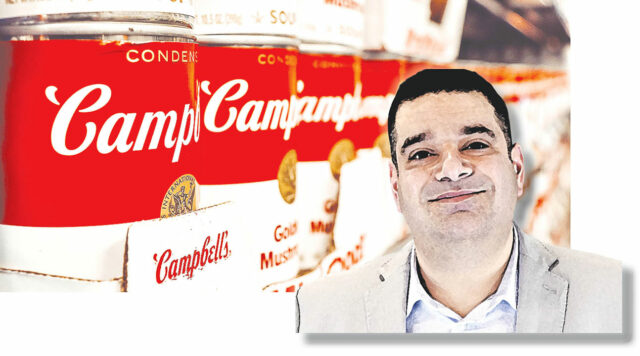
But that’s the position Campbell’s Co. finds itself in after executive Martin Bally was recorded allegedly badmouthing the company’s products, along with calling its Indian employees “idiots” and claiming its soup contains “bioengineered meat.”

The recording was leaked by Robert Garza, a former Campbell’s cybersecurity analyst, in connection with a lawsuit he filed against the company and Bally, claiming he was fired not long after reporting the comments to his boss and saying he planned to tell HR:

“We have s–t for f–king poor people. Who buys our s–t? I don’t buy Campbell’s products barely anymore. It’s not healthy now that I know what the f–k’s in it. Bioengineered meat — I don’t wanna eat a piece of chicken that came from a 3-D printer.”

Campbell’s did the right thing once the recording came to light. The company canned Bally after determining that the voice on the recording was indeed his, and it put out a statement saying the comments were “vulgar, offensive and false” and do not “reflect our values and the culture of our company.”

But examining the ways Campbell’s has continued to respond to the fiasco offers some clues as to how the company might have ended up in this position.

Sign No.1 is the following comment from a spokesperson: “Keep in mind, the alleged comments heard on the audio were made by a person in IT, who has nothing to do with how we make our food.”

This is not the defense that Campbell’s thinks it is. The suggestion here is that since Bally worked in information security, not food, he doesn’t have a full understanding of how the soup gets made. But what’s really being said is that not everyone at the company is expected to live the company’s values or understand what it does — that it’s okay to stick to your narrow lane and remove yourself from the organization’s broader mission.

It should go without saying that if an employee doesn’t respect or understand the brand, they don’t belong at the company — irrespective of how good they are at information security or any other function. (Although the leaked recording also raises some questions about Bally’s adeptness in his supposed area of expertise.)

Bally’s rant is offensive in two ways — the disparagement of the food, and the disparagement of Campbell’s customers and employees. It’s telling which one Campbell’s has spent more time defending. It put out a press release on “the facts about our chicken,” including an FAQ about its ingredients that spelled out that it does not use lab-grown, artificial, or bioengineered meat in its products. It also issued a statement from its chicken supplier and a video featuring its CEO contesting the “false and absolutely ridiculous” claims about its food.

The company has not invested equal energy in defending its workers or low-income customers. “This reveals the unspoken attitudes of corporate executives toward working people,” says Daniel Sidorick, a lecturer in labor studies at Rutgers University who has studied Campbell’s.

This would be the right moment for Campbell’s to embrace lower-income customers by explicitly saying that it’s proud it can provide a product to people who are struggling. It could point back to its greatest contribution to soup innovation, if there’s even such a thing: concentrating and condensing. Removing water from its products meant reducing packaging and shipping costs, allowing the company to sell a can for a dime — a price it maintained for years as Campbell’s soup became an affordable pantry staple.

It could have given the same amount of airtime to all this as it did to 3D-printed chickens. And the timing for such a message couldn’t have been better: The crisis unfolded during Thanksgiving week, when consumers were stalking the supermarket aisles for a can of gravy or cream of mushroom soup for their green bean casseroles. It would have especially resonated with lower-income shoppers who are feeling squeezed in this moment.

But if Campbell’s employees don’t hear or buy this messaging, it can’t expect its customers to either. Walmart, Inc. is far from a perfect company, but every employee there can rattle off its mission of “Save Money. Live Better.” “S–t for f–king poor people” may certainly be just as memorable a slogan, but it’s not going to sell any soup.

BLOOMBERG OPINION

Knauf Calabarzon training program to focus on lightweight construction

KNAUF.COM

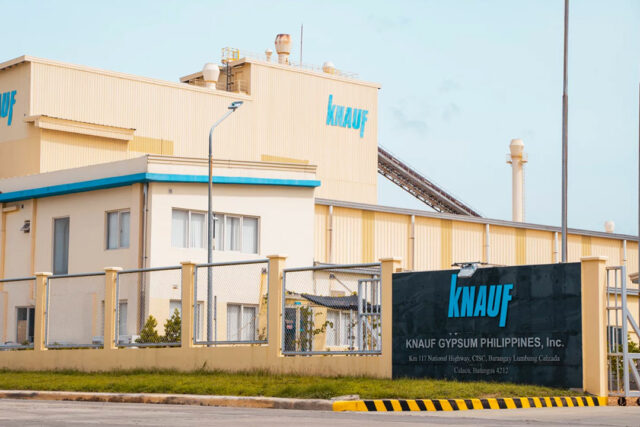
KNAUF GYPSUM Philippines, Inc. and the Department of Social Welfare and Development said they formalized a partnership aimed at expanding skills training and livelihood opportunities for construction workers in Calabarzon. 

In a joint statement, the two sides cited the authority of Republic Act 11310, or the Pantawid Pamilyang Pilipino Program (4Ps) Act, which makes human-capital development a part of the government’s poverty-reduction strategy. The agreement was signed at the Knauf Training Academy in Quezon City.

Mark Dewey Sergio, managing director of Knauf Philippines, said the initiative will support community-based training for workers with or without prior construction experience. 

“Anyone 18 and above who wants to learn and develop a skill can be trained,” Mr. Sergio was quoted as saying in the statement.

The partnership will leverage the Knauf Academy, which has operated since June 2022 and focuses on gypsum board installation and jointing techniques.

The company said nearly 848 workers have completed its programs. Mr. Sergio noted that lightweight construction methods are being emphasized because they offer “flexibility, functionality, and safety” in a tropical and earthquake-prone country.

“We aim to improve the skills of Filipino installers, especially in lightweight construction, to elevate the quality of their work,” Mr. Sergio said. “Second, we want to increase job opportunities. For workers already employed, it’s about gaining new skills that can lead to promotions. For those unemployed, we help them develop the necessary skills and directly connect them with our partner contractors for job placement.”

Knauf said it has also rolled out “K-Trabaho,” a job-matching platform designed to connect academy graduates with contractors seeking skilled labor.

Knauf said it intends to begin with Calabarzon and later expand nationwide, targeting more than 45,000 workers, and plans include additional training centers and mobile training vans to reach remote communities.

Knauf Philippines is part of Germany’s Knauf Group, a family-owned multinational building materials supplier operating in over 90 countries. The Philippine unit said it continues to promote lightweight construction systems through training programs and partnerships to support industry development. — Erika Mae P. Sinaking

Refounding: returning to our beginnings

The Philippines is grappling with a deepening sense of uncertainty. Disclosures of massive corruption in government infrastructure projects, combined with cracks in national leadership, have triggered public frustration and shaken investor confidence. Global turbulence — geopolitical tensions, rising protectionism, and economic slowdown — adds to a bleak horizon. Companies face a dual challenge: surviving the external storm while preventing internal drift.

This is where the concept of refounding, developed by John Iwata of the Yale School of Management, becomes not just relevant but urgent. Refounding is the disciplined act of reconnecting an institution to the values, purpose, and strategic clarity of its early — and often most vibrant — years. It is a way of anchoring organizations so they do not lose their identity in the midst of chaos.

But refounding is more than introspection. It is a strategic response to turbulence.

Historically, periods of crisis have triggered great refoundings:

• IBM refounded itself in the 1990s, confronting existential collapse after years of drift.

• Starbucks refounded during the 2008 financial crisis, returning to coffee quality and founder-led culture before expanding globally.

• Ford refounded in 2006, sharpening its mission and avoiding the government bailouts that hit other automakers during the recession.

In each case, geopolitical and economic shocks did not push these companies to retreat. Instead, leaders returned to their founding essence to chart a forward-looking path.

When institutions around you fail in integrity, the strongest counter-strategy is to strengthen your own. When governance collapses in politics, the best defense is governance excellence within your firm.

Refounding answers these challenges by clarifying:

• what you stand for;

• why you exist;

• what values you refuse to compromise; and

• what capabilities uniquely define you.

In a weak-governance environment, companies that operate with clarity and purpose gain trust — especially when public institutions lose it.

Many executives respond to turbulent times with the familiar call to “go back to basics.” While useful, this is largely operational — tightening execution, cutting costs, improving service.

Refounding is far deeper. It asks: what truth must we remember so that we can move forward with confidence — even when the world around us is unstable?

When corruption scandals shake the foundations of national governance, when unpredictability becomes the norm, companies must find stability elsewhere. That stability will not come from the outside. It must come from an internal re-anchoring — a renewed sense of identity and mission.

THE SAN MIGUEL EXAMPLE
San Miguel Corp. (SMC) illustrates how refounding can help companies rise above national dysfunction. While SMC started as a brewery in 1890, its remarkable transformation into a conglomerate spanning food, power, energy, tollways, and airports seems almost incongruent with “returning to origins.”

But SMC’s true origin was never beer alone. Its foundational strengths were: a) scale, b) nationwide logistics mastery, c) brand trust, and d) a philosophy of community engagement.

These principles allowed SMC to move into essential systems such as power grids, tollways, and infrastructure — areas ironically plagued by government inefficiency and corruption. SMC’s expansions filled gaps in national development, partly because the company refounded itself on the belief that private institutions can play a decisive role in public progress when state capacity weakens.

Thus, SMC’s diversification is itself an act of refounding. Its ventures remain consistent with its original impulse: to build systems that move the country forward, especially in times when public institutions falter.

REFOUNDING AS AN ANTIDOTE TO DISTRUST
A bleak economic scenario marked by corruption and leadership vacuums creates major risks for companies. These include erosion of public trust, unpredictable policy environments, and moral decay within organizations.

All three can be mitigated by refounding.

Refounding forces companies to reassert their ethical core — not as PR, but as a survival strategy. When trust in the public sector declines, society looks for integrity somewhere else. Institutions that embody transparency, governance rigor, and authentic purpose become magnets for talent, investors, and customers.

In a country struggling with government accountability, a company with a strong identity and clear values becomes a rare source of credibility.

When national leadership becomes erratic or compromised, organizational leadership must become steadier. Refounding strengthens leadership in two ways. It clarifies decision-making, because leaders operate from core principles rather than reacting to politics. It grounds leaders morally, reminding them that integrity is not situational — even if the nation’s leaders appear to waver.

The challenge for Philippine institutions is not merely to keep operating — it is to keep believing in their purpose amid a climate of cynicism.

This is the paradox that refounding solves. It restores optimism without ignoring reality. It rekindles ambition without abandoning prudence. It empowers companies to evolve without losing themselves.

In a period when corruption scandals undermine public trust, and when governance questions cast long shadows on the economy, the companies that will endure are those that look inward not to retreat but to regenerate.

Ultimately, a company’s founding idea is not a relic of the past — it is the anchor that steadies it when the nation around it is shaking.

And in these turbulent times, institutions that are deeply rooted can grow even stronger — not despite the chaos, but because they know exactly who they are.

The views expressed herein are his own and do not necessarily reflect the opinion of his office as well as FINEX.


Benel Dela Paz Lagua was previously EVP and chief development officer at the Development Bank of the Philippines.  He is an active FINEX member and an advocate of risk-based lending for SMEs. Today, he is independent director in progressive banks and in some NGOs.

Fallout expands ‘everything’ for show’s second season

Ella Purnell in a scene from Fallout.

LONDON — Hit television series Fallout ups the stakes as it returns to screens for a sophomore season, its stars and makers say.

“You can play it two ways,” actor Walton Goggins said as he premiered the new season in London on Tuesday. “You can play it safe, rely on what happened in season one, or you can go for broke. And we went for broke.”

Based on the popular video game franchise of the same name, the live-action series centers on three main characters; former vault dweller Lucy (Ella Purnell), Maximus, a member of the Brotherhood of Steel (Aaron Moten), and Cooper Howard/The Ghoul (Goggins), a former movie star and mutated bounty hunter.

The new season picks up where season one left off, with Lucy looking for her father Hank (Kyle MacLachlan), and pairing up with The Ghoul on a post-apocalyptic adventure through the Mojave Desert to New Vegas.

The show’s executive producer, Jonathan Nolan, said audiences could expect “more of everything.” “More madness, more humor, more violence. We just try to outdo ourselves,” he said.

The second season also shows a new side to Lucy as her optimistic attitude clashes with The Ghoul’s nihilistic worldview on their way to Sin City, said Ms. Purnell.

“She’s in the wasteland now and she has to survive. You can’t always do that by being nice,” Ms. Purnell said. “I don’t want to spoil it, but we’ll see what happens to that moral compass.”

The new season introduces Justin Theroux in the role of Robert House, the ruler of the New Vegas strip, and a major character in the franchise.

“It’s a bit intimidating,” said Mr. Theroux. “The players of this game and the fans of the show are really sort of the shareholders, so you don’t want to disappoint them. But I worked very hard to hopefully not do that.”

Also joining the cast are actors Macaulay Culkin and Kumail Nanjiani, as well as a host of new creatures, brought to life by puppeteers.

The eight-episode second season of Fallout starts streaming on Prime Video on Dec. 17, with a new episode released weekly. — Reuters