




Of ‘shall,’ ‘may,’ ‘quo warranto,’ and ‘snoots’
By Jemy Gatdula
Had the good fortune to come across Garner’s new book entitled Nino and Me: My Unusual Friendship with Justice Antonin Scalia in Totus Bookstore’s University of Asia and the Pacific outlet.
Open-plan offices are making us less social
IN recent years, a number of big companies — IBM, Bank of America, Aetna, Yahoo! under former chief executive officer Marissa Mayer — cut back on their telecommuting programs in the name of more interaction and cooperation between employees, supposedly fostered by being stuck together in an office. The business model of companies providing co-working spaces, such as $20-billion “unicorn” WeWork, is also based on the proposition that if people find themselves in a shared space, they’ll network and cooperate more.
Humanistic management sucks less and is better for your health
By Michael Pirson
How are you doing? How well did you sleep last night?
True public servants
By Marvin Tort
Often enough we have heard the expression from older folk: “They don’t make them like they used to.” And to an extent, I would have to agree. There is no doubt that advances in technology in various fields, including telecommunication and medicine, have made things better for us. But while phones have become smarter, we can’t always say the same about their owners.
CoA should consider benefits of Malampaya project
By Bienvenido S. Oplas, Jr.
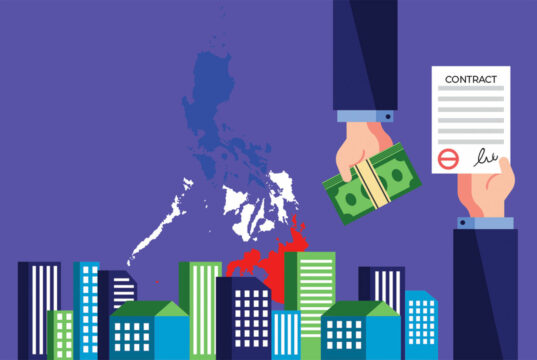
When developing economies attract multinational companies, they reap benefits. These developing economies get to have more commodities and services that otherwise would remain untapped for a long time. And, as a result, they also earn more revenues, taxes, and royalties even if these economies spent very little. Moreover, technology transfer from multinationals to developing economies is enabled as local professionals are hired to operate, maintain, and upgrade facilities.
Stemming the tide of plastic pollution
THE European Commission’s proposal to ban plastic straws, plates, cutlery, and drink stirrers, and slash the consumption of many other single-use products, is more than just a nice, novel idea. It’s a step urgently needed from every country — as plastic trash pours into the oceans at the rate of almost 9 million tons a year.
PhilSys: One card to rule them all
By Katrina Clemente-Lua
It is only a matter of time before President Duterte signs into law the bill that will put citizens and aliens under a National Identification System, to be known as Philippine Identification System or PhilSys.
The ease of doing business act cuts red tape further
By Noel Christian O. Luciano
Bureaucracy teaches us two things: to wait and to execute everything in triplicate.
Iglesia ni Duterte
By Greg B. Macabenta
It should now be clear to those who have to deal with him that President Rodrigo Duterte is not inclined to listen to anybody but himself. Even his own daughter, Mayor Sara Duterte of Davao City has advised people not to pay too much attention to what her father says about religion and God.
Wall Street is sharpening our nanoseconds
LET’S SAY you and I both want to buy 100 shares of Microsoft Corp. stock. Let’s say that 100 shares are currently listed for sale on the exchange at $100. There are more shares listed for sale at $100.01, $100.02, etc., but the first 100 shares are all that are available at $100.00. We both think the stock will go up, so whoever doesn’t get the 100 shares listed at $100 will have to spend more — at least $100.01 — to buy them. Which one of us should get the shares?
Wanted: A detailed data of city poverty incidence
By Rolando T. Dy
Poverty incidence monitoring is an important metric of local government performance.
The South China Sea game
By Rafael M. Alunan III
Panos Mourdoukoutas, a contributor to Forbes magazine, wrote a commentary entitled “China will lose the South China Sea game.” Let me quote him verbatim in the succeeding paragraphs.