





Regulating the creditor-debtor cat-and-mouse chase
By Jennidy S. Tambor
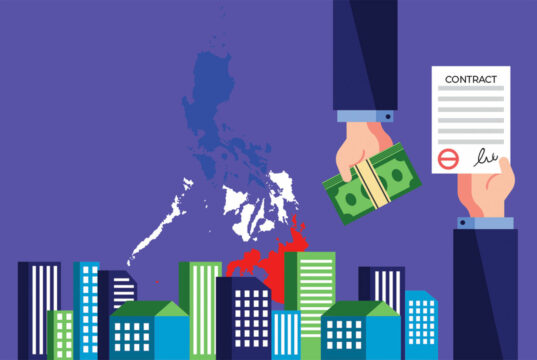
Benjamin Franklin said, “creditors have better memories than debtors.” Comically, Ambrose Bierce in his book, The Devil’s Dictionary, defined “forgetfulness” as a gift from God bestowed upon debtors in compensation for their destitution of conscience.
In the winter of our lives…
By Greg B. Macabenta
In September 2011, for the Global Summit of Filipinos in the Diaspora, convened by the Commission on Filipinos Overseas (CFO), then CFO Chair Imelda Nicolas, asked me to write a poem, “We Hear Our Motherland Calling,” as a response of overseas Filipinos to the call of Inang Pilipinas to her children in foreign lands.
Democracy and ‘The Right to the City’
By Hansley A. Juliano
This coming Sunday, Sept. 15, the world is being invited by the United Nations (UN) to commemorate the International Day of Democracy. Since the adoption of Resolution 7 by the UN General Assembly during its 62nd Session in 2007, the UN has committed, in word and institutional deed, to “to focus attention on the promotion and consolidation of democracy at all levels and reinforce international cooperation in this regard.”
Hong Kong’s long march
By Rafael M. Alunan III
Hong Kong has captivated the world these past 15 weeks, awed by the tenacity of its citizens to live free and stay free. But this has forced the dragon, which we had hoped would evolve peacefully into a responsible global citizen and stabilizing force for good, to carefully weigh its options. Today, we liberally quote two respected thinkers — Alexander Neill and Shyam Saran — who have written of the risks that lie ahead. Mr. Neill is the IISS Shangri-La Dialogue Senior Fellow for Asia-Pacific security, while Mr. Saran is a former Foreign Minister of India.
FIRe, innovation and stealing of innovation
By Bienvenido S. Oplas, Jr.
“All creation is a mine, and every man, a miner... In the beginning, the mine was unopened, and the miner stood naked, and knowledgeless, upon it... Man is not the only animal who labors; but he is the only one who improves his workmanship. This improvement, he effects by Discoveries, and Inventions...”
Challenging the status quo
By Lt. Gen. Jaime S. Delos Santos (Ret.)
On July 19, 2016, I wrote an column under “MAP Insights” entitled “General’s Impressions of the Commander-in-Chief.” Three years after his assumption into office, his popularity and trust ratings are still high. The results of the mid-year election further prove that he is a force to reckon with. Destabilization moves to emasculate or unseat him never materialized. In that article, I cited two significant qualities that he projects: charisma and political cunning. Both remain to be the foundations of his staying power. His charisma continues to inspire and has developed goal congruency with the majority of the Filipinos. With political cunning, he changed the parameters of the game. He built change and flexibility into the system. He addressed his agenda to the conditions of his time. He challenged the status quo.
Understanding rice tariffication
By Laurence Go, Jessica Reyes Cantos, AJ Montesa, and Filomeno Sta. Ana III
We are firm in defending and asserting the rice tariffication reform despite the current transitional problems that it faces in its implementation. The reform will benefit both Filipino rice farmers and Filipino consumers.
Middle-class legislation and its discontents
By Emmanuel S. de Dios
The recent alarm over falling rice prices after import-quotas were replaced by tariffs points up a larger problem that will increasingly confront Philippine society -- the conflict between the interests of a growing middle class and poorer minorities. On the one hand, the historic measure produced its intended effect: it has lowered rice prices, bringing relief to the large, mostly urban rice-consuming public. (After the avoidable fiasco of 2018, inflation is now a record low of 1.7%.) On the other hand, the same measure has wreaked havoc on the livelihood of rice farmers and landless farm workers, who count as some of the poorest Filipinos. To be sure, the government purports to ameliorate the damage. But the one-time loan it offers to rice farmers is obviously not enough to facilitate the permanent shift -- in crops, technologies, mindsets, and occupations -- that the new trade-regime imposes.
Export or fall deeper into debt
By Andrew J. Masigan
The country can fall into a debt crisis if exports don’t pick up. Here’s why...
People of the Philippines vs. the GCTA
By Amelia H.C. Ylagan
When a case is titled “People of the Philippines vs. Juan Santos,” it is a criminal case, or a crime against society. When a case is titled “Pedro Reyes vs. Juan Santos,” it is a civil case between two persons.
Impunity and discretionary justice
By Luis V. Teodoro
The phrase “heinous crimes,” for which death is their preferred penalty, falls often from the mouths of the advocates of state-sponsored murder, whether capital punishment, or the use of extrajudicial killings against suspected drug users and pushers as well as lawyer-, student-, farmer- and worker-activists and regime critics. Include in this lot certain senators and congressmen, the police and military, some judges, and, of course, the current president of this endangered republic.
The Bilibid redemption
By Geronimo L. Sy
We all have our purpose in life, to find our own place under the sun. We grew up in the gory days of the Vizconde massacre in Parañaque in 1991, Chiong sisters rape-slay in Cebu in 1997, and the murder of Bubby Dacer in Cavite in 2000. We remember the crimes against Maggie dela Riva, Pepsi Paloma, and Leonardo Villa in the decades past.