
(Part 1)
After obtaining my Ph.D. in Economics at Harvard University in September 1963, I decided to accept the offer from the newly established IESE Business School in Barcelona, Spain to help in the writing of cases patterned after the Harvard Business School (HBS) model. It was the HBS that introduced for the first time the use of cases in the training of business managers. At that time, Spain was very much a Third World country, still struggling to recover from the ravages of one of the most destructive civil wars (1936 to 1939) in modern history. Our former colonizer was still under the authoritarian rule of Francisco Franco, the military officer who saved the country from the evils of communism.
I was fortunate to witness first hand the evolution of Spain from a country with a very high rate of poverty to a First World economy by the 1980s. Spain really had to lift itself by the bootstraps because the dictatorial rule that prevailed under Franco made it a pariah among the Western democratic states that ostracized it, denying it the economic and technical assistance given to other developing economies. Fortunately for Spain, Franco was an enlightened leader who knew how to deploy the best and the brightest, regardless of political allegiances, to help him carry out successive development plans that blended strong government action (especially in the aggressive building of infrastructure) with free market economics. It was during my stay in Spain that I learned for the first time the slogan “Build, Build, Build” and the professional title “technocrat.”
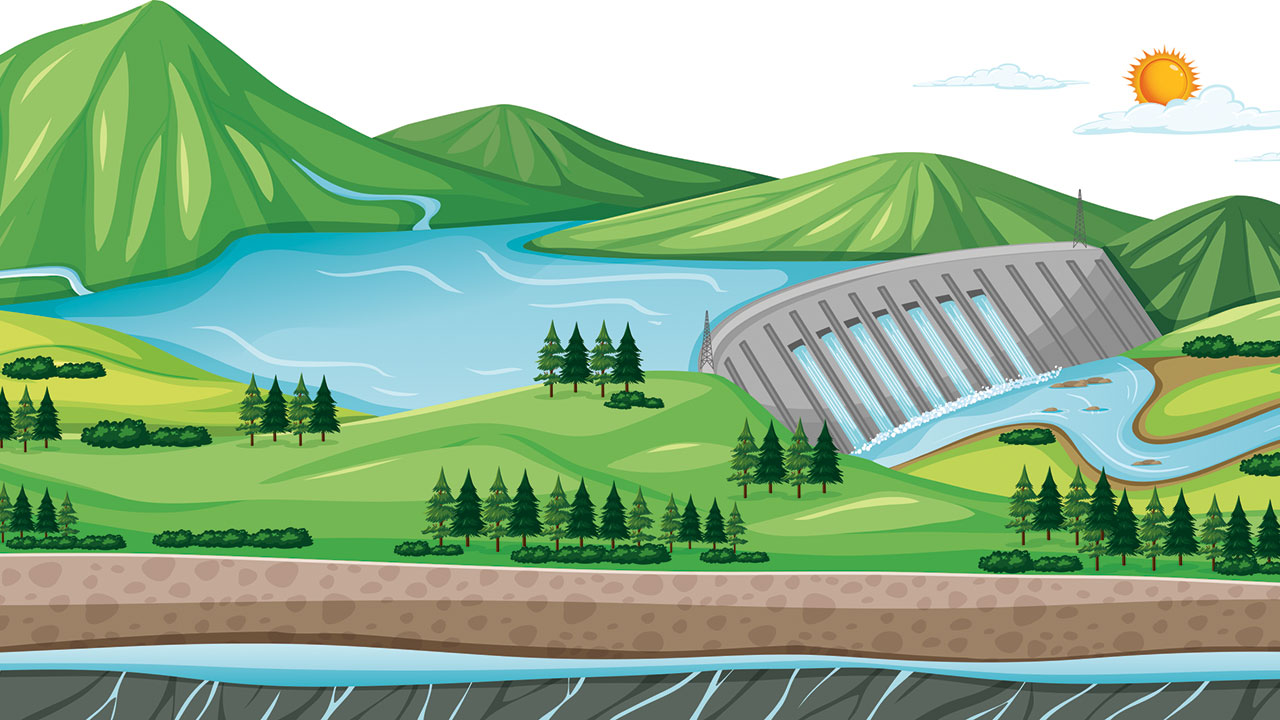
In his Build, Build, Build program, there was a special emphasis on the construction of hundreds of small dams all over the country to address the problem of scarcity of water during most of the year coupled with its abundance during short periods, causing serious damage from floods. With characteristic Spanish humor, Franco was nicknamed the “Great Frog” (El Gran Sapo) because he was inaugurating a new mini dam almost every week during my stay there.
From Chat GPT, we can get a brief account of what Spain has achieved with small dams or mini-hydro facilities. Spain has for a long time used not only massive, but also small-scale hydropower and small dams. The “mini-hydraulic/small hydropower” sector (installed capacity under 10 MW) was instrumental especially in the early electrification of rural areas. Because of Spain’s varied topography and many rivers — mountains, hills, and river basins — many small-scale installations could be built widely across regions (especially in mountainous or hilly areas).
Compared to large reservoirs (like our La Mesa Dam), small-scale hydro power/mini dams tend to require less massive infrastructure, smaller reservoirs or sometimes “run-of-river” setups, which can reduce environmental, social, and landscape impacts. Mini dams can have multiple uses. In Spain, dams —large and small — have served for water regulation, irrigation, flood control, and hydroelectric generation. This multi-purpose approach helped both agriculture and energy supply.
During the Age of Electrification (Industrial Revolution 2.0), the “mini-hydraulic” sector was key in the electrification of many localities at the end of the 19th and early 20th century. For countries like the Philippines that are facing the serious challenges of high energy costs, scarcity of water, damaging floods, and environmental deterioration, Spain shows that small dams and small-scale hydropower — if designed and deployed carefully — can be an effective tool, especially in regions were big dams may be impractical or undesirable, offering a balance among energy, water management, and lower environmental footprints.
There are, however, some serious challenges that Spain had to face in the building of mini dams from which the Philippines can learn. During the past two decades, the mini-hydro sector of Spain has undergone a downturn. Regulatory changes (retributive regime) and some economic factors have rendered many of them uneconomical. There were environment-related challenges. Even small or “run-of-river” dams can affect river ecosystems: altering natural flow, disrupting sediment transport, harming aquatic and riparian life, and if there are many dams cascaded along a river, the cumulative effect can be significant. As has already been happening with our own Department of Environment and Natural Resources (DENR), regulatory, financial, and administrative barriers have discouraged new small-scale dam projects.
Then there was the competition posed by large hydro and energy projects. As national energy demand grew and large hydroelectric or other energy sources (thermal, wind, solar) developed, many mini-hydro plants lost competitiveness and had to be decommissioned or abandoned. Needless to say, there is a need for cumulative planning. Studies show that although small-scale hydropower has potential, success strongly depends on good planning, including environmental flow requirements, ecosystem impact assessment, and governance.
Here are some lessons that can be learned by other countries, especially those that have to give priority to developing the rural areas: Small-scale dams can complement rather than replace the large ones. They can provide localized water management, irrigation, or electricity — especially in rural or mountainous areas — without the large social and environmental costs of huge reservoirs. Wherever possible, geographical features and natural rivers should be used (e.g., run-of-river, small head, minimal reservoir). This approach reduces environmental impact and displacement and is better suited for steep terrain or areas with rivers but limited flat land. There should always be a plan for environmental and cumulative impacts. Even small dams affect river ecology. Factors that should be seriously considered are environmental flow, fish passages, and sediment transport, which if ignored can degrade rivers in the long-term.
It should also be kept in mind that economic and regulatory viability is as important as engineering. Without supportive regulation, financial incentives or fair energy pricing, small-scale dams may not be viable. Mixed-purpose design (water supply, irrigation, flood control, plus energy) increases resilience and social benefits. There should be constant adaptation to changing energy markets and environmental/climate conditions. As hydropower demand or climate change shifts (as is the case in the Philippines in recent times), small hydro infrastructure must be managed, maintained, or repurposed.
In summary, the Spanish experience in the construction of mini dams can provide useful lessons to countries like the Philippines under the following specific circumstances. If the country has many rivers, mountainous terrain, rural communities, and variable rainfall, the experience of Spain suggests that small or mini-hydro dams can be:
• A relatively low-impact, decentralized option to provide electricity (especially in remote/rural zones);
• Useful for water management, irrigation, flood control — not just electricity — which adds social value in drought-prone or agricultural regions;
• More feasible to build than large dams (lower investment, simpler logistics), especially for local or community-scale projects;
• But are sustainable only if accompanied by good environmental planning, fair regulation, good maintenance, and long-term vision (not just a stop-gap measure).
Obviously, small dams are not a magic solution. Environmental trade offs, regulatory and economic viability, and cumulative impacts must be carefully considered. This is especially necessary if, as I will strongly suggest in the second part of this article, the private sector — not the Government — should take the lead in the construction of these mini dams. This shift to the private sector — as has already been proven very beneficial to the public in the cases of power plants and electricity and water distribution systems, airports, and telecom facilities — has become more desirable as an aftermath of the corruption-ridden flood control projects under the supervision of the Department of Public Works and Highways that have been recently unearthed, causing so much damage to the national economy in recent times.
(To be continued.)
Bernardo M. Villegas has a Ph.D. in Economics from Harvard, is professor emeritus at the University of Asia and the Pacific, and a visiting professor at the IESE Business School in Barcelona, Spain. He was a member of the 1986 Constitutional Commission.