Dearth of teacher expertise seen hindering push for media literacy
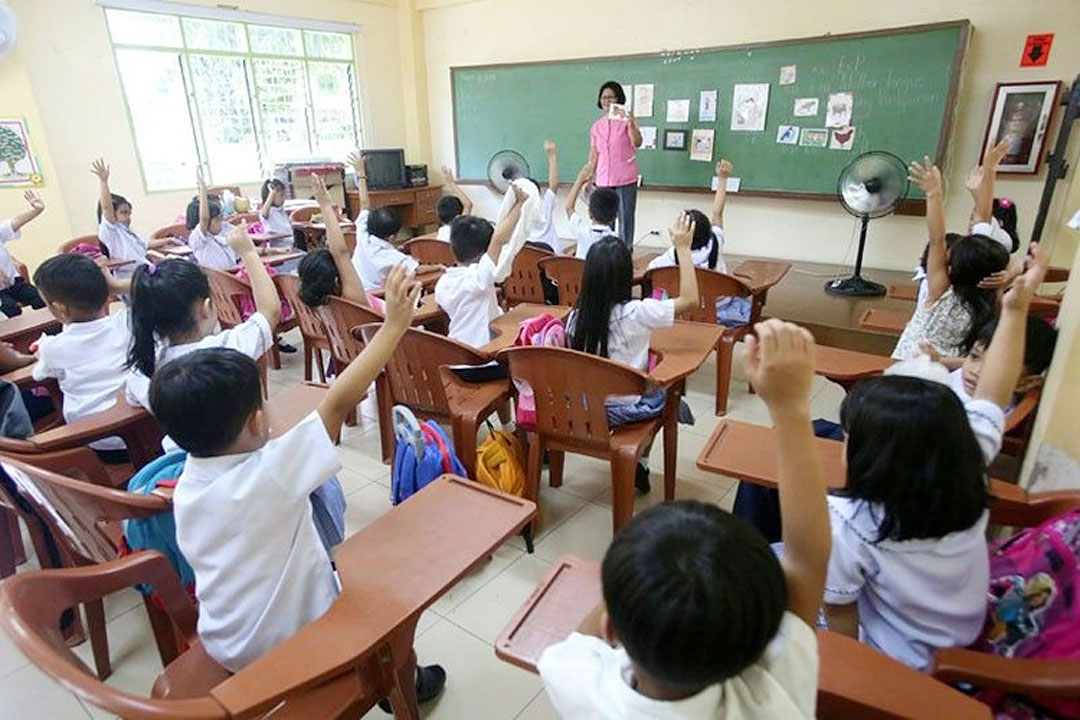
THE Department of Education (DepEd) said the revamped basic education curriculum that includes courses in media and information literacy (MIL) is running into obstacles due to the shortage of trained teachers.
“One of the hard things of integrating topics into various learning areas is that you have a much larger group of teachers who need to be trained on particular skills,” DepEd Director for the Bureau of Learning Delivery Gerson Marvin M. Abesamis said in a panel discussion at the Philippine Media and Information Literacy Conference 2025 (MILCon 2025) this week.
“There used to be a small number of teachers who would only deliver media and information literacy, and you’d have a small number of teachers to train to build their capacity,” he added.
For the March 2025 Licensure Examination for Professional Teachers, 16,282 elementary teachers and 38,747 secondary teachers passed. As more professionals join the education industry, teacher training in MIL is emerging as a challenge, he said.
“On the other hand, it does create an opportunity to ensure that MIL is not just treated as a subject for compliance,” Mr. Abesamis said.
In the revised K to 10 and strengthened senior high school (SHS) curriculum, MIL has evolved from a core subject in SHS to an integral topic discussed across various subjects.
The realignment of the DepEd curriculum also tracks the UNESCO Media and Information Literacy Framework recommendation, which highlights it as an “emerging framework” that should not be isolated in SHS alone.
“Media and information literacy as a separate subject in senior high school is still possible. There are ways that school can still propose it as an elective, so it’s not necessarily gone,” Mr. Abesamis said.
Philippine Association for Media and Information Literacy President Carlo T. Concepcion noted that teacher education must include MIL-related skills across specializations. “We’re not only selecting if it’s English, if it’s only the languages, we also want to have this to be integrated regardless whether you are taking physical education or social sciences.”
Finnish Ambassador Saija Nurminen underscored the importance of teacher training fostering trust between the student and educator.
“The evidence shows that when the teachers are trusted, students learn to trust themselves, and trust is the basis for critical thinking,” she said.
Teaching MIL at an early age is as essential as teaching age-appropriate topics that foster critical thinking skills, the Ambassador said.
“The way we inject MIL is different from four-year-olds, seven-year-olds, and when the abstract thinking develops in junior high, it’s already different,” Ms. Nurminen said.
“Every age group needs to start learning in order to become active citizens when the 15 years of schooling is at the end,” she added.
In the Philippines, MIL is included in the curriculum for students at Grade 3. “Even Grade 3 in the Makabansa course, there are certain competencies there that talk about the role of technology in society,” Mr. Abesamis said.
“Media and information literacy is the perfect spot or entry point for learners, as early as Grade 3, to understand the ecosystem that they’re currently in, the real world that they have,” he added.
The Makabansa subject, under the Matatag curriculum, was rolled out in Grades 1 to 3 to develop “healthy, resilient and patriotic” students. Makabansa covers competencies in Araling Panlipunan, and Music, Arts, Physical Education, and Health. — Almira Louise S. Martinez