Ilonggo cuisine takes center stage in Filipino Food Month

ILOILO CITY — Iloilo City showcased its cuisine during the launch of Filipino Food Month (FFM) 2026 on April 6, underscoring its position as a culinary gem in the Philippines.
“One of the highlights of why they choose Iloilo for conventions and events is because of the food,” Iloilo City Mayor Raisa Treñas-Chu told BusinessWorld in an interview.
“They’re saying that the food here is not only good, but it’s also cheap, so we get to highlight our food, and we also help in the local economy,” she added.
Since 2018, the Philippines has celebrated Buwan ng Kalutong Filipino (translated: Filipino Food Month; FFM) to honor the country’s vibrant culinary heritage and local food sources.
Beyond the famous batchoy (a noodle soup) and pancit molo (a soup with dumplings), Ilonggos take pride in their unique dishes, reflecting a rich culinary heritage that fosters local pride and appreciation.
“The best thing here is Iloilo cuisine has a definitive cuisine or food which is locally known here, and not every province has it,” Iloilo-based Chef Miner del Mundo told BusinessWorld in an interview.
“Not all Filipino households would claim that KBL or kadyos [pigeon peas], baboy [pork], and langka [unripe jackfruit] originated from them because it is really very Iloilo,” he added. KBL is a sour soup quite similar to sinigang but with a different take. Unlike sinigang, which uses either tamarind, kamias, unripe mangoes, or guava as its souring agent, KBL offers a more subtle sourness from batwan, a fruit primarily found in Western Visayas.
Another popular batwan-based sour beef soup is kansi. Its taste profile is like a mix between the traditional bulalo (a soup made from simmering beef shanks) of the Tagalogs and sinigang — both savory and sour in every sip.
The same goes for their version of adobo. While most adobo recipes consider soy sauce a staple ingredient, Ilonggo Adobo rarely uses it. Instead, they use vinegar, garlic, salt, pepper, and annatto oil, creating an earthy, tangy flavor.
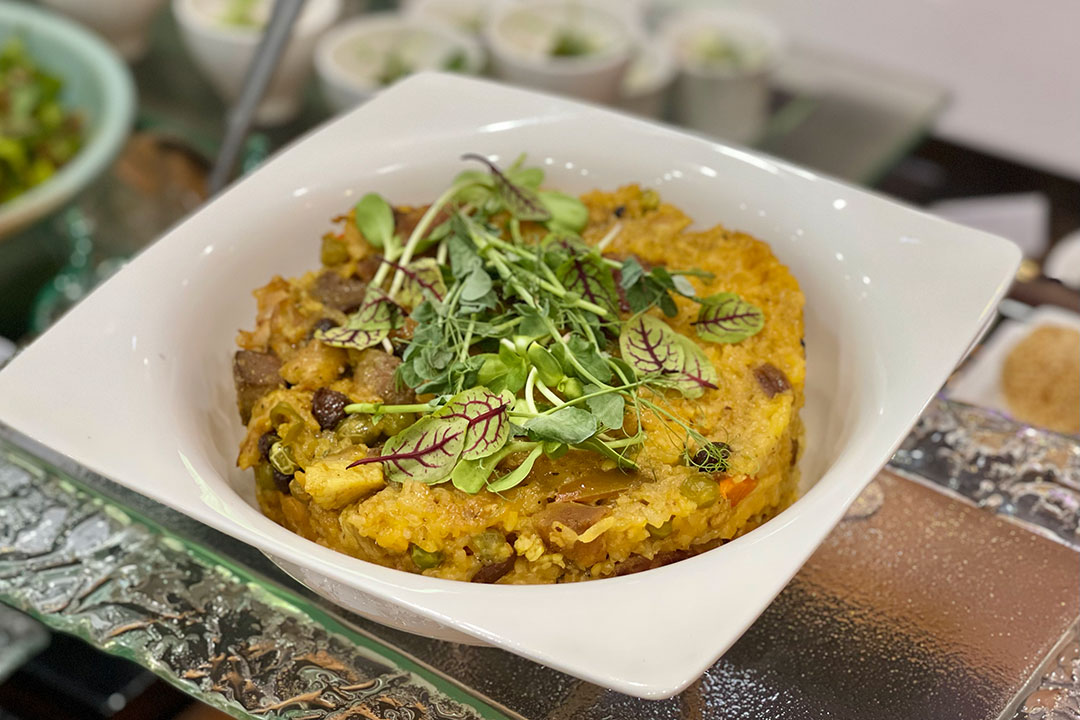
Iloilo also has its own version of paella served during occasions and gatherings called Arroz Valenciana.
Arroz Valenciana is a rich, sticky rice dish featuring chicken, pork, c, raisins, green peas, and egg. Compared to Pampanga’s bringhe (another celebratory rice dish), which has a suman-like (rice cake) texture and is heavily reliant on coconut milk, Valenciana has a moist texture from the combination of regular and glutinous rice.
As for their desserts, Iloilo has its bibingka [baked rice cake], which is relatively small in size but hefty in flavor. They also have a local variety of palitaw [chewy rice cake] called muasi that has toasted shredded coconut, muscovado sugar, and toasted sesame seeds.
Food is more than just a language of love for Ilonggos; it is a shared culture of abundance that unites communities and fosters a sense of belonging.
Visitors from the outskirts of town bring endemic ingredients like batwan fruit, kadyos, darag chicken (a native variety), and libas (a native tree whose leaves are used as souring agent and vegetable), highlighting the resilience and richness of Ilonggo culinary traditions.
Our visit to Filipino Food Month in Iloilo proved to us that the secret recipe for its native dishes lies in the hearts of its people and its longstanding traditions, making it deserving of its title as the City of Love (a much older nickname for the city) and Gastronomy (as per UNESCO). The city received its recognition as one of UNESCO’s (United Nations Educational, Scientific and Cultural Organization) Creative Cities of Gastronomy in 2023. Only 56 cities globally have received the title from the organization.
“The ingredients used in all the restaurants, carinderias, and food establishments in this city make it more appealing to the visitors, to the tourists,” Mr. Del Mundo said.
“They don’t go as far as traveling to other municipalities; they could taste it here in the city,” he added.
The city’s population is about 500,000, but rises to 800,000 during the day due to students and workers, according to UNESCO Focal Person for Iloilo City of Gastronomy Leny T. Ledesma.
While native ingredients play a significant role in all Ilonggo dishes, reliance on produce sourced outside the city poses challenges. “The environment, it’s changing already, and it’s affecting our seas. It’s affecting our planting,” Ms. Ledesma told BusinessWorld in an interview.
More than 80 backyard farms across the city aim to ensure sustainable sourcing and preserve Iloilo’s culinary heritage for future generations.
“We’re creating more farms and teaching the youth how to do this, so that the future is still there,” Ms. Ledesma said.
“We’re teaching them to eat local food so that more of the ingredients that we need can be grown. Otherwise, those foods will die if they are not eaten,” she added. — Almira Louise S. Martinez