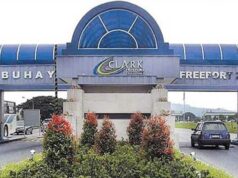
Worca AI center staffing needs for Pampanga site estimated at 2,000

By Beatriz Marie D. Cruz, Senior Reporter
WORCA, a US artificial intelligence (AI) talent firm, plans to hire 2,000 AI-skilled workers in the Philippines who can train and test AI systems for US tech research labs, according to its chief executive officer (CEO).
Steven Lin, Worca founder and CEO, said it is banking on the workforce’s English proficiency and tech-savviness to manage AI models from its upcoming center in Pampanga.
“It’s more like an office setting where we manage different kinds of data for the top AI research labs in the US,” he said in a video interview with BusinessWorld.
The company aims to employ 500 at its Pampanga site by year’s end, with plans to expand to 2,000 in the next three years, Mr. Lin said.
Its future staff will be called upon to provide context, judgment, and real-world scenario testing that AI machines cannot do, Worca said.
When asked why the Philippines was selected, Mr. Lin cited cultural affinity with the US, particularly in terms of English proficiency.
He also noted that the local talent is a good fit for global demand, particularly with the large pool of information technology-business process management workers exposed to AI as the industry upskills.
“If you want to make AI smarter, you need a lot of smart humans to feed the data,” he said. “We want to find the smartest Philippine talent to make AI smarter.”
Founded in 2021, Worca is a hiring agency that links talent from the Philippines, Taiwan, Vietnam, Singapore, and Thailand to Silicon Valley startups and corporations.
It hopes to supply its clients with virtual assistants, data processors, supply chain engineers, and account managers.
Unlike traditional back‑office providers and BPOs, Worca supports foreign clients by delivering end‑to‑end workforce management — including payroll and benefits, time and leave tracking, equipment and workspace support, and compliance with local regulations.
In the Philippines, Worca has linked 108 workers across 20 provinces nationwide to US firms to date, according to its website.
The company is also exploring partnerships with Philippine universities for internship programs that would help grow its pool of AI-skilled workers here, Mr. Lin said.
He noted that Silicon Valley firms want to attract more Asia-based workers, citing the region’s large populations, as well as its highly-educated and creative workforce.
AI is expected to account for about 10% to 18% of the Association of Southeast Asian Nations’ gross domestic product by 2030, Economy Secretary Arsenio M. Balisacan said last week.
With a digital and AI-driven workforce, many workers can build international careers without leaving their home countries, Mr. Lin said.
“There are many smart people who want to have a global career, but maybe their family or their financial situation won’t allow them to go abroad,” he noted.
“Worca was founded on this hypothesis — there’s way more top talent in Asia than anywhere else, so I want to bring Silicon Valley-type of opportunities to Asia.”