Senate approves bill authorizing President to temporarily reduce or freeze fuel excise
By Adrian H. Halili, Reporter
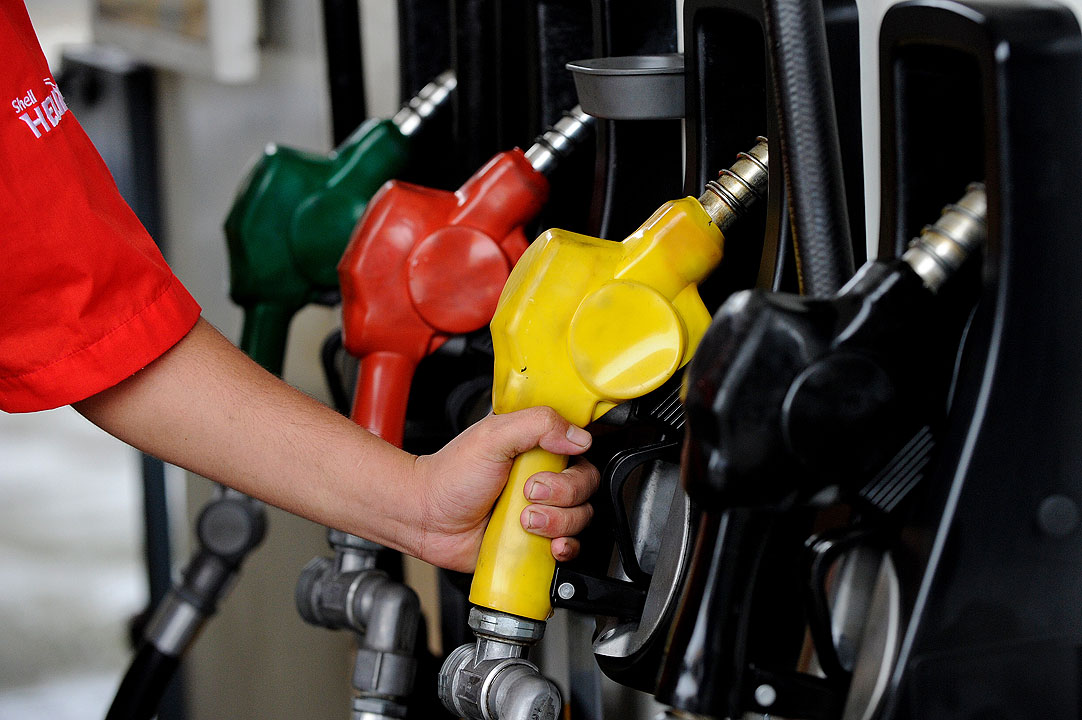
THE Senate approved on Tuesday a measure granting President Ferdinand R. Marcos, Jr. emergency powers to lower or suspend the excise tax on petroleum products.
In a plenary session, 17 senators voted to approve on third reading Senate Bill No. 1982, which would give the President emergency powers to reduce or halt collection of taxes imposed on fuel and other petroleum product.
“We want to assure the public that we have taken time to assess this, not just because it was a certified measure,” Senator Pilar Juliana S. Cayetano, who heads the Ways and Means committee, told senators.
A day earlier, the House of Representatives had approved on third reading House Bill No. 8418, which also granted the President similar emergency powers.
The emergency powers contemplated by the Senate involve a three-month maximum for suspending the taxes on petroleum products. The triggers for setting such action in motion are $80 per barrel for the Dubai crude benchmark, as well as the recommendations of the Secretary of Energy and the Development Budget Coordination Committee (DBCC).
It added that the suspension or reduction of taxes can be applied to specific petroleum products and may be implemented either as a full suspension or a partial reduction.
The bill states that the excise taxes on petroleum products will be automatically restored a week after the one-month average of Dubai crude oil falls below $80, or after the lapse of three months.
According to the Senate measure, the President’s emergency power to adjust excise tax collections will expire on Dec. 28, 2028.
The measure also orders the DBCC and the Department of Energy (DoE) to submit monthly reports to Congress stating the factual basis for the suspension or reduction of taxes, estimates of forgone revenue, and projections on the impact on inflation, fuel prices, and other economic activity.
The report will include recommendations on whether the suspension or reduction of excise taxes should be maintained, modified, or lifted.
Oil companies will also be required to submit monthly information on their cost structure to the DoE, DBCC and Congress.
President Ferdinand R. Marcos, Jr. last week certified as urgent the measure granting him temporary powers to mitigate surging fuel prices.
The Philippines imposes an excise tax of P10 per liter on gasoline, P6 on diesel and P5 on kerosene, as authorized by Republic Act No. 10963 or the Tax Reform for Acceleration and Inclusion (TRAIN) law.
The Philippines imports 98% of its fuel requirements. It currently has a fuel stockpile good for 50 to 60 days, the DoE has said.
Leonardo A. Lanzona, Jr., an economics professor at the Ateneo de Manila University, said any reduction or suspension of the fuel excise tax will result in only marginal relief.
“The maximum excise relief offsets perhaps a third to half of just one week’s price movement. The deeper structural problem is the Philippines’ import dependence,” he said via Messenger chat.
He added that the measure may not be the most efficient to counteract global oil price volatility, as it effectively serves as a “blanket subsidy.”
“Every peso of excise relief goes to every fuel consumer regardless of income — which means vehicle-owning households capture a disproportionate share,” Mr. Lanzona said, noting that the estimated foregone government revenue represent a “very large fiscal sacrifice.”
The Department of Finance has estimated the revenue to be foregone in suspending or reducing the fuel excise tax at up to P136 billion.
“It is time for the government to institute an honest-to-goodness energy program that reduces our dependence on foreign oil,” he said.
IBON Foundation Executive Director Jose Enrique A. Africa said the ongoing spikes in fuel prices may add at least 2-3 million Filipino families to the ranks of the poor.
“This will not mean very much amid a likely doubling of inflation to some 5% in the next three months and perhaps even higher beyond,” he said via Viber.
The Department of Economy, Planning, and Development has said that further global oil shocks could drive inflation above 4% this year.
Mr. Africa said subsidies for transportation, agriculture, and the poorer segments of society will be the fastest way to respond to rising oil prices, but are limited in scope.
“The supposed subsidies for the transport sector reach just a tiny share of them, are too small, and for too short a time. We haven’t even heard of any (aid) programs for at least 60 million poor Filipinos,” he added.