NESTLÉ Philippines, Inc. said it will try to avoid raising prices this year despite geopolitical risks that could disrupt supply.
“Price is the last thing that we want to touch,” Nestlé Philippines Head of Corporate Affairs José T. Uy III said at a briefing on Tuesday. “As long as we can absorb it, we will try to absorb it.”
The company said it remains cautiously optimistic about its revenue outlook, as it works to manage cost pressures through efficiency measures and sustainability initiatives.
“We always try to find efficiencies in our operations in order to compensate for the fluctuations,” Mr. Uy said.
Nestlé Philippines generated $2.5 billion in revenues in 2025, making it the Swiss company’s sixth-largest market globally.
In terms of revenue size, the Philippines is only behind the United States, China, Brazil, the United Kingdom, and Mexico.
The company said it is managing price pressures as the war in the Middle East affects global supply chains.
Kasia Gryzbowska, zone head of sustainability for Nestlé’s Asia, Oceania, and Africa region, said investing in sustainability “makes sense in the longer term” amid external uncertainties.
“Sustainability is not just doing good for the bigger good. It is very much the essence of survival for the company,” she told the briefing.
Nestlé Philippines has reduced its net greenhouse gas (GHG) emissions by 20%, mainly due to a shift to renewable energy (RE), according to Meg Anne Santos, the company’s sustainability head.
Ms. Santos said all Nestlé manufacturing sites, as well as its head office in Makati City, now operate on 100% renewable energy, mainly sourced from hydroelectric and geothermal sources.
Five of the company’s six distribution centers are powered by renewable energy, and it aims to transition all centers by yearend.
Ms. Santos said investments in renewable energy have become more practical due to increased availability and more competitive pricing in the market.
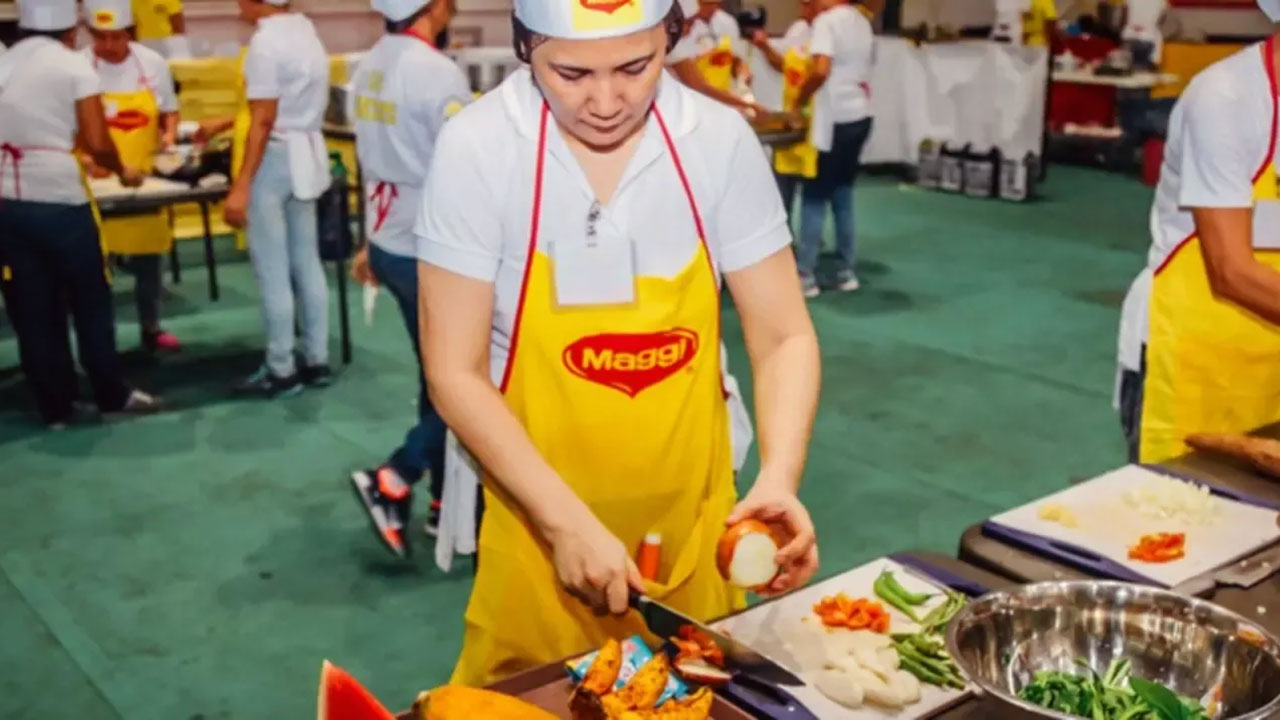
The company’s top brands in the Philippines include Nescafé, Milo, Bear Brand, and Maggi.
Nestlé Philippines is also exploring regenerative agriculture practices through new technologies, Ms. Santos said.
At its factory in Cabuyao, Laguna, the company is converting locally sourced wooden pallets into biomass fuel to reduce fossil fuel use.
Last year, Nestlé partnered with Mober Technology Pte., Inc. to transport products across the Greater Manila area using electric vehicles.
The company has also shifted to paper straws for its ready-to-drink products, reducing about three million kilograms of plastic.
Looking ahead, Nestlé plans to further integrate circular economy practices into its production processes.
“The dream really for us is to change the design for recycling to be recyclable, but we cannot do that without the infrastructure development,” Ms. Santos said. “We’re a long way to go, but that doesn’t mean we stop trying.”
Nestlé Philippines operates manufacturing facilities in Cabuyao and Canlubang, Laguna; Cagayan de Oro; and Lipa and Tanauan, Batangas. — Beatriz Marie D. Cruz