Peso plunges to four-month low before US GDP report
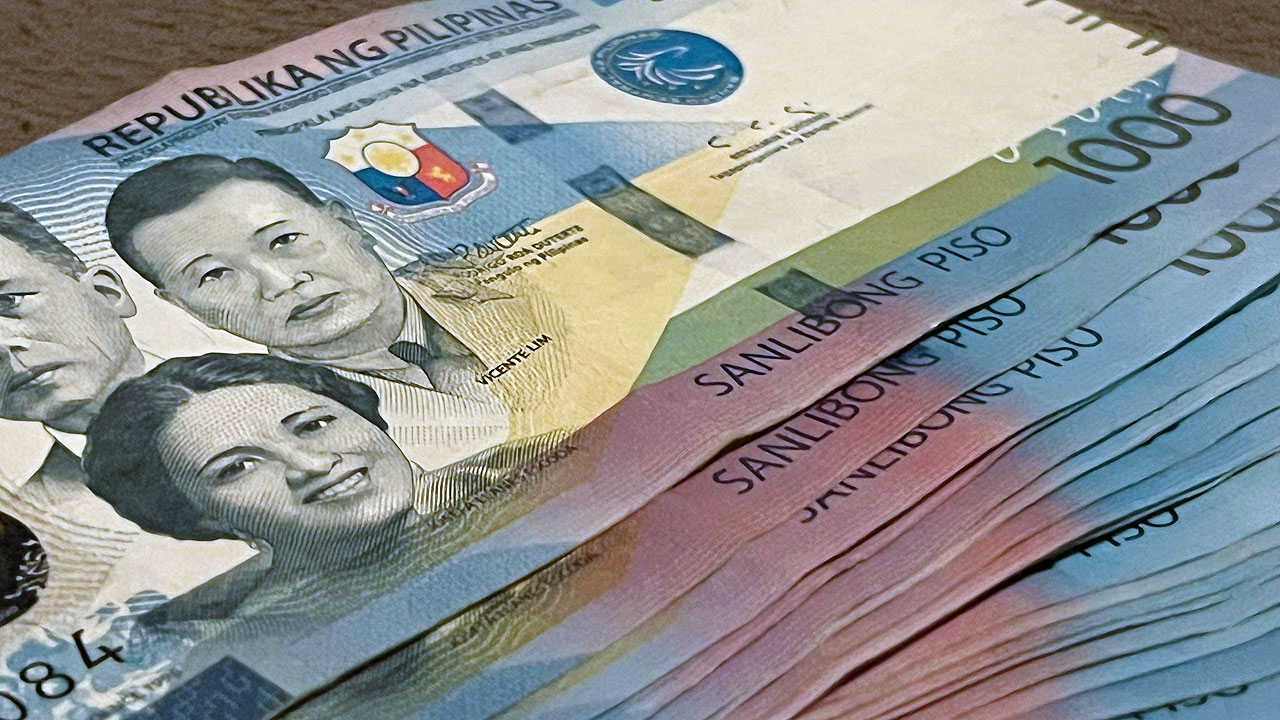
THE PESO on Wednesday plunged to its worst close in four months against the dollar on expectations of strong US gross domestic product (GDP) data and before the US Federal Reserve’s policy decision overnight.
The local unit closed at P57.58 per dollar, dropping by 27 centavos from its P57.31 finish on Tuesday, Bankers Association of the Philippines data showed.
This was the peso’s lowest close in over four months or since its P57.69 finish on March 26.
The local opened the session stronger at P57.20 against the dollar. Its intraday best was at P57.115, while its worst showing was at P57.60 against the greenback.
Dollars exchanged increased to $1.86 billion on Wednesday from $1.73 billion on Tuesday.
“The dollar-peso closed higher due to lower trade balance data and anticipation of a stronger US GDP and ADP employment data,” the first trader said in a phone interview.
“The peso weakened anew amid expectations of a strong rebound in US economic growth for the second quarter,” the second trader likewise said in an e-mail.
US economic growth likely rebounded in the second quarter as the flow of imports subsided, but with consumer spending anticipated to have increased moderately and business investment in equipment stalled that would grossly exaggerate the economy’s health, Reuters reported.
The Commerce Department’s advance gross domestic product report on Wednesday would be heavily distorted by trade as was the case in the January-March quarter when GDP contracted for the first time in three years. Economists said President Donald J. Trump’s protectionist trade policy, including sweeping tariffs on imports as well as delaying higher duties, had made it difficult to get a clear pulse on the economy.
They urged focusing on final sales to private domestic purchasers, viewed by economists and policymakers alike as a barometer of underlying US economic growth, which is forecast to have slowed from the first quarter’s moderate growth pace.
A Reuters survey of economists forecast GDP likely increased at a 2.4% annualized rate last quarter after declining at a 0.5% pace in the first quarter. The size of the economy is also expected to swell above $30 trillion for the first time ever before accounting for inflation.
The survey was, however, concluded before data on Tuesday showed the goods trade deficit shrinking to its smallest in nearly two years in June and inventories rising marginally. That prompted economists to upgrade their GDP growth estimates by as much as 0.8 percentage point to as high as a 3.3% pace.
Trade chopped off a record 4.61 percentage points from GDP in the first quarter. Though a reversal is expected, some of the boost could be offset by low inventories, the result of the ebb in the flow of foreign merchandise. Trade and inventories are the most volatile components of GDP. Inventories added 2.59 percentage points to GDP in the January-March quarter.
Economists estimated the economy grew less than 1.5% in the first half of the year. They anticipated a lackluster second half, which would limit growth to around 1.5% or even less for the full year, a sharp slowdown from the 2.8% notched in 2024.
Though the White House has announced a number of trade agreements, economists said the nation’s effective tariff rate remained one of the highest since the 1930s and noted that about 60% of the nation’s imports remained uncovered by a deal.
The first trader added that the dollar remained strong on Wednesday amid higher global crude oil prices after fresh tariff threats from US President Donald J. Trump.
For Thursday, the second trader said the peso could rebound on potentially dovish hints from the Fed overnight after their policy meeting that could hint towards a rate cut at their September review.
The first trader sees the peso moving between P57.20 and P57.45 per dollar on Thursday, while the second trader expects it to range from P57.45 to P57.70. — A.M.C. Sy with Reuters