An apple pie showed the way to a slice of Eden

Story and photos by Anna Isabel C. Sobrepeña
PARADISE was lost through the bite of a forbidden fruit, but an apple pie opened the way to a garden that might have been a passageway to Eden.
The joyride to Tagaytay with my two sisters had no schedule or definite itinerary. We just needed to pick up our fourth sibling at half past eight in the evening after her workshop was done. Whim and spontaneity determined the course of our leisurely drive through the countryside. The idea of outlet shopping or passing by supermarkets evaporated with the changing landscape. We shed the city mindset and shifted to weekend mode on a surprisingly traffic-free Saturday.
PIONEER IN COUNTERCULTURE
There were two things we needed to buy for mom back home — freshly baked bread for her breakfast, and buko pie. It wasn’t just any coconut pie; the particular one she wanted was available in only one place in these parts but by the time we got there, all were sold out. Our quick alternative was an apple pie and that determined where we would have our late lunch.
It had been a while since my last visit to Gourmet Café, now renamed Gourmet Farms. If memory serves me, my late husband and I had enjoyed meals in a romantic, rustic setting — interiors of bamboo, wood, and thatched palm leaves, with the aroma of coffee wafting through. The design was reminiscent of tropical dwellings suited to the Philippine climate. I saw that that had certainly changed as we eased into a parking space of the updated establishment, an expansion born of a vision that owner Ernest Escaler had set out to do.
Ernest believed that Philippine coffee had a place in the world market and began trading Filipino beans abroad in the 1970s. By 1988, his company built the first commercial coffee roastery in the country. Not long after, he embarked on the farm-to-table concept in the country, another pioneering effort inspired by the popularity of the California Cuisine and Healthy Eating movement. It was a counterculture shift to promote fresh, organic, and locally sourced food that aimed to reduce the distance that food travels, connect consumers with farmers, support local livelihoods, and provide highly nutritious produce free from excessive processing.
Many expansions and innovations continued to widen the enterprise, but there was an overarching spirit that has prevailed over all these efforts, and it was enshrined in a very special place somewhere in the 11-hectare property.
BEYOND FARMING
We had lunch in a commodious dining room with a mix of different dining sets and art for sale on the walls. Russell, who attended our table, was also an artist although his works were not part of the exhibit. A salad section in the pleasant salon allowed diners to select their own ingredients to complement their meals. While we were enjoying our pasta and pizza, Ernest himself walked in with company. He had just come from the Sanctuary, a place he invited us to visit after we were done. We accepted and our guide, Ray, arrived came to take us there, providing wide-brimmed hats for cover from the afternoon sun.
We walked past beds of vegetables cultivated not just for the restaurant’s consumption but also for salad greens sold in supermarkets. Marigolds, a natural pesticide, bloomed brightly in another section. The sidewalk disappeared as we wound down the paved road through an undulating terrain. There was a whiff of pine from a towering tree on one side, a scent of happy memories. We reached a steel gate marked as The Sanctuary of St. Joseph. Ray unlocked the barrier, and we stepped into the heart of Gourmet Farms, Inc.
SAINT BY THE GATE
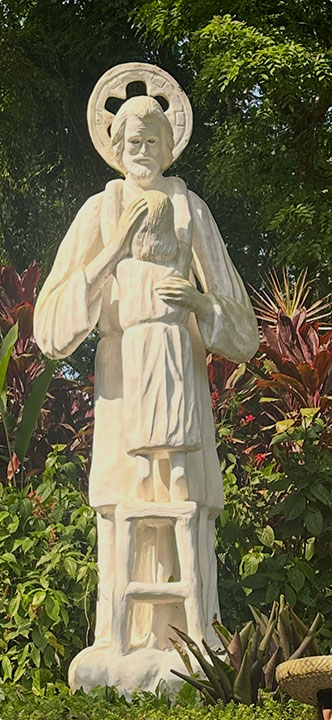
Right by the entrance was a log bench before a statue of St. Joseph, seemingly extending an invitation to sit and marvel. It provided a view of the vegetable patches outside the Tuscan-style gate. Towering over us was the kindly image of the venerated patron of the universal church, holding a child who stood on a stool, reaching up to be carried. It was such a loving and intimate depiction of the saint tasked to care for the Holy Family.
There was a peaceful stillness that opened the heart to a quiet joy. Bougainvillea leaned against the trunks of tall trees, blooming profusely in a shower of pink blossoms. Lush greenery lined a path, punctuating the grass carpet. Seven steps up led to a view of a pond with peace lilies blooming among the red, yellow, and green leaves of Baston de San Jose and San Francisco plants. Behind it were accommodations for those who wanted to spend more than a day in prayer.
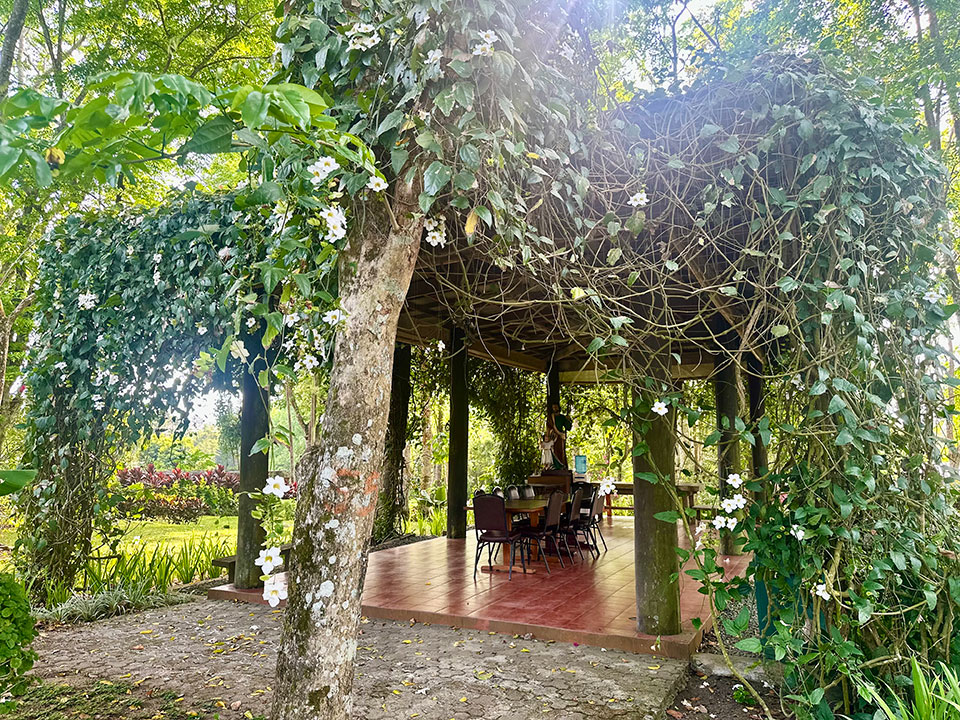
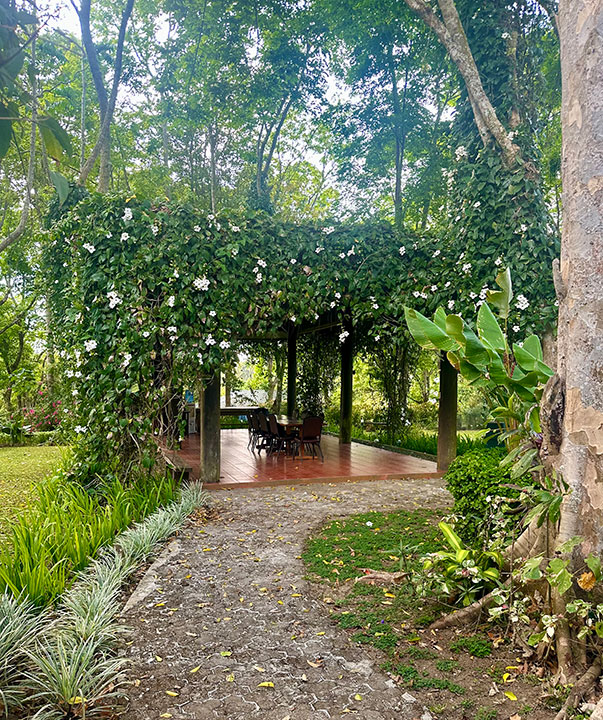
A gazebo on the opposite side was fully covered by vines with little white flowers. Beneath this outdoor pavilion were 10 chairs around a table carved out of a tree, providing a resting place to write, reflect, or maybe have a cup of coffee or tea. If this had been all, it would have been enough to dispel weariness and refresh the spirit, but there was more.
SACRED LISTENING
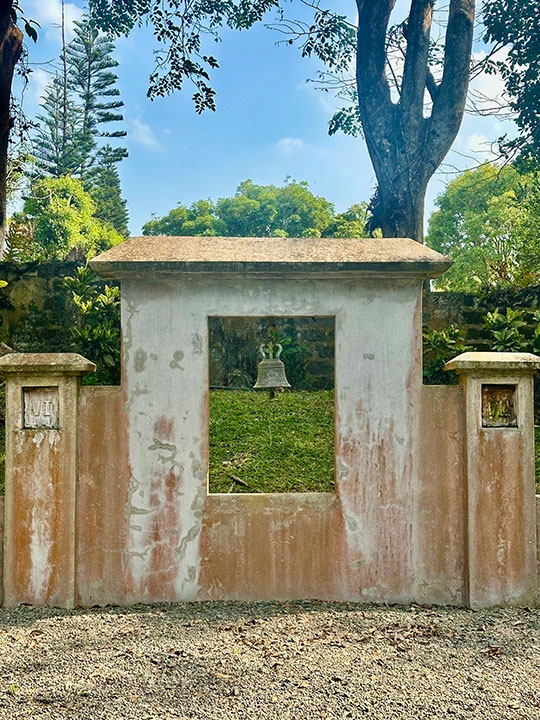
Steps away, the stone path leads past low walls topped with clay water jars, vessels that hold the life-giving source. An old-looking bell hangs on one side of the entrance, framed within a window in the wall. Beyond the walls stands a chapel, shaped like the octagonal Church of the Beatitude that had been built to mark where Jesus Christ gave His Sermon on the Mount.
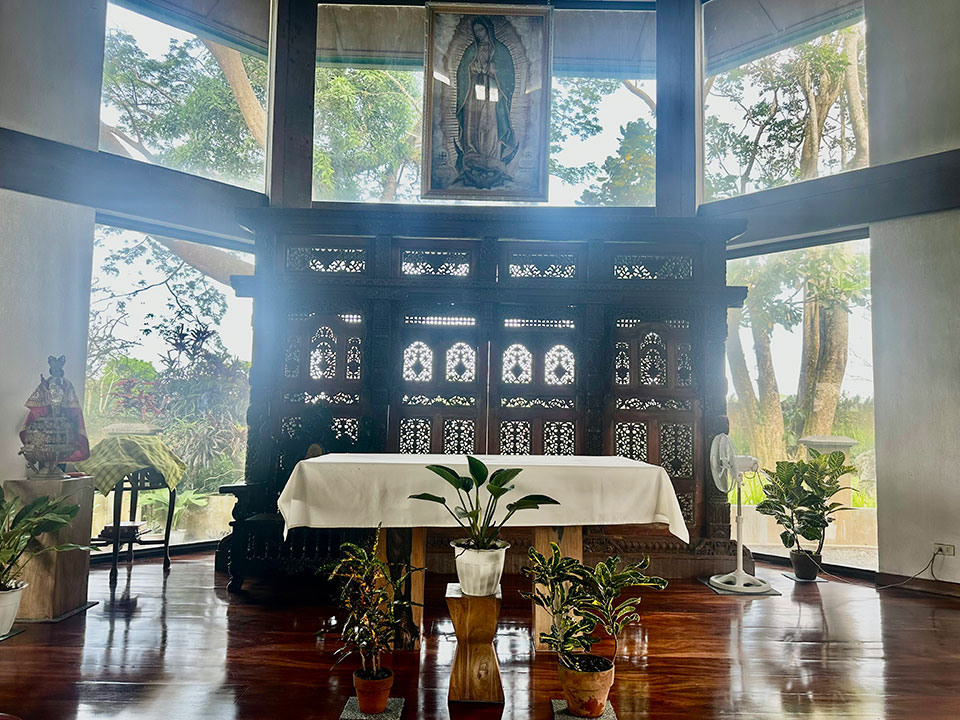
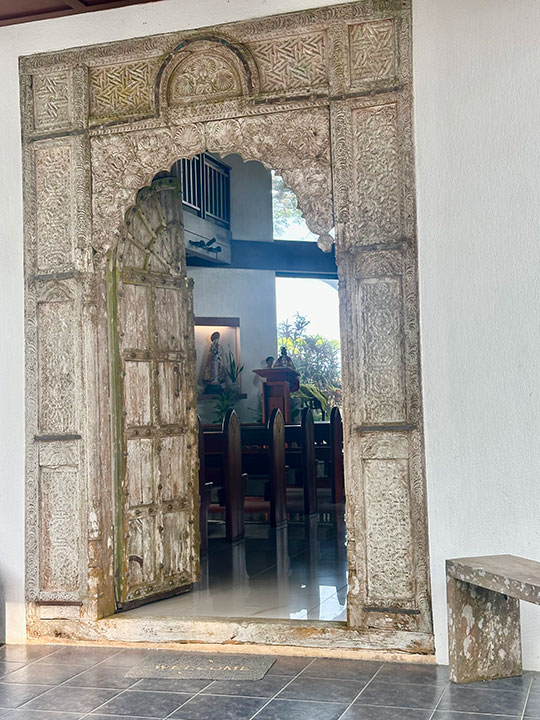
Antique carved doors at the entrance opened into an intimate sanctum. The immediate response was to kneel before the altar, beside a tabernacle where a lighted candle burned. Even without the flame, I felt embraced by Divine Presence and serenity. A tilma of Our Lady of Guadalupe hung over the altar above the backdrop of lacework carving. The glass panel walls brought a sense of the natural world into the sacred space. Prayers of gratitude flowed, overtaking grief and tiredness.
Ernest had designed the Sanctuary. “It is the place for silence, where one can listen to God,” he said. “Nobody had more profound direct communication with God than St. Joseph.
“We do not advertise the place because we believe it is God who calls those whom He wishes to communicate with.”
I felt this truth in my heart and that He would even use an apple pie to lead the way to this holy place.