
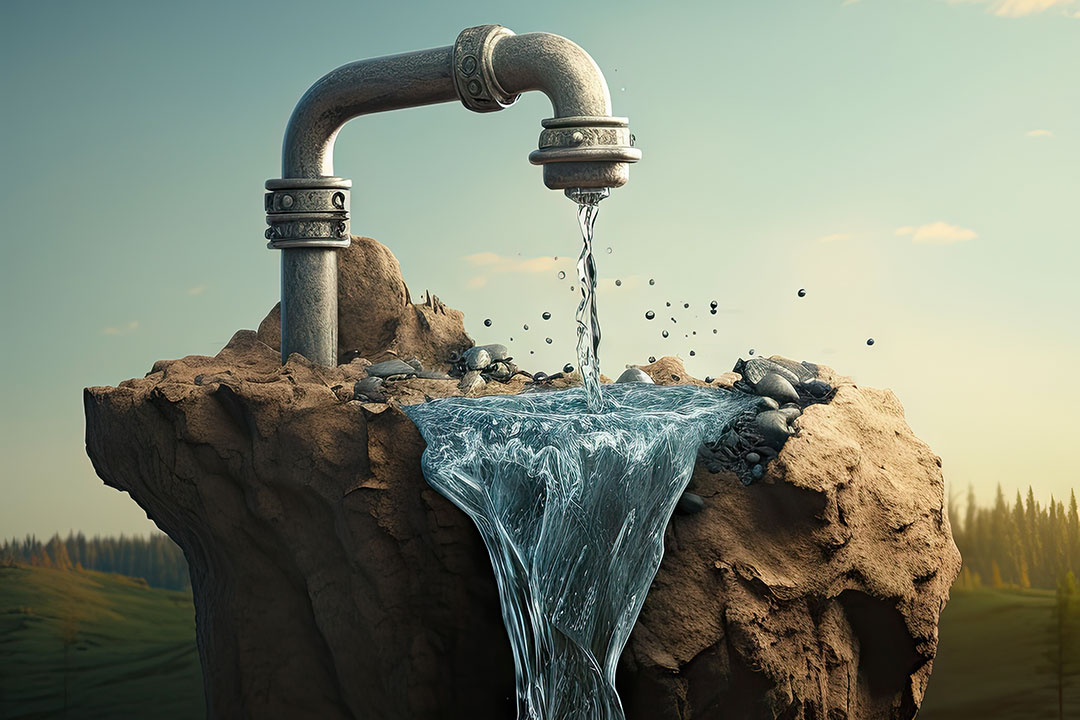
Water supply in the Philippines is as seasonal as the weather. A heavy rain turns our streets into rivers, then in summer months we talk about rationing. We explain these swings as separate events. We treat each as a passing crisis and then move on. We rarely connect them as one continuous story.
But a January 2026 report by the United Nations University Institute for Water, Environment, and Health gave this pattern a blunt name: water bankruptcy. It described a post-crisis condition where natural water capital has been damaged so badly that historical baselines are no longer attainable.
In plain terms, we have damaged the systems that make water available. A household or business becomes bankrupt when it spends beyond its means for too long. Water bankruptcy works in much the same way. We are drawing too much water, far beyond what nature can replenish.
This is not only about climate. It is also about land decisions and governance. We approve public and private infrastructure as if water will always there, and we convert land as if watersheds were optional. We take water for granted, failing to realize that even a natural resource can run out.
We treat groundwater as an escape hatch. When supply tightens, households, businesses, and water districts drill deeper wells. But aquifers recharge slowly. Over-extraction invites saltwater intrusion in coastal areas and subsidence in urban corridors. We do not always see this as a water story, but it is.
We also let watersheds erode. Deforestation, quarrying, poorly regulated upland development, and the spread of paved surfaces reduce infiltration. The land holds less rain. Floods worsen. Droughts grow harsher. We call this climate change, and it is, but we also created this fragility through our own poor land decisions.
Then we concentrate people and industry where land value is, and treat water supply as an afterthought that utilities must chase. Scarcity appears late in the project cycle, after investment has already locked in. By then, water becomes political. Someone gets priority. Someone else queues. The system has no buffer because it has already spent its natural capital.
This brings us to the harder part. Economic growth shapes water demand. And the global growth story is shifting toward industries that are more compute-intensive, more electricity-intensive, and in many cases more water-dependent than most people realize.
Artificial intelligence or AI is an example, with servers that draw electricity around the clock, generate heat around the clock, and require cooling around the clock. Cooling can be water-intensive directly, and it can also be water-intensive indirectly through the power system that supplies electricity.
So when we talk about the Philippines becoming a regional data hub, we are really talking about four things: policy, power, connectivity, and water. Policy must be consistent. The power grid must be reliable, and prices must be stable. The same goes for bandwidth. We need redundancy, diverse routes, resilient backhaul, and a network that does not fail when one link breaks.
But water changes the entire discussion. Money cannot generate water. Once lost, water is gone, no matter how much money you have. This is why water bankruptcy must sit at the center of industrial planning and investment, not as an environmental afterthought but a prime consideration.
Every major public or private investment decision should pass a water bankruptcy test. In financial bankruptcy, we can refinance money, restructure debt, or inject new capital. In water bankruptcy, we cannot refinance a collapsed aquifer, or recreate a lost watershed, or reverse saltwater intrusion on demand. We cannot compress decades of watershed recovery into one budget cycle.
This is why the United Nations report calls for a shift to bankruptcy management for water. Bankruptcy management means we tally and publish the ledger, set limits, protect what remains, and stop approving projects that deepen the deficit. The Philippines should do this for water resources.
The water bankruptcy test should answer basic questions before we approve any major project: How much water is the area drawing from groundwater, and is the aquifer recovering or shrinking? What is the project’s direct and indirect water demand? What rules will apply during shortages, and who gets curtailed first?
Do not add a major new water user unless it brings a plan that reduces total stress, not one that deepens it. Supply, allocations, losses, leakage, groundwater withdrawals, and pollution loads should be considered and disclosed. Make the numbers public.
The global AI economy rests on software, hardware, and minerals. Chips, data centers, grids, batteries, and industrial equipment all pull on supply chains for nickel, copper, cobalt, and other critical inputs. This is why countries with mineral deposits see an opening, and why the Philippines keeps returning to the idea that mining can anchor a more strategic role in the new economy.
But mining is exactly where water bankruptcy can also become irreversible. Irresponsible mining can damage watersheds, pollute rivers, and create risks from tailings and acid drainage. It can compete with agriculture and domestic water supply. Mining is a real option but only if done right, responsibly.
If we treat water as the primary constraint, then mining permits should follow water conditions set by the government. If a proposed project sits in a critical watershed or threatens an aquifer that already faces pressure, the answer should be no. If it proceeds, then the government must impose measurable limits and ensure transparent monitoring.
Many discussions push for value addition, moving from raw ore exports to processing and refining. That can create capability. But it can also increase local water and energy demand. If we chase value addition blindly, we can intensify the very scarcity that undermines long-term competitiveness. In a water bankruptcy framework, value addition is progress only if the basin can afford it.
Water bankruptcy should also guide land use and long-term leases. Long leases should be conditional on water rules. For water-intensive industries or activities, conditions should include measurable efficiency and reuse targets, mandatory reporting, and clear curtailment rules during declared shortages.
Mining permits and long-term land commitments both lead to long-term lock-in. They turn today’s approvals into tomorrow’s constraints. If we approve them today without a water-first framework, we risk building an economy that can produce money but cannot sustain life.
In the AI era, it is easy to believe the most important assets are data, computer systems, platforms. But the economy still runs on physical systems. It runs on land, power, and water. If the Philippines wants a serious development strategy, it must start with the one asset money cannot manufacture: water.
Because if we lose water, we do not only lose comfort. We lose food stability, public health, investment reliability, and social cohesion. The poor will suffer first, and the rich will suffer too, because no amount of wealth can renew a depleted basin. In water bankruptcy, nature does not extend credit.
Marvin Tort is a former managing editor of BusinessWorld, and a former chairman of the Philippine Press Council