THE Department of Agriculture (DA) said it is seeking up to $500 million from the Asian Development Bank (ADB) and other lenders to fund its bamboo industry development program.
Agriculture Assistant Secretary Arnel V. de Mesa said the proposal is still in its early stages, but has attracted interest from international financing institutions.
“We are still in the conceptual preparation stage. The ADB and other banks are willing to finance it because of the large potential of bamboo,” he told reporters on the sidelines of the launch of the Hand-in-Hand (HIH) National Investment Forum in Pasig City on Monday.
Mr. De Mesa said lenders are particularly interested in engineered bamboo as a potential alternative to traditional construction materials.
Engineered bamboo is a durable composite material created by bonding bamboo veneers, strands, fibers, strips, or slats with a suitable resin or glue.
“They see that it can serve as a replacement for construction materials, as well as for other purposes,” he said.
The DA said China is currently the largest exporter of engineered bamboo, but the Philippines has a significant raw material supply that could be developed.
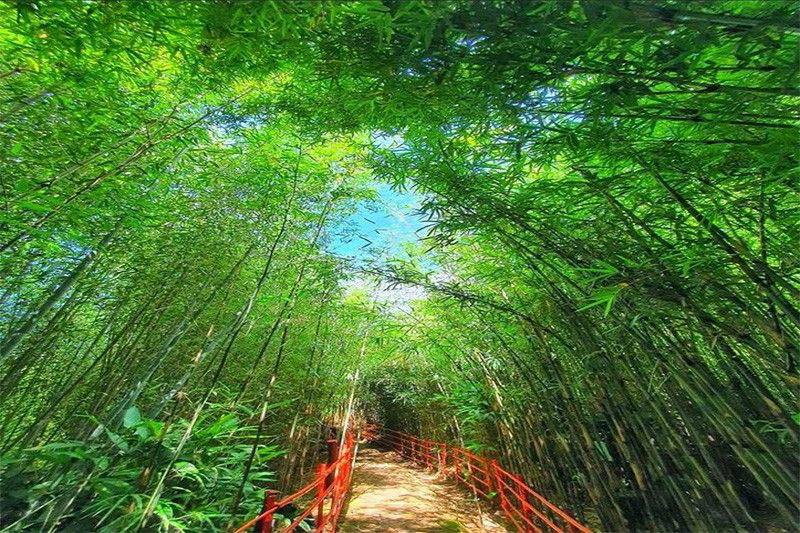
“We have substantial bamboo production, especially giant bamboo. It can be used for soil erosion control and reforestation. Plus, it has huge potential for investment and profit for our farmers,” Mr. De Mesa said.
Mindanao currently leads domestic bamboo production, with Bukidnon emerging as a key hub.
The DA said loan approval could come as early as next year, pending the completion of a feasibility study. The program is expected to run for about five years.
“Since it is still in the conceptual preparation stage, we need a full-blown feasibility study, which usually takes about five to six months,” Mr. De Mesa said.
The DA identified bamboo as a high-growth sector, citing strong global demand and environmental benefits.
According to the DA’s presentation at the HIH investment forum in Rome last year, the global bamboo market is valued at $72.1 billion in 2023 and is growing at 7.9%.
The Philippines has an estimated 1.5 million hectares suitable for bamboo cultivation, according to the Department of Environment and Natural Resources. However, only about 53,000 hectares or less than 3.5% of the total potential area is currently planted.
The DA said bamboo is also seen as a climate-resilient crop, capable of sequestering between 100 and 400 metric tons of carbon per hectare over a 10-year cycle, up to four times the rate for most tree species.
Apart from construction, the DA said bamboo is also used across multiple industries, including furniture, textiles, packaging, paper, food, and biomass energy.
Among the projects pitched by the DA at last year’s investment forum is a climate-smart bamboo plantation initiative aimed at building sustainable enterprises, supporting rural livelihoods, and strengthening value chains.
Proposed project sites include Ilocos Norte, Pangasinan, Pampanga, Palawan, and Agusan del Sur.
Meanwhile, Mr. De Mesa said the ADB approved a $1-million project preparation grant to fund technical and financial feasibility studies for a proposed coal-to-urea plant on Semirara Island in Antique.
It would be the Philippines’ only urea facility if the plans are realized.
The project is expected to boost fertilizer security as global prices remain elevated due to high fuel costs and supply disruptions linked to the war in the Middle East. — Vonn Andrei E. Villamiel