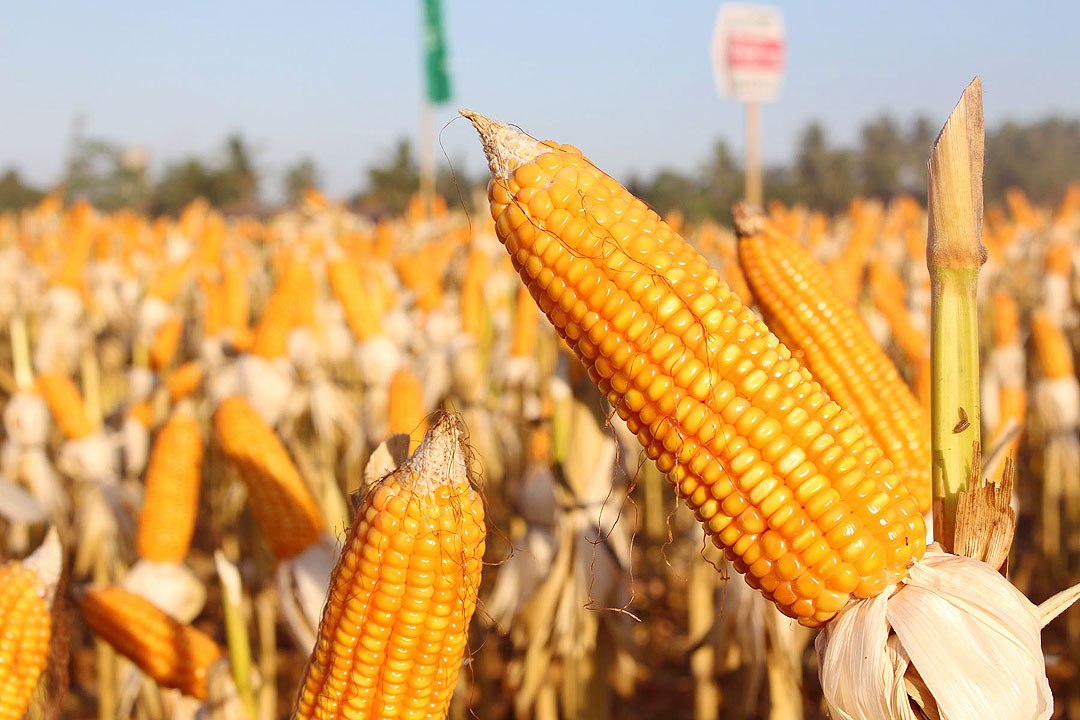
CORN PRODUCTION is expected to decline in the coming months as a looming El Niño and rising input costs weigh on farmers’ planting intentions, an industry official said.
Romualdo J. Elvira, Jr., president of the Philippine Maize Federation, Inc. (PhilMaize), said the developing El Niño could already be affecting the next corn planting season.
“The volume of harvest will definitely be affected, especially for the coming May-June planting,” he told BusinessWorld via Viber.
The government weather service has said that a moderate to strong El Niño may emerge by the fourth quarter and persist into early 2027.
The Philippines experiences below-normal rainfall during El Niño episodes, affecting agricultural production, particularly for water-intensive crops such as corn.
Mr. Elvira said rising input and fuel costs due to the war in the Middle East are also expected to weigh heavily on corn yields.
“Urea has increased in price from P1,500 a bag last year to P2,450 last month, and may rise further to P3,500 next month,” he said. “Fuel cost could affect our mechanized operations — land preparation, hauling, logistics, irrigation, and later on harvesting and drying.”
With elevated input and fuel costs, Mr. Elvira said corn farmers may be forced to cut back on fertilizer application and equipment use, which is expected to reduce productivity.
To help cushion the impact on corn and the industries that depend on it, such as animal feed and livestock raising, PhilMaize urged government intervention through procurement support.
“We further demand that the National Food Authority immediately allocate funds to procure at least 200,000 metric tons of corn at P25 per kilogram (dry),” the group said in a policy statement.
PhilMaize also opposed a proposal to remove tariffs on corn, instead calling for adjustments of the minimum access volume (MAV) for the commodity.
The MAV scheme allows limited imports of agricultural commodities at favorable tariff rates, while volumes beyond the quota are subject to higher duties. Corn imports within the MAV are currently charged a 5% tariff, while out-of-quota shipments carry a 15% rate.
PhilMaize proposed raising the MAV for corn to 500,000 metric tons from 216,000 metric tons, saying this would help stabilize supply and prices without undermining domestic producers.
“This adjustment will temper price declines, stabilize the market, and ensure a fairer playing field for both producers and consumers,” it said.
The group added that imports should be timed to avoid the harvest, particularly around August to September, to prevent oversupply and protect farmgate prices. — Vonn Andrei E. Villamiel