Regulator approves PUV fare hikes on oil price surge
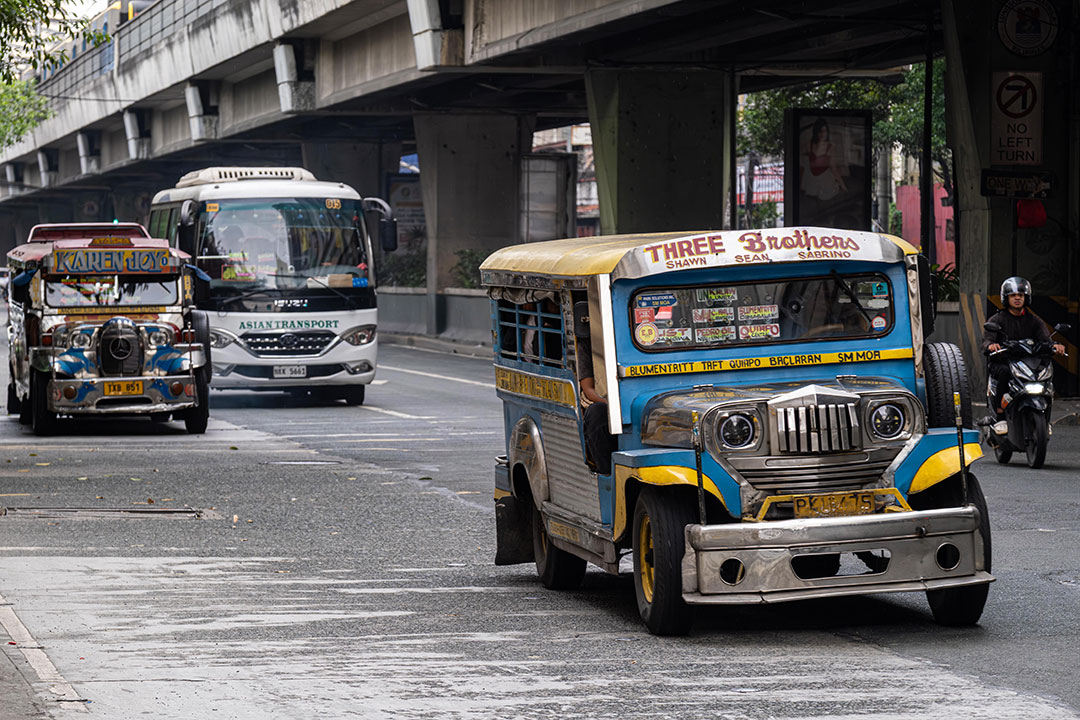
COMMUTERS will face higher transportation costs starting Thursday after the Land Transportation Franchising and Regulatory Board (LTFRB) approved fare increases for public utility vehicles (PUVs) amid soaring pump prices, a move that could add to inflationary pressures.
“It is the sense that every week, we see substantial, not just minimal changes (in oil prices). With the board’s permission, and the facts we have considered, there will be changes in transport fares. This (fare adjustment) will be permanent,” LTFRB Chairman Vigor D. Mendoza II said in a media briefing on Tuesday.
PUV operators can implement the adjusted fares on March 19, or as soon as they secure the new fare matrices and post them in their units, Mr. Mendoza said, adding that the fare hike will be permanent by June.
Michael L. Ricafort, chief economist at Rizal Commercial Banking Corp., in a Viber message, said higher transport costs could lead to faster inflation.
“Higher transport fares lead to risks of petitions for higher wages that would also lead to higher prices of goods and services. The effect could lead to higher inflation expectations,” Mr. Ricafort said in a Viber message.
The LTFRB approved a P1 increase in the base fare for traditional public utility jeepneys (PUJs) to P14, and a 20 centavo-hike for every succeeding kilometer to P2.
For modern PUJs, the LTFRB greenlit a P2 increase in the base fare to P17, and 20-centavo increase for every succeeding kilometer to P2.40.
For ordinary city buses, the base fare will increase to P15 from the current P13, while succeeding fare per kilometer will increase by 24 centavos to P2.49 from P2.25.
The base fare for air-conditioned city buses will rise to P18 from P15, while the succeeding fare per kilometer will jump to P2.98 from P2.65.
The LTFRB said the approval of the new fare matrix comes after the rising fuel costs triggered by the ongoing US-Israel war on Iran, although it approved the petition that was filed in 2023.
“This decision that covers all modes of land public transportation is proof of the National Government’s genuine concern on the welfare of those in the transport sector too while protecting the interest of the general commuting public,” Mr. Mendoza said.
The LTFRB also approved a P40 increase in the flag-down rate for airport taxis to P115 for the first 500 meters, from P75, but there was no increase in the P4 fare per 300 meters or per two minutes.
Transportation network vehicle services were also allowed to raise their base fare by P20 to P65 for sedans; P75 for AUV and SUV units; P55 for hatchback units; and P165 for premium units.
Over the weekend, the LTFRB approved an increase of up to P1 for provincial public utility buses effective March 14.
Under the approved fare adjustments, the provisional increase for provincial air-conditioned, deluxe, and super deluxe buses is set at 35 centavos per kilometer.
For provincial luxury buses, the approved provisional increase is set at 45 centavos per kilometer, while ordinary provincial buses will see a P1 increase on the base fare and 30 centavos per succeeding kilometer.
The LTFRB also greenlit a 15% increase of the existing fares for point-to-point bus services. The LTFRB said it calculated the fare adjustment based on the fuel prices in 2022 until 2025 which were at the P80-per-liter range.
The cost of fuel is the regulator’s biggest consideration in approving the fare hike petition, Mr. Mendoza said, adding that the agency has also factored in the prices of spare parts and maintenance of vehicles which climbed by 14%.
Mar S. Valbuena, chairman of transport group Manibela, said the P1 fare increase for PUJs is not enough given the surge in oil prices.
“They claimed they have carefully studied it, but the P1 fare increase for traditional jeepneys is an insult because of the current diesel prices,” Mr. Valbuena said in a Viber message.
On Tuesday, gasoline prices increased between P12.90 to P16.60 per liter, while diesel jumped by P20.40 to P23.90 per liter. Based on the monitoring of the Energy department, gasoline prices may go as high as P91.60 per liter while diesel may surge to P114.90 per liter.
Bus operators’ group Mega Manila Consortium Corp. Spokesperson Juliet de Jesus told reporters that they are studying to file another fare increase petition if fuel prices reach more than P100 per liter.
Pinagkaisang Samahan ng mga Tsuper at Operators Nationwide said the group will still be seeking a P5 fare increase.
Meanwhile, Mr. Mendoza said that taxis and motorcycle taxis have also sought fare hikes, although he declined to give details on the petition as the regulator is still studying the petition. — Ashley Erika O. Jose