PHL told to seek Korean investment beyond tariffs
By Chloe Mari A. Hufana, Reporter
THE PHILIPPINES should look beyond tariff reductions under the Korea-Philippines free trade agreement (FTA) and instead position itself as a regional base for South Korean investments targeting Southeast Asian supply chains, analysts said ahead of South Korean President Lee Jae Myung’s March 3-4 visit to Manila.
John Paolo R. Rivera, a senior research fellow at the Philippine Institute for Development Studies, said the visit should focus less on boosting bilateral trade volumes and more on attracting capital and technology.
“The goal should be to attract capital, technology transfer and deeper value-chain integration, not just expand bilateral trade volumes,” he said via Viber.
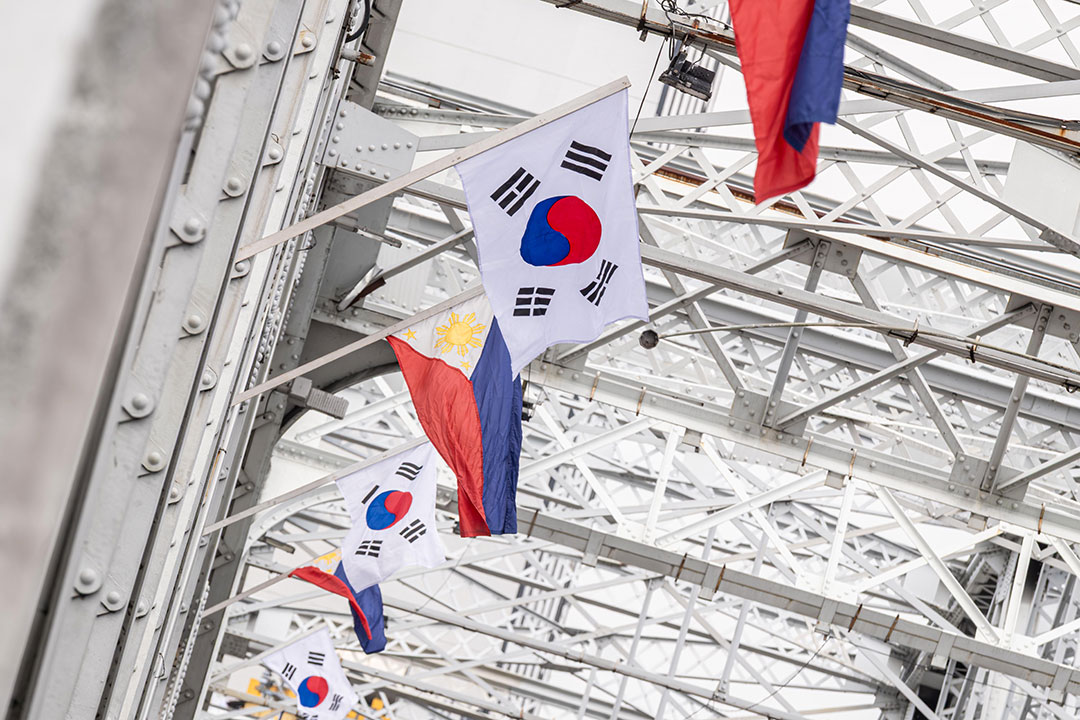
Mr. Lee’s trip marks his first visit to the Philippines as president and the first state visit since the FTA took effect on Dec. 31, 2024. The agreement reduced tariffs on key industrial and agricultural goods.
The visit also comes as both economies navigate global supply chain shifts and ahead of the 77th anniversary of diplomatic ties on March 3.
Rather than treating the FTA primarily as a trade liberalization tool, Manila should use it to position itself as Seoul’s gateway to the 680-million strong Association of Southeast Asian Nations (ASEAN) market, Mr. Rivera said.
Priority sectors include electronics, green technology, infrastructure and digital services.
Jonathan L. Ravelas, a senior adviser at Reyes Tacandong & Co., said the timing is significant, particularly with the Philippines chairing ASEAN. While the FTA can support growth, it is not transformative on its own.
“The FTA adds fuel, but smart ASEAN-level economic diplomacy is what can scale the gains,” he said. Manila should link Korean investments to regional supply chains in electric vehicles, manufacturing, energy and technology, he added.
Mr. Rivera said the agreement might lift exports and investment in manufacturing and services over the next three years, but its impact on gross domestic product would likely be modest compared with domestic drivers such as household consumption and infrastructure spending.
“The bigger contribution will be structural, by improving competitiveness and investment flows rather than sharply lifting short-term growth,” he said.
Trade between the two countries has long been anchored in electronics, automotive components and agricultural products. South Korea is a major source of foreign direct investment and tourists, while Philippine exports such as bananas and manufactured goods benefit from improved market access.
Bilateral trade is projected to reach $24 billion (P1.4 trillion) by 2030, according to ASEAN Secretariat estimates cited in December 2025. ASEAN-South Korea trade is targeted to hit $300 billion by the same year.
Analysts said deeper integration could also help cushion both countries from volatility tied to US-China tensions.
The trade war between Washington and Beijing, marked by tariffs and export controls, has prompted governments to diversify supply chains and reduce strategic dependencies.
Josue Raphael J. Cortez, an ASEAN Studies lecturer at De La Salle-College of St. Benilde, said stronger Manila-Seoul ties could support more cohesive regional supply chains in electronics components, rare earth minerals and other critical inputs.
Closer cooperation under the ASEAN-South Korea Comprehensive Strategic Partnership may reduce reliance on balancing between major powers, he said, and facilitate integration of production and services.
Francis M. Esteban, a faculty member at the Far Eastern University Department of International Studies, said the visit underscores the Philippines’ alignment with like-minded middle powers seeking to strengthen institutions amid global fragmentation.
While defense and people-to-people exchanges would likely be discussed, economic cooperation, particularly in trade and investment, would anchor the talks, he added.
Tourism and mobility are also expected to feature in discussions. South Korea remains one of the Philippines’ biggest tourism markets. Simplifying visa processes, potentially through digital systems backed by stronger cybersecurity safeguards, could boost travel, education and investment flows, Mr. Cortez said.