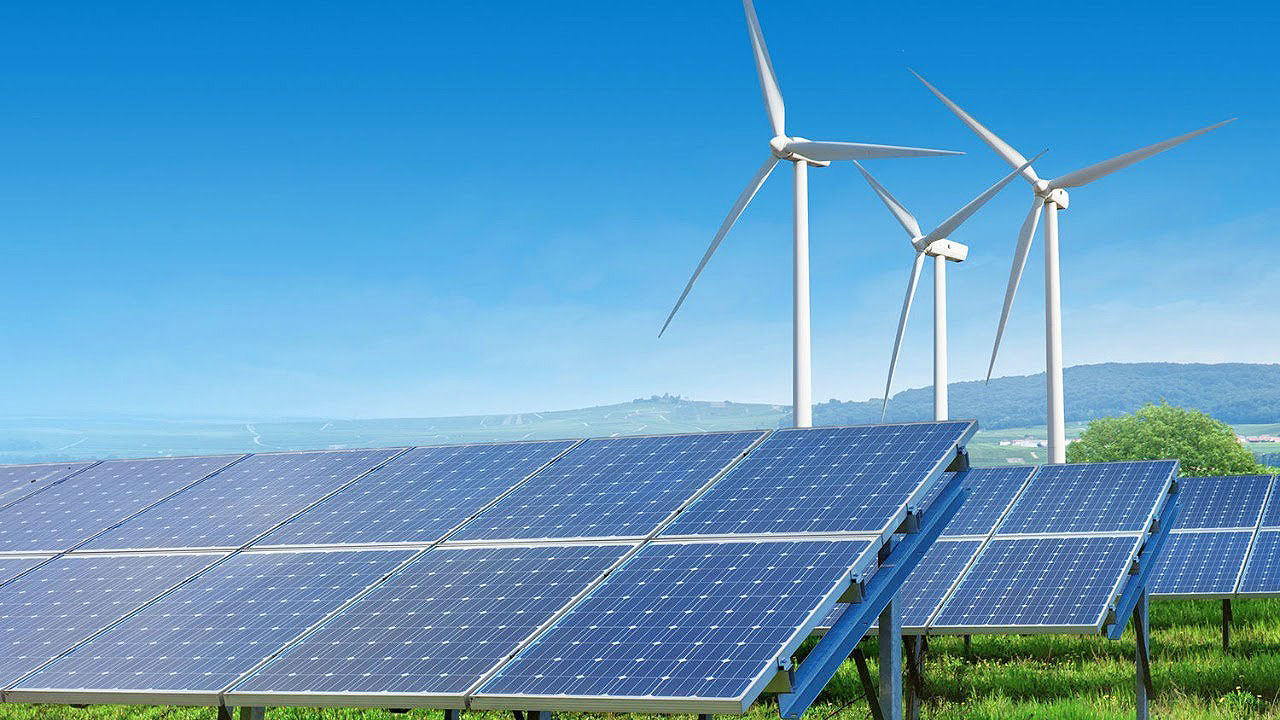
WIND AND SOLAR power for the first time generated more electricity in the European Union (EU) than fossil fuels in 2025, driven by a surge in solar output, data from energy think tank Ember showed on Thursday.
Wind and solar made up a record 30% of the 27-country bloc’s power last year, overtaking fossil fuels that contributed 29%. Solar alone was responsible for 13% of power generation and expanded by more than 20% for the fourth-year running, surpassing both coal and hydro.
“As fossil fuel dependencies feed instability on the global stage, the stakes of transitioning to clean energy are clearer than ever,” Beatrice Petrovich, senior energy analyst at Ember and lead author of the report, said.
Solar generation grew in all EU countries amid widespread solar panel installations and supplied more than a fifth of electricity in Hungary, Cyprus, Greece, Spain and the Netherlands in 2025.
Renewable sources provided nearly half of the bloc’s power mix at 48%, even as unusual weather pushed hydro output 12% lower and wind 2% lower. Despite this, wind contributed 17% of electricity in the EU, more than gas.
Early 2025 was exceptionally sunny, marked by low wind speeds and low rainfall, but strong solar output helped keep the overall share of renewables stable, Ms. Petrovich told Reuters.
Fourteen EU countries produced more electricity from wind and solar than from fossil fuels, reinforcing a structural shift in the region’s power system that includes phasing out coal.
“Coal power is in its terminal decline. We could say it’s becoming history for the EU,” Ms. Petrovich said in the interview. The fossil fuel share in the power mix was at a record low of 9.2%.
“The next priority for the EU should be to put a serious dent in reliance on expensive, imported gas,” she added.
Gas generation in the EU rose 8% due to lower hydro availability, lifting gas import costs by 16% to €32 billion ($37 billion, $1 = 0.8601 euros) for the power sector, the first increase since the 2022 energy crisis.
Increased gas usage also lifted average wholesale power prices, which were 11% higher during gas-heavy hours than in 2024.
But rapid growth in battery storage, particularly in Germany, Italy and Poland, could help shift solar and wind power to meet evening demand peaks and stabilize prices, Ms. Petrovich said. — Reuters