SolGen says ICC warrant vs ‘fugitive’ Bato enforceable without local court
THE enforcement of an International Criminal Court (ICC) arrest warrant does not require prior intervention by domestic courts, state lawyers told the Supreme Court, as it sought the denial of legal remedies pursued by Senator Ronald “Bato” M. dela Rosa, who is facing crimes against humanity charges.
In an 83-page comment made public on Sunday, the Office of the Solicitor General (OSG), Philippine law provides sufficient domestic authority to surrender individuals to international tribunals, despite the country’s 2019 withdrawal from the Rome Statute.
“The enforcement of an ICC warrant of arrest does not require corresponding warrant of arrest issued by a Philippine Court to be enforceable within the Philippine jurisdiction,” the OSG, headed by Solicitor General Darlene Marie B. Berberabe, said.
The OSG said Section 17 of Republic Act No. 9851, or the Philippine Act on Crimes Against International Humanitarian Law, Genocide, and Other Crimes Against Humanity, empowers Philippine authorities to surrender or extradite a suspected or accused person facing investigation or prosecution before an international court or tribunal.
“The ICC warrant against Senator dela Rosa does not require validation by a domestic court to be enforceable,” it added.
Israelito P. Torreon, lawyer for Mr. dela Rosa, did not immediately reply to a Viber message requesting comment.
Mr. dela Rosa, who has been absent since November, returned to the Senate last week to cast his vote to elect Senator Alan Peter S. Cayetano to lead the chamber. He was subsequently placed under “protective custody,” based on Senate Resolution No. 44, barring authorities from entering the Senate building.
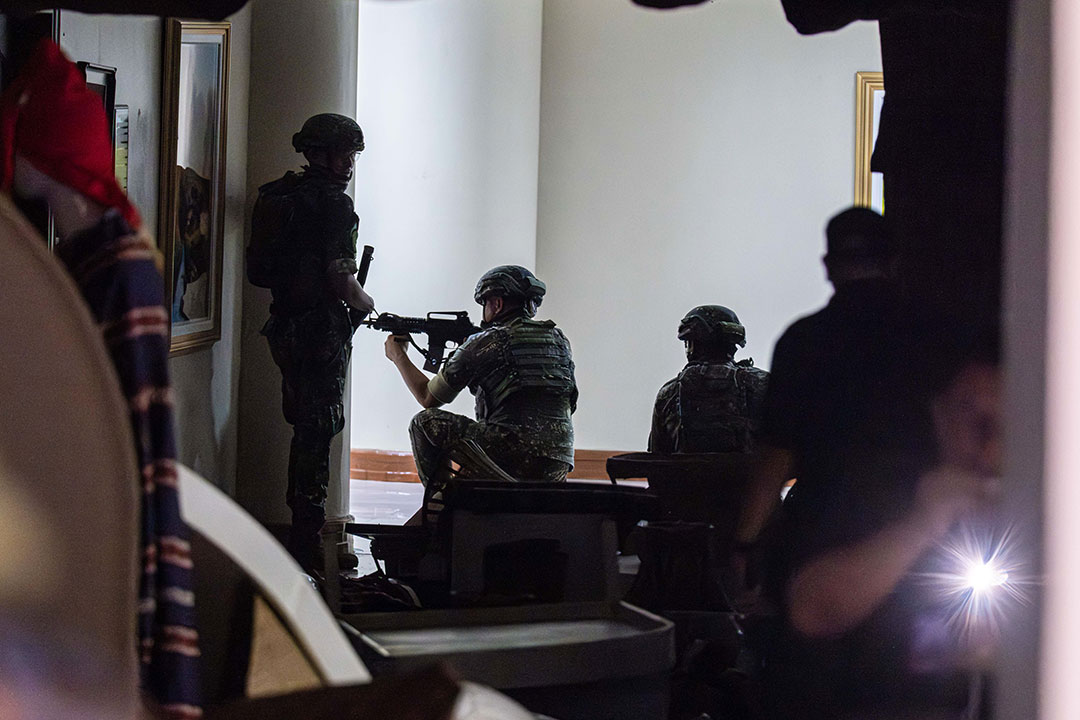
The senator, however, left the chamber early on Thursday morning after chaos erupted on Wednesday evening when the Senate Office of the Sergeant-at-Arms exchanged gunfire with agents of the National Bureau of Investigation.
The Department of Justice on Friday said an Immigration Lookout Bulletin Order has been issued against the senator, noting that authorities have been directed to arrest Mr. dela Rosa should he attempt to leave the country.
The OSG said the conduct of Mr. dela Rosa places him squarely within the definition of a “fugitive from justice” after he fled the Senate premises on May 14 to evade arrest.
The OSG also said Mr. dela Rosa could not seek judicial relief after deliberately placing himself beyond the law’s reach while using court procedures as a shield.
This followed the ICC’s move to unseal an arrest warrant for the 64-year-old Mr. dela Rosa for crimes against humanity of murder, identifying him as an alleged indirect co-perpetrator of former President Rodrigo R. Duterte, who is currently detained in The Hague.
The warrant showed that judges of the ICC’s Pre-Trial Chamber I found reasonable grounds to believe the Duterte ally bore responsibility for the Philippines’ deadly “war on drugs,” covering incidents between July 2016 and end-April 2018 in which at least 32 persons were killed.
Mr. dela Rosa earlier denied he ordered the killings of drug war victims, claiming that evidence held by the ICC was “fabricated.”
The OSG further rejected the senator’s claims of parliamentary immunity, noting that such privileges do not apply to crimes against humanity, which carry penalties far exceeding the constitutional six-year threshold for immunity.
The filing also noted that Mr. dela Rosa resurfaced only to cast a decisive vote in the Senate leadership before retreating into hiding.
The OSG said that the rule of law must prioritize the attainment of justice for the thousands of victims of the drug war over the procedural preferences of a sitting legislator.
Mr. dela Rosa was given a non-extendible 72-hour period to reply upon receipt of the government’s comment. — Erika Mae P. Sinaking