Manila on heightened alert amid Iran conflict
By Adrian H. Halili, Chloe Mari A. Hufana, and Kenneth Christiane L. Basilio, Reporters
PRESIDENT Ferdinand R. Marcos, Jr. on Sunday said the Philippines is on heightened alert and prepared to escalate contingency measures to protect overseas Filipino workers (OFWs) in the Middle East as conflict escalates following the US and Israel’s attack on Iran.
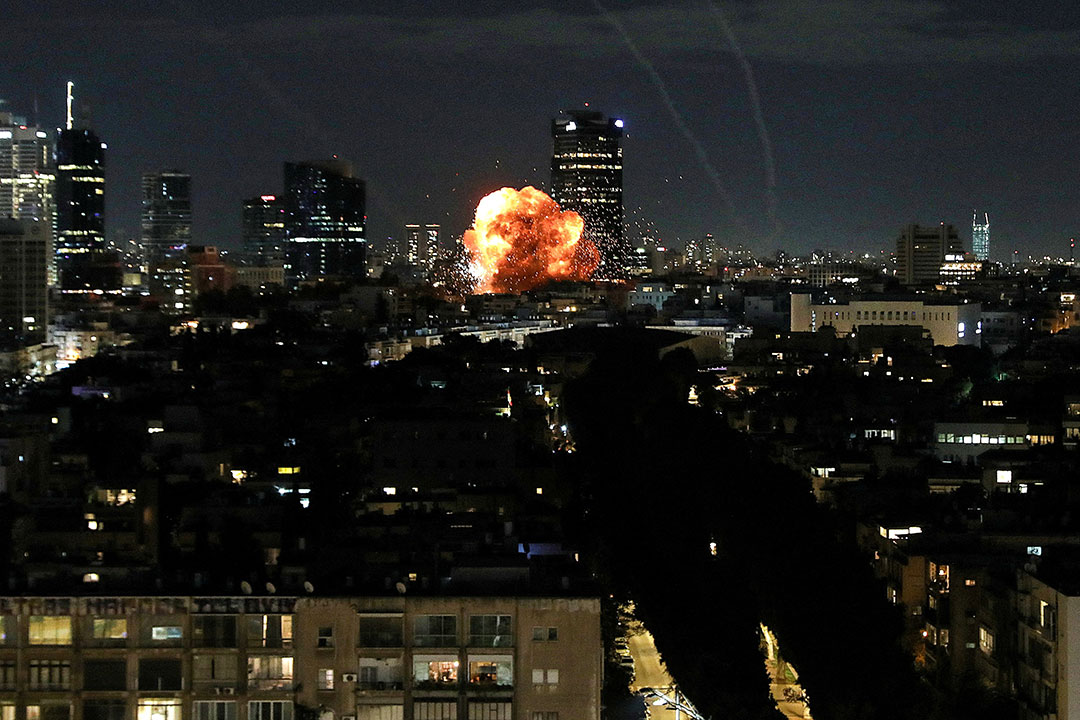
In a video message released on Sunday morning, Mr. Marcos said Tehran had struck US bases in the United Arab Emirates (UAE), Bahrain, Oman and Israel, as retaliation for earlier bombings by Tel Aviv and Washington, raising fears of a widening war across the Middle East.
“We continue to monitor the situation to ensure that our countrymen in the Middle East remain safe and in good condition,” he said in Filipino.
US and Israeli forces launched a salvo of airstrikes on Iranian targets on Saturday, in what US President Donald J. Trump described as an effort to eliminate threats against America and prevent Iran from developing nuclear weapons. The strikes, which decapitated Tehran’s leadership and hitting the Middle Eastern nation’s ballistic missile facilities and military command centers, came just after talks between Washington and Tehran aimed at constraining the Islamic Republic’s nuclear program.
Mr. Marcos said monitoring efforts would continue as the situation evolves, noting the conflict may continue further.
“We continue to monitor the situation because it requires ongoing vigilance and is not yet over. I believe this war will continue. However, based on our latest report, our countrymen are in safe locations,” he added.
“They have moved to bomb shelters where available, and they are staying away from US bases to avoid potential danger. We will continue to provide updates as reports come in.”
Over the weekend, he ordered the Department of Foreign Affairs (DFA) and the Department of Migrant Workers (DMW) to take immediate steps to safeguard Filipinos in the region.
He also directed embassies and migrant agencies to determine the whereabouts of nationals in affected areas and to ensure assistance where necessary.
The Philippine Embassies in Israel, Iran, Qatar, Bahrain, Lebanon, and the UAE have issued separate advisories calling on OFWs to seek safety amid ongoing retaliatory missile strikes. The embassies have also warned citizens to avoid traveling amid the ongoing regional tension.
Also on Sunday, the Philippine military said it is closely tracking developments in the Middle East, adding that the armed forces are prepared to mount humanitarian missions to aid Filipinos in the region.
In a statement, the Armed Forces of the Philippines (AFP) said it “stands ready” to help in repatriating Filipinos in affected areas and bolster the government’s crisis response efforts if called upon.
“The AFP remains committed to its supporting role in whole-of-government efforts, ensuring readiness to assist whenever called upon to help safeguard Filipino lives and uphold national security,” it said.
“At the moment, the conflict is contained within the Middle East and there is no credible direct threat to our territory and Filipino and foreign citizens in the country,” the Department of National Defense (DND) said in a separate statement.
There are an estimated 2.41 million Filipinos living in Middle Eastern countries. More than 975,000 are stationed in the UAE, while others are in Saudi Arabia (813,000), Qatar (250,000), and Kuwait (211,000). There are about 800 Filipinos in Iran and 31,000 in Israel, according to data from the DFA.
Any prolonged conflict in the region risks disrupting jobs, delaying wage flows and complicating deployment cycles, while potentially driving up oil prices that could stoke inflation back home.
“Nonetheless, the DND and the AFP are ready to respond to probable contingencies, including possible repatriation support and crisis response coordination of Filipinos in affected countries should conditions warrant further action,” the Defense department said.
It added that protecting Filipinos overseas “remains a paramount concern,” especially amid “rapidly evolving security developments” in the Middle East.
The immediate repatriation of Filipinos in conflict-stricken countries among other efforts to secure OFWs has also been urged.
“Immediate repatriation and heightened alerts from our embassies should be in place should there be emergencies that need to be urgently addressed,” Renz Paolo B. Ramos, who teaches international relations at the University of Santo Tomas, said in a Facebook Messenger chat.
Josue Raphael J. Cortez, diplomacy lecturer at De La Salle-College of St. Benilde, noted that the government through the DFA and DMW should place safeguards for Filipinos should the conflict further escalate.
“The prioritization of affected Filipinos, as well as ensuring their rights should not merely be focused on Iran. Instead, we must also look into the safety and wellbeing of Filipinos in Israel and the US given that retaliations may transpire,” he added.
Senator Erwin T. Tulfo, chair of the Senate Foreign Relations Committee, called on the DMW and the Overseas Workers Welfare Administration to support Filipinos whose deployments to the region have been delayed due to ongoing tensions.
In a statement, the senator called on the agencies to “give attention to Filipinos who were about to leave the country for work but had to stay due to the ongoing unrest in the region.”
Mr. Tulfo said that the agencies should utilize its P2-billion budget under the Agarang Kalinga at Saklolo para sa mga OFWs na Nangangailangan Fund to support affected Filipinos.
“We should exhaust all the remedies available for them not only on the financial aspect, but also for their mental health.”
There appeared to be no immediate let-up in the attacks on Iran, with Israel launching another wave of strikes on Sunday, Reuters reported.
Mr. Trump said on Saturday that American forces would continue striking Iranian targets “throughout the week,” or “as long as necessary” to achieve Washington’s objectives of preventing Tehran from acquiring a nuclear weapon and ushering a regime change in Iran’s clerical establishment.