The National Irrigation Administration (NIA) is powering its drive toward food security through a renewed focus on modern irrigation systems, climate-resilient infrastructure, and, most critically, closer collaboration with farming communities on the ground.
In recent years, the Agency has moved beyond traditional project delivery toward a more proactive, systems-based approach — standardizing operations, improving oversight, and adopting data-driven planning to ensure that irrigation services remain reliable amid increasingly variable weather conditions.
“At the end of the day, irrigation is about reliability for farmers,” said NIA Administrator Engr. Eddie Guillen. “When water delivery is predictable, farmers can focus on planting and harvesting, not disruptions.”
Productivity vs. disruption
By managing both water storage during heavy rains and controlled releases during dry spells, NIA’s irrigation systems help reduce risks from flooding and drought, allowing farming communities to focus on productivity rather than disruption. At its core, the effort is straightforward: stabilize water supply across seasons so farmers can plant and harvest with greater certainty.
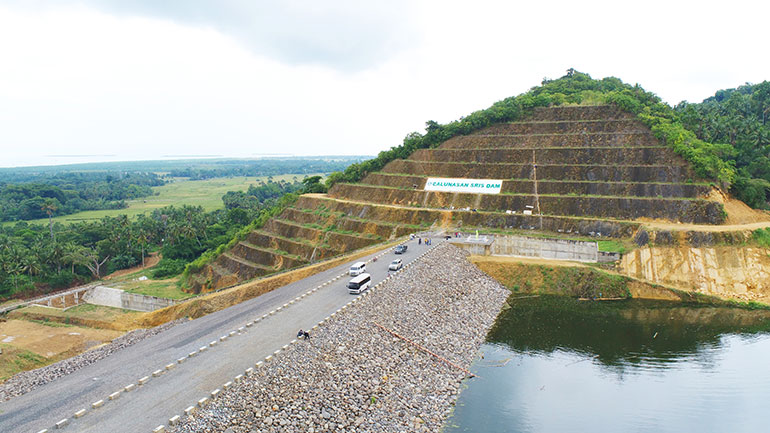
Projects such as the Union Water Impounding Dam in Cagayan and the Calunasan Small Reservoir Irrigation Project (SRIP) in Bohol illustrate this approach. Designed as multi-purpose facilities, these systems provide year-round irrigation to surrounding barangays while also serving as flood-control structures that protect farms and communities during extreme weather events.
Paired with weather monitoring, modern farm equipment, and technical support, these irrigation networks form part of a broader push to improve agricultural resilience and long-term food security.
Farmers’ IAs at the core
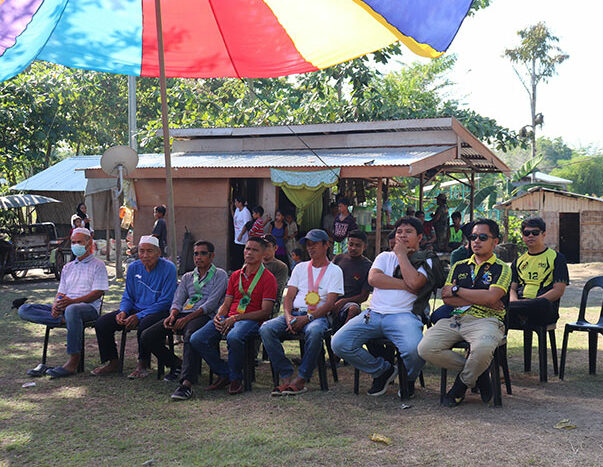
Central to NIA’s strategy is its partnership with Irrigators’ Associations (IAs) — organized groups of farmers who collectively manage, operate, and maintain communal irrigation systems.
These associations function as NIA’s on-the-ground partners, bridging national programs with community realities. Composed of farmers themselves, IAs coordinate water distribution schedules, monitor system conditions, and relay operational concerns directly to field offices, ensuring that local needs are addressed quickly and practically.
In many areas, IAs also serve as hubs for cooperation. bringing together farmers, local government units, and partner agencies to exchange information, organize maintenance activities, and adopt improved farming practices.
More accessible, more responsive
Through these IAs and farmer collectives, government support becomes more accessible and responsive. Training programs, technical assistance, and agricultural initiatives from NIA and the Department of Agriculture (DA) are disseminated directly within communities, helping farmers adopt more efficient and sustainable methods.
NIA reinforces these partnerships through institutional support and incentive mechanisms, including awards for high-performing associations, livelihood assistance, and the turnover of model farms.
IA’s may also access financing through partner institutions such as the Land Bank of the Philippines, including low-interest programs that help fund farm inputs and equipment.
Beyond irrigation operations, many associations have contributed to broader community improvements — from maintaining local facilities to supporting small rehabilitation works that help climate-proof existing systems.
Said Engr. Guillen: “Taken together, these efforts highlight a simple principle: irrigation infrastructure works best when the people who depend on it are actively involved in its management.”
A collaborative model for modern irrigation
For NIA, the partnership with IAs reflects a broader shift in how irrigation services are delivered — not solely as top-down infrastructure projects, but as shared systems sustained by both engineers and farmers.
In the past three years under Engr. Guillen, the NIA has emphasized practical coordination and reliability: strengthening water access, improving system uptime, and ensuring that projects continue delivering benefits long after construction is completed.
An engineer by training who comes from an agricultural region, Engr. Guillen said the goal is to keep programs grounded in day-to-day realities.
“Our partnership with Irrigators’ Associations helps us understand local conditions better and deliver infrastructure and technologies that directly support farmers’ livelihoods,” he said. “When irrigation systems are dependable, communities become more resilient.”
Building toward food security
As the Philippines continues to prioritize food security and climate adaptation, irrigation remains one of the most fundamental enablers of stable agricultural output.
Reliable water access allows for more predictable cropping cycles, reduces vulnerability to weather shocks, and supports higher productivity across farming areas — factors that ultimately contribute to steadier supply for markets and households.
Through continued investment in climate-resilient infrastructure, stronger institutional systems, and sustained collaboration with farmer collectives, NIA aims to reinforce its role as a key partner in the country’s agricultural development.
Across the country, that partnership is increasingly visible — not only in dams and canals, but in organized groups of farmers working together to manage the water that sustains their livelihoods.
Spotlight is BusinessWorld’s sponsored section that allows advertisers to amplify their brand and connect with BusinessWorld’s audience by publishing their stories on the BusinessWorld Web site. For more information, send an email to online@bworldonline.com.
Join us on Viber at https://bit.ly/3hv6bLA to get more updates and subscribe to BusinessWorld’s titles and get exclusive content through www.bworld-x.com.