Home Blog Page 9647

What does ‘flatten the curve’ mean?

By Aliyya Sawadjaan
Features Writer, The Philippine STAR

Authorities all over the globe are doing their best to curb the number of positive coronavirus disease 2019 (COVID-19) cases and deaths. Quarantine and lockdown measures have been implemented, with the goal of “flattening the curve.” But what does it really mean?

This curve is what researchers refer to as the projected number of people who will contract COVID-19 over a period of time, a theoretical number used to model the virus’ spread.

In the graph, there are two curves — a steep one and a flatter one. The steep curve shows the spread of the virus and the infection rate at its most escalated state. The steep rise of the infection curve also has a steep fall — meaning, after the virus infects the majority of the people, the cases will begin to drop exponentially as well.

The flatter curve, on the other hand, assumes the same number of people getting infected but over a longer period of time or at a slower rate. The slower infection rate means a less stressed health-care system — with enough medical frontliners to attend to patients and adequate medical equipment and facilities.

UNDERSTANDING THE SPANISH FLU PANDEMIC

Experts keep using the Spanish Flu to show how to flatten the curve.

The H1N1 virus, which originated from birds, caused a global pandemic in the late 1910s. It was first identified in the US in the spring of 1918, but was dubbed as Spanish Flu because during the First World War, Spain was a neutral party and therefore could report on the severity of the pandemic.

It was the world’s last big pandemic caused by a respiratory-based virus and the third deadliest in the last millennium with 50 million casualties.

Since the world was in the middle of a war, medical facilities were stretched as hospitals had to treat the injured and attend to the casualties of war. Add to this, many doctors were also on the frontline. Another factor why the virus spread widely was because of poor hygiene, as people lived in difficult and crowded conditions.

There was no vaccine available, which is also the case for the COVID-19 now. There were no antibiotics to treat secondary infections. The only non-pharmaceutical responses available to control the spread of the flu were isolation, quarantine, limited public gatherings, and use of disinfectants.

DO THESE MEASURES WORK?

Yes. Studies have shown that social distancing (or physical distancing) is crucial to prevent viruses. Minimizing close contact with others reduces the chances of catching the virus and spreading it to the community.

In the Philippines, the Enhanced Community Quarantine (ECQ) has helped contain the spread of COVID-19, according to Dr. Edsel Maurice Salvana, director of the Institute of Molecular Biology and Biotechnology at the University of the Philippines – National Institutes of Health (UP-NIH).
In a Facebook post last April 18, Salvana said that with a little over 200 cases of COVID-19 daily, “there is little doubt the ECQ has succeeded in slowing down the spread of COVID-19 in the Philippines.”

“Even without ‘mass testing,’ the fact that we are measuring the severe/critical population on a daily basis gives us a good picture of the shape of the curve.”

Based on the data from the Department of Health (DOH), the number of cases had “gone from a three-day doubling time from March 28 to 31 (from 1,000 to 2,000, the tail end of the number of cases prior to ECQ since incubation time was up to 14 days) to a doubling time of 14 days (from 3,000 to 6,000 between April 4 and 18).”

But he also pointed out that “due to the extreme cost to the economy, the ECQ is not a sustainable intervention.” Nevertheless, it has bought time for health-care facilities to prepare and prevent an overwhelming surge of patients to the hospitals.

The potential for cases to surge is always there, but this will not be seen within two weeks after quarantine is lifted. This is because the first two weeks will be made up of cases acquired during the lockdown as incubation period is up to 14 days.

“This may lull us into a false sense of security if it stays low until there has been real harm done. Therefore, if ECQ is going to be modified, it needs to be done slowly and allow the data to catch up, so we know what is truly going on,” he suggested.

Making sense of COVID-19 cases and people’s responses

By Adrian Paul B. Conoza
Special Features Writer, BusinessWorld

Research firm mines insights from gathered local and global data

Aside from the number of cases, deaths, and recoveries, the activities and behavior changes of people have been tracked as the coronavirus disease 2019 (COVID-19) spreads across the globe.

These statistics can altogether paint a big picture of the current global situation under the COVID-19 crisis, as Synergy Market Research + Strategic Consultancy has done in its recent COVID-19 Situation Report.

Synergy’s situation report takes a glimpse on the attitudinal and behavioral responses of monitored consumers from selected countries and the potential impact of such responses to the spread or containment of cases in each country.

The report presents diverse data from various countries. Countries selected within Asia include Hong Kong, Japan, Philippines, Singapore, and South Korea. United States and European countries such as France, Germany, Italy, Spain, and United Kingdom were also selected.

The report compiled data gathered from various sources. Data from the Philippines were retrieved from the Department of Health (DoH) through the University of the Philippines’ COVID-19 Dashboard, while global data were retrieved from Johns Hopkins School of Public Health through the Humanitarian Data Exchange (HDX) platform.

Additional data were also gathered from global public opinion and data company YouGov’s COVID-19 Behavior Tracker and the Google Mobility Report.

Growth in cases probed

First among the compiled data in Synergy’s report, it was shown that confirmed cases are still growing in Asian countries, with South Korea having the most number of cases among other selected countries.

The country was seen having a slow rise since early March and getting more than 10,000 confirmed cases by early April.

Confirmed cases in US and European countries, however, are significantly higher, with US crossing the 500,000 border early in April.

Furthermore, after more than 500 cases were reached, the non-Asian countries have much steeper increases in cases than Asian ones as the days progressed.

While South Korea’s cases draw an apparent curve in the graph, US’ cases indicate an imminent climb. This climb is also in contrast to the slow increases in the European countries.

In terms of the growth of new cases, US and Europe tally a significant growth rate as they still get thousands of new cases per day. US got a 23% growth rate; while the rest have a rate of less than 20%, with Italy getting the lowest (13%).

Growth in selected Asian countries, meanwhile, has apparently slowed down to a manageable level. Philippines, however, has a two-digit rate (12%) as a more widespread testing is being implemented.

Acting upon an ‘onset of fear’

Behavioral patterns were also shown in the report. As YouGov’s tracker revealed, the onset of fear in catching COVID-19 has likely been felt earlier in Asian countries than in US and Europe, even if it took long for these countries to reach beyond 500 cases.

The Philippines is seen in the data to have the highest increase in this “onset of fear”.

A “lack of fear”, however, was observed to have probably lead to the delayed government response of Western countries to the alarming situation.

From this observed “onset of fear”, the report turned to data showing behavioral changes.

From YouGov’s tracker, it was observed that the incidence of wearing masks have increased in most of the Asian countries prior to the outbreak of the disease. Hong Kong, Philippines, and Japan were tracked to have adapted to such measures before the pandemic.

Increases in the use of masks on US and Europe, on the other hand, were observed only after significant cases were being recorded.

The tracker has also observed increased incidences of working from home (WFH) in most of the selected countries. Philippines was seen adopting WFH much higher compared with the other countries.

Japan, on the other hand, was seen to apparently have maintained a work setup as close to “normal” as possible.

In terms of mobility, the Google Mobility Tracker shows Hong Kong, Singapore, and South Korea having average rates of mobility that are close to ‘normal’ (-27%, -15%, and 4%, respectively), which the report attributes to early intervention and case control measures.

Philippines, however, is among those with the lowest rates of mobility (-53%).

On the other hand, US and Germany still maintained significant public mobility (-28% and -13%, respectively) compared with other European countries who also tallied near to or less than the mobility rate of the Philippines.

“There are indications that those who have early onset of ‘fear’ in contracting COVID-19 could have influenced early intervention and adoption of safety measures such as wearing of masks and decreasing mobility,” Synergy observed in the report. “Such response may have, in turn, impacted on extent of spread or containment of cases in each country.”

Trends in cases a ‘litmus test’ for PHL

Whilst not included in the aforementioned sets of data, China’s incremental confirmed cases per day were compared to those in the Philippines in the report.

From China’s data, an increase was observed around 2.5 weeks after a lockdown was implemented, particularly in the Hubei province.

Forty days after, the number of daily cases decreased below 200. As this trend has remained, the lockdown was lifted a month after.

The Philippines, however, has recorded incremental cases that are still in the hundreds, with older age groups and males appearing to be more susceptible to the virus.

The country reached its highest increment cases recorded by the end of March, about two weeks after the enhanced community quarantine (ECQ).

The ‘spikes’ in such cases thereafter have slowly gone lower. But, as the fight against the virus continues, Synergy finds it is yet to be determined whether the preventive measures are effective.

“Learning from the China experience, an indicator of the effectiveness of the ECQ and other efforts to stem the tide of new cases is what this number will be on April 24 (40 days from ECQ),” the report read.

Data from DoH last April 24 tallied 211 new cases and the following day tallied a lower number of new cases (102). New cases spiked once more to 285 last April 26.

As of April 27, there are 198 new cases, including 10 deaths and 70 recoveries.

Meralco to the rescue: Provides conducive living quarters for TMC Frontliners

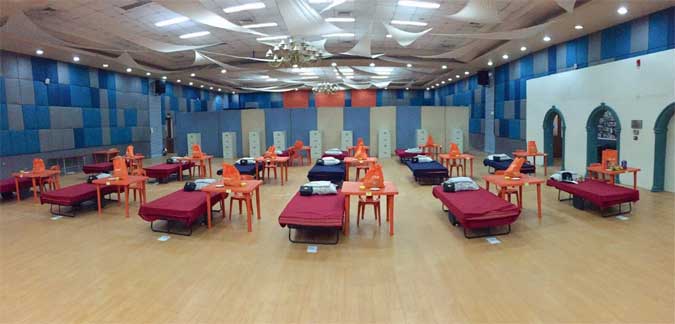
WHEN frontliners of The Medical City (TMC) were faced with the problem of finding a place to stay after their shifts were over, Meralco’s call came at an opportune time, offering them conducive living quarters at Meralco Center, complete with all the amenities to help them recharge for their next line of duty.

Prior to opening its doors, TMC frontliners were temporarily staying in TMC’s conference room, but unfortunately had to move out and were transferred to the TMC Rehabilitation Center gym. When the gym resumed operations, the frontliners had to move out again, leaving them no option but to seek for another place to stay close to TMC.

Recognizing the urgency of providing the TMC frontliners with a decent accommodation, Meralco readily reached out to TMC management, offering the company’s Multi-Purpose Hall (MPH) at the Meralco Fitness Center in Ortigas, just a 10-minute walk away from TMC, forits frontliners who had been living at the hospital since the Enhanced Community Quarantine (ECQ) was announced.

Initially, 32 TMC frontliners were welcomed by Meralco to stay in their MPH as long as they needed, providing them beddings, amenity kits, home-cooked hot meals four times per day, refrigerator, microwave, exercise equipment, shower and toilet facilities, internet access, 30 Smart SIM cards, including a TV with Netflix.

“These frontliners treat COVID-19 patients and we wanted to do our best to make them feel loved, cared-for, safe, and comfortable,” said Meralco President and CEO Atty. Ray C. Espinosa.

Through this initiative, Meralco continues to help address the frontliners’ problem in seeking conducive living quarters and faced difficulty in travelling to their homes due to the suspension of public transport during the ECQ period.

Kyla Buenafe, one of the TMC nurses currently staying in Meralco’s MPH, continues to be a light of hope in the war against the pandemic, calling on everyone to do their part in flattening the curve, as well.

Meralco is fulfilling its civic duty during this difficult and unprecedented time. Aside from ensuring reliable supply of electricity for everyone throughout this crisis, Meralco commits to keeping the lights on for those who work the hardest in the battle to fight against the dreaded pandemic.

You are the bearers of torches that give light to the dark corners of our country- not just mirrors passively reflecting the light of others” said Meralco chairman Manuel V. Pangilinan to his employees, as a testament to the company’s promise to serve and support the fight against the pandemic.

Globe names new Mynt CEO

Globe announced the appointment of Martha Sazon as new Chief Executive Officer of Mynt, operator of GCash, effective June 1, 2020, transitioning from her current role as Globe’s Senior Vice President and Head of Broadband Business. She succeeds Anthony Thomas who led the fintech company in the last three years.

Sazon joins Mynt with 12 years of leadership experience across various businesses in Globe such as Postpaid Mobile, Small and Medium Business, and Broadband Business.

“Inherent to her is the ability to pioneer and execute breakthroughs that led to significant and sustainable results, all anchored on addressing the most important customer needs such as the MySuperPlan, SME solutions-selling, and Home Prepaid Wifi and Streamwatch Xtreme Prepaid, while transforming operations through agile and digitalization,” said Ernest Cu, Globe President and CEO. “Martha, as a leader, is a clear embodiment of Mynt’s current state that is ready to take on the future, fired up for sustainable growth and armed with an evolved, progressive approach to customer experience.”

Mynt is poised for scale and Martha’s leadership experience in Globe is expected to help the company in re-shaping, championing and bringing to life Globe’s purpose in the fintech space towards a digital, financially-inclusive and cashless nation.

Meanwhile, Thomas will continue to serve as Advisor to the Mynt Board. “Mynt’s unwavering commitment in delivering world-class e-wallet services for the Filipinos, has brought the brand GCash to its undisputed leadership position in the Philippine Fintech space today. This achievement would not have been possible if not for the leadership of Anthony Thomas in the last three years,” said Cu.

Mynt is a leader in mobile financial services focused on accelerating financial inclusion through mobile money, micro-loans, and technology. As an affiliate of Globe, Ant Financial (affiliate of Jack Ma’s Alibaba), and Ayala, Mynt provides secure, accessible, and convenient fintech solutions to individuals, businesses, and organizations. It operates two fintech companies: GCash, a micropayment service that transforms the mobile phone into a virtual wallet, and Fuse, a tech-based lending company that enables Filipinos to get microloans to business loans. Mynt is part of the portfolio companies of 917Ventures, the largest corporate incubator in the Philippines wholly-owned by Globe.

Asian governments lead cryptocurrency legislation

Entering the second quarter of 2020, many Asian investors continue the widespread implementation of cryptocurrency into their portfolios. Thus, crypto markets have seen major influxes of new users. Coupled with widespread government acceptance of blockchain by means of new legislation as well as the development of blockchain powered fintech, cryptocurrency and blockchain are gaining a strong position in Asia.

When the People’s Republic of China outlawed the purchase of all cryptocurrencies in 2018, other Asian countries jumped on opportunities. Japan, for instance, began introducing legislation to ensure companies dealing in cryptocurrency are properly organized, incorporated and managed. Therefore, in 2019, the Japanese Congress passed the Payment Services Act and the Financial Instruments and Exchange Act. These laws require cryptocurrency exchanges to manage and hold their clients’ virtual assets differently than they do their cashflows and protect the rights of users against fraud while establishing derivative rules, respectively. Japan will begin to enforce these on May 1, 2020. Many within the industry see this legislation as a means to avoid future problems, foment mid to long term growth in cryptocurrency investment and technology while promoting Japan as a cryptocurrency haven. Currently, 23 cryptocurrency exchanges operate in Japan.

In Singapore, the state of cryptocurrency legislation and public perception of cryptocurrency is promising and interesting. Similar to Japan, the Singaporean government hopes to protect consumers by requiring cryptocurrency exchanges and payment providers to register with the Monetary Authority of Singapore. More interesting yet, Singaporeans themselves see blockchain skills as most the important skill for career development, according to a June 2019 LinkedIn survey. It should therefore not come as a surprise that investment in blockchain from both international and Singaporean sources accumulated to over USD 1billion in 2019.

In early April of 2020, Malaysia granted the first licenses to three firms allowing them to operate cryptocurrency exchanges; it should be noted that the government granted these licenses during the coronavirus crisis. Also, passing legislation applying to cryptocurrencies markets despite the presence of the coronavirus is the government of South Korea, which moved in March of 2020 to set regulations for cryptocurrencies exchanges and cryptocurrency itself. South Korea is a shining example of a country that has come to embrace cryptocurrency; the city of Seoul plans to unveil its own coin later in 2020 while implementing blockchain technology for public services and utilities, aiming to make Seoul Asia’s first smart city by 2022.

Blockchain has also gained acceptance from Asian fintech companies. Everex and Quoine (Singapore), use blockchain to facilitate speedy money transfers, Level01 (Hong Kong) allows customers to trade options, forex and other derivatives using blockchain technology, and in China, the Japanese financial giant Soft-Bank has teamed with Chinese fintech firm OneConnect to build a blockchain-based, uber-efficient logistics system for the Hong-Kong/Guangdong/Macau Greater Bay region.

The coronavirus ushered in a massive sell-off of bitcoin in mid-March, causing the price to dip below $4,000 per coin, but it currently sits at just around $7,000, indicating a recovery. Although this volatility could be a result of liquidity raising to cover margin calls, the experiences above demonstrate that governments are willing to embrace blockchain technologies even during times of crisis, a major boon to cryptocurrency markets. Most experts agree that the world economy will change as a result of the pandemic, presenting opportunities for blockchain technology.

Upskill with e-TESDA’s free courses while on quarantine

The Technical Education and Skills Development Authority (TESDA) is encouraging Filipinos to register and enroll in the online courses available on their platform e-TESDA or the TESDA Online Program.

The authority says taking advantage of this free opportunity allows workers to remain productive despite the mobility restrictions issued by the government to prevent the further spread of COVID-19.

“We are enjoined to stay at home, as this is among the ways to prevent the spread of the virus,”TESDA chief Secretary Isidro Lapeña said. “We encourage those with available time to make good use of this period, while Metro Manila is under community quarantine. I invite the students and workers to try enrolling in our online classes.  This is offered for free.”

There are a total of 68 online courses on e-TESDA, which is also accessible through the TESDA app in Google Play and Apple Store. Among the offerings available are courses in Agriculture, Automotive, Electronics, Entrepreneurship, and Heating, Ventilation, Air Conditioning, and Refrigeration. There are also resources on Human Health/Health Care, Information and Communication Technology, Lifelong Learning Skills, Maritime, Social, Community Development and other services, Tourism, and Technical Vocational Education and Training.

There are no requirements to enroll apart from computer literacy and an Internet connection. Enrollees are required to pass the quizzes that accompany each course. A certificate of completion will be given to successful enrollees, but assessment tests that require one’s physical presence at the technical schools are required for those who also wish to receive a national certification.

Once na mag-normalize ang sitwasyon, kailangan mo magtake ng assessment kasi kailangan ng physical presence para ma-assess nila yung paggamit mo ng equipment at kung ang skills ay kwalipikado na,explained Lapeña.

(“Once the situation normalizes, you need to take an assessment (test). Physical presence is needed so that they can assess how you used the equipment, and if your skills are qualified enough.”)

The term “disruption” has been used countless times since the start of the pandemic to describe how Covid-19 has turned the world upside down. Workers whose jobs have been suspended can take heart and bide their time by taking free courses to improve their career prospects.

Facebook compiles platform-specific tools to fight the COVID-19 infodemic

As information on COVID-19 continues to saturate the social media channels we rely on for news around the current crisis, a secondary danger of misinformation and fake news are fueling an infodemic that could potentially be as damaging as COVID-19 itself.

In response, Facebook, the company managing many of these platforms, has compiled a list of tools to ensure the news and knowledge we share are reliable.

Below are several ways to quickly access accurate and timely updates on the COVID-19 situation in the Philippines and globally across Facebook’s family of apps.

Facebook

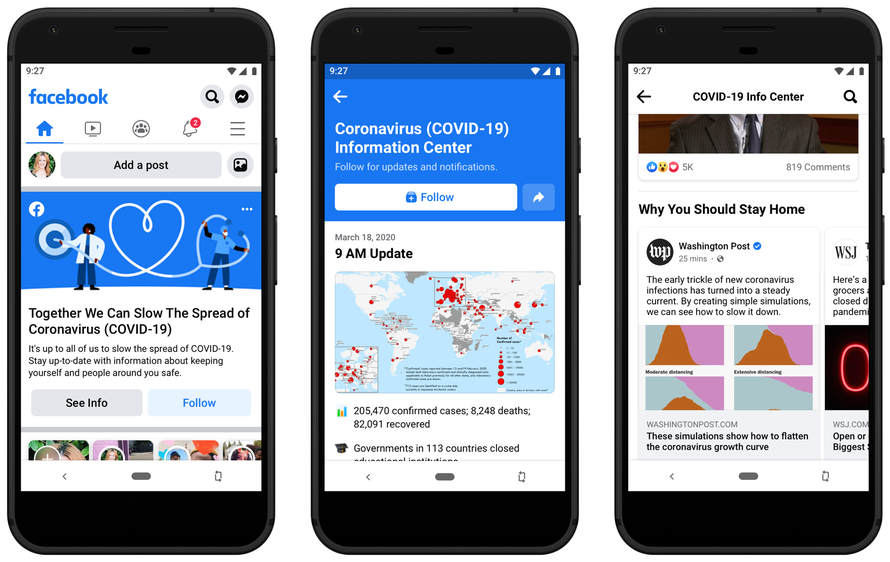
On the Facebook app, you can find the Coronavirus (COVID-19) Information Center featured at the top of your News Feed. It leads to the latest statistics and updates from the Department of Health (DOH), World Health Organization (WHO) and the United Nations Children’s Fund (UNICEF), with links to their verified Facebook pages.

The COVID-19 Information Center on Facebook also shares tips to handle staying at home, social distancing, how you can prevent spreading the virus, and what to do when you’re not feeling well. It even has a Community Help section to make it easier for people to post a request for help or offer help in their area.

People can opt in to follow the information center to get notifications and see real-time updates directly in their News Feed or find it bookmarked on the left side of their feed or when they tap on their mobile app.

In the coming weeks, Facebook will also start showing messages to people who have liked, reacted, or commented on harmful misinformation about COVID-19 that have since been removed from the platform. These messages will connect people to COVID-19 myths debunked by the WHO including those that Facebook removed for leading to imminent physical harm.

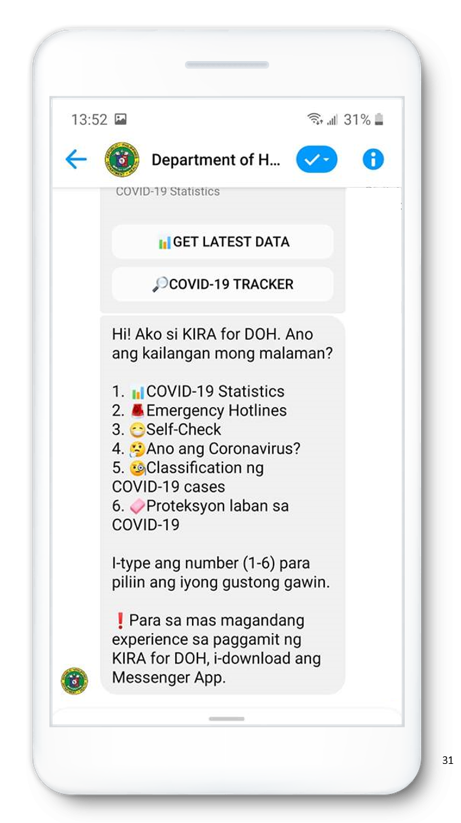
On Messenger, you can message KIRA the KontraCOVID Chatbot, brought to you by the Department of Health (DOH). When you chat with KIRA, you can get immediate responses to the most common questions about the virus, information on how to protect yourself and your loved ones against COVID-19, and even do a self-check of your symptoms to gauge your risk for COVID-19. You can search for the Department of Health on the Messenger app or go to the official DOH Page on Facebook and click the Messenger button to get started. 

Instagram

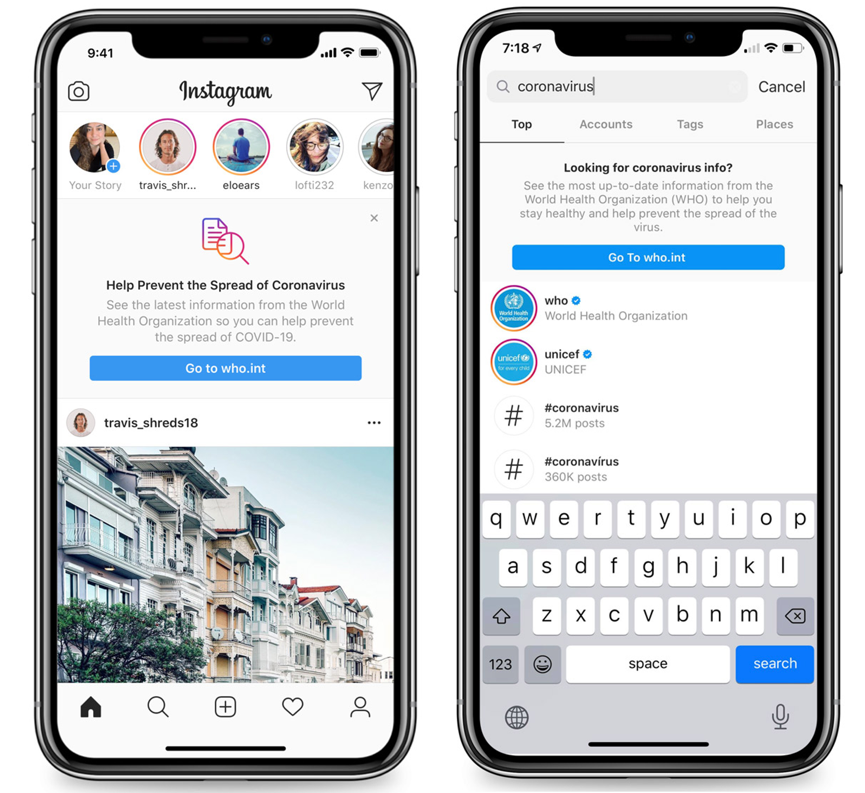
While scrolling through Instagram, you’ll find a notice at the top of your feed that directs you to credible resources from expert health organizations like the WHO and DOH. When searching for information and viewing hashtags related to COVID-19 on Instagram, resources from these health organizations are also put at the top to highlight them, making accurate information more accessible.

WhatsApp

If WhatsApp is your messaging app of choice, you can sign up to receive the WHO Health Alerts which provides daily reports, tips on how to prevent the spread of the disease, and answers to COVID-19 FAQs that you can easily share with your friends and family. Just send “Hi” to +41 79 893 18 92 on WhatsApp or follow this link. The same WHO Health Alerts are also available on Messenger.
With COVID-19 information available to you 24/7, it’s important to remember that accurate information can save lives. So it’s crucial for everyone to take that responsibility very seriously and ensure that we only share legit and verified info. Factual sharing is caring.

You can learn more about how Facebook is keeping people safe and informed about Coronavirus here.

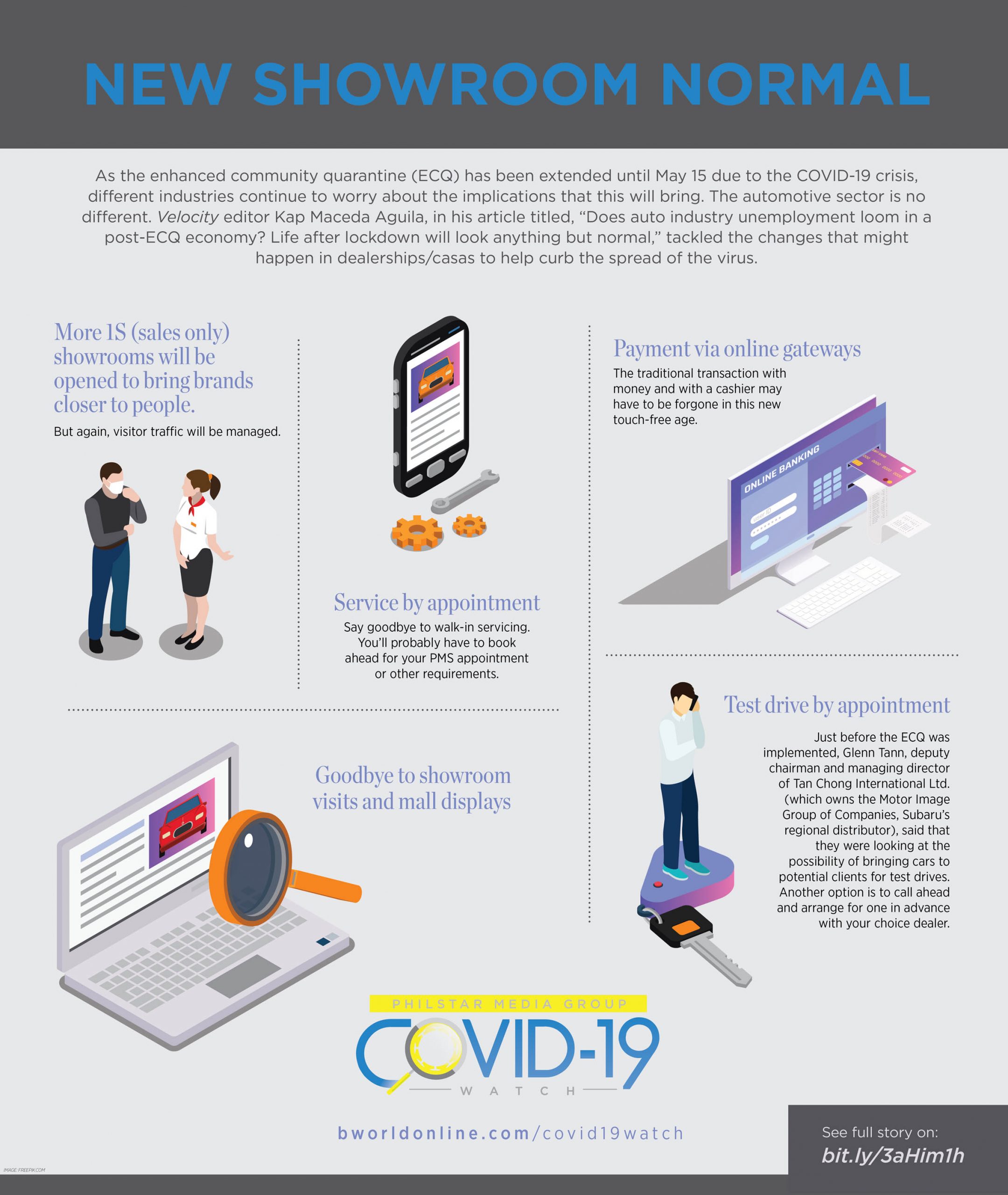
New Showroom Normal

For car buyers and enthusiasts, here are a few changes that might happen in dealerships/casas when the lockdown period ends to curb the spread of COVID-19.

Full story here: https://bit.ly/3aHim1h.

PHL to return to global bond market

THE Philippine government is set to return to the global bond market, announcing on Monday its plan to issue multi-tenor dollar-denominated bonds.

According to data from the Bloomberg Terminal, the papers to be offered will be 10-year and 25-year dollar-denominated senior unsecured bonds.

National Treasurer Rosalia V. de Leon declined to provide further details.

The proceeds of the fundraising activity will be used for general purposes and budgetary support, according to Bloomberg.

The bond issue has set a price guidance at “CT10+220 basis points (bp) area” for 10-year tenor, with CT10 referring to 10-year US Treasury bonds, and “3.375% area” for the 25-year notes. The notes will also carry semi-annual fixed interest rates.

Bloomberg said the volume of the offer for the two tenors will depend on the US benchmark size.

The benchmark size for Philippine global bond sales based on previous issuances ranges between $500 million and $700 million.

Debt watcher S&P Global Ratings on Monday assigned a “BBB+” long-term foreign currency issue rating to the proposed dollar-denominated notes.

“The notes represent direct, general, unconditional, unsecured, and unsubordinated obligations of the sovereign, and rank equally with the sovereign’s other unsecured and unsubordinated debt obligations,” S&P said in a statement yesterday.

The joint bookrunners for the transaction include Citigroup, Inc., Credit Suisse Group AG, Goldman Sachs (Asia) L.L.C./ Morgan Stanley, Standard Chartered Bank and UBS Group AG, according to Bloomberg.

The government’s initial borrowing plan was set at P1.4 billion with a borrowing mix of 75:25, in favor of domestic sources, but Ms. De Leon said earlier this month that the revised mix could now range between 70:30 and 72:28.

The Development Budget Coordination Committee is currently reviewing its macroeconomic assumptions in light of the ongoing pandemic.

Ms. De Leon earlier postponed the government’s plan to tap the panda or yuan bond market amid the coronavirus pandemic.

In January, the government raised €1.2 billion out of bids worth €4.3 billion from its offer of two tenors of euro-denominated bonds, broken down into €600 million each for three-year and nine-year papers.

The bonds carry coupon rates of 0.1% for the three-year bonds and 0.7% for the nine-year papers, a spread of 40 bps and 70 bps over benchmark rates, respectively.

Meanwhile, the Treasury sold $1.5 billion in 10-year dollar-denominated global bonds in January 2019 priced 110 bps above benchmark rates. The offer was met with strong demand, with total bids reaching $4 billion.

In May last year, the government also raised 2.5 billion renminbi (RMB) or $363.3 million via three-year panda bonds at a coupon of 3.58%. The offer was met with strong demand with total bids reaching RMB11.25 billion.

The Treasury also issued ¥92 billion ($860 million) following a multi-tenor offer of yen-denominated bonds in August last year. Broken down, ¥30.4 billion was raised via three-year samurai bonds at a coupon rate of 0.18%, ¥21 billion from five-year papers priced at 0.28%, ¥17.9-billion from seven-year securities at a 0.43% coupon, and ¥22.7 billion through 10-year bonds priced at 0.59%. — B.M. Laforga

NOLCO extension for small firms eyed

THE Department of Finance (DoF) is proposing the extension of the net operating loss carry-over (NOLCO) by two years for small firms which are facing nearly P500 billion in losses as a result of strict lockdown measures.

In a statement on Monday, Finance Secretary Carlos G. Dominguez III said extending the NOLCO to five years from the current three-year period would require approval by Congress, as it is provided for under the National Internal Revenue Code (NIRC).

“We will propose to Congress an extended NOLCO of five years for net losses that will be incurred in 2020. This means that a small business’ losses this year may be deducted from their income for up to the next five years for tax purposes,” Mr. Dominguez was quoted as saying.

The Finance chief said that extending the tax deductibility of losses incurred in 2020 will allow small businesses to “recoup” losses they suffered during the Luzon-wide enhanced community quarantine (ECQ), which started in mid-March.

DoF estimates showed small companies may suffer around P465.3 billion in financial losses due to strict protocols of the ECQ, which forced many to temporarily halt operations or employ a skeletal force.

Small businesses that operate in shopping malls and other outlets are expected to post P461 billion in losses, while those who have remained open but at reduced capacity will record P4.3 billion in losses.

“The longer NOLCO period will have the effect of lowering the tax payments between 2021 and 2025 of affected small businesses by a combined estimated total of P139.6 billion,” Mr. Dominguez said.

Under the NIRC, net operating losses of businesses that have not been previously offset as a deduction could be carried over as a deduction from their gross revenues over the next three taxable years immediately following the year of such loss.

Sought for comment, Albay Representative and House Economic Stimulus Cluster Co-Chairman Jose Maria Clemente S. Salceda said they will include the NOLCO extension provision under the proposed Economic Stimulus Act bill.

“It’s one of the tools we will include — a scalpel in the operating room for economic recovery,” Mr. Salceda said in a Viber message.

He estimated that the impact of the coronavirus pandemic on asset quality of businesses could reach P3 trillion.

Meanwhile, the government also assured that it will provide credit guarantees for small businesses affected by economic fallout from the pandemic. This will cover up to P120 billion worth of loans, according to the DoF.

“The credit guarantee program will provide small businesses easier access to bank financing, which tends to contract during crisis periods,” Mr. Dominguez said, adding that these could help small firms improve their cash position and settle other expenses. — Beatrice M. Laforga

Philippines may miss out on expected boom in ICT services

By Jenina P. Ibañez
Reporter

THE Philippines may miss out on an expected global boom in the information and communications technology (ICT) sector amid the coronavirus pandemic.

The National ICT Confederation of the Philippines (NICP) President Michael Tiu Lim said in a recent phone interview that many small businesses, especially those in the countryside, are unable to implement work-from-home (WFH)schemes due to a lack of adequate internet infrastructure.

The United Nations Conference on Trade and Development (UNCTAD) in a report last week said that while the pandemic dealt a “severe blow” to the services sector, particularly in tourism, hospitality, and retail, the ICT services sector will see windfall opportunities.

However, rapid growth in ICT services such as teleworking, video streaming, gaming, and e-commerce will mostly be seen in developed countries, the UNCTAD said.

UNCTAD International Trade Director Pamala Coke-Hamilton said the boom in the ICT sector may not compensate for the loss of income from personal service sectors like tourism, especially in developing countries.

NICP’s Mr. Lim said there’s been growth in some ICT companies, such as food delivery apps.

“But on the other side of the coin, there are companies that are service oriented… who are hardest hit,” he said, citing tourism and restaurant mobile applications that have seen reduced demand.

“So it’s a double-edged sword. There are certain sectors in the ICT industry that are doing well, and the others will not be doing well. In the overall balance, I think companies that don’t do well outweigh the companies that do well, unfortunately.”

Mr. Lim said that there are opportunities for ICT companies as more businesses start working from home and make use of their services, noting an increase in demand for online meeting apps.

“But the question is, how ready are our SMEs (small- and medium-sized enterprises) to go to work from home? There are a lot of problems right now with work from home, especially in the countryside. And the main issue is not only the policies of the companies but even the physical connectivity,” he said, adding that many businesses are still geared towards social, in-person activities.

“Some employees don’t even have proper 4G or 3G connectivity at home to enable them to connect to their work.”

TOURISM SLUMP
The Philippine tourism sector continues to suffer as global travel grinds to a near halt.

Tourism Congress of the Philippines (TCP) President Jose C. Clemente III said in a phone interview on Thursday that the industry expects 18-24 months before a return to normal.

“The last ones that will recover (in the tourism industry), based on the sub-sectors, will be tour operators, travel agents, and the MICE (meetings, incentives, conferences, exhibitions) industry,” he said, explaining that those sub-sectors attract mass gatherings.

He said airlines will have to wait and see what travel demand will be like after borders are reopened, noting that tourism will probably not return to normal until a COVID-19 vaccine is developed.

Mr. Clemente noted that part of the hotel industry, especially in Metro Manila, remains in operation due to the demand from outsourcing companies housing their workers and the repatriated overseas Filipino workers.

But he said the industry cannot yet quantify the effect of the pandemic on revenue projections, noting that some companies have already started cutting costs and laying off workers.

“It’s hard to say because a lot of this is foregone travel…which we cannot really quantify anymore.”

The best-case scenario, Mr. Clemente said, would involve a return to a semblance of normalcy after a year. The worst-case scenario — “some companies that were there pre-COVID will not be there after all of this.”

FUTURE OF SERVICES
Mr. Lim said small businesses must put business continuity plans in place as WFH measures become the new norm.

“Improving the ICT infrastructure, yes that is definitely needed. Work-from-home strategies in the countryside are not as effective as here in Metro Manila because certain areas where employees live don’t have decent coverage.”

Mr. Clemente sent recommendations to the tourism department, detailing in a position paper that the industry needs the expedited provision of low or interest-free loans, lower rental rates for offices and event venues, waived participation fees for trade shows, and funding for marketing to the domestic market “as soon as practicable.”

In the medium term, TCP is calling for the waiving of corporate and income taxes for 2020 among accredited tourism stakeholders and incentives such as tax credits, among others.

The Department of Tourism (DoT) in a mobile message said it has incorporated suggestions from the Tourism Congress in its recovery program, which waives participation fees to trade shows, includes a “beefed up” marketing campaign, and develops post-pandemic health protocols.

“(The TCP) has been continually apprised of the efforts undertaken by the Philippine government to mitigate the impact of this global health concern on the country’s tourism stakeholders, such as the expedited provision of low or interest-free loans to DOT-accredited stakeholders, capacity enhancement programs, alternative livelihood training for cooperatives and representation to various government offices on matters relevant to the travel and hospitality sector.”

BusinessWorld reached out to the Department of Information and Communications Technology, but has not yet received a response.

Further monetary easing ‘still in the agenda’ — Diokno

BANGKO SENTRAL ng Pilipinas Governor Benjamin E. Diokno said on Monday that further monetary easing through rate cuts and reduction in reserve requirement ratio (RRR) remain on the table to ensure the country’s economic stability amid the coronavirus disease 2019 (COVID-19) crisis.

“We’ll do anything to get us through this crisis, so that’s still in the agenda. But right now, as you know monetary policy works with a lag, we will observe how the banking industry will behave,” Mr. Diokno said in an interview with ABS-CBN News Channel (ANC).

The central bank has already slashed policy rates by 125 basis points (bps) this year to cushion the impact of the pandemic on the economy. The latest of which is the 50 bps off-cycle rate cut which brought down reverse repurchase rate to a record low 2.75%.

Meanwhile, overnight lending and deposit have been lowered to 3.25% and 2.25%, respectively.

In total, the BSP has slashed rates by a total of 200 bps since 2019, fully reversing the 175 bps rate hikes in 2018 when inflation went to a multi-year high.

Whether or not another rate cut will come sooner will depend on inflation trend, according to Security Bank Corp. Chief Economist Robert Dan J. Roces.

“They’ll likely assess trajectory of inflation to help decide when appropriate to cut policy rates further while keeping real rates in positive territory,” Mr. Roces said in an e-mail.

For UnionBank of the Philippines, Inc. Chief Economist Ruben Carlo O. Asuncion: “There might be another 25 bps depending on more data points, i.e., April inflation. Or it could also be another 50 bps because 2.25% essentially is still above the BSP new inflation average for 2020 at 2.0%.”

Since the Monetary Board (MB) canceled its May 21 meeting after the off-cycle rate cut, the next scheduled policy-setting meeting will be on June 25.

In terms of RRR cuts, it can be recalled that Mr. Diokno promised to bring it down to a single digit by the end of his term in mid-2023.

Given that the central bank has again reduced RRR for universal and commercial banks by 200 bps to 12% in early April, Mr. Diokno said that they are now “ahead” of their goal as he still has three more years to further bring down the RRR.

For now, RRR of thrift and rural banks have been maintained at four and three percent, respectively. However, the BSP has reduced minimum liquidity ratio for standalone thrift and rural banks by 400 bps to 16% until yearend in a move to boost liquidity amid the pandemic.

“Further cuts in RRR by least another 200 bps as hinted by the MB would help further reducing borrowing costs and infuse about P200 billion into the banking system,” Rizal Commercial Banking Corp. Chief Economist Michael L. Ricafort said.

Mr. Diokno has been authorized by the central bank to reduce RRR by a total of 400 bps in total for the whole of 2020.

Analysts are of the view that BSP still has space left to further cut RRR.

“We still have a high level of RRR compared to other neighboring countries and it is part of the plan since the time of the late Governor Nestor A. Espenilla,” Mr. Asuncion said.

“RRR is also still potent with central bank affording to cut by another 200 bps authorized, or even further if the situation needs it, though they’ll likely stop at 10%,” Mr. Roces said. — Luz Wendy T. Noble

ADVERTISEMENT
ADVERTISEMENT