Home Blog Page 9500

The office isn’t dead. It’s just convalescing

By Nisha Gopalan

I RETURNED to the office this week, joining thousands of bankers from Citigroup, Inc. to Morgan Stanley that are trickling back to their desks in Hong Kong. After almost five months working from home, it’s going to take some getting used to.

The easing of coronavirus lockdowns heralds the beginning of the end for the world’s greatest work-from-home experiment. Perhaps. Twitter, Inc. will let employees work from home permanently even after the outbreak recedes, while others such as Google have said staff should expect to stay away for the rest of the year. The upheaval caused by the pandemic has caused many to question whether we will ever return to business as usual, giving rise to headlines such as “the death of the office.” I have my doubts.

My initial reaction at being told to stay home in January was panic. With two teenage daughters about to start online schooling and a husband who would also need to work from home, I struggled to see how our crowded 47th floor apartment would cope. I’d had a taste already, when the office became all but inaccessible for several days during the height of Hong Kong’s protests last year, so I knew what we were facing. Over the following, fractious few months, I have jostled for space on the dining table, mediated disputes between the girls, and tussled over the yoga mat — a crucial stretching prop for laptop-induced shoulder strains, as well as an essential accessory for online PE classes.

Somewhere along the line, I grew to like it. I’ll miss the home-work experience, when it finally ends (like many other companies in Hong Kong, our return is on a split-team basis, so we aren’t back at the office full-time yet). The family has bonded more tightly as a result. I’ve grown accustomed to the home-office rhythm, acquiring some admittedly unhealthy habits along the way — such as snacking on Cheetos, bingeing on TV news channels, and reading the obituaries.

I’m in the minority, though. We’re fortunate in having more living space than most. In a city such as Hong Kong, which is densely packed with tiny apartments, it’s simply not viable for many people to work from home indefinitely. The average apartment size is 40 square meters (430 square feet) compared with 137 square meters in New York City, according to Jones Lang LaSalle, Inc. Many employees just don’t have the room to set up a home office. And living in such cramped quarters, they need to get out regularly.

The cost-benefit equation for Hong Kong is skewed. With urban areas being closely packed and the subway system efficient, getting to the office is quick and easy for most people. It may be a different story in the US, where cities sprawl into the suburbs, commute times may be long, and public transport is often less reliable. Or in Asian metropolises such as Mumbai, which is densely packed but plagued with horrendous traffic congestion and a more than 150-year-old train network that makes suburban working attractive.

That’s not to suggest that Hong Kong will escape any long-term impact from COVID-19. Macquarie Group Ltd. is among companies that have already decided to cut space in the city’s skyscrapers. Other financial services firms can be expected to follow.

Still, there are many office jobs that can’t be done remotely. At most, 30% of bank employees in the city can work from home, Bloomberg Intelligence analyst Francis Chan estimates. “In industries that thrive on information flow and speed, like sales and trading, you may see back offices and compliance work from home but traders will likely have to go back even if they already have three screens at home,” said Parijat Banerjee, a financial services consultant at Singapore-based Greenwich Associates.

In any case, most people don’t want to get rid of the workplace, HSBC Holdings Plc analysts James Pomeroy and Davey Jose wrote in a report titled “Leaving the City.” They just don’t want to be there all the time. That broad conclusion applies across all developed markets where the technology is adequate to enable remote working, Mr. Pomeroy said.

Ultimately, offices are more than just a place to do business — like the cities that surround them, they are meeting points for social and cultural exchanges. Humans are social animals, and we need more contacts than those our immediate family provide.

That’s a thought that resonated with me this week as I surveyed the near-deserted pantry at Bloomberg’s central Hong Kong offices, a space that was typically heaving with people and animated conversations before the pandemic. A return to normality can’t come soon enough.

BLOOMBERG OPINION

Women’s leadership in the time of pandemic

During this period of the pandemic, we have heard of both female and male leaders doing a great job at managing the crisis in their respective countries. However, more and more, the spotlight seems to be on the former.

For Cami Anderson who wrote in a Forbes article entitled, “Why do women make such good leaders during COVID-19,” women possess vision, inspiration, direction-setting, and creative thinking — qualities of transformational leaders. In the same vein, Michelle P. King added that “research has consistently found women tend to adopt a more transformational leadership style, which included demonstrating compassion, care, concern, respect and quality. In the context of this pandemic, women leaders were also seen as ‘other-directed’ and have ‘a sense of commitment to the common good.’”

How have women leaders in the Philippines responded to the COVID-19 crisis?

ON THE LOCAL FRONT
According to Leta Hong Fincher, one of the key attributes of women leaders appropriately responding to the pandemic is that of early and decisive action. To a large extent, this was exemplified by Isabela City, Basilan Mayor Sitti Djalia Turabin-Hataman, one of the 11 women elected as mayors in Mindanao. When asked about strategies she used in responding to the COVID-19 crisis, she explained a five-fold approach consisting of prevention, response and management, assistance, communication and information, and data.

At the onset, prevention was the priority strategy. As early as February 2020, the Isabela City COVID-19 Task Force was established. Policies on social distancing, limitations on non-essential establishments, no angkas (riding pillion on motorcycles), curfew, and skeletal workforce systems were already implemented even before the general community quarantine (GCQ) declaration on March 25. They also set up a BalikBayani program for returning Isabelenos from Luzon and other areas with COVID-19 cases for contact tracing.

The second strategy was response and management targeting positive COVID-19 cases, should they begin to have them. According to Mayor Turabin-Hataman, they only have a Level 1 hospital catering to the entire province of Basilan. Thus, they undertook urgent actions as regards capacitation of their health workers to handle COVID-19 patients and the procurement of equipment, supplies, and medicines. They also set up a Ligtas COVID facility for the isolation of suspected COVID-19 cases and are currently preparing an identified quarantine area for the use of other Isabelenos coming back home.

Isabela City has a 52% poverty rate and many of its residents are in the informal sector. In this light, Mayor Turabin-Hataman’s third strategy was the provision for assistance. Under the GCQ, they were able to distribute assistance to 36,502 families. They also provided free delivery services for those needing essential supplies available only in Zamboanga City.

The fourth strategy revolves around communication and information that consists of having regular video messages that give updates and inform the public about preparations as well as reminders on existing policies.

And lastly, the fifth strategy focused on data. They constantly updated their data on suspect-probable-confirmed COVID-19 cases, the number of affected households and families, displaced workers, logistics (a Procurement and Inventory Committee was created), movement of people, etc. To date (as of May 9), Isabela City, Basilan has zero confirmed COVID-19 cases, zero probable, and 16 suspected cases.

As a woman leader, she believes that leadership must provide a platform for people to work together and maximize their potential. She also believes in the currency of innovative approaches and foresight. And finally, the indispensability of human connection:

“Getting people to trust you. Reach out in every possible way you can and let them know what the city is going through. Tell the truth about the realities, while providing hope based on actual gains and positive projections.”

PEACEBUILDING AND PANDEMIC
In the time of COVID-19, peace education is most relevant for communities already under conflict and strife, for individuals battling against hatred, discrimination, and division, and for children who are the most affected by this multi-layered situation.

Bai Rohaniza Sumndad-Usman leads the Teach Peace Build Peace Movement (TPBPM). In order to continue their mission of building a Culture of Peace and Resilience through Peace Education, they adopted a four-component strategy — assess, adapt and translate, technology exploration, and resources tapping and building. One of the results of their work was the launch of the #KumustaKa #PeaceInTheTimeOfCovid19 online campaign on March 30. As explained by Bai Rohaniza, this campaign consisted of “each day having themes that create opportunities for children, youth and adults to learn about finding peace with self and others in the midst of the pandemic.” Additionally, they launched the Peace in the Time of Covid-19 Campaign where they uploaded graphics, conducted live sessions, and received messages regarding how the sessions helped them find peace amidst the crisis.

Several factors influenced her and her team to think more innovatively about peace education. According to Bai Rohaniza, these were “1.) the immediate need for a strategic internet access and online or digital transition of peace education to address conflicts within self (e. g. depression and mental health), toxicity of social media and possible psychological and physical violence, which might emanate from inequity and poverty, brought about by the pandemic; 2.) possible worsening of existing conflict and context sensitivity issues in the communities we cater (directly and indirectly caused by the pandemic); 3.) positive opinions and response of the community with regard to physical, emotional and psychological impact and benefit of these strategies (from collected data survey); and 4.) available resources from the organization and partner organizations, which would help in the realization of strategies.”

Being a woman peacebuilder in the time of pandemic, Bai Rohaniza draws inspiration from her past experiences and learnings and the kind of ethos she has put together to meaningfully serve others. She said peacebuilding work has made her resilient and gain inner peace and taught her to adapt to difficult situations. But more importantly, this current crisis highlighted the humanity in her leadership.

“I am also the type of leader who values sensitivity, inclusivity, compassion and empathy with a strong practice of servant leadership combined with mindful and charismatic leadership styles on the aspect of continuing to serve, be inspired and driven by my conviction and commitment to our mission while making sure that other people’s needs are being served and a focus on the growth and wellbeing of those we serve. I am able to communicate empathetically and nurturing and guiding others towards our vision even under unfavorable circumstances and thinking of creative and innovative programs or solutions to address our challenges have been a part of my practice in serving our schools and communities. And in all of these, I consider everything as a gift from the Almighty as He is the reason behind the purpose and journey that I am in.”

Indeed, being a woman leader does not automatically and magically make one successful in dealing with a pandemic. However, as shown by the experiences of Mayor Turabin-Hataman and Bai Rohaniza, it is not really a matter of being better but rather doing things better that matter.


Ma. Lourdes Veneracion-Rallonza, Ph.D. is an Associate Professor at the Department of Political Science, Ateneo de Manila University.

mrallonza@ateneo.edu

Seeking for a job during the pandemic

By Hannah Mallorca
Features Writer, The Philippine STAR

As we face an uncertain future, here are ways to stay at the top of your career game in a seemingly overwhelming job search

The coronavirus disease 2019 (COVID-19) pandemic has affected various sectors worldwide. With this, many companies addressed its effects by resorting to salary cuts, furloughs, reducing work hours and bonuses, employee layoffs and freeze hiring.

As a result, unemployment rates have worsened and left millions of people jobless. According to Labor and Employment Secretary Silvestre Bello III, 2.6 million workers in the Philippines have already lost their jobs due to the temporary closure of businesses affected by the pandemic.

To address how jobseekers can thrive despite COVID-19 woes, The Philippine STAR’s CareerGuide shared tips on how to be hire-ready. The online discussion featured certified HR professional Oliver Requilman, Philippine HR Group founder and president Darwin Rivers and TaskUs VP for Recruitment for SEA Carmela Sais.

Hiring in the new normal 

As the world transitions into the new normal, many companies need to adapt to changes in operations — job hiring is no exception. For Ms. Sais, recruiters are still adjusting to the drastic shift from the traditional hiring process.

“Recruiters will tell you that kami mismo, we need to adjust because a lot of recruitment operations in all companies were on-site,” she admitted. “There are very few who support virtual hiring as all the technology that’s needed to support virtual hiring needs to be planned out.”

With this, Ms. Sais advised recruiters to innovate the hiring process through virtual hiring or conducting interviews through phone calls.

“A really good virtual infrastructure doesn’t even require you to come in the site at all,” she stated. “Companies need to develop virtual hiring processes from start to finish, from application processes to interviews, and even submission of documents.”

Despite the pandemic, Mr. Rivers stressed that there are still industries that are hiring. These include business process outsourcing (BPO), accounting, online teaching, front- and back-end support, government offices and frontline industries such as hospitals and clinics.

“There are dozens of companies that are still hiring because they need the right people to function properly. They need the right talent and the right amount of manpower to support their business,” Mr. Rivers said.

Ideal characteristics of a hire-ready jobseeker

For Mr. Requilman, having the right mindset and adopting a growth mentality are ideal characteristics of a jobseeker.

“It’s easy to say that an applicant has the right attitude, but having the right mindset will become your driver towards success,” he said. “We always look for someone with a ‘self-help’ mindset. If he needs help, he or she can always improve by reading or researching.”

Mr. Requilman shared that recruiters ask about an applicant’s pastime since it reflects his or her mindset in a professional landscape. “Ang importante kasi is that the person has the innate desire to learn and do something to improve,” he added.

During the hiring process, Ms. Sais said that recruiters examine if a jobseeker’s abilities match the requirements of the position. With this, applicants must have the proper soft skills.

“There is always a job for you. You should use this time to upskill and to get better at what you’re doing. The job market is competitive, so you need to have the skill, right mindset and emotional intelligence,” Ms. Sais added.

Applying through virtual hiring 

According to Ms. Sais, the interview process in virtual hiring is audio-driven. Job seekers should prepare by researching necessary information and making sure that they’re camera- and audio-ready.

“Make sure that laging naka-charge at naka-open ang phone mo, make sure that the audio conversation is clear and we have to alert our family members at home,” Ms. Sais added. “Invest in a good Internet or data connection because it’s the only way for us to get a hold of you.”

It’s difficult to predict when the pandemic will end, but we can always choose to develop ourselves. There’s always an advantage in constantly improving yourself — especially in the current job market.

For more information about employment, job openings and advertising options, visit CareerGuide PH on Facebook and LinkedIn.

A conversation on women in the workplace

By Hannah Mallorca
Features Writer, The Philippine STAR

At present, women are rising to top positions in their respective industries. However, a 2019 survey conducted by McKinsey discovered that despite their achievements in the workforce, women are still underrepresented at every level

In the past, much of the labor force has been confined to specific gender roles, which has affected various industries. Even if the world has progressed much since then, women still face occupational sexism and inequality at work.

It’s important for organizations to empower female employees during this time. According to the online learning platform Bizlibrary, companies and leaders can support women by improving gender diversity, celebrating their accomplishments, prioritizing professional development, closing pay gaps and accepting individuality.

To discuss women’s identity in the workplace, The Philippine STAR’s CareerGuide shared insights on how various industries can empower women. The online discussion featured Remote Staff co-founder Rica Jankulovski and TaskUs VP for Business Development Victoria Alcachupas.

Balancing between career and life

One of women’s strengths lies in her ability to multitask. Despite this, Ms. Jankulovski stressed the importance of balancing a woman’s career and personal life.

“As a woman, I think career should be part of life, not separate. A balanced life makes me really happy. Having that balance between having time with my family and doing something that makes an actual difference to the community I belong to or care about makes me happy,” she added.

For Ms. Alcachupas, understanding her purpose as a career professional helps a woman manage her priorities at work and life.

“It’s not just understanding why we are doing this, mas importante sa amin ‘young impact na ginagawa namin kasi nakakatulong kami to change the lives of the people working for us and ‘yung family nila,” she said. “And it’s not just fulfilling for me, but also for the entire team.”

Leading a team

According to Ms. Jankulovski, she prioritizes her personal values whenever she leads her team and fulfills her tasks. Even if workplaces have its own problems, she stressed that bosses and employees must work towards finding a solution.

“All you have to do is to declare the objectives of your team, what you’re aiming for and what you are trying to achieve. It’s also important to align the values that you have,” Ms. Jankulovski said. “We have a goal and focus, and we have to be honest with each other. We have to know that not all of us are perfect, that’s why we all have a team because we’re here to help each other.”

Employment opportunities for women

The coronavirus disease 2019 (COVID-19) pandemic has affected various industries worldwide. As a result, many organizations have transitioned into the work-from-home (WFH) set-up to cope. For Ms. Alcachupas, WFH is an opportunity for women to showcase their skills.

“We see many companies take advantage of the WFH setup. For women, it’s a perfect time to shine, it’s a matter of choice on where to put your energy,” she said. “There are lots of opportunities, especially in the business process outsourcing (BPO) industry, that are open during this pandemic.”

Ms. Alcachupas added that she prioritizes talent and capability in scouting for potential employees, contrary to the stigma against women.

“Based on my experience, more than 50 percent of our workforce are women and marami diyan are working mothers,” she shared. “We promote diversity and inclusion so more than just mothers, we’re open to the LGBTQ+ community and persons with disabilities.”

Why going digital is an advantage for women

For Ms. Jankulovski, the digital landscape is helpful for mothers since they prioritize their careers and family life. Online workspaces provide more options for women to do their daily tasks within their own pace.

“The post-pandemic era and even the digital landscape give women more options to stay at home and have an option to do more task-based roles. Any knowledge-based work can work remotely,” she added.

Millennials, Gen Zs help amid COVID-19 pandemic

By Aliyya Sawadjaan
Features Writer, The Philippine STAR

For two months, many parts of the country including the National Capital Region were under lockdown or enhanced community quarantine (ECQ). In those months, many businesses and places of work were closed in the hopes of curbing the spread of the virus. For many people, these were the hardest months of their lives. With work and public transportation suspended, many people had to rely on government subsidies and donations from the private sector and private individuals.

Millennials and Gen Zs were among those who dedicated their time and effort in helping the needy. In fact, many charitable initiatives were started by them, from donating money to organizations and fundraisers, making face shields and masks for frontliners, donating food packs to poor communities, to feeding stray animals.

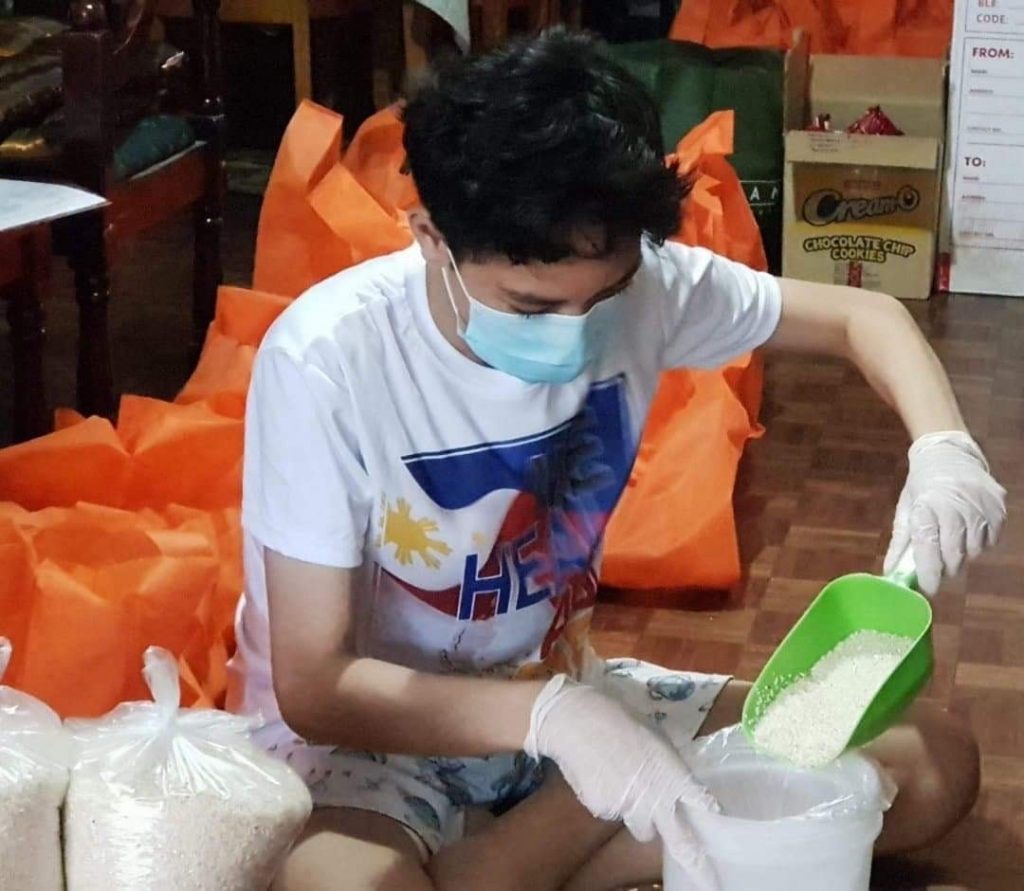
Jarred Gaviola, a Grade 9 student from Muntinlupa, used his scholarship allowance and created his own fundraiser and donation drive to buy food and other necessities for the benefit of 100 families in barangays Tunasan and Bayanan of Muntinlupa, including his school’s canteen and utility staff. He also distributed pastries to medical and security frontliners. He’s also the president of the Key Club of Munsci Servant Leaders. He and other members of the organization initiated a special project called “Oplan COVID-19” to help residents and frontliners cope with the ECQ by giving relief packs to different locations in Muntinlupa.

Jarred Gaviola repacks rice and other food items distributing them to beneficiaries in Muntinlupa City. Photo from JARRED GAVIOLA FACEBOOK ACCOUNT

Gaviola’s donation drive “Tara, tulong tayo: Food donation drive” aims to provide donated goods to the homeless and affected families of the coronavirus disease 2019 (COVID-19) pandemic.

Marcus Chu is a 16-year-old Grade 10 student who made face shield frames for medical frontliners using a 3D printer gifted by his parents. It takes him one hour and 20 minutes to print one frame. Once printed, acetate can be attached to make a reusable face shield.

Meanwhile, post-graduate students of West Visayas State University called for donations to make improvised face shields for the medical frontliners of West Visayas State University Medical Center and other Iloilo public hospitals. According to a Facebook post last March 26, Rhona MacEachen and the people involved in the initiative have given out more than 3,000 face shields to medical frontliners. The group has also donated gloves, thermometers, surgical caps and hoods.

Through collective effort, some initiated bringing prepared meals to frontliners or partnering with farmers to bring their crops to the metro for selling.

The 2011 high school batch of Chiang Kai Shek College along with their partner Batch 8 Brotherhood Inc., formed a project called Action Agad: Covid19 Task Force, to raise funds to provide 1,000 food packs to street dwellers around Manila. With the help of their batchmates, friends and generous donors, the group was able to raise P278,000 from the initial goal of P250,000. Excess funds were used for two other projects, namely Action Agad: Laban, Frontliners and Manila Food Drive.

Action Agad: Laban, Frontliners focused on providing hot meals to medical frontliners, specifically in Paranaque, Muntinlupa and Las Pinas cities while the Manila Food Drive aims to provide hot meals to at least 100 people per day around Manila.

Meanwhile, the 2003 high school batch of San Beda College Alabang rallied batchmates, friends and families to donate to a project called Bene 2003: The Clarion Call Donation Drive. The initiative, in partnership with Lawyers for Doctors and Call for Love Against COVID, aims to raise funds to provide medical supplies for medical frontliners. The group was able to collect more than P100,000 and used the funds to provide medical equipment such as personal protective equipment (PPE), hazmat suits, N95 face masks, and aerosol boxes to six hospitals in four cities.

A group of mountaineers was also able to help out numerous communities through their numerous initiatives. Random Act of Kindness or RAK, through their RAK: Operation Kindness donation drive, was able to commission a community in Banaba, San Mateo to produce medically-sound and reusable face masks and soaps that are essential in preventing the spread of COVID-19.

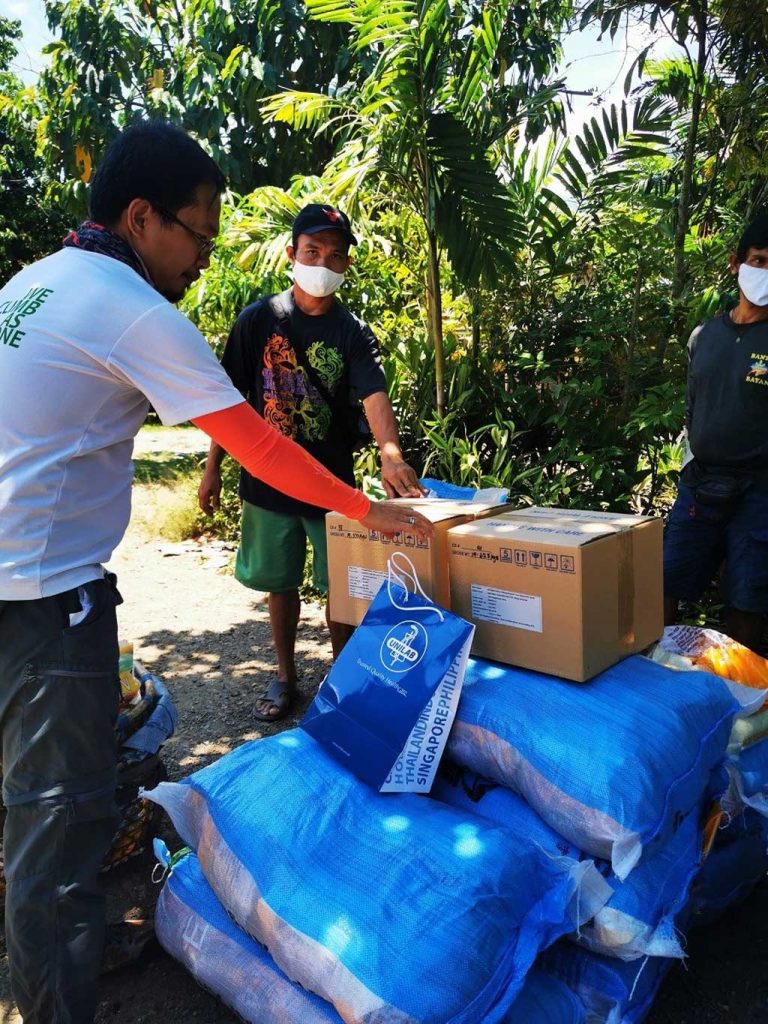
RAK presents donated food items and other essentials to the Dumagat communities in Rizal. Photo from RANDOM ACT OF KINDNESS – RAK

With the money raised from the drive, they funded materials for these products and bought these at a fair price from the sewers. The masks and soaps were then donated to 400 residents from different sitios surrounding Daraitan and Kaliwa rivers, and 150 residents in six barangays in Caloocan and San Jose del Monte, Bulacan.

Their second project involved partnering with Dumagat farmers to help them sell their produce in the capital. They have since created the Facebook page Talepaan, dedicated to selling various products from these farmers. Talepaan is a Dumagat word for the marketplace. For their third project during the ECQ, RAK partnered with Human Heart Nature to donate relief packs to 204 Dumagat families from five sitios of Daraitan-Tinipak, Makidata, Baykuran, Cablao and Yok-yok. The beneficiaries live in off-the-grid communities along the Sierra Madre mountains.

Millennials and Gen Zs often get a bad rap as many people see them as lazy or entitled. But when it comes to making a positive difference, these young people are driven to make that change possible.


To help the Dumagat farmers, visit Talepaan at www.facebook.com/talepaan. 

Philippines probes proliferation of fake Facebook accounts after anti-terror law protest

THE Philippines is investigating the proliferation of fake Facebook accounts using the identities of students, journalists, and government officials, which appeared after an anti-terror law protest, the Justice Secretary Menardo Guevarra told Reuters on Monday.

The University of the Philippines first identified the accounts over the weekend following the protest on its campus on Thursday. Those spotted carried names of students who were among eight people arrested during the protest.

Dozens of Facebook users have since posted screenshots of accounts using their names and urged friends to report the duplicates.

Mr. Guevarra said he has ordered the cybercrime office and National Bureau of Investigation to “get to the bottom of this huge anomaly.”

A Facebook Inc. spokesperson said the US firm was investigating reports of “suspicious activity” and would act on accounts violating its policies.

Filipinos spend more time on social media than any other nationality, according to a recent study. Platforms such as Facebook have become political battlegrounds, with so-called influencers emerging as a force behind President Rodrigo Duterte’s 2016 election campaign and defending him ever since.

Opposition Senator Francis Pangilinan said he suspected the accounts targeted those who oppose Duterte’s anti-terror bill.

A presidential spokesman previously said the bill is patterned on those used in countries that had dealt effectively with extremism. Critics have said the bill could give the president unprecedented power to target them.

“We just need to stand together against possible tactics seeking to silence our voice,” the student representative of the state-funded university said in a statement opposing the accounts.

Raymund Liboro, head of the National Privacy Commission, said it was too early to draw conclusions on the motivation for the accounts. He told Reuters he had been informed by Facebook that the company had taken many of them down.

Facebook in May said it estimated the prevalence of fake accounts among its worldwide monthly active users at 5%. — Reuters

Mindanao introduces eco-friendly abaca face mask

By Michaela Tangan
Features Writer, The Philippine STAR

The world has boosted its creativity in finding alternative materials for making face masks.

Online, we can easily find do-it-yourself (DIY) video tutorials on how to transform old clothing into face covers. Recently, Japan and Chile also presented copper in face masks to repel certain bacteria and viruses.

The Philippines also takes masks one step further with Mindanao’s trademark abaca fiber.

Salay’s contribution to the world

The Abaca fiber used to create Salay Handmade Products Industries, Inc. (SHPII) face cover provide better filtration, density, porosity, and water repellency than the synthetic materials. (Photo from Fiber Mask – SevenXb/Facebook)

Salay Handmade Products Industries, Inc. (SHPII) has been creating world-class stationery products for the last three decades.

In March, the Misamis Oriental-based company began developing prototypes of abaca-made masks, heeding to the call of the World Fair Trade Organization-Asia to join the rest of the world in flattening the coronavirus disease 2019 (COVID-19) curve by providing fair trade personal protective equipment (PPE) to affected communities.

SHPII utilized abaca that is locally grown by farmers in Salay and prized for its mechanical strength and resistance to saltwater.

“We have this strong, tear-resistant, and water-absorbent paper material that was introduced to us about five years ago. We experimented by applying this strong material to make face mask or face cover. The material is based from 100% abaca fiber, the strongest fiber in the world,” SHPII’s Neil Francis Rafisura told The Philippine STAR.

Along with local women artisans with over 30 years of experience in making handmade paper, SHPII started with the production of face masks in mid-April.

Mr. Rafisura explained that it takes roughly five days to process, convert and ship the face masks as each product is carefully and precisely manufactured by hand.

“The paper filters are manufactured by hand,” he shared. “The raw abaca fiber undergoes at least 15 processes before they are cut and sewn into face covers. It also has three layers: two layers of abaca-based filters in 90 to 220 gram per square meter (gsm) and one layer of cloth.”

Soon, they will have the capacity to produce 4,000 face covers per week. SHPII’s goal is to gradually increase their production and is currently focusing on developing and adding more features and varieties to the mask. They are looking to add layers of anti-microbial cloth and cotton fabric to cater to the special needs of the market.

“We really need to scale up our production capacity to satisfy the demand. We need more sub-contractors for sewing, preferably within Misamis Oriental or Cagayan de Oro City and a reliable courier service for our distribution,” he shared.

According to the recent study conducted by the Department of Science and Technology (DOST) Region 10, the abaca face cover has a filtration rate that is seven times better than cloth masks. It also has lower water absorption than N95 masks. More tests will be conducted to strengthen the study of DOST.

“Our mask is for face covers and not for medical or surgical use,” he added. “We are not in that category. It is not our intention to market this to hospitals. However, it can be an option for better protection compared to thin masks found and peddled everywhere and in the public market place,” he said.


To support the local artisans of Salay, Misamis Oriental, customers may call the following numbers to order a facemask: (0956) 956-6769, (0936) 980-3345, (0917) 529-9150, (0998) 854-5644, (0956) 739-6238 and (0936) 369-8502. To learn more about SHPII, visit www.salayhandmade.com.

BUSINESSWORLD INSIGHTS: The need for resilient, more comprehensive systems

By Adrian Paul B. Conoza
Special Features Writer, BusinessWorld

The healthcare and welfare sectors have been on the frontlines in tackling coronavirus disease 2019 (COVID-19) itself as well as its impacts on the vulnerable members of the society. At the same time, the pandemic has revealed several concerns and issues that need to be fixed in order to improve the country’s healthcare and welfare systems, which the panelists in the recent session of BUSINESSWORLD INSIGHTS have looked into.

Moderated by BusinessWorld‘s associate editor Timothy Roy Medina, the recent BUSINESSWORLD INSIGHTS session, held last June 3, gathered from esteemed professionals assessments on the current state of the healthcare and welfare systems of the country in light of the pandemic and insights on how these systems can be improved to meet the needs of people amid the ongoing fight against COVID-19.

Managing risks to the vulnerable
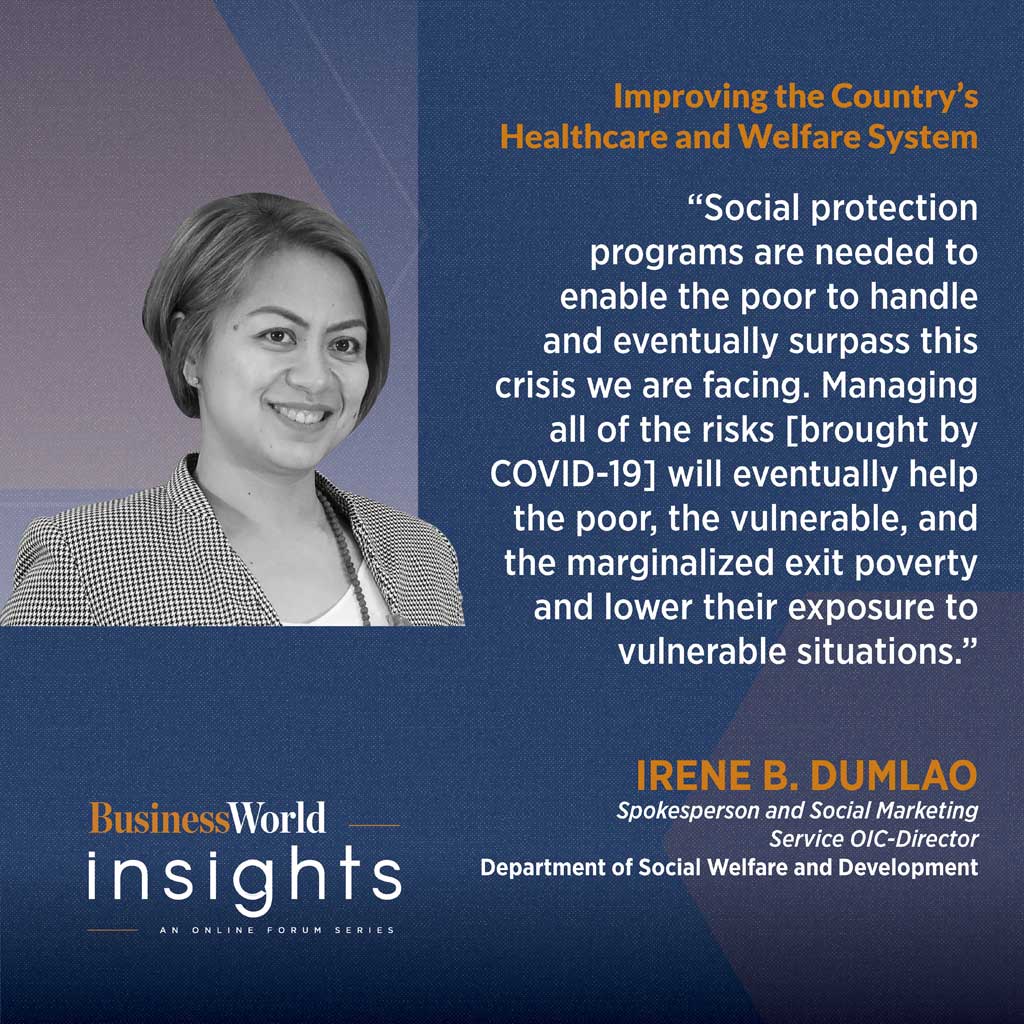
Irene B. Dumlao, spokesperson of the Department of Social Welfare and Development (DSWD) and the social marketing service head of the department, started the online forum by recognizing that the rapid spread of COVID-19 and the continued extent of quarantine measures have brought a severe long-term impact on the poor and highly vulnerable families and individuals.

In response to such impacts, social protection programs are set in place “to protect and prevent people from falling from their current income and consumption levels due to various risks.”

These are also in place to build capacity adaptability and to expand more income opportunities and improve human capital investments in the long-term, she added.

Ms. Dumlao also highlighted the actions taken by DSWD as the lead agency in social protection, especially the emergency cash subsidy under the Social Amelioration Program (SAP).

“Through SAP, we helped cushion the impact or effect of the pandemic to poor Filipino families, whose jobs and sources of livelihood have been disrupted,” she said.

The spokesperson reported that the department has partnered with various local government units (LGUs) in delivering the cash aid to Filipino families who belong to the low income and vulnerable sector, which amount to 18 million families.

More than 4.2 million beneficiaries of the Pantawid Pamilyang Pilipino Program (4Ps) were identified and included among the beneficiaries, and around 13.8 million were identified by LGUs.

For the second tranche of the distribution, Ms. Dumlao continued, DSWD would be partnering with the Armed Forces of the Philippines (AFP) and the Philippine National Police (PNP) in distributing the aid to identified recipients.

The department has agreements with several private groups, particularly financial services GCash and Paymaya, in distributing the cash aid. The department has also rolled out its Relief Agad mobile application, which seeks to fast track data gathering and aid distribution of the SAP.

However, Ms. Dumlao noted that the distribution could have been more efficient with a national ID system set in place.

“It could also have been helpful since the system would have been able to link our constituents, our clients, and beneficiaries to banking or financial institutions. That would have expedited the delivery of our aid to them,” she said.

Ms. Dumlao also noted the value in cooperation between the private sector and the government in strengthening the welfare system.

“The government has a big responsibility to promote and protect the welfare of the poor, the vulnerable, and the marginalized. But the private groups also play a significant role,” she said.

With the pandemic posing economic, environmental, and man-made risks to the vulnerable sectors of the country, Ms. Dumlao finds it important for social protection programs to manage these risks in order to prevent families from falling into and being trapped into poverty.

Improved capabilities
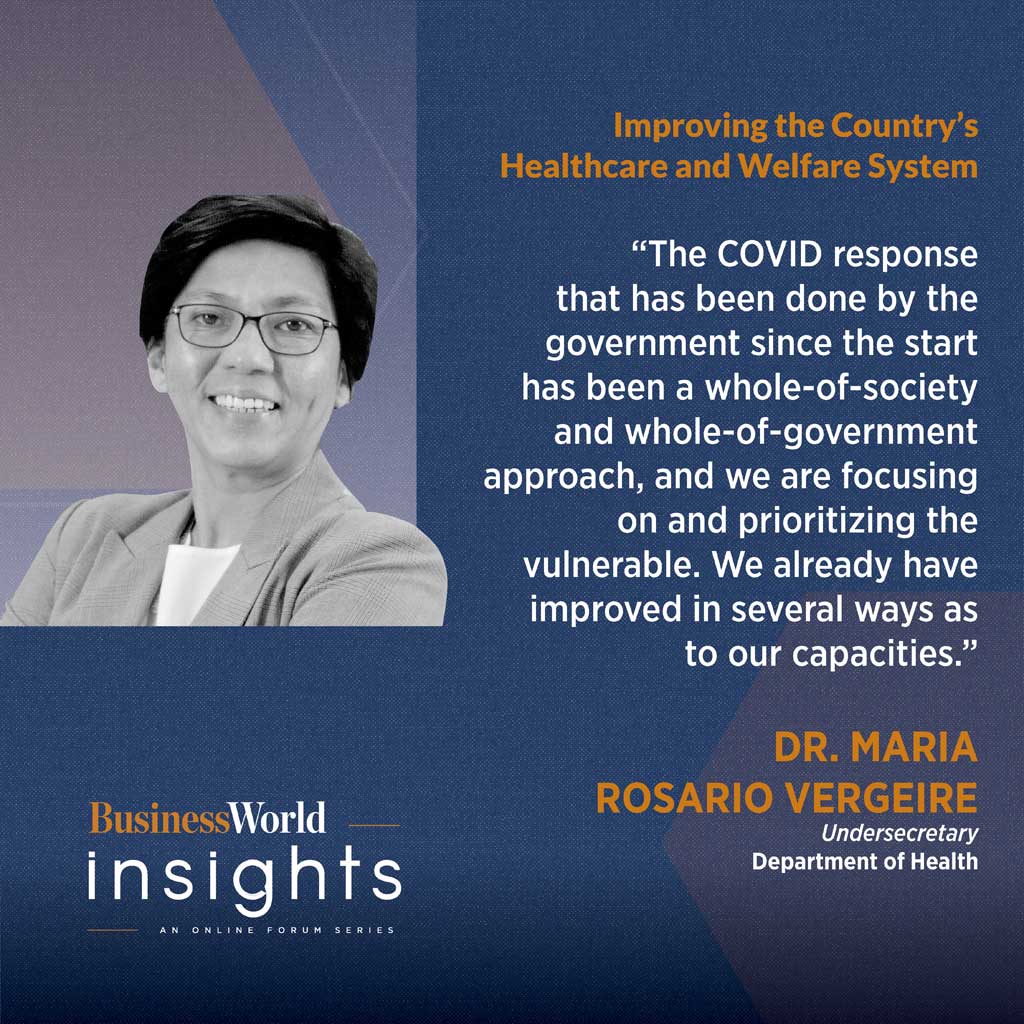
Meanwhile, Dr. Maria Rosario S. Vergeire, Undersecretary of the Department of Health (DoH) highlighted the gradual improvement in the government’s response to the pandemic.

“The COVID response that has been done by the government since the start has been a whole-of-society and whole-of-government approach, and we are focusing on and prioritizing the vulnerable. We already have improved in several ways as to our capacities,” Dr. Vergeire said.

According to the Undersecretary, from just a single laboratory at the onset of COVID-19, there are now a total 52 laboratories licensed by the DoH.

From only 300, the testing capacity has grown to at least around 34,000 rated capacity per laboratories.

Dr. Vergeire also noted that several facilities are set in place to respond to the pandemic, namely COVID referral hospitals, COVID accepting hospitals, temporary treatment and monitoring facilities for quarantined individuals, and Ligtas COVID centers in LGUs.

The department has an emergency hiring program intended to provide and augment health human resources to our hospitals and quarantine facilities as well as our primary care facilities, she added.

In terms of DoH’s engagement with the private sector, the T3: Test, Treat, and Trace program is ongoing, with the private sector providing DoH with the utmost support in terms of the capacity for laboratories and swabbing facilities, among others.

Dr. Vergeire also noted that as the Universal Health Care (UHC) program has initially enrolled all Filipinos to the Philippine Health Insurance Corporation (PhilHealth), individuals who have been affected by COVID-19 has benefitted from PhilHealth rates or benefits packages.

“Prior to April 15, Philhealth covered a whole set of medical bills that only individuals affected by the COVID have incurred,” she said. “But after April 15, they have issued these new benefits packages, especially for COVID-19, [which also cover] pneumonia cases and also testing and quarantine facilities.”

“The other provisions of the law have taken the back seat, but we are very eager to push forward and implement these in the coming months as we go through this pandemic, also realizing that there are still other non-COVID services for health that our people are entitled to,” Dr. Vergeire added.

Regarding private testing by private companies, Dr. Vergeire stressed that DoH has issued return-to-work policy guidelines, wherein the department recommends companies to hold symptomatic screening.

“Upon resumption to work, all employees should be screened, and all those who have symptoms have to be isolated,” she explained. “Also, those who have symptoms within 15 days prior to returning to work should be tested and isolated.”

As to companies who have been doing this mass testing, the undersecretary reminded, DoH’s position still remains on symptomatic screening using the RT-PCR method of testing.

Hospitals in the ‘new normal’
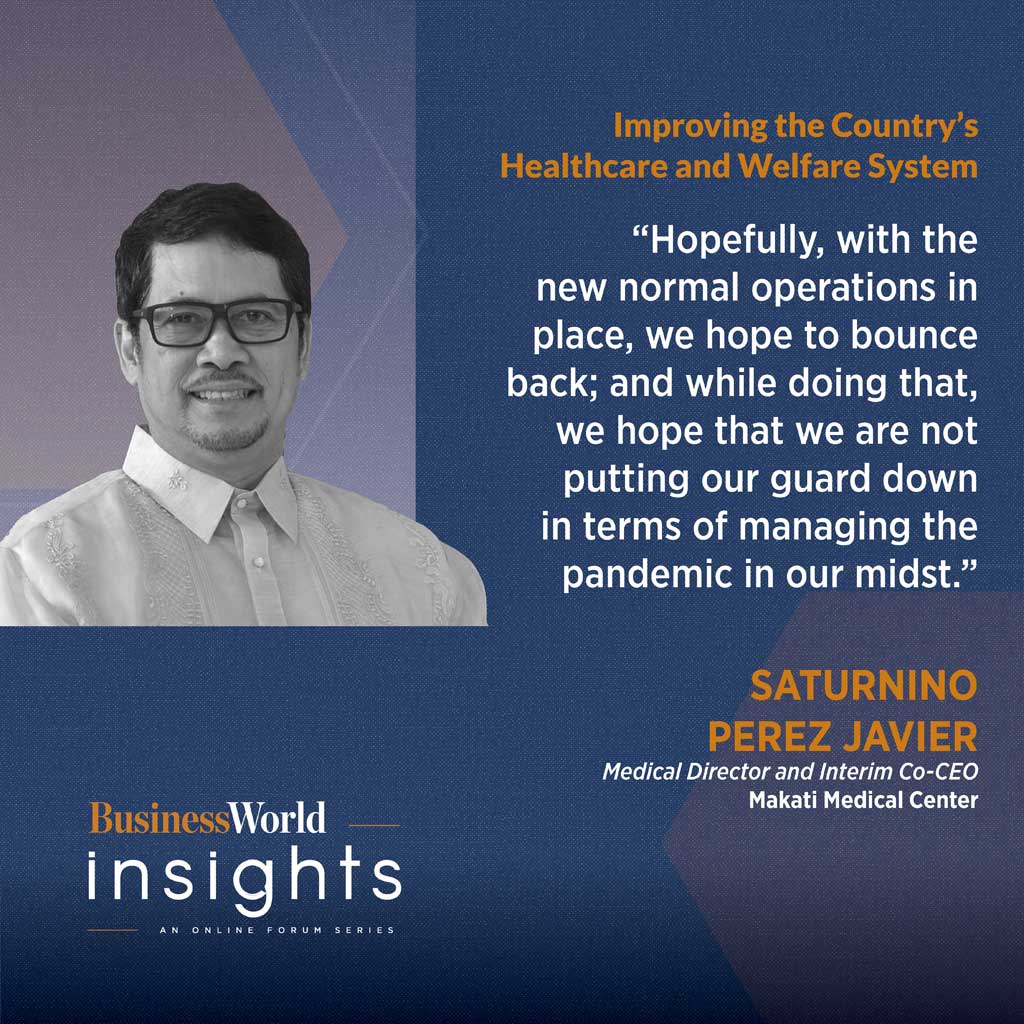
Dr. Saturnino Javier, medical director of Makati Medical Center (MMC), provided a perspective from the medical community by showing how the esteemed medical institution struggled with intensively attending to COVID-19 cases and how it plans to bounce back as it gradually reopens for other patients.

He noted the difficulties hospitals encountered in the past two months.

“You go out of the house, and it seems to be peaceful and quiet. But, it’s a different atmosphere when you’re in the hospital,” Dr. Javier said. “You have the emergency room full of patients on ventilators waiting to be admitted. You have an ICU and COVID wings which are full. Some of your nurses are being quarantined, if not admitted… And while these are happening, PPEs (personal protective equipment) and masks are being depleted, and supplies are running low.”

Hospital has had to confront other issues, he added. One of them is a decrease in occupancy, which has caused a drop in revenues will fall. There was also a halt in elective surgeries as well as closures of clinic offices. Adding to these burdens is the continuous spending in PPEs, some of which Dr. Javier found to have been exorbitantly priced.

From this chaotic situation, according to Dr. Javier, MMC has started moving to a resumption of operations in a gradual, partial, limited, and very conscious manner.

“This is a situation where we try to manage fear, and this fear cuts across sectors — fear of the patients to come back and fear among our healthcare practitioners and professionals to once again embrace clinical practice,” he added.

Ensuring the safety of patients, healthcare workers, and physicians, MMC has put in place measures such as zoning protocols across the hospital, designated traffic routes for patients, and designated hotspots, among many others.

Nevertheless, with safety measures set in place in hospitals, Dr. Javier stressed that people should still do their share in preventing others from getting infected by COVID-19.

“We have to keep in mind that the virus did not go on quarantine. It’s the people who did. The virus is just there. It did not go on vacation. Once it finds a suitable host again it will definitely be causing havoc again,” he said.

Dr. Javier also expressed his support for telemedicine as a platform for meeting patients’ needs in the new normal.

“Even during the height of the pandemic, we have encouraged many of our practitioners to embrace telemedicine to be able to connect with the patients who have no opportunity to visit them at the hospital. This is still being encouraged as we partially resume operations,” he said.

When asked whether he sees any pressure on the supply of medical professionals and nurses amid the pandemic, Dr. Javier recognized that there are manpower issues with the nursing field, while there is not much with physicians.

“When personal security or health issues are on the line, we can’t impose on anyone to stay, especially if there are offers of higher salaries elsewhere. This is a reality we confront and we’re still confronting at the moment,” he said.

For Dr. Javier, action by the government in needed in this matter.

“We really cannot compete with our European countries and the US, especially when the demand for nurses in those areas is much higher. I think that’s one area where we can be helped by the government to put some stop-gap measures to prevent the brain drain,” he stressed.

Regarding legislation that responds to the health crisis, Dr. Javier emphasized that there is no need for additional laws, but existing laws must be implemented very well. In particular, he sees the need to ensure a steady flow of medicine and testing kits as well as to ensure proper regulation of prices of PPEs and supplies.

Lessons from disaster response
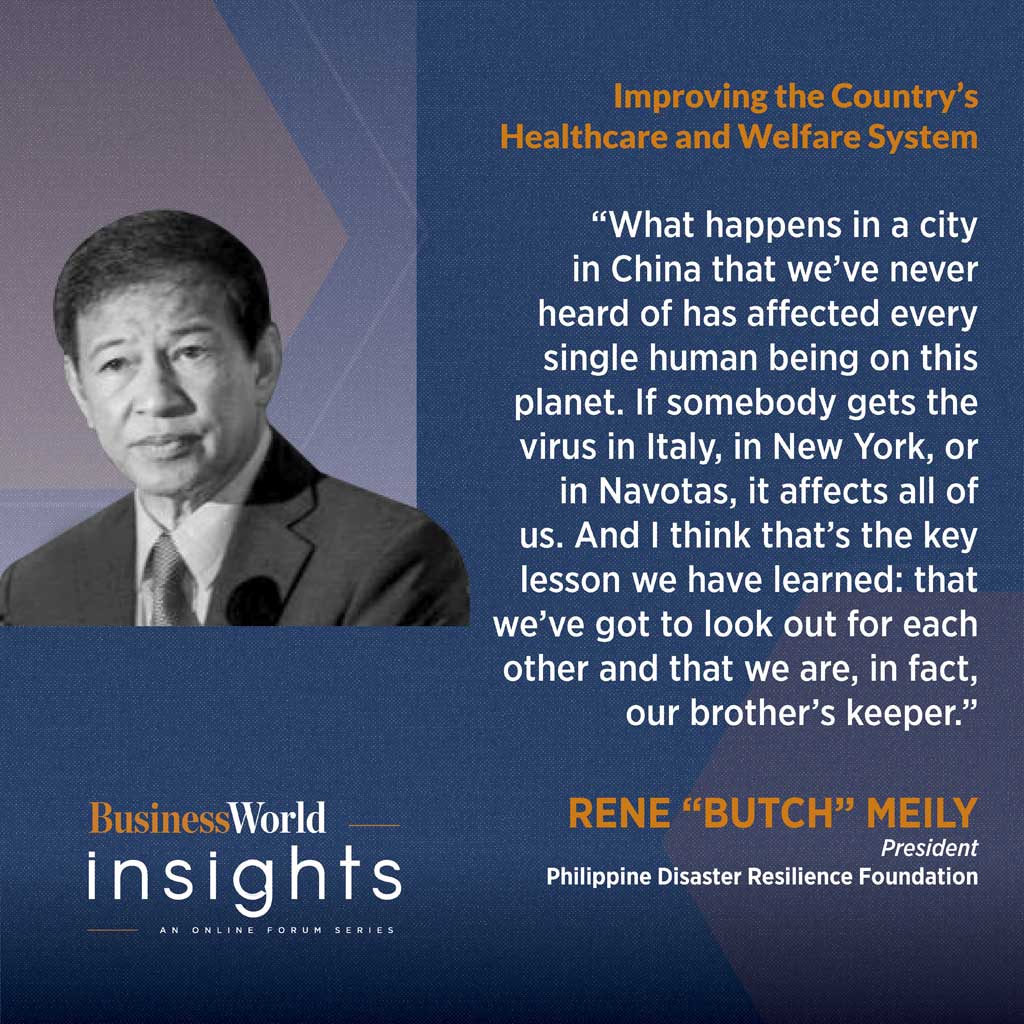
A [stark] difference from previous disasters was spotted by Butch Meily, president of the Philippine Disaster Resilience Foundation (PDRF), in COVID-19. While previous disasters have primarily affected one area of the country, the health crisis has affected the entire Philippines. A similarity, however, was found in terms of reopening the economy, especially the micro, small, and medium enterprises (MSMEs).

One of PDRF’s intiatives in this matter is Project Sikap, which launched a one-stop digital shop for MSMEs where their questions about bouncing back gets to be answered.

Moreover, similar to PDRF’s response to affected sari-sari stores after Supertyphoon Yolanda, it has started helping sari-sari stores in Metro Manila reopen after the COVID-19 crisis, as they found that up to 40% of them have closed — either for health concerns or because many consumers were not able to purchase their goods.

As the foundation interviewed sari-sari store owners, it has found out that 80% to 90% of them are women. “[S]o they play a key role in the recovery of the economy and in holding our families together,” Mr. Meily concluded.

Another lesson learned from responding to the present crisis, according to Mr. Meily is the value of having pre-agreements in place with companies.

Through its pre-agreements with private companies, the PDRF rolled out other initiatives. With the help of package delivery company UPS, it has ferried medical supplies from Manila to outside areas. Through a pre-agreement with online marketplace company Airbnb, health workers were provided with temporary shelters in residences and hotels.

Among the lessons learned from this pandemic, however, the most important to keep in mind is that people are connected, Mr. Meily said.

“What happens in a city in China that we’ve never heard of has affected every single human being on this planet,” he said. “If somebody gets the virus in Italy, in New York, or in Navotas, it affects all of us. And I think that’s the key lesson we have learned: that we’ve got to look out for each other…, that we are, in fact, our brother’s keeper.”


[B-SIDE Podcast] Lack of preparation threatens Philippine agriculture sector

Follow us on Spotify BusinessWorld B-Side

COVID-19 has exposed how fragile the agriculture sector is. Local farmers are among the hardest hit by the pandemic and the protracted crisis is putting a strain on the country’s food supply chains. Magsasaka Party-List Representative Argel Joseph T. Cabatbat and BusinessWorld reporter Genshen L. Espedido talk about the consequences of the delays in modernizing our rice farms and why we should aim for food sovereignty in the long-term.

TAKEAWAYS

Government has to work harder to ensure that our food supply chain remains intact.
Allied businesses of the agricultural sector were not granted frontliner exemptions during the lockdown. As a result, the delivery of supplies and equipment critical for the operation of the agricultural sector was limited. Government should make sure that the transportation of agricultural products and farm inputs remains unhampered especially during a crisis.

Farmers are among the hardest hit by the pandemic.
COVID-19 greatly disrupted the country’s agricultural sector. The pandemic made it more difficult to distribute the Rice Competitiveness Enhancement Fund (RCEF), which was supposed to equip farmers with modern machinery to facilitate efficient farming. At the same time, farm produce anticipated to be sold in bulk during this season was wasted. Aid should be distributed immediately to farmers to help them recover from their losses.

In the long-term, we should aim for food sovereignty.
The pandemic showed that the Philippines cannot continue relying on importation, as other countries limit their exports to secure their own food supply for their citizens. The country should prioritize Filipino farmers by giving them enough financial and material resources, thus ensuring food sovereignty.

Recorded remotely on April 28. Produced by Nina M. Diaz, Paolo L. Lopez, and Sam L. Marcelo.

Follow us on Spotify BusinessWorld B-Side

PHL to miss poverty eradication goal

By Marissa Mae M. Ramos, Researcher

PRIOR to the coronavirus pandemic, the Philippines was on track to meet its targets for reducing unemployment and poverty.

Poverty incidence among individuals — or the proportion of Filipinos whose incomes fell below the poverty threshold — was 16.7% in 2018, lower than the revised 23.5% recorded in 2015, according to the Philippine Statistics Authority (PSA). This was already near the Philippine Development Plan (PDP) 2017-2022 target of reducing poverty incidence to 14% by 2022.

According to the National Economic and Development Authority (NEDA), around 5.9 million Filipinos had been lifted out of poverty as of 2018 on track with its target of six million Filipinos by 2022.

At that time, the NEDA noted the country was likely to meet the Sustainable Development Goal (SDG) target of eradicating extreme poverty as defined by the international poverty line as well as cutting by half the proportion of the population living below the national poverty line by 2030.

The same could also be said about unemployment. The PSA’s Labor Force Survey (LFS) revealed a national unemployment rate of 5.1% in 2019 — its lowest since the adoption of a new unemployment definition in 2005. In the PDP 2017-2022, unemployment was targeted to go down by 3-5% by 2022.

With the ongoing health crisis, it is now unlikely these development goals will be attained.

“The government will likely find it difficult to bring the poverty rate down to 14% by 2022. The extended lockdowns have not only slashed jobs, they have compelled firms to restructure their operations post-COVID-19, which would likely require fewer investments in capital goods, except for IT-related spending,” University of Asia and the Pacific (UA&P) Economist Victor A. Abola told BusinessWorld in an e-mail.

In an upcoming paper, Ateneo de Manila University (ADMU) Economist Geoffrey M. Ducanes and former Socioeconomic Planning Secretary Arsenio M. Balisacan said poverty incidence is “likely to double or even triple relative to the 2018 level,” assuming no or minimal government transfers, the lockdown lasts for two months, and employment levels only gradually recover by yearend.

“Most low-income households are dependent on wage income and entrepreneurial income [for those that are self-employed], so unless this decline is offset by an increase in other income, such as government transfers, it is inevitable that poverty will increase,” Mr. Ducanes said in a separate e-mail interview.

Philippine Institute for Development Studies Senior Research Fellow Jose Ramon G. Albert estimated a 10% contraction in incomes during the pandemic, even with the Social Amelioration Program (SAP) and Small Business Wage Subsidy, will push poverty incidence to 18.2% from the 2018 baseline data.

Meanwhile, a simulation of a 20% drop in incomes, with both government programs implemented, will increase poverty incidence to 24.2%.

NEDA Acting Secretary Karl Kendrick T. Chua said last Tuesday that the increase in poverty incidence may be “very short-lived” as the majority of the poor are in rural areas. Mr. Chua said these areas are hardly affected by the government’s quarantine measures as COVID-19 cases are concentrated in urban areas. He said he does not see the temporary increase in the poverty rate of urban areas as a “prolonged problem.”

The poverty rate for individuals residing in urban areas stood at 9.3% in 2018 (from 13.2% in 2015) while for individuals in rural areas it is 24.5% (from 34%) according to PSA data.

Broken down, poverty incidence in the National Capital Region (2.2%), Central Luzon (7%), and Calabarzon (7.1%) — cited by Mr. Chua as urban areas — have lower poverty incidence than the national rate at 16.7%. However, the poverty rates in the remaining regions of Luzon, which have also undergone quarantine for at least a month and a half, were relatively close or higher than the national figure: Ilocos Region (9.9%), Cordillera Administrative Region (12%), Mimaropa (15.1%), Cagayan Valley (16.1%), and Bicol Region (27%).

As of June 5, the Department of Health reported that 11,656 or 57% of confirmed COVID-19 cases in the Philippines are in the NCR while 1,781 cases or 9% were in Calabarzon.

UNEMPLOYMENT
Along with rising poverty rates, the country would have to deal with the increase in unemployment levels.

The April round of the PSA’s LFS showed the unemployment rate rising to record high of 17.7% from 5.1% in April 2019. This is equivalent to an additional five million jobless Filipinos, bringing the total to more than seven million.

“My fear is that the worst of modern economics’ nightmares will happen — simultaneous massive unemployment and ever ratcheting price spirals (stagflation)…,” said Federico M. Macaranas, an adjunct professor at the Asian Institute Management (AIM) and a former Foreign Affairs undersecretary, in an e-mail interview last month.

Stagflation, a term coined in the 1970s, was characterized by persistently high inflation and unemployment levels. Alternatively, it can be defined as a period of accelerating inflation with a decline in the gross domestic product (GDP).

Mr. Macaranas said stagflation could persist only until productivity bounces back with the production of “real goods” along with innovative ideas.

“The most vulnerable in the short-term are the hard-core unemployed with no basic income for subsistence, or those working under contractual terms, small enterprises whose cash lifeline may not be sufficient to adopt new business models, and in the long-term even larger firms which lack creative minds to collaborate with good market-sensing, socially aware people,” Mr. Macaranas said.

For ADMU’s Mr. Ducanes, employment in restaurants, malls, and public transportation where physical distancing could be challenging is generally affected.

“Together, wholesale and retail trade, transportation and storage, accommodation and food service activities, construction, and manufacturing employ 21 million workers or about 50% of total employed in the country. A good portion of these workers is likely to have lost or to lose jobs because of COVID-19. To the extent that a large share of these workers belongs to low-income households… many will fall into poverty,” Mr. Ducanes said.

“The global recession is also likely to dampen demand for Philippine exports, thus possibly even affecting manufacturing and some agricultural jobs. Many OFWs (overseas Filipino workers), especially seamen and those working in countries that are hit hard economically by COVID-19 will lose their jobs,” the economist added.

MORE NEEDS TO BE DONE
“Because COVID-19, through its effect on employment and income, will also have a downstream effect also on enrollment and health outcomes… It will also negatively impact our hope of achieving a high level of human development by 2022,” Mr. Ducanes said.

In the near term, he said the government should extend or expand SAP even if the household is no longer under strict quarantine. While acknowledging the program can be very costly, he said targeting beneficiaries for cash grants and emergency employment programs would be key to keep Filipinos above the poverty line.

“The government needs to improve the social protection programs for the working poor, especially those in self-employment,” Mr. Ducanes said, noting that subsidized social security and unemployment insurance are necessary safety nets for the country’s vulnerable population.

“The government must also make sure to control inflation, especially for food, which has a big weight in the consumption basket of the poor. An extraordinary rise in food inflation of about 15% will be enough to offset the impact on poverty of the current SAP, according to our estimates,” he added.

For AIM’s Mr. Macaranas, government funds may soon run out when the more than $2 billion in COVID-19 support programs are extended.

“National finances can be supplemented by funds from international financial sources… If worse comes to worst, the government can sell more of its land assets, and reclaim more land from coastal urban centers,” he said.

Mr. Macaranas also said that private sector institutions should also be quick on their feet as “those who will be more successful are people who are more creative, collaborative, fast, agile, sustainability-driven, and technologically-savvy.”

For UA&P’s Mr. Abola, the government should provide subsidies and incentives to private schools in upscaling human capital to reduce the burden on state-owned institutions and improve education quality.

“Financial assistance should also focus a lot on the agricultural sector, where poverty is highest, so that they can shift to more high-value crops, as well as provide incentives for modern storage facilities. Help provide e-platforms so that farmers can maximize their earnings, instead of being held captive by middlemen,” Mr. Abola said.

He added infrastructure goals under the “Build, Build, Build” program “should not be sacrificed” in order to lower logistics costs in the country.

Philippine economy to shrink by 4% — Fitch Ratings

By Luz Wendy T. Noble, Reporter

THE Philippine economy is now forecast to contract by 4% this year, according to Fitch Ratings, as the fallout from the coronavirus pandemic widens.

“We have recently lowered our GDP (gross domestic product) growth outlook to -4% to reflect the short-term impact of lockdown restrictions on economic activity, as well as the ongoing weak external environment,” Stephen Schwartz, head of Asia Pacific Sovereign Ratings at Fitch Ratings, told BusinessWorld in an e-mail.

To recall, Fitch Ratings gave a -1% forecast for the Philippine economy in May, and a 6% baseline forecast before the pandemic.

The government projects the economy will contract by 2% to 3.2% this year. S&P Global Ratings and Moody’s Investors Service see the economy shrinking by 0.2% and 2.5%, respectively.

“A cautious lifting of restrictions could lead to a resumption of activity, but the outlook is highly uncertain depending on the evolution of the virus, both globally and within the Philippines,” Mr. Schwartz said.

The lockdown in Metro Manila and key cities began easing on June 1, allowing public transportation to partially resume and most businesses to reopen. Most parts of the country are also now under a more relaxed quarantine.

As the lockdown covered April and May, Mr. Schwartz said the second quarter will be “significantly worse” than the first quarter, as the full-quarter impact of the restrictions will be seen.

The country’s economic output shrank by 0.2% in the January to March period, its first contraction since 1998.

However, Mr. Schwartz noted the third and fourth quarters will likely see positive growth, setting the stage for a gradual recovery next year. For 2021, Fitch Ratings sees growth at 7.4%, faster than the 7% penciled in last May and the 6.5% baseline forecast.

He pointed out that the country had ample fiscal space pre-pandemic, which will allow it to weather the crisis.

“We understand that the authorities aim to preserve their infrastructure spending program, while returning the debt-to-GDP ratio to a downward path over the medium term after the crisis subsides,” Mr. Schwartz said.

The country’s end-2019 debt-to-GDP ratio was at 41.5%, slightly lower than the 41.8% seen in 2018 and better than the government target of 41.7%.

“Their recent tax reforms and medium-term efforts to boost the Philippines’ tax revenue ratio will be important in this regard for meeting these objectives,” Mr. Schwartz said.

The Senate was unable to pass the second tax reform package under the Corporate Recovery and Tax Incentives for Enterprises (CREATE) bill before adjourning last week. However, senators committed to passing the measure by August.

One of the main features of CREATE is the immediate lowering of corporate income tax to 25% from 30%.

Finance officials earlier hoped the lower corporate income tax would take effect by July, as part of efforts to stimulate the economy amid the pandemic.

Remittances may fall by 10% this year

By Beatrice M. Laforga, Reporter

CASH sent home by overseas Filipino workers (OFWs) could drop by as much as 10% this year, as massive layoffs and wage cuts are seen around the world, the Institute of International Finance (IIF) said.

Yuanliu Hu, an emerging markets Asia economist at the IIF, told BusinessWorld remittances from OFWs are projected to decline by 7% to 10% this year.

“We expect remittances to fall by 7% to 10% in 2020, and the current account deficit will also expand to 1% of GDP (gross domestic product),” Mr. Hu said via e-mail.

IIF earlier projected a 20-30% drop in remittances for developing countries, worse than the 5% decline recorded during the global financial crisis between 2007 and 2009.

“From the high frequency monthly overseas workers’ remittances data, we did not see a significant reduction until February, but we expect the number will decline sharply in March as a lot of countries started lockdown since then,” Mr. Hu said.

He attributed the decline mainly to the massive layoffs and salary reductions implemented in other countries affected by the pandemic and subsequent lockdown measures.

“The Philippines relies heavily on OFW remittances, it accounts for around 8% of GDP in 2019. But with the COVID-19 effect, a lot of overseas Filipino cannot provide services or suffering layoffs and pay cuts,” he said.

Mr. Hu also pointed to the slump in oil prices that has hurt countries in the Middle East — the biggest source of remittances from Filipino migrant workers.

OFW remittances rose 2.5% from a year ago to $2.358 in February, but at a slower pace compared to the 6.6% expansion seen in January.

“Looking forward, the speed of reopening for the world economy is very important for the remittance inflow, if there is a second wave of outbreaks, the situation will definitely be worse,” Mr. Hu said.

Philippine Statistics Authority (PSA) data showed there were 2.202 million OFWs in 2019, slightly less than the 2.299 million in 2018. Saudi Arabia remains the top destination of OFWs accounting for 22.4% of the total migrant workers, followed by the United Arab Emirates (13.2%), Hong Kong (7.5%), and Taiwan (6.7%).

“The recovery of international shipping and fishing business is also crucial for OFW remittance, as around 75% of remittance comes from sea-based (workers),” Mr. Hu added.

The central bank still expects OFW remittances to post a two percent growth this year.

Meanwhile, the World Bank in April projected remittance flows in lower- and middle-income countries could drop by around 13% on average this year.

Current account made up 0.1% of GDP in 2019 as the current account deficit hit $464 million, narrower than the $8.773-billion gap recorded in 2018.

The current account displays the country’s overall economic interaction with the rest of the world covering trade in goods and services; remittances from OFWs; profit from Philippine investments abroad; interest payments to foreign creditors; as well as gifts, grants and donations to and from abroad.

The government estimated the economy to shrink by 2-3.4% this year.