Home Blog Page 8867

Regional Updates (11/12/20)


Water released from Luzon dams as typhoon Ulysses dumps rain

GATES in three dams in Luzon were opened on Thursday following heavy downpour from typhoon Ulysses (international name: Vamco). Angat Dam in Bulacan, the main water source for Metro Manila, exceeded spilling level prompting the release of 65 cubic meters per second of water, according to the National Power Corp. (Napocor). “Due to the release of water, the water level and flow in Angat River is expected to rise,” Napocor warned. As of Thursday morning, Angat’s elevation was at 211.30 meters, higher than its spilling level of 210 meters. The Ipo Dam, also located in Bulacan, opened its four gates after its elevation reached 101.20 meters, above the spilling level of 101 meters. In a separate advisory, weather bureau PAGASA announced that Magat Dam in Isabela opened three of its gates, at five meters each, to reduce the water elevation, which stood at 190.70 meters. Magat’s spilling level is at 193 meters. Meanwhile, east zone water concessionaire Manila Water Co., Inc. confirmed that La Mesa Dam in Quezon City reached its spilling level of 80.15 meters as of Thursday morning. “As of 12 noon, La Mesa Dam’s level is at 80.22 meters and has been spilling since 9:20 a.m.,” Manila Water Corporate Strategic Affairs Head Nestor Jeric T. Sevilla said in a mobile phone message. In another advisory, PAGASA said the two dams in Benguet — Binga Dam in Itogon and Ambuklao Dam in Bokod — have also released water. — Revin Mikhael D. Ochave

Typhoon Ulysses affects over 1.9 million Meralco customers

EMERGENCY responders use motorized boats to rescue residents in Estrella Heights Subdivision in Rodriguez, a town in Rizal located east of Metro Manila, after heavy rain from typhoon Ulysses caused flooding. — PHILSTAR/MICHAEL VARCAS

MORE THAN 1.9 million customers in Luzon under distributor Manila Electric Co. (Meralco) were still without power supply on Thursday afternoon as typhoon Ulysses (international name: Vamco) battered the northern part of the country. The affected Meralco franchise areas include Metro Manila, Bulacan, Cavite, Rizal, Laguna, and Batangas. Meralco Spokesperson Joe R. Zaldarriaga, in a press briefing on Thursday afternoon, said the utility giant is slowly restoring electricity service where possible, but it may take some time to repair facilities in areas that were flooded. In a separate advisory, the Department of Energy (DoE) reported that an ongoing assessment by the National Electrification Administration (NEA) initially showed that provinces experiencing full or partial power cuts include Nueva Ecija, Tarlac and Pampanga.

TRANSMISSION
The National Grid Corporation of the Philippines (NGCP), meanwhile, said 32 transmission lines in Luzon were unavailable as of Thursday afternoon. NGCP said while transmission services may be fully restored in the coming days, distribution systems may take longer to repair. There were about 13 Luzon generating facilities affected, with a combined output of about 4,231.8 megawatts. Energy Secretary Alfonso G. Cusi, in a statement, assured that the entire energy sector has been mobilized to immediately restore services. “[The DoE-led] Task Force on Energy Resiliency is working round-the-clock to coordinate the efforts of all our industry players, who remain on their toes and at the ready,” Mr. Cusi said. — Angelica Y. Yang

Renovated Bantayan airport to receive maiden flight as Cebu prepares for tourism revival 

THE renovated Bantayan Island Airport in northern Cebu will receive its first commercial flight on Nov. 27 as the Cebu provincial government ramps up its promotional campaign in preparation for the reopening of tourist destinations. The Cebu Pacific flight, using an 80-seater aircraft, will be a 30-minute ride from the Mactan Cebu International Airport at the central-eastern side of the province. The passengers will consist of a group participating in the Suroy-Suroy Sugbo, the Cebu provincial government’s packaged tours program covering different areas. Bantayan has been a popular tourist destination for its beaches and dive sites. “I’m sure all Bantayanons, Lawisnons and Santafehanons will be very, very proud on that day,” Governor Gwendolyn F. Garcia said in a statement. The Bantayan Airport was rehabilitated and expanded through a partnership between the Cebu government and the Mactan Cebu International Airport Authority. Leisure travel around Cebu has been reopened for locals, but regular flights to Bantayan has yet to be announced as the the airport’s official soft opening is still being finalized. 

Survey set for Davao MSMEs on coronavirus impact, recovery plan

MICRO, small, and medium enterprises (MSMEs) in Davao Region will be surveyed in the third week of November to determine the actual impact of the coronavirus crisis on their operations, and use the results to identify specific programs for recovery. The survey will be conducted by the Davao City Chamber of Commerce and Industry, Inc., together with the Davao regional offices of the Department of Science and Technology, Department of Trade and Industry, Commission on Higher Education, and the Department of Information and Communications Technology-Mindanao Cluster 3 under the Davao  Regional Inclusive Innovation Center. The Davao chamber, in a statement on Thursday, said the survey is part of the Innovation for Business Recovery plan initiated by USAID Science, Technology, Research, and Innovation for Development (USAID-STRIDE). After the survey, sessions on rapids needs assessment and suggestive next steps will be conducted by University of the Philippines-Mindanao School of Management for participating firms and research partners “to further understand the current situation of MSMEs, identify their priorities, and assist them in accessing specific innovation programs.”

Crop damage estimate from Rolly upgraded to P5.79B

AGRICULTURAL DAMAGE caused by Typhoon Rolly (international name: Goni) was estimated at P5.79 billion, against the previous estimate of P5.01 billion, according to the Department of Agriculture (DA).

In a bulletin, the DA said the typhoon affected 48,682 farmers across 127,298 hectares of farmland. Lost agricultural output amounted to 177,091 metric tons (MT).

Farm losses have been reported in the Cordillera Administrative Region (CAR), Central Luzon, Cavite, Laguna, Batangas, Rizal, and Quezon (Calabarzon), Mindoro, Marinduque, Romblon, and Palawan (Mimaropa), Bicol, and Eastern Visayas.

Affected commodities include rice, corn, high-value crops such as abaca and coconut, livestock, and agricultural facilities.

Losses to high-value crops amounted to P2.05 billion, with 97,130 MT of lost production volume. Some 11,218 hectares were affected.

Damage to rice amounted to P1.18 billion, equivalent to 64,254 MT of lost produce, affecting 23,009 hectares of farmland.

Losses to the abaca crop were reckoned at P1.02 billion, with 12,918 MT in lost production across 39,790 hectares.

Other damage estimates were: coconut P569.81 million, agricultural facilities P516.58 million, fisheries P341.32 million, corn P63.55 million, livestock P49.18 million, and agricultural machinery P875,000.

Combined with Typhoon Quinta (international name: Molave), which preceded Rolly and caused P2.66 billion worth of losses, total agricultural damage has been valued at P8.46 billion.

The two typhoons affected 106,540 farmers and damaged 223,772 hectares of farmland.

However, the totals are set to increase as losses from the most recent storm, Typhoon Ulysses (international name: Vamco), have yet to be validated.

As of Thursday morning, the DA said it has not yet received any reports of agricultural damage and is awaiting updates from its regional field offices.

According to the DA, rice production areas damaged by Quinta and Rolly amount to 106,833 hectares.

Some 76.44% or 81,663 hectares were planted during the 2020 wet season, while the remaining 23.56% or 25,170 hectares were due for harvest in the 2021 dry season.

“Furthermore, Quinta and Rolly caused a combined volume production loss of 176,249 MT for palay (unmilled rice), which amounts to 2.10% of the fourth quarter projected palay production of 8.40 million MT,” the DA said in the bulletin. — Revin Mikhael D. Ochave

GDP seen contracting 9.8% this year, more BSP easing expected

THE ECONOMY could contract by 9.8% this year, weighed down further damage to the economy from calamities, according to Nomura Global Markets Research, adding that the absence of an “additional, sizeable” fiscal package to match those rolled out by governments in the region could also lead to another round of easing from the central bank before the year ends.

Issued following the weaker-than-expected third quarter gross domestic product (GDP) data, the latest estimate represents a downgrade from Nomura Global’s previous projection of minus 6.6% GDP growth. The official government forecast for 2020 GDP performance is between minus 4.5% and minus 6.6% estimated by the government.

“This partly reflects the impact of recent typhoons, which led to substantial damage to the agriculture sector but also, importantly, our expectation that fiscal spending growth will continue to be a significant drag on the economic recovery at a time when private sector confidence remains fairly weak,” it said in a note.

The economy contracted by 11.5% in the three months to September following the record 16.9% contraction in the second quarter.

In the fourth quarter, Nomura Global expects GDP to continue contracting, though it will moderate to minus 9.8%. If realized, this would mark the fourth consecutive quarter to post declines.

“As was evident in the Q3 GDP details, a lack of fiscal support will still likely weigh on private sector spending with sentiment remaining weak and business uncertainty still high,” it said.

Capital formation slumped 41.6% in the third quarter, following the 53.7% decline in the three months to June. Meanwhile, government spending growth slowed to 5.8% from 21.8% in the second quarter.

“We believe the passage of the fiscal measures called Bayanihan II (Republic Act No. 11494) is unlikely to raise meaningfully fiscal expenditures, particularly on capital outlays because its total size was just 0.9% of GDP,” it said, noting this is also unlikely to support a rebound in public construction activity.

Bayanihan II, passed in September, allocated P165.5 billion in additional pandemic responses. It is the follow-up to RA 11469, which provided P275 billion to address the crisis.

Nomura Global said it does not expect the government to consider further rounds of fiscal packages to revive the economy from the coronavirus disease 2019 (COVID-19) pandemic as it focuses its efforts on passing the P4.5-trillion 2021 budget and the CREATE (Corporate Recovery and Tax Incentives for Enterprises Act) bill which will lower corporate income taxes.

“We have argued before CREATE is unlikely to be effective if the goal is to provide emergency support to vulnerable sectors as well as to stimulate demand in the short run,” it said.

Given a likely slow recovery awaiting the economy as well as the relatively small fiscal measures, Nomura is pricing in a 50 basis point rate cut from the Bangko Sentral ng Pilipinas (BSP) in the fourth quarter.

“A benign inflation outlook allows BSP to focus on measures to support growth, and we believe the Q3 GDP outturn disappointed official forecasts, and hence supports our call of a rate cut in the near term,” it said.

October inflation was 2.5%, picking up from 2.3% in the prior month. Year-to-date inflation averaged 2.5%, above the BSP’s 2.3% forecast for the year but still well within the 2-4% target range.

The central bank has slashed rates by a total of 175 basis points this year, bringing down the overnight reverse repurchase, lending, and deposit facilities to 2.25%, 2.75%, and 1.75%, respectively. The Monetary Board will hold two more policy-meetings this year on Nov. 19 and Dec. 17. — Luz Wendy T. Noble

Philguarantee approves P42B in guarantees for MSME loans

STATE-RUN Philippine Guarantee Corp. (Philguarantee) approved P42.3 billion worth of credit guarantee facilities to cover loans taken out by micro, small and medium enterprises (MSMEs) from banks, easing their access to credit during the economic crisis.

“The P42 billion approved facilities for banks are all new, and still part of a program launched earlier,” Philguarantee President and CEO Alberto E. Pascual said in a text message Thursday.

Citing a report from Philguarantee, the Department of Finance said in a statement Thursday that 6,000 borrowers are expected to apply for P3.6 billion worth of loan guarantees by year’s end, while 40,000 more are likely to avail of a combined P20 billion towards the end of 2021.

So far, Philguarantee has accredited eight universal banks, one commercial bank, six thrift banks and 10 rural banks for its MSME guarantee facility. It is also currently reviewing the applications of 16 more banks.

“This is the first time Philguarantee is providing guarantee coverage for MSMEs,” Mr. Pascual was quoted in the statement.

Providing state-backed loan guarantee is part of the government’s relief package to the private sector, allowing banks to lend more to MSMEs, a sector hit hard by the pandemic. With the need for working capital to survive the crisis mounting, small businesses are typically deemed by banks to be bad credit risks.

In June, Philguarantee approved a credit guarantee scheme valued at P120 billion to provide 50% guarantee cover on loans to MSMEs by banks.

Loans covered under the program range from P100,000 to P1 million, with micro enterprises making up a large portion of the borrowers and most of them seeking credit from rural banks, according to the statement.

Up to P50 million worth of loans per bank can be guaranteed under the program with a guarantee fee of 1% per annum.

The program offers terms for working capital loans of between one to five years with 50% guarantee cover; and up to seven years at 80% cover.

Mr. Pascual said “on a case-to-case basis, (Philguarantee) can extend the guarantee up to 10 years depending on the banks’ risk appetite.”

He said the agency will offer more guarantee cover for small-, medium-sized and large companies once the Budget department releases the P5 billion in additional equity it is due to receive under Republic Act No. 11494 or the Bayanihan to Recover as One Act (Bayanihan II).

The upcoming facility will cover bigger loans needed by such firms, up to P300 million per borrower.

“We can leverage the P5 billion in additional equity 15 times. This will allow an extra guarantee capacity of P75 billion,” he said.

Mr. Pascual said banks are now more willing to lend to the sector after the agency launched the program early this year.

“Just like in Thailand, the freed-up reserves or extra liquidity of banks was not used to lend to MSMEs. But now we are seeing banks becoming active again and some in fact have been pre-clearing with us bigger loans for new projects,” he said.

Philguarantee has P23 billion worth of unimpaired capital, bringing its potential guarantee capacity to P345 billion, assuming leverage of 15 times.

Its outstanding guarantees declined 17% to P170 billion at the end of September from P207 billion at the end of 2019.

Mr. Pascual said the agency expects this to increase when the applications of guarantee cover for housing and SME loans are approved. — Beatrice M. Laforga

Managing transition to renewables seen as key challenge confronting power industry

BW FILE PHOTO

THE Asian power industry considers the transition to renewables a major challenge, second only to finding investment during an economic downturn, according to a survey conducted by a US engineering and construction firm.

According to Black & Veatch’s (B&V) Strategic Directions: Electric Industry Asia 2021 report, 34.4% of respondents considered renewables to be challenging, the second-largest share after uncertainty of investment at 37.1%. Respondents who cited energy storage challenges took up a 25.7% share.

“The renewables challenge can be construed as one of change management, rather than a challenge rooted in the technical aspects of decarbonizing Asia’s power infrastructure. The theme of managing change, often through the prism of government policy, regulation and socio-economic factors, is a trend across survey responses,” Black & Veatch said.

Regulators wielded significant influence in the Asian energy businesses, according to 65.6% of respondents. The financial and investment sector and customers were ranked second and third with a share of respondents of 56.3% and 50%, respectively.

“Renewable energy is critical to Asia’s future, but delivering on its promise will require a coordinated effort between the energy sector, regulators and other critical stakeholders,” B&V said.

The Philippines and Indonesia can attract investors for clean energy by shortening the time for project approval, B&V Executive Vice-President and Managing Director of Power Business-Asia Narsingh Chaudhary said.

“The time period for getting those approvals for this kind of clean energy solution needs to be faster, with policies which streamline bringing investment into the country,” he told BusinessWorld in an interview.

Mr. Chaudhary also said that the Philippine Feed-In-Tariff policy — a form of subsidy for renewables producers — as well as other incentives can encourage investors and developers.

According to the B&V report, the share of coal-fired energy in Southeast Asia in the power mix rose in 2018. However, 70% of respondents had “strong views about the decline of future investment in coal.”

Last month, Energy Secretary Alfonso G. Cusi announced a ban on all new coal-fired power plants, and the opening of a competitive bidding process allowing foreign investors to fully own large-scale geothermal plants.

During a BusinessWorld Insights webinar Wednesday, National Renewable Energy Board Chair Monalisa C. Dimalanta said the transition to renewable energy requires a “whole-of-government, whole-of-society” approach.

According to the Department of Energy, coal accounted for 44.5 % of the energy mix, with renewables at 25.4 % in 2015. — Angelica Y. Yang

LGUs gain more say over dev’t funds

THE GOVERNMENT issued new rules giving local government units (LGUs) more leeway to decide on which projects to support with their development funds (DFs), but added reporting requirements to ensure accountability.

Joint Memorandum Circular (JMC) No. 1 was issued by the Departments of Finance, (DoF) Budget and Management (DBM) and the Interior and Local Government (DILG) to overhaul the rules for using DFs.

LGUs are required to set aside at least 20% of their annual internal revenue allotment for development projects — the so-called 20% DF.

“This JMC is being issued to increase the responsiveness of the guidelines and promote greater autonomy, transparency and accountability in the LGUs’ appropriation and utilization of their respective 20% DFs, as provided under RA No. 7160,” according to the circular dated Nov. 4 and published on Wednesday. RA 7160 is the Local Government Code.

LGUs now have more freedom to decide on which projects and programs to support with 20% DFs, removing specific restrictions contained in the old rules, according to John Aries S. Macaspac, director of the DBM’s Local Government and Regional Coordination Bureau.

“The LGUs will now have greater leeway and flexibility to choose programs and projects, which they deem are responsive to the development needs of their respective constituents, since we did not prescribe the specific project menu, but merely general policies that should be observed by LGUs,” Mr. Macaspac said in a Viber message Thursday.

The circular noted that LGUs can use the funds to support priority development projects based on their medium-term plans. Such projects must be identified as necessary, vital in promoting general welfare; well-planned; and ready for procurement and implementation.

It said local governments can also seek technical assistance from agencies in the national government such as the Agriculture department, DBM, DoF, DILG, Public Works department, and the National Economic and Development Authority, among others, to help them assess which relevant and responsive projects to prioritize.

The funds cannot still be used for personnel service expenditures such as salaries, overtime pay and other benefits, for administrative and travel expenses, registration and participation fees for training and seminars, payment for furniture, equipment and appliances of administrative offices, as well as to buy or repair vehicles.

However, Mr. Macaspac said the new rules also contained an improved reporting system for the use of DFs.

“As regards transparency and accountability, that was further strengthened in the new JMC given the institutionalization of the use of the system of the DoF-BLGF (the Bureau of Local Government Finance) in the reporting of utilization by LGUs,” he said.

The circular directs local governments to submit quarterly reports on their usage of the 20% DF following the requirements of the BLGF.

The BLGF will monitor and maintain a database of fund usage based on the submitted reports.

“The responsibility and accountability in ensuring that the development projects funded under the 20% DF comply with the guidelines under this JMC and optimally contribute to the attainment of desirable socio-economic targets and outcomes of the LGU shall rest upon the local chief executive and other officials concerned,” it said.

In March, the government allowed LGUs to use their 20% DF to supplement their spending on pandemic containment measures. — Beatrice M. Laforga

Gov’t agencies top NPC’s data breach tally

GOVERNMENT AGENCIES received the most number of data breach notifications so far this year among sectors monitored by the National Privacy Commission (NPC).

Government data breaches accounted for 41 of the notifications received by the commission, Privacy Commissioner Raymund E. Liboro said in an online event Wednesday.

The health sector followed with 20 notifications, while education had 18. Transportation and logistics as well as outsourcing companies each had 14 notifications, while banks had 13.

Mr. Liboro said that 24 of the notifications involving government breaches are from malicious attacks such as hacking, while 12 were the result of human error. The rest are from system glitches, among other reasons.

“We continually build on this and improve on this because we want to build resilience sa lahat ng ating (among all our) institutions,” he said.

He added that technology and data will be instrumental in addressing the pandemic, noting that the pandemic exposed gaps in Philippine data management.

The commission is investigating a website that claimed to be associated with the Land Transportation Office (LTO) for possible breach of personal information of registered motorists. The NPC said it is preparing a cease and desist order to take down the site, after the LTO confirmed that the website lisensya.info is not officially connected with the LTO.

The NPC last month also flagged lapses in data privacy standards in the health sector, particularly its management of contact-tracing information during the pandemic.

In the 10 months to October, 64% of breaches in the health industry were caused by human error.

In contrast, human error accounted for 39% of breaches among all sectors monitored, making it the second-highest source of data breaches after malicious attacks, with 48%. — Jenina P. Ibañez

Farmers report difficulty accessing weather data

FARMERS have reported difficulty in accessing and making use of weather and climate data provided by the government weather service, known as PAGASA (Philippine Atmospheric, Geophysical and Astronomical Services Administration), according to studies conducted by the Philippine Institute for Development Studies (PIDS).

The government think tank said farmers in Benguet, a key vegetable growing area, reported difficulty in obtaining raw weather data from PAGASA’s website.

Problems faced by farmers include the lack of access to online information, including social media and mobile applications, lack of knowledge, insufficient financial resources, and  the dearth of weather and climate forecasts tailored to their area.

“Some farmers have low trust in forecasts as they are not applicable to their needs or locality and seem different from their own experiences,” PIDS said.

PAGASA Assistant Weather Services Chief Thelma A. Cinco said the agency plans to strengthen its radio weather distribution channel, which is expected to improve farmer access to its products and services.

At a webinar in which PIDS presented its studies, Ms. Cinco said PAGASA will also conduct regular education drives and training for farmers under a joint program with the Agricultural Training Institute.

“The state weather bureau also plans to establish climate field schools and develop systematic and consistent dissemination of warning protocols,” Ms. Cinco said.

Ms. Cinco said PAGASA will issue climate projections and hazard assessments to assist local government units in creating their climate change action plans and comprehensive land use plans.

She added that the agency will develop plans for climate threats and create a communication channel for farmers and extension workers.

“The agency is moving toward impact-based forecasting, which focuses on what the weather will do and not on what the weather will be,” Ms. Cinco said.

The Philippine Statistics Authority said in October that the agriculture sector accounted for P290 billion or 62.7% of the P463 billion worth of damage caused by natural extreme events and disasters between 2010 and 2019. — Revin Mikhael D. Ochave

Addressing traffic congestion in Luzon

DPWH’s Luzon Spine Expressway Program in progress to improve existing highways and expressways inside and outside Metro Manila

When urban roads get congested due to traffic, commuters and motorists lose valuable time. A recent study by the Japan International Cooperation Agency shows that traffic congestion in Metro Manila causes the Philippines loses P3.5 billion a day, pertaining to vehicle operating costs and time costs spent by drivers and passengers along the metropolitan road network. This apparently translates to hampered economic development.

Seeing how traffic congestion in Metro Manila can hurdle development on both cities and provinces, the Department of Public Works and Highways (DPWH) is addressing this long-lying problem with the Luzon Spine Expressway Network Program.  “The objective of the Luzon Spine Expressway is to connect the north to the south via a high-speed highway network. Once this high-speed highway network is completed, the travel time from La Union to Bicol will be cut from almost 18 hours to only 8 to 9 hours,” DPWH Secretary Mark A. Villar shared in an economic briefing in Malacañang back in January.

The Alabang-Sucat Skyway Connection and Ramp Extension is 47% complete.

The high-speed network not only aims to decongest existing roads already burdened by heavy traffic. As DPWH shared in a statement, the Luzon Spine Expressway Network is also expected to hasten the economic development of regional cities, avoid over-concentration of socio-economic activities in Metro Manila, and eventually diminish the economic disparities across the country.

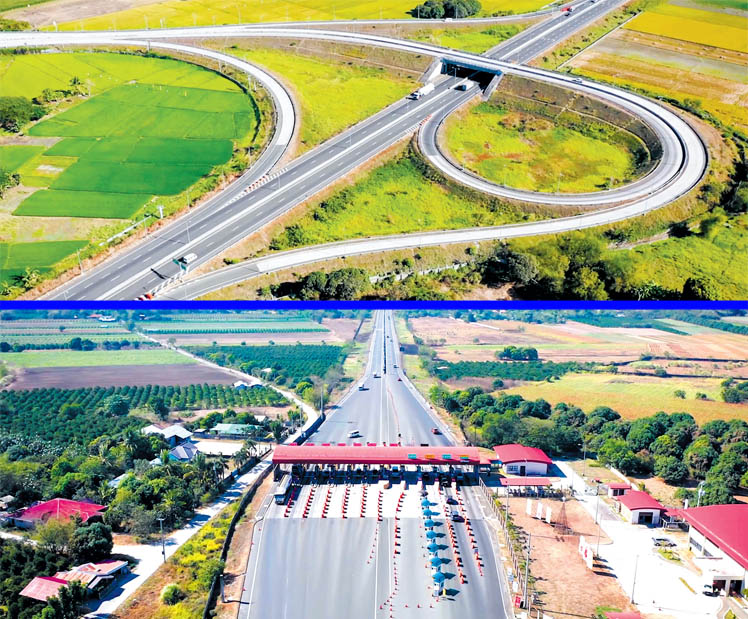
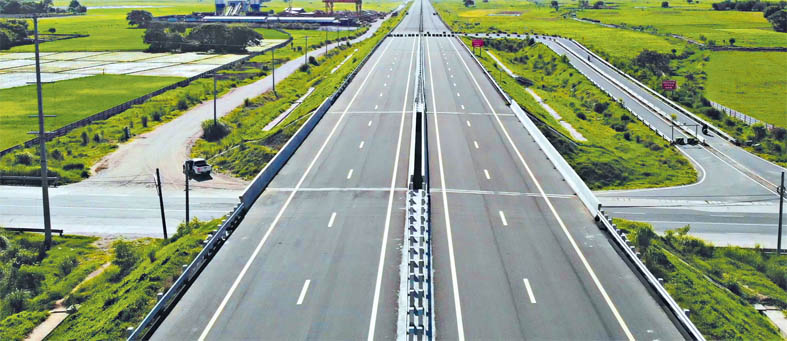
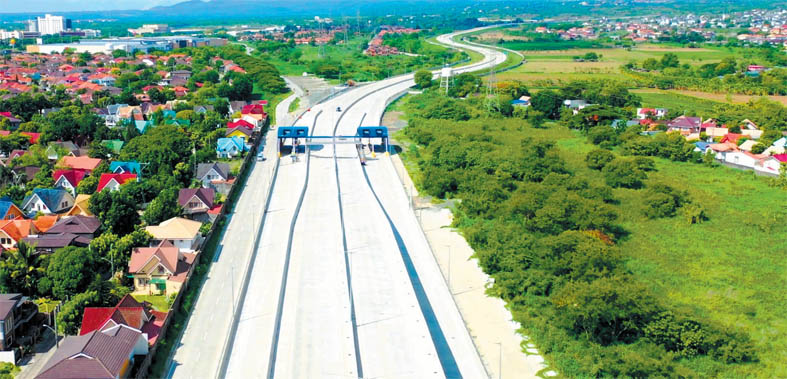
The P633 billion masterplan consists of a total of 905-kilometer of High Standard Highways/Expressways, more than twice the length of existing expressways. The expressway network starts with the Tarlac-Pangasinan-La Union Expressway (TPLEX). The 89.21-km expressway reduces travel time between Tarlac City to Rosario, La Union from 3.5 hours to 1 hour and will benefit 20,000 travelers per day. TPLEX’s Section 3, from Urdaneta City to Rosario, La Union was opened to traffic last July 15, 2020. An extension, meanwhile, is planned to be constructed from the end of TPLEX to San Juan, La Union.

The NLEX-SLEX Connector Road extends the NLEX southward from the end of Segment 10 in C3 Road, Caloocan City to PUP Sta. Mesa, Manila and connects to Skyway Stage 3.

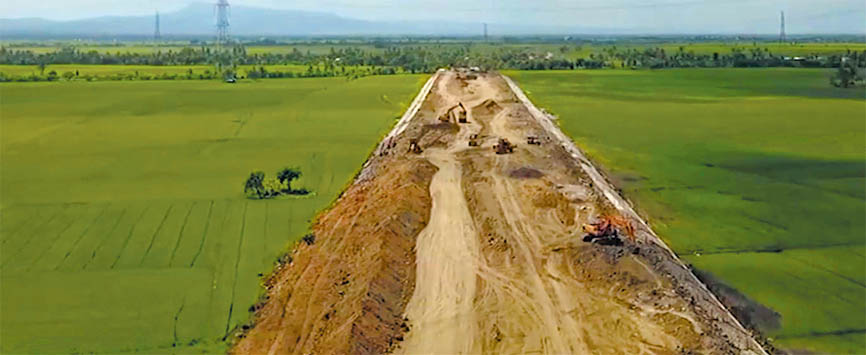
The 30-km four-lane Central Luzon Expressway, spanning from Tarlac City to Cabanatuan City in Nueva Ecija, aims to reduce travel time from 70 minutes to 20 minutes. It is 89.63% complete and will benefit 11,200 motorists per day once it is finished.

At Plaridel, Bulacan, the widening of the 24.61 km Arterial Bypass Road from two lanes to four lanes is nearing completion, currently at 89.97%. The P5.26 billion project is expected to reduce average travel time between Burol, Balagtas and Maasim, San Rafael in Bulacan from 69 minutes to 24 minutes.

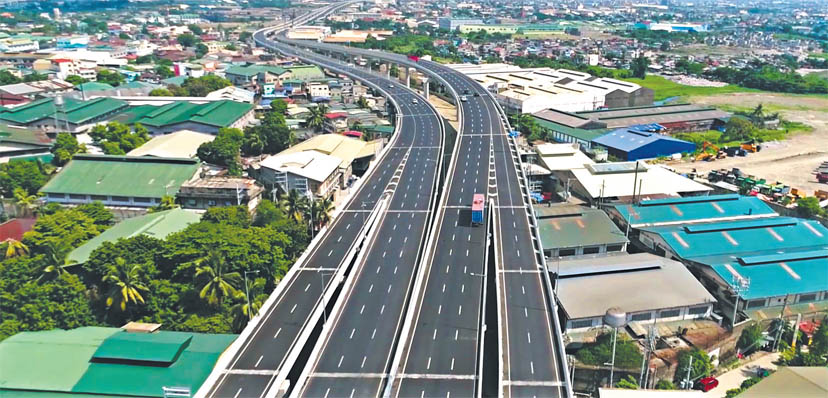
The NLEX Harbor Link Segment 10, a 5.58-km expressway connecting McArthur Highway and C-3, is already complete. The expressway reduces travel time from Valenzuela City to Caloocan City from more than an hour to five minutes, and it benefits 20,000 motorists per day.

The NLEX Harbor Link Segment 10, a 5.58-km expressway connecting McArthur Highway and C-3, is already complete.

Another section of the Harbor Link, the C3-R10 Section, is also complete. Traversing from C3 Road in Caloocan and Radial Road 10 in Navotas, this 2.6 km, six-lane all-elevated portion of the Harbor Link enables 30,000 motorists per day to reach NLEX from Port Area (or vice-versa) in just 10 minutes.

Adding to these sections is a proposed 8.35-km four-lane segment that aims to reduce travel time from Minadanao Ave. to Commonwealth Ave. in Quezon City to 10 minutes. It is expected to be completed by 2024.

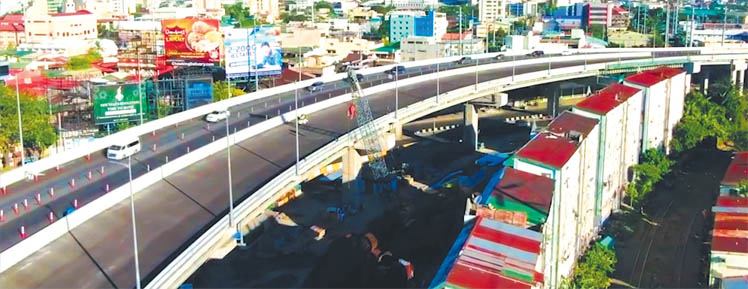
The P44.86-billion Metro Manila Skyway Stage 3, an18.83-km elevated expressway spanning from Buendia, Makati City to the North Luzon Expressway in Balintawak, Quezon City, is 90%

Built to further reduce travel time between north and south, the 8-km four-lane NLEX-SLEX Connector Road is 11% complete. The elevated expressway extends the NLEX southward from the end of Segment 10 in C3 Road, Caloocan City to PUP Sta. Mesa, Manila and connects to Skyway Stage 3. Once complete, it will cut travel time from two hours to 20 minutes and will benefit 35,000 motorists per day.

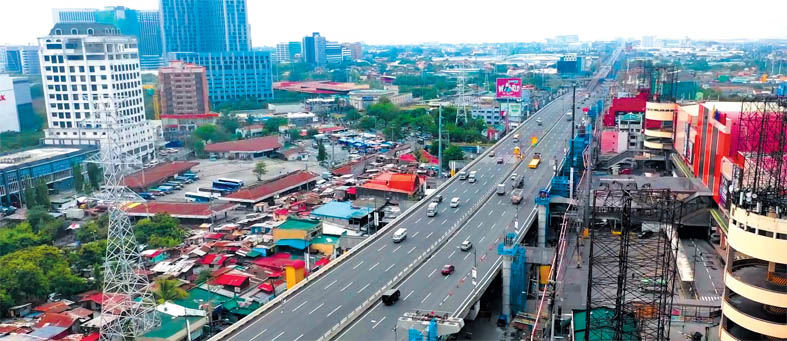
The P44.86-billion Metro Manila Skyway Stage 3, meanwhile, is 90% complete. The 18.83-km elevated expressway, spanning from Buendia, Makati City to the North Luzon Expressway in Balintawak, Quezon City, aims to reduce travel time from two hours to 15-20 minutes, as well as decongest roads in Metro Manila by as much as 55,000 vehicles per day.

The second phase of NAIA Expressway, 14.85-km long and with four lanes, was completed by 2017, providing access to NAIA Terminals 1, 2, and 3, as well as an interface with the Skyway and CAVITEX.

At Plaridel, Bulacan, the widening of the 24.61 km Arterial Bypass Road from two lanes to four lanes is nearing completion, currently at 89.97%.

At the P45.29-billion Southeast Metro Manila Expressway, C-6, the Skyway/FTI – C-5/Diego Silang section is 12% complete. The 32.66-km toll road from Skyway/FTI in Taguig City to Batasan Complex in Quezon City aims to reduce travel time from almost two hours to 26 minutes, and will benefit a maximum of over 88,000 motorists per day.

The Luzon Spine Expressway starts with the Tarlac-Pangasinan-La Union Expressway (TPLEX).

The Alabang-Sucat Skyway Connection and Ramp Extension, on the other hand, is 47% complete. The P10-billion project consists of two additional lanes along northbound and southbound, plus an additional at-grade roadway along northbound—all of which are targeted to be complete by July 2021.

At the 7.70-km six-lane Manila Cavite Toll Expressway Project, C-5 South Link Expressway, the segment from Merville to C5/SLEX was opened to traffic on July 23, 2019, while the groudbreaking for two other segments were held last July 10. The project aims to cut travel time from R-1 Expressway to SLEX/C5 to 10 minutes.

The 15.21-km 4-lane Camarines Sur Expressway will connect the municipalities of San Fernando and Pili in the province of Camarines Sur.

Further south, along the 45.29-km Cavite-Laguna Expressway (CALAX), the construction at Laguna segment reached 78.03% accomplishment. The P35.68-billion CALAX connects CAVITEX in Kawit, Cavite and SLEX-Mamplasan interchange in Biñan, Laguna. It will reduce travel time from 1 hour and 30 minutes to 45 minutes.

The 30-km four-lane Central Luzon Link Expressway (CLLEX), spanning from Tarlac City to Cabanatuan City in Nueva Ecija, aims to reduce travel time from 70 minutes to 20 minutes.

Along SLEX, a 66.74-km toll road from Sto. Tomas, Batangas to Tayabas/Lucena City, Quezon starts constructions Tiaong, Quezon and Alaminos, Laguna. Once completed, the toll road is expected to cut travel time from Sto. Tomas to Lucena from 4 hours to an hour while benefitting 17,000 travelers per day.

The 15.21-km 4-lane Camarines Sur Expressway, meanwhile, progresses at 13%, and is expected to be finished by 2022. The high-speed highway will connect the municipalities of San Fernando and Pili in the province of Camarines Sur, and it targets to reduce travel time in those areas from 51 minutes to 11 minutes.

The P35.68-billion Cavite-Laguna Expressway (CALAX) connects CAVITEX in Kawit, Cavite and SLEX-Mamplasan interchange in Biñan, Laguna.

Two more expressways are expected on the southbound segment of DPWH’s high-speed highway network. The 50.43 km Cavite-Tagaytay-Batangas Expressway will traverse Silang, Tagaytay, Amadeo, Mendez, Alfonso, and Magallanes in Cavite, as well as Nasugbu, Batangas. The Quezon-Bicol Expressway, meanwhile, spans 220 km and aims to cut travel time from Tayabas, Quezon to San Fernando, Camarines Sur by two hours.

Crisis watch

Some Filipinos were rightly on tenterhooks over the United States of America’s 2020 presidential elections, but for the wrong reasons. Some were rooting for Joseph R. Biden, Jr. and others for Donald Trump. While it does matter, it is not so much who prevails in that contest, but how the most contentious US elections in decades are resolved that should really most concern the people of this country and those of the rest of the world. Because of Trump and the Republican Party, a crisis could develop in the US in the coming months that could have far-reaching consequences on the entire planet.

Former Vice-President Biden of the Democratic Party, and with him his running mate Kamala D. Harris, who will be the first ever Asian and woman Vice-President of the US, handily won the popular and US Electoral College vote. But a peaceful transfer of power is still iffy, with Trump’s refusal to concede defeat as of yesterday, Nov. 12, apparently because losing the Presidency will lift his immunity from prosecution for tax fraud among other offenses he allegedly committed while in office.

Political analysts and media pundits in the US are therefore saying that getting President-elect Biden into the White House might take longer than usual. Trump is filing numerous lawsuits that, if they prosper, can lead to recounts in some states. Doomsayers are also predicting that his refusal during one of last October’s presidential debates to declare that he will vacate the White House if he loses — he claims that the only way he can fail to win a second term is if the Democrats steal the elections — indicates that he won’t accept defeat. He could trigger a prolonged dispute, or worse, even civil war should his hardcore base support with force his clinging to power.

That base has turned out to be much bigger than many thought it to be. In addition to Christian fundamentalists, it consists of, among others, heavily armed white supremacists like the Ku Klux Klan, neo-Nazis and other outrightly fascist groups that applaud his racist, authoritarian, and anti-immigration policies, who believe he is “making America great again” and who are prepared to use their guns to keep him in the White House.

If Trump refuses to give up the Presidency he would be in violation of the US Constitution and a “trespasser” who could be forcibly evicted. The assumption is that not only the Secret Service but also the US military will defend the Constitution by assuring the transfer of power despite the presence in the armed services and in the police of racists and white supremacist sympathizers.

Trump calls himself a conservative but even some conservatives, among them the family of the late Republican Senator John McCain who ran against Barack Obama in 2012, but who quickly conceded defeat when he lost, and the prominent conservative political commentator George Will, have denied him that title. Will has even said in one of his columns in the Washington Post that the Republicans under Trump are no longer a legitimate party but a right wing, anti-democratic “insurgency.”

The wonder of it is that in spite of Trump’s taking liberties with women and the facts, and his outright lies since he came to power in 2016 despite losing the popular vote to Hillary Clinton by three million (he has lied thousands of times, according to the Washington Post); despite his misogyny; his blatant racism; his plain ignorance; and worst of all his mishandling (or more precisely, his “unhandling”) of the COVID-19 contagion which has infected over seven million Americans, killed some 300,000, and is afflicting 120,000 daily — despite it all, nearly 50% of the US electorate apparently still voted for him.

What is even more surprising is that among that number were Hispanics and women. But it was not unexpected for some 34% of Filipino Americans, many of whom are Republicans, to vote for him as well. They did so even in such predominantly Democratic Party bulwarks as New York, California, and Hawaii, in one more indication of how conservative, factually challenged, even racist and more white mannish than whites is a big number of that two million-strong community.

In any event, what all these are demonstrating is how dysfunctional US democracy is — or, as the less charitable have put it, how undemocratic is the US electoral process. They cite how the popular vote can be overridden by the electors of the Electoral College as was demonstrated by Trump’s winning over Clinton in 2016, and how the College is among the dregs of the southern states’ slave-owning past. What is even more apparent is that any political system in which any clueless, narcissistic, abusive scoundrel can lie his way to its highest post, who can claim that its elections — the most fundamental of all democratic exercises — are fraud-ridden, and who can provoke an entire country into a prolonged crisis and even civil war must be deeply flawed. That used to be thought of as true only of Third World countries like the Philippines. But as recent events in both the US and other countries are demonstrating, the “developed” parts of the planet and their peoples can be, and often are, no less benighted.

Those who dismiss the US elections as of no major consequence to the Philippines are mistaken. Political chaos and conflict in the only remaining superpower can plunge the rest of the world into even worse disorder as certain countries eager to take the US’ place as global overlord take advantage of its predicament by even more aggressively expanding their spheres of influence and dominance in Asia, Africa, and Latin America.

It is true enough that the results of the US elections will not make much of a difference in US-Philippine relations. Foreign policy was hardly an issue between Trump and Biden quite simply because its fundamentals — maintaining US “full spectrum dominance” on land, sea, air, and space; containing the rise of another superpower; keeping subject nations in line through soft power, but with muscle diplomacy and even force if necessary — have never been contested by either the Democratic or Republican Party. Despite his supposed commitment to democracy and human rights, Barack Obama basically adopted from 2008 to 2016 the same foreign policy as that of his Republican predecessors’, and proved thereby that US global interests are above everything else. What is therefore most crucial is how the contention between these US parties is resolved or remains unresolved — and at what cost.

This is not to argue in support of US global dominance, but to point out that any disruption in the balance of power could stoke further disorder on a global scale as US rivals Russia and China contend for supremacy in a world they can either wrongly or correctly interpret to be within their capacity to dominate. But crisis or no crisis, the US still has the means to militarily engage any challenge to its hegemonic interests. The resulting confrontation can lead to nuclear war, and, as Noam Chomsky warns, the end of “the human experiment” — of humanity itself.

Not being a big or even medium power, the Philippines could either end up among the usual prizes of the winner in another global conflict, or, in case of a nuclear catastrophe, as just another victim of intra-imperialist rivalry. The next few months in the US deserve more than the world’s passing interest. 


Luis V. Teodoro is on Facebook and Twitter (@luisteodoro).

www.luisteodoro.com

‘Growth’ manifestations of coronavirus

The broadsheets described the third quarter real GDP growth at -11.5% as indicative of an “economy on the mend.” The recession was deep, but not as deep as the second quarter’s deep dive at 16.9%.

And yes, it is correct to ascribe it to the brief reimposition of strict lockdown during the quarter. Whether dancing with the virus may be two steps forward and one step backward is already immaterial. There is no other option to restart business activities except to allow the targeted reopening of key economic sectors, congregational activities and public transport within the ambit of the health protocols. Since these protocols remind us of God’s tablets of stone, the lesson of the pandemic should truly be inscribed in stone, never to be forgotten especially by our health authorities.

For the trade-off between life and jobs was in the beginning dubious. There is no contest between the two. Our health infrastructure was weak and we had very little to boast about testing, tracing, quarantining and treating capability. A strict lockdown was absolutely needed. We attempted to buy time with the lockdown.

But we wasted a good crisis. There continues to be a large deficit in our public health institutions, then and now. Risks and challenges are mostly predictable; they move with the season. The sad reality in many cities and provinces stares us in the face when people lose their lives while in transit to Manila for emergency treatment while hundreds of billions in the annual budget could have put up general hospitals with tertiary treatment capability. It is beyond us to think that testing, tracing, quarantining, and treatment that did not cost as much as other forms of public spending, failed to merit as much as the required allocation. We could have atoned for the sins of the past by overhauling our health infrastructure and preparing it for future health crises.

What is apparent from the output data from the Philippine Statistics Authority is that the pandemic was first a supply shock with demand-type spillover effects. The whole economy was shut down for a couple of months. Productivity plummeted to zero and negative territory, and this is how economic scars are formed. They will haunt us for many more months and perhaps years to come. Uncertain health prospects paralyze us into inactivity and sap our drive for work. Fear of the virus kept us away from our offices and workplaces. Production stands still. Even the seniors among us who serve in key positions in both government and the private sectors were prohibited from even going out.

It is not surprising therefore that the industries that retarded even a modest recovery, less decline to some, were those that required physical presence of labor such as construction, real estate and ownership of dwellings and manufacturing. They contributed negatively to the third quarter performance at 39.8%, 22.5%, and 9.7%, all minuses. These are the same industries that rely more on labor and for some sub-sectors, less skilled and of sub-professional capability.

Services also failed to do its job, shrinking by nearly 11%, a few percentage points better than the second quarter’s 17% decline. Aside from real estate, accommodation and food services exhibited a huge drop of more than 52% while wholesale and retail trade, transport and storage and the rest of the services arm of the economy failed to hurdle even zero growth.

On the other hand, the positive contributors to moderate the drop are the financial and insurance activities, public administration and defense, compulsory social activities, and agriculture. Information and communication also managed to crawl up for obvious reasons, the only means of keeping one’s sanity during the lockdown to fight off the alienation brought about by social distancing. Relevant skill sets are IT familiarity, banking and insurance expertise. Workers can do remote work.

The lockdown must also be behind the decline in both private consumption (9.3%) and gross investments (41.6%). Net exports were also down while government consumption expenditure managed to grow by nearly 6% perhaps on account of its social support due to the health damage of the virus. Income flows from the rest of the world further pulled down growth in terms of the gross national income which showed a bigger contraction of 13% compared to the 11.5% decrease in gross domestic product.

It was correct for the IMF and the World Bank to have highlighted the challenges and prospects of the global economy in the face of the pandemic. It is the single wild card in the calculus of growth and survival. The pandemic brought to the fore the urgency of allocating more of the budget to health and education, the need to support vulnerable countries and people, the social desirability of debt condonation or relief. We will not mind seeing more of burden sharing, or the law of Christ in the Scripture, as one economic scar that may be permitted to persist now and forever.

Who can ever forget Hyman Minsky who was described as a maverick economist for good reason? While he believed in Keynes’ view that the market is a good referee for resolving important decisions on resource allocation, he maintained that it is not reliable when it comes to the issue of equity, efficiency and stability. He concluded his book Stabilizing an Unstable Economy (1986), in fact, with “capitalism is flawed mainly because it handles capital poorly.”

Based on the third quarter output report of the PSA therefore, it looks like capital accumulation in the productive sectors of the economy, particularly manufacturing, continues to be outpaced by financial capital. Were it not for the coronavirus, perhaps the gap could have been more pronounced.

Mohammad El-Erian was therefore spot on when he observed the need to shift the excessive reliance of central banks on unconventional monetary policy “to a more balanced mix anchored by responsive fiscal policy and pro-growth structural reforms.” Monetary policy that pushes policy rate to near zero or negative territory may be preparing the ground for future problems like deflation cum financial stability. Excessive expansion in liquidity and credit may be avoided by circumspection and careful assessment of the economic milieu and market dynamics. It is easier to create a liquidity trap than getting out of it.

We support the whole-of-society approach of the Government in marshalling public resources against the virus and laying the groundwork for restarting business activities. A number of key legislative measures are pending in Congress; there is so much our legislators can do to avoid further delay. By all means, let us eliminate all “plunderable” lump sum allocations in the 2021 national budget. A more decisive policy is also needed to deal with bad governance among our frontline agencies.

Joel in chapter 2 verses 28 and 29 wrote about the Lord pouring out His Spirit upon all flesh that would allow sons and daughters to prophesy, old men to dream dreams, young men to see visions. It is not too much of a dream or a vision for us, all flesh, to prophesy the day when the hard work of our people amounts to something solid and long-lasting, when every fruit of their labor is not lost but is properly accounted for in the national income accounts of our statistics authority. That would be the day.


Diwa C. Guinigundo is the former Deputy Governor for the Monetary and Economics Sector, the Bangko Sentral ng Pilipinas (BSP). He served the BSP for 41 years. In 2001-2003, he was Alternate Executive Director at the International Monetary Fund in Washington, DC. He is the senior pastor of the Fullness of Christ International Ministries in Mandaluyong.

Foreign investment damage under lockdowns

Suppose you’re managing a corporation doing business in a foreign country. Suppose further its government imposes mandatory rules that are unnecessary, arbitrary, and results in substantial loss of profits. What do you do to recoup your losses? One way is to sue that government which imposed those measures.

Of course, one defense governments could raise against such lawsuits is to claim they were forced to act the way they did because of force majeure. Measures to supposedly counter the COVID-19 pandemic are a good example.

But such a position, at least under international law, is likely as ineffective as COVID-19 mandatory mask policies: “‘the plea of force majeure is a very strict one, and States have rarely been successful when invoking it as a matter of international law.’ This line of defense has not proved sufficient in the past to stop lawsuits or successful and expensive claims by investors in the past. In 11 out of the 14 cases where Argentina used the state of necessity as a defense, arbitration tribunals rejected the argument” (see Longreads’ “Pandemic Profiteers: How foreign investors could make billions from crisis measures,” April  20, 2020).

The defense of “force majeure” needs to be looked at also from the perspective of State responsibility, particularly Article 23 of the International Law Commission’s Draft Articles on State Responsibility. In this regard, Symbiosis Law School’s Riddhi Joshi points out: “Despite the apparent suitability of a force majeure argument in response to the pandemic, its current understanding in international law renders the successful invocation of the defense difficult. Indeed, the reliance on a high threshold seemingly defeats the very purpose of the provision itself, i.e., a viable option for states to excuse non-performance of their obligations in certain unique circumstances. In light of the extant contours of Article 23 set out above, it is clear that the measures states have imposed may not pass muster.” (“Force Majeure under the ILC Draft Articles on State Responsibility: Assessing its Viability Against COVID-19 Claims,” Sept. 17, 2020)

Which leads us to the question of the appropriate forum to file a claim for damages. Worth exploring is the International Centre for Settlement of Investment Disputes (ICSID).

The ICSID short circuits State immunity from suit obstacles by allowing private entities to protect the investments they made in a foreign country. Complaints covered could include improper expropriation of the investment or unfair treatment, either through violation of most-favored-nation or national treatment principles. Thus, Article 25 of the ICSID Convention: “The jurisdiction of the Center shall extend to any legal dispute arising directly out of an investment, between a Contracting State (or any constituent subdivision or agency of a Contracting State designated to the Center by that State) and a national of another Contracting State, which the parties to the dispute consent in writing to submit to the Center. When the parties have given their consent, no party may withdraw its consent unilaterally.”

ICSID proceedings are self-contained: no appeals to local courts, no diplomatic protection, and once ICSID is engaged all other remedies are deemed excluded. The ICSID Convention obliges each contracting State to recognize and enforce pecuniary obligations imposed by awards of ICSID tribunals as if they were final judgments of the State’s own courts. Note that State immunity may still hold but then that State will have to answer for a possible treaty violation.

Bilateral investment treaties (BITs) may also provide an opening for recovery of damages. BITs will normally contain an “Investor-State Dispute Settlement (ISDS)” clause, which essentially allows foreign investors to sue a government for discriminatory practices.

The Philippines, for example, has entered into several BITs with ISDS clauses, amongst them the 2000 investment agreement with India. Aside from the Article IX (i.e., the ISDS clause), there is also: Article III.1 — “Each Contracting Party shall encourage and create favorable conditions for investors of the other Contracting Party to make investments in its territory, and admit such investments in accordance with its laws and policy.”

Furthermore, Article VI provides: “Investors of one Contracting Party whose investments in the territory of the other Contracting Party suffer losses owing to war or other armed conflict, a state of national emergency or civil disturbances in the territory of the latter Contracting Party shall be accorded by the latter Contracting Party treatment, as regards restitution, indemnification, compensation or other settlement, no less favorable than that which the latter Contracting Party accords to its own investors or to investors of any third State.”

Admittedly, a government can argue that its policies equally apply to both foreign and local companies, and that the latter suffered equally as well. A counter to this argument would be to charge the government as having violated the international “minimum standard of treatment,” which allows for greater and more effective protection to foreign investors than would have been available under Philippine domestic law.

In terms of holding governments accountable, the law and tribunals are certainly there.


Jemy Gatdula is a Senior Fellow of the Philippine Council for Foreign Relations and a Philippine Judicial Academy law lecturer for constitutional philosophy and jurisprudence.

jemygatdula@yahoo.com

www.jemygatdula.blogspot.com

facebook.com/jemy.gatdula

Twitter @jemygatdula

ADVERTISEMENT
ADVERTISEMENT