Home Blog Page 8843

Mariwasa releases new tile adhesive heavy duty

Mariwasa Siam Ceramics, Inc., the leading tile manufacturing company in the Philippines, recently released its new Mariwasa Tile Adhesive Heavy Duty, formulated for big-sized, non-absorptive, and wall tile applications.

“The onset of the new decade marks the testament of Mariwasa’s commitment to be a complete home building solutions provider. Early this year, to complete our tiling solutions, we launched the new Mariwasa Tile Adhesive Regular, and we deemed it necessary to release another variant, this time catering to bigger tiles, which post common problems caused by wrong adhesive use and way of installation,” said Mariwasa President and SCG Country Director, Mr. Jakkrit Suwansilp.

In the Philippines, many residential owners and contractors choose to use sand-cement mortar to bond tiles during tile applications. This traditional practice has led to several setbacks that make it questionable in terms of cost-worthiness. Due to this, many professional tile setters now prefer and recommend the use of tile adhesive instead.

Choosing the right tile adhesive to avoid tile installation problems is the first step

Tyler, the tile expert, recommends the following checklist to consider in choosing the right tile adhesive for your tile installation needs — fast and easy application; thick consistency; wall application; slip resistance; high adhesive strength; high tensile strength; prevents tile cracks and breakage; fits interior and exterior usage; and cost-saving.

Making sure that its products adhere to the International Organization of Standardization and the Philippine National Standard, Mariwasa’s new Tile Adhesive is composed of bonding material, filler aggregate, and polymer additive.

With the new Mariwasa Tile Adhesive Regular and Heavy Duty, you can be assured that it is fast and easy to apply, thereby saving precious time that a worker can use for other construction work. The adhesive’s thick consistency, which is indicative of its bonding strength, is suitable for wall application with its slip-resistant property, assuring that the tiles stay glued to their base for decades. Also, the new Mariwasa Tile Adhesive Regular and Heavy Duty’s high adhesion strength prevents debonded tiles and high tensile strength can resist a lot of tension and allow the tile application to last long. This prevents tile cracks and breakage and saving money and effort for repairs in the future.

Available in select home depots, tile stores, and hardware nationwide.

To know more about the new Mariwasa Tile Adhesive Heavy Duty, visit mariwasa.com.

DTI and SM urge Filipinos to Buy Local, Support Local this Christmas

In this season of giving, what better way to share but by gifting locally made products by micro, small and medium enterprises (MSMEs), whether sweet treats, artisanal products, apparel, home decorations, or other keepsakes. By doing this, we not only keep our heritage alive while promoting local craftsmanship and delicacies, through our support for local goods, we also help businesses bounce back.

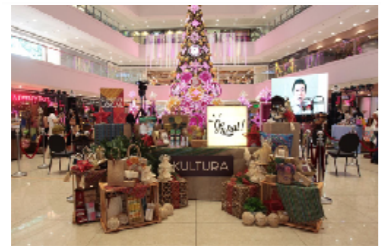
In partnership with the Department of Trade and Industry’s (DTI) Buy Local, Support Local campaign, SM is providing MSMEs a way to sell their products through the SM Christmas Markets. The SM Christmas Markets will simultaneously happen in 54 malls nationwide, featuring around 300 MSME participants from nearby communities, DTI partners, tenants of SM Supermalls, and supplier partners of Kultura. Buy Local, Support Local is a national campaign that aims to boost demand for Philippine-made products, particularly those from small businesses. SM Christmas Markets will run from November 9, 2020 to January 3, 2021.


SM Christmas Markets is a nationwide campaign in support of MSMEs. This is implemented in all SM Supermalls nationwide in partnership with the Department of Trade and Industry.

DTI Secretary Ramon Lopez, SM Supermalls President Steven Tan, and SM Retail President Chito Manalo personally visited the MSME participants of the SM Christmas Markets at Megamall. During a short program, DTI Sec. Lopez emphasized the role of MSMEs as the backbone of our economy as well as the sector mostly imperiled by the pandemic. “Filipinos should prioritize buying local products to help the economy recover from the coronavirus pandemic. Only with this can we truly reopen and restart our economy,” said DTI Sec. Lopez.

According to Steven Tan, SM will carry on its mission to support MSMEs and showcase Filipino ingenuity.

“We are committed to working hand in hand with our MSME partners alongside government, and private sectors to provide an environment that will enable MSMEs to quickly adapt and recover,” said Steven Tan, President SM Supermalls. “When the pandemic struck in March this year, we waived rental fees in the malls and provided financial relief to our suppliers. We partnered with jeepney and tricycle drivers to deliver goods, and we continue to do everything we can for the businesses and people that rely on SM,” Steven added.


As MSMEs are the backbone of the economy, they are also the backbone of SM shared Chito Manalo, President of SM Retail Inc.

“As MSMEs are the backbone of the economy, they are also the backbone of our business, that is why we made it a mission to support MSMEs, even before the pandemic, during the ECQ, and now as we kickstart the economy,” said Chito Manalo, President of SM Retail. “SM has a wide range of MSME partners from farming to artisan communities, from local manufacturers to shop owners, from food kiosks to restaurant owners, making SM a community, a marketplace, and partner to MSMEs,” said Chito.

Visit the SM Christmas Market at an SM mall near you to help MSMEs bounce back stronger.

SM traces its roots from a small shoe store put up in downtown Manila during the late 1950s so its affinity with MSMEs comes naturally. Some of its MSME partners started as homegrown businesses. As SM grew, a longstanding partnership has evolved beyond being a business transaction into an enabling community where MSMEs are nurtured in SM stores, malls, and other business ventures. 

For more updates and announcements, visit www.smsupermalls.com or social media pages of the SM mall near you.

People’s champ Pacquiao donates Globe endorsement fee to Rolly and Ulysses victims

After scoring a brand endorsement agreement with Globe to be its newest brand ambassador, Senator and People’s Champ Manny Pacquiao announced that he is donating his fees to victims of typhoons Rolly and Ulysses. At the recently held contract signing at the Mireio, Raffles Hotel in Makati with Globe President and CEO Ernest Cu and Globe Chairman and Ayala Corporation Chairman Jaime Augusto Zobel de Ayala, Pacquiao offered to give his earnings to support relief efforts.

“I said yes to Globe because I believe in the company, and I use the company’s services. Not only that, I am given another God-given opportunity to be of help to our kababayans in any way I can. That is why my endorsement fee for this will go to relief efforts to help our kababayans who were affected by the devastation of typhoons Rolly and Ulysses. Ibibigay natin sa mga taong ito ang ating income dito, ibabalik natin sa taumbayan para makatulong ng malaki sa ating mga kababayan na naghihirap at nagugutom ngayon at nawalan ng tahanan. Sama sama tayong babangon, that is my commitment,” said Pacquiao.

The contract signing between Globe and twelve-time, eight-division world champion, Manny Pacquiao as its brand ambassador was live-streamed on Facebook last night, a new standard for events marketing in the new normal.

“You’re donating the proceeds of the endorsements – I think that’s a very gallant move, and one that is so timely given the vast devastation that has occurred in the country today,” said Cu.

For Ayala, “At a time when the country is facing so many challenges, Manny’s life story has remained a source of inspiration for every Filipino even in this time of pandemic – a constant reminder of the Filipino’s strength, talent, and tenacity to overcome every difficulty.”

The partnership with Globe also paves the way for Filipinos from all over the world to see Pacquiao’s upcoming fights live via UPSTREAM, the newest transactional video-on-demand (VOD) platform, and GMovies.

“It is indeed a source of pride to partner with Manny Pacquiao, the People’s Champ. His legendary boxing career is a never ending source of Pinoy inspiration to always strive to be better,” said Upstream partner Dondon Monteverde. “This same inspiration goes in line with our vision for Upstream to become the best entertainment platform for the Filipino. It is with great privilege and honour that Upstream will air his next fight through live internet streaming to the Filipino people,” Monteverde added.

Also present at the contract signing were Jaime Alfonso Zobel de Ayala, Business Development Head of Ayala Corporation; Issa Cabreira, Globe Consumer Business Group Head; Joe Caliro, Globe Senior Adviser; Arnold Vegafria, Talent Manager, and Roselle Monteverde, Regal Films Producer.

Globe is a signatory to the United Nations Global Compact and has committed to implement sustainability principles hinged on four pillars including One Digital Nation, Care for the Environment, Care for People, and Positive Societal Impact. Globe is actively supporting 10 UN Sustainable Development Goals.

For more information, please visit globe.com.ph.

Western Visayas-Sta. Rosa provincial bus routes reopened; more jeepneys allowed to operate

AT least 1,043 more traditional jeepneys were allowed by the Land Transportation Franchising and Regulatory Board (LTFRB) to resume operations on Tuesday in eight routes in Metro Manila. For provincial buses, 221 units have been allowed back on the road starting Wednesday in seven routes. The jeepney routes approved by the LTFRB under Memorandum Circular 2020-073 are Evergreen Subdivision to Bagong Silang/Evergreen Subdivision to Philcoa, MCU to Recto via F. Huertias and Oroquieta, Pier South to Project 6 via España, Pier South to Project 8 via Quezon Avenue, Project 6 to T.M. Kalaw via Quezon Avenue, Project 6 to Vito Cruz via Quezon Avenue, Project 8 to Quiapo via Roosevelt Avenue and Project 8 to T.M. Kalaw via Quezon Avenue. The bus routes, meanwhile, are: Kalibo and  Malay in Aklan, San Jose in Antique, Roxas City in Capiz, Estancia in Iloilo, Iloilo City and Miag-Ao in Iloilo, all going to and from the Sta. Rosa Integrated Terminal in Laguna. The LTFRB said public utility vehicle  operators need not secure special permits to operate, but they are required to use downloadable quick response or QR codes. — Emmanuel Tupas/PHILSTAR

2021 recovery crucial for banks — S&P

S&P Global Ratings expects the Philippine economy to shrink by 9.5% this year, before growing by 9.6% in 2021. — PHILIPPINE STAR/MIGUEL ANTONIO N. DE GUZMAN

A DEEPER-THAN-EXPECTED recession in the Philippines will increase the downside risks for the banking industry, S&P Global Ratings said.

“This year’s recession is likely to impair the debt-servicing ability of consumers, small businesses, and leveraged companies. The extent of the impact on banks depends on the economic recovery and stabilization of credit conditions in 2021,” S&P analyst Nikita Anand said in a note on Tuesday.

Ms. Anand said Philippine banks are facing a negative economic risk trend, as the economy remained in a recession in the third quarter. Gross domestic product (GDP) shrank by 11.5% in the July to September period, slightly easing from the record 16.9% decline in the second quarter as lockdown restrictions gradually loosened amid the coronavirus disease 2019 (COVID-19) pandemic.

S&P expects the Philippine economy to contract by 9.5% this year, before growing by 9.6% in 2021.

“We expect operating conditions for banks and borrowers in the Philippines to improve only gradually, on the back of 9.6% growth in the economy in 2021. These projections assume an eventual flattening of the COVID-19 curve,” Ms. Anand said.

The government expects the economy to bounce back to 6.5-7.5% growth in 2021.

Ms. Anand said local lenders can absorb credit losses since its “good capital position (15% Tier-1 ratio) and more than 100% provisioning of NPLs provide a cushion against challenging operating conditions.”

But a longer recession than the S&P forecast “could result in substantially higher credit losses for Philippine banks,” Ms. Anand said.

“We expect the banking sector’s credit costs to stay elevated at 1.5%-2.0% of gross loans over 2020 and 2021 compared with the five-year average of 0.4%. The consumer, micro, and SME (small and medium enterprises) portfolios will contribute to higher NPLs (nonperforming loan) in the coming quarters,” she said.

“Large conglomerates, with their strong business profiles by domestic standards and good access to liquidity, are better placed to weather the storm. If the recession is longer or deeper than our forecast, this could set off sharper asset quality deterioration for banks, due to potential stress in large corporate books.”

As of end-September, the gross NPL ratio of the banking system hit 3.4%, as soured loans climbed 60% year on year to P364.672 billion.

The central bank expects the NPL ratio to reach 4.6% by end-2020. It reached 17.6% in 2002, the aftermath of the Asian Financial Crisis.

Ms. Anand also noted regulatory forbearance will only delay the true recognition of NPLs. Republic Act No. 1494 or Bayanihan to Recover as One Act provided for a one-time 60-day debt payment moratorium.

“The effect on individual banks in the coming quarters will be uneven, hinging on their exposure to vulnerable segments and their accounting and provisioning standards,” she said.

Banks’ recovery to pre-COVID-19 levels will likely stretch beyond 2022, Ms. Anand said. — Luz Wendy T. Noble

Creation of a child trust fund proposed

THE Capital Market Development Council (CMDC) is studying the possibility of setting up the country’s Child Trust Fund (CTF), which would aim to encourage low-income families to save for their children’s college education.

In a statement on Tuesday, the Finance department said the national and local governments would both contribute to the proposed CTF. Financial institutions will be tasked to manage these funds.

National Treasurer Rosalia V. de Leon, who is also part of CMDC, said the model will be based on CTFs in the United Kingdom and Singapore.

“The fund can also either be managed by the government and a part of it can also be cut out to be managed by the private sector. We are still on an exploratory stage and we would like to further do a more detailed or granular study on the CTF and to sell it to the Council in the coming meetings,” Ms. De Leon said in the statement.

Proceeds from the trust fund can be used to augment the remaining educational expenses of students such as daily allowance, transportation costs, lodging and other fees, since education from kindergarten to college in public schools and state universities are free of tuition fees.

In a separate text message on Tuesday, Ms. De Leon said the proposal is still at the early stage of development and there is no target schedule yet on when the proposed CTF will be launched.

“No launch date since still on a very preliminary stage looking at various models that are appropriate and affordable for us,” she said.

In the UK, Ms. De Leon said over six million tax-free trust fund accounts were created to save up for future educational expenses of children born between Sept. 1, 2002 and Jan. 2, 2011.

The UK government allotted an initial seed capital of £250-500 (P16,000-P32,000) per child, with those in the poorer households receiving bigger amounts. The funds can be withdrawn once students reach 18 years old.

The CTF was scrapped by the UK government in 2011.

Under Singapore’s Education Endowment or Edusave Scheme, the state gives 4,000 Singapore dollars to each recipient child seven years old and above, to cover 10 years of schooling in primary and secondary education.

Singapore’s system does not have withdrawal limitations so the students can take out the proceeds even prior to the maturity provided that these will be used for educational expenses. The accounts are then closed once beneficiaries turn 16 years old and the unused funds will then be transferred to other accounts.

Consuelo D. Garcia, the liaison director for capital markets of Financial Executives Institute of the Philippines (FINEX), said the proposed trust fund can revive the “savings culture” in the country, especially those in poor families.

Ms. Garcia said more than five years ago, the country ranked second among Asian countries in terms of savings as a percentage of the total economic output, based on a survey by the Asian Development Bank.

The Philippines has since then lagged behind peers and now only maintains combined savings worth 15% of gross domestic product (GDP), which is roughly half of Vietnam’s 25% savings-to-GDP ratio and Indonesia’s 35%.

“It is actually to be the missing link to what we have right now. The PERA (Personal Equity and Retirement Account) is for the working class. This one is for the young people. The baby boomers already got left behind so I think we could have this as a starting point,” she was quoted as saying.

Ms. Garcia said the trust fund can also boost the economy as the pooled savings will be invested professionally to support programs such as the government’s big-ticket infrastructure projects.

Aside from promoting savings, the proposed trust fund for children could also help diversify and deepen the capital market since it serves as another instrument to boost resources available in the market, said University of Asia and the Pacific (UA&P) School of Economics Senior Economist Cid L. Terosa

“It will be beneficial for students because the Child Trust Fund is a lifeline for low-income families to improve their standard of living and overall material welfare through education,” Mr. Terosa said in an e-mail on Tuesday.

“The key to a successful Child Trust Fund program is a well-designed partnership between the government and the private sector, particularly financial institutions,” he added.

The financial institutions play a key role in designing and marketing the CTF, said Mr. Terosa, while both the public and private sectors are needed to make sure that consumers are protected and the funds will remain a viable and attractive savings and investment option. — Beatrice M. Laforga

Local digital economy to hit $28B by 2025 — study

THE Philippine digital economy’s gross merchandise value (GMV) is seen to hit $28 billion in 2025, accelerating to a 30% compound annual growth rate (CAGR), driven by the growth in new digital consumers, the latest e-Conomy Southeast Asia report by Bain & Company, Google, and Temasek said.

The digital economy’s GMV is expected to grow at a CAGR of 6% to $7.5 billion this year, which was described as “resilient.”

The e-Conomy Southeast Asia report made use of data from consumer and merchant surveys, corroborated with market participant interviews and databases. It focused on six markets, namely Indonesia, Malaysia, the Philippines, Singapore, Thailand and Vietnam.

As the pandemic helped drive Filipino consumers’ shift to digital services, the report showed 37% of new digital consumers plan to continue using internet economy services even after the pandemic. Among the new digital consumers, 95% said they will continue to use at least one digital service after the health crisis.

The study also found that the average hours spent by Filipinos online per day had increased to 5.2 hours during the strict lockdown, from four hours previously. This declined to 4.9 hours after the lockdown eased.

“In the Philippines, given the extensive COVID-19 (coronavirus disease 2019) lockdown periods, users went online searching for solutions to their sudden, new challenges,” the study noted.

Growth in e-commerce and online media offset the decline in transport, food, and travel sectors this year. The e-commerce sector’s value is projected to increase by a CAGR of 55% to $4 billion this year, and by 31% to $15 billion in 2025.

The online media sector’s value is seen to rise by a CAGR of 27% to $2.1 billion in 2020, and hitting $5 billion in 2025.

While travel and transport sectors grew by less than a percent this year, both are expected to bounce back by 2025.

On the other hand, the value of investments in the Philippines’ internet sector rose 34.13% to $169 million in the first half of 2020 with a total of 22 investment deals, as compared with the $126 million posted in the same period a year ago with 32 investment deals.

“Deal activity across the region continued to grow unabated in the first half 2020. Investors are remaining cautiously optimistic and are doing fewer deals at more attractive valuations, in hope for higher returns in the long run. Where the goal of years prior has been ‘blitzscaling,’ investors are now looking for sustainable, profitable growth,” the study said.

The study identified six major barriers to growth: internet access, funding, consumer trust, payments, logistics and talent. This year, significant progress has been seen, particularly in payments and consumer trust.

Alessandro Cannarsi, co-author of the report and Lead Partner in Private Equity for Bain & Company Southeast Asia, offered three ways for investors to be able to tap into the region’s “burgeoning digital economy.”

Investors can “recalibrate towards sustainable and profitable growth” by refocusing on companies that progress towards “profitable organic growth rather than metrics driven by subsidization,” he said.

Investors can also differentiate between essential versus non-essential tech. “Focus on startups that drive improvements in efficiency and access to essential goods and services,” Mr. Cannarsi said.  Arjay L. Balinbin

Philippine internet economy to reach $28 billion by 2025 — study

Philippine internet economy to reach $28 billion by 2025 — study

THE Philippine digital economy’s gross merchandise value (GMV) is seen to hit $28 billion in 2025, accelerating to a 30% compound annual growth rate (CAGR), driven by the growth in new digital consumers, the latest e-Conomy Southeast Asia report by Bain & Company, Google, and Temasek said. Read the full story.

Philippine internet economy to reach $28 billion by 2025 — study

PHL may attract oil traders after loss of refining sector

PILIPINAS SHELL Petroleum Corp. shut down its refinery in Tabangao, Batangas this year. — PHILIPPINE STAR/MICHAEL VARCAS

MORE oil traders might see the Philippine downstream market attractive with the impending loss of its oil refining industry, according to an oil executive.

The coronavirus pandemic exacerbated the already challenging fuel retail competition in the Philippines, leading its last standing refiner to consider shutting down “very soon.”

Petron Corp., the country’s remaining petroleum refiner, recently disclosed that it will shut down its 180,000 barrel-per-day (bpd) refinery in Bataan “very soon” to prevent further losses due to poor refining margins and uneven playing field, according to its president, Ramon S. Ang.

Losing the domestic refinery may attract oil traders to enter the Philippine market, said Raymond T. Zorrilla, senior vice-president for external affairs of Phoenix Petroleum Philippines, Inc.

“If there is no refinery in the [Philippines], it might be very attractive for traders to target [the country] and this could impact the importers too — [they could be] in direct competition with other importers,” he said in a message.      

A consumer group said earlier that the Philippines would be completely “at the mercy” of oil traders and suppliers without its refining sector.

“The supply and prices will make the country dependent [on] foreign supply and prices,” Victorio A. Dimagiba, president of Laban Konsyumer.

As the Philippines becomes more dependent on fuel imports, it will also be tied to fluctuations of supplies and prices in the global oil market, Fitch Solutions said in a recent research note.

Still, there will be no adverse impact on fuel security if Petron would turn to full importation like its rival Pilipinas Shell Petroleum Corp., according to Rino E. Abad, director of the Department of Energy’s (DoE) Oil Industry Management Bureau.

Pilipinas Shell, owner of a 110,000-bpd refinery in Tabangao, Batangas which permanently closed in August, will convert the facility into an import-receiving site.

“Finished products are abundant almost all over the world. Importation within Asia-Pacific is not an issue,” Eastern Petroleum Chairman Fernando L. Martinez said in a mobile message. He also said that the loss of domestic refineries won’t impact the country’s fuel supplies.

STOCKPILING
To allay fuel insecurity from uncertainties in the global oil market, the Philippine government should invest in strategic oil stockpiling and encourage more investments in local gas and oil exploration.

“The government should invest in strategic stockpiling of products or encourage investment in oil exploration for our own needs,” Mr. Zorrilla said. “That [will make] us independent [from] global supply disruption.”

State-led Philippine National Oil Co. in a recent Senate hearing said it has deferred to next year the conduct of a feasibility study on the formation of a strategic petroleum reserve program, which the DoE says will help secure the country’s fuel supply in instances of volatility and disruptions.

But Petron’s Mr. Ang said that without local refineries, a stockpiling program won’t be possible. He claimed that the government cannot sell products that are stored for months since their quality will deteriorate unless reprocessed in a refining facility.

“You can only stockpile kung may refinery ka kasi pwede mong i-reprocess ang gasoline mo, diesel,” he said. (You can only stockpile if you have a refinery that will allow the reprocessing of gasoline and diesel imports.)

Ideally, the country should retain its refining sector for the sake of supply security, “as petroleum in its crude state can be stored for a longer period [versus] finished product,” Mr. Martinez said.

The country must maintain at least 150,000 bpd of petroleum coming from refiners, or 30% of the country’s total fuel demand, he added.

Mr. Martinez said he expects a better refining environment in the country in the future.

“It can just be a temporary shutdown until the economics of refining is achieved, which may also happen In the future, in which case the owners may decide to revive it,” he said. — Adam J. Ang

Pandemic brings more job hunters, fewer opportunities, says JobStreet

By Denise A. Valdez, Senior Reporter

MORE Filipinos are looking for jobs online during the coronavirus pandemic, but companies are offering fewer opportunities because of uncertainties brought by the crisis, online job hunt platform JobStreet found in its data.

In a media briefing on Tuesday, JobStreet said the job ads on its platform dropped by more than half in the past months of the quarantine. From 100,000 jobs on its website every day before the pandemic, the figures hit as low as 30,000 jobs during the height of the lockdown.

On the other hand, applications for job listings have grown by about five times, from an average of 50 seekers per ad pre-pandemic to 300-400 applications per ad at present.

“We have very little number of jobs compared to pre-pandemic, and more people looking to augment or looking for new jobs,” Philip A. Gioca, country manager for JobStreet in the Philippines, said in the briefing.

“In the past, before the pandemic, we had a very good number of jobs that are available in the market. We were able to get those from our hirer partners because they were expanding and the economy was doing so well. Unfortunately, when the pandemic came, they had to do a lot of things,” he added.

A primary concern during the pandemic is how businesses can keep operating while the economy has fallen into a recession. To many, this means having to cut salaries or reduce manpower, but in worst case scenarios, closing shops, Mr. Gioca said.

The Philippine government reported a 10% unemployment rate in July 2020, lower than April’s record-high 17.7%, but nearly double July 2019’s 5.4%. That means there are about 4.57 million unemployed Filipinos during the period, 88% higher than 2.44 million in July 2019.

“Given those situations, people would look for another job to augment their financial situations. Good thing that we were able to encourage our partners to actually give more jobs for part-timers. Second, they opened up not only for those with experiences, but also fresh graduates… These, in a way, augmented those who were displaced,” Mr. Gioca said.

He also noted the salary for job listings declined between 20% and 50%, but people were willing to agree to it rather than have no job at all. “The promise of management is that it will go back to the normal rate when operations stabilize,” Mr. Gioca said.

But on the bright side, job listings have improved to an average of 44,000 ads a day over the past three months. It is still lower than pre-pandemic’s 100,000, but better than 30,000 in the early months of quarantine.

“It signals to us that companies are expanding and are trying to open up. Hopefully, it gets sustained. That’s why in the recent survey that we did, we see hirers remain very positive in the next six months,” Mr. Gioca said.

JobStreet currently has about 27,000 partner hirers on its platform. It recently launched a new mobile application to accommodate more job seekers and hirers.

The top jobs on JobStreet at present are in the fields of education, customer service, clerical and administrative support, security and protection, information technology, healthcare, finance and general accounting, general work, computer networking, and sales.

DMCI Homes eyes P13.9B worth of project completions

DMCI PROJECT DEVELOPERS, Inc. (DMCI Homes), the residential arm of listed DMCI Holdings, Inc., is targeting to complete 10 projects before the year ends.

In a disclosure by its parent to the exchange on Tuesday, DMCI Homes said it is expecting to finish P13.9 billion worth of projects in the remaining period of 2020, comprising 4,088 residential units spread across 10 buildings.

These projects belong to DMCI Homes’ Mulberry Place, Lumiere Residences, Calathea Place, Sheridan Towers, Alea Residences, and Oak Harbor Residences.

Of the combined 4,088 residential units, some 3,500 have already been sold out.

“The pandemic really battered our productivity. Our projects got delayed by one to three months because of the 76-day work stoppage in the first semester,” DMCI Homes President Alfredo R. Austria said in the statement.

“Since we follow the percentage-of-completion method for revenue recognition, our booked revenues contracted on lower construction accomplishments,” he added.

In the nine months through September, DMCI Homes contributed a net income of P472 million to its parent DMCI Holdings, down about 74% from P1.8 billion in the same period a year ago.

Its revenues slid 36% to P9.5 billion due to delayed project completions following restrictions on construction activity.

To catch up, the company is implementing “modularization,” which is a method that allows building components to be pre-made then assembled for construction.

It is also providing onsite barracks for some 4,941 construction workers to reduce tardiness and the likelihood of absences while transportation facilities are limited.

As of September, DMCI Holdings booked an attributable net income of P3.91 billion, slumping 58% from the same nine-month period in 2019. Aside from its residential business, the company also has interests in mining, construction, water and power.

Shares in DMCI Holdings closed at P5.41 each on Tuesday, inching up one centavo or 0.19% from the last session. — Denise A. Valdez

‘Good start’ for imported cars in fourth quarter after 16% slump in sales

IMPORTED car sales declined by 16% in October, while the industry continues to look to more growth towards the end of the year.

In a report released on Tuesday, the Association of Vehicle Importers and Distributors, Inc. (AVID) said the industry’s 21 member companies and 26 global brands sold 6,120 vehicles in October. Previously released data said the industry sold 7,320 in the same month last year.

In the 10 months to October, sales plummeted almost 43% to 40,993 vehicles compared with 71,362 in the same period last year.

But the industry indicated some month-on-month recovery, growing nine percent in October from 5,594 units in September.

“We are off to a good start in the last quarter of the year and we aim to continue this revival,” AVID President Ma. Fe Perez-Agudo said.

“Businesses are reopening and travel and tourism are resuming. These activities require mobility and a strong and healthy auto industry will set the course for economic recovery.”

AVID sales had dropped by more than 50% in the first half from the same period a year earlier after dealerships closed during the strictest version of the lockdown. September usually starts off an upward trend in automotive sales due to the upcoming holiday season.

As of October, passenger car sales plummeted 46% to 13,523 vehicles. The bulk of the vehicles during the 10-month period were sold by Hyundai Asia Resources, Inc. with 7,177 units.

Light commercial vehicle sales fell 40.1% to 27,209 units, led by the 10,619 vehicles sold by Ford Group Philippines, Inc.

Commercial vehicle sales dropped by 64% to the 261 units sold by Hyundai.

Ms. Agudo said that the industry overhauled its sales strategies during the pandemic.

“So now you can buy a car online, have it delivered to you without face-to-face contact, and do contactless pickups and drop-offs at service locations for your After Sales needs,” she said. — Jenina P. Ibañez