Home Blog Page 8099

China suspends economic dialogue with Australia as relations curdle

BEIJING – China “indefinitely” suspended on Thursday all activity under a China-Australia Strategic Economic Dialogue, its state economic planner said, the latest setback for strained relations between the two countries.

“Recently, some Australian Commonwealth Government officials launched a series of measures to disrupt the normal exchanges and cooperation between China and Australia out of Cold War mindset and ideological discrimination,” China’s National Development and Reform Commission (NDRC) said in a short statement on the decision.

The commission did not say in the statement what specific measures prompted the action.

The Australian dollar fell sharply on the news, and was as low as 0.7701 to the U.S. dollar from Wednesday’s $0.7747.

Bilateral ties were strained in 2018 when Australia became the first country to publicly ban Chinese tech giant Huawei from its 5G network. Relations worsened last year when Australia called for an independent investigation into the origins of the novel coronavirus, prompting trade reprisals from China.

Australian Trade Minister Dan Tehan said the decision by the commission was “disappointing” because the economic dialogue was “an important forum for Australia and China to work through issues relevant to our economic partnership”.

“We remain open to holding the dialogue and engaging at the ministerial level,” he said in a statement.

The last meeting was in Beijing in 2017, when Australia’s trade minister signed an agreement on cooperation on Belt and Road projects in third-party countries.

Australia has, however, declined to sign agreements on direct participation in China’s flagship foreign policy initiative.

In April, Canberra cancelled two Belt and Road cooperation deals struck by the state of Victoria, prompting the Chinese embassy to warn that ties were bound to worsen.

Australia’s federal parliament granted veto power over foreign deals by states in December amid the deepening diplomatic dispute with China, which has imposed a series of trade sanctions on Australian exports ranging from wine to coal.

Successive Australian trade ministers have been unable to secure a phone call with Chinese counterparts since diplomatic tensions worsened in 2020.

In the 12 months to March, Australia exported A$149 billion ($115 billion) worth of goods to China, excluding services, of which iron ore was by far the largest product.

Experts expect the bilateral strains would not have a major impact on the iron ore trade.

“We believe the iron ore trading relationship between Australia and China will remain ring-fenced in relation to current political tensions between the two nations,” said Atilla Widnell, managing director at Singapore-based Navigate Commodities Ptd Ltd.

“This is a co-dependent relationship whereby either party cannot survive without the other.”

Matt Bekier, CEO of No.2 Australian casino operator Star Entertainment Group Ltd, which relied on Chinese tourists as a key revenue source until Australia closed its borders due to the pandemic, told the Macquarie Australia Conference he was unconcerned about China’s suspension of the Strategic Economic Dialogue.

“I’m probably a bit more optimistic that people will do what they’ll do. That’s not to say that (there won’t be) a number of months of challenges in the government relations,” he told the conference in Sydney. – Reuters

COVID curbs reinstated in Sydney as Australian officials trace mystery case

STOCK PHOTO

SYDNEY – Australian officials reinstated social distancing measures across greater Sydney on Thursday, as they scrambled to find missing tranmission links in a COVID-19 case connected to an Indian variant of the virus.

With many people expected to gather over the weekend for annual Mother’s Day celebrations, the New South Wales state government restricted household gatherings to 20 guests and limited aged care facility visitors to two people per resident.

Masks will be mandatory on public transport and at indoor venues. All the restrictions, which cover around 5.3 million people in the country’s biggest metropolitan area, take effect at 5 p.m. local time and are scheduled to last until Monday morning.

“We believe this is a proportionate response to the risk we have ahead of us,” NSW Premier Gladys Berejiklian told reporters.

The measures, which also cover Sydney’s neighbouring regions of Wollongong, the Central Coast and Blue Mountains, were spurred by the detection of COVID-19 in a 50-year-old man, who passed the infection to his wife.

The case, the first local transmission in NSW in more than a month, baffled health officials given the man had no known links to high-risk jobs or people.

Testing has determined the man was infected with a variant first detected in India and genomic sequencing had linked the case to a returned traveller from the United States, NSW Chief Health Officer Kerry Chant said on Thursday, but there was no clear transmission path between the two people.

“We can’t find any direct link between our case, so what we’re concerned about is there is another person that is as yet unidentified that infected our case,” Chant said.

It appeared to be the first time officials had reported the local transmission of an India virus variant in Australia.

Tests on the infected man had showed a higher viral load than typically seen in infected people, potentially increasing the chance that the man has spread the disease, officials said.

NSW Treasurer Dominic Perrottet entered self-isolation on Thursday after he visited a restaurant at the same time as the infected person, classifying him as a close contact, his office said. Perrottet, who attended a sitting of state parliament on Wednesday, has tested negative.

Authorities also asked thousands of residents in the city’s inner west to seek testing for any mild flu symptoms after fragments of the coronavirus that causes COVID-19 were detected in the sewerage network used by several suburbs.

Speedy tracing systems, movement curbs and border restrictions have largely reined in the spread of COVID-19 in Australia, which has recorded 29,865 cases and 910 deaths since the pandemic began.


INDIA BAN

The federal government is currently under pressure to overturn a temporary travel ban on travellers, including its own citizens, from COVID-ravaged India. Australia has blocked all direct flights from the country until May 15.

A report in the Sydney Morning Herald newspaper on Thursday, citing unidentified sources, said at least two repatriation flights will be dispatched to India every week from the middle of this month to bring home around 9,000 Australians.

Prime Minister Scott Morrison, however, said the situation would be constantly reviewed.

“We are not going to commit to that at this point,” Mr. Morrison told radio station 3AW on Thursday. – Reuters

Blue Origin opens up bidding for first ‘spectacular’ space tourism trip in July

STOCK PHOTO

SEATTLE – Blue Origin, billionaire Jeff Bezos’ rocket company, said on Wednesday it is targeting July 20 for its first suborbital sightseeing trip on its New Shepard spacecraft, a landmark moment in a competition to usher in a new era of private commercial space travel.

Blue Origin also said it will offer one seat on the first flight to the winning bidder of a five-week online auction, the proceeds of which will be donated to the space firm’s foundation.

The New Shepard rocket-and-capsule combo is designed to autonomously fly six passengers more than 62 miles (100 km) above Earth into suborbital space, high enough to experience a few minutes of weightlessness and see the curvature of the planet before the pressurized capsule returns to earth under parachutes.

The capsule features six observation windows Blue Origin says are nearly three times as tall as those on a Boeing 747 jetliner and the largest ever used in space.

“The view will be spectacular,” Blue Origin’s Director of Astronaut Sales, Ariane Cornell, told a media briefing.

After its first flight in July, Cornell said Blue Origin would have “a couple more” crewed flights before the end of the year. She declined to disclose details of the ticket price, which has been a closely guarded secret inside the company for years.

Reuters reported in 2018 that Blue Origin was planning to charge passengers at least $200,000 for the ride, based on an appraisal of rival plans from billionaire Richard Branson’s Virgin Galactic Holdings Inc and other considerations, though its thinking may have changed.

Wednesday’s announcement follows years of testing and development work that has included delays.

Cornell said Blue Origin would “love” to increase the frequency of its tourist spaceflights and add launch locations, possibly outside the United States, depending on demand. For July’s flight, the reusable New Shepard booster will launch and land in West Texas.

Celebrities and the uber-rich appear to be the core market for space tourist jaunts, at least initially. Cornell told reporters the most likely candidates would be “very clear on our radar.”

Only 569 people had ever been into space, she said, adding that “we’re about to change that dramatically.”

But she declined to say when – or if – Bezos, a lifelong space enthusiast and currently the world’s richest person, will take a trip on New Shepard.

Virgin Galactic also aims to fly private customers in early 2022, after a first flight with Branson on board later this year.

Its zero-gravity experience is anchored by its SpaceShipTwo plane, and the company has ambitious plans to offer point-to-point travel between far-flung cities at near-space altitudes.

Virgin says it will charge more than $250,000 for new reservations but has not announced final pricing. Sales will reopen following Branson’s flight.

Meanwhile, a college science professor and an aerospace data analyst are among a four-member crew for a launch into orbit planned later this year by Elon Musk’s SpaceX, part of a charity drive billed as the first all-civilian spaceflight in history.

Blue Origin has fallen far behind SpaceX on orbital transportation, and lost out to SpaceX and United Launch Alliance (ULA) on billions of dollars’ worth of U.S. national security launch contracts which begin in 2022.

But its space tourism announcement provides Bezos, who founded Amazon.com Inc, needed momentum while it protests SpaceX’s $2.9 billion contract under NASA’s high-profile program to return Americans to the moon in coming years.

Regulatory filings revealed that Bezos sold Amazon shares worth about $2 billion this week as a part of an arranged trading plan. Bezos, who will step down as CEO in a few months, has been unloading shares of the company he founded and had also said he would sell shares worth $1 billion to fund Blue Origin projects. – Reuters

Investor group in exclusive talks to acquire Forbes for $650 mln – source

An investor group led by U.S. merchant bank GSV’s CEO Michael Moe has entered into exclusive negotiations to acquire business news and information publisher Forbes Media LLC for about $650 million, a person familiar with the matter said on Wednesday.

A deal could result in Forbes’ ownership changing hands seven years after Hong Kong-based investor group Integrated Whale Media Investments purchased 95% of the company. The remainder is owned by the Forbes family.

Moe’s consortium has about a month to clinch a deal with Forbes before the exclusivity period expires, the source said, cautioning that no deal is certain.

A Forbes spokesman said: “We have no comment, but investors have consistently shown interest in Forbes, which has produced three years of record results. 2021 is shaping up to be a strong year as well.”

GSV did not respond to a request for comment.

Reuters reported last week that Moe was leading a bid to acquire Forbes. Bloomberg News reported the exclusive negotiations earlier on Wednesday.

Forbes was valued at $475 million in 2014 when Integrated Whale Media bought a majority stake in the company from the Forbes family and investment group Elevation. Chinese conglomerate HNA Group made an unsuccessful bid to acquire a majority stake in Forbes in 2017, Reuters reported at the time.

As one of the oldest media outlets in the United States, Forbes publishes its flagship magazine which reaches six million readers. Founded by B.C. Forbes in 1917, it has long championed capitalism and entrepreneurship and is known for its annual list of the world’s wealthiest people.

The company has been undergoing a digital transformation amid declining print revenue. It has been doubling down on expanding key franchises like Under 30 and live events, most of which have become virtual during the COVID-19 pandemic. It says its digital platform now reaches more than 140 million people with 40 global editions. – Reuters

Lamudi brings together the biggest lineup of developers with exclusive deals at Online Housing Fair

Lamudi’s survey of property seekers in the first quarter of 2020 revealed that 91% of respondents want financial help from property developers, with 46% looking for discounts, 31% for promos, and 23% interested in a smaller down payment. Responding to this need from the market, the leading real estate partner brings its housing fair online this May with not just the biggest lineup of developers, but also special deals and exclusive property discounts.

For the real estate industry, the first quarter of 2020 saw some of the hardest struggles, with the Taal volcano eruption happening in January, growing concerns about the novel coronavirus in February, and the subsequent announcement of the enhanced community quarantine (ECQ) midway through March.

Surveyed property seekers last year mentioned they were keeping their property buying time frame open, with 34% considering a property purchase a year after the start of the pandemic. Monitoring property demand on Lamudi across all price points, most price segments experienced year-on-year dips in pageviews on Lamudi in 1Q2020. Demand one year later in 1Q2021 points to recovery across all prices, with high-end properties proving most resilient during a time when cash is king, while the affordable segment showed the dream of homeownership is alive amid a health crisis.

High-end properties for sale lead recovery in the residential market

The luxury market, the only segment that posted positive year-on-year growth in pageviews in 1Q2020, saw a 33.7% average growth in pageviews year-on-year in 1Q2021. Leads for the luxury segment were particularly strong in 1Q2020 compared to 1Q2019, with houses priced over 20M posting a 222% growth. This grew by an additional 18% in 1Q2021.

As the country faced unprecedented challenges which highlighted the importance of cash, those with more purchasing power took the opportunity to consider investing in real estate — a financial move advised by investors during times of crisis.

Laborers showed strong desire to own a home amid the pandemic

Even outside the luxury segment, the importance of owning a home proved strong amid the pandemic. For affordable houses for sale, properties priced less than 450K saw a 46% growth in pageviews in 1Q2021 compared to 1Q2020, posting the highest recovery rate in the affordable segment. Property seekers realized the importance of owning a home when mobility restrictions were put in place. The proximity of one’s home to essential establishments and place of employment greatly affected their mobility, comfort, and capacity to work at such a critical time.

Houses in this price range were also the second most inquired property in 1Q2020 compared to 1Q2019 at 128% growth in leads, which continued to grow by 38% in 1Q2021.

Pandemic property demand calls for safe property search at home

The interest across all price segments fueled Lamudi’s decision to bring its much-anticipated housing fair online this May. As property buyers revive their confidence in investing in real estate, the free event will help them get the best value for their money through special deals and exclusive offers from featured developers. Since 2016, Lamudi has been organizing housing fairs in various cities across the country, bringing real estate seekers closer to their dream properties. Previous housing fairs were held in shopping malls, including SM Mall of Asia, TriNoma, SM City Cebu, and Glorietta — a setup that would not be ideal in the new normal.

Seeing the demand for homeownership bounce back in 2021, Lamudi has decided to host the first and biggest online housing fair in the Philippines through a digital platform showcasing exclusive offers from property developers such as RLC Residences, AboitizLand, Federal Land, Shang Properties, Prime Homes, Solar Resources, PH1 World Developers, ACM Homes, DMCI, and PIK, as well as the real estate brokerage PropertyPro.

Sponsored by Nook, Kamada, and the Subdivision and Housing Developers Association, Inc. (SHDA), the Online Housing Fair will officially open on May 3 and last until May 31, 2021. The event’s official media partners are BusinessWorld and Mindanao Times.

The online housing fair will feature the Pag-IBIG Fund to talk about affordable housing loan programs, and Atty. Siegfrid S. Suarez, the Legal and Compliance Officer of Lamudi Philippines, to answer land title transfer concerns. Renelyn Tan-Castillejos, a Certified KonMari Consultant and the founder of World of Yorokobi, will teach attendees how to tidy and organize their homes. Clean All PH and Happy Helpers will also give valuable advice on how to deep clean and sanitize the home in the new normal, and SoFA will be sharing home interior design tips. Learn to start your own garden at home with tips from ZassyGreen – All About Plants.

A first in the history of Lamudi, the online housing fair marks a significant milestone for the company. CEO Kenneth Stern said, “For the past years, Lamudi’s housing fairs have been held in malls all over the country. Our team has been working hard to address the limitations to property buying brought on by the pandemic, which is what led to us deciding to bring the housing fair online.”

Visit the Lamudi online housing fair through this link.

Monde Nissin gets investor commitments for $1-B IPO

SINGAPORE – Philippine food maker Monde Nissin Corp has secured investor commitments for a $1 billion initial public offering (IPO) at P13.50 ($0.28) each, in what would be the country’s biggest IPO on record, three sources familiar with the matter told Reuters on Wednesday.

The owner of meat alternative Quorn had flagged the sale of up to 3.6 billion primary shares at a maximum price of P17.50, but Philippine IPOs are rarely set at their top price.

A spokesman for Monde Nissin declined to comment.

“Monde could have priced the IPO higher but it was best to leave some money on the table in these choppy markets,” said one person who did not want to be identified as the fixed price has not been announced.

More than a dozen cornerstone investors, including some of the world’s largest asset managers are backing the IPO, the sources said.

The Philippines, a historical laggard in Southeast Asia in terms of capital market fundraising, is shaping up as the region’s biggest IPO market of 2021, despite local equity markets falling nearly 12% so far this year.

Monde Nissin is looking to finalise agreements with its cornerstone investors this week before formally opening books for the $1 billion IPO next week, said two of the sources.

Including an overallotment option of 15%, Monde Nissin’s IPO is set to raise P55.89 billion or $1.16 billion.

The firm is banking on growing demand for both consumer staples and higher-value products.

Lucky Me! is an iconic local brand, while British meat substitute Quorn, which Monde Nissin bought in 2015 for $831 million, gives it a foothold in the healthy food category. — Reuters

Unemployment rate eases in March

PHILIPPINE STAR/ MICHAEL VARCAS

THE COUNTRY’s jobless rate in March fell to its lowest level since the start of the coronavirus pandemic, the Philippine Statistics Authority (PSA) reported this morning.

Preliminary results of the PSA’s March 2021 round of the Labor Force Survey (LFS) showed around 3.441 million unemployed Filipinos, down from 4.187 million and 3.953 million in the February and January LFS rounds, respectively.

This puts the March unemployment rate at 7.1%, the lowest since the 5.3% in January 2020, as well as the record-high 17.6% posted in April 2020.

The underemployment rate — the proportion of those already working — but still looking for more work or longer working hours, improved to 16.2% in March from 18.2% in February and 16% in January.

This translates to 7.355 million underemployed Filipinos, less than the 7.850 million in February. However, this was higher than the 6.589 million recorded in the January LFS round.

The size of the labor force was approximately 48.772 million in March, up from 47.341 million in February and 45.201 million in January. This brought the labor force participation rate (LFPR) to 65% in March, the highest since the 65.2% posted in April 2014.

The employment rate — the proportion of the employed to the total labor force — was recorded at 92.9% in March. This was higher than the 91.2% rate in February and 91.3% in January. In absolute terms, this was equivalent to 45.332 million in March versus 43.153 million and 41.248 million in February and January, respectively.

The PSA noted the LFS for March was conducted from March 8 to 27, days before the government put Metro Manila, Bulacan, Rizal, Laguna, and Cavite on the enhanced community quarantine — the strictest form of lockdown — in reaction of renewed surge in coronavirus cases. — Ana Olivia A. Tirona

FWD Insurance soars to top 4 in new business APE ranking in latest industry figures

FWD Insurance is the top 4 insurer in the country based on New Business Annualized Premium Equivalent (NBAPE), the unaudited Insurance Commission financial report indicates. It was a big leap from the previous eighth position in 2019, with the Insurer posting a 43% increase in premiums to over PhP13Bn, and 39% growth in assets to almost PhP20Bn from 2019 to 2020.

“We attribute our performance to our digital advantage, innovative products, and strong distribution. They help us provide a faster, simpler and smoother experience for our customers even during the pandemic,” said Li Hao Zhuang, president and CEO of FWD Insurance.

Digital advantage

FWD Insurance made strides in creating products and programs through digital advancements in 2020. The Insurer became one of the first in the industry to offer remote selling through the FWD online shop (shop.fwd.com.ph) and eCommerce outlet Lazada.

Other digital innovations intended to enhance customer experience include the award-winning mobile app FWD Tapp, the AI Talkbot Frankie, and the FWD Affiliates Program designed to close the insurance protection gap in the country by providing rewarding opportunities to any individual who shares their financial know-how, helps recruit affiliates, and refers clients to FWD Insurance, especially at this time when earning potentials are scarce.

Innovative products

FWD Insurance champions innovative products that make protection accessible and affordable. Last year they launched online versions of their best protection plans like Set for Health and Set for Tomorrow, and made their online starter plans KanMend, KanLive and KanGuard available for companies. Quick innovations like COVID-19 Ready and COVID-19 Assist made FWD Insurance one of the first insurers to respond swiftly to the needs of their current customers diagnosed with coronavirus illness. As an initiative to help cancer patients and healthcare frontliners, the President’s Charity Drive donated over PhP10M worth of funds and medical supplies to the Philippine Cancer Society and St. Luke’s Medical Center Foundation.

Strong Distribution

Li Hao also attributes FWD Insurance’s growth in scale and rise in ranking to its financial advisors and distribution partners. “We would not have achieved this strong performance without our dedicated Elite Agency. Our financial advisors tirelessly served our customers and transformed their business online when the nation locked down. At the same time, we worked hand-in-hand with our strategic partner Security Bank to intensify our service and protection to our clients in time of greatest needs. Together, they represent our frontliners, exemplify our values,  and expand our reach, care and protection to every Filipino.”

FWD’s focus remains on empowering people to celebrate living, a vision that resonates with increasingly more Filipinos. “We are grateful to our customers who continue to place their trust in us. We are also thankful to everyone in the FWD family for their important role in changing how people feel about insurance one customer at a time, one policy at a time, one interaction at a time,” Li Hao said.

Li Hao pointed out that being one of the top insurers in the country validates their work toward inclusion and bayanihanwhere every Filipino gets insurance coverage. “As we look ahead beyond the pandemic, we will continue to innovate our products according to the changing needs of Filipinos,” Li Hao said. He cited their insurance packages that include protection and investment for babies through Babyproof and families of OFWs through FWD Family Hero, as well as sustainable investing through FWD Global Good ESG Funds, as proof of their innovative mindset.

Metro Pacific Investments Corporation sets stockholder’s meeting via remote communication

April inflation steadies at 4.5%

PHILIPPINE STAR/ MICHAEL VARCAS
The consumer price index rose 4.5% year on year in April. — PHILIPPINE STAR/ MICHAEL VARCAS

INFLATION remained stable in April, while core inflation eased to a five-month low, leading economists to expect the central bank to keep rates on hold at next week’s policy-setting meeting.

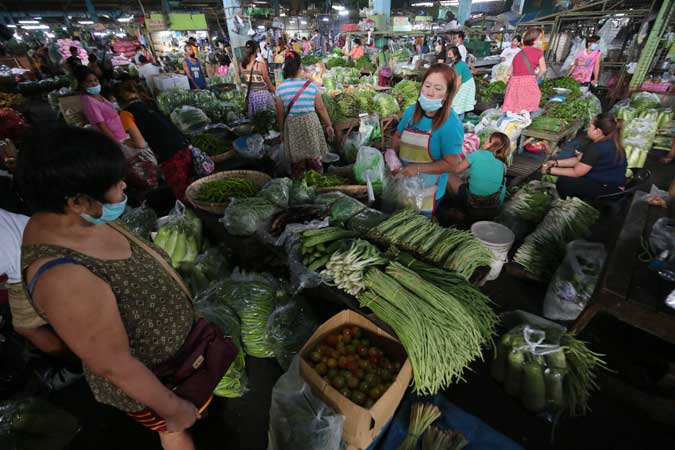
Preliminary data from the Philippine Statistics Authority released on Wednesday showed the consumer price index rose by 4.5% year on year last month, unchanged from March but faster than 2.2% in April 2020. This as price increases for food staples such as rice and vegetables slowed, helping offset a spike in transportation costs caused by higher oil prices.

April headline inflation was lower than the median 4.7% in an analyst poll by BusinessWorld late last week, and settled within the Bangko Sentral ng Pilipinas’ (BSP) 4.2-5% estimate.

Headline inflation rates in the Philippines (April 2021)

Year to date, inflation averaged at 4.5%, slightly above the BSP’s 2-4% target, as well as its inflation forecast of 4.2% for the year. April was the fourth month in a row that inflation went beyond this year’s target. 

Inflation eased in the indices of food and nonalcoholic beverages to 4.8% in April from 5.8% in March; and alcoholic beverages and tobacco to 12% from 12.1%.

On the other hand, annual increases were noted in housing, water, electricity, gas, and other fuels (1.5% from 0.9%); furnishing, household equipment and routine maintenance of the house (2.1% from 1.9%); health (3.1% from 2.9%); transport (17.9% from 13.8%); communication (0.3% from 0.2%); and restaurant and miscellaneous goods and services (3.4% from 3.1%).

The following indices saw steady inflation compared with the previous month: clothing and footwear (1.6%); recreation and culture (-0.6%); and education (1.1%).

Food inflation slowed to 5% in April from 6.2% in March, though still faster than last year’s 3.4%.

Core inflation, which is used to determine price trends by stripping out volatile prices of food and fuel, stood at 3.3% in April, easing from 3.5% in the previous month. Still, this was higher than the 2.9% core inflation in April 2020.

Core inflation last month was the slowest since 3.2% in November 2020, matching the 3.3% figure recorded in December 2020.

So far, core inflation has averaged 3.4% this year compared with 3.1% in 2020’s comparable four months.

Meanwhile, inflation for the bottom 30% of income households stood at 4.9% in April, slower than 5.5% recorded in the previous month, but still faster than 2.9% in April 2020.

Inflation for the bottom 30% takes into account the spending patterns of this income segment, assigning heavier weights on necessities.

“The latest outturn is consistent with expectations that inflation would remain elevated this year, owing to supply-side pressures, before settling close to the midpoint of the target range in 2022,” BSP Governor Benjamin E. Diokno said in a Viber message to reporters.

Mr. Diokno also said the “timely approval” of the temporary reduction in tariffs on imported pork meat implemented last month would help ease price pressures.

President Rodrigo R. Duterte signed Executive Order 128 last month which slashed tariffs for pork imports for a year.

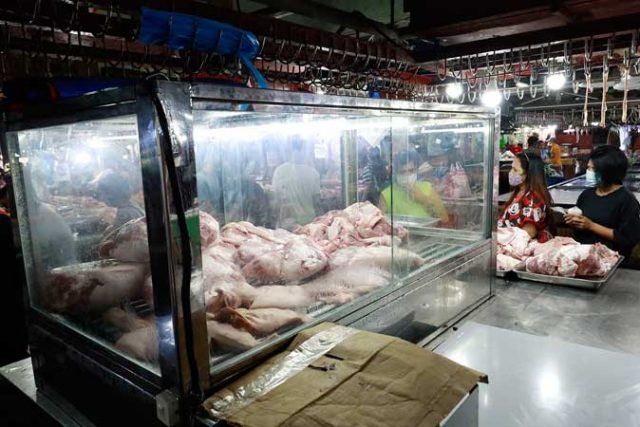
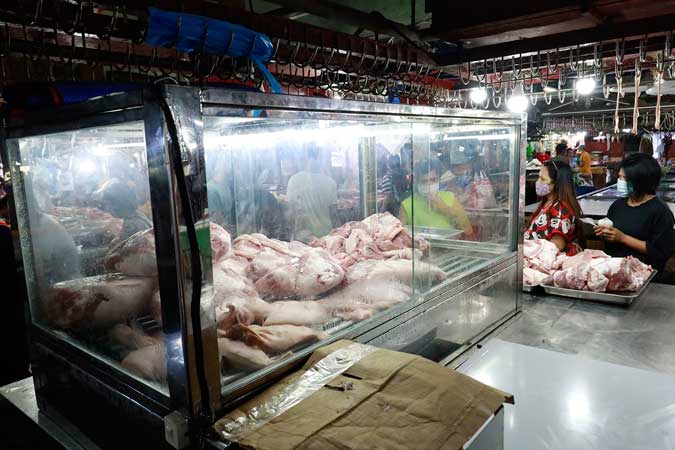
PSA data showed prices of pure pork in Metro Manila averaging P360.20 per kilo in April from P328.71 per kilo in March and P322.90 in February. However, this was slightly lower than P367.7 per kilo in January.

ACCOMMODATIVE FOR NOW
Mr. Diokno noted that inflation expectations “remain well anchored” to inflation targets.

“The ongoing pandemic continues to pose downside risks to the inflation outlook and growth prospects. However, improvements in external demand as well as continued rollout of the government’s COVID-19 (coronavirus disease 2019) vaccination program and other stimulus measures will bolster economic recovery,” he said.

Benchmark interest rates stand at an all-time low of 2% for the overnight reverse repurchase facility, while the overnight deposit and lending rates are at 1.5% and 2.5%, respectively. The BSP’s Monetary Board has kept these settings unchanged for three consecutive meetings as it continues to support the economy amid elevated risks from the surge in COVID-19 cases.

Economists continue to see the central bank keeping an accommodative stance at the next monetary policy meeting on May 13.

“We expect BSP to remain on hold for the whole of 2021 to provide support to the economy and we believe inflation will begin to decelerate further in May as supply side issues are addressed by supply side remedies,” ING Bank N.V. Senior Economist Nicholas Antonio T. Mapa said in a statement.

In an e-mail to BusinessWorld, Asian Institute of Management economist John Paolo R. Rivera said inflation in the coming months would depend on the supply side.

“This will be dependent on developments in containing the COVID-19 pandemic; arresting the consequences of African Swine Fever; managing the factors affecting supply of basic necessities and essential services like transportation and communication; and threading external shocks like volatilities in oil prices,” he said.

“At the current rate the economy is going, there is a huge likelihood that policy rates will be held constant until a deceleration of inflation is manifested within target bands,” he added.

Rizal Commercial Banking Corp. Chief Economist Michael L. Ricafort said easing inflation for the bottom 30% income households and lower core inflation “signal subdued second-round inflation effects” and “would help the continuation of more accommodative monetary policy.”

ANZ Research economists Rini Sen and Sanjay Mathur expect the BSP to remain accommodative throughout the year given the dent in economic recovery following stricter lockdowns imposed starting mid-March. 

“Support is likely to come via regulatory and liquidity channels and not rates, for now,” they said in a note.

HSBC Global Research economist Noelan Arbis said the pressure on the BSP to act against inflation has “dissipated” given the easing inflation trend.

“We believe an additional rate cut at this juncture would not do much to boost the economy given ongoing lockdowns, while it remains far too early to begin policy normalization,” he said.

“BSP Governor Benjamin Diokno has recently noted that an additional cut on the reserve requirement ratio (RRR) is on table, but with ample liquidity in the market, we believe it is unnecessary. We expect the RRR to remain at 12% this year,” he added. — Lourdes O. Pilar with inputs from Luz Wendy T. Noble

Philippines plans to establish artificial intelligence research center

REUTERS
An illustration picture shows a projection of binary code on a man holding a laptop, June 24, 2013. — REUTERS/KACPER PEMPEL/FILE PHOTO

THE government plans to build a national center for artificial intelligence (AI) research that will help the private sector develop new technologies.

A goal under the artificial intelligence roadmap launched on Wednesday, the National Center for AI Research (N-CAIR) will employ full-time research scientists and engineers.

“The N-CAIR will encourage companies to adopt AI by building their capacity to produce new products, processes and services that use AI,” Trade Secretary Ramon M. Lopez said at the launch.

The AI roadmap outlined 42 “strategic tasks” or goals that cover regulation, workforce development, research and development, and digitization and infrastructure.

One of the tasks is the creation of the AI research center, which Asian Institute of Management-Aboitiz Chairman in Data Science Christopher P. Monterola said would be run by private companies and would be central to regional hubs identified by the government.

“The idea is for this to make the companies in the Philippines competitive,” he said, adding that the facilities would house national data and research cloud centers.

The center in its first three to five years will prioritize agricultural technology and aquaculture, transportation and urban science, smart manufacturing, healthcare and resilience or disaster-management technology.

The success of the roadmap can be measured by internet speed and reliability, the global innovation index ranking, the quality of education rankings, labor market efficiency and employment, and the number of new businesses that use AI as critical components of products, Mr. Monterola said.

The Philippines will also try to attract top global companies to work on research and development in the country, he added.

The center will help small businesses improve productivity through data science and analytics, according to Mr. Lopez. 

“The potential AI applications that can benefit companies include avoiding spoilage of agricultural produce, predicting maintenance of equipment, optimizing processes in factories, and enhancing business decision-making through advanced analytics. This will lead to more operational efficiencies and innovation,” he said.

Information Technology and Business Process Association of the Philippines President and Chief Executive Officer Rey E. Untal is hoping that the center will help create higher value work in advanced technologies after noting a lack of upskilling opportunities for professionals.

“There is room and great opportunity for the industry to partner with N-CAIR in this case to work on comprehensive programs that will utilize real-life use cases across the variety of industries that we service,” he said.

The Trade department worked with data scientists from the Asian Institute of Management-Aboitiz School of Innovation, Technology, and Entrepreneurship to develop the roadmap. — Jenina P. Ibañez

DoF agreed to change EO on pork imports — Sotto

PHILIPPINE STAR/ MICHAEL VARCAS
THE AGRICULTURE department on April 9 implemented a suggested retail price for pork kasim at P270 per kilogram and imported pork liempo at P250 per kilogram. — PHILIPPINE STAR/ MICHAEL VARCAS

THE EXECUTIVE ORDER (EO) reducing the tariff rate for pork imports would be amended after the Senate and the country’s economic managers reached a compromise on the issue, Senate President Vicente C. Sotto III said on Wednesday.

“Compromise reached… (EO) 128 will be amended,” Mr. Sotto told reporters via Viber.

In a phone interview, Mr. Sotto said they agreed to place the cap on minimum access volume (MAV) for pork imports at 254,000 metric tons (MT).

He said they also agreed to set the tariff rates of pork imports under the MAV quota at 10% for the first three months, and increase it to 15% in the succeeding nine months.

Under EO 128 signed by President Rodrigo R. Duterte in April, the original 30% tariff rate of the pork imports under the MAV quota would be cut to 5% in the first three months and will be raised to 10% for the succeeding nine months.

“Middle ground kasi pinagbigyan din namin ’yung kahilingin ni Secretary (Carlos G.) Dominguez (III) at tsaka ng economic managers na ito’y makakatulong sa reduction ng inflation in the next few months,” he told BusinessWorld in a phone interview.

Mr. Sotto earlier said the senators and Executive department had to “strike a balance between accepting a formula in the reduction of inflation and the protection of the local swine industry.”

Mr. Duterte on April 7 issued EO No. 128 temporarily reducing the tariff rates on fresh, chilled or frozen pork “to address the existing pork supply shortage, stabilize prices of pork meat and minimize inflation rates.”

Mr. Duterte also asked Congress to increase the pork imports under the MAV quota by 350,000 metric tons (MT), on top of the current 54,210 MT.

However, Congress opposed the government’s pork import policy. Senators on April 15 adopted a resolution urging Mr. Duterte to withdraw the EO, saying Congress has exclusive power to change tariff rates and import quotas under the Constitution. — Vann Marlo M. Villegas