Home Blog Page 7905

Mattel turning old Barbies, Matchbox cars and MEGA Bloks into new toys

MATTEL.COM

TOY MAKER Mattel is encouraging kids to return Barbies, Matchbox cars, and MEGA Bloks they no longer play with to the company for recycling into new toys. The goal of the company’s new “Playback” program is to recover and reuse materials across all products and packaging by 2030, Mattel said as it announced the program this week. “Mattel’s Playback program is a great step,” said Jim Silver, CEO of TTPM, a toy industry research firm. “The consumer is becoming more and more concerned about the future and becoming more eco-friendly; manufacturers are starting to step up and start to try and make the environment better.” The company is encouraging consumers to ship their old toys back to Mattel, where they are sorted and separated by material type, processed, and recycled. Materials that cannot be recycled will be either “downcycled” or “converted to energy.” Last month, Mattel unveiled the Matchbox Tesla Roadster, its first vehicle made from 99% recycled materials and carbon. Mattel is aiming to make all Matchbox die-cast cars, playsets and packaging with 100% recycled, recyclable or bio-based plastic materials by 2030. To participate in the program, consumers can visit Mattel.com/PlayBack, print a free shipping label, and pack and mail their outgrown Mattel toys back to Mattel. — Reuters

EDC nets P3.3 billion in first quarter, expects ‘relatively flat’ financial year

By Angelica Y. Yang, Reporter

LOPEZ-LED Energy Development Corp. (EDC) ended the first quarter with a 2.1% increase in net income to P3.3 billion mainly due to higher sales, but its financial showing for the year may turn out to be flat, its finance chief said.

“The increase was mainly due to higher revenues by P532.0 million from P9.9 billion in the first quarter of 2020 to P10.4 billion in the first quarter of 2021, partly offset by higher costs of sale and general and expenses of P643.3 million,” EDC’s Chief Financial Officer Erwin O. Avante told BusinessWorld in an e-mail on Wednesday.

He said EDC had a lower net financial expense of P92.6 million, which was primarily driven by the repayment of its outstanding $181-million bonds in January.

For the firm’s financial prospects for the year, he said: “I think this early, we’re still looking at a relatively flat financial performance for 2021 in terms of our attributable recurring net income.”

“Given the lockdown, electricity demand is still tepid and we are prudent as we ramp up our activities moving forward,” Mr. Avante said.

Speaking for the firm, he said that the country’s economic recovery is hinged on the successful rollout of coronavirus disease (COVID-19) vaccines and the achievement of herd immunity.

For updates on the company’s capital expenditure (capex) this year, the official said EDC was tracking at around P2.1 billion as of end-March.

While he did not disclose which specific projects cornered the budget, he said they “covered several items.”

“We expect to catch up later this year. Some of the bigger projects are ongoing including the 29-megawatt (MW) Palayan Bayan binary project and the 3.6-MW Mindanao 3 project,” he said, referring to the firm’s geothermal projects that are underway.

Mr. Avante earlier said that EDC had allotted a capex of P17 billion to secure its growth in the long term.

Based on the annual report of its parent firm First Gen Corp., EDC targets to complete its Mindanao 3 binary plant in the first half of 2022, and its Palayan Bayan project by the second half next year.

In a press release issued on Wednesday, EDC President Richard B. Tantoco said that the firm had noted a recurring attributable net income to parent equity holders of P9.85 billion for 2020 despite a significant decrease in power demand.

Last year, EDC sold a total of 9,111.8 gigawatt-hours of power generation volume across its geothermal, wind, solar and hydro operations.

Renewable energy producer EDC has an installed capacity of more than 1,476 MW, accounting for almost 20% of the country’s installed renewables capacity.

YouTube to launch $100-M creator fund for Shorts video feature 

NATANAELGINTING/FREEPIK.COM

ALPHABET, Inc.’s YouTube on Tuesday announced a $100-million fund to pay content creators who make hit videos on its new short-form video feature Shorts, as YouTube aims to court more influencers. The fund will launch in the coming months and pay creators this year and 2022, YouTube said. The investment comes as platforms are racing to attract young creators who are building huge fan followings — and big earning potential — by filming short comedy skits and dance routines. Viral app TikTok jump-started the trend of short-form video clips and was quickly copied by other apps such as Facebook-owned Instagram’s Reels, Snapchat Spotlight, and YouTube Shorts. YouTube said the new fund will pay thousands of creators each month whose videos on Shorts receive the most engagement from viewers. The streaming video site added it will begin to test ads on Shorts. — Reuters

Weak bank lending may force BSP to keep interest rates low

BW FILE PHOTO

THINK TANK Fitch Solutions said they see the Bangko Sentral ng Pilipinas (BSP) keeping benchmark interest rates at their current record lows this year to drive economic recovery, and may have to wait a bit longer to unwind its easy policy if bank lending continues to be weak.

“We do not see the BSP easing further despite the rising risks to the economic recovery. Indeed, we maintain our forecast for the key policy rate to stand at 2% by end-2021 and see downside risks to our outlook for three 25 bps (basis points) rate hikes in 2022, given the Philippines’ continued struggles with managing the COVID-19 pandemic,” Fitch Solutions said in a note on Thursday.

“We highlight weak credit growth as a signal that monetary policy may need to remain accommodative over an extended period time,” it noted.

The BSP kept benchmark rates steady for a fourth straight meeting on Wednesday as it continues to support the economy’s recovery from the pandemic.

The Monetary Board maintained the overnight reverse repurchase rate at a historic low of 2%, in line with expectations of 15 out of 17 analysts in a BusinessWorld poll last week. Both the lending and deposit rates were also kept at 2.5% and 1.5%, respectively.

The BSP’s decision came a day after release of disappointing first-quarter gross domestic product (GDP) data. For the first three months of 2021, GDP shrank by an annual 4.2%, keeping the economy in a recession for a fifth consecutive quarter.

Still, the central bank lowered its inflation outlook this year to 3.9%, from a previous estimate of 4.2%. On the other hand, the forecast for 2022 was raised to 3%, from 2.8% previously. This will put inflation, which averaged at 4.5% in the first four months of 2021, back within the BSP’s 2-4% annual target range.

Meanwhile, credit by big banks continued to drop for the third consecutive month in February as both lenders and borrowers remained risk averse due to the ongoing coronavirus crisis that has also caused liquidity growth to slow.

Preliminary data from the BSP showed outstanding loans by big banks declined by 4.5% to P8.979 trillion in March from P9.4 trillion a year earlier as credit granted for production and household consumption contracted. This was worse than the 2.7% decline seen in February.

“The combination of the easing inflationary pressures and the economic downside risks spurred the Monetary Board to keep conditions accommodative,” Fitch Solutions said in its note.

“We will be watching the Philippines’ COVID-19 containment efforts and vaccination program. If the country continues to struggle with the outbreak we could revise our economic growth outlook lower and with it, our outlook for policy hikes in 2022,” it said. “In particular, if the weak credit data continues through 2021, monetary policy conditions may have to be eased further.”

The think tank expects the economy to grow by 5.3% this year versus last year’s 9.6% slump.

Meanwhile, it expects headline inflation to average at 4% this year on expectations that prices will subside over the coming months. For next year, inflation could ease to 3.4% as demand picks up and the global economy reopens further.

“[I]f the Philippines is still struggling to contain COVID-19 outbreaks in 2022, the recovery in domestic demand may take longer and rising demand-side pressures may not materialize,” it added. — BML

Pinoy and Thai stars join in TNT’s new campaign 

PREPAID brand TNT launched its latest ad campaign featuring three of Thailand’s leading actors: Nonkul Chanon, Gulf Kanawut, and Mario Maurer. The three actors are the new faces in the “Kilig Saya” campaign, a three-minute music video performed by Sarah Geronimo, and co-starring actress Sue Ramirez.

During an online campaign launch held via Zoom on May 11, Miriam Z. Choa, FVP and Head of Prepaid Marketing at Smart, said that their team facilitated a focused group discussion with the youth from across the country about their hopefulness for the future. In the discussion, it was found that the youth entertained themselves with their smartphones for videos, music, and games which enhanced their mobile experiences. “2020 is really a difficult year for most of them. So, we are happy that they turned to our brand and to the affordable services that we offered to help them find some sense of happiness,” Ms. Choa said.

“We need characters, people who can give some light to this darkness. We need people who encourage us and keep us stay upbeat or make us feel kilig or good happy vibes in our lives,” she added.

TNT’s chose the Thai actors because of the fans their Thai series and films attract.

Since 2007, Thai dramas and films have been nearly as popular in Southeast Asia as K-Pop and Japanese shows. Nonkul Chanon is best known for the film Bad Genius, the highest-grossing Thai film of 2017. Gulf Kanawut is best known for his role as Type in TharnType The Series, an adaptation of a popular Thai web novel. Mario Maurer is best known for his lead roles in Love of Siam (2007) and Crazy Little Thing Called Love (2010), and the 2013 supernatural romantic comedy Pee Mak.

“Filipinos and Thais have always had mutual appreciation for each other’s wealth of entertainment content, but we’ve seen this grow even bigger recently as more Filipinos enjoy easy access to streaming platforms and social media through TNT’s value-packed promos,” Jane J. Basas, SVP and Head of Consumer Wireless Business at Smart in a statement.

TNT’s “Kilig Saya” campaign can be seen on Facebook at www.fb.com/TNTph, Twitter via the hashtag #TNTKiligSaya and Instagram (@tntph).— MAPS

50-MW solar plant in Bulacan goes online

MERALCO PowerGen Corp. (MGen) said on Thursday its unit had begun commercially operating a 50-megawatt (MW) solar plant in San Miguel, Bulacan after receiving regulatory approval.

In a press release, MGen said the power plant known as “BulacanSol” secured clearance to operate from the Energy Regulatory Commission on Wednesday and is now providing energy to the Luzon grid.

“We look forward to many more investments in renewables, particularly solar, as we attempt to achieve that balance in fuel sourcing, which will ultimately be biased towards renewables,” said Manuel V. Pangilinan, chairman of Manila Electric Co. (Meralco), the parent firm of MGen.

BulacanSol is a P4.25-billion project under PowerSource First Bulacan Solar, Inc., which is 60% owned by MGen unit MGen Renewable Energy, Inc. (MGreen). The remaining 40% is held by PowerSource Energy Holdings Corp.

MGreen is the renewable energy unit of MGen, which is the power generation arm of distribution utility Meralco.

Mr. Pangilinan described BulacanSol as a “modest step into renewables, but a significant one” for Meralco.

Meralco President and Chief Executive Officer Ray C. Espinosa described BulacanSol as the “very first renewable power plant” that “One Meralco Group” lined up for investment and sourcing.

Two years ago, Meralco announced that it would shift to renewable energy and adopt sustainability practices.

MGen President and Chief Executive Officer Rogelio L. Singson said BulacanSol signifies the commitment of the group to attain energy security by providing clean, cost-competitive and sustainable power. He also chairs the plant’s project company.

“As the first operational project of MGreen, BulacanSol is a very important milestone that drives us to aggressively pursue more projects that will help us achieve our target of building a renewable energy portfolio with a capacity of up to 1,500 MW in the next five to seven years,” Mr. Singson said.

Construction activities for the solar plant began in December 2019.

Meralco’s controlling stakeholder, Beacon Electric Asset Holdings, Inc., is partly owned by PLDT, Inc. Hastings Holdings, Inc., a unit of PLDT Beneficial Trust Fund subsidiary MediaQuest Holdings, Inc., has interest in BusinessWorld through the Philippine Star Group, which it controls. — Angelica Y. Yang

Distressed recruiters win extension to meet capitalization norms

PHILSTAR

RECRUITMENT AGENCIES whose equity has fallen below regulatory minimums during the pandemic have been given a deadline extension to the end of the year to submit a Securities and Exchange Commission certificate that they have been recapitalized.

In Advisory No. 52 dated May 3, the Philippine Overseas Employment Administration, an agency of the Department of Labor and Employment, said the extension covers distressed recruitment and manning agencies.

“All licensed recruitment and manning agencies whose equity falls below the minimum capitalization requirement are hereby given until 31 December 2021 to comply with the submission of the Securities Exchange Commission (SEC) Certificate on capital infusion to aid financial distressed agencies in this time of pandemic,” the advisory said.

Audited financial statements and income tax returns are some of the requirements, recruitment and manning agencies need to renew their licenses.

The submission of a SEC certificate is required for recruitment and manning establishments whose equity is below the minimum capitalization requirement. — Gillian M. Cortez

HK looks to expand cross-border tests of digital yuan

REUTERS

HONG KONG is in talks with China to expand cross-border testing of the digital yuan after the first phase proceeded smoothly, another step toward wider adoption of the currency.

The Hong Kong Monetary Authority (HKMA) recently conducted tests with the Digital Currency Institute of the People’s Bank of China (PBoC), involving a bank designated by the mainland authority, as well as merchants and bank staff, the HKMA said in an e-mailed response to questions.

“We have tested the use of the related app, system connectivity and certain use cases such as cross-boundary purchases,” it said. “We are discussing and collaborating with the PBoC on the next phase of technical testing, including the feasibility of broadening and deepening the use of e-CNY for cross-boundary payments.”

The PBoC is well ahead of other major central banks in developing its own digital currency, seeking to replace cash and maintain control over a payments landscape that has become increasingly dominated by technology companies not regulated like banks.

China has been expanding trials in major cities like Shenzhen, with wider adoption planned for the Winter Olympics in Beijing next year. Cross-border use of the digital yuan would be an important step toward global adoption of the currency for financial transactions.

PBoC officials confirmed in April the central bank had conducted the cross-border tests with the HKMA.

The use of the digital yuan in Hong Kong could lead to a much faster and cheaper cross-border payment and clearing process, consultancy Oliver Wyman said in a report released Wednesday. It estimated that costs related to cross-border payments in the city are about $20 billion to $40 billion per year, the equivalent of as much as 11% of the city’s gross domestic product in 2020.

“If the payment infrastructure underpinning e-CNY were to roll out for cross-border payments at scale, we believe it can address a substantial portion of this cost base,” said Michael Ho, principal of financial services at Oliver Wyman and co-author of the report.

China could promote the digital yuan’s overseas use starting with the Greater Bay Area, a massive urban cluster that includes Hong Kong, Shenzhen and Macau, the consultancy wrote in the report. It could also potentially use the digital yuan to settle oil contracts, given its growing influence as an oil buyer, and create an “e-CNY bubble” among countries involved in the Belt and Road Initiative, it said. — Bloomberg

Fed privately presses banks on risks from climate change

REUTERS

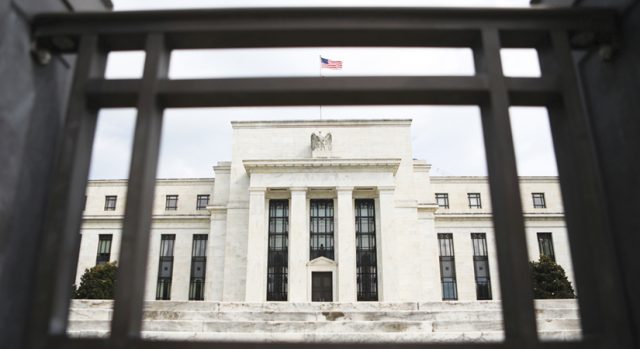
WASHINGTON — The US Federal Reserve has asked lenders to start providing information on the measures they are taking to mitigate climate change-related risks to their balance sheets, according to four people with knowledge of the matter.

The previously unreported supervisory discussions highlight how US watchdogs are moving to execute President Joe Biden’s agenda to incorporate climate risk into the financial regulatory system, with potentially major ramifications for Wall Street.

While European regulators are this year rolling out climate-change “stress tests” for lenders, the Fed lags its peers. 

Fed officials have previously said they are considering a new scenario analysis to help them understand how climate change may affect trillions of dollars’ worth of bank assets, but have not said how or when they would start to apply such tests.

In private discussions, however, Fed supervisors have begun pressing large lenders to detail the measures they are taking to understand how their loan books would perform under certain climate change scenarios, the four people said.

Fed officials have not dictated the parameters for the analysis but have made it clear they expect lenders to conduct the internal risk-management exercises and hand over the data, the people said.

That analysis includes testing the geographical exposure of bank assets to physical risks such as flooding, drought and wildfires, as well as testing exposures to different sectors, such as how oil and gas loans may perform versus renewable energy loans.

The aim of the tests is to identify risks, but the Fed has not indicated that the data it is gathering would translate into any additional capital charges or other regulatory actions. “They’re being very pragmatic. They’re doing their homework,” said one of the people.

Global banks — including JPMorgan, Citigroup, Wells Fargo, Bank of America, Goldman Sachs and Morgan Stanley — have been exploring the implications of climate change for some time, both internally and in some cases with European regulators like the Bank of England who are more aggressively integrating climate change risks into the regulatory framework.

Nevertheless, the new climate scrutiny from the US central bank adds to the pressure on Wall Street lenders, forcing them to make investments in technology, data management and staff.

“The data work is a big deal,” said another of the sources.

The banks did not immediately respond to requests for comment on the private discussions with the Fed.

STRESS TESTS
Climate change could upend the financial system because physical threats such as rising sea levels, as well as policies and carbon-neutral technologies aimed at slowing global warming, could destroy trillions of dollars of assets, risk experts say.

In a 2020 report, a Commodity Futures Trading Commission panel cited data estimating that $1 trillion to $4 trillion of global wealth tied to fossil fuel assets could be lost.

The Fed in January appointed Kevin Stiroh, one of its top supervisors, to lead a new team focusing on climate-related financial risks, but some congressional Democrats are pushing the central bank to move much faster and add climate risks to bank stress tests which dictate Wall Street’s capital plans.

In March, Fed governor Lael Brainard said that climate scenario tests could be helpful but that they would also rely on qualitative judgments and be highly uncertain.

Fed Chair Jerome Powell has said the agency will tread carefully and focus on incorporating climate change into existing regulatory obligations, as opposed to creating strict new rules. It is unclear, though, if he will be renominated to lead the Fed after his term expires next year, while his vice chair Randal Quarles, a Republican appointee who oversees bank regulation, is expected to leave this year.

Progressive groups say there is much more the central bank could do to address climate risks, even if it does not want to go as far as its European counterparts.

Tim Clark, a former senior Fed official who helped build its stress tests after the 2008 financial crisis, said it should publicly communicate that it expects banks to incorporate climate change into their risk management processes.

“That’s something they can basically start right now and make it clear to the industry that they expect banks to be working hard on this.” — Reuters


Maynilad: P29-B worth of sewage treatment plants being constructed

WEST ZONE water concessionaire Maynilad Water Services, Inc. is building several sewage treatment plants costing P29 billion in Caloocan, Las Piñas, central Manila, Valenzuela, and Muntinlupa as part of its commitment to protect the environment.

The water provider said in a statement on Thursday that the Caloocan-Malabon-Navotas and Las Piñas water reclamation facilities will provide 16% additional sewerage coverage in its concession area, once construction is finished by 2025.

It added that sewage treatment plants are also being established in barangays Cupang and Tunasan in Muntinlupa and Brgy. Marulas in Valenzuela, which will be finished within the year, while another treatment plant is being constructed at Ayala Southvale in Muntinlupa.

Currently, Maynilad is operating 22 wastewater facilities that have a total treatment capacity of 664,000 cubic meters of wastewater daily. It has 110 vacuum truck units that offer septic tank cleaning for areas not covered by the sewage treatment plants.

Maynilad President and Chief Executive Officer Ramoncito S. Fernandez said the projects are part of the company’s promise to safeguard the environment by ensuring that effluents meet legal standards.

He added that facilitating Maynilad’s construction projects goes on despite the quarantine measures being implemented due to the coronavirus disease 2019 (COVID-19) pandemic.

“These projects generate jobs and business opportunities which have been drastically affected by the pandemic,” Mr. Fernandez said.

He added that expanding the company’s wastewater services is a difficult process that needs massive investments and coordination with affected local government units.

“Nevertheless, we have a comprehensive wastewater management plan in place, and its completion will ensure full sewerage coverage in our concession area which will help to considerably reduce the pollution load into Manila Bay,” Mr. Fernandez said.

Maynilad provides water to Caloocan, Pasay, Parañaque, Las Piñas, Muntinlupa, Valenzuela, Navotas, Malabon, Manila, Makati, and Quezon City, as well as parts of Cavite province including Bacoor, Imus, Kawit, Noveleta, and Rosario.

Metro Pacific Investments Corp., which has a majority stake in Maynilad, is one of three Philippine units of Hong Kong-based First Pacific Co. Ltd., the others being Philex Mining Corp. and PLDT, Inc.

Hastings Holdings, Inc., a unit of PLDT Beneficial Trust Fund subsidiary MediaQuest Holdings, Inc., has an interest in BusinessWorld through the Philippine Star Group, which it controls. — Revin Mikhael D. Ochave

Stuff to Do (05/14/21)

CCP Arthouse Cinema pays tribute to Filipino workers

THE CCP Arthouse Cinema salutes Filipino workers in this month’s film offerings on the Cultural Center of the Philippines’ (CCP) Vimeo Channel from May 14 to 21. To be shown are select films and documentaries from Gawad Alternatibo which mirror the daily plight of Filipino workers. Take a peek into the lives of factory workers in Jon Red’s 10-minute film Ang Pabrika. Directed by Cha Escala and Emerald Hidalgo, Pasko ni Intoy (Intoy’s Christmas) is a 30-minute documentary that portrays the bitter-sweet Christmas of a child-laborer in a remote community in Leyte. To watch the films for free, go to vimeo.com/ondemand/ccparthousecinema and use the promo code LABOR.

The EU’s children’s cultural festival

THE EUROPEAN Union (EU) Delegation to the Philippines mounts the virtual edition of the annual cultural festival Lakbayin Natin ang EU on May 16, 10 a.m., via the EU in the Philippines Facebook Page. This is a part of the ongoing Viva Europa celebrations and focuses on the theme “Children for Friendship,” featuring arts, crafts, songs, poetry, and storytelling from the Embassies of the Czech Republic, Germany, France, Austria, Poland, and the Philippine-Italian Association. The activities include a reading of Adolf Heydukh’s poem Štěstí or (Fortune) in both Czech and in English by the daughters of the Czech Ambassador and the Czech Deputy Ambassador; and Country Comparisons in which German grade schoolers will appear in a video highlighting comparisons between Germany and Philippines in terms of weather, clothing, animals, and landmarks. France will present 14-year-old soprano Yumi —  the World for Opera, Junior Division champion of the 2019 World Championship of Performing Arts and the host of Musikwela Kids TV —  performing “L’amour” and “Ode to Joy,” while Italy will mark the 140th anniversary of the first appearance of Pinocchio through storytelling of Ang Pangako ni Pinocchio narrated by the storytellers of the National Library of the Philippines, and a nursery rhyme on friendship by Italian writer Gianni Rodari, interpreted by three Italian students. There will also be a “Country Tour” where kids will be taken around Austria to learn more about its rich culture; Rhyme by Poland where representatives from the Polish Embassy will recite the Lokomotywa or (Locomotive) by Polish poet Julian Tuwim. Samantha Belwa of Teens for Unity PH will teach how to make friendship bracelets. There will also be a display of the winning works in the EU Delegation’s Art Contest.

Photo portraits at the Art Fair

ART/n23, a multi-city agency for Philippine contemporary artists, will be presenting the work of Paris-based Filipino photographer Ding Gerrous during Art Fair Philippines 2021. Ding Gerrous (born Panganiban) specialized in an artisanal photographic process called wet plate collodion. In a sense, it is the ancestor of film as we know it. Interestingly, Mr. Gerrous uses recuperated window glass panes from old buildings in Paris. All of his works are unique pieces, working on both portrait and conceptual photography. To adapt during the lockdown, art/n23 has partnered with Mr. Gerrous to produce virtual Zoom portrait sittings. Sitters will need a decent Internet connection, natural or spot light, and a phone or computer camera. Portraits may be done with props, favorite art works, or friends and family members. The sittings take 20 to 30 minutes after which sitters will receive digital proofs and be shipped their glass portraits of 5×7 inches. Book a sitting through www.artn23.com, or e-mail contact@artn23.com. Art Fair Philippines is ongoing online until May 16, at www.artfairphilippines.com. Metro Mom convention on SaturdayMetro magazine is set to inform, involve, and recharge moms with a Mother’s Day event dubbed “Metro MomCon,” a one-day gathering on May 15. The free event will take place on Zoom, and will include panel discussions and workshops on parenting, food, home and living, relationships, and beauty. Here will be a panel discussion on  “How to Keep Your Sanity While Raising Your Kids” with Metro editor-in-chief Geolette Esguerra, Dr. Lia Bernardo, and celebrity moms Andi Manzano, Bianca Gonzalez-Intal, Jodi Sta. Maria, Mikaela Lagdameo-Martinez, and Sofia Andres. There will be a “Shibuya Hotpot Cooking Workshop,” an interactive online cooking workshop with chef Him Uy de Baron of Himpossible Recipes who will show how to prepare Japanese dishes for four to five people. Happy Ongpauco will show new ways to make celebrations at home even more special in one workshop. Beauty experts will demonstrate how to glam up for Zoom meetings, virtual gatherings, and home celebrations. Everything is covered from makeup with Albert Kurniawan, hairstyling with Lourd Ramos, to haircare with Dr. Risa Caldoza-de Leon and Dr. Cecilia Catapang. Janeena Chan leads this workshop as its host. A juicy and relevant session will cover everything about getting intimate during these times — over cocktails. Join the discussion with host Delamar Arias and sex and relationships therapist Rica Cruz and create your own cocktails with free kits from Served Manila. The kids can also take part in various workshops, including PETA’s Children’s Theater Sneak Peek (for kids ages seven to 12; free for the first 30 registrants), OneTwoStep HipHop Dance Workshop for Kids  (ages four to seven and eight to 11; free for the first 30 registrants for each age group), and WIKA’Y GALING! Filipino Workshop for the Family (for kids ages six to 10). For more details, visit Metro.Style and @metrodotstyle on IG and Twitter, and metrodotstyle on Facebook.

Mexico scraps tainted GM union vote; US lawmakers warn of labor abuses

REUTERS

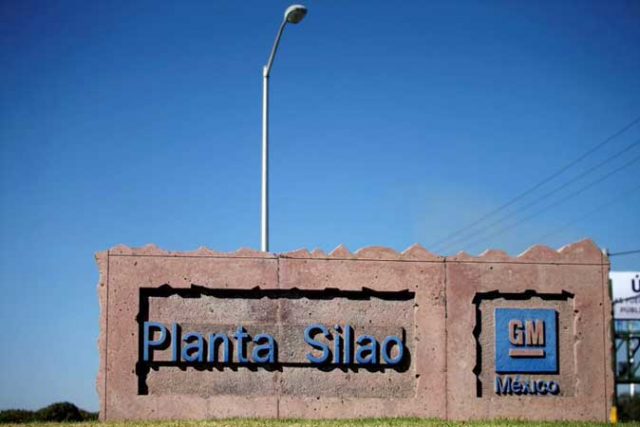
MEXICAN AUTHORITIES on Tuesday ordered the General Motors Co. (GM) union in the city of Silao to repeat a worker vote following pressure from US lawmakers for the automaker to address alleged abuses that could potentially violate a new trade deal.

Mexico’s labor ministry said it found “serious irregularities” in last month’s vote, which is required under a Mexican labor reform to ensure workers are not bound to contracts that are signed behind their backs and keep wages low.

Such votes are part of Mexico’s broader effort to uphold worker rights as part of a new free trade pact that replaces NAFTA.

The concerns over GM come amid various complaints in recent days regarding Mexican workplace abuses, just as US activists and politicians begin to flex new powers to enforce labor standards south of the border enshrined in the United States-Mexico-Canada Agreement (USMCA).

The largest US labor federation, the AFL-CIO, on Monday urged the US government to file a complaint under USMCA against Tridonex, an auto-parts plant in the Mexican border city of Matamoros where it said workers have been blocked from electing an independent union.

In the GM case, some ballots were destroyed during the union-led vote, Mexico’s labor ministry found. It also said the union, which is part of the powerful Confederation of Mexican Workers (CTM), refused to give labor inspectors documentation of the vote tally.

US Representatives Dan Kildee, Bill Pascrell and Earl Blumenauer, all Democrats, called on GM to answer questions about potential abuses.

The largest US automaker “has a responsibility to speak out against violations of labor and human rights abuses at the Silao GM plant,” they said in a letter to GM Chief Executive Mary Barra.

The lawmakers also cited news reports indicating that GM officials had removed independent inspectors, among other intimidation tactics targeting workers.

GM (GM.N) has denied wrongdoing, and said government-approved inspectors were not prevented from entering the voting site. It also said it condemned labor rights violations and had hired a third-party firm to review the matter.

GM’s union must hold a new vote within 30 days, the ministry said, after the initial vote “violated principles of safety and certainty.”

Hugo Varela, head of the CTM in Guanajuato state, where the Silao plant is located, did not respond to a request for comment on the labor ministry’s order.

He previously said that CTM was committed to complying with the law and keeping jobs in Mexico.

A spokesman for the US Trade Representative’s office declined to comment on GM.

The disputed vote at Silao, which employs some 6,000 people, came several days before GM said it would invest $1 billion in an electric vehicle manufacturing complex in Mexico, triggering criticism from the United Auto Workers.

UAW spokesman Brian Rothenberg told Reuters separately this week that it was “concerned and is having appropriate discussions” about the Mexico vote.

In addition, Geneva-based IndustriALL Global Unions and Toronto-based Unifor said in letters to GM President Mark Reuss last week that the incident appeared to violate the USMCA and urged GM to protect workers.

Unifor’s president, Jerry Dias, expressed his “outrage” at the situation and said he would explore “all available avenues” to uphold worker rights in Mexico, including dispute resolution tools under the USMCA. — Reuters