Home Blog Page 7793

Government dropped the ball in the IT-BPM industry


VECTORJUICE-FREEPIK
VECTORJUICE-FREEPIK

The country’s Information Technology-Business Process Management (IT-BPM) industry faces serious threats from the widespread use of chatbots (or bots) and artificial intelligence. Unfortunately, the Duterte administration has not acted fast enough to help the industry pivot.

Our IT-BPM industry began to take-off in 2007. Back then, the Philippines was known as an outsource supplier for simple services like directory assistance for telecommunication companies. In time, it expanded its range of services to include tele-marketing and tech assistance. Collectively, these services are known as “voice-based business processes.”

Through the years, the Philippines has reigned supreme in voice-based services due to our English proficiency, neutral accent, and ability to understand American slang. Working to our advantage too is our natural sense of empathy and service-oriented culture. These traits are important for service-conscious clients like banks, hotels and airlines. The Filipino’s soft skills have made him the global leader in voice-based business processes, taking 18% of the global market share.

The industry has also diversified to more sophisticated IT-BPM processes. Although not as widespread, we have also become proficient in clerical work, legal and medical transcription, multimedia processing, animation, and professional services (e.g., accounting and engineering). But the lion’s share of the industry is still voice based. The IT-BPM industry generated $26.3 billion in revenues in 2019 and provided jobs for 1.3 million of our countrymen.

But the road ahead does not look promising. See, demand for voice-bases services is rapidly declining given the prevalent use of chatbots and artificial intelligence. Bots are becoming increasingly intelligent and cognitive, thanks to deep learning. When on the phone or on chat, it is now almost impossible to distinguish between bots and human beings. Thus, it is only a matter of time before bots replace call center agents. In fact, Citibank Global CEO Michael Corbat, said that human call centers will be a thing of the past in as early as three years.

The Philippines stands to lose hundreds of thousands of jobs and billions of dollars in revenues in the voice-based segment if it does not pivot. Even at this late stage in the game, the government’s plans to pivot is only a mere concept.

It is truly lamentable that the government has not prepared the industry to level-up and climb the value chain in IT-BPM services. A study conducted by the IT and Business Process Association of the Philippines (IBPAP) shows that the following sub-sectors will be in high demand in the next three years (enumerated from highest to lowest): Animation and game development; Healthcare and Information Management; Global In-House Center; Software development and; General back-office processes like bookkeeping. Also in demand will be services relating to robotics, artificial intelligence, and cloud technology.

Unlike the Philippines, India successfully migrated out of voice-based services as early as 15 years ago. It purposely transformed itself to be a specialist in higher paying, technical services such as software development, data analytics, cloud technology, and the like. They achieved this by making massive investments in education and upskilling their workforce. Technical training programs were made available to all, university curriculums were upgraded and the government aggressively promoted engineering and the sciences among their youth. As a result, India is today’s superpower and gold standard in high level IT-BPM’s.

The Duterte administration did not make a commitment to education nor did it make any meaningful investment in up-skilling our workforce. This left us vulnerable to the demise of voice-based BPMs. It is a shame since we have the basic assets to be a world leader in IT-BPM’s.

Since we will have a new government in 14 months, our hope is that our new leaders will pay due attention to preserving our market share in the IT-BPMs space. The faster we upskill our workforce, the more rapidly we can migrate out of voice-based services and into non-voice services of higher technical value.

Again, it starts and ends with education. There must be closer cooperation between the academe and the IT-BPM industry to allow deeper collaboration in curriculum development. IT-BPM companies must allow more internships to better integrate students into the industry and provide them hands-on experience. Universities must work closely with IBPAP to allow them to generate graduates with the right skills. Above all, the Department of Education and the Commission on Higher Education (CHED) must aggressively promote technical courses and make them accessible to the majority.

I recently spoke to Derek Gallimore, the man behind Outsource Accelerator (OA). OA is the world’s most authoritative independent source of information on business process outsourcing in the Philippines. Although Gallimore agrees that the voice-based segment of the industry is fading, there is still a large market to be had among small and medium sized businesses (SMBs) in the English speaking world. SMBs are a market the Philippines could pivot to.

Let us not even consider conglomerates anymore, declared Gallimore — 99% of them are already outsourcing. The bigger opportunity is in servicing the SMBs of the world. There are over 60 million of these businesses across the high-cost English-speaking countries and only 0.5% of them are outsourcing today. So there is huge growth potential in this part of the market — a market that previously, due to technology cost and accessibility, was unable to access outsourcing. The opportunity is so profound that it can potentially generate 60 million new jobs for Filipinos over the next 20 years.

The outsourcing jobs demanded by SMBs include accounting, coders and program developers, E-Commerce and Digital Marketers, Customer Service and Account Management, and Administrative Assistants. To prepare our workforce to effectively fill this demand, the Department of Education, CHED, and the Technical Education and Skills Development Authority (TESDA) will do well by offering courses on the standards and legal forms that apply in the United States, Canada, the United Kingdom, Australia, New Zealand, Ireland, and Singapore. Communication skills, analytical thinking and proficiency in basic computer programs must also be improved.

Regardless of how our authorities plan to deal with the IT-BPM industry, two things are certain. First, the voice based sector, a sector we have been dependent on, is certain to fade away to irrelevance. We must diversify if we are to preserve the revenues and jobs from the industry. Second, there is no escaping it, upskilling our workforce is something the government must invest in.

Conversely, if the government fails to act with haste to save the industry, we might as well say goodbye to 1.3 million jobs and the $26.3 billion in revenues that keeps the economy afloat.


Andrew J. Masigan is an economist

andrew_rs6@yahoo.com

Twitter @aj_masigan

Biden to raise US cap on refugee admissions

REUTERS

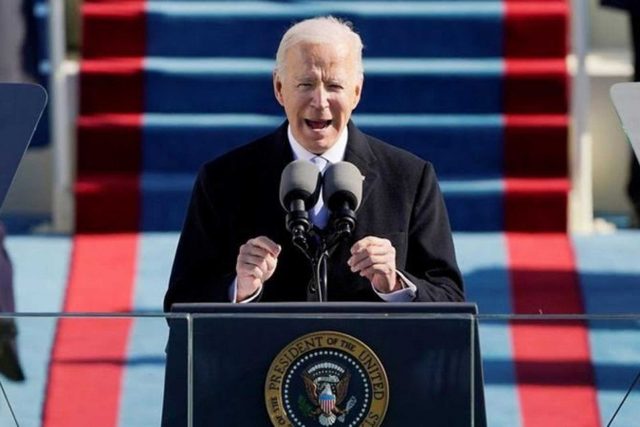
WILMINGTON — President Joseph R. Biden said on Saturday he will raise the cap on the number of refugees admitted this year to the United States, a day after he drew criticism from Democratic lawmakers for agreeing to keep the historically low figure in place.

Mr. Biden signed an order on Friday extending a 15,000 refugee admissions cap issued by his predecessor Donald Trump through the end of Sept. In signing the order, Mr. Biden shelved a plan announced in Feb. to increase the cap to 62,500. Mr. Biden told reporters in Delaware on Saturday after playing golf that he would go beyond the 15,000 limit.

“We are going to increase the number. Problem was the refugee part was working on the crisis that ended up at the border with young people. We couldn’t do two things at once, so now we are going to raise the number,” he said.

With Mr. Biden being criticized by lawmakers and refugee advocacy groups, White House press secretary Jen Psaki said Friday that he planned to “set a final, increased refugee cap for the remainder of this fiscal year by May 15.”

Mr. Biden’s order to limit admissions to 15,000 was a blow to advocacy groups that wanted the Democratic president to move swiftly to reverse the refugee policies of the Republican Mr. Trump, who had set the figure in part as a way to limit immigration.

The program for admitting refugees is distinct from the asylum system for migrants. Refugees must be vetted while still overseas and cleared for entry to the United States, unlike migrants who arrive at a US border and then request asylum.

Mr. Biden’s cautious approach appears to have been tied to concerns over the optics of admitting more refugees at a time of rising numbers of migrants arriving at the US-Mexico border, and to not wanting to look “too open” or “soft,” another US official with knowledge of the matter previously told Reuters.

Mr. Psaki said on Friday that Mr. Biden’s “initial goal of 62,500 seems unlikely … given the decimated refugee admissions program we inherited.”

Mr. Republicans have blamed Mr. Biden for the situation at the border, faulting his moves to reverse other Trump-era hardline immigration policies.

Mr. Biden took office aiming to set a new course for US immigration policy, including a more compassionate approach. But his initial decision to leave in place the caps went against his promises as a candidate. — Reuters

Queen Elizabeth stands alone as Philip is laid to rest

BRITAIN’s Queen Elizabeth II watches as the coffin of Prince Philip is placed inside St. George’s Chapel, Windsor Castle during his funeral service, in Windsor, Britain, April 17. — POOL VIA REUTERS

WINDSOR, England — Queen Elizabeth bade farewell to Prince Philip at a funeral on Saturday that celebrated his seven decades of service and gave grandsons William and Harry the chance to talk in public for the first time since claims of racism threw the family into crisis.

Queen Elizabeth, dressed in black and in a white trimmed black face mask, stood alone, head bowed as her husband of 73 years was lowered into the Royal Vault of St. George’s Chapel in a service attended by senior royals including heir Prince Charles.

Prince Harry, who flew from the United States to attend the funeral, walked and talked with his brother William and wife Kate at the end of the service — the first time they have spoken in public since Prince Harry and his wife Meghan gave an explosive interview to Oprah Winfrey last month.

That crisis came as Philip lay in hospital. Officially known as the Duke of Edinburgh, he died aged 99 on April 9. “We have been inspired by his unwavering loyalty to our Queen, by his service to the Nation and the Commonwealth, by his courage, fortitude and faith,” Dean of Windsor David Conner said.

Philip, who married Elizabeth in 1947, helped the young queen adapt the monarchy to the changing times of the post-World War II era as the loss of empire and the decline of deference challenged the world’s most prominent royal family.

In 1997, the queen described Prince Philip as her “strength and stay” over their decades of marriage. Now 94, she has reigned for 69 years.

Her husband’s coffin was borne to the chapel on a bespoke Land Rover Defender TD 130 in military green that Philip himself helped to design, as a minute gun fired eight times.

Philip’s children and grandchildren followed behind on foot, evoking memories of the 1997 funeral of Princess Diana when Princes William and Harry — then just 15 and 12 — walked behind their mother’s coffin.

His naval cap and sword lay on top of the coffin, which was covered with the Duke of Edinburgh’s personal standard featuring the Danish coat of arms, the Greek cross, Edinburgh Castle and the stripes of the Mountbatten family. A wreath of white roses, lilies and jasmine from the queen also adorned the coffin.

There were just 30 mourners inside the chapel because of continuing coronavirus restrictions in Britain. As the service began at 3 p.m.(1400 GMT), Prime Minister Boris Johnson observed a minute’s silence, along with millions of Britons.

Before the procession, military bands spaced out across the quadrangle of Windsor Castle in brilliant sunshine to play the prince’s chosen music, including “I Vow To Thee My Country,” “Jerusalem” and “Nimrod.”

HARRY AND WILLIAM
The four-person choir sang a sailors’ hymn, “Eternal Father, Strong to Save.” Shortly before the coffin was lowered into the Royal Vault, the Russian “Kontakion of the Departed,” a hymn of the Orthodox and Eastern churches, echoed around the ancient church.

There were no eulogies, just brief words of praise for the prince from the dean of Windsor and Archbishop of Canterbury Justin Welby in their prayers.

Queen Elizabeth has been widowed just as she grapples with one of the gravest crises to hit the royal family in decades — allegations of racism and neglect by it from Prince Harry and Meghan, his American-born wife.

In last month’s interview the couple, who quit royal duties and moved to California last year, laid bare their perceptions of the family’s attitudes in what amounted to a critique of the old-fashioned customs of an ancient institution.

They accused one unnamed royal of making a racist comment, and said Meghan’s pleas for help when she felt suicidal were ignored.

Meghan said she had been silenced by “the Firm” while Harry said his father, Prince Charles, had refused to take his calls. Harry said both Charles and his brother William were trapped in the royal family.

Meghan, who is pregnant and was advised by her doctor not to travel, watched the funeral at home in California, a source familiar with the situation said.

As the service ended, buglers from the Royal Marines sounded the “Last Post” and then “Action Stations” to honor the late duke’s World War II naval service, before choir sang the national anthem.

Queen Elizabeth left for the castle’s apartments in her car but other royals decided to walk up the hill to the main part of Windsor Castle.

Prince William, his wife Kate, and Harry chatted as they walked. Kate, Duchess of Cambridge, swiftly stepped away to allow the brothers to talk further. It was not possible to hear what they were saying.

FAMILY IN MOURNING
The palace emphasized beforehand that while the occasion would have the due pageantry that marks the passing of a senior royal, it remained an occasion for a mourning family to mark the passing of a husband, father, grandfather and great-grandfather.

Mourners eschewed the tradition of wearing military uniforms, a step newspapers said was to prevent embarrassment to Harry, who despite serving two tours in Afghanistan during his army career, is not entitled to wear a uniform because he was stripped of his honorary military titles.

Prince Andrew, who stepped down from public duties in 2019 over controversy surrounding what he termed his “ill-judged” association with late US financier Jeffrey Epstein, had wanted to wear an admiral’s uniform at the funeral, media reported.

Prince Andrew sat closest to the queen.

Philip’s dedication to his duty earned him widespread popularity in Britain, but he was also criticized by some for a number of off-the-cuff racist or abrupt comments which shocked princes, priests and presidents.

“He was authentically himself, with a seriously sharp wit, and could hold the attention of any room due to his charm and also because you never knew what he might say next,” Prince Harry said earlier this week of his grandfather. — Reuters

COVID survivors may require just 1 vaccine shot

CORONAVIRUS vaccines were just rolling out in December when more than 1,000 staffers at Cedars-Sinai Medical Center in Los Angeles volunteered for a sweeping study. The goal: pinpoint how immune reactions to the jab might vary.

By last month, a clear pattern in the data “popped out at us,” said research leader Susan Cheng. Those who had recovered from COVID-19 responded to their first shot so robustly that the results rivaled never-infected colleagues who had received both shots. The implication was clear. If you’ve had COVID, you may only need one of the two doses recommended by Pfizer and Moderna.

“We did not expect that this was going to jump out like a smoking gun,” said Ms. Cheng, who co-authored the Nature Medicine write-up. In fact, if you already had the virus, your immune response after one vaccine is likely to be even better than a never-infected person’s after two, according to Italian research just out in the New England Journal of Medicine.

The issue of giving only a single dose to people who have had COVID has become all the more urgent since safety concerns have been raised about Johnson & Johnson’s and AstraZeneca’s vaccines. The implications at a time of strained global supply are striking: giving previously infected people just one mRNA vaccine shot could free up more than 110 million doses worldwide, according to a calculation by University of Maryland School of Medicine immunologist Mohammad Sajadi and colleagues.

‘REMEMBERING COVID’
Mr. Sajadi co-authored one of the recent studies that fit into a recent flurry of findings all pointing in the same direction: The immune system in people who’ve had COVID “remembers” the virus, so a first vaccine acts as a powerful booster for existing defenses. “The data is very clear,” Mr. Sajadi said. “Every study has shown you get a very clear and strong memory response.”

Since Feb., several European countries — including France, Spain, Italy and Germany — have adopted policies giving COVID survivors just one dose of the two-dose vaccines.

In Israel, a world leader on coronavirus vaccinations, health authorities initially withheld vaccines altogether from recovered COVID patients, but in Feb. recommended they receive one shot. New research there suggests that the booster vaccine adds protection against newer variants that originated in the UK, South Africa and Brazil.

“We think that our study supports the recommendation to administer one vaccine dose to recovered individuals to protect against the original and SARS-CoV-2 variants of concern,” Michal Mandelboim, head of Israel’s National Center for Influenza and Respiratory Viruses, said in an email. A study in “Science” found that in COVID survivors, vaccinations massively boosted immunity against variants.

In the US, the Centers for Disease Control and Prevention (CDC) still recommends two vaccine doses for people who have had Covid, but the mounting evidence that one vaccine could be enough is under discussion. The US has administered enough doses for 31% of its population, while Israel has given enough for 57%, according to the Bloomberg Vaccine Tracker.

DATA NEEDED
In a blog post, National Institutes of Health Director Francis Collins raised the possibility that giving survivors a single dose could “help to extend vaccine supply and get more people vaccinated sooner.”

“But any serious consideration of this option will require more data,” he cautioned in February.

Since then, one study after another has reinforced the single-vaccine-for-survivors idea, though some skeptics have pointed out that it is logistically simpler to just give everyone two doses than to figure out who needs only one.

In the US, vaccine supplies are relatively copious, Mr. Sajadi said. But “for other countries, especially places that are having a hard time getting vaccines, this is really still an important question. And it’s also an important question in general because you don’t want to just give someone a medical intervention they don’t need.”

If a patient who’d had COVID asked Mr. Sajadi at this point whether they needed a second vaccine, he said, he’d say it would make sense to skip it if nothing in their medical history indicated issues with immune responses.

Ms. Cheng at Cedars-Sinai said she would still default to the CDC guidance calling for two vaccines, even for people who’ve had Covid. The data does suggest, however, that one dose could be enough, she said — and that could be true for other types of people as well: “I think we’re just at the tip of the iceberg of figuring out who they are.” — Bloomberg

S.Korea, US show differences over Japan’s Fukushima plans

An aerial view shows the storage tanks for treated water at the tsunami-crippled Fukushima Daiichi nuclear power plant in Okuma town, Fukushima prefecture, Japan, Feb. 13, 2021, in this photo taken by Kyodo. Kyodo/via REUTERS
REUTERS

SEOUL — South Korea raised concerns over Japan’s decision to release contaminated water from its crippled Fukushima nuclear plant into the sea with visiting U.S. climate envoy John Kerry, its foreign ministry said, but Kerry reaffirmed Washington’s confidence in the plan’s transparency.

Kerry arrived in Seoul on Saturday to discuss international efforts to tackle global warming on a trip that included a stop in China ahead of President Joe Biden’s virtual summit with world leaders on climate change on April 22-23.

South Korean Foreign Minister Chung Eui-yong sought to rally support behind the country’s protest against the Fukushima plan at a dinner meeting with Kerry, the ministry said. Under the plan, more than 1 million tonnes of water will be discharged from the plant wrecked by an earthquake and tsunami in 2011 into the nearby sea off Japan’s east coast.

Seoul strongly rebuked the decision, with the foreign ministry summoning the Japanese ambassador and President Moon Jae-in ordering officials to explore petitioning an international court.

“Minister Chung conveyed our government and people’s serious concerns about Japan’s decision, and asked the U.S. side to take interest and cooperate so that Japan will provide information in a more transparent and speedy manner,” the ministry said in a statement.

But Kerry, at a media roundtable on Sunday, said Tokyo had made the decision in a transparent manner and will continue following due procedures.

“The United States is confident that the government of Japan is in very full consultations with the IAEA,” he said, referring to the International Atomic Energy Agency.

“The IAEA has set up a very rigorous process and I know that Japan has weighed all the options and the effects and they’ve been very transparent about the decision and the process.”

The former U.S. secretary of state added that Washington would closely monitor Japan’s implementation “like every country, to make certain there is no public health threat.”

The South Korean foreign ministry said Chung and Kerry also agreed to work together to boost international cooperation to achieve carbon neutrality by 2050, a goal pledged by South Korea, Europe and others.

Kerry told the roundtable that Biden aims to urge countries to commit to more ambitious greenhouse gas emissions targets, including China, such as by revamping their power initiatives or speeding up transitions to renewable energy.

The United States is expected to announce its own new emissions target for 2030 this week.

“I think Korea has set an ambitious target and Korea is trying to do a lot, it’s not easy for any country,” Kerry said. “We need to be smarter, so do I think it’s possible for additional steps? I do think there are some things that could happen.” — Reuters

Pfizer agreed to supply additional COVID-19 vaccines, says Japan’s vaccine minister

Pfizer CEO Albert Bourla has agreed to Japanese Prime Minister Yoshihide Suga’s request to supply additional doses of the COVID-19 vaccine, the vaccine minister of Japan said on Sunday.

“They have agreed on the essentials of the matter,” vaccine tzar Taro Kono said during a live interview on Fuji TV, adding that further details including the shipment schedule will be discussed.

Kono did not specify the number of extra doses sought from Pfizer, but said Japan would secure enough supply by the end of September to inoculate all people over 16. The Pfizer/BioNTech vaccine is the only one approved in Japan.

Suga made the request during a telephone call with Bourla on Saturday, the last day of a three-day visit to Washington.

Japan is seeing a surge of new coronavirus cases in recent weeks, which top health experts say is a fourth wave of the COVID-19 pandemic.

Only 0.9% of the Japanese public had received their first vaccine shot as of Friday, compared with 2.5% in South Korea, and 48% in the United Kingdom. – Reuters

UK warships to sail for Black Sea in May as Ukraine-Russia tensions rise – Sunday Times

British warships will sail for the Black Sea in May amid rising tensions between Ukraine and Russia, the Sunday Times newspaper reported, citing senior naval sources.

The deployment is aimed at showing solidarity with Ukraine and Britain’s NATO allies, the newspaper reported.

One Type 45 destroyer armed with anti-aircraft missiles and an anti-submarine Type 23 frigate will leave the Royal Navy’s carrier task group in the Mediterranean and head through the Bosphorus into the Black Sea, according to the report.

RAF F-35B Lightning stealth jets and Merlin submarine-hunting helicopters will stand ready on the task group’s flag ship, the carrier HMS Queen Elizabeth, to support the warships in the Black Sea, the report added.

Tensions between Moscow and Kyiv have been rising amid a build-up of Russian troops along the border and clashes in eastern Ukraine between the army and pro-Russian separatists.

Officials at the UK Ministry of Defence were not immediately available for comment.

A ministry spokesman told the newspaper that the UK government was working closely with Ukraine to monitor the situation and continued to call on Russia to de-escalate.

“The UK and our international allies are unwavering in our support for Ukraine’s sovereignty and territorial integrity”, the newspaper quoted the spokesman as saying. – Reuters

China, U.S. agree on need for stronger climate commitments

STOCK PHOTO

SHANGHAI/WASHINGTON – China and the United States agree that stronger pledges to fight climate change should be introduced before a new round of international talks at the end of the year, the two countries said in a joint statement on Sunday.

The statement came after a meeting between Chinese climate envoy Xie Zhenhua and his U.S. counterpart, John Kerry, in Shanghai on Thursday and Friday, China’s environment ministry said.

“The United States and China are committed to cooperating with each other and with other countries to tackle the climate crisis,” their joint statement said. The two countries will continue to discuss “concrete actions in the 2020s to reduce emissions aimed at keeping the Paris Agreement-aligned temperature limit within reach.”

Kerry arrived in Shanghai on Wednesday night under tight COVID-19 protocols and was transferred to a secluded hotel not open to the public. He subsequently traveled to Seoul.

His stop in Shanghai was the first high-level visit to China by a Biden administration official since the new president took office, and followed a contentious exchange between officials from the two countries in March in Alaska.

The talks also mark a resumption of climate dialogue between the world’s two biggest greenhouse gas emitters. Bilateral discussions ground to a halt during the administration of Donald Trump, who withdrew from the 2015 Paris agreement after claiming it unfairly punished U.S. businesses.

The United States is expected soon to deliver a new pledge to reduce U.S. greenhouse gas emissions in a bid to win back trust from foreign allies. Biden brought the United States back into the Paris climate accord.

Li Shuo, senior climate adviser for the environmental group Greenpeace, said China could soon respond to a new U.S. pledge with one of its own, building on the “momentum” of the Shanghai talks.

“The statement in my view is as positive as the politics would allow: It sends a very unequivocal message that on this particular issue (China and the United States) will cooperate. Before the meetings in Shanghai this was not a message that we could assume,” Li said.

Biden will hold a virtual summit for dozens of world leaders this week to discuss climate change, to be livestreamed for public viewing. Global climate talks are scheduled Nov. 1-12 in Glasgow.

The statement said the two countries also agreed to discuss specific emission reduction actions including energy storage, carbon capture and hydrogen. They said they would take action to maximise financing for developing countries to switch to low-carbon energy sources.

The Paris agreement encourages countries to submit more ambitious climate pledges if they are able to do so. China has already promised enhanced actions as it tries to meet its goal to become “carbon neutral” by 2060. – Reuters

Australia, largely free of COVID-19, in no hurry to reopen borders – PM

MELBOURNE – Australia is no hurry to reopen its international borders and risk the country’s nearly coronavirus-free lifestyle, Prime Minister Scott Morrison said on Sunday.

Australia closed its borders to all non-citizens and non-residents in March 2020 and has been permitting only limited international arrivals in recent months, mainly its citizens returning from abroad.

The border closure, together with snap lockdowns, swift contact tracking and high community compliance with health measures, have made Australia one of the world’s most successful countries in curbing the pandemic, limiting coronavirus cases to under 29,500 infections and 910 deaths.

“Australia is in no hurry to open those borders, I assure you,” Mr. Morrison said at a televised briefing.

“I will not be putting at risk the way we are living in this country which is so different to the rest of the world today.”

For months now, except for some short snap lockdowns, Australians have been able to dine out, gather nearly freely and stop wearing face masks in most places.

They exchanged their international forays for local trips, with government figures showing big annual increases in intra-state travel in the first months of 2021.

From Monday, Australians and neighbouring New Zealanders will be able to travel between both countries without the need to apply for an exemption or spend time in mandatory quarantine.

New Zealand has had only 2,239 confirmed coronavirus cases and 26 related deaths. Morrison flagged on Sunday that vaccinated Australians could be able travel overseas “for essential purposes” and return via home quarantine in the second half of the year, but that possibility is only in “planning stages”.

Australia recently abandoned a goal to vaccinate nearly all of its 26 million population by the end of 2021 following advice that people under the age of 50 take Pfizer’s COVID-19 vaccine rather than AstraZeneca’s shot. – Reuters

Canada has second case of rare blood clots after AstraZeneca vaccine

Canada on Saturday reported a second case of rare blood clots with low platelets after immunization with AstraZeneca’s COVID-19 vaccine in a week, while it said it still recommended the use of the shot.

The person who experienced the very rare event has been treated and is recovering, Canada’s health ministry said in a statement, adding that the person lives in the province of Alberta.

Based on the evidence available, Canada still maintains that the benefits of the AstraZeneca vaccine outweigh the potential risks, the statement said.

Canada health authorities “will continue to monitor the use of all COVID-19 vaccines closely and examine and assess any new safety concerns,” the statement said.

Canada reported a first blood clotting associated with the vaccine on Tuesday, and a day later, after a review, health authorities said they would not restrict use of the AstraZeneca vaccine.

A separate advisory council had earlier recommended Canada stop offering the vaccine to people under 55. That panel is in the process of reviewing its advice.

Canada has been ramping up its vaccination campaign, but still has a smaller percentage of its population inoculated than dozens of other countries, including the United States and Britain.

Amid a spiking third wave of infections, Ontario, Canada’s most populous province, announced new public health restrictions on Friday, including closing the provinces borders to domestic travelers. – Reuters

Billionaire Lucio Tan hospitalized with COVID-19

Philippine billionaire Lucio Tan has been hospitalized after testing positive for the coronavirus, his daughter Vivienne Tan said.

The 86-year-old owner of Philippine Airlines Inc. and Philippine National Bank is “in stable condition, responding well and recovering,” his daughter said in a statement. – Bloomberg

Petron Corporation announces schedule of virtual stockholders’ meeting