Home Blog Page 7669

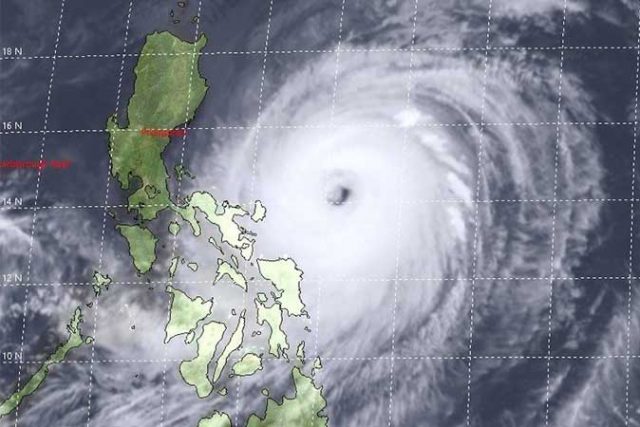
Agricultural damage due to Typhoon Bising upgraded to P163.36M

PHILSTAR

THE CROP damage estimate for Typhoon Bising (international name: Surigae) has been upgraded to P163.36 million from the previous estimate of P45.93 million, the Department of Agriculture (DA) said Wednesday.

The DA said in a bulletin that 9,774 metric tons (MT) of crops were lost across 4,826 hectares, with 3,353 farmers affected.

“Affected commodities include rice, corn, assorted vegetables & fruits, livestock, fisheries produce and facilities, and agri-infrastructure. These values are still subject to validation,” the DA said in the bulletin.

According to the bulletin, rice losses due to the typhoon amounted to 5,449 MT, valued at P93.49 million. A total of 2,996 hectares of farmland was also affected. — Revin Mikhael D. Ochave

The promise of speedy disposition of civil cases

When deciding whether or not to go to court for judicial action or remedy, the main concerns can be summarized as follows: (1) the length of time to finish the case, (2) the chances of winning, and (3) the cost of litigation. In my opinion, the 2019 Amendments to the 1997 Rules of Civil Procedure and the 2020 Guidelines for the Conduct of Court-Annexed Mediation (CAM) and Judicial Dispute Resolution (JDR) in Civil Cases, which took effect on May 1, 2020 and March 1, 2021, respectively, addresses these concerns. The Philippine Judicial Academy (PHILJA) defines CAM as a voluntary process conducted under the auspices of the court, wherein the parties are referred to the Philippine Mediation Center Unit (PMCU) for the settlement of their dispute, assisted by a Mediator accredited by the Supreme Court. JDR, on the other hand, is a process whereby a JDR judge employs conciliation, mediation or early neutral evaluation of the case.

The 2020 Guidelines for CAM and JDR in Civil Cases provides the specific cases covered by the mandatory CAM and those that may be referred to JDR. Generally, these are cases that could be the subject of a compromise and where compromise is not prohibited by law nor contrary to morals, good customs, public order or public policy.

In practice, lawsuits may take years (give or take five years, at the earliest, to over 10 years if appealed up to the Supreme Court) to conclude. Fortunately, based on the mandatory timeline provided under the 2020 Guidelines for CAM and JDR, such cases can be concluded in a matter of months in case of a successful CAM or JDR.

Pursuant to the rules and guidelines, a notice of pre-trial must be issued within five calendar days after the last responsive pleading was served and filed, setting the pre-trial not later than 60 calendar days from the filing of the pleading. For cases covered by Summary Procedure, the preliminary conference must be set not later than 30 calendar days from the filing of the last responsive pleading.

After the pre-trial/preliminary conference, and the issues have been consolidated, the court will refer the parties to a CAM, subject to some exemptions. The mediator has no more than 30 calendar days from the date of the order referring the case to CAM to complete the mediation process without further extension. If a settlement is reached, the PMCU will submit to the referring Judge the Mediator’s Report on the result of the proceedings with the copy of the compromise agreement and any attachments.

The referring Judge will evaluate the agreement and may either approve or disapprove it, or require its amendment. If found acceptable, a judgement will be issued, approving the compromise agreement and stating that the same was rendered through CAM (to distinguish it from judgments based on compromise agreements entered into during JDR).

In case of non-settlement, a Mediator’s Report stating the outcome (i.e., failed CAM or no CAM conducted) will be submitted to the referring Judge. Thereafter, in a hearing set for such purpose, the referring Judge will determine if a settlement is still possible, and if so convinced to be feasible, refers the case to a JDR Judge.

The JDR Judge is to conduct the JDR proceedings immediately upon receipt of the referral order. The proceedings will be conducted within a non-extendible period of 15 calendar days from the receipt of the referral order.

If the case is settled through JDR, the JDR Judge will accomplish a JDR Report and return the case to the referring Judge for appropriate action. If a full settlement is reached, the parties will submit a draft compromise agreement to the referring Judge for judgement upon compromise enforceable by execution. On the other hand, if there has been full compliance with the terms of the compromise agreement, the parties are instead to submit a satisfaction of the claims or a mutual withdrawal of the parties’ respective claims and counterclaims. The referring Judge will then issue an order declaring the case terminated.

If the case is not settled through the JDR process, the case will proceed to trial. On the other hand, if a partial settlement is reached, the parties will submit their terms to the referring Judge for approval and judgement on partial compromise, which may be enforced without waiting for the resolution of the unsettled part.

Cases which are on appeal from the exclusive and original jurisdiction of first-level courts may also be referred to the JDR if the Regional Trial Court (RTC) Judge is convinced that settlement is still possible. In the case of JDR on appeal, the RTC Judge has 15 calendar days to complete the JDR proceedings. This may be extended for another 15 days upon joint motion of the parties on the ground that settlement is likely to be concluded. If settlement is reached, the compromise agreement is to be submitted to the RTC judge for judgment upon compromise. Otherwise, the RTC Judge will declare the failure of the JDR and render a decision within the prescribed period.

The promise of a speedy disposition of civil cases is among the championed objectives of the 2019 Amendments to the 1997 Rules of Civil Procedure and the 2020 Guidelines for the CAM and JDR in Civil Cases. Through effective mediation, a successful CAM or JDR will expedite the disposition of civil cases. It may well be the panacea to our slow justice system. After all, when court dockets are congested, justice delayed is justice denied.

The views or opinions expressed in this article are solely those of the author and do not necessarily represent those of Isla Lipana & Co. or Cabrera & Company. The content is for general information purposes only, and should not be used as a substitute for specific advice.


Maria Ysidra May Y. Kintanar-Lopez is a Manager at the Tax Services Department of Isla Lipana & Co. and a Senior Legal Advisor of Cabrera & Company, member firms of the PwC network.

+63 (2) 8845-2728

may.y.kintanar@pwc.com

Super League breakaway in tatters after English clubs quit

MANCHESTER CITY F.C. FB PAGE
MANCHESTER City was reportedly the first to back out of the Super League venture. — MANCHESTER CITY F.C. FB PAGE

MANCHESTER, ENGLAND — European soccer’s breakaway Super League project lay in tatters on Tuesday after the six English Premier League clubs involved in the project quit 48 hours after agreeing to join Italian and Spanish teams in the controversial elite competition.

After a storm of protests from fans, players, managers, and governments, alongside threats of bans and sanctions from the game’s European and world-governing bodies UEFA and FIFA, the English clubs capitulated under pressure and threw in the towel.

Manchester City was the first to back out of the venture and then Arsenal, Manchester United, Liverpool and Tottenham Hotspur, and Chelsea announced it was following suit.

The Super League issued a statement which suggested it may be suspending its project but stopped short of abandoning it altogether.

“Given the current circumstances, we shall reconsider the most appropriate steps to reshape the project, always having in mind our goals of offering fans the best experience possible while enhancing solidarity payments for the entire football community,” the statement said.

The Madrid-based organization said the departure of the English teams was due to “pressure” placed on them and said they were “convinced that the current status quo of European football needs to change.”

The league, which was announced on Sunday with 12 founding members, has been championed by Real Madrid President Florentino Pérez, the new competition’s chairman. It is now left with three Italian clubs — AC Milan, Juventus, and Inter Milan — plus Pérez’s Real Madrid along with Barcelona and Atletico Madrid from Spain.

Pérez canceled a planned radio interview on Tuesday.

Inter Milan looks likely to be the next to leave with the Italian news agency ANSA quoting a club source as saying, “The Super League project in its current state is no longer considered of interest by Inter.”

Union of European Football Associations (UEFA), whose elite Champions League competition was at risk from the proposed new league, threatened to ban the clubs and players who joined the Super League, but its president Aleksander Čeferin had earlier urged the English clubs to think again.

“I said yesterday that it is admirable to admit a mistake and these clubs made a big mistake,” he said after the English clubs announced their decisions to leave.

“But they are back in the fold now and I know they have a lot to offer not just to our competitions, but to the whole of the European game.

“The important thing now is that we move on, rebuild the unity that the game enjoyed before this and move forward together,” he said.

MORE MONEY
The Super League had argued that it would increase revenues to the top clubs and allow them to distribute more money to the rest of the game.

United States investment bank JPMorgan was brought in to finance the new league, providing a 3.5-billion euro ($4.21-billion) grant to the founding clubs to spend on infrastructure and recovery from the impact of the coronavirus pandemic.

However, the sport’s governing bodies, other teams and fan organizations said the Super League would boost the power and wealth of the elite clubs and the partially closed structure of the league goes against European football’s long-standing model.

Unlike Europe’s current top-level Champions League competition, where teams have to qualify through their domestic league, the founding Super League teams would have guaranteed themselves a place in the new competition every year. — Reuters

World governing body FIFA expresses support for European model amid Super League issue

ZÜRICH, SWITZERLAND — FIFA President Gianni Infantino has called for respect and dialogue as he expressed the organization’s strong disapproval of the proposed European breakaway league project, and has requested that the concerned parties consider their position in line with respecting the institutions that exist to protect the interest of national, European and global football.

“FIFA is an organization which is built on values, the true values of sport,” said the International Federation of Association Football (FIFA) president in his address to the 45th Ordinary UEFA Congress in Montreux, Switzerland. “It is an organization that is built on our statutes, the statutes that define the institutional framework, with the pyramid, with FIFA, the confederations, the associations, the leagues, the clubs, the players. And at FIFA, we can only strongly disapprove the creation of a super league…”

The FIFA president emphasized his full support to the European sports model, a successful model of openness and inclusivity, promotion and relegation, and a model that he promoted in his 16 years at Union of European Football Associations (UEFA): “FIFA is here, and I am here today as FIFA President, to bring full support to European football, to UEFA, and the 55 member associations of UEFA and of FIFA, to the leagues, clubs, players, and to fans.”

“We can see that there is a lot to throw away for the short-term financial gain of some,” Infantino added. “People need to think very carefully, they need to reflect, and they need to assume responsibility. They need to think not only of their shareholders, but they need to think about all the people, of all the fans, of all those who have contributed to make European football what it is today. It goes back not only decades, it goes back more than one hundred years. People — with love, with passion, with commitment — have created all this. And we need to protect this. It is our task.”

“FIFA is a democratic organization, an organization that is open,” the FIFA President concluded. “Everyone can bring ideas and proposals, but always with respect for the institutions, leagues, associations, UEFA and FIFA; with respect for the history and with the respect for the passion of so many people around the world.”

Sotto commits to join Gilas for key tourneys this year

FIBA
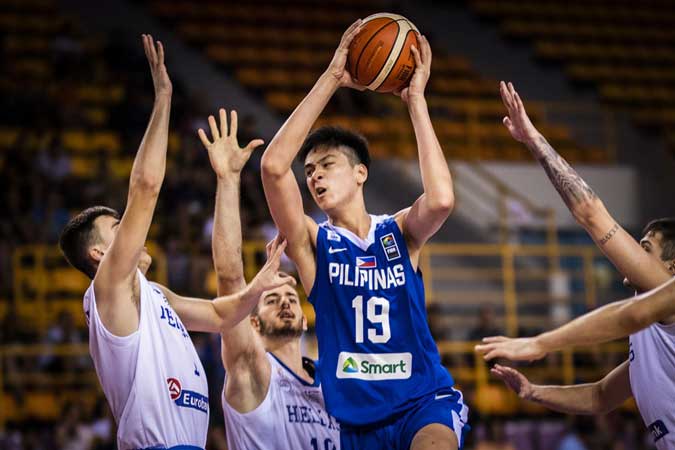
YOUNG Filipino international basketball campaigner Kai Sotto has committed to play for the national team in key tournaments this year. — FIBA

By Michael Angelo S. Murillo, Senior Reporter

KAI Sotto expressed his commitment to don the national colors in key tournaments this year.

The young international basketball campaigner shared on Wednesday that he is looking forward to playing for Gilas Pilipinas in the Olympic Qualifying Tournament in June and the International Basketball Federation (FIBA) Asia Cup after.

“I’d like to announce that I’m very excited and honored to be joining the Gilas national team playing in the OQT and FIBA Asia Cup,” said Mr. Sotto, 19, in a virtual press conference where he was introduced as well as the latest brand ambassador of Smart Communications, Inc.

In the briefing, it was also announced that the former Ateneo High School standout has signed a multi-year deal to play in Australia’s National Basketball League (NBL) with the Adelaide 36ers.

Mr. Sotto, who is currently in the United States training under the guidance of his management team East West Private, surprised many when he decided to come back to the country early this year to play for the national team in the third window of the FIBA Asia Cup Qualifiers despite him part of Team Ignite in the NBA G League, which was set to see action in the league’s “bubble” tournament in February.

Unfortunately for him, the Asia Cup event here was canceled over concerns on the spike of coronavirus cases.

He then went back to the States after and tried to rejoin his Team Ignite squad in the bubble, but things did not pan out as hoped and both parties mutually agreed to part ways.

Mr. Sotto has since continued with his training and is now in Miami, Florida, honing his skills.

For the Samahang Basketbol ng Pilipinas (SBP), the expression of commitment of Mr. Sotto to play for flag and country is a welcome development.

SBP officials said there is nothing definite yet as to when the young player can join the team, but they are working on having him over as soon as possible to begin preparation with him in tow.

“This announcement is still fresh to us. We’re looking forward to having Kai play with the young Gilas Team soon. We still need to discuss things with Kai and his management group. There’s still a lot that needs to be sorted out, especially with the situation with the pandemic and all the quarantine and lockdown protocols,” said SBP program director Tab Baldwin, who was also part of the press conference.

PLAYING DOWN UNDER
Meanwhile, Mr. Sotto said he is excited to showcase his wares Down Under with the Adelaide 36ers.

“I’m both excited and a little nervous. It’s a different kind of competition in the NBL and place than the United States. But I’ll work hard and do what I have to do to adjust and earn my spot and help the team,” he said.

Recognizing what the seven-footer could potentially give their team, officials of the 36ers said they are happy to have Mr. Sotto play for their team, which is looking to improve in the nine-team NBL.

“We are delighted to welcome Kai, both to the club and the City of Adelaide. Having him in Adelaide will only enhance the club’s reputation for identifying and developing elite basketball talent,” said Adelaide Chairman Grant Kelley.

“The thing with Kai is that he realizes that he has work ahead of him as all rookies do when coming in to this tough league, but his combination of height and developing skills set give him every chance to raise his game,” 36ers General Manager Jeff Van Groningen, for his part, said.

The Adelaide officials went on to say that they do not see any conflict with Mr. Sotto’s commitment with Gilas as the NBL is set up to work along the scheduled windows of FIBA and that they will communicate with the SBP to make the process fluid as possible.

Volleyball federation sets national team tryouts

JAPAN V. LEAGUE
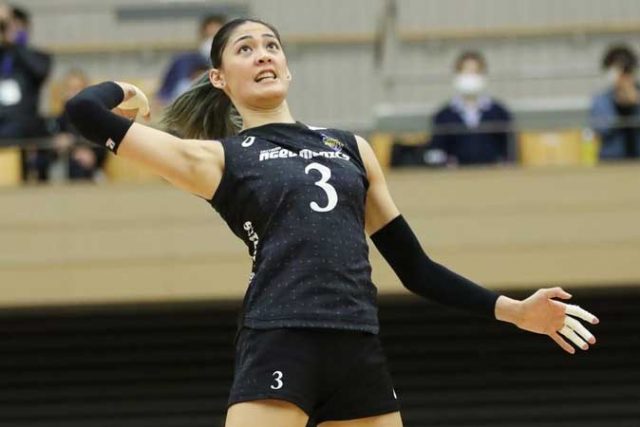
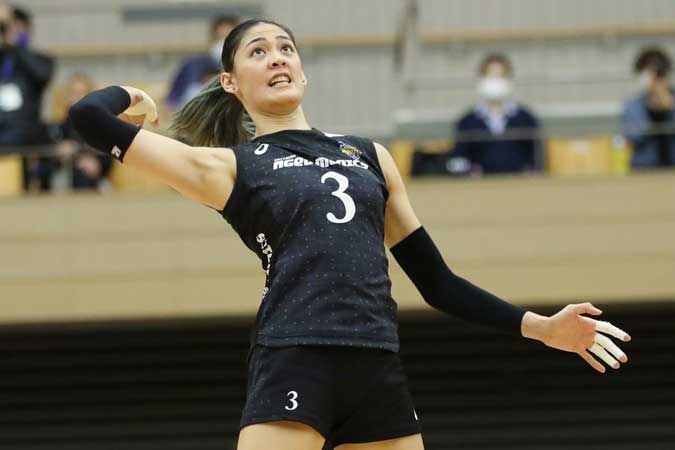
LOCAL volleyball star and Japan league player Jaja Santiago is among those invited to national team tryouts in Subic set for next week. — JAPAN V. LEAGUE

THE Philippine national volleyball team’s preparation for the 2021 Southeast Asian Games goes into higher gear next week with tryouts set in Subic, Zambales.

Organized by the Philippine National Volleyball Federation (PNVF), the tryouts will be from April 28 to 30 and done under a “bubble” setup following strict health and safety protocols.

The PNVF said invitations were sent to 40 women and 40 men for indoor volleyball tryouts while 20 women and 20 men were invited for beach volleyball.

The federation is looking to assemble formidable teams to represent the country in the biennial sporting meet in Vietnam, happening from Nov. 21 to Dec. 2.

“The PNVF is currently prioritizing its elite/high-performance initiatives through the National Team Commission. The national team will be focusing on the 31st Southeast Asian Games in Hanoi in December,” said PNVF President Ramon Suzara in an announcement.

“These tryouts are needed in order for the athletes to be at their optimal condition prior to key competition events this year,” he added.

The volleyball federation head went on to say that they have met with Subic Bay Metropolitan Authority officials and Philippine Red Cross officers at the Subic Gym on Monday to finalize health and safety protocols.

Among the things agreed upon was that athletes, coaches, organizers, and officials involved would undergo RT-PCR tests 48 hours before the tryouts with a guaranteed turnaround time of 24 hours.

Included in the list of players invited for the women’s team tryouts are setters Rhea Dimaculangan (PLDT), Kim Fajardo (F2 Logistics), Alohi Robins (Cignal HD), and Jia Morado (Creamline); and outside hitters Alyssa Valdez (Creamline), Myla Pablo (PetroGazz), Kalei Mau (F2 Logistics), Ces Molina (PetroGazz), Kat Tolentino (Choco Mucho), and Faith Nisperos (Ateneo).

Opposite hitters invited include Jovelyn Gonzaga (Army), Mylene Paat (Chery Tiggo), Dindin Santiago (Chery Tiggo), Kim Kianna Dy (F2 Logistics), and Eya Laure (UST/Chery Tiggo); middle blockers Aby Maraño (F2 Logistics), Risa Sato (Creamline), Jaja Santiago (Chery Tiggo/Ageo Medics), Majoy Baron (F2 Logistics), Bea de Leon (Choco Mucho), Maddie Madayag (Choco Mucho), and Marist Layug (PLDT); and liberos Dennise Lazaro (Choco Mucho), Dawn Macandili (F2 Logistics), and Kath Arado (PetroGazz).

For men’s volleyball, among those invited are setters Jessie Lopez (Air Force), Kim Dayadante (Go for Gold), Ish Polvorosa (Cignal) and Josh Retamar (NU/Sta. Elena); outside hitters Mark Alfafara (PLDT), Marck Espejo (Cignal), Dan Aldrin Garnica (USPF), and Bryan Bagunas (Go for Gold); and opposite John Vic de Guzman (PLDT), Ysay Marasigan (Cignal), Mark Enciso (IEM), Joeven dela Vega (Navy), Jao Umandal (PLDT), and Banjo Mondero.

Middle blockers include Rex Intal (Cignal), Kim Malabunga (Go for Gold), Francis Saura (Go for Gold), John Edward Carascal (SWU), Nilo Jasmin, Jr. (SWU), Chumson Njigha, Jr. (Ateneo), JP Bugaoan (Cignal), and Lloyd Josafat (UE/PLDT); and liberos Jack Kalingking (Navy), Ricky Marcos (Go for Gold), and Manuel Sumanguid (Cignal).

Women’s beach volleyball has Sisi Rondina (Creamline), Bernadeth Pons (Creamline), Dij Rodriguez (Creamline), Dzi Gervacio (Creamline), Alexa Polidario (Abanse Negrense), Babylove Barbon (UST), Jackie Estoquia (Sta. Lucia), Milena Alessandrini (UST), DM Demontaño (Sta. Lucia), and Princess Robles (NU) as among the invited.

Men’s beach volleyball, meanwhile, has Jude Garcia (Creamline), Jaron Requinton (Creamline), Anthony Arbasto (Creamline), Edwin Tolentino (Air Force), Ranran Abdilla (Creamline), Ronald Umang-it (Mapua), Joven Camaganakan (IEM), AJ Pareja (Creamline), Jade Becaldo (Cebu), Calvin Sarte (Davao), James Pecaña (PLDT), Jason Uy (Army), and Greg Dolor (Navy).

National coaches Odjie Mamon (volleyball women) Dante Alinsunurin (volleyball men), Paul Jan Doloiras (beach volleyball women), and Rhovyl Verayo (beach volleyball men) will supervise the tryouts.

The men’s and women’s volleyball team tryouts are set for April 28 and 29 at the Subic Gym, while those for the men’s and women’s beach volleyball squads are scheduled on April 30 at the Subic Tennis Courts. — Michael Angelo S. Murillo

Folayang views latest clash with Aoki as a legacy fight

ONE CHAMPIONSHIP
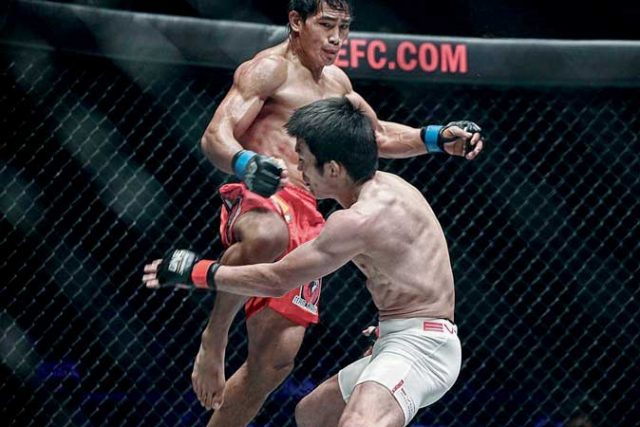
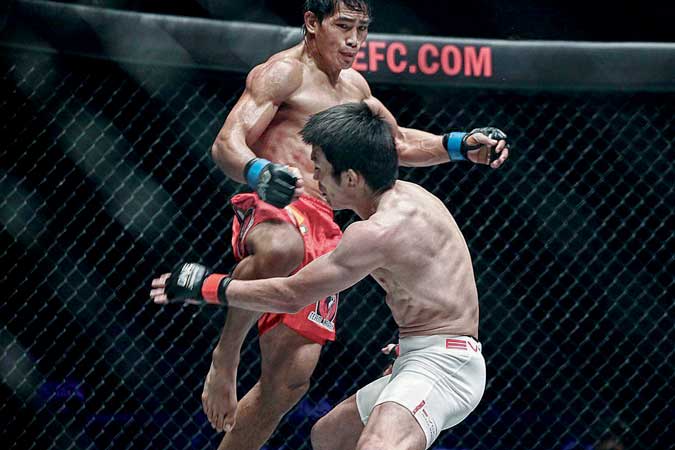
“THIS next fight is very important. It’s an important juncture in my career,” said Filipino MMA veteran and champion Eduard Folayang of his third fight with Japanese legend Shinya Aoki. — ONE CHAMPIONSHIP

FILIPINO mixed martial arts (MMA) champion Eduard “Landslide” Folayang will face Japanese legend Shinya Aoki for the third time in ONE Championship in a fight the Team Lakay stalwart is viewing with much significance especially in further establishing his legacy in the sport.

Set to return to action at “ONE on TNT IV” in Singapore on April 29, Mr. Folayang (22-10) tries to go up one over Mr. Aoki in their ongoing lightweight rivalry where they have split their first two encounters.

Mr. Folayang took the first back in 2016, knocking out then ONE lightweight champ Aoki in the third round to become the new champion.

The Japanese then exacted payback in 2019 when he submitted the Filipino by way of arm triangle choke in the opening round to reclaim the lightweight belt.

Given what is at stake in his upcoming fight, the Baguio-based fighter said they in their team are working hard to have him ready and have the best possible game plan.

“This next fight is very important. It’s an important juncture in my career. Right now, the team is helping me prepare as always, and I am highly motivated to get this win. I have a pack of ferocious lions behind me, helping me sharpen my tools,” shared Mr. Folayang.

“I’m ready to go to war. Mentally and physically, I’m going to bring the best Eduard Folayang to the Circle,” he added.

The Filipino champion, however, admitted that presenting a challenge is the quick pivot they had to make since Mr. Folayang was originally set to face off with Japanese veteran Yoshihiro “Sexyama” Akiyama until the latter had to pull out of the contest due to injury. Mr. Aoki, too, saw his original opponent — American Sage Northcutt — back out, setting the stage for the trilogy fight with Mr. Folayang.

Despite that, Mr. Folayang is undeterred and forging ahead to have the best showing possible and win.

“Nevertheless, I’m going to be well prepared for the test he presents. I’m a striker through and through, but I will make the necessary adjustments for this fight. I am confident I will get my hands raised at the end,” he said.

Adding, “This is the most important fight of my career so far, and I will do everything I can to come out on top.”

“ONE on TNT IV” is headlined by the ONE light heavyweight world championship fight between champion “The Burmese Python” Aung La N Sang and challenger Vitaly Bigdash of Russia.

The event is the fourth and last installment of the “ONE on TNT” series, which is catered to North America apart from the promotion’s traditional audience. Matches in the series are being broadcast both digitally and on television on prime time in the United States.

Meanwhile, playing on Thursday, April 22, is “ONE on TNT III” headlined by the bantamweight collision between Brazilian John “Hands of Stone” Lineker and American Troy “Pretty Boy” Worthen.

It will be shown live in the country on One Sports beginning at 8:30 a.m. with an encore telecast on April 23 at 8:30 p.m. on the same channel and April 25 at 12 a.m. on TV5. — Michael Angelo S. Murillo

Brooklyn guard Harden out indefinitely; Hawks top Magic

BROOKLYN NETS FACEBOOK PAGE
BROOKLYN Nets guard James Harden is out indefinitely after sustaining a setback during his rehabilitation from an injured right hamstring, the team announced. — BROOKLYN NETS FACEBOOK PAGE

BROOKLYN Nets guard James Harden is out indefinitely after sustaining a setback during his rehabilitation from an injured right hamstring, the team announced on Tuesday.

“We’re back to square one,” Nets coach Steve Nash said. “He will be back when he’s back. It might be the playoffs. It might be sooner.”

The 31-year-old was reinjured during an on-court session, according to the team. He underwent an MRI exam on Tuesday to learn the severity of the injury.

Harden is averaging 25.4 points, 8.7 rebounds and 11 assists in 34 games since joining Brooklyn early in the season from the Houston Rockets in a three-team trade. He has not played since April 5, when he left after less than five minutes of action against the New York Knicks.

Last weekend, Nets general manager Sean Marks spoke optimistically about Harden’s return.

“James is progressing well,” Marks said. “He’s looking forward to having at least one or two more play days, which means he’ll play four-on-four, five-on-five with the group in practice. And then hopefully if things go smoothly, he’ll be out and joining the guys in a game.”

Harden is a nine-time All-Star, three-time NBA scoring champion and the league’s 2017-18 MVP. He was considered a strong candidate for this season’s MVP honor before his injury.

Hawks over Magic

Meanwhile, Trae Young, wearing goggles for the first time due to an injury, scored 25 points and Lou Williams came off the bench to score 22 as the Atlanta Hawks defeated the visiting Orlando Magic (112-96) on Tuesday.

The Hawks (32-26) have won two straight and nine of their last 11 games. Atlanta improved to six games over .500 for the first time since March 11, 2017. Orlando (18-40) has lost three in a row and nine of its past 10.

Young was wearing the glasses to protect his right eyelid, which was scratched in a Sunday game against the Indiana Pacers. Young never seemed comfortable — and removed the goggles a couple of times during the game — but still shot 7-for-16 from the field while compiling seven assists, five rebounds and five turnovers.

Clint Capela had 14 points and 19 rebounds for his 11th straight double-double, increasing his total to a team-leading 39.

Orlando was led by Cole Anthony with 17 points and eight assists and Wendell Carter, Jr. with 17 points and eight rebounds. Greg Harris scored 14, and Dwayne Bacon and Chasson Randle had 10 points apiece. — Reuters

Torre nominated for World Chess Hall of Fame

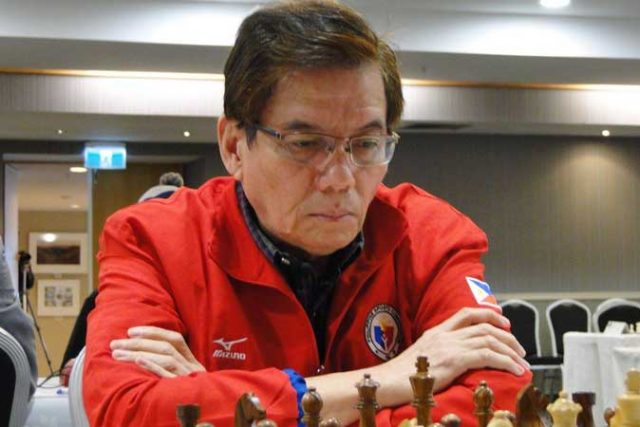
Asia’s first Grandmaster Eugene Torre of the Philippines

Eugene Torre of the Philippines was nominated for the World Chess Hall of Fame by the World Chess Federation (FIDE), becoming the first male from Asia to be given such an honor.

Asia’s first Grandmaster Torre, 69, joined Polish-Argentine GM Miguel Najdorf and GM Judit Polgar of Hungary as the 2020 nominees of FIDE for the Hall in online proceedings held early this week.

The list was recommended by FIDE’s historical committee composed of chairman Willy Iclicki of Belgium, Andrzej of Poland, Berik Balgabaev of Kazakhstan and Casto Abundo of the Philippines, and approved by the FIDE Council.

“I’m very proud to be the first Asian male player to be honored with this,” said Mr. Torre in Filipino of his FIDE nomination.

Mr. Torre said it is a good development for players in this part of the world to be recognized for their achievements in the sport of chess.

“It’s a welcome development that Asians are being recognized in chess despite the fact that we are young in the sport compared to the Russians, Americans and Europeans,” he said.

“We have a lot of Asian world champions like Grandmaster Viswanathan Anand of India, Xie Jun of China and Filipino US-based Wesley So (World Fischer Random Champion),” added Mr. Torre, who became a Grandmaster at the age of 22 in 1974.

He follows Ms. Xie who was bestowed the honor in 2019.

The World Chess Hall of Fame was established in 1984 in St. Louis Missouri, but it was in only 2001 when it inducted the first five players nominated by FIDE, namely, Jose Raul Capablanca of Cuba, Wilhem Steinitz of Austria, Robert James “Bobby” Fischer and Paul Morphy  of the United States and Emmanuel Lasker of Germany.

Among the other legends in the Hall of Fame are Tigran Petrosian, Vasily Smyslov, Mikhail Botvinik, Boris Spassky, Mikhail Tal, Alexander Alekhine, Anatoly Karpov and Garry Kasparov. – Marlon Bernardino

The Western European microfinance movement: An evolution of purpose

FREEPIK

(First of four parts)

In the last two weeks, we questioned Microfinance’s identity crisis in the developing countries in which it emerged, wherein the model has increasingly become market-driven to sustain itself, impacting its social mission. In tandem, however, Microfinance emerged in “rich” countries. Microfinance is characteristically seen as a substitute for weak financial institutions and flourishes where the traditional financial system is weak. The question is, why and how would Microfinance emerge in Western Europe? Lacking systematic research, we decided to conduct an exploratory, qualitative study in 2017 using 16 personal interviews of relevant persons from member organizations of the Microfinance European Network from seven countries. Several themes and categories emerged during this inductive process that allowed us to gain insight into this. These next four weeks discuss our results and shed light onto how this practice is gaining traction in a completely new context.

In 2006, the European Commission described microfinance activities in Europe as loans of up to €25,000 granted to people unable to access formal credit or to micro-enterprises lacking funds. Microfinance institutions (MFIs) in this geography target vulnerable populations that have been excluded from traditional financial markets including women, migrants, ethnic minorities, youth, people with disabilities, single parents, and individuals with a low level of education and skills.

While Microfinance in the developing world was conceptualized as a tool to fight against financial exclusion, we found that in Europe, being excluded professionally is what first and foremost creates financial exclusion, which eventually creates social exclusion. These three are intrinsically linked in Europe, which is not the case in the developing world. For instance, in French deprived suburbs, the unemployment rate is 2.5 times higher than the average unemployment rate in the country, with 50% of the youth population living under the poverty line. By promoting entrepreneurship and offering professional loans, MFIs in Europe do not just aim to fight against unemployment, but to reintegrate people into the society. Creating a company is not necessarily the aim, but it can be a stepping stone toward financial stability and social integration.

This orientation is reflected in the following three characteristics of Microfinance in Europe: 1.) A focus on entrepreneurial and inclusion loans, 2.) Entrepreneurship training, and, 3.) For-profit status with non-profit funding. Today we focus on the first. There are two types of loans that are provided by MFIs in Europe depending on the purpose: entrepreneurial loans and personal “inclusion” loans. Entrepreneurial loans are widespread among MFIs in Europe and represent the main micro-financial product of developed countries. They can finance a new enterprise, small companies’ take-overs, or the creation of small social businesses. These are usually small loans aiming to support good business ideas that could be difficult to fund through other means, with some even helping finance the personal contribution that will allow the entrepreneur to become eligible for a loan in a traditional bank or provide assistance for things which cannot be financed by traditional banks, such as working capital need or patent costs. MFIs can focus on a specific group of entrepreneurs who are struggling with paperwork or with legal issues that regular banks cannot help them with in order to step in where banks fail.

The objective of entrepreneurial loans is to help the micro-entrepreneur launch his business and grow it until it becomes profitable. However, unlike in traditional Microfinance which targeted the extreme poor with almost no background in entrepreneurship, this type of loan is granted to entrepreneurs or professionals who have a very complete and developed project, which reassure the MFI that it will turn profitable in the near-term, usually consisting of a sustainable and well-done business plan and cash flows forecasts.

The second kind of loan is provided to individuals to finance personal expenses, the amount of which (usually up to EUR 3,000). However, such personal expenses are not linked to personal consumption and cannot be used to repay a debt or a professional loan but must have a role of addressing professional exclusion. It is a timely assistance for the individual in order for him to get out of a difficult situation or a so-called “life accident” such as a divorce, a death in the family, a health issue, or a job loss. Personal loans can thus finance professional training, cars, dental care, furniture, a washing machine, and even computers. MFIs look carefully at the purpose of the purchase, and beneficiaries are selected based on their needs and their motivation to get out of their difficult situation and again, back into the job market.

Hence, unlike the personal loans in the developing world that are used for daily needs, these personal “inclusion” loans have the objective to reintegrate people into society. Further, Western European MFIs are careful in managing their risks and impose standards for granting such loans by requiring a number of documents to control the eligibility of the applicant, such as bank account statements, driver’s license, unemployment insurance amounts, and other welfare benefits: things that barely exist in the developing world version. And though MFIs usually do not ask for any guarantees and do not charge administrative fees, all the same, “good” candidates for personal microcredit are likely to be individuals who have never fallen into indebtedness. A far cry from the original Yunus model wherein beneficiaries were already part of some form of deep and complex indebtedness.

This article is based on a co-authored working paper originating from the Master Thesis of Hélène Laherre under the supervision of the author at the IÉSEG School of Management (Catholic University of Lille) in Paris, France. References are available upon request.


Daniela “Danie” Luz Laurel is a business journalist and anchor-producer of BusinessWorld Live on One News, formerly Bloomberg TV Philippines. Prior to this, she was a permanent professor of Finance at IÉSEG School of Management in Paris and maintains teaching affiliations at IÉSEG and the Ateneo School of Government. She has also worked as an investment banker in The Netherlands. Ms. Laurel holds a Ph.D. in Management Engineering with concentrations in Finance and Accounting from the Politecnico di Milano in Italy and an MBA from the Universidad Carlos III de Madrid.

Sustaining pantries

A COMMUNITY PANTRY set up along Maginhawa St., Quezon City, April 18. — PHILIPPINE STAR/MICHAEL VARCAS

Indeed, it has been a year of living dangerously for many of us. Joblessness, loss of income, rising food prices, and economic uncertainties have left us in the doldrums. We worry about dying from either a contagious and deadly virus, or from poverty and hunger. We have been generally stuck these last 13 months, unable to move on, wondering when this COVID-19 pandemic will end.

In a column in late January 2020, I noted that there were roughly 4,600 reported cases of COVID-19 worldwide at the time, and with about 100 deaths attributed to it, specifically in China. Since then, millions have gotten sick globally. In the Philippines, as of April 20, COVID-19 has affected over 950,000 people, with over 16,000 dying from it. Active cases to date are at 127,000.

Earlier that same month, I also wrote an indictment of the Filipino for having lost the bayanihan spirit: “Gone is the post-war Filipino who used to be known for his values, and his strong sense of others as evidenced by his readiness to be part of any bayanihan to help his fellow man. In our cities in particular, people now look out more for themselves than each there. And with the spirit of bayanihan obviously dead, I can only wonder if bayan itself will soon follow to the grave.

“The Filipino of old, the one with traditional values and who understood the spirit of bayanihan, is as good as gone. And he is unlikely to come back. His ilk evolved, for sure, but not necessarily for the better. The personality traits of his descendants seem to have been shaped less by heredity and more by environment. And given how things are now, perhaps their disastrous end is inevitable.”

It was a harsh condemnation, but it was evident in how we lived at the time. We had lost our regard for others, and thus exhibited a poor sense of community. We celebrated the individual, and de-emphasized the communal — for this was how we believed one could best survive the hustle and bustle of 21st century life.

Little did I realize then how COVID-19 would soon change our lives. For about three months from March 2020, it became a survival of the loneliest as we had to deal with a prolonged lockdown, physical distancing, and “independent” living. Most places where people used to meet socially or congregate were shut down. People were told to stay in their homes as much as possible.

Policy makers tend to believe that physical distancing is still the most effective way of limiting transmission of COVID-19. Lockdowns have been our favored quick fix for COVID surges. Some households actually choose to isolate by choice. But I also believe isolation is among the most difficult initiatives to take as people, by nature, are social beings.

COVID-19 has changed many of us, perhaps for the better. There seems to be greater emphasis now on health and well-being, and greater concern for cleanliness and hygiene. We have also become more neighborly, in a way, with our social life focusing more now on the immediate community. And, I am quite happy to be proved wrong about the bayanihan spirit being lost.

Since last year, many of us have been surviving on the kindness and generosity of others. The business community gave to the extent that it could, for as long as it could. And when it became evident that this pandemic was for the long haul, effective management of resources, amid a crisis, became the name of the game.

I am pleasantly surprised at how community pantries have sprouted all over, and quite happy to note that bayanihan is alive after all. And I beg to disagree that community pantries reflect the inadequacies of government. All over the world, many governments were not prepared for COVID-19, and are presently hard pressed to sufficiently cover all the needs of their people.

Communal pantries work because they help in managing deficits and surpluses. And, I suppose, despite a few bad eggs, in general, people are learning to be more giving and sharing. Judging from the experience of many such pantries, hoarding is an exception rather than the rule. Self-restraint is ensured by peer pressure and fear of public censure.

The fact of the matter is we generally tend to over-consume, building up surpluses when we can, but sometimes ending up throwing away a lot of raw and cooked food. Every day, plenty of farm produce are also left unsold, all ending up in the trash bin. With community pantries taking up these surpluses, they give particularly the poor greater access to available food.

It had to take a crisis, and a few well-meaning individuals, to make people realize once more that bayanihan can work. But it takes a lot of effort, and goodwill, to sustain these pantries. In this line, I believe the practice can be institutionalized. There will always be a crisis, either a calamity or a pandemic, and there will always be a need for improved access to food.

Fresh farm produce like vegetables and fruits go to waste after failing to make it to market on time. Farmers get rid of surplus harvest by either feeding them to farm animals or just turning them to compost. Even harvested grains like rice, after being dried, hulled, and milled, can last only for so long. Old grain end up as animal feed.

We need to look into technologies to improve storage and shelf life. Local governments should look into helping maintain community pantries by investing in food warehousing and refrigeration facilities. If they can afford to build public markets, either at their own expense or through private sector investment, then they should also invest in cold and dry storage facilities.

Community pantries can be sustained only for so long with donations and support from those who can help. Imagine how this initiative can be improved if local governments can also provide suitable warehousing and storage facilities. Storage sufficiency will help ensure food security locally, and will provide for the creation of even bigger community pantries in the future.


Marvin Tort is a former managing editor of BusinessWorld, and a former chairman of the Philippines Press Council

matort@yahoo.com

Now’s the time to tackle vaccine-hesitant parents

PHILIPPINE STAR/ MICHAEL VARCAS

MORE THAN 910 million COVID-19 vaccine doses have been given and the number is climbing daily. So far, though, the vast majority of those given a shot and targeted by campaigns have one thing in common: They’re adults. That was the right place to start the world’s largest vaccination drive, but it’s not where we should stop.

Children have, it’s true, proven less susceptible to the coronavirus so far. It’s one of the pandemic’s few mercies, even if under-reporting plays a role. But not all have escaped unscathed, and we know infected youngsters have unwittingly passed the illness to others. As with shots for diseases like measles and rubella, COVID-19 vaccinations for kids are about protecting them — and about shielding everyone else. Even if children aren’t “super” spreaders, but merely spreaders, the return to a normality of sorts remains a mirage without them.

Unfortunately, this is a corner of the global vaccination campaign where problems like access and hesitancy will be most sharply felt. Trials involving children are only just beginning and are by necessity slow, given safety concerns, which mean researchers work down the age ranges, and lower infection rates. We’ll need to wait to know which immunizations are safest and best at preventing transmission. The good news is that the gap before rollouts provides a vital few months to tackle head-on the misperception that these shots bring lower rewards.

Children made up about 8% of all COVID-19 cases last year, according to World Health Organization (WHO) figures, though they account for 29% of the global population. Fewer have ended up in intensive care and most have escaped with fever, fatigue, and a cough. Under 0.2% of COVID fatalities were people younger than 20, according to WHO numbers from September.

Crucially, this can change during periods when the disease is running wild. It’s alarming to note that Brazil’s devastating current wave is killing younger people. Pregnant women and children under 10 are falling ill, some of whom have different symptoms and so are misdiagnosed. Kirsty Short, a virologist at the University of Queensland, points out that there is a lot we don’t know around other factors at play, including social behaviors, or how children, in particular, respond to variants. But there are good reasons to be wary — not least because of the rare but potentially lethal multi-system inflammatory syndrome, which shares symptoms with toxic shock and Kawasaki disease, like rashes and vomiting, and appears a few weeks after infection. We also know little about the long-term consequences of COVID-19.

Avoidable deaths and potential after-effects are reason enough to ensure shots get into the arms of the world’s children, but there’s more. For one, figures like Anthony Fauci, President Joe Biden’s medical adviser, point out that it will be tough to reach herd immunity levels — which he estimates requires 70% to 85% of people to be vaccinated or immune — without children, who make up about a quarter of the US population.

And while restrictions remain in place, youngsters suffer the most, bearing the burden of curtailed education, play and sport as advances in health and nutrition go backward. Many who have suffered such disruptions may never return to the classroom.

We’re getting closer to the point where children’s vaccines will become available. Moderna, Inc., for example, began clinical trials with over-12s in December, and said last month that the first children had been dosed in a trial of its vaccine with younger kids. Pfizer, Inc. and partner BioNTech SE want regulators to allow use of their vaccine in 12- to 15-year-olds, after a study found it was 100% effective in preventing illness during a final-stage trial with that age group. We know Israel has already vaccinated some 600 adolescents in at-risk groups with the BioNTech vaccine and saw no significant side effects.

The rub is that while vaccine hesitancy has varied causes and is spread globally, parents in general have more doubts. Pew research in 2017 found that Americans overwhelmingly backed measles, mumps and rubella vaccine requirements for public school pupils, but parents of young children saw lower benefits and higher risks. That’s the case with COVID-19, too. Research carried out by leading US universities published last month found that when it comes to the coronavirus, younger mothers are especially reluctant: Roughly two-fifths are somewhat or extremely unlikely to seek the vaccination for their children. Part of it, in the developed world, is the lingering, damaging legacy of misinformation around vaccines like MMR. In the developing world, there are also competing health priorities — even when shots are available.

Tackling that requires a concerted global effort focused on education, outreach, and, critically, communication around the risks and rewards, especially after blood-clotting incidents that suspended shots of some vaccines. Robust safety data from trials will help, given that most people simply have doubts, usually reasonable ones, and are not unconditionally opposed.

It’s an opportunity to build trust, particularly in communities and among parent groups that have been more vulnerable to COVID-19 but are also skeptical of official pronouncements. Success with these campaigns percolates in a way that mandatory drives do not. Convincing families to protect themselves now may well improve their willingness to get other childhood vaccines. That’s a win, since immunization programs have been battered in much of the world due to the broader disruptions of the past year.

The alternative to vaccinating children is to let COVID linger, as measles has. The highly contagious illness was officially eliminated in 2000 in the United States. But in 2019, a total of 1,282 cases were reported, the most in more than a quarter-century, thanks to unvaccinated people. It’s an unpalatable prospect.

BLOOMBERG OPINION