Home Blog Page 7661

Philippines adds Oman, UAE to travel ban list amid spread of Indian COVID variant

The Philippine government has expanded its travel ban to include Oman and the United Arab Emirates (UAE) in a bid to prevent the spread of a double-mutant version of coronavirus disease 2019 (COVID-19) which was first discovered in India.

Presidential Spokesperson Harry L. Roque said the imposition of the travel ban on Oman and the UAE will take effect starting 12:01 a.m. of May 15 until 11:59 p.m. of May. 31.

“All travelers coming from Oman and the United Arab Emirates (UAE) or those with travel history to these two countries within the last 14 days preceding arrival shall be prohibited from entering the Philippines,” he said in a statement.

Passengers who are set to arrive from these two countries before May 15 would not be barred from entering Metro Manila, but they must complete a 14-day quarantine in an accredited facility.

Mr. Roque said the Philippines also extended the ban on travelers from Pakistan, Bangladesh, Nepal and Sri Lanka until the end of the month.

Meanwhile, more than 544,000 overseas Filipino workers (OFWs) displaced by the coronavirus pandemic have been repatriated by the Philippine government.

International Labor Affairs Bureau Director Alice Q. Visperas said during a televised news briefing that about 49,000 OFWs are set to return to the country. — Kyle Aristophere T. Atienza


6,784 new COVID cases push active cases up to 58,986

The Department of Health (DoH) on Friday reported 6,784 new cases of the coronavirus disease 2019 (COVID-19) and nearly 3,000 recoveries. The DoH also reported 137 additional deaths, bringing the total death toll from the disease to 18,958.

In a statement on Friday, the DOH said there are 6,784 additional cases of the COVID-19, bringing the total tally since the pandemic started to 1,131,467.

As of Friday , there are 58,986 active cases, higher than the 55,260 reported on Thursday.

The number of new recoveries is 2,972, bringing the total number of recoveries to 1,053,123.

Around 93.5% of the active cases are classified as mild, while 2.3% are asymptomatic. Meanwhile, 1.8% of the cases were severe, 1.3% critical, and 1.13% moderate.

The DoH reported that 59% of the country’s ICU beds are being utilized while utilization rates of ward beds are 48%; isolation beds, 44%; and ventilators, 40%. — Gillian M. Cortez

Comelec mulls adjusting 2022 election campaign rules due to COVID-19

PHILSTAR

The Commission on Elections (Comelec) said it is considering modifying its rules and processes for the 2022 national and local elections due to the ongoing coronavirus disease 2019 (COVID-19) pandemic. These include the possibility of virtual debates among presidential candidates, safety protocols, and changes in absentee voting. 

In its first media briefing on the 2022 national and local elections on Friday, the poll body said that they expect that the pandemic will still be raging as they prepare for next year’s polls and during the election period itself. The first regular elections for the Bangsamoro Autonomous Region in Muslim Mindanao will also be held next year. 

As you all know, we have a committee on new normal which will handle on how the elections are prepared and how elections will be performed or done. We anticipate the elections will be happening while the COVID-19 is still there,” said Comelec Commissioner Marlon S. Casquejo during the briefing. 

There will be a conference on Monday to discuss how to proceed with the elections during the pandemic. Among the topics to be tackled is how to conduct the Presidential debates. Mr. Casquejo said Comelec is looking at “hybrid” options such as having only the candidates present at the debate venue; allowing a limited audience to attend the debates; or giving candidates the option to appear virtually during the debates. 

How candidates can campaign during the pandemic will also be discussed, as face-to-face campaigning is risky during a pandemic. The Comelec is studying how other countries have held their elections during the COVID-19 pandemicIt may introduce other campaign methods that the candidates can utilize. 

“As of now, the existing guidelines of the campaign is still face to face, however we are studying the possibility of modifying our rules in campaign since we have the pandemic,” said COMELEC Commissioner Aimee Ferolino-Ampoloquio in the same briefing. 

The Comelec also plans to release safety protocols for the filing of certificates of candidacy and is eyeing setting specific dates for the filing of these per elective position. The dates for the filing of certificates of candidacy and certificates of nomination and acceptance (for partylist aspirants) will be on Oct. 1 to 8 of this year. 

There will be 18,187 elective positions contested during next year’s polls 

The campaign period for the 2022 national and Local elections will begin on Jan. 7, 2022. The actual elections will be on May 9, 2022. 

The COMELEC said paper-based automated polls will be used again for next year’s elections. Absentee voting will apply for persons with disabilities and overseas Filipinos, but the poll body said it is also looking into who else can avail of absentee voting such as pregnant women. 

Next year’s elections will also have new features for ensuring the transparency of the elections. These include the use of digital signatures of the electoral boards on election returns when transmitting the votes to the canvassing center. Mr. Casquejo saithat this was supposed to be implemented during the 2016 national and local elections, but the government was not able to allocate enough funds for it. — Gillian M. Cortez 

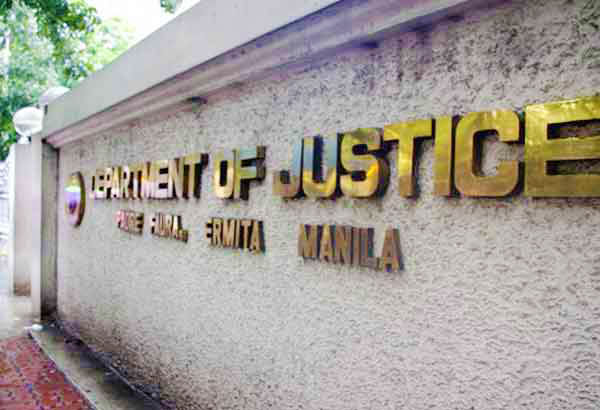
DoJ Usec. says terrorist designation is not a new concept

PHILSTAR

Department of Justice (DoJ) Undersecretary Adrian F. Sugay said the concept of designating individuals as terrorists is not new as it has been used since 2012 under the Anti-Terrorism Financing Prevention and Suppression Act.

“I supposed Congress deems it necessary to have something like this in place in order to prevent the terroristic activities or the financing of terrorist activities,” Mr. Sugay said in an interview on Friday on the ABS-CBN news channel.

He explained that the process of designation starts with gathering evidence and information on a suspected terrorist by the National Intelligence Committee, “which is gathered like it is stated in the resolution…(and) by the Vice-Chairman of the Anti-Terrorism Council (ATC), NSA (National Security Adviser) Hermogenes C. Esperon, Jr.”

“This is based on verified and validated information. So, there is evidence. There is information. There is intelligence information,” he added.

Mr. Sugay also said “the designee can always file a petition for delisting, a verified petition for delisting, and may also, of course, go to court and seek judicial remedy.”

In a separate interview on Friday, when asked about the possible danger of using the designation for purposes other than the freezing of assets, Mr. Sugay told reporters over Viber, “I don’t think you can stop anybody from using designation for purposes other than what law clearly provides. Whether or not such use will yield the desired result is another matter altogether. That is why we should all be vigilant.”

In a press briefing of the families of those included in the ATC’s designation as terrorists, they said they hope the Supreme Court will strike down the Anti-Terrorism Act of 2020.

Sharon Cabusao-Silva, wife of peace consultant Adelberto Silva, said her husband’s designation as a terrorist was abusive as it was solely based on intelligence reports.

Ms. Cabusao-Silva added that she does not believe that her husband’s designation as a terrorist will only lead to the freezing of assets and not arrests as the Philippine government has a track record of brutality and of coming up with a broad law.

Fides Lim, wife of peace consultant Vicente Ladlad who is also included in the ATC’s list, said the Anti-Terrorism Act is itself terrorism.

Ms. Lim said her husband was not informed by the ATC of any charges, and as such, the ATC violated his rights to due process.

“There is nothing most fearful, most oppressive, and most unjust than the way political prisoners are being treated under this regime,” she added, but said that she wishes that peace talks could be held under this government. — Bianca Angelica D. Añago

Budget, logistical problems delay normalization process in Bangsamoro — gov’t peace panel

The Office of the Presidential Adviser on the Peace Process (OPAPP) on Friday said budget and logistical problems have delayed the normalization process in the conflict-torn region of Bangsamoro in the southern Philippines.

This as the Senate is deliberating over proposed legislation seeking to extend the term of the body tasked to implement the program by another three years.

The normalization track of the peace pact between the Moro Islamic Liberation Front (MILF) and the Philippine government is yet to be achieved more than three years after the establishment of the Bangsamoro Transition Authority (BTA), OPAPP Undersecretary David Diciano told a Senate hearing.

The normalization plan aims to disarm Moro rebels, initiate socio-economic programs, create transitional justice and reconciliation, and implement confidence-building initiatives.

Mr. Diciano, chair of the government’s peace panel on the Bangsamoro Peace Accord, said the region would have been a step closer to the last phase of the track’s implementation had “travel restrictions and budget reallocation” not entered the scene, Mr. Diciano said.

The phase he referred to is the “the establishment and operationalization of the police force for the Bangsamoro.” The Philippine government and Moro rebels are expected to sign an exit program at the last phase.

“The runway for the full implementation of the commitments under the normalization track between now and the target signing of the Exit Agreement in 2022 is short – not to mention the total budget and resources required to completely deliver these commitments, which may need a minimum amount of P49 billion,” he said, noting that the decommissioning of 70% MILF combatants, or approximately 28,000 fighters, is “yet to be done.”

“Half of this target should be decommissioned in 2020. However, the failure of the MILF to submit the list of names and weapons on time and the availability of the budget pushed the time frame for the decommissioning process,” he said.

Mr. Diciano noted that the MILF’s failure to submit its full list of combatants “affects the timeline not just of decommissioning but as well as the formulation, programming, and provision of socioeconomic programs.”

Congress has only nine remaining session days before it adjourns sine die on June 4

Government troops clashed with members of the Bangsamoro Islamic Freedom Fighters (BIFF) in Datu Paglas in Maguindanao province last week.

The BIFF is a breakaway group from the MILF. — Kyle Aristophere T. Atienza
DOLE gears up to evacuate Filipinos in Israel, Gaza

The Department of Labor and Employment (DOLE) said it is preparing to extract Filipinos who are located in affected areas in Israel and Gaza if the ongoing violence in the area escalates further, adding it will need manpower and an additional budget to do so.

In a briefing on Friday, Israel Labor Attache Labatt Rudy Gabasan said this is being prioritized in case the situation becomes more critical for Filipinos residing in affected areas of Israel, specifically in the southern coastal cities of Ashdod and Ashkelon.

“We need personnel if we are going to extract Filipinos here. At the same time, the budget issue is already being asked by the Department of Foreign Affairs here in Israel for an emergency fund to be sent here,” he said in Filipino.

He said that they may have to rescue 10 Filipinos who are residing in Gaza. They are not overseas Filipino workers but are spouses of Palestinians.

Mr. Gabasan said they are in talks with the hotel associations in the country to provide rooms for Filipino evacuees.

No Filipinos have been reported injured or killed in the ongoing violence in Israel and Gaza.

“Physically there is no reported injury or death but because of the gravity of consecutive bombings here, many Filipinos are experiencing trauma,” said Mr. Gabasan.

He added that they had to extract one Filipina whose Arab-Israeli spouse and child were killed when their compound was hit by a rocket in the city of Lod in Israel. — Gillian M. Cortez

Duterte asks Enrile to discuss South China Sea dispute

FORMER SENATE president Juan F. Ponce Enrile

Philippine President Rodrigo R. Duterte has invited former senator Juan F. Ponce Enrile to a discussion on the South China Sea dispute, saying “he was there right at the beginning.”

The veteran legislator was invited to visit the Palace to shed light on the country’s maritime dispute with China, Mr. Duterte said in a taped Cabinet meeting that aired on Friday. The meeting is set on Monday.

He said Mr. Enrile, 97, has the intellectual capacity to discuss the issue.

Sa kaniya ako makinig, sa kaniya ako bilib sa utak at pag-intindi nitong problema, itong ating West Philippine Sea.”

Mr. Enrile recently backed the administration’s China policy, saying the country is “no match” for Beijing.

The former lawmaker in 2012 criticized the supposed backdoor negotiations of former senator Antonio Trillanes IV with the Chinese government. He alleged that Mr. Trillanes was selling the country’s sovereignty to Beijing.

A Philippine taskforce earlier reported the continued presence of almost 300 Chinese ships in the Spratly Islands in the South China Sea.

Mr. Duterte has said provoking Beijing into war over the disputed waterway would only lead to the massacre of government troops. He has called the arbitral ruling that rejected China’s claim to more than 80% of the South China Sea a “piece of paper” that could be disposed of.

Also on Friday, Senator Risa Hontiveros-Barraquel called on the Palace to retract its “defeatist” statements regarding the country’s territorial dispute with China.

The office of Mr. Duterte should set the record straight immediately, Ms. Hontiveros said, citing Beijing’s continued incursions in the disputed waterway.

The senator also called for better coordination among government agencies when it comes to the South China Sea dispute.

“While Foreign Affairs Secretary Teddyboy Locsin ordered the lodging of another diplomatic protest over the recent report of the NTF-WPS, he lamented that the task force should have informed the DFA on the presence of Chinese vessels first before releasing a statement to the media,” Mr. Hontiveros noted.

Mr. Locsin earlier said only his agency could speak for the President’s foreign policies.

This, after presidential spokesman Herminio L. Roque, Jr. made a false claim about a Philippine reef.

Mr. Roque and Mr. Locsin have clashed over the China issue several times.

The envoy in February told the Palace official to “lay off” after he suggested that the Philippines should sue Beijing at an international court for passing a law allowing its coast guard to fire at foreign vessels in the disputed waterway.

“We need to harmonize our statements and actions,” Ms. Hontiveros said. — Kyle Aristophere T. Atienza
Chinese economic aid may be blueprint for increasing its international power — Carpio-Morales

CONCHITA CARPIO-MORALES — PHILSTAR/MICHAEL VARCAS

Former Ombudsman and Supreme Court Associate Justice Conchita Carpio-Morales warned that China’s economic support for the Philippines may have “trade-offs” such as debt traps, possible seizure of strategic assets, economic dependence, and even national security.

In her keynote address in a webinar on Friday hosted by the Stratmore Albert del Rosario Institute, Ms. Carpio-Morales alluded to “the growing notion that the (Belt and Road Initiative of China) BRI is far from altruism but is essentially China’s blueprint to advance its geopolitical interest and an embodiment of China’s dream of increasing its domestic and international power.”

“The Belt and Road Initiative… is an ambitious infrastructure investment effort which would connect a host of different countries across the globe with continually increasing geographical reach in order to reach and facilitate what in the initiative identify as its major goals, such as policy coordination, facilities, connectivity, unimpeded trade, financial integration, and people to people bonds,” Ms. Carpio-Morales explained.

“This is how it is made to be understood; rosy and inclusive, devoid of political interests. Ambitious as it is, the selling point of being a game changer in the geopolitical arena has enticed nations to take part in it,” she added.

The BRI is the Chinese government’s centerpiece project to invest in key development infrastructure in nearly 70 countries, including the Philippines.

Its target completion date is 2049, which is also the centennial of the founding of the People’s Republic of China.

Ms. Carpio-Morales said the Chico River pump irrigation project, funded mainly by an $88 million loan from the Export-Import Bank of China, has a contentious confidentiality clause that disallows the disclosure of fine details even to the Filipino people who are the ultimate bearers of the loan.

She added that the New Centennial Water Source Kaliwa Dam project did not conduct an environmental impact study and has been seen as giving preferential treatment to China at the cost of feasible and sustainable development.

On April 21, Australian Foreign Minister Marise Ann Payne announced that Australia will pull out of the BRI as she considered the agreements to be “inconsistent with Australia’s foreign policy or adverse to our foreign relations.” — Bianca Angelica D. Añago

DoF sees continued risks from virus despite signs of economic recovery

THE DEPARTMENT of Finance is seeing some signs of economic recovery, even as the virus continues to be a threat to the outlook.

Finance Undersecretary and Chief Economist Gil S. Beltran noted in an economic bulletin on the country’s first-quarter gross domestic product (GDP) data that GDP rose by 0.26% in January to March 2021 from the October to December 2020 period, signalling a slight improvement.

“Recovery, however, continues to be threatened by risks posed by the virus. This health issue should be effectively addressed, and it is encouraging that the much-needed vaccines have started arriving,” Mr. Beltran said in the statement.

Finance Secretary Carlos G. Dominguez III said the government might need to spend another P75 billion until 2022 to fund its expanded vaccination program that will include booster shots for 85 million Filipinos and also cover teenagers and adults.

Based on data from the US-based Center for Strategic & International Studies, the Philippines has fully inoculated 517,113, only equivalent to 0.5% of its population.

This makes the country a laggard in the region, besting only Brunei (0.2%), Myanmar (0.1%), and Vietnam (0%) in terms of the ratio of vaccinated people to the population.

The government wants to vaccinate 70 million Filipinos by end-2021 to achieve herd immunity. However, at the current pace, the Philippines would only be able to vaccinate 75% of its population after 6.4 years.

GDP shrank by 4.5% on an annual basis in the first quarter. This marked the fifth consecutive quarter of the country in recession.

The government targets GDP growth of 6.5% to 7.5% this year following the record 9.6% contraction in 2020 due to the pandemic. It will review its macroeconomic assumptions next week.

Pag-IBIG Fund net income up 3.7% in Q1

THE HOME Development Mutual Fund (Pag-IBIG Fund) booked a higher net income of P8.332 billion in the first quarter, supported by savings in operation costs due to the new normal.

Pag-IBIG Fund’s net profit increased by 3.7% from the P8.028 billion recorded in the same period in 2020, based on its financial statement.

The agency’s gross income stood at P12.3 billion, down by 1.37% from the P12.472 billion a year earlier. This was on the back of lower service and business earnings.

Meanwhile, Pag-IBIG Fund’s expenses dropped by 10.7% to P3.967 billion from P4.443 billion on lower personnel, maintenance and other expenses amid the pandemic.

The new normal helped the firm post lower costs, Pag-IBIG Fund Chief Executive Officer Acmad Rizaldy P. Moti said in an online briefing.

“We’ve saved a lot. The new normal actually is giving us a lot of opportunities to save,” he said.

The fund’s assets increased by 10% to P678.244 billion from P614.749 billion.

During the quarter, the mandatory regular savings of the fund rose by 13% to P9.1 billion.

Meanwhile, the voluntary MP2 savings climbed by 43% to reach P6.7 billion in the first three months of 2021 from P4.67 billion last year.

The agency also released housing loans worth P20.94 billion during the period, rising by a third from the P15.77 billion booked a year ago.

DoE approves force majeure request of SC 55 consortium

PHILSTAR FILE PHOTO

THE DEPARTMENT of Energy (DoE) has cleared service contract (SC) 55 consortium’s request to put its offshore west Palawan petroleum block under force majeure for one year, based on disclosures from two firms.

In a regulatory filing on Friday, the Ayala Group’s oil and gas exploration unit ACE Enexor, Inc. said its subsidiary Palawan55 Exploration & Production Corp., received DoE’s letter on May 11. Palawan55, which holds majority or 75% participating interest in the consortium, is the operator of the SC 55,

The DoE approved the consortium’s request to place the block under force majeure.

“The letter…states that the timeline of the SC 55 Appraisal Period will be adjusted accordingly, and the end of the period will be adjusted by the same amount of time that SC 55 was on Force Majeure,” ACE Enexor said.

In a separate regulatory filing, Pryce Corp. said this will allow the consortium to plan and prepare ahead for unforeseen events brought about by the prolonged global health emergency. Pryce Gases, Inc., a unit of Pryce, holds a 25% participating interest in SC 55.

The consortium previously asked the Energy department to declare the block under force majeure as a definitive drilling plan has yet to be made.

Pryce explained the SC 55 consortium originally planned to drill at least one well in the area within the first two years of its appraisal work program which took effect on April 26, 2020.

Last month, ACE Enexor’s President and Chief Operating Officer Raymundo A. Reyes announced a drilling proposal for the exploratory well is in the works. He said they were drafting a comprehensive technical document, which details plans for the construction of the borehole and assessing rock formations and fluids in the subsurface.

Once the proposal is completed, it will be submitted to the DoE for clearance.

On Friday, shares of ACE Enexor remained unchanged at P17 apiece, while Pryce shares also closed steady at P5.50 each. — A.Y. Yang

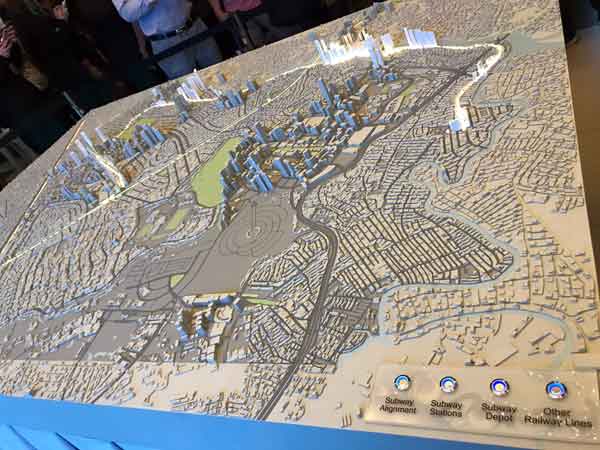
First tunnel boring machine for Makati subway arrives

Makati subway scale model — BW FILE PHOTO

PHILIPPINE Infradev Holdings, Inc. on Friday received its first tunnel boring machine (TBM) for the Makati subway project, its chief executive officer said.

Philippine Infradev President and Chief Executive Officer Antonio L. Tiu in a tweet on Friday said that the company received the first of five tunnel boring machines for the Makati subway (MkTr) project.

“Our (Infradev Chairman Jin Hua Ren) will accept the TBM in simple ceremonies,” he said.

Construction of the Makati City subway station 5, the main site where tunnel boring machines will be set up, could happen by 2023.

Infradev aims to finish underground civil works at the main site within the two-year period.

The company earlier said its wholly-owned subsidiary Makati City Subway, Inc. executed a legally binding term sheet with Richer Today, Inc. on March 9 to finance the project and acquire lots in and around the station.

Infradev plans to finish the project in seven years. — J.P. Ibañez