Home Blog Page 7548

Private schools press for amendment to take away BIR discretion on preferential tax rates
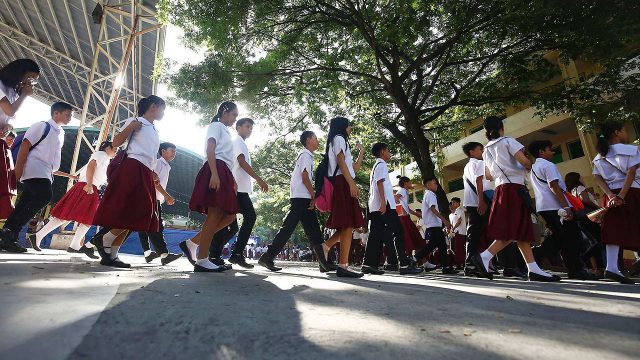
PHILIPPINE STAR/ MIGUEL DE GUZMAN

PRIVATE SCHOOLS said the Senate needs to approve within the month an amendment to the tax code which explicitly makes the industry qualified to enjoy preferential tax rates, in order to avoid any situation in which the Bureau of Internal Revenue (BIR) can declare them ineligible for tax relief.

Senate Bill (SB) No. 2272, which amends Section 27 (B) of the National Internal Revenue Code will effectively clarify that the industry is entitled to a preferential tax rate as provided for by the Corporate Recovery and Tax Incentives for Enterprises (CREATE) Act. CREATE allowed private schools to pay a rate of 1% between July 2020 and June 2023 as a form of pandemic relief.

The private schools said in a joint statement Tuesday that the amendment will “rectify with finality the flawed interpretation of a provision under the CREATE Act by the BIR’s Revenue Regulations 5-2021.”

As of Monday, the enrollment in private schools was 1.4 million, down 57% from a year earlier, and 66% of the 4.3 million in 2019, according to the Department of Education’s Learning Enrollment Survey Quick Count data.

The study also indicated that most private schools do not expect a substantial number of late enrollees, as classes in public schools have also begun, while many private school students are expected to transfer to public schools due to economic difficulties.

Albay Rep. Jose Ma. Clemente S. Salceda, chairman of the House Committee on Ways and Means, has said that a BIR interpretation that renders the industry ineligible for tax relief could force the already weakened sector to shed another 21,661 jobs.

On the other hand, applying the CREATE rate of 1% until 2023 would allow schools to rehire at least 12,996 teachers for the beginning of the school year, he added.

Senator Pilar Juliana S. Cayetano last month promised to expedite the passage of SB 2272. Also in August, the House version of the bill passed on third and final reading.

“Private schools are the government’s partner in education. This partnership is even more important today, as our nation deals with the COVID-19 pandemic, which has disrupted our educational system,” Ms. Cayetano said last month.

“The country’s human capital depends on the quality of education our learners receive from both public and private educational institutions,” private school associations said in a statement Tuesday.

“This is a complementary role that must be strengthened and will prove critical for recovering from the pandemic, and sustaining Philippine economic growth and global competitiveness,” they added.

Signatories to the statement were Joseph Noel M. Estrada, managing director of the Coordinating Council of Private Educational Associations (COCOPEA) and Anthony Jose M. Tamayo, chairman of COCOPEA and president of the Philippine Association of Colleges and Universities. — Alyssa Nicole O. Tan

Exporters launch digitalization effort to help industry recover

AN EXPORT industry group is rolling out a digitalization and business continuity program to help companies recover from the effects of the pandemic.

The Philippine Exporters Confederation, Inc. (Philexport) announced the P30 program — a reference to the association’s 30-year anniversary next year — which focuses on using technology to improve business decision-making and promote collaboration among stakeholders.

The pandemic has accelerated the need for businesses to be more resilient, Philexport Executive Vice-President Senen M. Perlada said at a general membership meeting Tuesday.

“The first strategy is to embrace technology in various forms: digital technology, information technology, business technology, communication technology, product technology,” he said.

“The other strategy is to strengthen and tighten collaboration with stakeholders, as may be seen in the various forms and levels of public private partnerships and collaboration that Philexport has entered into.”

The project includes the rollout of the Philexport portal, an online information and services center for exporters.

“The overarching objective for the year-long undertaking is to set in place systems and adopt the tools that will help Philexport and its members survive and thrive,” Mr. Perlada said.

“The dynamics of this COVID-19 pandemic are actually providing us experiential data…. information, knowledge, and insights into how to make Philexport organizations resilient.”

Philexport is helping businesses set up digitalization or automation efforts, along with business continuity procedures.

“We wish to take this opportunity, while business is ‘muted’ to do house-keeping, capacity building,” Mr. Perlada said.

Exporters have been set back by global logistics delays. The global shipping industry has been facing a shortage of vessel space after demand bounced back in some countries, pushing freight rates higher and causing delays in goods shipments.

Philexport President Sergio R. Ortiz-Luis, Jr. said that the solution is not within the industry group’s sole control, even as it works with other stakeholders to address shipment problems with domestic shipping lines.

“We hope that more and more international shipping lines will respond positively to this situation ahead of the holiday purchases,” he said.

The industry group will also set up regular forums to help exporters deal with government requirements.

“(We have) another collaboration platform as we work with government agencies to ease up and inform members about regulatory requirements,” Mr. Perlada said. — Jenina P. Ibañez

Dar batting for control of irrigation agency   

JAPAN INTERNATIONAL COOPERATION AGENCY

THE NATIONAL Irrigation Administration (NIA) needs to be under the control of the Department of Agriculture (DA) in order to expand irrigation coverage.   

Meron kaming proposal na kung puwede, kung mamarapatin po ng mahal na Pangulo, ay ilipat na sa DA itong NIA (We have a proposal, which I hope the President approves, to transfer NIA to the DA) because water is agriculture. Agriculture is life,” Agriculture Secretary William D. Dar said in a television appearance Tuesday.   

Mr. Dar said the Philippines has over 1.2 million hectares of rice land that stand to benefit from unified control of irrigation development, and estimated that it would take 20 years for the government to cover such an area.   

The NIA is under the control of the Office of the President as provided for by Executive Order No. 165, signed by President Benigno S. Aquino III in May 2014.   

Meanwhile, Mr. Dar said there are proposals to open up NIA for public-private partnerships to improve the irrigation system.   

“We encourage the private sector to invest and that they be paid accordingly. That way you have more partners from the private sector investing in the development of national irrigation systems,” Mr. Dar said.   

During a recent House Committee on Appropriations hearing, Mr. Dar asked for an additional P30 billion on top of its proposed 2022 budget of P91 billion to further improve agricultural production.  

The DA’s proposed 2022 budget is well below the P231.7-billion budget it originally requested, but is 1.05% higher than its 2021 allocation.   

Meanwhile, NIA presented in the same hearing a 2022 budget proposal of P32.08 billion, down 1.18% from its 2021 budget. — Revin Mikhael D. Ochave 

Ban on poultry imports from Japan lifted  

THE Department of Agriculture (DA) has lifted a temporary ban on poultry imports from Japan, after that country’s poultry industry was deemed free of highly pathogenic avian influenza (HPAI), or bird flu.   

Agriculture Secretary William D. Dar signed Memorandum Order No. 52 on Sept. 10 which lifted the ban on Japanese domestic and wild birds and their products, including meat, day-old chicks, eggs, and semen.   

“Based on the evaluation of the DA, the risk of contamination… is negligible,” Mr. Dar said in the order.   

Japanese veterinary authorities have sent a report to the World Organisation for Animal Health (OIE) confirming the end of the bird flu outbreak.   

“In accordance with the provisions of Chapter 10.4 of the OIE Terrestrial Animal Health Code, Japan is now free from highly pathogenic avian influenza,” Mr. Dar said.   

On Dec. 14, the DA implemented the ban on Japanese poultry imports via Memorandum Order 75.   

At the time, Japan’s Ministry of Agriculture, Forestry, and Fisheries had outbreaks of the H5N8 HPAI virus in Higashi, Kagawa City, Kagawa Prefecture, and in other prefectures such as Fukuoka, Hyogo, Miyazaki, Nara, and Hiroshima. — Revin Mikhael D. Ochave 

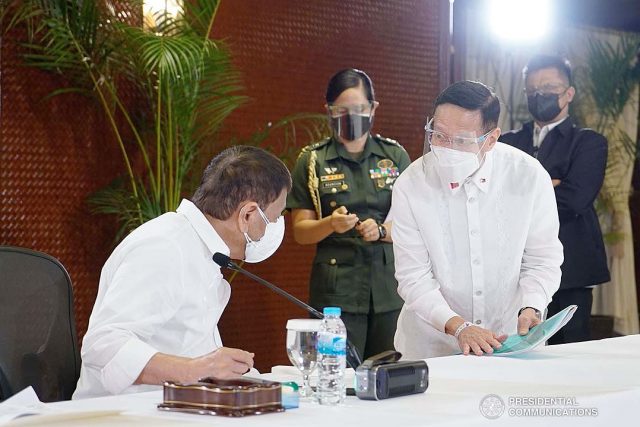
Duterte bars Cabinet from attending Senate probe

PRESIDENT RODRIGO R. Duterte has barred Cabinet officials from attending without his approval Senate hearings investigating the government’s alleged misuse of funds against the coronavirus.

In a taped speech aired on Tuesday night, the President also accused senators of using the probe to harass people.

“I will require every Cabinet member to clear with me any invitation,” he said.

The Senate is looking at multibillion-peso deals between the government and private contractors for what it suspects were overpriced face masks and other medical supplies.

Mr. Duterte said senators have been grilling witnesses for hours, wasting time that should otherwise have been used at work. Other resource persons wait on standby and end up not being called to testify, he added.

Michael Henry Ll. Yusingco, a senior research fellow at the Ateneo de Manila University Policy Center, questioned the timing of the President’s order.

“Why insist on this requirement only at this late stage of his term?” he asked. “And why only now when the possibility of massive graft and corruption is the target of the Senate investigation?”

“It is in the best interest of the President to make sure all of these allegations are directly answered immediately,” the political analyst said.

Mr. Duterte cited as an example Health Secretary Francisco T. Duque III, who he said had not been “in control” of the agency because he’s been busy attending legislative hearings.

The President cannot invoke executive privilege when government officials are compelled to appear before legislative hearings, constitutional expert Antonio M. La Vina said, citing jurisprudence.

“The President can do this for what is called question hour, but not for a legislative investigation,” he said in a Facebook Messenger chat.

For the latter, the official must credibly invoke executive privilege, which is inapplicable here,” he added.

In 2005, ex-President Gloria Macapagal Arroyo issued an executive order that required Cabinet and other government officials to seek presidential permission first before attending legislative hearings.

But the Supreme Court in 2006 “struck down Executive Order No. 464 and the sections that, taken together, attempted to expand the scope of officers covered by executive privilege and render the claim to privilege unchallengeable by Congress due to presidential silence/nonconsent to appearance,” Mr. La Vina said.

In that ruling, the tribunal upheld the right of the President to prevent officials from participating in legislative inquiries known as a question hour, where department heads appear before lawmakers to answer questions on matters relating to their office.

In 2014, the late Senator Miriam Defensor-Santiago said former President Benigno S.C. Aquino III had no reason to forbid his Budget secretary, Florencio B. Abad, from answering congressional questions about a special budget meant to fast-track certain projects.

The Supreme Court later struck down the program for being illegal.

Ms. Santiago, a constitutional expert, said “the information that the Senate seeks is not covered by the doctrine of executive privilege.” “The doctrine of executive privilege is recognized only in relation to certain types of information of a sensitive character,” she said.

These types of information include military, diplomatic and other national security matters; presidential conversations, correspondences and discussions in closed-door Cabinet meetings and information on investigations of crimes by law enforcement agencies.

Executive Secretary Salvador C. Medialdea earlier said the Senate blue ribbon committee had summoned witnesses “for further bullying,” adding that many of them have been “criminally condemned.”

Senator Richard J. Gordon, Sr., who heads the body, said the Senate was just doing its job. Senator Ana Theresia N. Hontiveros-Baraquel has said the Senate is a co-equal government branch and the probe is part of its constitutional duty.

The presidential palace, she added, should let the Senate do its job in ensuring that the people’s money was not misused.

Meanwhile, Justice Secretary Menardo I. Guevarra said he had issued a lookout order against six officials of Pharmally Pharmaceutical Corp. and former presidential economic adviser Michael Yang, who is allegedly a financier of the company. 

Pharmally is a private contractor that cornered at least P8 billion in state contracts for medical supplies.

The Justice department also issued a lookout order against two former Budget officials suspected to have facilitated the scam.

Mr. Gordon sought Mr. Yang’s inclusion in the lookout bulletin in a letter to the agency, the Justice chief told reporters in a Viber group message.

A person under a lookout order is not barred from leaving the country but their travel will be monitored, and government authorities will be alerted if they do leave the country. — Kyle Aristophere T. Atienza and Bianca Angelica D. Añago

Duterte ally faces P100-M complaint from boxing champ

SENATOR MANNY PACQUIAO FB PAGE

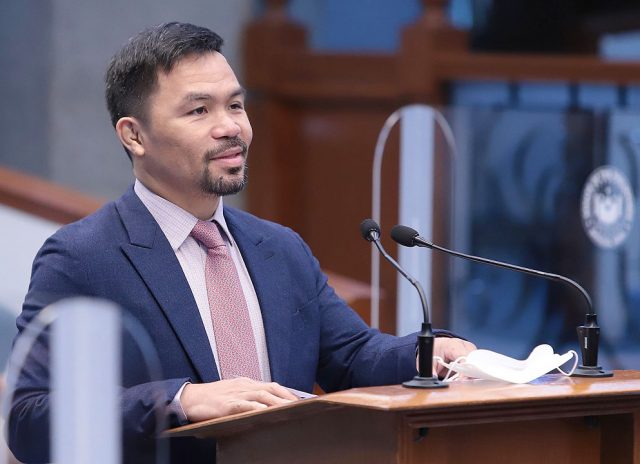
SENATOR Emmanuel “Manny” D. Pacquiao filed a P100-million libel suit against President Rodrigo R. Duterte’s spiritual adviser for accusing him of corruption.

The boxing champion filed the complaint against Apollo C. Quiboloy at the Makati City Prosecutor’s Office on Tuesday.

In his 13-page complaint, the senator cited Mr. Quiboloy’s comments on TV and social media posts accusing him of having misused funds for the unfinished Sarangani Sports Training Center that eventually became a “white elephant.”

Mr. Quiboloy allegedly used his “power and influence to spread fake news and false information.”

“In a democratic society, public officials like Senator Manny Pacquiao should expect criticisms and critical evaluation of their performance from citizens whom they are expected to serve,” Marie Dinah Tolentino-Fuentes, Mr. Quiboloy’s lawyer, said in a video posted on YouTube.

She also said their client had not accused the lawmaker of any wrongdoing but only floated a question regarding the matter. Mr. Quiboloy’s comments were “constitutionally protected speech and expression,” she added.

Mr. Quiboloy earlier challenged Mr. Pacquiao to a debate as he showed photos of dilapidated bleachers and overgrown grass at the center. Mr. Pacquiao said these were old facilities at the Sarangani Province Sports Complex. “He used this deliberate falsehood to brainwash the minds of the Filipino public, recklessly propagating lies to blacken the image and reputation of an honest public servant,” according to copy of his complaint.

“He even had the audacity to quote the Holy Scripture in furtherance of his lies, misleading his flock and confusing the public, with the end in view of blackening another’s reputation.”

Mr. Pacquiao vowed that if he is awarded damages, he would use the money to build homes and help poor Filipinos. — Alyssa Nicole O. Tan

Congressmen seek booster shots for health frontliners

PHILIPPINE STAR/MICHAEL VARCAS

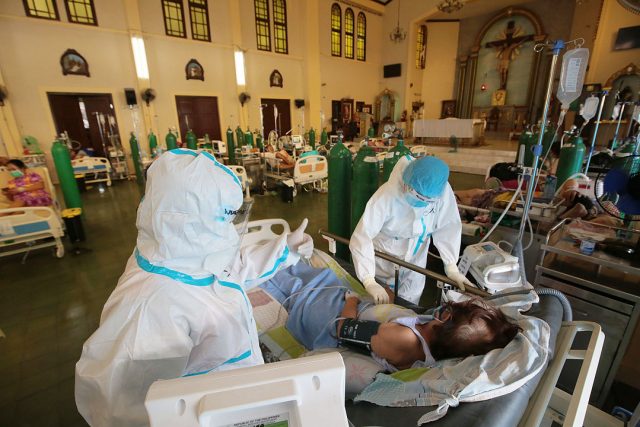
SIX congressmen have filed a resolution urging the government to provide booster shots to protect Filipinos from a more contagious Delta coronavirus variant.

The lawmakers led by Taguig Rep. Alan Peter S. Cayetano urged an inter-agency task force to provide the shots to frontline health workers and patients whose immune system have been compromised.

The booster shots are a “moral imperative and a practical necessity to prevent the collapse of our healthcare system,” according to a copy of the resolution.

The congressmen noted that countries such as Indonesia and Thailand have started giving a third shot to vulnerable residents.

A total of 39.14 million doses have been given out, with 22.06 million Filipinos getting their first dose, while 17.08 million have been fully vaccinated as of Sept. 13, according to the National Task Force Against COVID-19 (coronavirus disease 2019).

Meanwhile, the coronavirus pandemic has affected government response to the country’s already dismal tuberculosis (TB) crisis, health authorities told a Senate hearing on Tuesday.

TB tests last year fell to 556,000 from 1 million a year earlier and 1.16 million in 2018, Health Undersecretary Mario C. Villaverde said.

TB patients have not gone to hospitals for consultation for fear of being infected with the COVID-19 virus, he said. A number of health workers had also been assigned coronavirus patients.

Mr. Villaverde said the Health department had come up with a TB program to work around the COVID-19 crisis and make it sustainable.

Among the strategies are improved screening and contact tracing, a flexible treatment management and telemedicine.

“While we battle this pandemic, we should not lose sight of other diseases,” said Senator Christopher Lawrence T. Go, who heads the health committee. “They are also plaguing the country.”

The Philippines had the highest TB incidence rate in Asia last year, with 554 cases for 100,000 Filipinos, according to the World Health Organization. — Russell Louis C. Ku and Alyssa Nicole O. Tan

Duterte names new SC justice 

Justice Japar Babay Dimaampao takes his oath as the 191st Associate Justice of the Supreme Court before Chief Justice Alexander G. Gesmundo at the Session Hall of the Supreme Court earlier today. — PHILIPPINE SUPREME COURT PUBLIC INFORMATION OFFICE TWITTER PAGE

PRESIDENT Rodrigo Duterte has appointed an appellate court justice to the Supreme Court (SC), according to the high tribunal. 

Court of Appeals Justice Japar B. Dimaampao, a well-known Muslim jurist, was appointed on July 2, the SC said in a statement on Tuesday. 

Mr. Dimaampao is the second Muslim High Court justice after the late Abdulwahid Bidin, who was appointed in 1987. He got shortlisted 16 times for the position before his appointment. 

He had been an appellate court magistrate for 17 years since 2004. Mr. Dimaampao, who will take the seat left by Chief Justice Alexander G. Gesmundo after his promotion, will serve until 2033, when he reaches the mandatory retirement age of 70. — Bianca Angelica D. Añago 

DepEd says additional P37B needed to assist teachers in distance learning 

PHILIPPINE STAR/ MICHAEL VARCAS

By Russell Louis C. Ku 

THE DEPARTMENT of Education (DepEd) would need an additional P37 billion for laptops and internet service allowance to assist teachers as the country enters its second year of distance learning, officials said on Tuesday during a House budget hearing.   

DepEd Undersecretary Alain Del B. Pascua said despite the department’s higher proposed budget for 2022, funds are still insufficient to cover all teachers nationwide.   

“If we will be providing all teachers with the needed laptops considering the existence of laptops that we have now, we still need P33 billion to provide everybody with laptops and then we need another P4 billion for data connectivity… for 12 months of connectivity,” he said.  

DepEd is proposed to receive P629.8 billion next year, an increase of 6.01% from this year’s P594.11 billion.    

Of the total, P11.31 billion is allotted for the agency’s computerization program, which is a 99.83% increase from this year’s P5.66 billion.  

Mr. Pascua said 211,000 laptops purchased from the 2019 national budget were delivered in June this year while 36,676 units bought from the 2020 spending plan are set to be sent to teachers. Another 65,683 laptops are still being procured from this year’s budget and an additional 40,000 units were acquired from Bayanihan II funds.  

For data connectivity, he said the Department of Information and Communications Technology is the lead agency for this but DepEd has also allotted P700 million for satellite connectivity in geographically isolated and disadvantaged areas.  

Meanwhile, DepEd Secretary Leonor M. Magtolis-Briones said during the hearing that 25.58 million students have enrolled for school year 2021-2022, which is 97.5% of the previous school year’s record of 26.22 million students.   

In another development, the Commission on Human Rights (CHR) said it is investigating the death of a grade 10 student in Negros Occidental allegedly due to hazing.   

In a statement on the commission’s website on Tuesday, CHR Spokesperson Jacqueline Ann C. de Guia said initial police reports suggest that the student died due to hazing. 

Ms. De Guia also called on schools and the security sector “to ensure proper and complete implementation of the Anti-Hazing Act of 2008 and to practice vigilance in monitoring the country’s schools and universities” even as face-to-face classes are still banned.   

CHR has yet to reply to a request for comment on their recommendations on how schools can monitor such activities under a remote learning set-up. — with Bianca Angelica D. Añago  

Nearly 11K free WiFi sites built nationwide 

DICT

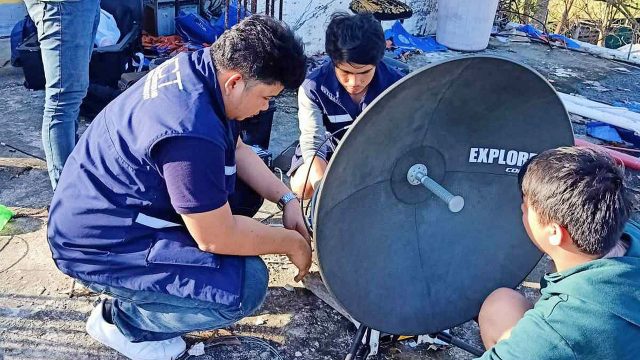
NEARLY 11,000 free WiFi sites have already been set up across the country, the Department of Information and Communications Technology (DICT) said on Tuesday, in a boost to the agency’s free internet connectivity program.  

“We now have 10,996 free WiFi sites… that’s our tally as of now,” DICT Secretary Gregorio “Gringo” B. Honasan II said, speaking in a mix of English and Filipino, in a taped Cabinet meeting.   

Mr. Honasan said the rollout rate of the DICT’s Free Wi-Fi for All program had a 500% increase last year. More than 4,300 sites were put up in 2020 alone, he said, adding that an average of 800 stations were built yearly from 2016 to 2019.   

In 2018, the DICT announced a target to install 250,000 free Wi-Fi sites nationwide before the end of President Rodrigo R. Duterte’s six-year term in 2022. — Kyle Aristophere T. Atienza 

Agricultural damage from back-to-back typhoons reach P1.27B  

NDRRMC.GOV.PH

DAMAGE caused by typhoon Jolina (international name: Conson) to the country’s agriculture sector increased to P1.26 billion, compared to the prior estimate of P633.36 million, according to the Department of Agriculture (DA).  

The succeeding typhoon, locally named Kiko (international name: Chanthu), caused damage to the sector worth P9.84 million based on DA estimates as of Sept. 13.   

In a bulletin released Tuesday noon, the DA said a total of 46,931 farmers and 27,051 hectares of agricultural areas in Central Luzon, CALABARZON (Cavite, Laguna, Batangas, Rizal, and Quezon), Bicol Region, Western Visayas, Central Visayas and Eastern Visayas were affected by Jolina.    

The typhoon also caused 45,558 metric tons (MT) of lost production volume, with losses recorded in rice, corn, high-value crops, livestock, fisheries, and irrigation and agricultural facilities.    

Damage to rice was valued at P546.3 million with 35,153 MT of produce lost.    

Fisheries losses amounted to P421.6 million, which consisted of damaged fishing boats and gears, and lost produce.    

High-value crops losses totaled P183.5 million while damage to corn reached P77.4 million.    

Other losses include P28.4 million for irrigation and agricultural facilities, and P2.8 million for livestock and poultry.    

Typhoon Kiko, meanwhile, affected 680 farmers and 777 hectares of production areas in Cagayan, Bataan, and Nueva Ecija.  

The typhoon also caused 339 MT of production volume loss, with damaged commodities including rice, corn, and high-value crops.    

Damage to rice was valued at P5.47 million while losses to high-value crops reached P3.63 million. Corn damage totaled P739,190. — Revin Mikhael D. Ochave   

Tunnel excavation for Japanese-funded Davao bypass road to start Oct. 

BORING equipment are on site for the Davao bypass road. — DPWH

EXCAVATION ACTIVITIES for the twin tunnels of the 45.5-kilometer Davao City bypass road project will start in October, according to a Department of Public Works and Highways (DPWH) official.  

“Construction of access road had started first quarter of 2021. Actual boring of tunnel will start third week of October,” DPWH Undersecretary Emil K. Sadain said in a text message.   

The department announced Sunday the arrival of several heavy equipment that will be used for the tunnel boring.   

It said on site are 56 equipment from Japan, France and Korea that will be used to excavate the two-tube mountain tunnels that will span 2.3 kilometers.   

The tunnels are part of the bypass road’s first phase covering 7.9 kilometers, with three bridges, two underpasses, and two overpasses.  

Project phase 1 is under a contract awarded to the joint venture companies of Shimizu Corporation, Ulticon Builders Inc., and Takenaka Civil Engineering and Construction Co, Ltd.  

The bypass road, seen to improve cargo transport and logistics in the Davao Region, stretches from Toril in the southern part of Davao City to the neighboring city of Panabo in Davao del Norte.   

The project is financed through a ¥34.83 billion, or about P15.78 billion, official development assistance from the Japanese government under a Special Terms for Economic Partnership loan from the Japan International Cooperation Agency (JICA). — Maya M. Padillo 

ADVERTISEMENT
ADVERTISEMENT