Home Blog Page 7536

G7 finance ministers meet in London to broker global tax deal

REUTERS

LONDON  Finance ministers from the G7 group of rich nations will meet in London on Friday for two days of talks aimed at moving closer to a global deal to raise more tax from the likes of Google, Facebook, and Amazon. 

The gathering, chaired by British finance minister Rishi Sunak, will be the first time all seven ministers will meet face-to-face since the start of the coronavirus pandemic. 

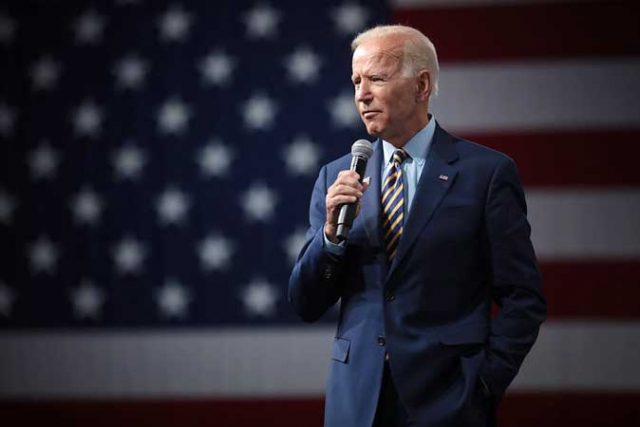
US President Joseph R. Biden, Jr.’s willingness to raise taxes on large businesses also creates more chance of an international consensus than under his predecessor Donald J. Trump. 

“I’m hugely optimistic that we will deliver some concrete outcomes this weekend,” Mr. Sunak said in a statement released late on Thursday. 

Mr. Sunak stressed the importance of his fellow ministers from the United States, Japan, Germany, France, Italy and Canada being able to meet face-to-face in Lancaster House, an ornate 19th-century mansion almost next door to Buckingham Palace. 

“You need to be round a table, openly, candidly talking through things,” Mr. Sunak told Reuters in an interview this week. 

Due to coronavirus disease 2019 (COVID-19) restrictions, ministerial delegations have been cut down and there are few traveling journalists. Seating plans have been redesigned with the help of public health officials. 

But the bigger challenge remains reaching an agreement on tax reform which could then be presented to a broader group of countries, the G20, at a summit in Venice in July. 

French finance minister Bruno Le Maire said ahead of the meeting that an agreement would be a “decisive step” which he thought was “within reach.” 

However, Japanese finance minister Taro Aso said on Monday that he did not expect agreement this week on a specific minimum tax rate. 

The US Treasury expects a fuller agreement to come when Biden and other heads of government meet at a secluded beach resort in southwest England on June 1113. 

MINIMUM 15% RATE 

The United States has proposed a minimum global corporate tax rate of at least 15%. If a company paid tax somewhere with a lower rate, it would probably have to pay top-up taxes. 

But just as important for Britain and many other countries is that companies pay more tax where they make their sales  not just where they book profits, or locate their headquarters. 

The United States wants an end to the digital services taxes which Britain, France, and Italy have levied, and which it views as unfairly targeting US tech giants for tax practices that European companies also use. 

British, Italian, and Spanish fashion and luxury goods exports to the United States will be among those facing new 25% tariffs later this year if there is no compromise. 

The United States has proposed levying the new global minimum tax only on the world’s 100 largest and most profitable companies. 

Britain, Germany, and France are open to this approach but want to ensure companies such as Amazon  which has lower profit margins than other tech firms  do not escape the net. 

“All of them, and without exception” must be covered by the new rules, German finance minister Olaf Scholz told Reuters. 

Daniel Bunn, an expert on global taxation at Washington’s Tax Foundation think tank, said this was likely to lead to more complex regulation. 

“A lot of those rules are going to be, I think, politically based rather than principles-based,” he said. 

Some large companies might even be incentivized to acquire less profitable subsidiaries to reduce their overall profit margin and dodge the new tax, he added. 

Climate change is the other main point on the agenda. Britain hosts the United Nations’ COP climate summit in Glasgow in November, and wants countries to make businesses report their environmental impact in a consistent way, to make it easier for investors to back green projects. 

British businesses will have to follow an environmental reporting  model set out by the Financial Stability Board, a global regulator, from 2022. French businesses have followed similar national guidelines since 2016.  David Milliken/Reuters 

Banks bulk up in Hong Kong as China business overshadows politics

Image via Benh LIEU SONG/Flickr/CC BY-SA 4.0/Wikimedia Commons

HONG KONG  Some global banks, funds and other financial services providers say they are stepping up hiring in Hong Kong, in a sign the city’s unique position as a financial gateway to China is outweighing concerns about Beijing’s tightening grip over it. 

Goldman Sachs Group Inc., Citigroup Inc., UBS AG and other banks are each hiring hundreds of people in the city this year, adding substantially to their existing ranks. 

Citigroup, for example, has said it is bulking up its staffing by 1,500 people, including additional headcount and replacements in 2021, double the number of people it hired a year ago. It has about 4,000 people in the city. A Goldman spokesman said the bank, which has about 2,000 people in Greater China, expects hiring in Hong Kong to be up 20% this year. 

The Securities and Futures Commission, Hong Kong’s market regulator, is seeing a rebound in licenses it issues for people involved in asset management, securities and other financial activities, according to data on its website. The total number of licenses it issued was up 1.7% at the end of March, compared with nine months earlier, and just shy of an all-time peak in 2019. 

“Hong Kong has some unique advantages, and it will remain the gateway for many of our local and global clients to access China,” said Kaleem Rizvi, head of Citi’s Asia-Pacific corporate bank. 

Many financial companies slowed hiring last year, after protests against Chinese rule and a new security law imposed on the city to crush dissent by Beijing, as well as the coronavirus pandemic, six bankers, recruiters and other industry executives said. 

The increased hiring plans of some major players show that they are now willing to live with the political risks. 

“Everyone in the business community I have spoken with welcomes the peace and stability now, compared with the chaos of 2019,” said Weijian Shan, chairman and chief executive of Hong Kong-based private equity group PAG. 

To be sure, politics remains contentious and unsettling for some finance professionals, some bankers have said. Some expatriate financial workers have left or considered leaving Hong Kong, along with thousands of residents of the former British colony. 

Hong Kong police have asked some banks to hand over account details of opposition activists and politicians arrested under a stringent national security law imposed by Beijing, and the government has threatened jail time for bankers handling assets belonging to media tycoon Jimmy Lai frozen under the new law. 

Hong Kong’s financial regulators declined to comment on banks’ hiring plans or some bankers’ disquiet about the political tightening. 

CLOSE TO CHINA 

Bankers and other financial services professionals interviewed by Reuters said much of the lure of being in Hong Kong comes from the city’s close ties to China and the business it brings. 

That business is booming. Flows via the stock connect schemes linking Hong Kong with the Shanghai and Shenzhen exchanges rose to record highs in the first quarter of 2021. 

Companies, mostly from mainland China, raised more money through Hong Kong listings in the first five months of this year than they did in the same period of the last four years combined, Refinitiv data shows. Mergers and acquisitions in Greater China are the highest since 2018. 

Anthony Fasso, Asia Pacific chief executive of global asset manager PineBridge Investments, said Hong Kong was adapting to the new realities. “We believe that Hong Kong will remain a globally competitive international city at the doorstep of one of the largest and fastest growing economies in the world,” Mr. Fasso said. 

HIRING SPREE 

Besides Goldman and Citigroup, Swiss bank UBS hired 200 people in the year through March, which consisted of 20 new full-time staff compared to seven in the previously financial year, a spokesman said. 

The bank took on 100 contractors and 80 graduates in the year to March. It was the highest number of graduate recruits to join UBS in more than 10 years. The bank has 2,500 people based in Hong Kong. 

HSBC Holdings Plc has said it plans to add 400 staff in Hong Kong this year, part of its plan to recruit 5,000 people in the next five years in the region to wealth management in Asia. 

Lok Yim, Hong Kong chief executive of Deutsche Bank AG , said the German bank was also planning on making further strategic hires, after a first quarter that had been its strongest in years. 

“We are probably two to three times as busy now as we were late last year,” said Olga Yung, regional director at recruitment firm Michael Page in Hong Kong.  Scott Murdoch, Alun John, and Kane Wu/Reuters 

Biden outlines plan to quickly share 25 million COVID-19 vaccines with world 

PHILIPPINE STAR/ MICHAEL VARCAS

WASHINGTON  The White House laid out a plan for the United States to share 25 million surplus coronavirus disease 2019 (COVID-19) vaccine doses to the world, with the first shots shipping as soon as Thursday, and said it would ease other countries’ access to US-made supplies for vaccine production. 

President Joseph R. Biden, Jr., said the United States would give the vaccines without expectation of political favors in return. The dose shipments are the first of some 80 million COVID-19 vaccines that Biden has pledged to provide internationally this month as concern grows about the huge disparity in vaccination rates between advanced economies and developing countries. 

The United States will donate nearly 19 million doses through the COVAX international vaccine-sharing program, Mr. Biden said in a statement. Through COVAX, some 6 million doses would go to Latin America and the Caribbean, about 7 million doses to South and Southeast Asia, and roughly 5 million to Africa. 

The remaining doses, amounting to just over 6 million, would go directly from the United States to countries including Canada, Mexico, India, and South Korea, he said. 

“We are sharing these doses not to secure favors or extract concessions,” Mr. Biden said. “We are sharing these vaccines to save lives and to lead the world in bringing an end to the pandemic, with the power of our example and with our values.” 

Although the United States is working through COVAX co-run by the World Health Organization, the White House retains final say in which countries receive US doses and how many, said national security adviser Jake Sullivan. 

The White House will base donation decisions on “factors included achieving global coverage, responding to crises … and helping as many countries as possible,” Mr. Sullivan said, adding the United States intends to prioritize its neighbors, including Canada, Mexico and countries in Central and South America. 

Reuters reported last month that the United States was considering prioritizing its own hemisphere, with Latin America a beneficiary. 

The 25 million doses would be delivered quickly, with some going out as soon as Thursday, the White House said. 

For months, the White House remained focused on getting Americans vaccinated as the coronavirus killed more than half a million people in the United States. But Biden promised the United States would become a supplier and send abroad at least 20 million doses of the Pfizer Inc./BioNTech SE, Moderna Inc., and Johnson & Johnson vaccines, on top of some 60 million AstraZeneca Plc doses he had already planned to donate. 

The 25 million doses Mr. Biden announced on Thursday will not include supply from AstraZeneca, the White House said. 

International organizations including the United Nations and the World Bank welcomed the announcement. “It’s a good start, and I am hoping that more doses will be made available,” World Bank President David Malpass said. 

For Southeast Asian countries, it is a “symbolically important” first step, but the dose shipments are a “drop in the bucket” compared to what is needed in the region, said Alex Feldman, head of the US-ASEAN Business Council, a lobbying group. He added that Indonesia, the Philippines, Vietnam, and Thailand are facing serious difficulties with COVID-19. 

LIFTING SOME RESTRICTIONS 

The White House is also removing special powers it granted through the Defense Production Act (DPA) to certain vaccine makers that received US funding but do not yet have US approvals, including AstraZeneca, Sanofi SA/GlaxoSmithKline Plc , and Novavax Inc. 

The DPA ratings give US producers priority access to supplies and equipment needed to manufacture the vaccines that are in short supply around the world. Lifting them could free up raw materials for major vaccine makers elsewhere, especially the Serum Institute of India (SII). 

Invoking the DPA helped the United States build a huge vaccine production system, while some companies overseas have struggled to get needed supplies to ramp up vaccine production. 

SII, the world’s largest vaccine maker and a top supplier of COVID-19 shots to low- and middle-income countries, had criticized the use of the DPA, and Reuters reported in May that a shortage of US-made raw materials would hit production of Novavax’s vaccine. 

White House COVID-19 adviser Jeff Zients said the United States would continue to donate additional doses throughout the summer as more supply becomes available. 

The International Monetary Fund and World Bank on Thursday urged the Group of Seven advanced economies to release any excess COVID-19 vaccines to developing countries as soon as possible, and called on manufacturers to ramp up production to benefit poor countries. 

Pfizer has begun independently exporting millions of its US-made shots largely to countries in Central and South America, Reuters reported last month. 

Many Latin American countries have a dire need for vaccines as they combat outbreaks. Brazil has been one of the world’s hardest-hit countries by the pandemic, reporting more than 15 million cases and 400,000 deaths. 

Peru this week revised its COVID-19 death toll, making it the country with the worst per-capita fatality rate.  Jeff Mason and Carl O’Donnell/Reuters

US to give ransomware hacks similar priority as terrorism, official says

Unsplash

WASHINGTON  The US Department of Justice is elevating investigations of ransomware attacks to a similar priority as terrorism in the wake of the Colonial Pipeline hack and mounting damage caused by cybercriminals, a senior department official told Reuters. 

Internal guidance sent on Thursday to US attorney’s offices across the country said information about ransomware investigations in the field should be centrally coordinated with a recently created task force in Washington. 

“It’s a specialized process to ensure we track all ransomware cases regardless of where it may be referred in this country, so you can make the connections between actors and work your way up to disrupt the whole chain,” said John Carlin, principal associate deputy attorney general at the Justice Department. 

Last month, a cybercriminal group that the US authorities said operates from Russia, penetrated the pipeline operator on the US East Coast, locking its systems and demanding a ransom. The hack caused a shutdown lasting several days, led to a spike in gas prices, panic buying and localized fuel shortages in the southeast. 

Colonial Pipeline decided to pay the hackers who invaded their systems nearly $5 million to regain access, the company said. 

The DOJ guidance specifically refers to Colonial as an example of the “growing threat that ransomware and digital extortion pose to the nation.” 

“To ensure we can make necessary connections across national and global cases and investigations, and to allow us to develop a comprehensive picture of the national and economic security threats we face, we must enhance and centralize our internal tracking,” said the guidance seen by Reuters and previously unreported. 

The Justice Department’s decision to push ransomware into this special process illustrates how the issue is being prioritized, US officials said. 

“We’ve used this model around terrorism before but never with ransomware,” said Mr. Carlin. The process has typically been reserved for a short list of topics, including national security cases, legal experts said. 

In practice, it means that investigators in US attorney’s offices handling ransomware attacks will be expected to share both updated case details and active technical information with leaders in Washington. 

The guidance also asks the offices to look at and include other investigations focused on the larger cybercrime ecosystem. 

According to the guidance, the list of investigations that now require central notification include cases involving counter anti-virus services, illicit online forums or marketplaces, cryptocurrency exchanges, bulletproof hosting services, botnets and online money laundering services. 

Bulletproof hosting services refer to opaque internet infrastructure registration services which help cybercriminals to anonymously conduct intrusions. 

A botnet is a group of compromised internet-connected devices that can be manipulated to cause digital havoc. Hackers build, buy and rent out botnets in order to conduct cybercrimes ranging from advertising fraud to large cyberattacks. 

“We really want to make sure prosecutors and criminal investigators report and are tracking … cryptocurrency exchanges, illicit online forums or marketplaces where people are selling hacking tools, network access credentials  going after the botnets that serve multiple purposes,” said Mr. Carlin. 

Mark Califano, a former US attorney and cybercrime expert, said the “heightened reporting could allow DOJ to more effectively deploy resources” and to “identify common exploits” used by cybercriminals. — Christopher Bing/Reuters

Inflation steadies at 4.5% in May

The overall year-on-year increase in prices of widely used goods steadied for the third consecutive month in May, the Philippine Statistics Authority (PSA) reported earlier this morning.

Preliminary PSA data showed headline inflation at 4.5%, steady from April and surging from 2.1% a year ago.

The annual rate recorded in May marked its third straight month of inflation remaining unchanged.

The latest headline figure matched the median estimate in a BusinessWorld poll conducted late last week. This also fell within the 4%-4.8% estimate given by the Bangko Sentral ng Pilipinas (BSP) for May.

Year to date, inflation settled at 4.4%, still slightly above the BSP’s 2-4% target, as well as its revised inflation forecast of 3.9% for the year. May was the fifth month in a row that inflation went beyond target.

Food inflation eased to 4.9% in May from 5% in April. Still, this was faster than last year’s 2.9%.

Core inflation, which is used in determining underlying price trends by removing the volatile food and fuel prices, stood at 3.3% in May. This was also unchanged from the annual rate recorded in April, but was still higher than the 2.9% core inflation in May 2020.

So far, core inflation averaged 3.4% this year compared with the 3.1% in 2019’s comparable five months.

Meanwhile, the inflation rate experienced by the bottom 30% of income households likewise stood at 4.5% in May, slower than the 4.9% rate recorded the previous month. Still, this was faster than the 2.9% logged in May 2020. — Abigail Marie P. Yraola

Taskforce T3 welcomes vaccination of A4 sector in June

A private sector coalition that was organized to consolidate the business community’s COVID19 response efforts fully supports the government’s decision to expand the vaccination rollout to the A4 priority sector starting June 7.

Guillermo “Bill” Luz, Taskforce T3 proponent and Chief Resilience Officer of the Philippine Disaster Resilience Foundation, says the inclusion of A4, majority of whom represent the economic frontliners, will help the private sector greatly in the reopening of their businesses.

“The private sector believes in vaccinating as many people in the soonest possible time so that we may safely reopen the economy. Thus, we support the expansion of the administration of vaccines to the A4 priority sector this June and thank the IATF and the national government for this decision,” explains Luz.

Luz adds that they acknowledge that in the 40-59 year-old age group among A4 may be given preference in the implementation, as well as continued priority to be given to A1 to A3.

National Task Force for Covid-19 (NTF) Deputy Implementer Secretary Vivencio Dizon clarified during yesterday’s Task Force T3 monthly update meeting that even with the opening of vaccination to the A4 sector, A1 to A3 will still be prioritized through dedicated special lanes in all vaccination facilities.

Under Inter-Agency Task Force for the Management of Emerging Infectious Diseases (IATFEID) Resolution No. 117, those eligible for vaccination include private sector workers required to be physically present at their workplace outside their residences; employees in government agencies and instrumentalities; and informal sector workers and self-employed who may be required to work outside their residences, and those working in private households.

Taskforce T3 also lauds NTF Chief implementer Secretary Carlito Galvez for continuously working to ensure a steady supply of vaccines for the country, which made the opening for the A4 sector possible.

“We are pleased with the increased and assured supply of around 10 million doses in June and we hope that this continues in the coming months,” says Luz.

The rollout to include A4 will make use of vaccines procured by the government and the private sector, through tripartite agreements. Supply coming from the COVAX facility will continue to be earmarked exclusively for the A1 to A3 and the A5 priority sectors, as explained by Secretary Dizon.

Taskforce T3 vowed to strengthen its ongoing collaboration with the national government to accelerate the pace of the national vaccination program. It is partnering with LGUs to augment jab rates in NCR Plus 6 through the cooperation of the 5 biggest private hospital groups in the country, namely: Ayala Healthcare Holdings, Inc. (AC Health), Metro Pacific Hospitals Holdings, Inc (MPPHI), Mount Grace Hospitals Inc., St. Luke’s Medical Center and The Medical City.

Moreover, T3 has also helped promote vaccine confidence through the Ingat Angat Bakuna Lahat campaign as well as providing incentives via Smart Bakuna Benefits.

Luz assures that Taskforce T3 will continue to work and collaborate with the government until the country is able to overcome the COVID-19 pandemic.

“We support the plan to achieve population protection by focusing on the vaccination of NCR Plus 8,” adds Luz.

ALLHOME Corp. sets annual stockholder’s meeting

UnionBank voted as the Most Recommended Retail Bank in Asia Pacific and in the Philippines

Union Bank of the Philippines (UnionBank) was recognized as the Most Recommended Retail Bank in Asia Pacific and in the Philippines by BankQuality.com. According to BankQuality.com, the Most Recommended Retail Banks in 11 Asia-Pacific markets are ranked from a survey of 11,000 bank customers based on a BankQuality Score (BQS) derived from a net promoter assessment of each bank.

UnionBank has consistently been recognized as of one of Asia’s leading companies, ranking among the country’s top universal banks in terms of profitability and efficiency.

Notice of Annual Stockholders’ Meeting of Arthaland Corporation

NOTICE OF ANNUAL STOCKHOLDERS’ MEETING

NOTICE is hereby given that the 2021 annual stockholders’ meeting of ARTHALAND CORPORATION will be held on 25 June 2021, Friday, 8:30 A.M. and will be convened by the Presiding Officer in Taguig City through remote communication.

The Agenda for the meeting is as follows:

  • Call to Order
  • Secretary’s Proof of Due Notice of the Meeting and Determination of Quorum
  • Approval of Minutes of the Annual Stockholders’ Meeting held on 26 June 2020
  • Notation of Management Report
  • Ratification of Acts of the Board of Directors and Management During the Previous Year
  • Election of Directors (including Independent Directors)
  • Appointment of External Auditor for 2021
  • Other Matters
  • Adjournment

Only stockholders of record on 01 June 2021 will be entitled to further notice of and to vote at this meeting. Electronic copies of the Information Statement which will include the manner of conducting the meeting and the process on how one can join the same, as well as vote in absentia, among other relevant documents, will be made available in www.arthaland.com and the Electronic Disclosure Generation Technology of the Philippine Stock Exchange (PSE EDGE).

WE ARE NOT SOLICITING YOUR PROXY. However, if you cannot personally attend the meeting or participate through remote communication but would still like to be represented thereat and be considered for quorum purposes, you may inform the Office of the Corporate Secretary at the address indicated below or through investor.relations@arthaland.com not later than 18 June 2021 (Friday). You will thereafter be advised the following business day of any further action on your part, which may include accomplishing a proxy.

ARTHALAND CORPORATION
Head Office, 7F Arthaland Century Pacific Tower
5TH Avenue corner 30TH Street, Bonifacio Global City
1634 Taguig City, Philippines


RIVA KHRISTINE V. MAALA
Corporate Secretary

The new BPI Amore Cashback cards reward Filipinos with more cashback options

The Bank of the Philippine Islands (BPI) revamped its current Amore Visa credit cards to BPI Amore Cashback and BPI Amore Platinum Cashback cards, as the bank aims to enable more Filipinos to make both online and in-store shopping more convenient and rewarding with enhanced payback features.

This move comes on the heels of the COVID-19 pandemic, which has changed the spending habits of Filipinos across all market segments.

According to Credit Card Association of the Philippines, credit card billings growth declined in 2020 across the industry due to the effects of the pandemic. As for the top three segments where credit cards were used, these included supermarkets, micropayments such as transportation and fast food restaurants, and electronics.

BPI also noted that its customers are shopping more online and spending more on essentials. The bank sees this trend to most likely continue until 2021 and the years to come.

“The pandemic has resulted to certain challenges for Filipinos and BPI customers. We revamped the BPI Amore credit cards to let customers enjoy safe and secure cashless transactions, while giving them the added value of cash rebates whenever and wherever they spend. These are the card features that are truly relevant and helpful at a time like this,” said Jenny Lacerna, group head of BPI Unsecured Lending and Cards – Product and Sales.

Rewarding and safe

The BPI Amore Cashback card allows its cardholders to enjoy cashback for their day-to day purchases, whether in-store or online. For every P1,000 worth of local spend anywhere, cardholders may get 4% cashback from supermarkets, 1% from drugstores and utilities, and 0.3% from other local spend.

True to its beginnings as a co-branded credit card with Ayala Malls, BPI Amore Cashback cardholders will continue to enjoy exclusive Ayala Malls privileges, such as free unlimited access to Ayala Malls’ Customer and Family Lounges.

BPI Amore Platinum Cashback cardholders can get 4% cashback from restaurants and food deliveries; 1% from supermarkets, department stores, and other retail stores; and 0.3% from other purchases, for every P1,000 worth of spend anywhere, be it here or abroad. They also get exclusive Ayala Malls privileges, including 5% discount on their movie ticket, free unlimited access to Ayala Malls’ Customer and Family Lounges, and six complimentary parking tickets.

Cashless transactions and digital payments are seen as a safer way to help stop the spread of COVID-19. The revamped BPI AMORE Cashback cards are accepted by most online merchants, enabling safe and contact-free shopping at the comfort of one’s home. Customers can also tap or swipe the cards themselves at in-store credit card terminals to minimize physical contact when they need to go out to purchase essentials.

Customers can apply for a BPI Amore Cashback Card conveniently online through www.bpi.com.ph/creditcards/apply.

Q1 foreign investment pledges fall

PHILIPPINE STAR/ MIGUEL DE GUZMAN

By Ana Olivia A. Tirona, Researcher

THE Philippines saw approved foreign investments decline by nearly a third in the first quarter due to uncertainty over the coronavirus pandemic.

Preliminary data from the Philippine Statistics Authority (PSA) showed foreign investment pledges slumped by 32.9% year on year to P19.55 billion during the first three months of 2021 from P29.14 billion recorded in the same period last year.

This marked the fifth consecutive quarter of an annual decline in foreign investment pledges in the country.

Total Approved Foreign Investment Pledges

PSA data also showed the amount committed during the January to March period was the lowest level since the P15.46 billion logged in the second quarter last year, at the height of the lockdown.

Combined with approved investment pledges by Filipinos, total investment pledges in the first quarter jumped by 42.5% to P165.16 billion.

Should foreign and local commitments materialize, these projects are expected to generate 23,472 jobs, 35% less than the 36,130 projected additional employment a year ago.

PSA’s foreign investment commitments differ from the actual foreign direct investments (FDI) tracked the by the Bangko Sentral ng Pilipinas for balance of payments purposes. The central bank’s monitoring also goes beyond the projects and includes other items such as reinvested earnings and lending to Philippine units via their debt instruments.

Asian Institute of Management economist John Paolo R. Rivera attributed the decline of first quarter’s investment pledges to the lingering effects of the pandemic.

“In the midst of this pandemic, foreign investor sentiment and confidence are not only driven by macroeconomic fundamentals and institutional frameworks but also by a country’s systematic approach to managing the economic effects of the pandemic in the short, medium, and long-run to mitigate the investment risks and ensure favorable returns for investors” he said in an e-mail interview.

To recall, a fresh spike in coronavirus disease 2019 (COVID-19) was seen in March, prompting the government to tighten lockdown restrictions again.

ING Bank N.V. Manila Senior Economist Nicholas Antonio T. Mapa said economic uncertainty remains while firms are still recovering from the effects of the pandemic. Which, in turn, made investors “conserve cash before diving in headlong into a new venture.”

“Most investors generally take a medium-term view of the economy and would likely look past the recent lockdowns per se as they will likely end soon,” he said in a separate e-mail interview.

“But what the lockdowns could suggest is that the Philippine growth momentum will remain hampered in the medium term as we repeatedly need to return to tighter lockdowns when infections spike,” Mr. Mapa said.

The government counts investment pledges from seven investment promotion agencies (IPAs), which are authorized by law to grant tax and nontax incentives to investors putting up businesses or expanding existing ones in priority sectors.

The seven IPAs tracked by the PSA are the Philippine Economic Zone Authority (PEZA), the Board of Investments (BoI), the Clark Development Corp. (CDC), the Subic Bay Metropolitan Authority (SBMA), the Authority of the Freeport Area of Bataan (AFAB), the BoI-Bangsamoro Autonomous Region in Muslim Mindanao (BoI-BARMM), and the Cagayan Economic Zone Authority (CEZA).

The three months to March saw the PEZA contributing the most foreign investment pledges at 62.3% of the total with P12.19 billion, albeit a 1% year-on-year decline. This was followed by BoI with a 35% share valued at P6.84 billion, 48.4% less than a year ago.

Rounding the rest of the IPAs were CDC’s 1.8% share at P357.3 million, SBMA’s 0.4% share at P76.4 million, CEZA’s 0.3% share at P49.1 million, and AFAB’s 0.2% share at P39.4 million.

Data from BoI-BARMM were not available.

By sector, a huge chunk of foreign investment pledges went to manufacturing with a 57% share of the total at P11.13 billion, followed by information and communication with a 23.4% share (P4.58 billion), and real estate activities’ 11.5% share (P2.24 billion).

Year on year, foreign pledges in manufacturing grew by 11.9% from last year’s P9.95 billion. Likewise, real estate activities marginally increased by 3.7% from the first quarter of last year’s P2.16 billion. The growth rate for investments in the information and communication sector was not indicated as it exceeded over a thousand.

The Region IV-A or Calabarzon, consisting of Cavite, Laguna, Batangas, Rizal, and Quezon provinces, got the bulk of the foreign pledges at 38.6% of the total or P7.54 billion. This was more than four-fifths the commitments to the region from a year ago when it logged P5.13 billion in foreign pledges.

Central Visayas was the second-largest contributor in the total with a 14% share (P2.73 billion) in foreign pledges, followed by the National Capital Region with an 8.9% share (P1.74 billion).

In terms of country investors, Japan was the biggest source of FDI commitments in the first quarter with P10.72 billion, 8.4 times greater than a year ago and accounting for 54.8% of the total. It was followed by the Cayman Islands and South Korea, pledging P1.14 billion (5.8% share) and P592.63 million (3% share), respectively.

As for the second quarter outlook, Mr. Rivera said investors remain “risk averse” due to the apprehensions over the handling of the pandemic.

“The Philippines needs to project and prove that it is efficiently managing the pandemic by swiftly inoculating the population so the economy can be reopened safely,” Mr. Rivera added.

For Mr. Mapa, foreign investment pledges would likely “remain subdued” as investors are left with conserving cash or in the search for other destinations.

“Given that we have lost our previous most compelling factor to attract investment: our strong growth trajectory,” Mr. Mapa said.

The Philippine economy shrank by 4.2% in the first quarter. Economic managers expect gross domestic product to grow by 6-7% this year.

Government debt nears P11 trillion as of April

By Beatrice M. Laforga, Reporter

THE National Government’s outstanding debt inched closer to P11 trillion as of end-April after tapping the international debt market twice that month, the Bureau of the Treasury (BTr) reported.

Preliminary data showed the debt pile rose 2% to P10.991 trillion in April, from P10.77 trillion in the period ending March after the BTr issued more government securities here and abroad. The month’s debt tally was 27.8% higher year on year from P8.6 trillion as of April 2020.

Around P1.196 trillion was added to the debt stock so far this year, up 12% from the P9.795 trillion at the start of 2021.

Of the total, 71% of the debt portfolio were from domestic lenders while 29% were from external sources.

The local debt stock reached P7.812 trillion as of April, a tad higher than the P7.74-trillion level in March, and 33% bigger than the P5.863-trillion debt pile as of April 2020.

This was after more government securities were issued in April, bringing the total 0.9% higher to P7.271 trillion in April from P7.204 trillion in March.

Outstanding loans remained unchanged that month with P540 billion in advances from the Bangko Sentral ng Pilipinas and P156 million from other domestic borrowings. Assumed loans stood at P792 million.

Meanwhile, the outstanding external debt of the government grew by 4.9% to P3.179 trillion as of April from P3.029 trillion in March, mainly because of the two global bond issuances. Year on year, the tally climbed by 16.2% from P2.737 trillion in the same period last year.

Overall debt securities went up by 8.3% from the month before to P1.798 trillion. Euro-denominated bonds more than doubled to P234.64 billion as of April from P111.3 billion in March, after the Treasury raised P122 billion from a triple-tranche sale of euro bonds.

Total Japanese yen-denominated bonds also increased by 23% to P132.7 billion that month following the P24 billion it raised in three-year Samurai bonds.

The rest of the debt stock consisted of dollar-denominated global bonds (P113.136 billion), peso global bonds (P85.57 billion) and Chinese yuan-denominated notes (P18.6 billion).

Outstanding loans also inched up by 1% to P1.38 trillion after new loans worth P163 billion were obtained in April.

Guaranteed debt stock, meanwhile, went down by 0.2% to P434.74 billion as of April from P435.8 billion in March due to the net redemption of P750 million in local guaranteed obligations and P80 million in foreign guarantees. Year on year, this fell by 9% from P477.68 million.

Domestic guaranteed debt dipped by 0.3% month on month to P238.53 billion, while those owed to foreign lenders likewise slipped by 0.2% to P196.2 billion.

“Local-currency exchange rate fluctuations further lowered the peso value of external guaranteed debt by P1.57 billion while third-currency appreciation added P1.33 billion to the peso value of guarantees,” the BTr added.

A net redemption occurs when the Treasury pays back more debt than the new loans it obtains during the period.

The ballooning debt showed the need for the government to increase its borrowings to plug the widening budget gap, said Rizal Commercial Banking Corp. (RCBC) Chief Economist Michael L. Ricafort in a note on Thursday,

“The need to finance the purchase of more COVID-19 (coronavirus disease 2019) vaccines would also lead to some pick up in government borrowings/debt; as the commercial purchases for COVID-19 vaccines would be recurring in nature in the foreseeable future,” Mr. Ricafort said.

He said the country’s debt-to-GDP ratio could remain within the global threshold of 60% if the economy recovers in the coming months. He said this could give the state more room to hike spending, budget deficit and the debt pile to boost the economy.

The budget deficit shrank to P44.4 billion in April compared with the P274-billion fiscal gap a year ago, largely due to base effects. This brought the four-month deficit to P365.9 billion.

Official estimates showed the government’s debt stock could rise to P11.98 trillion by end-2021.