Home Blog Page 7509

Why is Southeast Asia so concerned about AUKUS and Australia’s plans for nuclear submarines?

FREEPIK

The announcement of a new strategic alliance between Australia, the UK, and the US (AUKUS) has caught many by surprise. Besides France, which reacted with fury over Australia’s scrapping of a major submarine deal with a French company, few countries were as surprised as Australia’s neighbors to the north, the ASEAN members.

In particular, Indonesia and Malaysia have come out strongly against Australia’s plan to acquire a fleet of nuclear-powered submarines with the help of the US and UK. Even Singapore, Australia’s most reliable ally in the region, has expressed concern.

The Afghanistan debacle has left a bad taste among many Indo-Pacific countries, and some are wondering if the timing of the AUKUS announcement was intended as a show of US power in the region to reassure jittery partners.

To understand the deep anxiety in Kuala Lumpur, Jakarta, and other ASEAN capitals requires some context on where they are coming from.

First, many of them think there is no such thing as acquiring nuclear-powered submarines without the prospect of acquiring nuclear weapons in the future.

Australia has not joined the Treaty on the Prohibition of Nuclear Weapons, which requires parties to agree not to develop, test, produce, acquire, possess, stockpile, or threaten to use nuclear weapons.

The Morrison government says the treaty would be inconsistent with its alliance with the US, a nuclear weapon power.

However, Australia did ratify the Treaty on the Non-Proliferation of Nuclear Weapons in 1973 and the Comprehensive Nuclear Test Ban Treaty in 1998. And Prime Minister Scott Morrison said last week Australia has “no plans” to pursue nuclear weapons.

Yet, some ASEAN countries are worried the AUKUS agreement is a clear signal the West will take a more aggressive stand towards China by admitting Australia to the nuclear club.

Both Indonesia (the unofficial leader of ASEAN) and Malaysia fear AUKUS will also lead to a major arms race in the wider Indo-Pacific region.

The new agreement also signals that the US, Australia, and UK view the South China Sea as a key venue for this contest against China.

The ASEAN nations have always preached maintaining Southeast Asia as a “zone of peace, freedom and neutrality,” free from interference by any outside powers. In 1995, the member states also signed the Treaty of Southeast Asia Nuclear Weapon-Free Zone, which committed to keep nuclear weapons out of the region. Not a single nuclear power has signed on to it.

Although everyone knows China, the US, Britain, and France have ignored these protocols by maneuvering armed warships through the South China Sea — not to mention China’s building of military bases on disputed islands there — ASEAN does not want to see this number grow.

Australian nuclear-powered submarines have the potential to change the dynamics in the South China Sea and make the Chinese much more nervous. There have already been plenty of “close encounter” incidents between the Chinese and US navies in the disputed waters, as well as the Chinese navy and ships belonging to ASEAN members. The region doesn’t need yet another potential “close encounter” to worry about.

The ASEAN states are already very worried about the China-US rivalry playing out in its backyard. And the new AUKUS agreement reinforces the idea that the opinions of the ASEAN members matter little when it comes to the superpowers and how they operate in the region.

The region has always insisted on the idea of “ASEAN centrality” in their relations with the world — that ASEAN members must decide what is best for Southeast Asia — but as AUKUS shows, nuclear nations play a different game.

Indonesia is especially unhappy with Australia given the new agreement will affect it directly, given their common maritime border.

Morrison had already been forced to cancel his upcoming trip to Jakarta after Prime Minister Joko Widodo said he would be unavailable to meet — a decision that was made before the AUKUS announcement. This will add another layer to the strained relationship.

While in public, most Southeast Asian governments have expressed uneasiness with AUKUS, there is a school of thought that says the more hawkish voices in the region will probably accept the agreement in the long term, as it will help keep China’s aggression in check.

For those in the “hawk” camp, the number one long-term threat to regional security is China. Many think the strategic balance of power has been tilting too much in Beijing’s favor in the past decade, especially after China started rushing to build military bases in the South China Sea and using its navy to protect Chinese fishing vessels in disputed waters.

So, they believe any moves to remind China it does not have a carte blanche to do what it wants in Southeast Asia is a good thing.

Japan and South Korea are clearly in this camp and their muted reaction to AUKUS suggests they are in favor of a “re-balancing” in the region. Taiwan and Vietnam are probably on this side, as well.

The only downside is that Australia may use its nuclear-powered submarines to bully ASEAN countries. If Canberra uses its nuclear submarines as a bargaining chip, it will simply turn public opinion in the region against Australia.

If anything, the AUKUS move reinforced the widely held perception that Australia’s mantra of being “part of the region” is, in fact, “empty talk.” Australia has firmly signaled its intentions to put its Anglo allies in the US and UK first.

AUKUS also reinforces the view that Australia cannot be accepted as a regional partner or player. This, of course, is nothing new. For years, the ASEAN bloc has seen Australia as “deputy sheriff” to the US, though this view would not necessarily be shared in public.

So, while AUKUS came as a surprise to many in the region, an alliance of this sort was probably bound to happen. It’s just that nobody expected it to happen so soon.


James Chin is a Professor of Asian Studies at the University of Tasmania.

Why wokeism will rule the world

PIKISUPERSTAR-FREEPIK

I am decidedly un-woke. As a professor of economics, I strongly favor a market-oriented approach. I have worked hard to defend the positions of non-woke right-wing and libertarian colleagues in academia. What’s more, I am on record as saying that wokeism is stupid and inflexible, and will state here and now that it is also boring and predictable.

And yet: I have a nagging sense that, among its opponents, wokeism is underrated. (Its proponents, meanwhile, tend to overrate it.) Consider this essay my attempt to explain why and how its enemies should learn to live with wokeism.*

WOKEISM IS GLOBAL
Too many critics of wokeism make the mistake of focusing on purely local status relations. They are obsessed with the influence of woke forces in their intellectual communities — their universities, their media universe, and so on. Oddly but perhaps appropriately, this is exactly the mistake that the woke themselves make.

But the woke are engaging in a much larger international arena. One question raised by the woke movement, though hardly ever asked, is whether the US will be able to deploy this new intellectual tool for exporting American cultural influence. Put another way: If there is going to be an international progressive class, why not Americanize it?

Wokeism is an idea that can be adapted to virtually every country: Identify a major form of oppression in a given region or nation, argue that people should be more sensitive to it, add some rhetorical flourishes, purge some wrongdoers (and a few innocents) and voila — you have created another woke movement.

As the technology writer and lawyer Paul Skallas has written: “MeToo and BlackLivesMatter are essentially US culture issues which provide an effective identity for internationals of the progressive class.” Almost every other country now has its own version of woke, though it may differ greatly from the American version.

The French clearly see wokeism as a carrier of American cultural influence. “French politicians, high-profile intellectuals and journalists are warning that progressive American ideas — specifically on race, gender, post-colonialism — are undermining their society,” the New York Times reported in February. It quoted France’s education minister on the need to fight “against an intellectual matrix from American universities.’’

But even the un-woke among us might think Francophone society and culture could stand to be a little more woke. The boss needs to know he doesn’t have the right to sleep with his secretary. And Belgians need to come to terms more honestly with their colonial heritage in Africa. Wokeism has turned out to be a way to get them to do that.

I also think French culture and society will emerge just fine from this engagement with wokeism. Most of all, wokeism is a way of spreading ideas from a relatively feminized American culture to a world less supportive of women’s rights.

Returning to the glories of American cultural imperialism, consider the British philosophical pessimist John Gray. He recently wrote the following, weird but insightful:

“Wokery is the successor ideology of neo-conservatism, a singularly American world-view. That may be why it has become a powerful force only in countries (such as Britain) heavily exposed to American culture wars. In much of the world — Asian and Islamic societies and large parts of Europe, for example — the woke movement is marginal, and its American prototype viewed with bemused indifference or contempt.”

Does that make you feel better or worse about wokeism? I say better. Again, keep the bigger picture in mind. It doesn’t much matter who controls the English department at Oberlin College. But it would be nice if the Saudis moved to allow more rights for women.

Note that it is not necessary to approve of all US cultural exports to view the spread of wokeism as a net positive for the world. I do not like either Big Macs or Marvel movies, for instance. But at the end of the day I think American culture is a healthy, democratizing, liberating influence, so I want to extend it.

As the motivational speakers like to say, Winners win! And woke is right now one of America’s global winners. Part of what makes America great, and could help to make the rest of the world greater yet, is accepting a certain amount of semi-stupid, least-common-denominator culture.

IF NOT WOKE, THEN WHAT?
Another question is what are the alternatives to woke. Some people are going to be extremists no matter what.

One possible alternative belief system, for example, is QAnon. According to a poll released in May by the Public Religion Research Institute and the Interfaith Youth Core, 15% of Americans “agree with the sweeping QAnon allegation that ‘the government, media and financial worlds in the US are controlled by a group of Satan-worshipping pedophiles who run a global child sex trafficking operation.’” The same share said that “true American patriots may have to resort to violence” to restore order.

If QAnon were considered a religion, it would have more adherents than many other denominations. Even if not all of those believers are locked in, 15% is still a lot.

Of course, there are many possible alternative belief systems more moderate than either wokeism or QAnon. But recall the question of the counterfactual: What exactly is wokeism a substitute for? If the woke didn’t believe in wokeism, what would they believe in? Something like the ideology of the Weather Underground of the 1970s? Classical liberalism? Moderate 1990s-style Clintonism? Or would they simply become disillusioned?

Woke and wokeism are a way to keep people engaged. To be clear, I think there are better alternatives to woke on the relevant margins. But simply asking the question is to realize the costs of woke are not as high as they might seem. The relevant comparison is not “woke vs. what I believe to be best,” but rather, “woke vs. a lot of the other crazy stuff people are going to believe if they weren’t woke.”

WOKEISM DOES NOT NECESSARILY CONFER PARTISAN ADVANTAGE.
Now to make a pair of narrower point about US politics.

First, a lot of Republicans like to portray wokeism as a Democratic movement, and some even plan to campaign against it. The idea is that wokeism will take over the party, then the government, then the culture, not necessarily in that order.

I am not a Republican, but I agree that America needs greater ideological diversity in its universities, media outlets, and corporate human resource departments. Nor am I a terrified conspiracy theorist who thinks leftists are taking over everything. They are, however, taking over some things — and perhaps wokeism will be part of what stops them. In this sense, it is not something to be feared.

Maybe wokeism will become more popular, even among Republicans (consider the generational shift in views of gay marriage, among both liberals and conservatives). Alternatively, perhaps wokeism will cause the Democrats to overreach and thus make the party less influential, not more. Already many on the left are worried about this possibility, as this excellent Thomas Edsall column makes clear (Opinion | Is Wokeness ‘Kryptonite for Democrats’? — The New York Times (nytimes.com).

The larger point is that there aren’t very many good macro theories of social change. Wokeism may well be the rope that the anti-capitalists will use to hang themselves. Wokeism does not poll very well with the public.

It’s also possible that wokeism will encourage truly original and dynamic thinkers to look to the right for support and inspiration. There might still be many more left-wing than right-wing intellectuals in the world, but the leftists would all be dull and predictable. The thinkers on the right would have more influence with the rebels and with the broader creative class.

Again, it’s useful to take the long view: When it comes to the long-term political consequences of wokeism, it’s better to be agnostic.

Just as there is a danger in Republicans making too much of woke Democrats, there is an accompanying risk that anti-woke Republicans will impoverish conservative policy debate.

“The anti-woke portion of conservatism,” writes the political scientist Richard Hanania, “increasingly seems to be the most animated part of the movement.” He cites cancel culture as “the animating focus of the political right today,” but notes that “the political movement devoted to fighting this ideological matrix is quite short on policy ideas.”

A few months ago, the conservative talk-show host Jesse Kelly tweeted this (since deleted): “If you’re a small-government type, you should be smart enough to realize we cannot ‘live and let live’ our way out of this now. We could’ve. But not now. Now the communists control every pillar of power in America. Now you’re gonna have to do things that make you uncomfortable.”

As the saying goes, if you spend your life fighting dragons, you tend to become a dragon yourself.

WILL WOKEISM HELP BLACK AMERICANS?
America’s Black communities still lag considerably on economic and socioeconomic indicators. A perennial question is whether or which ideology can help to close this gap.

Like the Beatles, the ideologies of the civil rights movement transformed US society and culture, mostly for the better, but they eventually ran out of steam. The Black church has also had a great beneficial influence, but more secular ideas are needed as well.

Black conservatives such as Shelby Steele and Thomas Sowell have experimented with a “tough talk” approach, which former President Barack Obama sometimes used as well. But whatever your opinion of the substance, those views are not political winners. They are more likely to lose rather than gain ideological influence.

So now there are the woke and Black Lives Matter movements, in all their varying manifestations, as dominant ideologies among significant portions of the Black intellectual communities. The idea is to try something new.

Many critics of woke are convinced this will end in disaster for Black people, with some kind of ideology of rights replacing an ideology of responsibility. Alternatively, they might argue that the woke ideology is impractical.

I am not so sure. Ideologies can operate in genuinely roundabout and counterintuitive ways. Way back when, who would have predicted that Christianity would prove so effective in mobilizing the creative energies of Europe? After a lot of arcane debate and various councils, we have decided to emphasize this idea of the Holy Trinity. Really? And yet it worked. How about the principle that the meek shall inherit the earth — what would Hernán Cortés have to say about that?

The world is full of false belief. No successful human community has ever been based on completely true ideas. I am hoping for the best, and I don’t trust anyone’s predictive abilities about what wokeism will lead to, including for America’s Black communities. But critics of wokeism should root for at least some parts of it to succeed.

This is not necessarily a defense of wokeism. It is merely to point out that a lot of its critiques are not as well-grounded or as certain as they might seem.

WOKEISM IS STRONGER IN THE PRIVATE SECTOR.
It drives conservatives and libertarians crazy that woke ideas often have more purchase in the private sector than in the public sector. Private universities, for example, seem “more woke” than public universities.

Still, you read it here first (or maybe not): The halls of power in Washington just aren’t that woke! They are nothing like Twitter or Google or Yale University.

Yes, many woke opponents cite the role of government and the fear of lawsuits as forces driving woke behavior and corporate attachment to wokeism. And surely they have a point. Yet in much of the corporate and nonprofit world, wokeism is not merely a reflexive defense against lawsuits. It is embraced with enthusiasm.

Wokeism has passed a market test that has been going on for decades. That should give pause to anyone seeking to dismiss it.

CONCLUSION: WHAT IS AMERICA, REALLY?
Why is the debate over wokeism so wide and deep? In part it is a function of the internet. But it is also because it is the intellectual equivalent of potboiler, implicating politics, race, ethnicity, gender, education, and international relations. All it needs is a subplot about luxury real estate.

On a more serious note: The arguments have been so fully joined because they are about how to define success, which is the fundamental American ideology. I believe such debates are not only healthy but also necessary. I also believe that the ideology of success will endure, though it may take less familiar forms over time. In some ways wokeism is what a feminized, globalized version of 21st century US triumphalism looks like.

You don’t have to like that. But you may have to get used to it.

*Rather than spend too many words trying to define wokeism, I ask readers — if only for the purposes of this essay — to accept the Wikipedia definition.

BLOOMBERG OPINION

Vaccination plateau and rising cases

Vaccination plateau — rapid rise in vaccination rates as percent of population followed by a quick slowdown with the curve nearly flatlining. That is my simple and personal definition as I have not seen other definitions yet when I checked the various search engines. The term has similar connotations to “vaccine ceiling” and “vaccine burnout.”

The best example of a country experiencing a vaccine plateau would be Israel. From the Our World in Data (OWID) excel file, Israel’s vaccination rate as percent of population was 0.1% on Jan. 10, quickly rising to 21.1% on Jan. 31, 38.7% on Feb. 28, and 54.6% on March 31. This rapid rise in the vaccination rate also coincided with a rapid decline in infections and cases, from around 8,000/day in mid-January to only 466 by March 31, then lockdown and mask mandates were slowly removed. And Israel became a poster example of “more vaccination, more protection, less infections.” Good.

Israel’s vaccination rate plateaued in April to June at 58%, with a mild rise to 61% to 63% in July to Sept. 17. Infections and cases started rising in July and peaked on Sept. 1 with 20,500 cases. This rapid rise in cases despite a high vaccination rate has led to a reverse situation of “more vaccination, less protection, more infections.” Israel later ordered a third booster shot for those above 65 years old.

Another example of “more vaccination, more cases” is Singapore. Its vaccination rate was only 0.1% of population on Feb. 2, rose to 6.4% by end-March, 30% by end-May, 57% by end-July, and 77% by Sept. 17. Then Singapore experienced a mild rise in cases in July, which declined in August, but then experienced huge spikes this month with new highs of 1,000+ cases on Sept. 18 and 19.

The Philippines is another example of “more vaccination, more cases,” but a mild version compared to Singapore or South Korea. Mass vaccination officially started on March 1 at the Philippine General Hospital (PGH) with Sinovac. A slow roll out, vaccination rate was only 0.2% of population by end-April, 2.4% by end-June, 12.6% by end-August, and 16.2% by Sept. 17. The rise in the number of vaccinations in August and September coincided with a rise in infections, from 5,000-6,000 per day in June-July, it went up to about 15,000/day in August, and about 20,000/day in September.

See Figures 1 and 2. I arranged the countries into four groups: the rich non-Asians (US, UK, Israel) in column 1, rich Asians (Singapore, South Korea, Japan) in column 2, middle income ASEAN in column 3, and lower income ASEAN in column 4.

Consider also the following numbers from the Open Vaccine Adverse Event Reporting System (VAERS, https://openvaers.com/). It is a voluntary reporting system and is estimated to account for only 1% of vaccine injuries. It is built from the US’ Health and Human Services (HHS) data (https://vaers.hhs.gov/). As of Sept. 10: there were, a.) 1,519,354 reports of vaccine adverse events, b.) 14,925 vaccine reported deaths, and, c.) 60,741 vaccine reported hospitalizations.

And during the Weekly Huddle of the Concerned Doctors and Citizens of the Philippines (CDC PH) on Sept. 11, Dr. Jody Dalmacion, an epidemiologist and retired faculty member of UP College of Medicine (UPCM), said that the current numbers on VAERS are unprecedented in global medical history: a.) COVID-19 vaccine-related deaths in the US are 4,400, higher than all other vaccine-deaths in the last 20 years, b.) COVID-19 vaccine deaths in Europe are more than 10,000, c.) there are 14,000 hospitalizations.

The numbers in Figures 1 and 2, the Open VAERS data, and data from Dr. Dalmacion should be enough reasons for governments, including the Philippines, to pause and re-think their mass vaccination program while infections are either rising or staying at high levels.

CDC PH has been campaigning for early treatment, home-based treatment using old, proven, off-patent drugs like ivermectin, hydroxychloroquine, melatonin, budesonide, and immune-boosting supplements to avoid hospitalization.

I am a COVID survivor myself. From the first day of symptoms to the “you’re already cured, you may stop your medicines except supplements Vit. C, D” pronouncement by my doctor-friends, it was 19 days. In my worst days — just walking 10 steps, bed to door and back, I was already desperate for air, with a cough with phlegm or a dry rapid-fire cough, etc. — I was taking up to four ivermectin tablets per day, plus various medicines and a hydrogen peroxide nebulizer, winding down to one tablet a day as I got better. After being cured, Doc Homer Lim, who is the new president of CDC PH and one of my doctors, said I could stop taking ivermectin as I have antibodies against the virus already, long-term protection against different variants.

CDC PH has turned one year old on Sept. 17. One year of tireless volunteer work to promote focused protection for the vulnerable, and early treatment for those with symptoms to avoid hospitalization. It will hold another big press conference on Sept. 30.


Bienvenido S. Oplas, Jr. is the Director for Communication and Corporate Affairs, Alas Oplas & Co. CPAs

nonoyoplas@alasoplascpas.com

Pro-Putin party wins majority

REUTERS
A RUSSIAN FLAG flies outside the Consulate General of the Russian Federation in Manhattan, New York City, Aug. 2. — REUTERS

MOSCOW — Russia’s ruling United Russia party, which supports President Vladimir Putin, retained its parliamentary majority after an election and a sweeping crackdown on its critics, despite losing over a tenth of its support, partial results on Monday showed.

With nearly 74% of ballots counted, the Central Election Commission said United Russia had won nearly 49% of the vote, with its nearest rival, the Communist Party, at about 20%.

Although that amounts to an emphatic win, it looks like a somewhat weaker performance for United Russia than the last time a parliamentary election was held in 2016, when the party won just over 54% of the vote.

A malaise over years of faltering living standards and allegations of corruption from jailed Kremlin critic Alexei Navalny have drained some support, compounded by a tactical voting campaign organized by Mr. Navalny’s allies.

Kremlin critics, who alleged large-scale vote rigging, said the election was in any case a sham.

United Russia would have fared worse in a fair contest, given a pre-election crackdown that outlawed Mr. Navalny’s movement, barred his allies from running and targeted critical media and non-governmental organizations, they said.

Electoral authorities said they had voided any results at voting stations where there had been obvious irregularities and that the overall contest had been fair.

The outcome looks unlikely to change the political landscape, with Mr. Putin, who has been in power as president or prime minister since 1999, still dominating ahead of the next presidential election in 2024. Mr. Putin has yet to say whether he will run. He was due to speak on Monday.

The 68-year-old leader remains a popular figure with many Russians who credit him with standing up to the West and restoring national pride.

The partial results showed the Communist Party finishing in second, followed by the nationalist LDPR party with about 8% and the Fair Russia party with about 7%. All three parties usually back the Kremlin on most key issues.

A new party called “New People,” appeared to have squeezed into parliament with just over 5%.

At a celebratory rally at United Russia’s headquarters broadcast on state television, Moscow Mayor Sergei Sobyanin, a close ally of the Russian leader, shouted: “Putin! Putin! Putin!” to a flag-waving crowd that echoed his chant.

Allies of Mr. Navalny, who is serving a jail sentence for parole violations he denies, had encouraged tactical voting against United Russia, a scheme that amounted to supporting the candidate most likely to defeat it in a given electoral district.

In many cases, they had advised people to hold their noses and vote Communist. Authorities had tried to block the initiative online.

The Central Election Commission was slow to release data from online voting in Moscow, where United Russia traditionally does not fare as well as in other regions amid signs it may have lost some seats in the capital.

Golos, an election watchdog accused of being a foreign agent by authorities, recorded thousands of violations, including threats against observers and ballot stuffing, blatant examples of which circulated on social media, with some individuals caught on camera depositing bundles of votes in urns.

The Central Election Commission said it had recorded 12 cases of ballot stuffing in eight regions and that the results from those polling stations would be voided.

DOMINANCE
United Russia held nearly three quarters of the outgoing State Duma’s 450 seats. That dominance helped the Kremlin pass constitutional changes last year that allow Mr. Putin to run for two more terms as president after 2024, potentially staying in power until 2036.

Mr. Navalny’s allies were barred from running in the election after his movement was banned in June as extremist. Other opposition figures allege they were targeted with dirty tricks campaigns.

The Kremlin denies a politically driven crackdown and says individuals are prosecuted for breaking the law. Both it and United Russia denied any role in the registration process for candidates.

“One day we will live in a Russia where it will be possible to vote for good candidates with different political platforms,” Navalny ally Leonid Volkov wrote on Telegram messenger before polls closed on Sunday.

One Moscow pensioner who gave his name only as Anatoly said he voted United Russia because he was proud of Mr. Putin’s efforts to restore what he sees as Russia’s rightful great-power status.

“Countries like the United States and Britain more or less respect us now like they respected the Soviet Union in the 1960s and 70s. … The Anglo-Saxons only understand the language of force,” he said.

There were signs of widespread apathy.

“I don’t see the point in voting,” said one Moscow hairdresser who gave her name as Irina. “It’s all been decided for us anyway.” — Reuters

Lava pours out of volcano on La Palma in Canary Islands

LAVA POURS OUT of a volcano in the Cumbre Vieja national park at El Paso, on the Canary Island of La Palma, Sept. 19, in this screen grab taken from a video. — FORTA/HANDOUT VIA REUTERS

LA PALMA, Spain — A volcano erupted on the Spanish Canary Island of La Palma on Sunday, sending lava shooting into the air and streaming in rivers towards houses in two villages from the Cumbre Vieja national park in the south of the island.

Authorities had begun evacuating the infirm and some farm animals from nearby villages before the eruption at 3:15 p.m. (1415 GMT) on a wooded slope in the sparsely populated Cabeza de Vaca area, according to the islands’ government.

Two hours later, with lava edging down the hillside from five fissures torn into the hillside, the municipality ordered the evacuation of four villages, including El Paso and Los Llanos de Aridane.

After nightfall, video footage showed fountains of lava shooting hundreds of meters into the sky, and at least three incandescent orange rivers of molten rock pouring down the hill, tearing gashes into woods and farmland, and spreading as they reached lower ground.

One stream, several hundred meters long and tens of meters wide, crossed a road and began engulfing scattered houses in El Paso. Video footage shared on social media, which Reuters has been unable to verify, showed the lava entering a house.

“When the volcano erupted today, I was scared. For journalists it is something spectacular, for us it is a tragedy. I think the lava has reached some relatives’ houses,” local resident Isabel Fuentes, 55, told Spanish television TVE.

“I was 5 years old when the volcano last erupted (in 1971). You never get over a volcanic eruption,” added Ms. Fuentes, who said she had moved to another house on Sunday for her safety.

‘STAY IN YOUR HOUSES’
Canary Islands President Angel Victor Torres told a press conference on Sunday night that 5,000 people had been evacuated and no injuries had been reported so far.

“It is not foreseeable that anyone else will have to be evacuated. The lava is moving towards the coast and the damage will be material. According to experts there are about 17-20 million cubic meters of lava,” he said.

Flights to and from the Canaries were continuing as normal, the airport operator Aena said.

Spanish Prime Minister Pedro Sanchez arrived in La Palma, the most northwesterly island of the archipelago, late on Sunday for talks with the islands’ government on managing the eruption.

“We have all the resources (to deal with the eruption) and all the troops, the citizens can rest easy,” he said.

Stavros Meletlidis, a doctor of volcanology at the Spanish Geographical Institute, said the eruption had torn five holes in the hillside and that he could not be sure how long it would last.

“We have to measure the lava every day and that will help us to work it out.”

King Felipe spoke with Torres and was following the developments, the royal household said.

La Palma had been on high alert after more than 22,000 tremors were reported in the space of a week in Cumbre Vieja, a chain of volcanoes that last had a major eruption in 1971 and is one of the most active volcanic regions in the Canaries.

In 1971, one man was killed as he was taking photographs near the lava flows, but no property was damaged. The earliest recorded eruption in La Palma was in 1430, according to the Spanish National Geographical Institute (ING). — Reuters

Singapore urges caution as rising cases may test ICU system

REUTERS

SINGAPORE’s leaders are closely watching the intensive care unit situation to make sure its hospital system won’t be overwhelmed, as reported coronavirus disease 2019 (Covid-19) cases breached the 1,000 mark for a second consecutive day, cabinet ministers said.

The next one to two weeks “will be critical,” Finance Minister Lawrence Wong said in a Facebook post late Sunday. Health Minister Ong Ye Kung said in a separate post that while ICU (intensive care unit) capacity is “still holding up,” accident and emergency departments and general wards in hospitals are coming “under pressure.” Both sit on the task force that handles the virus situation.

Singapore’s plan to shift away from a COVID-zero elimination strategy, toward living with endemic COVID, relies on limiting serious cases through mass vaccination. The current increase could test that strategy. The number of serious cases in ICU or in need of oxygen supplementation more than doubled to 139 as of Sunday, from 61 a week ago.

“There is no doubt that if our people had not come forward in big numbers to vaccinate ourselves, our healthcare system would have been overwhelmed by now,” Mr. Ong said.

Singapore’s public acute hospitals had more than 9,600 beds for in-patient care as of 2020. Among hospitals tracked by the health ministry, the beds occupancy rate ranged between 76% and 88% as of Sept. 11.

Singapore’s vaccination rate of 82% is among the highest in the world according to data compiled by Bloomberg. About 0.2% of infected cases here are at risk of needing ICU care, Mr. Wong said, citing data from the Ministry of Health. While that’s far lower than many western nations that have opened up faster than Singapore, government leaders say they need to ensure ICU cases don’t spike alongside rising overall cases. 

“Some have told me that based on our high vaccine coverage, and the current ICU figure… we don’t have to worry,” Mr. Wong said. “But in fact, the ICU numbers can change very quickly and we cannot afford to be complacent.”

Mr. Ong said in July that Singapore can open up to about 1,000 ICU beds if needed for critically ill COVID-19 patients.

The city state has 873 patients currently warded in hospitals, 118 of which are serious illness requiring oxygen supplementation, and 21 are in the ICU, according to a statement from the ministry. At its peak, early in the pandemic, Singapore had as many as 32 ICU Covid patients.

Of the 1,009 new cases of locally transmitted infections on Sept. 19, 321 were seniors above 60 years old. Those 18 or below made up 88 cases.

Singapore has urged younger vaccinated people to recover at home. More community care facilities will be set up to provide clinical care to patients with mild symptoms or who have underlying conditions that require a closer monitoring, the health ministry said in a separate statement.

“Our hospitals and healthcare workers cannot be overburdened,” Mr. Ong said, adding that it’s currently the Ministry of Health’s “biggest challenge and we are doing our best to solve this.” — Bloomberg

Missed dining out? More restaurants in Eastwood City are now open for dine-in

Starting September 16, foodies can now enjoy dining indoors or alfresco at their favorite restaurants and dining establishments at Eastwood City.

With its plethora of dining options and abundant open spaces, the metro’s City of Eats is sure to be a fun destination for diners looking to once again indulge in different flavors and dishes straight off the kitchen.

As a bonus, vaccinated individuals may also present their cards to get discounts, freebies, and other exclusive dining deals at the many restaurants and dining establishments in Eastwood City.

One can start the day right with premium American diner cuisine or enjoy it any time of the day at Denny’s (GF, Eastwood Mall). This restaurant is known for its signature slams among other American breakfast specialties available all day round.

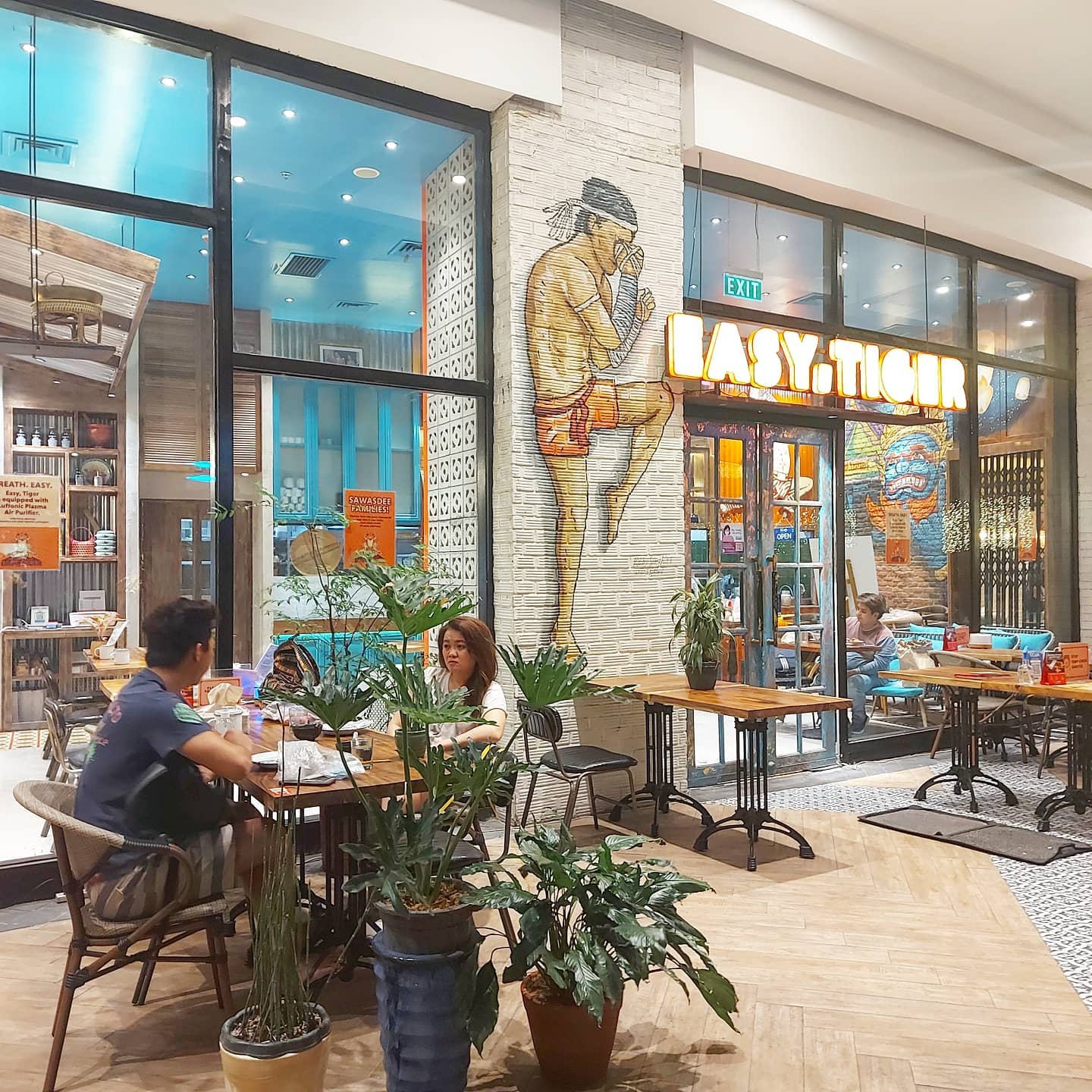
For those up for some unique Asian cuisine, Easy Tiger (GF, Eastwood Mall) is open to serve Thai food with a kick. Their bestselling Chiangmai Sausage, best paired with Thai Milk Tea, is a truly delightful Southeast Asian experience.

Easy Tiger

Those craving for Japanese cuisine and specialties can head over to Sandaime (GF, Eastwood Mall), while those looking to get a taste of authentic Japanese ramen can head over to Ippudo (GF, 1880 Building). Diners can also stop by Yayoi (GF, Eastwood Mall) and enjoy its famous “Teishoku” set meals with main dish, miso soup, side dish and steamed rice, all served in one tray.

Mary Grace Cafe (GF, Eastwood Mall) is also ready to delight its customers with its fresh from the oven pastries and delightful home-cooked meals. For more pastry choices, delicious cakes and more, Conti’s (GF, Eastwood Mall) is also open nearby.

Mary Grace Eastwood

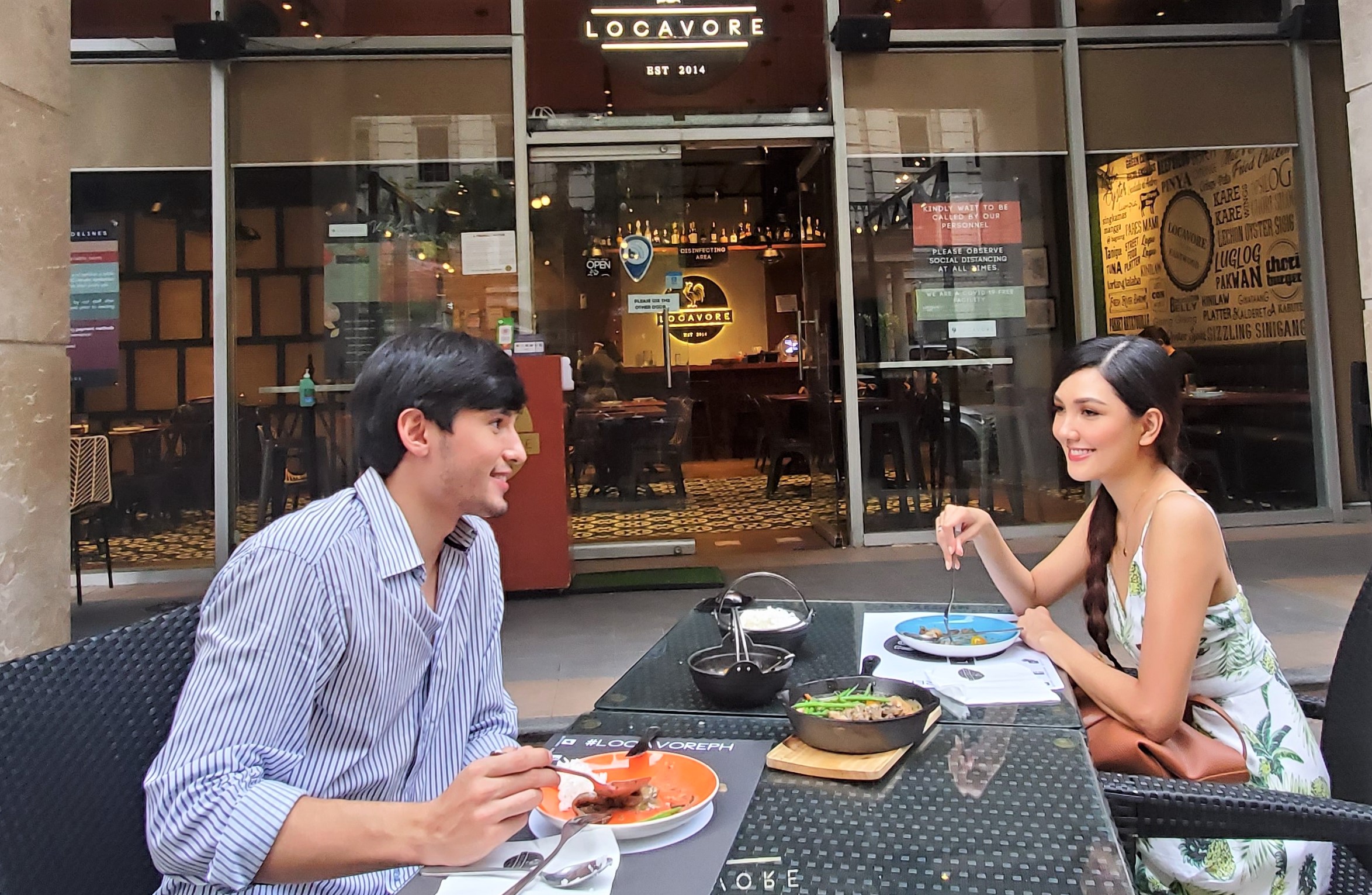
Fan-favorite Locavore (GF, 1880 Building) is also accepting diners and ready to thrill its customers with its famed Filipino fare with a delicious and modern twist.

Locavore

To warm up the start of the ‘ber months, Ramen Naggi (GF, Citywalk) is open to serve its authentic Japanese ramen. You can never go wrong with their Butao King, an award-winning tonkotsu pork-broth prepared in the traditional method.

Ramen Nagi

Travel the world farther with some Fil-Mex cuisine from Silantro (2F, Citywalk), serving Mexican comfort food with a Filipino twist. Invite your bestie over and dine safely over generous servings of their Beef Nachos, overloaded Quesadillas and Paella Fajitas.

Mediterranean cravings kicking in? No need to look far. CYMA Greek Taverna (2F, Eastwood Mall) is open to serve hearty and savory Mediterranean dishes from lamb chops to Moussaka to chicken kebabs. For a taste of Italian gastronomy, diners can head over to Cibo (2F, Eastwood Mall) or Itallianni’s (2F, Eastwood Mall), and delight in mouth-watering Italian favorites, from pasta, pizza and more.

For a bit of Tex-Mex culinary experience, diners can head over to Fiery Style (3F, Eastwood Mall) and savor the best of Southwestern comfort food fresh off the grill, while for those looking for an authentic Chinese fine dining experience, they can visit the ever popular Gloria Maris (3F, Eastwood Mall).

For those looking for the perfect after-work indulgence, Frankies (GF, Citywalk) is arguably the home of the highly acclaimed chicken wings in the metro. Choose from a wide selection of flavors for their “biggest and baddest” wings and chicken tenders, such as Salted Egg, Garlic Parmesan, Honey Garlic, Hickory BBQ and Cheesy Bacon.

Fans of Asian flavors can visit Pho Hoa (GF, Citywalk) and indulge in authentic Vietnamese cuisine, or Superbowl of China (GF, Citywalk) and enjoy a delicious selection of Cantonese cuisine with a western ambiance.

Here are other restaurants that are open to fulfill your cravings:

Citywalk

  • McDonald’s
  • Bonchon
  • Max’s Restaurant
  • Buddy’s
  • KFC
  • I’Milky
  • Zark’s Burgers
  • Wendy’s
  • Seafood Island
  • Dunkin’ Donuts
  • Yellow Cab
  • 11:11
  • Starbucks
  • 19 Degrees
  • Swaadisht
  • The Alley
  • Popeyes
  • Yalla Yalla Foodtruck
  • TGIFridays
  • Nitro 7 Coffee
  • Army Navy
  • Bill’s Lounge Sports Bar
  • Jollibee Foodtruck
  • Four Bowls
  • Giligan’s
  • Mazza
  • Chatime
  • Magoo’s Pizza

Cyber Mall

  • Serenitea
  • Krispy Kreme
  • Ramen Kuroda
  • Sinangag Express
  • Simply Dimsum

 Techno Plaza 2 & Citywalk Peripheries

  • Tous Les Jours
  • Goldilocks
  • Pan de Manila
  • Wangfu
  • Barcino
  • Ebi 10
  • Dominos
  • Bo’s Coffee
  • CoCo
  • The Sandwich Guy
  • Go Salads
  • Original Cake
  • Birdbox
  • Takoichi
  • French Baker
  • Red Ribbon
  • Avocadoria
  • Turks
  • Little Farmers Coffee
  • Papa Diddi’s Ice Cream
  • Binalot
  • Pao Tsin
  • Ate Rica’s Bacsilog
  • Tapa King

Eastwood Mall

  • Starbucks
  • Tim Hortons
  • Coffee Bean & Tea Leaf
  • Greenstop
  • Co. Donuts
  • Jamba Juice
  • Mary Grace
  • Grand Castella
  • Brother’s Burgers
  • Caramia
  • Breadtalk
  • Peri-Peri
  • Tiger Sugar
  • Red Robin
  • Gong Cha
  • Italianni’s
  • Katsu Sora
  • Crisostomo
  • Elait / Overdoughs
  • Coco Ichibanya
  • Happy Lemon
  • Koomi
  • Red Mango
  • Sbarro

Eastwood City is open daily from 10 am-9 pm. Retail stores, groceries, pharmacies, hardware, and other essentials are ready to serve shoppers. Salons, barbershops, and other personal care services are now also available at 10% capacity. For those who want a more convenient option, food and essential deliveries are available via Pickaroo, MEGAN, and other apps.

To get the latest updates, visit megaworld-lifestylemalls.com or call 8-462-8888.

Spotlight is BusinessWorld’s sponsored section that allows advertisers to amplify their brand and connect with BusinessWorld’s audience by enabling them to publish their stories directly on the BusinessWorld Web site. For more information, send an email to online@bworldonline.com.

Join us on Viber to get more updates from BusinessWorld: https://bit.ly/3hv6bLA

PHL waters being taken over by invasive fish 

Invasive Nile tilapia. Image via Gregory Paul “Gregg” H. Yan.

By Brontë H. Lacsamana  

Over the last decade, fisherfolk operating in freshwater lakes and rivers have noticed a shift in the contents of their catch, according to environmental group Best Alternatives.  

Native fish like biya (gobies), ayungin (silver perch), martiniko (climbing perch), and ulang (freshwater shrimp) have grown scarcer while species alien to the Philippines such as knifefish from Indochina, blackchin tilapia from Africa, janitor fish from the Americas, and cream dory from other parts of Asia, have multiplied in inland waters.  

“Our native fish are dying a slow, silent death because they’re quietly being eaten by invasive fish every minute, every second. It’s happening now,” said Gregory Paul “Gregg” H. Yan, founder of the Best Alternatives campaign, in an interview with BusinessWorld 

He shared that fisherfolk along Marikina River observed an abundance of Nile tilapia, janitor fish, knifefish, and blackchin tilapia (dubbed Gloria or Arroyo due to the black moles on their faces) after heavy rains this July.  

(When it rains, ponds, lakes, and other bodies of water in areas like Rizal and Laguna overflow, allowing fish to escape into the Marikina and Pasig rivers. Fisherfolk, knowing this, go there while water levels are elevated.)  

Only the kanduli, a type of brackish water catfish, remained plentiful among the numerous native species that used to roam the river.  

“They said there’s regularly a lot of kanduli, but that’s almost the only native species left,” he said. “Still, they’re just happy to have a catch because, when you get a 20-kilogram cream dory, siyempre tingin nila biyaya (of course they see it as a blessing).”  

ALIENS EVERYWHERE
In 2011, two years after Typhoon Ondoy, fisherfolk in the Laguna Lake area reported an alarming presence of the ornamental knifefish in the lake, which was traced back to their possible escape from aquaculture ponds during the typhoon. BFAR, after conducting surveys, declared it an infestation of invasive alien species (IAS) in the lake.  

“By 2012, nearly half of fishermen in the area were affected by this, with knifefish comprising a large chunk of their catch,” said Romualdo M. Pol, officer-in-charge at BFAR’s National Inland Fisheries Technology Center (NIFTC), told BusinessWorld. 

He added that NIFTC analyzed the gut contents of the knifefish, finding that around 32% were small fish heads and tails and about 29% were scales and eyes of kanduli, meaning the lake’s native species were indeed being eaten by the IAS. The sad part was, knifefish weren’t appealing to fish markets and were often released back into waters, where they would continue their reign of terror.  

The worst-case scenario, according to Mr. Yan of Best Alternatives, is similar to what happened to Lake Victoria in Africa, where the Nile perch was introduced to the lake to boost productivity, eventually wiping out 60% of its native cichlids. There’s also a local example, unfortunately — Lake Lanao in December 2020 saw 15 of the 17 freshwater fish endemic to the lake go extinct due to invasive species that altered the ecosystem 

To combat extinction of species in Laguna Lake, BFAR-NIFTC enacted multiple initiatives, from the development of a prototype electro-fishing gadget to stop eggs from hatching to a buy-back scheme that mobilizes fisherfolk to catch knifefish for at least P20 per kilo until they are consumed to depletion, said Mr. Pol.   

He added that the catch is usually processed into fishmeal feed for farm animals as well as value added products like hotdog, fishball, kikiam, and siomai, which they also teach affected fisherfolk to do through livelihood programs. During the pandemic, these have unfortunately been hindered by restrictions.   

Fisherfolk also caught much less, unable to go out in lockdowns, resulting in a drop to around 900,000 knifefish caught in 2020 from 1.9M in 2019, reported Mr. Pol.  

Meanwhile, the Balik ang Sigla sa Ilog at mga Lawa (BASIL) program, launched by BFAR in 2017, has been working on propagating native freshwater species like biya, ayungin, martiniko, ulang, and kanduli to replace the invasive ones being retrieved.  

In addition to collaborating with the Department of Science and Technology (DOST) and University of the Philippines Los Banos (UPLB) for studies on the population dynamics and control assessment of knifefish in Laguna Lake, BFAR-NIFTC said that they’ve been sharing their native species repopulation methods and technologies to a network of regional government hatcheries, to replicate their pilot efforts nationwide.  

SUSTAINABLE BUT EXPENSIVE
Best Alternatives, meanwhile, has put forward transitioning into the farming of local fish species — a long-term objective they’re looking into with European research firm VB Consultancy.   

“We’re trying to convince government and businesses that instead of farming invasive tilapia and cream dory, we should invest in the farming of high-value local fish species like ludong (which is expensive at P5,000 per kilo). It’s a type of mullet, a very common fish, just like how the maliputo and tawilis in Taal Lake are really nothing more than freshwater sardines, which can be marketed well,” said Mr. Yan.  

He cited their advantages: being better adapted to local conditions, resilient to diseases in this part of the world, and profitable for fish farmers who can earn up to P5,000 per kilo of ludong compared to at least P15 per kilo for knifefish and about P80 for tilapia.  

Mr. Pol of BFAR-NIFTC echoed this sentiment, adding that culturing these fishes in aquaculture facilities could eventually lead to more affordable prices once the population grows, since large ayungin currently reach up to P600 a kilo.   

“If we embrace the technologies now, there’s potential for profit, locally and in export markets. Most people have this idea that, to be sustainable, you have to let go of profitability. That’s not true. You can be profitable by farming the right species and you can bring back native fish in the country,” said Mr. Yan.  

When it comes to saving the earth, there’s no such thing as too young 

By Patricia B. Mirasol 

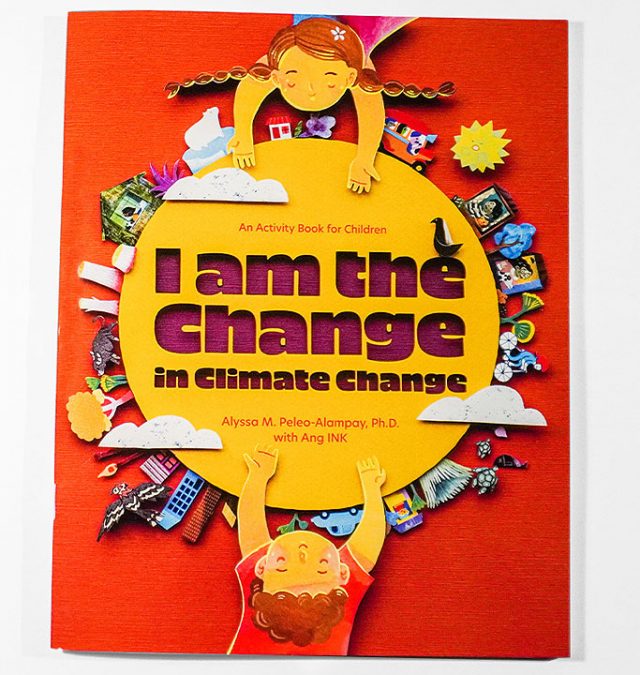
I Am the Change in Climate Change, a children’s book written by geology professor Alyssa M. Peleo-Alampay, shows how sustainability and climate change can be tackled at an individual level.  

Stewardship of the earth is taught in schools, said Ms. Peleo-Alampay, but not in a way that makes students feel that they can be part of the solution. 

“The most important takeaway should be that the climate change we are experiencing today as global warming is not going to go away in our lifetime. It will take the earth some time to adjust since the change has already started,” she told BusinessWorld in an e-mail, adding that the Philippines is a country which is and will continue to be among the worst hit by global warming and climate change.   

“The message of being good to, and taking care of, the earth will help improve our way of life for the present and the immediate future for our generation. It is a win-win situation.”  

Aimed at children between six and twelve, the book includes interactive activities, environmental lessons, and illustrations by members of Ang Ilustrador ng Kabataan, a local association of artists.  

It was produced with the help of Union Bank of Switzerland, which is also distributing the book in the communities it supports.  

STARTING THEM YOUNG 
Greenpeace Philippines campaigner Marian Ledesma said it’s never too early to educate children on climate change and sustainability, including through hands on-activities.   

“Address misconceptions at an early age,” she said in a separate e-mail. “Allow kids to create their own content. You can get an idea of how they understand environmental problems and engage them from there.”  

Filipinos are starting to walk the talk when it comes to sustainability, and companies are taking note. Corporations such as Monde Nissin, for instance, are giving their product development and innovation plans a health and sustainability emphasis by offering meat alternatives like Quorn, for example.  

Others firms, like building solutions provider Holcim Philippines, Inc., are offering more environment-friendly products such as blended cement.  

Meanwhile, a 2021 survey by GlobeScan, an insight and strategy consultancy, noted that only 24% of experts believe the pandemic will make sustainability a lower priority, down from 49% in 2020.  

A third of respondents also think that more attention will be given to the environment because of the pandemic.    

As a Singaporean respondent from Singapore put it, “If the world can find the money to deal with the economic and health impacts of the pandemic, it must do the same for the climate crisis.”  


Every purchase of I Am the Change in Climate Change is matched with book donations to two children from poor and disadvantaged communities in the Philippines in support of One Million Books for One Million Filipino Children Campaign, an initiative by the book’s publisher CANVAS. 

Elevate your dining room with Wilcon Depot

The dining room is an area in a home where we gather to share food, laughter, and conversations — and choosing the perfect dining set that matches our needs and style is crucial. And the right kind of furniture will ensure a comfortable and pleasant dining experience for everyone. 

Wilcon Depot, your one-stop-shop home store, is here to help you choose the perfect dining interior, so you, your family, and your friends can have a more enjoyable time in your dining space. Check out this guide for your next dining room upgrade.

Transitional 

The Transitional interior features a mix of both traditional and contemporary designs. Designing a transitional dining space can go from straight and bold lines to rounded and intricate patterns. Like a traditional setup, you can also see dark wood, textured fabrics, and light colors. In addition, it showcases both feminine and masculine characteristics to provide a harmonious setup.

Heritage Naxos dining chairs and walnut table

Japanese

The Japanese style is a superb choice if you’re aiming for a peaceful and space-saving dining area. It exudes an organic aesthetic, a serene ambiance, and natural elements. This dining set provides style and space efficiency. Chairs are ergonomically designed to fit seamlessly under the table. It brings out a unique Asian touch with its wooden structures, low-seating cushioned chairs, and flawless textures.

Heim Bet dining table set

Contemporary

Contemporary interior design plays with a variety of tones often seen in current styles. It encapsulates unconventional curves that result in a unique style for your space. You can achieve the eccentricity of a contemporary design by adding an accent color then building a palette around that color. It is essential to maintain a complementing color scheme to avoid a chaotic look for your space. 

Heritage Jarrett dining table and chairs

Mid-Century Modern

Known as one of the most popular interior themes, the mid-century modern is composed of muted tones, elegant lines, and earthy elements like wood, stone, and leather. This interior stood the test of time after it was popularized in the ’40s to ’60s. The glass table and leather chairs offer a timeless appeal with a boxy design and an open space concept perfect for a more conducive dining space.


Heim Dining Set

British Colonial

The British Colonial interior focuses on dark-colored wood to achieve an opulent look paired with neutral shades to create an elegant contrast for your space. You can often see a monochromatic touch of colors, including white, beige, and browns, that make up the whole dining setup. The intricate designs in the legs of the chairs and table welcome a subtle regal ambiance, often festooned with greenery and lightweight fabric for a fresher feel. 

Nobizzi round dining table and dining chair with armrest

Mission

Simplicity and warmth are what make a Mission interior design stand out. Also known as the “craftsman” style, it draws out its color palette mostly from different earthy elements and shades. It offers a heavy and solid look coming from edgy-style furniture. In this setup, wood is always the main character that lifts the whole space. Japanese style is a superb choice if It requires little to no detailing for a smoother effect. 

Heim Mia chairs and glass dining table

Dine in style and design your dining space with remarkable chairs and tables from Wilcon Depot. Shop at any of their 68 Wilcon Depot and Wilcon Home Essentials stores nationwide or shop online at Wilcon Online Store by visiting shop.wilcon.com.ph.

Explore the limitless product selections that Wilcon offers, ranging from Tiles, Sanitarywares, Plumbing, Furniture, Home Interior, Houseware, Outdoor Living, Building Materials, Hardware, Electrical, Appliances, Tools, Automotives, Paints & Sundries, and other DIY items.

To ensure a safe and convenient shopping environment in all Wilcon stores, the company continuously implements safety protocols for the health and well-being of both employees and valued customers.

You can also shop through your Personal Shopper with the Browse, Call, and Collect/Deliver service. For the list of participating stores with their pick-up and delivery contact details, click this link: www.wilcon.com.ph/content/328-bcc-branches.

Another shopping alternative is the Wilcon Virtual Tour. An online shopping option wherein customers can contact the nearest Wilcon store via Facebook Messenger App. Customers can contact the nearest stores, and the Wilcon team will take you on a virtual tour where you can explore the available products inside their physical stores.

Wilcon also provides contactless payment options to its customers like bank transfers, GCash, PayMaya, InstaPay, PesoNet, WeChat, and Alipay for customers’ convenience.

For more information about Wilcon, you can log on to www.wilcon.com.ph or follow their social media accounts on Facebook and Instagram. Subscribe and connect with them on Viber Community, LinkedIn, and YouTube.

France cancels defense meeting with UK over submarine row, sources say

US Navy illustration

PARIS — France has canceled a meeting between Armed Forces Minister Florence Parly and her British counterpart planned for this week after Australia scrapped a submarine order with Paris in favor of a deal with Washington and London, two sources familiar with the matter said.  

Ms. Parly personally took the decision to drop the bilateral meeting with British Defense Secretary Ben Wallace, the sources said.  

The French defense ministry could not be immediately reached. The British defense ministry declined comment.  

The sources confirmed an earlier report in the Guardian newspaper that the meeting had been canceled.  

The scrapping of the multi-billion-dollar submarine contract, struck in 2016, has triggered a diplomatic crisis, with Paris recalling its ambassadors from Washington and Canberra.  

France claims not to have been consulted by its allies, while Australia says it had made clear to Paris for months its concerns over the contract.  

French President Emmanuel Macron and US President Joseph R. Biden, Jr., will speak by telephone in the coming days to discuss the crisis, the French government’s spokesman said on Sunday. — Reuters

Universal Studios Beijing draws eager throngs amid uneasy US-China ties

Image via universalbeijingresort.com

BEIJING — Universal Studios’ Beijing resort opened its doors to the public on Monday after a two-decade wait, including delays because of coronavirus disease 2019 (COVID-19).  

The highly anticipated opening takes place amid US-China relations that have deeply deteriorated in recent years.  

The park will be US-based Universal’s largest and its fifth globally. It is also a first for Beijing, which lacks a big branded theme park to rival the Disney resorts in Shanghai and Hong Kong.  

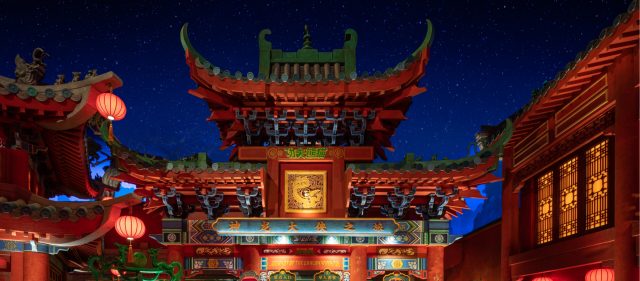
And, it will be the first Universal park with a section dedicated to the movie Kung Fu Panda and includes an area based on the Harry Potter franchise, which is popular in China.  

Amid light rain and tight security, a steady stream of umbrella-wielding visitors entered the resort, with several saying they were “excited” to be finally getting to go see the park.  

One Universal Studios staff member told Reuters that visitor numbers were being capped at around 10,000 for Monday because of the pandemic but the park has a capacity to take in many more and will do so in the future.  

All of the 10,000 tickets for the opening available in a pre-sale on Sept. 14 sold out in three minutes, according to Trip.com Group.  

Beijing-based visitors snatched 40% of the tickets for the first month of opening, while the cities of Tianjin and Shanghai were the second- and third-largest sources of patrons, according to travel website qunar.com.  

However, many buyers complained on social media about ticket costs, which range from 418 yuan ($64.76) in the low season to 748 yuan during peak periods.  

“This is a rare time in a long while when an America-themed topic has attracted such obvious and widespread praise in China,” the Global Times, a nationalistic tabloid published by the ruling Communist Party’s People’s Daily, wrote last week.  

The resort was proposed 20 years ago by the Beijing Tourism Group, according to the official China Daily, and is 30% owned by Comcast Corp’s Universal Parks & Resorts and 70% by state-owned Beijing Shouhuan Cultural Tourism Investment.  

The new Chinese ambassador to Washington, Qin Gang, likened its roller coaster ride to ties between the two countries.  

“After all the tumbling and shakes, the roller coaster came to a soft landing in the end,” he tweeted on Tuesday.  

Universal Studios announced the development of the resort in 2014, saying at the time it would cost $3.3 billion. In 2017, Comcast Chief Executive Brian Roberts said the park could provide $1 billion of operating cash flow per year when it opened.  

The park is estimated to earn more than 10 billion yuan ($1.6 billion) a year in revenue with up to 12 million visits, according to state-run Beijing Daily. — Martin Quin Pollard/Reuters